
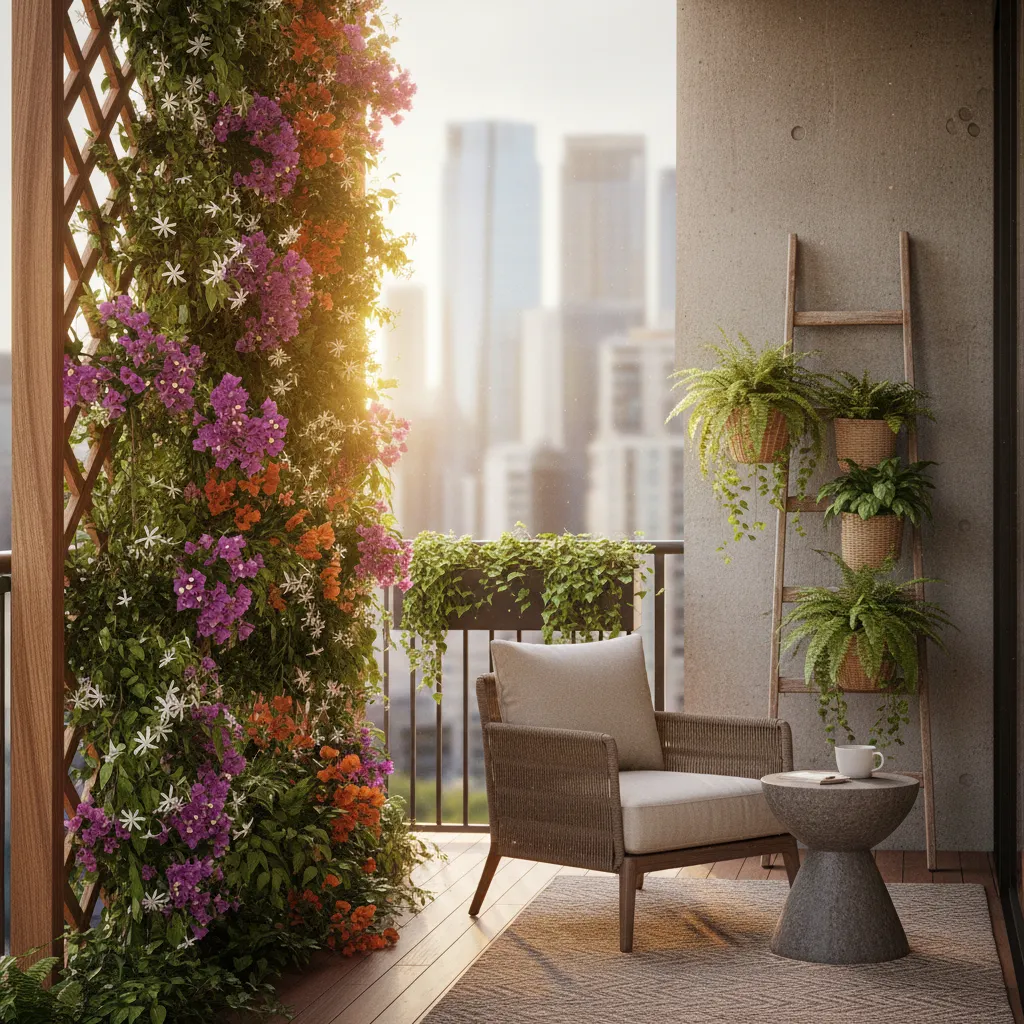
Table of Contents
- South-Facing Solar Screens: Creating Natural Shade with Heat-Tolerant Vines
- North-Facing Green Walls: Utilizing Low-Light Ferns on Renter-Friendly Ladders
- The Neighbor-Safe System: Installing Drip-Catching Vertical Towers to Prevent Leaks
- High-Rise Wind Breaks: Securing Sturdy Pallet Gardens for Exposed Balconies
- Minimalist Tension Rod Displays: A No-Drill Solution for Hanging Herb Pots
- Elevating Your Open-Air Sanctuary
- Vertical Gardening Design Dilemmas
Transforming a compact balcony into a lush retreat requires a thoughtful blend of greenery and smart design. Whether you are dealing with a small urban patch or a sprawling terrace, vertical gardening offers the perfect solution for maximizing square footage.
By elevating your plants, you create a sophisticated living wall that instantly softens harsh lines and brings nature closer to home.
Beyond the obvious beauty, these leafy installations serve as functional barriers against prying eyes and the midday sun. Sturdy wooden trellises or simple hanging pockets can block unwanted views while providing a refreshing layer of natural shade.
Choosing the right climbing vines or cascading ferns ensures your space feels private, intimate, and remarkably cool during warmer months.
Creating your own green oasis does not require a professional landscaper or an expensive budget. Simple DIY projects, such as repurposed pallets or sleek metal grids, offer high impact at a fraction of the cost.
With a few creative adjustments and a focus on layered textures, your balcony will become a cozy destination for morning coffee and evening relaxation.
South-Facing Solar Screens: Creating Natural Shade with Heat-Tolerant Vines
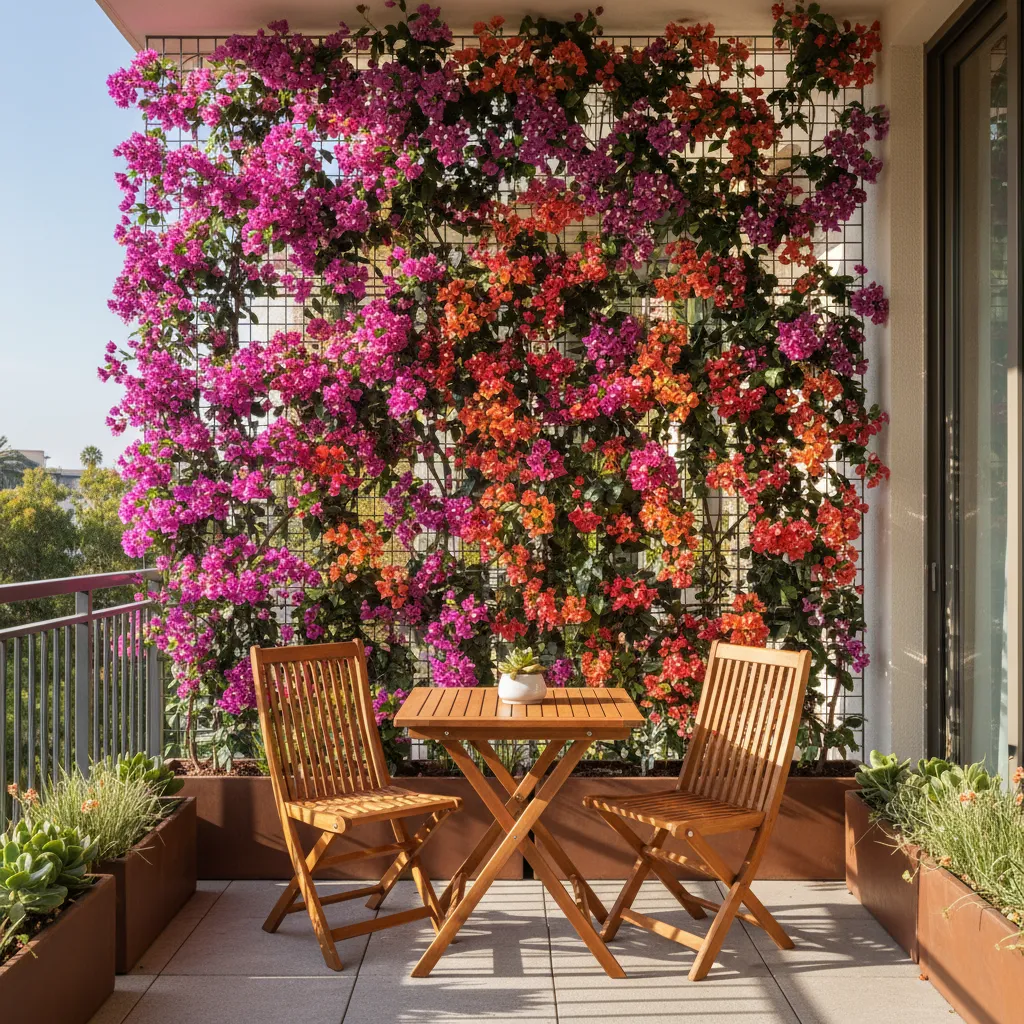
A south-facing balcony offers an abundance of sunlight, but the midday intensity can often make the space unusable during summer months.
Instead of installing heavy curtains, consider a living solar screen. This uses nature to filter harsh rays into soft, ambient light.
By training vines vertically, you lower the ambient temperature. The transpiration from the leaves creates a cooling microclimate for your home.
Turn scorching sunlight into a design feature by filtering it through a living curtain of green.
Selecting the Right Support Structure
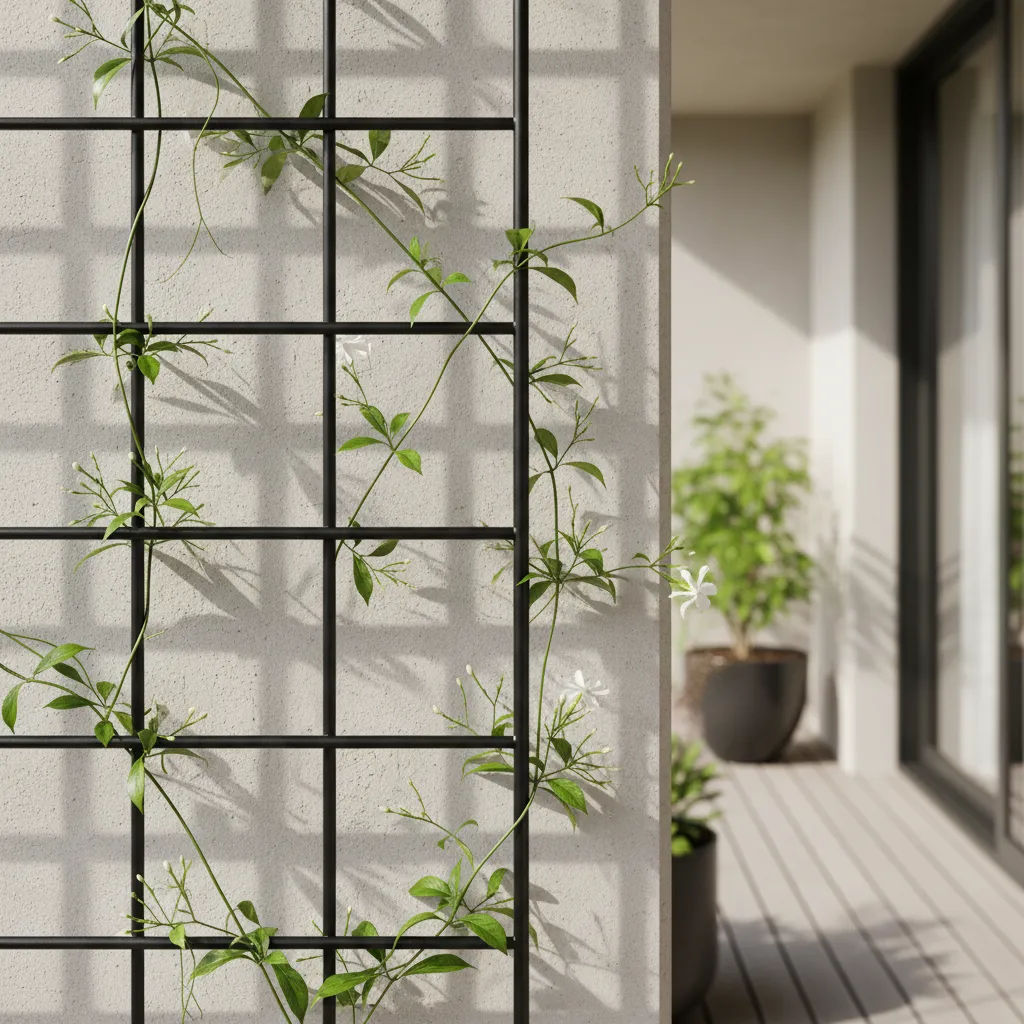
The foundation of a successful solar screen is durability. South-facing walls endure high heat and wind, so materials must be robust.
Tension rod systems or stainless steel wire grids are excellent choices. They offer a minimalist aesthetic that disappears as plants grow.
For a rustic touch, cedar lattice adds warmth and texture. It pairs beautifully with organic styling and weathers to a soft gray over time.
If you prefer a romantic aesthetic, you might adapt techniques used for climbing roses to create a lush, cottage-style vertical display.
Heat-Loving Vines for Privacy
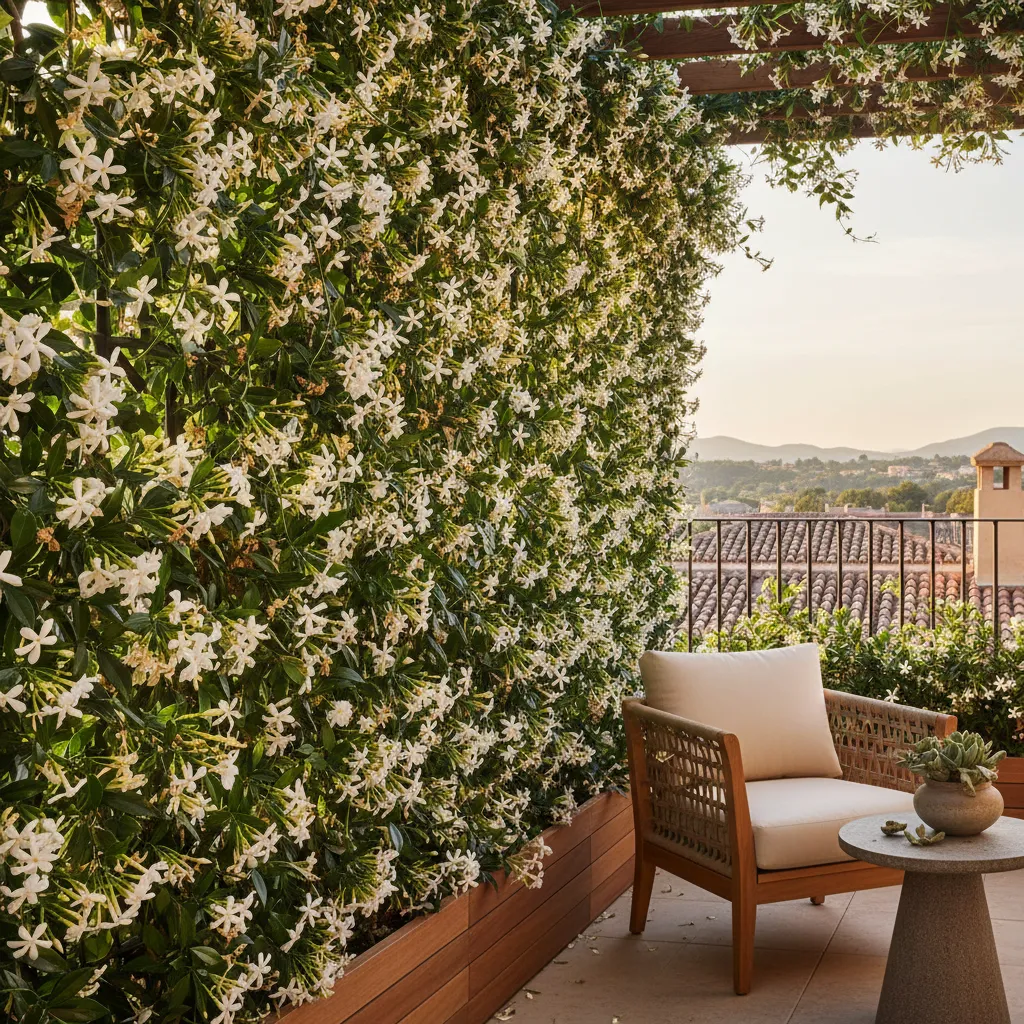
Not all plants can survive the baking heat of a southern exposure. You need varieties that thrive in direct solar radiation.
Bougainvillea is a top contender for its papery, vibrant bracts. It loves the heat and creates a dense color block for privacy.
Star Jasmine is another favorite. It offers glossy dark foliage and a heady fragrance that transforms your evening relaxation routine.
Implementing these living walls is one of the most effective very small balcony apartment ideas for maximizing vertical real estate.
In a small outdoor space, walls are your best asset. Vertical planting draws the eye up, making the footprint feel expansive while providing essential cooling.
Isabelle Palmer, The Balcony Gardener
Comparison of Sun-Loving Climbers
Choosing the right vine depends on your desired maintenance level and aesthetic goals. Here is a breakdown of popular options.
| Plant Variety | Heat Tolerance | Growth Rate | Visual Impact |
|---|---|---|---|
| Bougainvillea | Extreme | Fast | Vibrant magenta/red blooms |
| Star Jasmine | High | Moderate | Fragrant white flowers |
| Passion Flower | High | Fast | Exotic, intricate blooms |
| Morning Glory | Moderate | Very Fast | Daily purple/blue trumpets |
Ensure your containers are large enough to retain moisture. Small pots dry out quickly on south-facing surfaces, stressing the root systems.
Glazed ceramic or thick resin pots are superior to terracotta here. They hold water better and prevent the soil from baking in the sun.
Sun-Smart Secrets
- Install your trellis or wire grid at least 2 inches away from the wall to create an air gap; this prevents reflected heat from scorching leaves and improves airflow.
- To create a denser privacy screen, pinch off the growing tips of your vines occasionally to encourage lateral branching rather than just vertical growth.
- Combat rapid evaporation on south-facing balconies by topping your containers with mulch or decorative pebbles to lock in moisture and keep roots cool.
North-Facing Green Walls: Utilizing Low-Light Ferns on Renter-Friendly Ladders
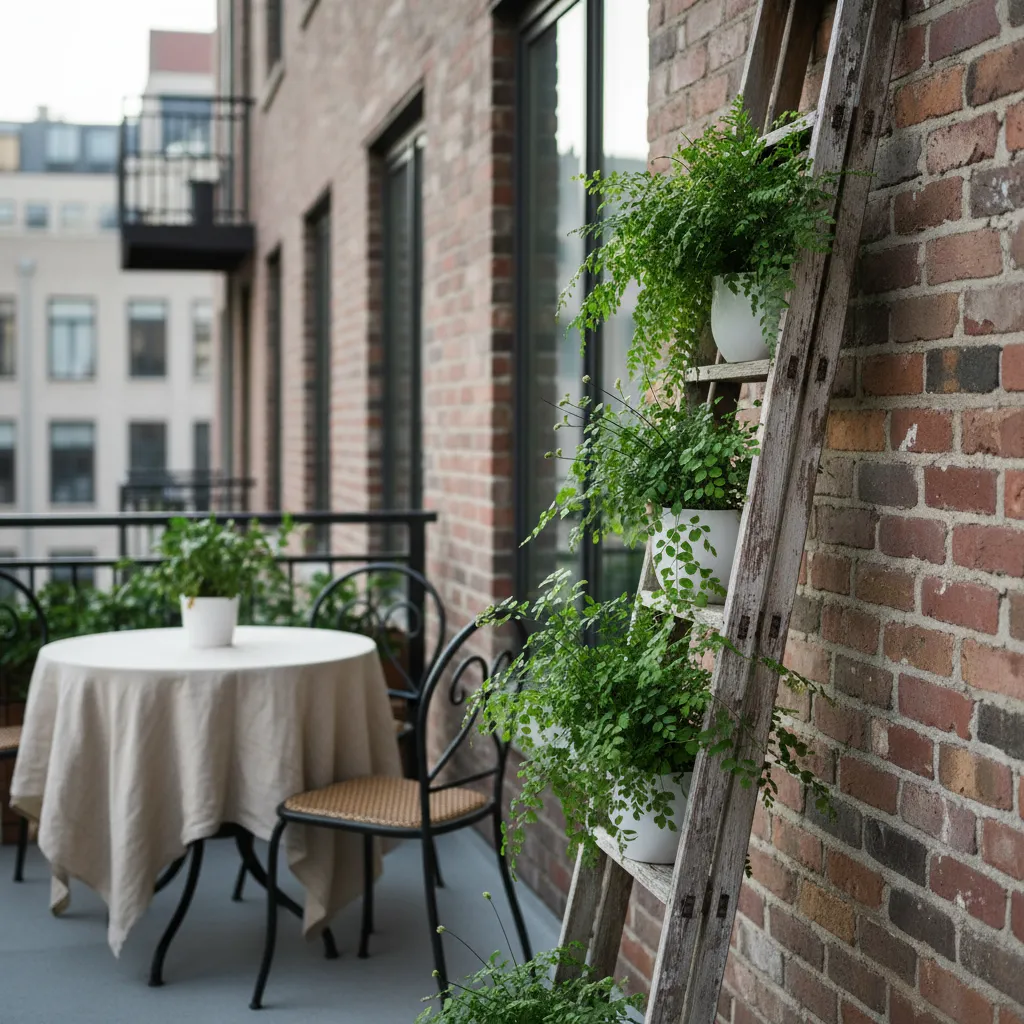
A north-facing balcony often feels like a design challenge due to the lack of direct sunlight. However, this soft light is perfect for a lush retreat.
The absence of harsh rays allows you to cultivate a forest-floor aesthetic. This creates a cooling, serene atmosphere that feels organic and grounding.
To maximize vertical space without drilling into walls, lean a wooden blanket ladder against the siding. This is an ideal solution for renters.
The raw texture of a reclaimed wood ladder provides a warm contrast to the deep emerald tones of shade-loving foliage. It adds instant rustic charm.
Shadow is not an absence of light, but a canvas for rich textures and deep emerald greens.
Ferns are the undisputed champions of this lighting condition. Their feathery fronds soften the hard architectural lines of metal railings or brick.
By using a ladder, you create a tiered waterfall effect. This draws the eye upward and makes the ceiling feel higher, enhancing the spatial flow.
You can pair these greens with textured vessels to enhance the organic feel. Explore seasonal plant pot ideas to find containers that complement this verdant palette.
Curating the Perfect Shade Palette
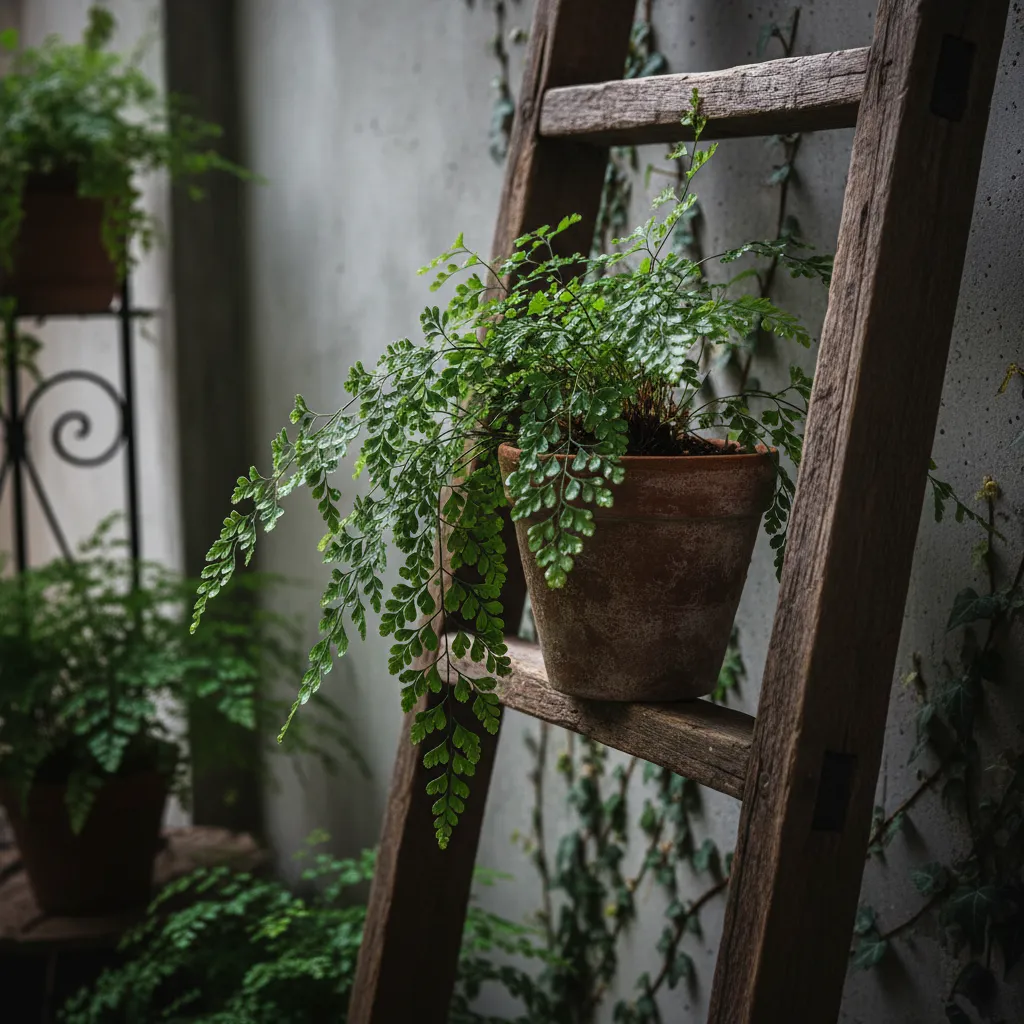
Selecting the right plant varieties is crucial for a thriving north-facing wall. You need plants that tolerate consistent shade and cooler temperatures.
Mix textures to prevent the design from looking flat. Combine the broad, glossy leaves of a Cast Iron Plant with the delicate lace of a Maidenhair Fern.
This vertical approach is a staple in modern small balcony designs where every square inch of floor space counts.
Place trailing plants on the upper rungs. This allows varieties like English Ivy or Creeping Jenny to drape down, connecting the visual layers.
To keep vertical gardens looking their best, rotate plants occasionally so they receive even light exposure and don’t grow lopsided.
The Editors, Better Homes & Gardens
Water management is vital for ladder gardens. Ensure your top plants do not drip muddy water onto the foliage below by using matching saucers.
Here is a curated list of plants that thrive in these specific vertical conditions, focusing on texture and durability.
Top Picks for North-Facing Vertical Ladders
- Boston Fern: Adds massive volume and classic texture. Best placed on middle rungs to fill the visual center.
- English Ivy: A rapid trailer that softens the edges of the ladder. Perfect for the top shelf to cascade down.
- Cast Iron Plant: Indestructible and upright. Use this on the bottom rung to anchor the display visually.
- Heuchera (Coral Bells): Introduces pops of deep purple or silver. Use these to break up the monotony of green.
- Calathea: Offers striking patterned leaves. These require high humidity, so group them closely with ferns.
Finish the vignette with subtle lighting. A few battery-operated lanterns placed on the steps create a warm, ambient glow in the evenings.
This setup transforms a dark, unused corner into a living sculpture. It proves that low light does not mean low impact.
Shady Spot Secrets
- Secure your leaning ladder with non-slip rubber furniture pads on the base and top contact points to ensure stability on slick balcony floors without damaging the siding.
- Boost humidity for your ferns by placing a shallow tray of pebbles and water beneath the ladder; as the water evaporates, it creates the misty environment these shade-lovers crave.
- Keep your vertical garden safe by distributing weight strategically; place lighter resin pots on upper rungs and anchor the structure with heavier ceramic planters on the bottom step.
The Neighbor-Safe System: Installing Drip-Catching Vertical Towers to Prevent Leaks
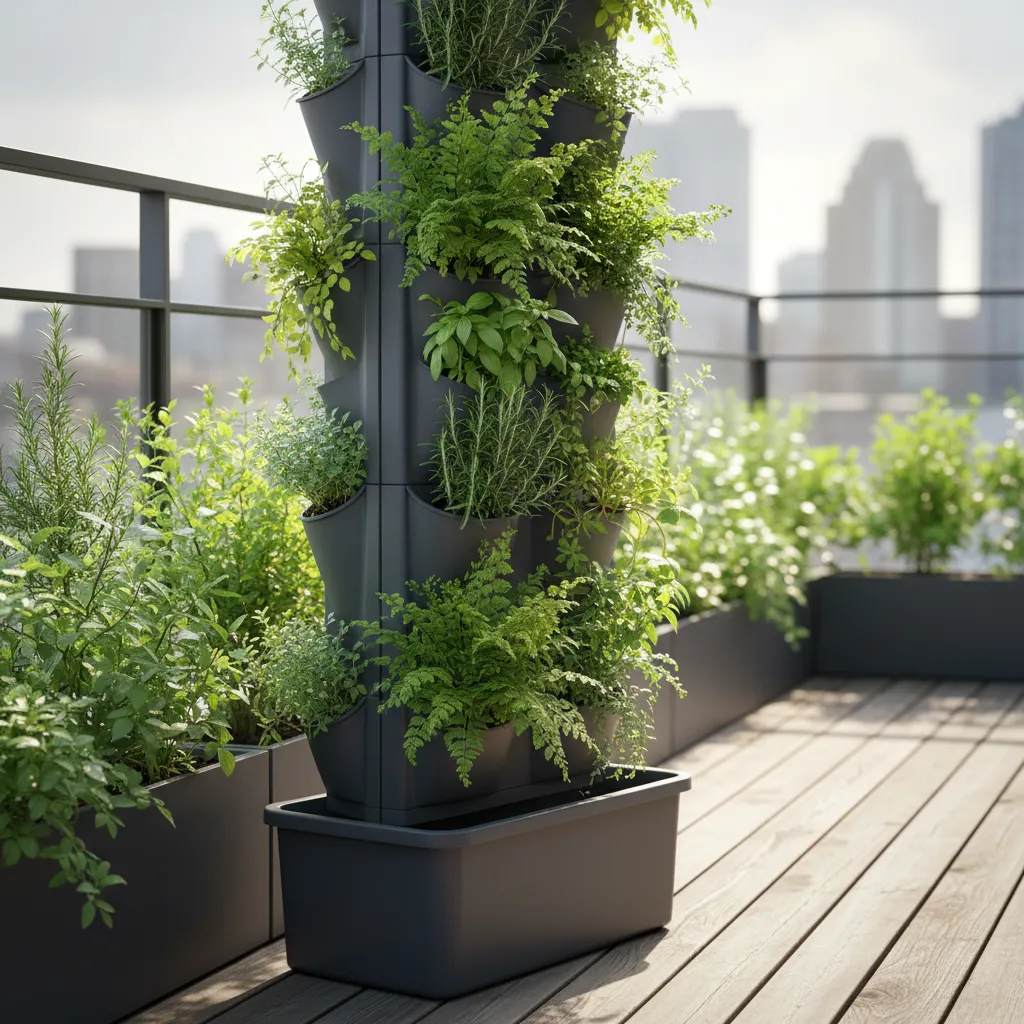
Living in an apartment complex requires a delicate balance between cultivating a lush oasis and maintaining good relations with those living below you. The greatest anxiety for any balcony gardener is the dreaded water runoff.
Uncontrolled drips can ruin your downstairs neighbor’s patio furniture or stain their railing. Fortunately, modern vertical towers offer a closed-loop solution that is both neighbor-safe and visually stunning.
You can achieve a high-end look without plumbing. The secret lies in selecting vertical systems designed with integrated internal reservoirs. These units catch excess hydration before it ever touches the floor.
True luxury in small space design is seamless functionality; a garden that thrives without inconveniencing the world around it.
Gravity-Fed Tower Mechanics
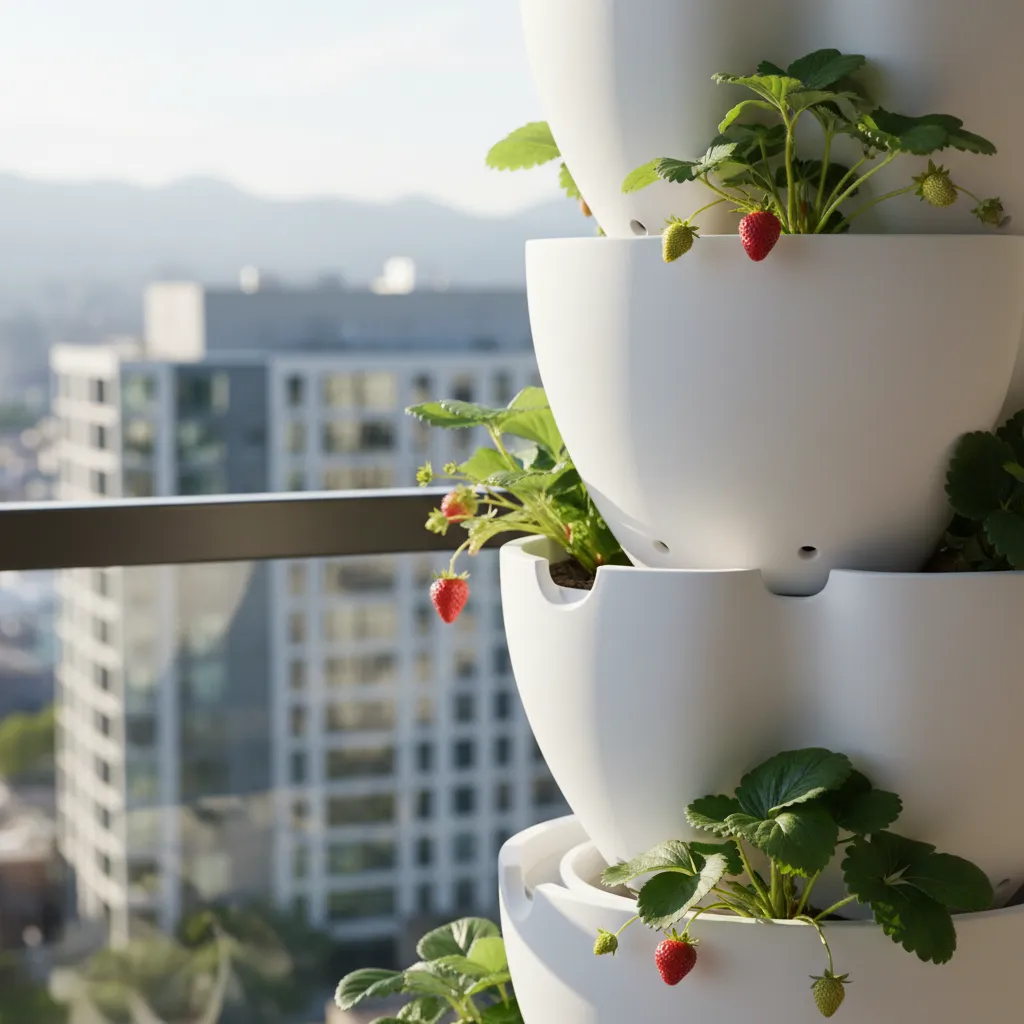
Gravity-fed towers operate on a simple yet brilliant principle. You water the top tier, and gravity pulls moisture down through the subsequent layers. This mimics natural rainfall patterns.
The bottom tier usually rests on a sealed catch basin. This reservoir collects nutrient-rich runoff that can be recycled back to the top. It prevents any liquid from escaping onto your decking.
For a cohesive aesthetic, choose towers with a matte finish in neutral tones like slate grey or sandy beige. This allows the vibrant greens of your plants to take center stage.
If you are looking to expand your outdoor living space beyond a single tower, consider exploring stunning rooftop garden modern terrace designs ideas. These often utilize similar water retention strategies on a larger scale.
Styling the Catchment Area
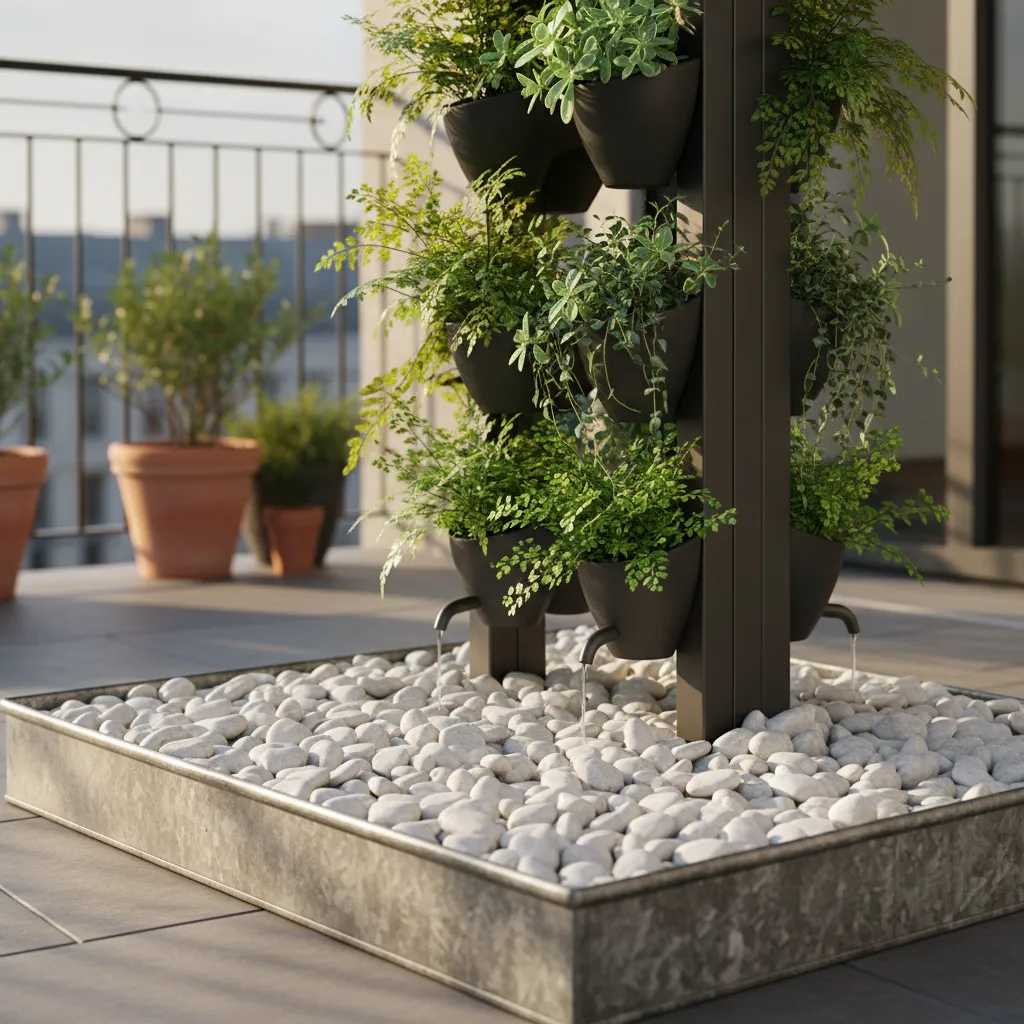
Functionality does not have to look industrial. If your vertical system requires a separate saucer or tray, turn it into a deliberate design feature rather than an afterthought.
Place a wide, shallow galvanized tray underneath your vertical stand. Fill the tray with smooth white river stones or polished black pebbles. This hides the murky drainage water.
The stones also increase humidity around your plants as the water evaporates. This creates a microclimate that mimics a tropical environment, which is perfect for ferns and pothos.
You can also customize the catchment containers to match your decor. For inspiration on adding personal flair to these functional items, check out easy hand painted flower pots diy cute ideas & pro tips.
Always use a saucer specifically designed for outdoor use under your pots. Terra cotta saucers are porous and will eventually leak moisture through to the surface below.
Maxwell Ryan, Apartment Therapy
Water Management Methods Compared
Choosing the right drip-protection method depends on your specific setup and aesthetic preference. Here is a breakdown of how different catchment styles function in a balcony setting.
| System Type | Visual Impact | Maintenance Level | Best Application |
|---|---|---|---|
| Integrated Reservoir | Sleek, invisible, seamless look. | Low: Empty once a week. | Modern minimal apartments. |
| Pebble Tray Basin | Spa-like, organic texture. | Medium: Clean stones monthly. | Boho or Zen style balconies. |
| Recirculating Pump | High-tech, hydroponic style. | High: Check pump/power. | Tech-savvy herb growers. |
| Deep Saucer | Traditional, cottage garden vibe. | Low: Turkey baster to empty. | Classic potted arrangements. |
Regardless of the system you choose, always test it with a small amount of water first. Ensure the seals are tight and the capacity is sufficient for a heavy watering session.
The Good Neighbor Hack
- Use a turkey baster to easily remove excess water from deep saucers or hidden reservoirs without needing to disassemble your vertical tower.
- Before a heavy watering, place a dry paper towel under your catchment basin to spot micro-leaks early and ensure your neighbor’s patio stays dry.
- Add a few pieces of horticultural charcoal to your drainage stones or reservoir to prevent odors from stagnant water buildup.
High-Rise Wind Breaks: Securing Sturdy Pallet Gardens for Exposed Balconies
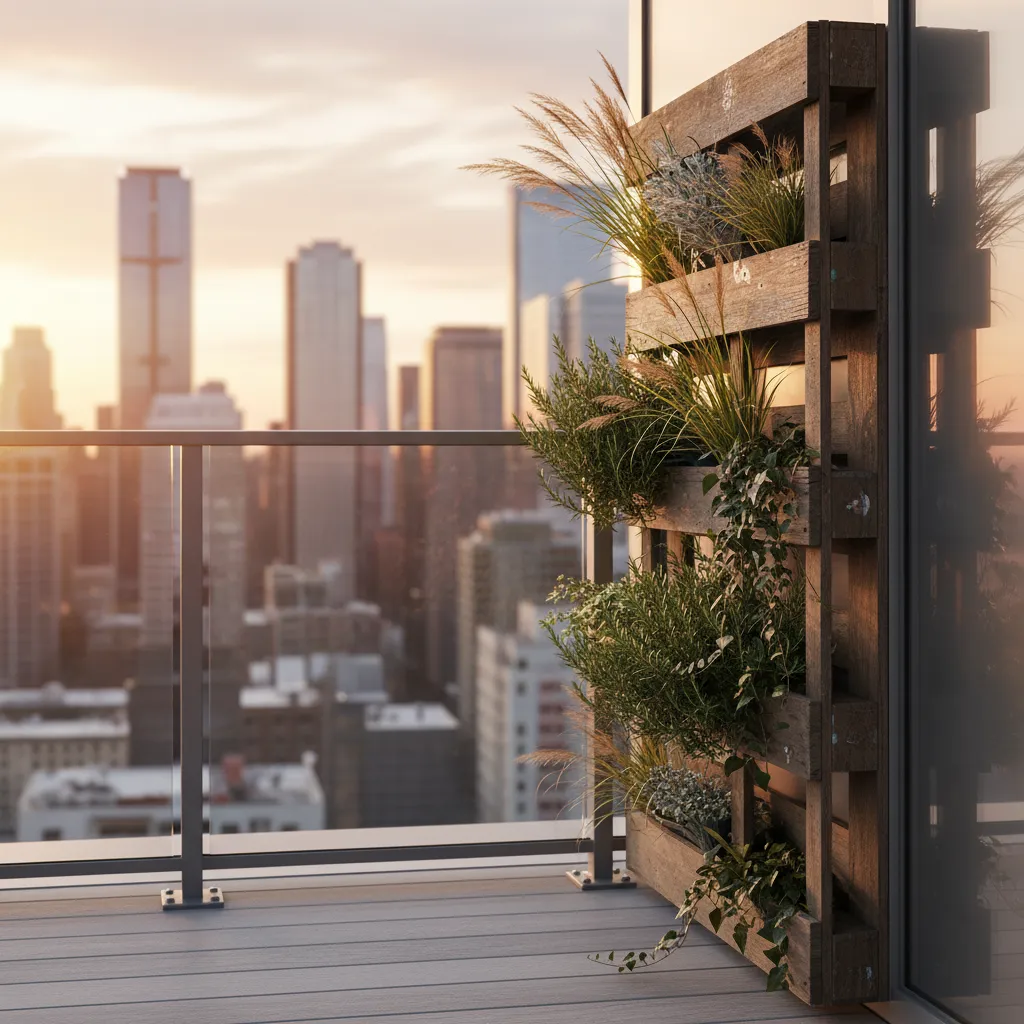
Living in a high-rise apartment offers breathtaking views, but the exposed nature of the space often brings relentless wind. A standard vertical garden can easily tip over.
To combat this, repurposed wooden pallets serve a dual purpose. They act as a sturdy windbreak while providing a rustic, textured canvas for your greenery.
The raw wood finish adds warmth to concrete balconies. When positioned correctly, the structure creates a calm microclimate, protecting delicate leaves from strong gusts.
A well-designed balcony doesn’t just survive the elements; it embraces them to create a sanctuary above the city.
Sky-High Secrets
- Secure your pallet directly to the balcony railing using heavy-duty, weather-resistant zip ties or steel cable ties for maximum stability.
- Lower the center of gravity by placing your heaviest pots and densest soil in the bottom-most slats of the pallet structure.
- Select wind-resilient plants like ornamental grasses or lavender that can sway and filter air rather than catching the wind like a sail.
Anchoring Your Pallet Safely
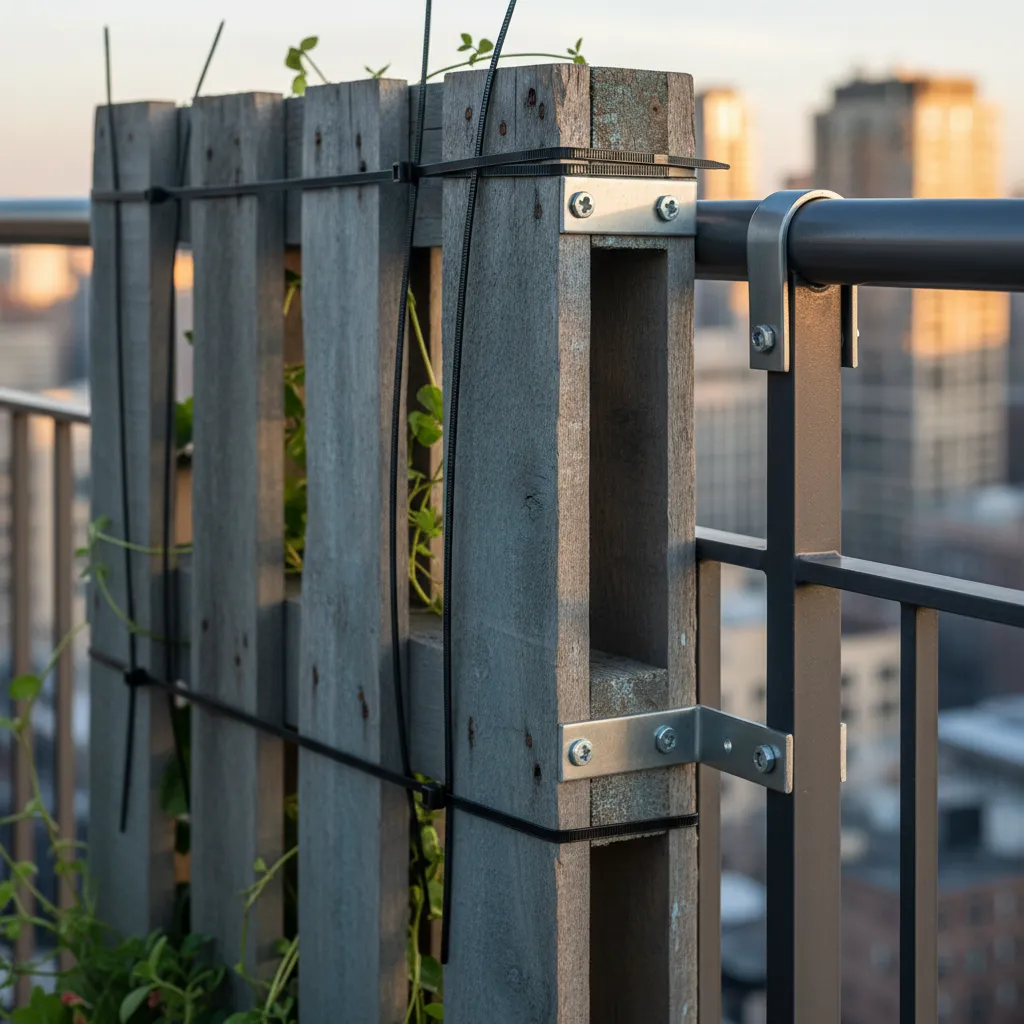
Safety is the priority when installing vertical elements on a high floor. You must ensure the structure is anchored to the railing or wall without causing damage.
For renters, heavy-duty industrial zip ties are indispensable. They secure the pallet firmly to metal railings and can be easily removed when you move out.
If you have more flexibility, consider using L-brackets attached to the floor. This method mimics the stability seen in permanent yard divider and fence ideas tailored for ground-level homes.
Ensure the back of the pallet is lined with landscape fabric. This holds the soil in place and prevents debris from blowing onto your neighbor’s balcony below.
When gardening on a high-rise, you must treat wind as a physical force. Secure all containers and vertical structures as if they were permanent fixtures to prevent hazards.
Fern Richardson, Small-Space Container Gardens
Stability Secrets
- Use UV-resistant industrial zip ties to ensure the sun doesn’t weaken your anchors over time.
- Place your heaviest pots at the very base of the pallet to lower the center of gravity against high winds.
- Perform a monthly ‘tug test’ on all brackets and ties to catch any loosening before it becomes a safety hazard.
Selecting Wind-Resistant Flora
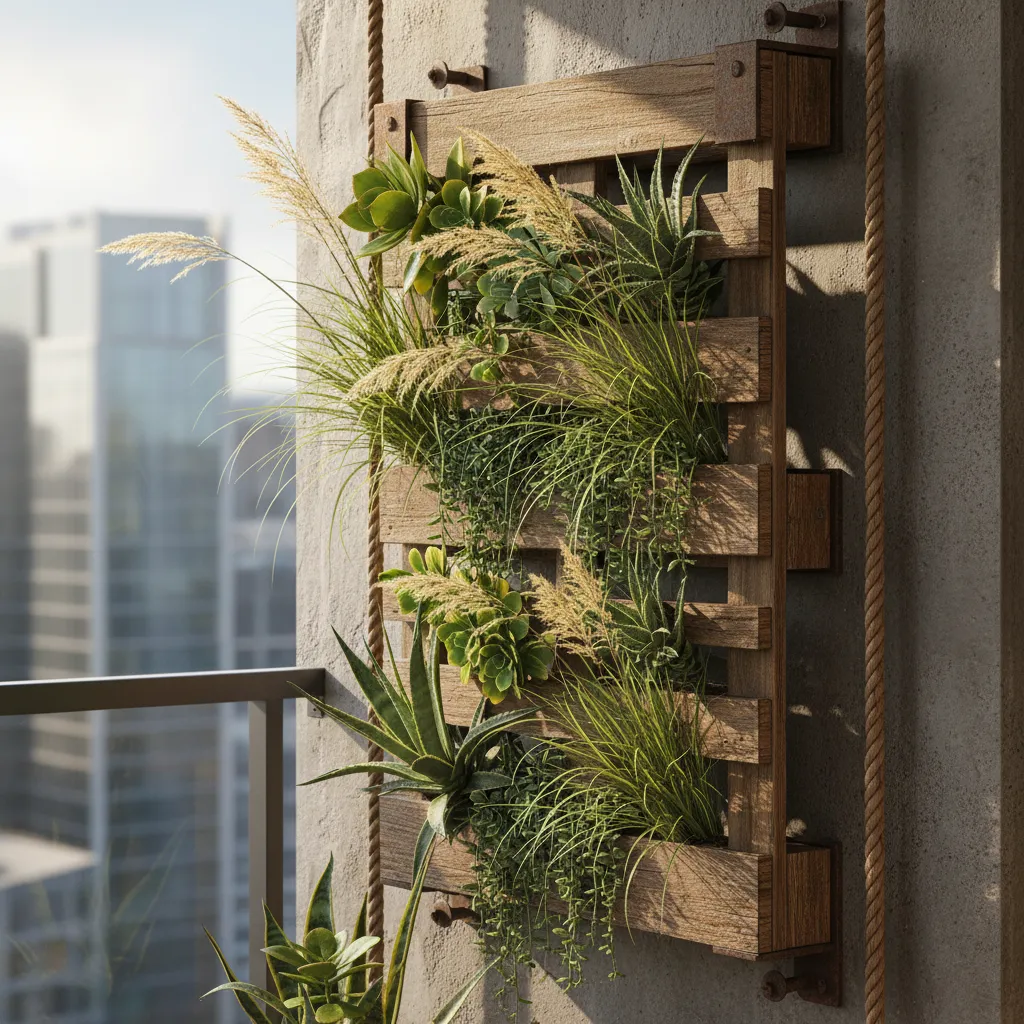
The success of your windbreak depends on plant selection. Avoid plants with large, fragile leaves that will tear easily in high gusts.
Opt for hardy herbs like rosemary and thyme. Their woody stems are resilient, and their small leaves retain moisture effectively in breezy conditions.
Ornamental grasses are also excellent choices. They add movement and visual softness, similar to the vegetation found in stunning rooftop garden designs.
Arrange taller grasses at the top of the pallet to filter the wind. Place smaller succulents or flowering annuals in the lower pockets where the air is calmer.
High-Rise Windproofing Checklist
Before installing your vertical garden, ensure you have these essentials to maintain a safe and thriving outdoor space.
- Industrial Cable Ties: Choose black UV-resistant ties that won’t degrade in the sun.
- Burlap or Landscape Fabric: Line the pallet slats to retain soil and prevent mess.
- Heavy Base Weights: If not attaching to a railing, weight the bottom with heavy stones.
- Moisture Retaining Soil: Wind dries soil quickly; add vermiculite to your mix.
- Hook-and-Eye Latches: Use these to secure the top of the pallet to a wall if drilling is permitted.
By securing your structure and choosing the right plants, you create a functional privacy screen. This transforms a blustery ledge into a cozy, usable extension of your home.
Skyline Gardener’s Secret
- Choose plants with flexible stems like ornamental grasses that sway with the gusts rather than snapping under pressure.
- Top your soil with a layer of heavy river stones or decorative gravel to prevent high-altitude winds from scattering your potting mix.
- Group several pots together to create a shelter effect where hardier woody herbs protect more delicate succulents from direct exposure.
Minimalist Tension Rod Displays: A No-Drill Solution for Hanging Herb Pots
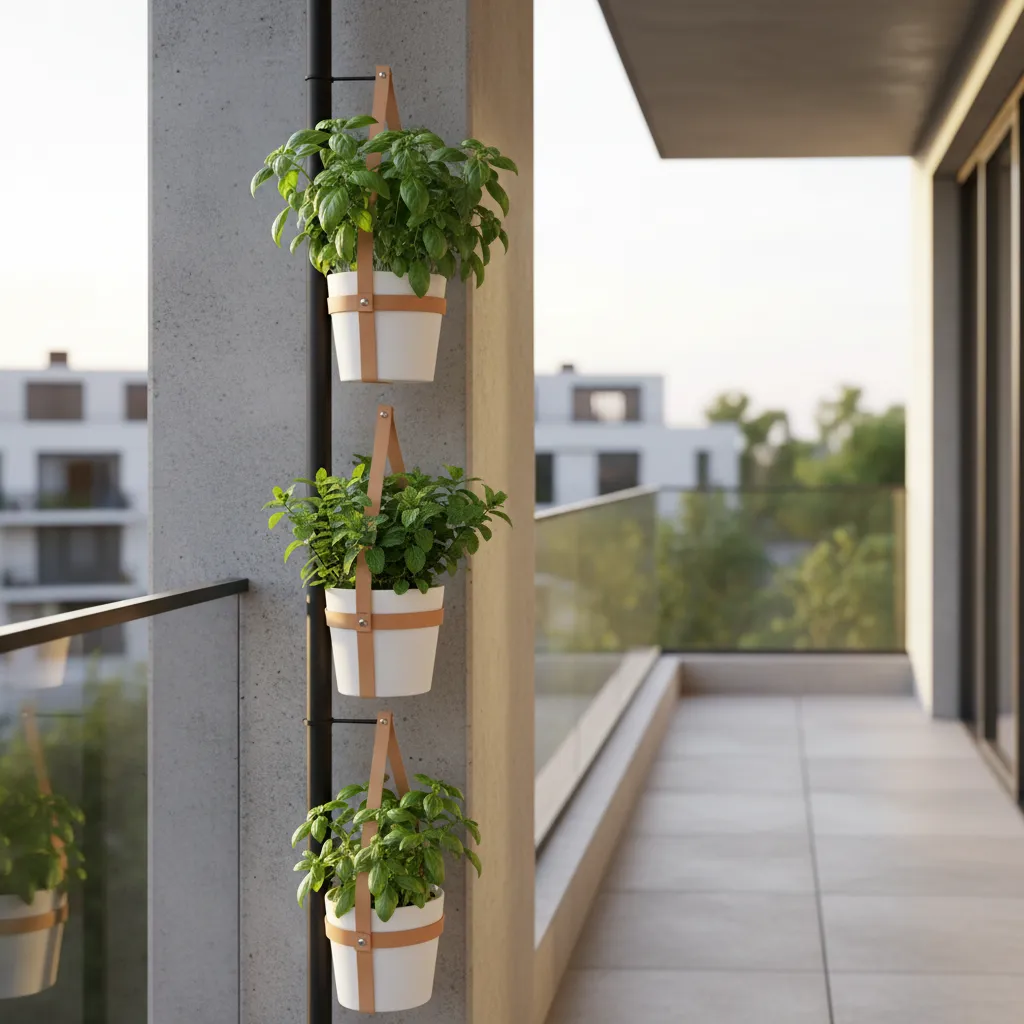
Tension rods are the ultimate secret weapon for renters who crave greenery without sacrificing their security deposit. This system utilizes vertical space, making small balconies feel loftier.
Imagine sleek matte black rods contrasted against terracotta pots, creating a warm and industrial vignette. Sunlight filters through fresh basil leaves, casting playful shadows on the floor.
Beyond aesthetics, this setup keeps herbs at arm’s reach for cooking while freeing up precious floor space. It facilitates better airflow around plants, reducing the risk of mold or pests.
Minimalism isn’t about having less; it’s about making room for what matters; like fresh mint for your mojitos.
Choosing the Right Materials for Stability
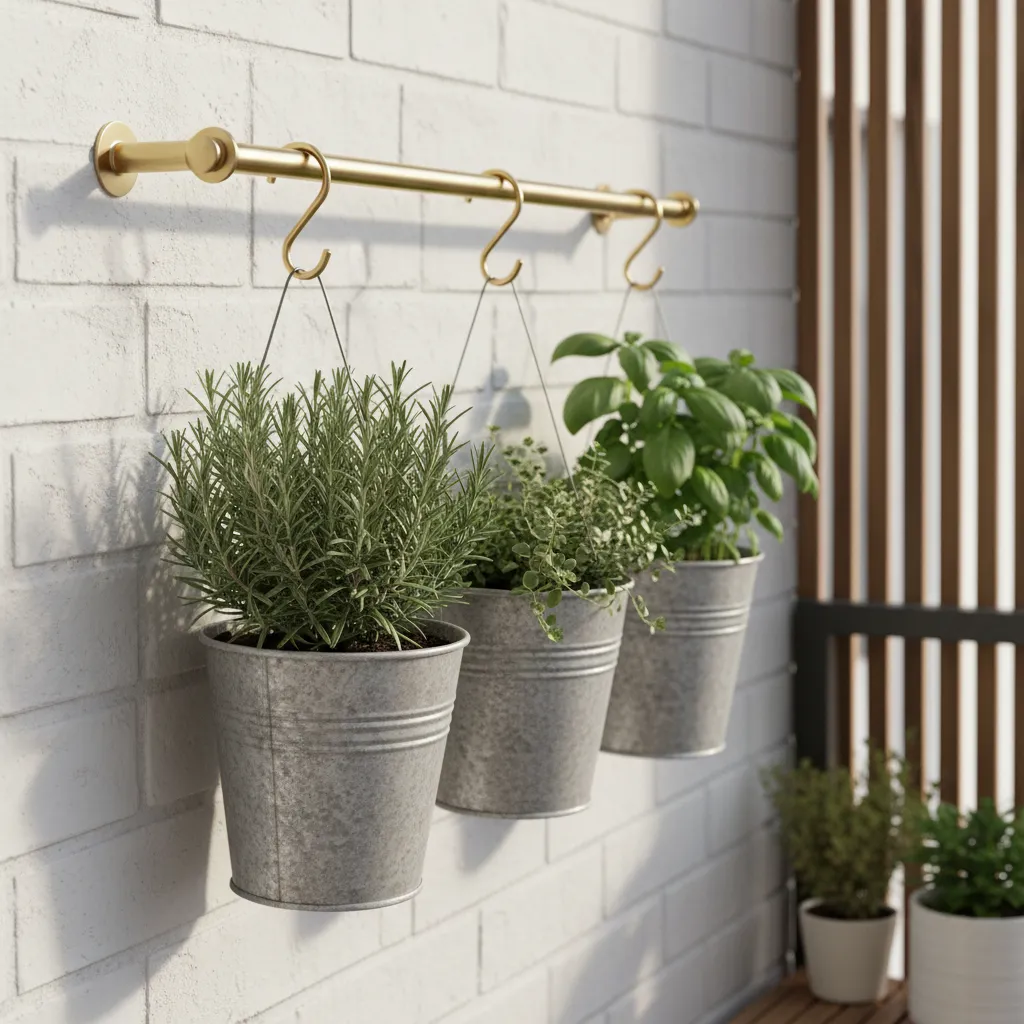
Select heavy-duty rods designed for room dividers, ensuring they can support wet soil weight. Opt for lightweight resin or metal planters to minimize the load on the tension mechanism.
To add personality, customize your containers using Easy Hand Painted Flower Pots Diy Cute Ideas & Pro Tips for a bespoke look. This adds a pop of color to the industrial metal fixtures.
When styling a vertical garden, think of plants as living art. Use S-hooks to vary the height of each pot, creating a cascading visual rhythm that draws the eye upward.
Hilton Carter, Architectural Digest
The beauty of this system lies in its modularity. You can easily unhook plants for watering or rearrange them to chase the sun, ensuring your organic garden thrives in any season.
Recommended Setup Components
Creating a safe and stylish display requires balancing aesthetics with structural integrity. This approach mirrors the efficiency found in Small Coffee Shop Aesthetic Interior Design Minimal Layouts, where every inch counts.
| Component | Recommended Material | Key Benefit |
|---|---|---|
| Tension Rod | Powder-Coated Steel | Rust resistance and high weight capacity. |
| Hooks | Stainless Steel S-Hooks | Easy removal and modern metallic finish. |
| Pots | Plastic or Fiber Clay | Reduces strain on the rod while mimicking stone. |
| Lighting | Clip-on Grow Lights | Provides ambient lighting and boosts growth. |
Secure the rod tightly between the floor and ceiling, checking for levelness. Test the hold by pulling down firmly before adding any plants to ensure it can withstand wind gusts.
The Gravity-Defying Edit
- Boost stability and protect your rental surfaces by placing non-slip rubber furniture pads between the tension rod ends and the floor or ceiling.
- Keep the load light by mixing extra perlite into your soil and opting for high-quality resin pots that mimic the look of heavy ceramics or terracotta.
- Prevent water damage and minimize weight strain by unhooking plants to water them in the sink, allowing them to drain completely before re-hanging.
Elevating Your Open-Air Sanctuary
Transforming a compact balcony into a lush retreat isn’t just about saving space; it’s about altering your perspective.
By utilizing vertical planes, you turn a flat footprint into a dynamic, living room that breathes and cools naturally.
Whether you choose fragrant jasmine or a vibrant vegetable wall, the sky is quite literally the limit for your design.
Vertical Gardening Design Dilemmas
Most balconies handle standard vertical setups well. However, always use lightweight potting mix and resin containers to keep the load minimal.
Drip irrigation kits are a lifesaver for vertical systems. They deliver water directly to the roots, preventing runoff on your neighbor below.
Absolutely. Freestanding trellises, tension rod systems, or over-the-rail planters allow you to add height without damaging rental walls.
Ferns, pothos, and peace lilies love shady spots. They thrive in indirect light, creating a moody, lush jungle vibe without direct rays.
