
Table of Contents
- Medieval Spruce and Stone Brick Weave: 10×10 Blueprint Schematics
- Rustic Dark Oak and Cobblestone Checkerboard: 15×15 Resource Calculators
- Modern Oak and Smooth Stone Concentric Borders: Applying Wood-Stone Contrast Theory
- Birch and Polished Andesite Geometric Patterns: Downloadable Layout Grids
- Stripped Spruce and Deepslate Tile Inlays: High-Density Visual Textures
- Founding Your Digital Masterpiece
- Design Dilemmas Solved
Creating a cohesive interior begins from the ground up, where the choice of materials defines the soul of your living space.
In the realm of virtual architecture, wood and stone represent the ultimate balance between organic warmth and structural elegance. Mastering these classic textures allows you to transform any basic build into a sophisticated sanctuary that feels both intentional and lived in.
Successful floor patterns rely on the clever interplay of light, depth, and material selection.
By layering dark oak planks with polished andesite or smooth stone, you can introduce a visual rhythm that defines different zones without cluttering the room.
These practical combinations provide a sturdy foundation for your furniture while maintaining a seamless flow throughout your entire home.
Every block placed is a chance to express your unique aesthetic through subtle contrasts and geometric arrangements.
This guide offers the essential design principles needed to elevate your flooring from simple utility to high-end style.
Whether you are refining a rustic cottage or a sleek modern manor, these professional wood and stone techniques ensure your space looks as beautiful as it feels.
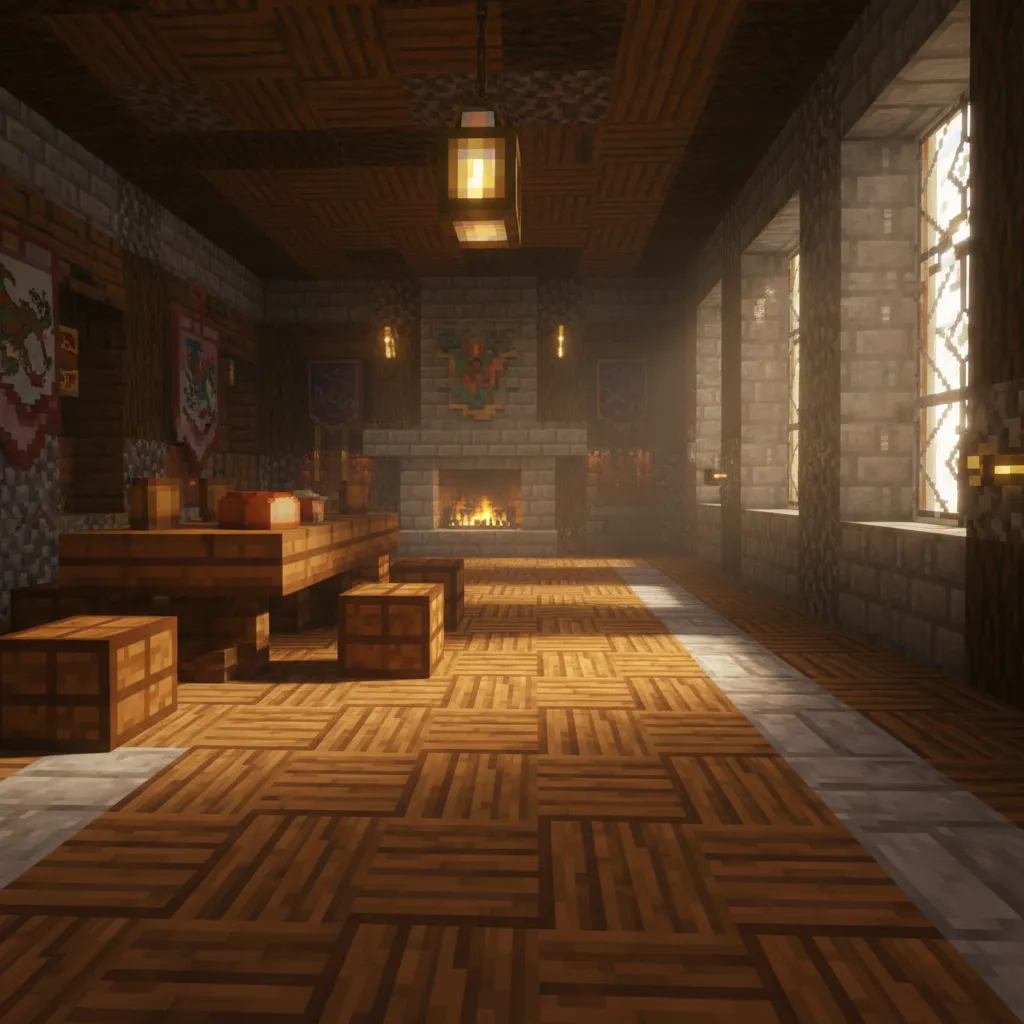
Medieval Spruce and Stone Brick Weave: 10×10 Blueprint Schematics
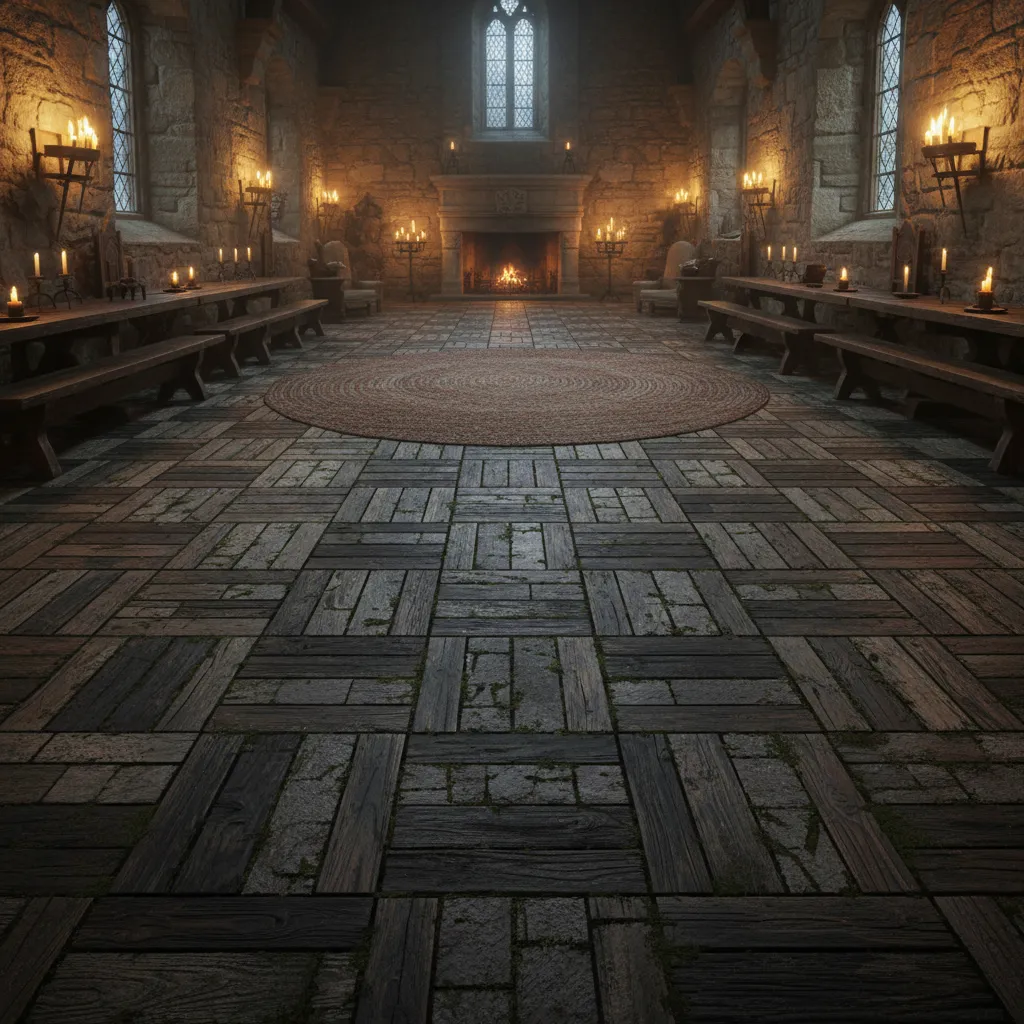
Combining dark spruce planks with stone bricks establishes a robust foundation. This weave pattern offers a historical palette that feels both sturdy and inviting.
Mastering the Weave Technique
The 10×10 grid allows for a symmetrical layout. By alternating these materials, you create a focal point that guides the spatial flow of the room.
Spruce provides a deep, organic texture. Stone bricks add a clean finish. Together, they create a hygge atmosphere ideal for large halls or cozy kitchens.
I always look for the tension in a room. Using wood and stone together creates that perfect balance of warmth and strength.
Nate Berkus, Nate Berkus Interior Design
This design is highly functional. The durability of stone near entrances prevents wear. The warmth of wood in central areas makes the space feel cozy.
| Material | Visual Texture | Atmosphere |
|---|---|---|
| Spruce Wood | Deep, grainy, raw | Warm and cozy |
| Stone Bricks | Smooth, structured | Grounded and strong |
For those building cabins and cottages, this floor is essential. It mirrors the natural landscape outside your build.
A floor is the soul of a room, where stone’s strength meets wood’s warmth.
You can further elevate this look with vintage living room decor. Brass lanterns and linen rugs enhance the medieval charm beautifully.
Artisan Build Hacks
- Incorporate mossy or cracked stone bricks sparingly near doorways to add a sense of weathered history and visual age to your build.
- Use dark oak or spruce trapdoors as wall trim at the floor’s edge to seamlessly transition between the heavy stone weave and vertical surfaces.
- Conceal lighting sources beneath spruce-colored carpets to maintain a warm, torch-free glow that emphasizes the natural grain of the wood.
Rustic Dark Oak and Cobblestone Checkerboard: 15×15 Resource Calculators
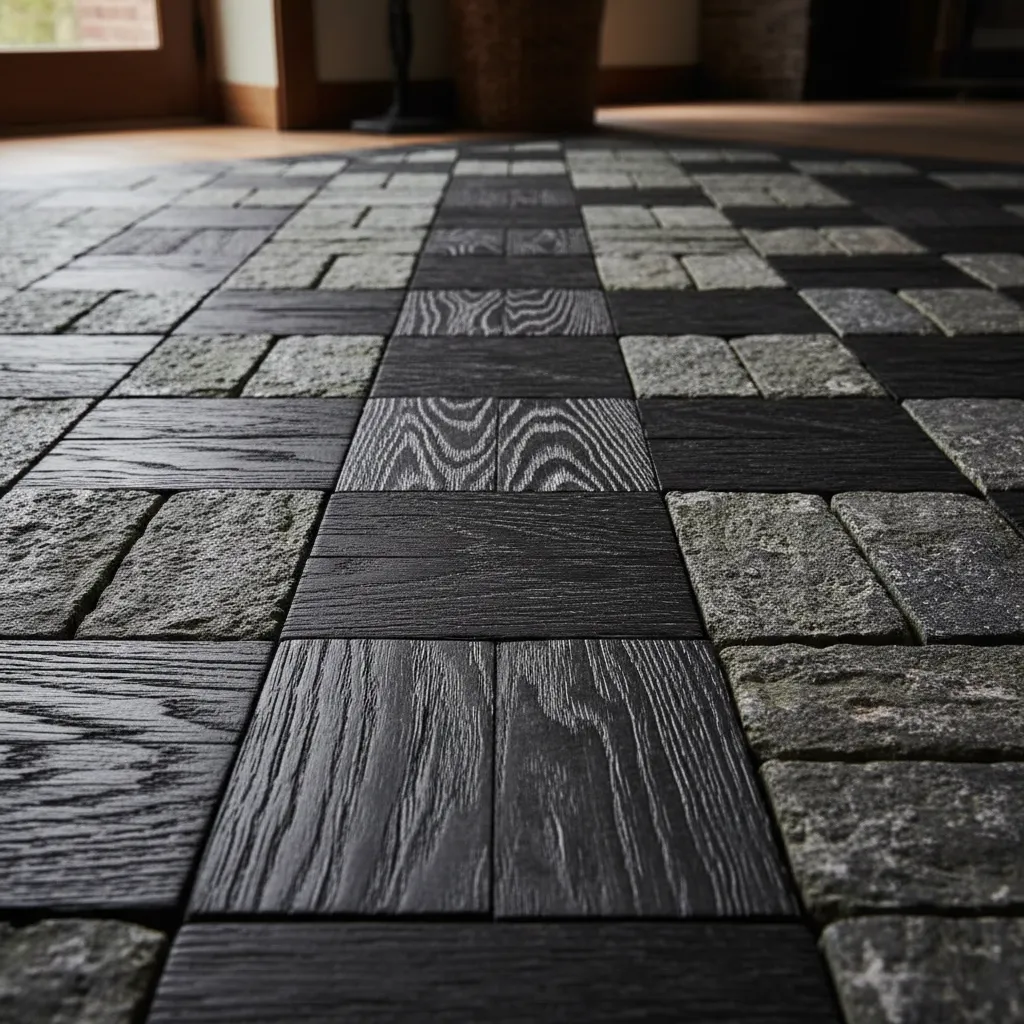
This rustic pairing creates a cozy yet resilient foundation. Dark oak offers a velvet-like depth. Cobblestone provides a raw, grounded feel.
Dark oak provides warmth while cobblestone adds raw strength. This balance is ideal for cabins and cottages.
Visual Contrast and Spatial Flow
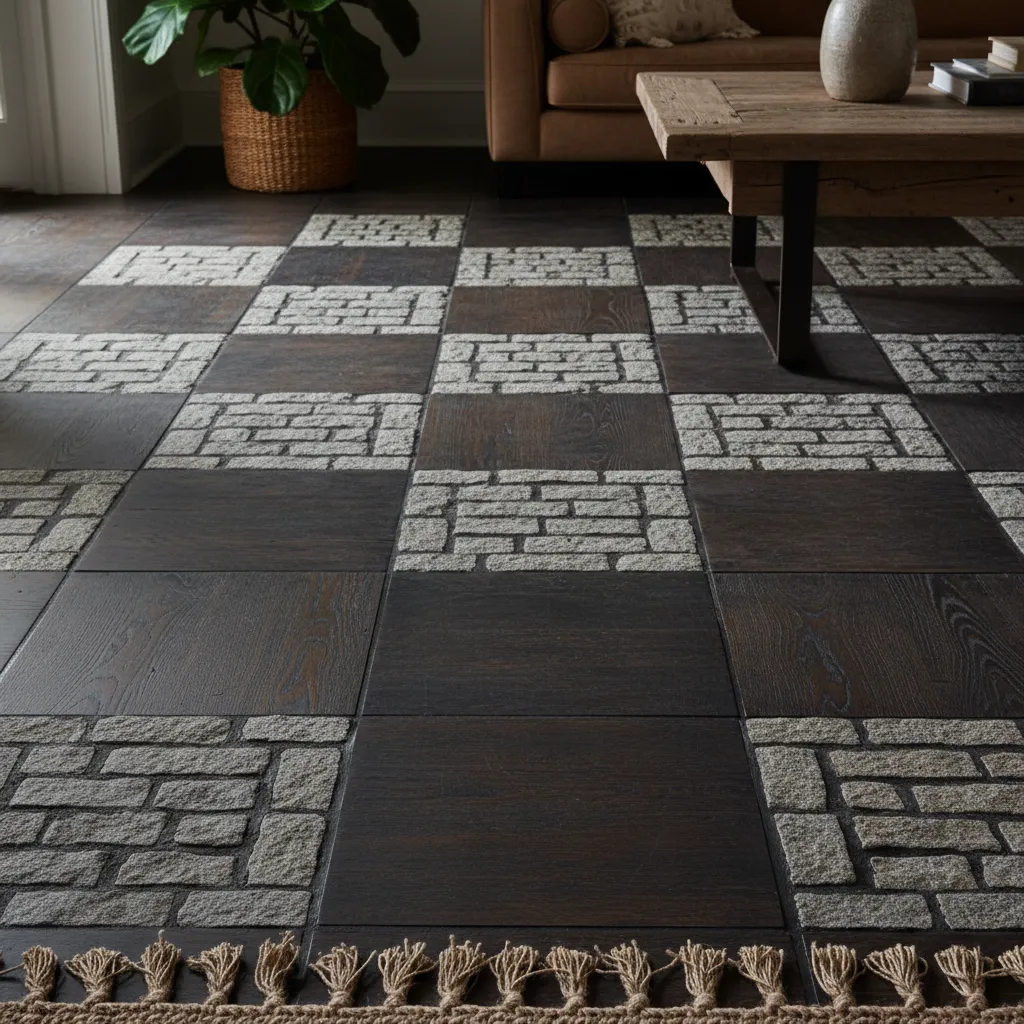
A checkerboard pattern breaks up the monotony of large spaces. It creates a rhythmic movement across the floor. The organic wood tones soften the cold stone.
The contrast defines the spatial flow of a large room. It guides the eye across the floor. This layout works beautifully in a farmhouse living room.
Contrast is the soul of a rustic room. Wood brings the heart, and stone brings the history.
Calculating Your 15×15 Grid
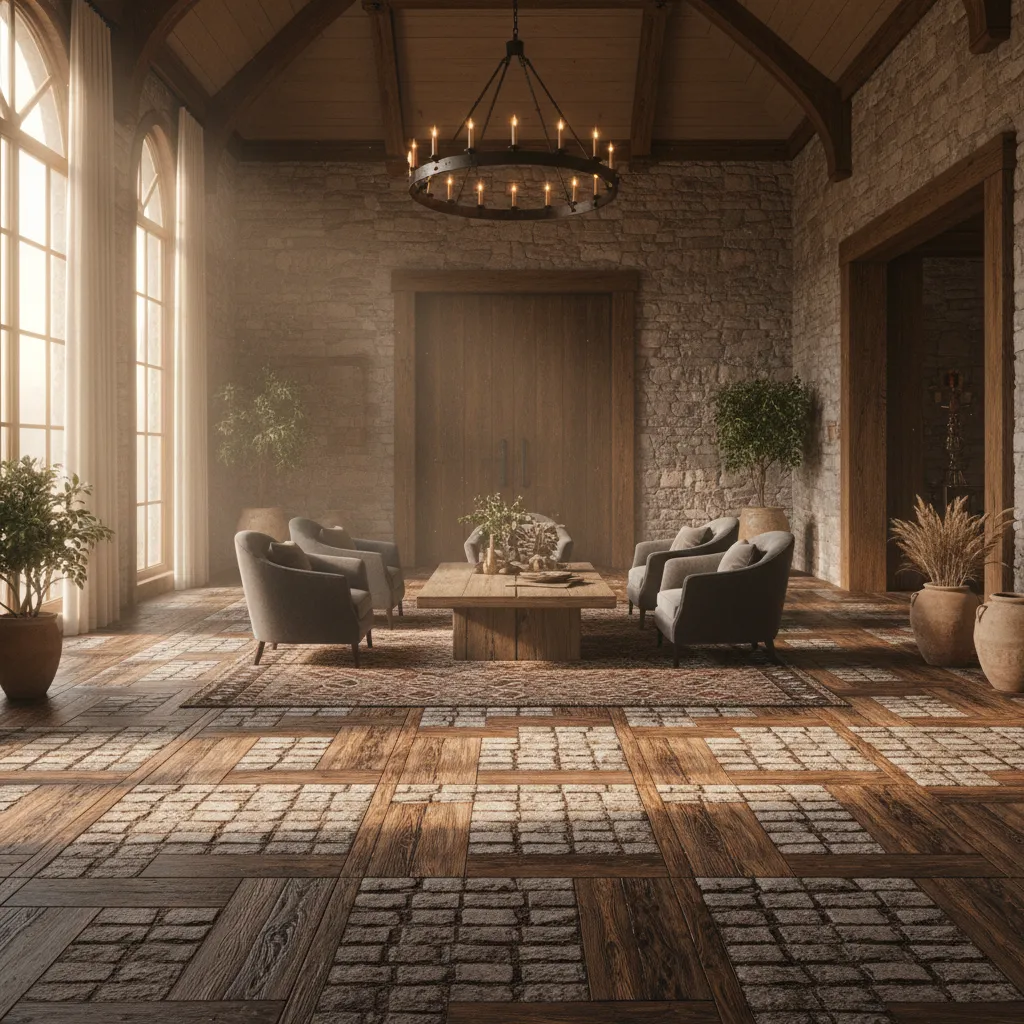
When building Minecraft floor designs wood and stone remain the most reliable materials. They are easy to source and look professional.
A 15×15 grid covers 225 square blocks. Calculating materials ensures a smooth build. No more mid-construction runs for more logs.
| Material | Quantity (15×15) | Atmosphere |
|---|---|---|
| Dark Oak Planks | 113 Blocks | Sophisticated, Warm |
| Cobblestone | 112 Blocks | Rugged, Textured |
Stone and wood are the ultimate pairing for a home that feels both grounded and warm.
Joanna Gaines, Magnolia
For the best results, use ambient lighting to highlight the textures. Lanterns or recessed lights make the wood grain glow against the stone.
Master Crafter’s Corner
- Elevate the texture by swapping every third cobblestone block with mossy cobblestone or andesite for a weathered, historic aesthetic.
- Frame your 15×15 grid with a border of dark oak logs to define the room’s edges and create a professional finish.
- Hide light sources like glowstone or torches beneath the dark oak squares topped with brown carpet to keep your floor illuminated without visible clutter.
Modern Oak and Smooth Stone Concentric Borders: Applying Wood-Stone Contrast Theory
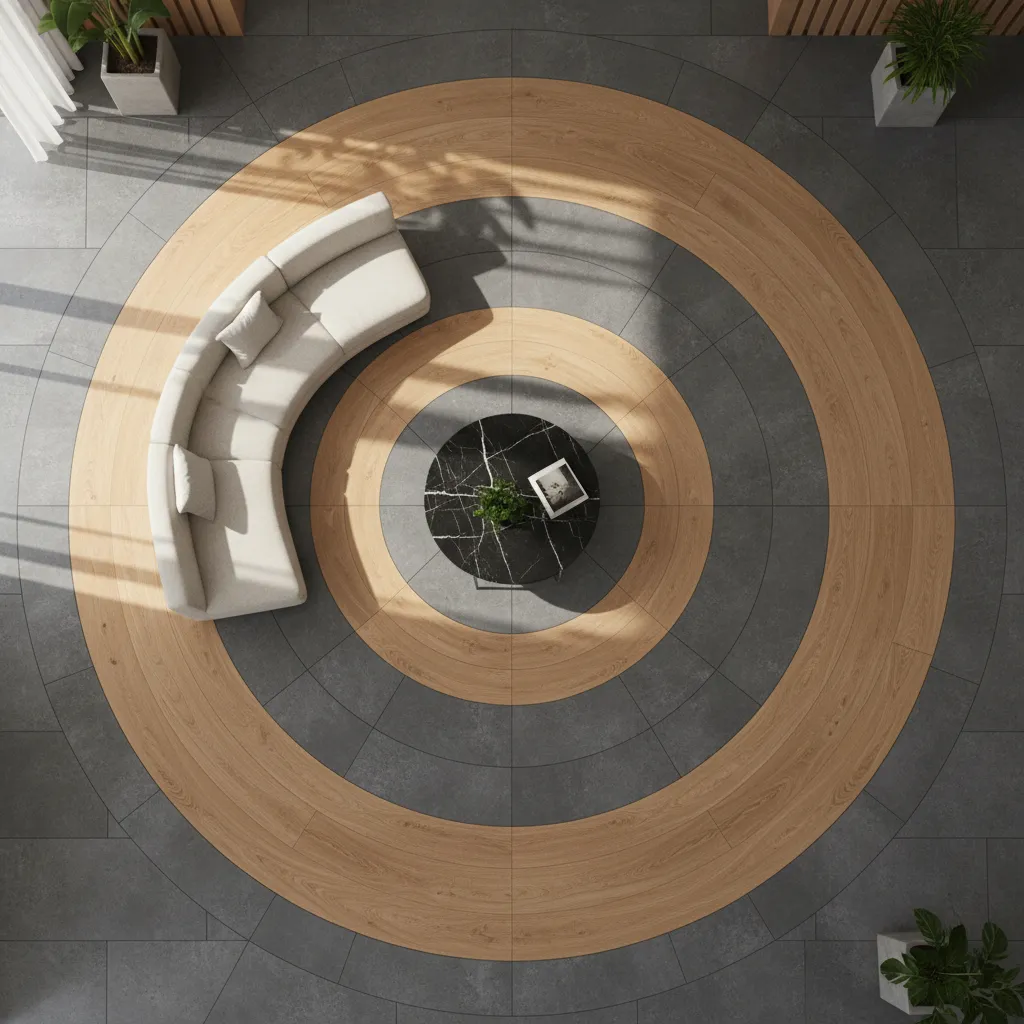
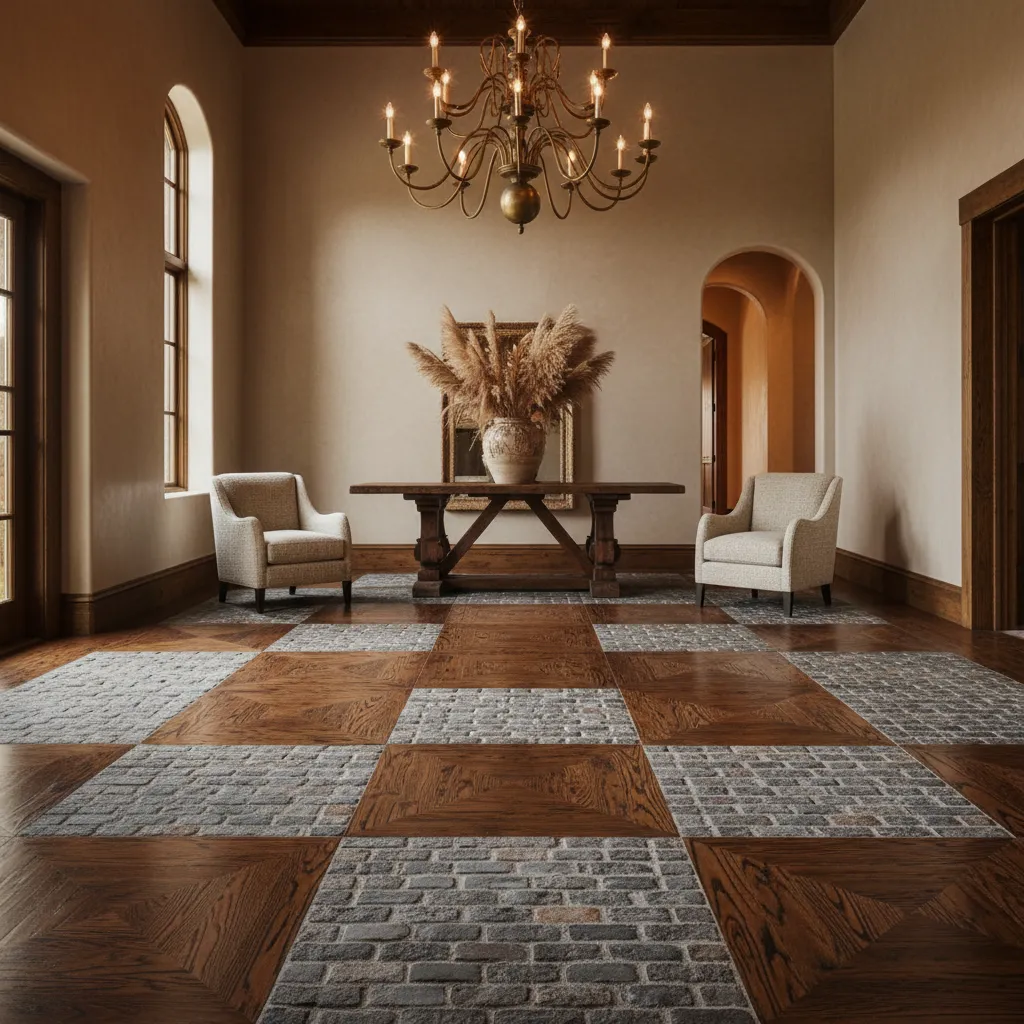
The palette combines the honey tones of oak with the cool grays of smooth stone. This creates a balanced, modern aesthetic in any build.
Contrast theory suggests that hard surfaces like stone need the soft finish of wood. This keeps a room from feeling too sterile or cold.
Design is the art of balancing organic warmth with industrial precision.
Building the Border Layers
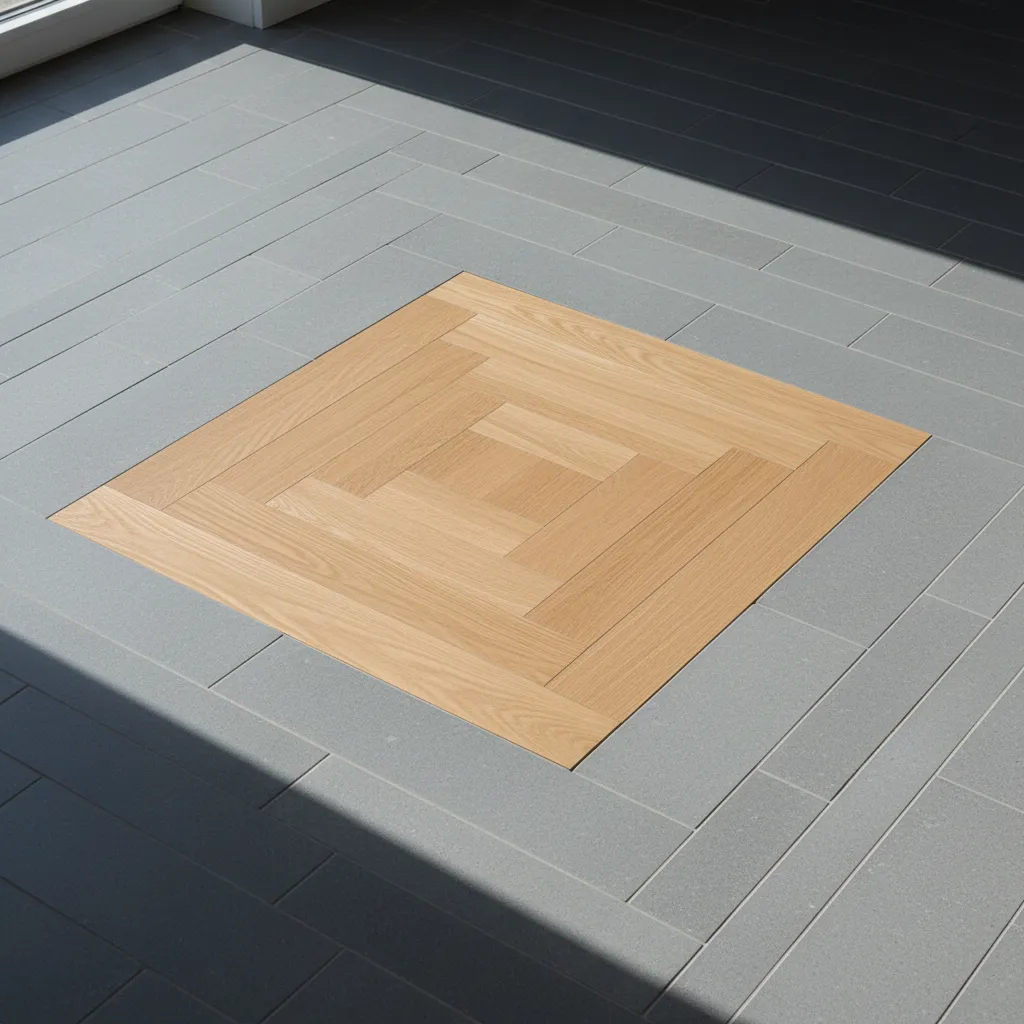
Start with an outer ring of oak planks to frame the room. This organic border acts as a warm transition between the walls and the floor center.
Next, place an inner ring of smooth stone. The sleek, flat finish of the stone adds a touch of minimalism that highlights the focal point.
These textures work together to create a sophisticated atmosphere. It is a simple way to elevate dark wood bedroom ideas with lighter accents.
- Visual Depth: Layering different materials makes the floor look three-dimensional.
- Durability: Stone is ideal for high-traffic areas in the center of a room.
- Style: The combination fits both mid-century and hygge-inspired designs.
Lighting and Functional Layout
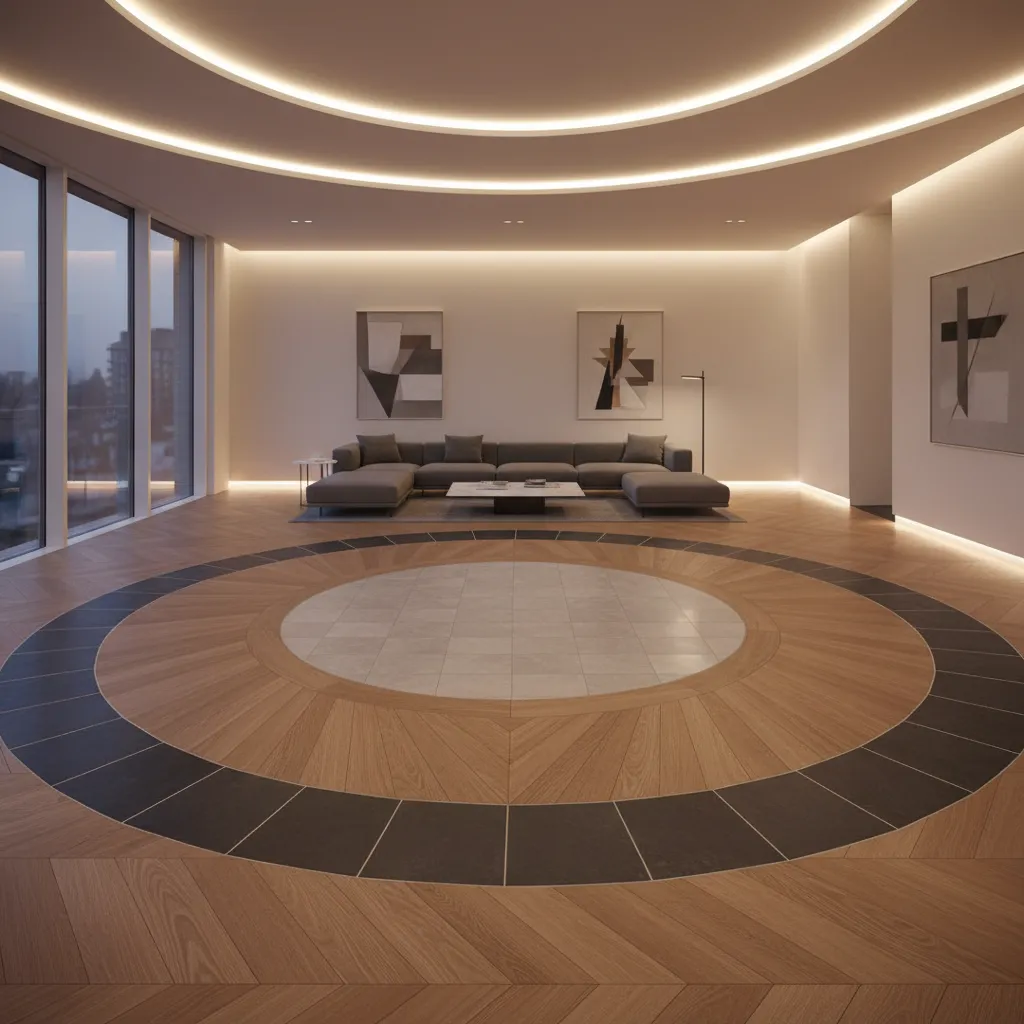
Concentric borders improve spatial flow by naturally centering furniture. It defines the layout without the need for bulky walls or partitions.
These modern house floor plans thrive on such contrasts. It makes simple, open spaces look intentionally designed and high-end.
Warm ambient lighting is crucial for this look. It reflects softly off the oak grain while creating sharp, clean lines on the stone surface.
Using natural materials like wood and stone together creates a sense of harmony. It grounds the space while adding visual interest.
Bobby Berk, Interior Designer
Consider placing a statement piece, such as a brass table, at the very center. The metal finish will pop against the cool stone and warm wood rings.
The Contrast Playbook
- Incorporate a slim metal inlay, such as brushed brass or matte black, between the oak and stone layers to add a high-end, jewelry-like finish to your flooring.
- Position your primary light source directly over the stone center to accentuate its sleek texture and create a dramatic visual anchor.
- Use a matte sealant on both materials to maintain a uniform sheen level, ensuring the contrast comes from the texture and color rather than mismatched glints.
Birch and Polished Andesite Geometric Patterns: Downloadable Layout Grids
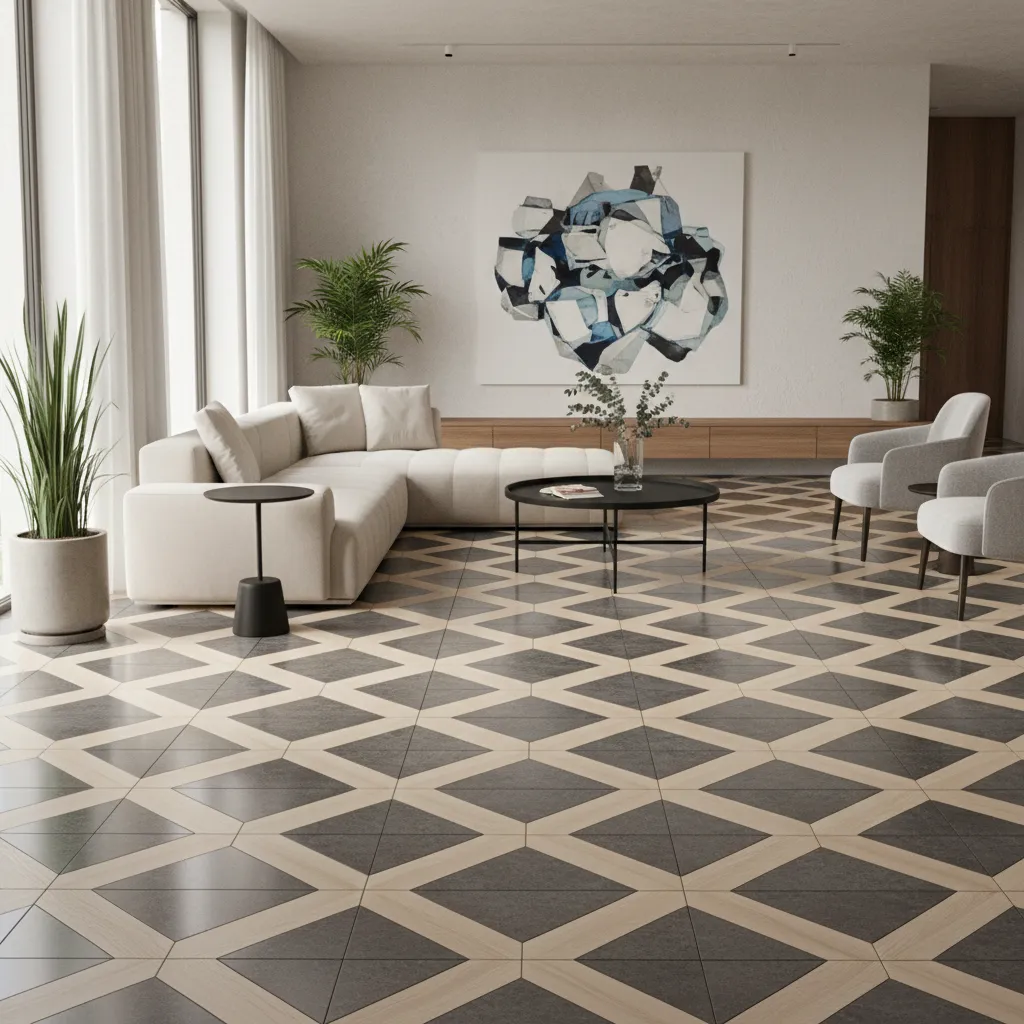
Birch wood offers a pale, creamy finish. It provides a soft, organic feel to any room. This makes it an ideal choice for bright floors.
Polished andesite adds a sleek, gray contrast. Its smooth surface reflects light beautifully. This stone provides a sturdy, clean aesthetic.
Balance the cold touch of stone with the living warmth of light wood to create a space that breathes.
Balancing Tones and Textures
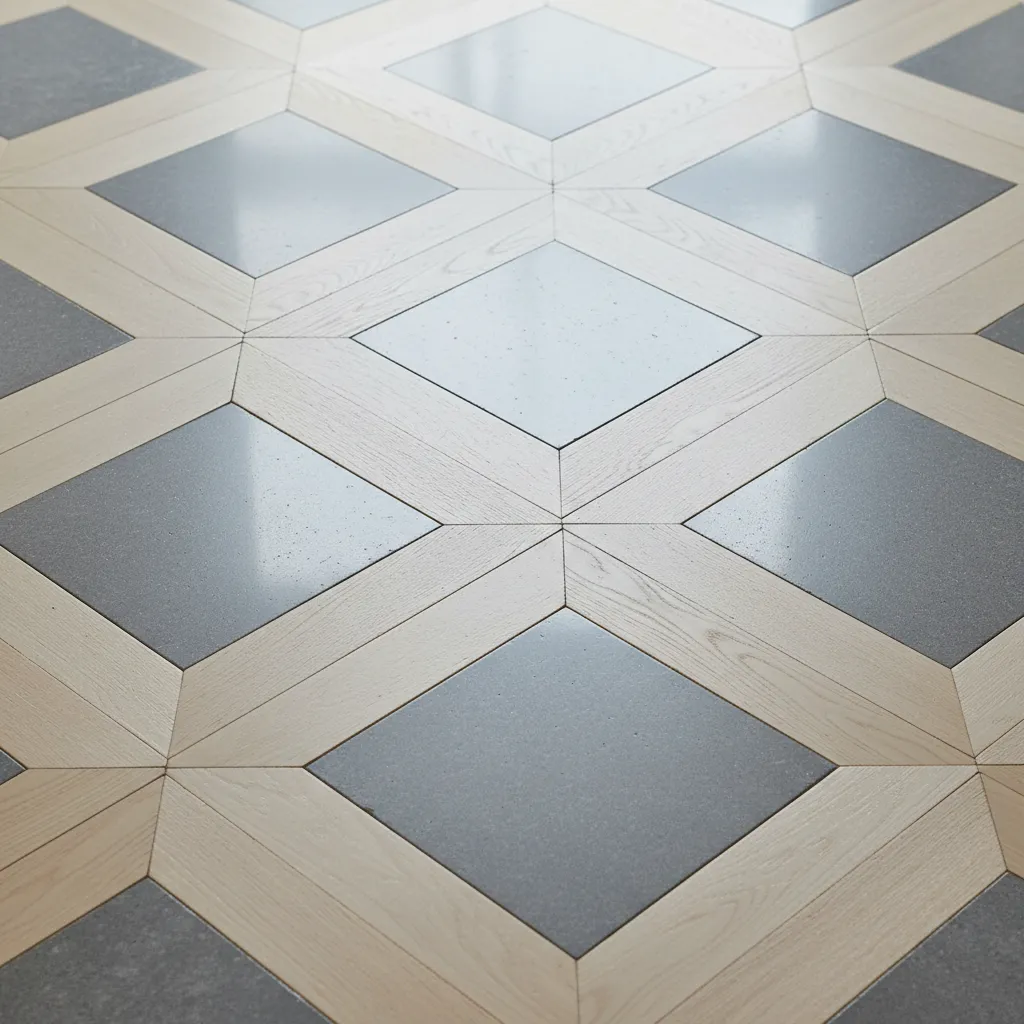
Combining these materials creates a high-end look. The spatial flow remains open and bright. It works best in open-concept layouts.
When planning your build, consider using 15 modern house floor plans for stylish living to guide your layout.
The mix of raw and refined materials creates a space that is both sophisticated and soulful.
Kelly Wearstler, Architectural Digest
Grid Layouts for Spatial Flow
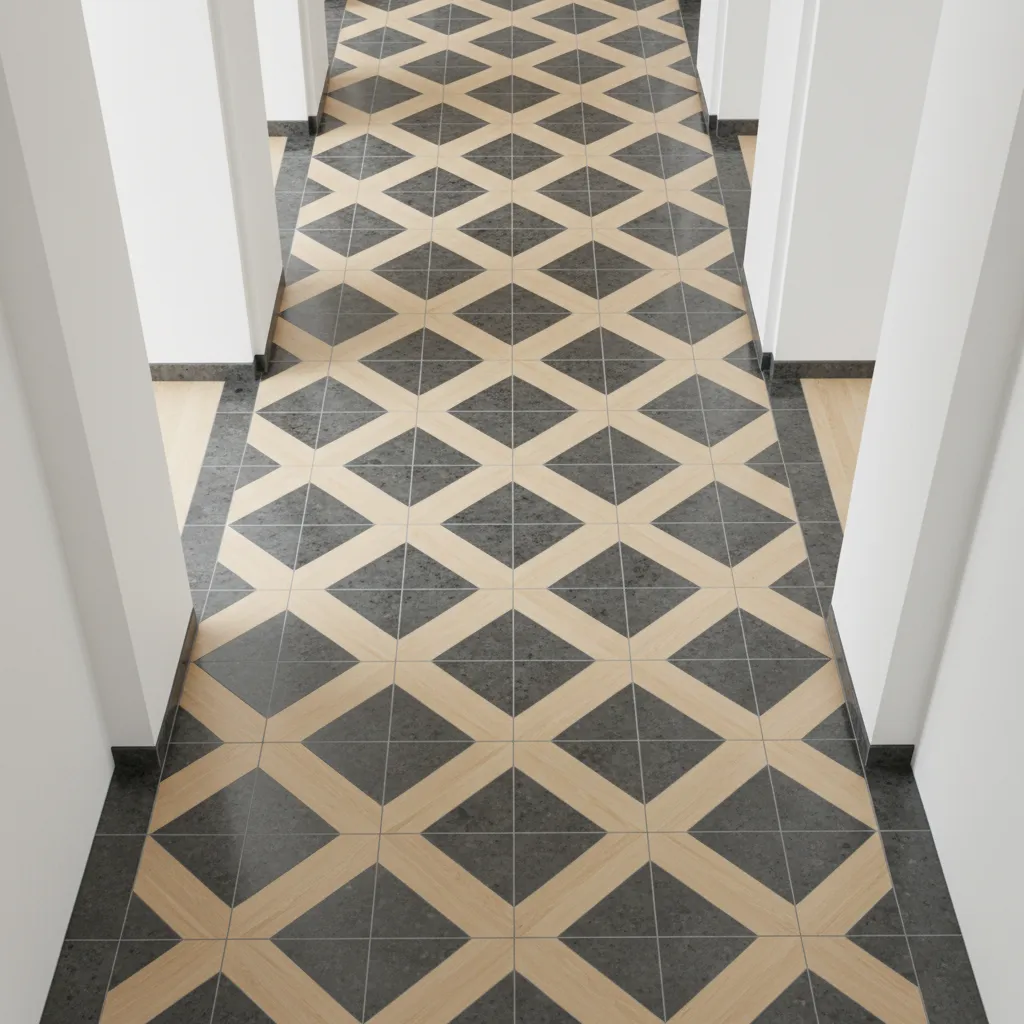
Geometric grids help define specific areas. Use andesite to frame birch planks. This creates a clear focal point in the center of the room.
These intricate patterns often draw inspiration from Miami architecture and Art Deco styles for a classic look.
| Design Pattern | Visual Effect | Ideal Room |
|---|---|---|
| Inset Border | Sophisticated | Modern Hallway |
| Diagonal Grid | Dynamic | Open Kitchen |
| Checkerboard | Classic | Large Entryway |
Layout grids ensure your patterns stay symmetrical. Start from the center and work outward. This prevents awkward cuts at the walls.
Polished stone is highly durable for high-traffic paths. Birch wood adds a cozy touch near seating areas. This improves both look and utility.
Layout Masterclass
- Always begin your pattern installation from the center point of the room to maintain perfect symmetry and prevent uneven or narrow cuts at the edges.
- Prioritize polished andesite for high-traffic corridors to leverage its durability, while keeping birch accents near seating zones to maximize visual warmth.
- Install slim brass or matte black transition strips between the two materials to create a defined, high-end border that accentuates the geometric grid.
Stripped Spruce and Deepslate Tile Inlays: High-Density Visual Textures
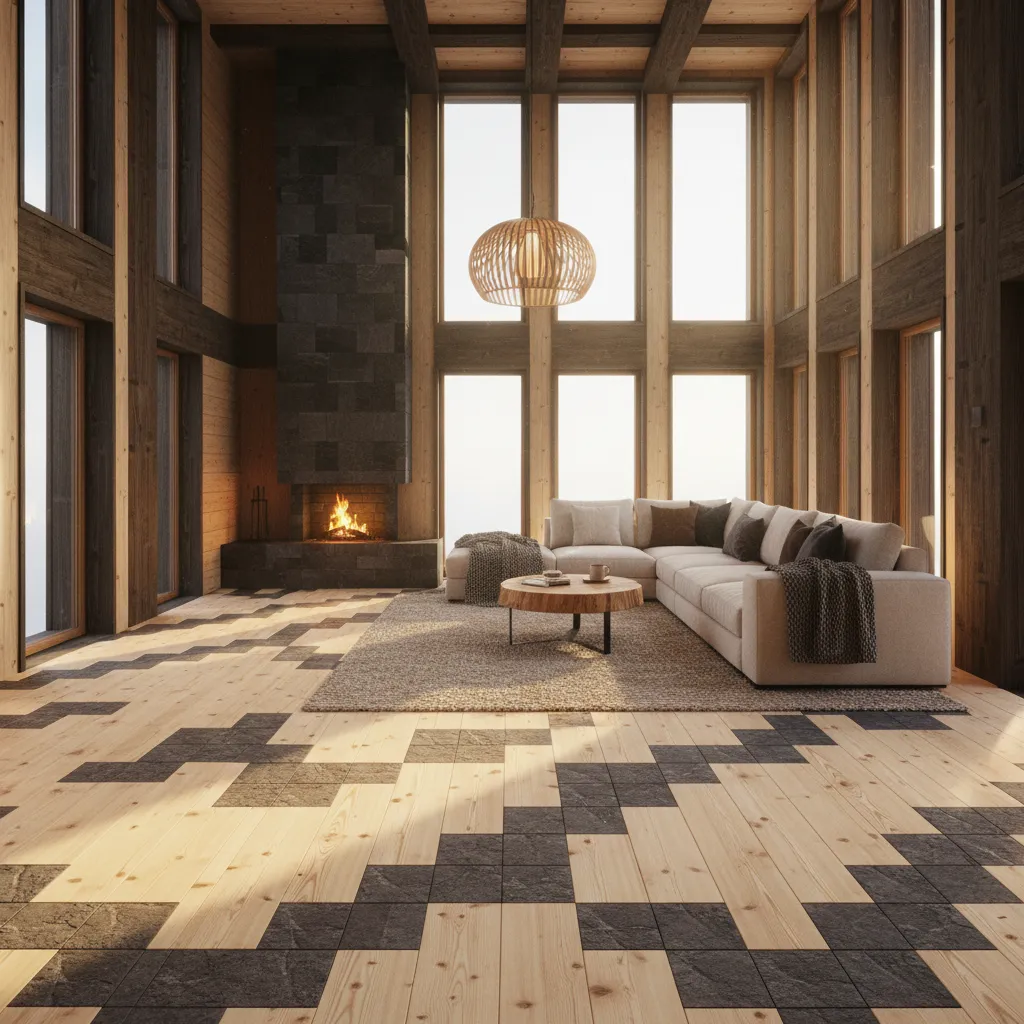
Stripped spruce planks offer a creamy, pale texture that mimics the look of raw linen. It creates an airy feel in small, modern spaces.
By contrast, deepslate tile inlays provide a heavy, dark anchor. This duo balances light and shadow for a moody, curated finish in any room.
Using these materials improves the spatial flow of your interior. The stone tiles are durable, making them perfect for high-traffic entryways.
Combining different materials such as wood and stone adds layers of visual interest and tactile depth to a home.
Shea McGee, Studio McGee Design Blog
Balancing Light and Texture
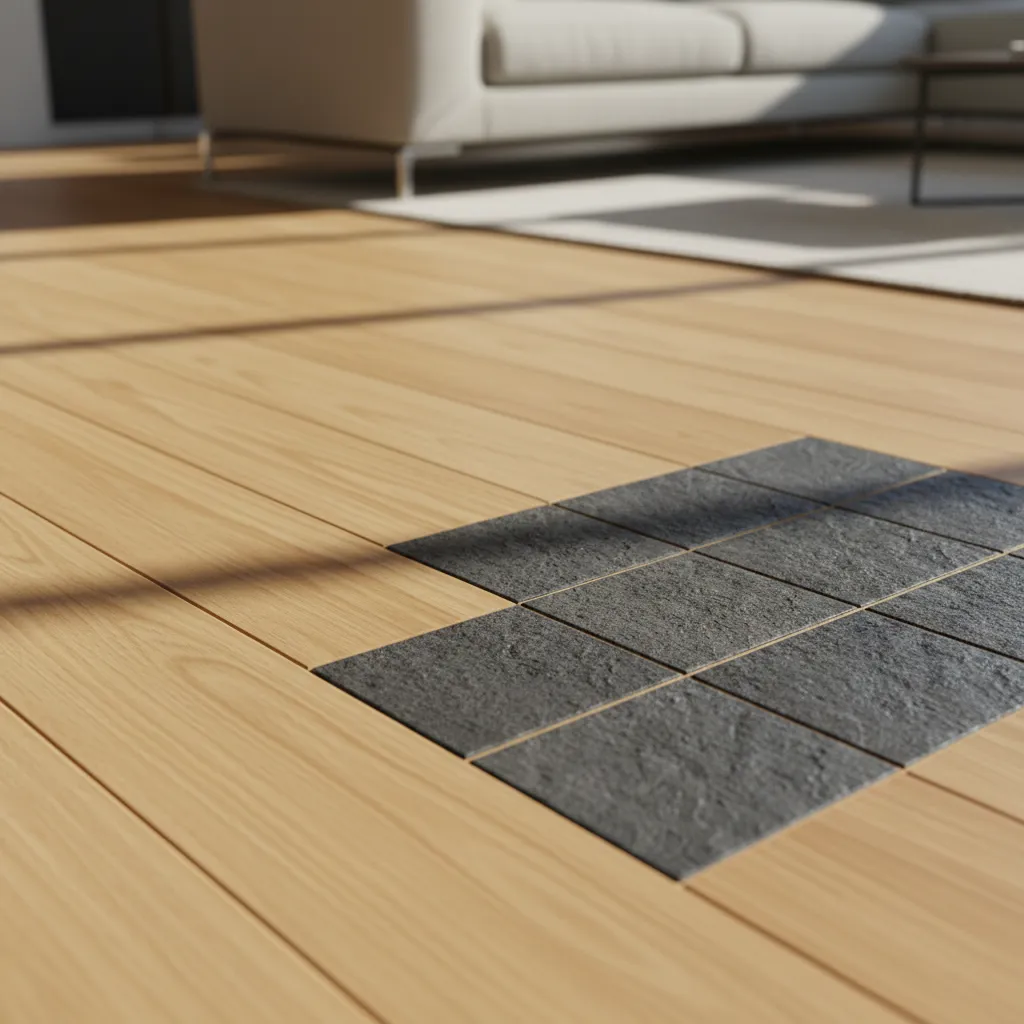
Natural light reflects beautifully off the spruce surface. This brightens the room and highlights the subtle, organic grain of the wood planks.
The matte finish of the deepslate absorbs light, creating a sense of depth. This interplay adds a sophisticated layer to your home aesthetic.
The raw wood texture of the spruce feels warm underfoot. It contrasts perfectly with the cool, smooth touch of the deepslate stone tiles.
Design is the art of balancing the warmth of nature with the cool precision of stone.
Mastering the Inlay Technique
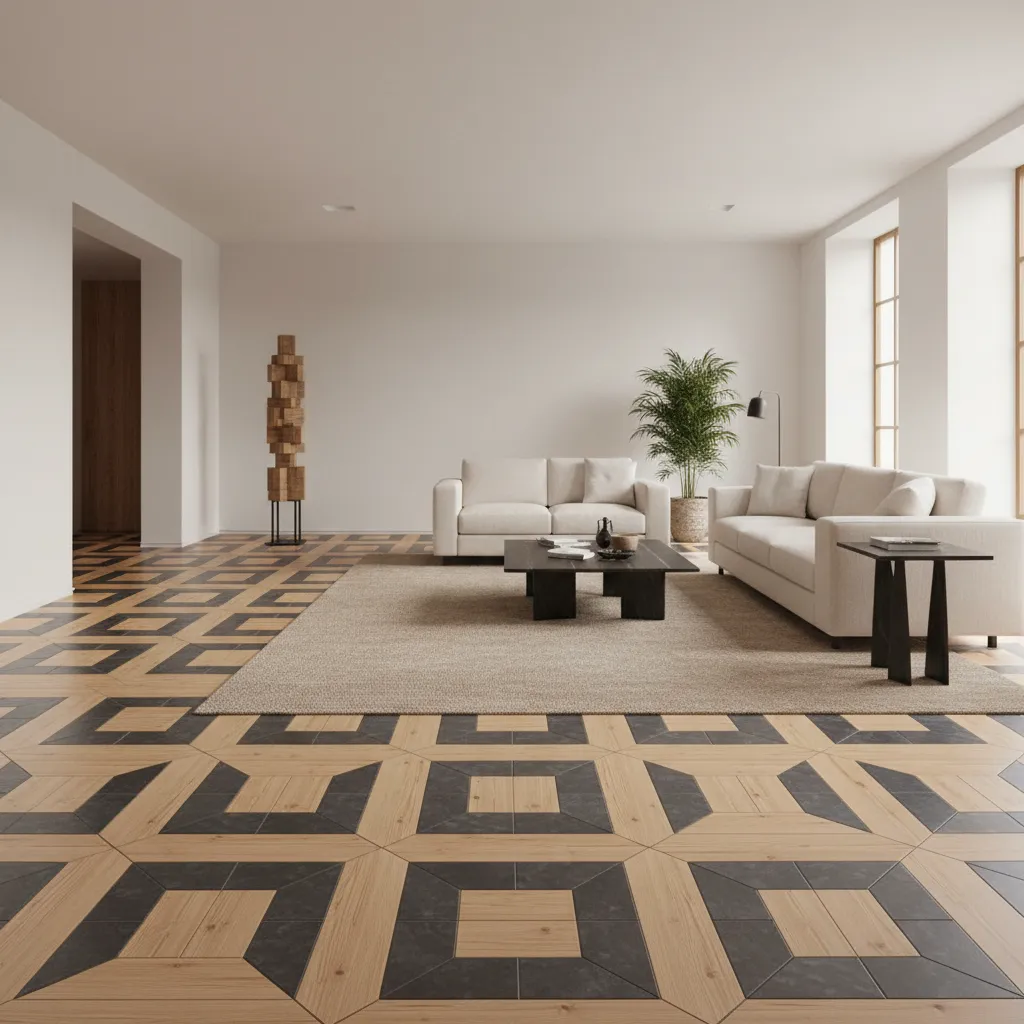
Inlays are perfect for defining specific functional zones. You can use deepslate to create a visual rug under a heavy dining table.
This approach is common in mountain dream homes to separate open-plan areas. It provides structure without the need for walls.
If you prefer a moodier aesthetic, explore these dark wood bedroom ideas for further styling tips and curated inspiration.
Visual Cue:
| Material | Aesthetic Vibe | Best Room Use |
|---|---|---|
| Stripped Spruce | Warm and Minimalist | Living Rooms |
| Deepslate Tiles | Industrial and Moody | Entryways |
| Mixed Inlay | Curated and Modern | Dining Areas |
- Use spruce for the main floor to maximize ambient lighting.
- Place deepslate inlays near fireplaces to handle heat and soot.
- Maintain a consistent spatial flow by aligning tile edges.
- Add velvet furniture to contrast with the hard stone textures.
Designer’s Texture Secret
- Use transition strips or a precise grout line to ensure a flush surface between the wood and stone for a seamless, tripping-free flow.
- Align spruce planks parallel to your primary natural light source to emphasize the organic wood grain and maximize the room’s brightening effect.
- Apply a high-quality matte sealant to your deepslate inlays to protect against moisture in entryways without losing the sophisticated, light-absorbing finish.
Founding Your Digital Masterpiece
Mixing wood and stone creates a timeless aesthetic for any build. These materials offer the perfect balance of organic warmth and structural strength for your virtual home.
Whether you choose a medieval weave or a rustic checkerboard, the right floor defines your space. It sets the tone for your adventures and provides a cozy retreat from the wild.
Experiment with textures and patterns to find what resonates. Your Minecraft floors should be as unique as the structures they support. Happy building and designing!
Design Dilemmas Solved
Spruce wood is a top choice. Its dark, rich tones offer a sophisticated contrast to the clean lines of stone bricks, creating a classic medieval look.
Use a simple checkerboard or diagonal pattern. These designs guide the eye across the room, creating an illusion of more space and better flow.
Absolutely! Both materials are easy to gather early on. Using stone near fire sources or entrances adds durability and safety to your build.
Yes, but keep it balanced. Try adding polished andesite or dark oak accents to your main pattern to add depth without cluttering the visual field.
