
Table of Contents
- Establish the Base with Earth-Tone Paint and Warm Whites
- Layer High-Contrast Textures like Sheepskin, Leather, and Linen
- Balance Rustic Wood Accents with Sleek Modern Furniture Profiles
- Create Intimacy with Warm, Layered Lighting Fixtures
- Maximize Natural Light with Minimalist, Unadorned Window Treatments
- Your Private Alpine Sanctuary
- Design Dilemmas Solved
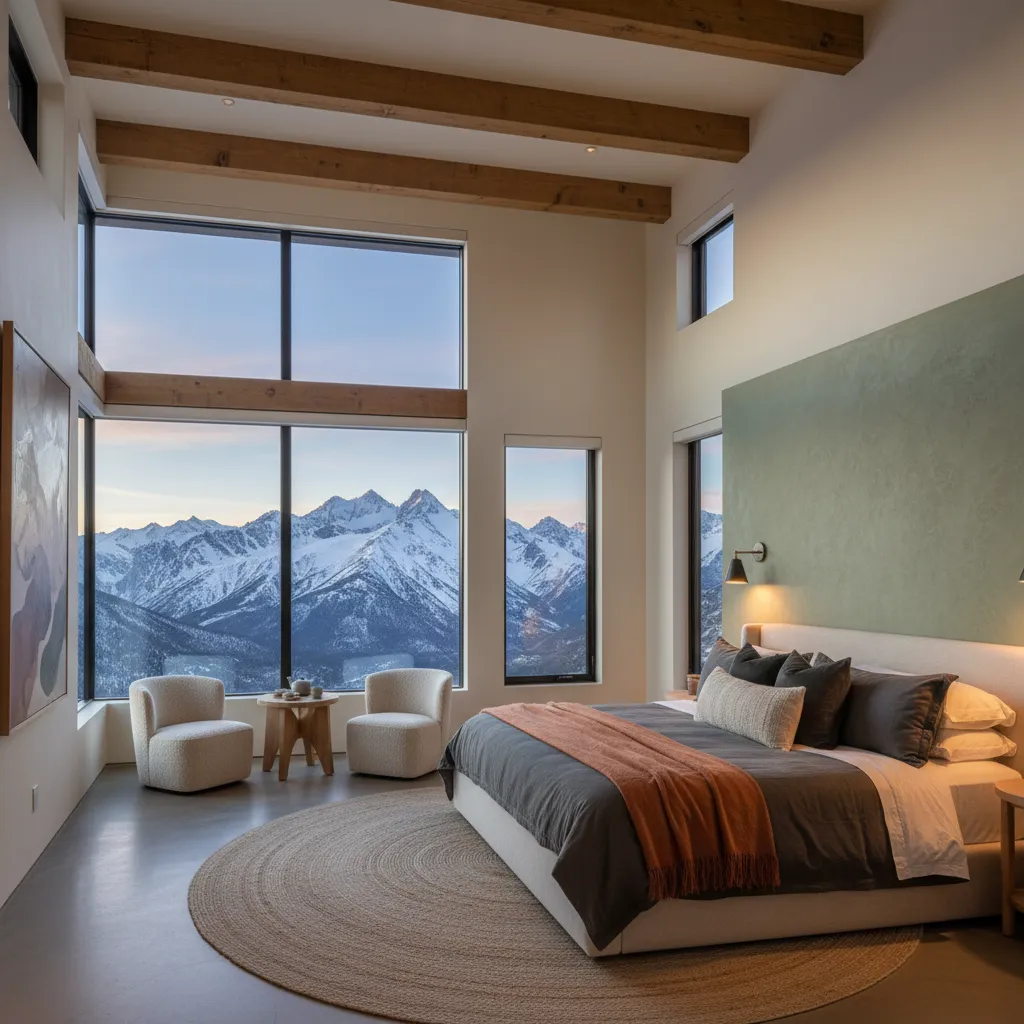
Modern mountain design blends the rugged beauty of the outdoors with the clean lines of contemporary styling.
Creating a bedroom that feels both elevated and inviting requires a thoughtful mix of textures, from plush wool rugs to reclaimed wood accents.
Whether you are starting from scratch or refreshing a rental, the goal is to cultivate a sanctuary that reflects the natural landscape.
Achieving this look does not require a massive budget or a professional contractor.
Focus on layering neutral tones with organic materials to bring warmth into the space without cluttering the visual field.
Simple changes, such as swapping out hardware or adding linen curtains, can instantly transform a basic room into a high-end retreat.
Functionality remains just as important as aesthetics in a mountain home.
Consider how natural light interacts with your furniture placement and choose pieces that serve multiple purposes.
By balancing professional design principles with practical DIY solutions, you can build a bedroom that feels as good as it looks.
Establish the Base with Earth-Tone Paint and Warm Whites
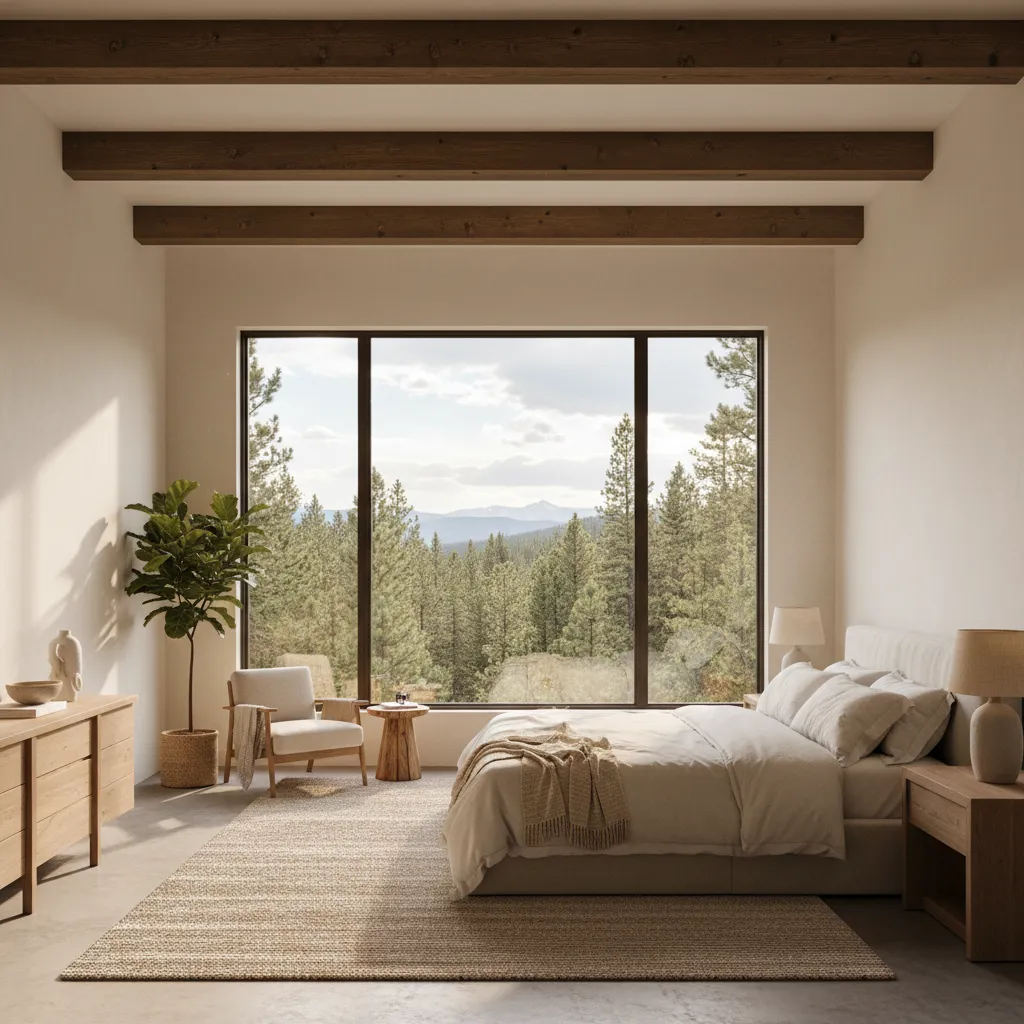
The foundation of any modern mountain interior lies in its color palette. Gone are the days of dark, cavernous rooms that feel heavy and enclosed.
Today, the aesthetic leans toward airy, breathable spaces that maximize natural light while retaining a cozy, grounded atmosphere.
To achieve this, you must start with the right backdrop. This usually means swapping stark, clinical whites for softer, creamier alternatives.
A sophisticated palette uses warm whites to reflect light, paired with deep earth tones to anchor the space. This balance creates a restful sanctuary.
Choosing the right hue is critical for creating a cozy winter bedroom look that transitions well into summer.
Palette Masterclass
- Always test your warm whites on both north- and south-facing walls, as mountain light shifts dramatically throughout the day and can make cream tones appear too yellow or unexpectedly cool.
- Opt for a matte or eggshell finish on earth-toned accent walls to absorb light rather than reflect it, creating a velvety, grounded feel that mimics natural stone and soil.
- Follow the 60-30-10 rule: use a soft white for 60% of the space, a grounding earth tone for 30%, and save deep charcoals or dark wood grains for the final 10% accent.
Selecting the Perfect Warm White
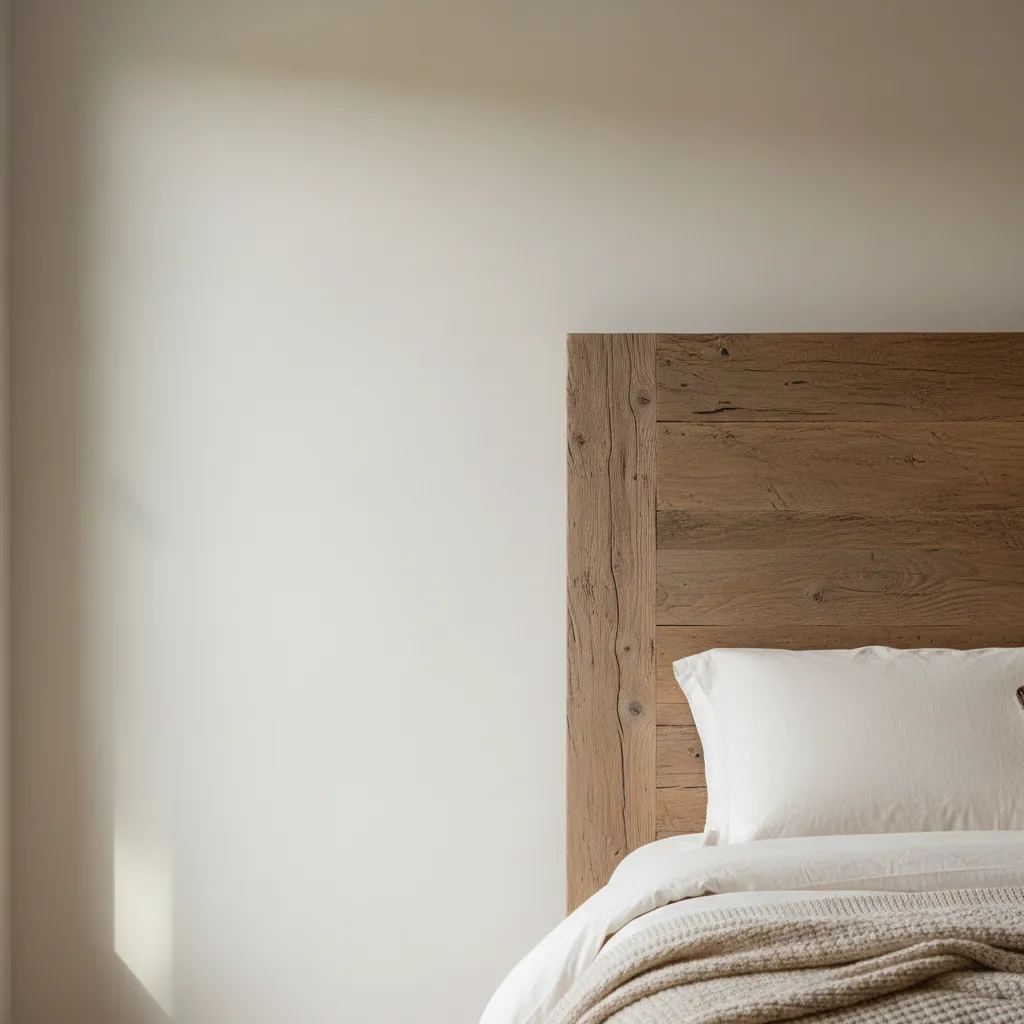
White paint is never just white. In a mountain home, you want shades that contain yellow, red, or brown undertones rather than blue or gray.
Cool whites can make a room feel sterile and chilly, especially when snow is falling outside. Warm whites imitate the glow of candlelight.
Look for colors like alabaster, heavy cream, or soft linen. These shades bridge the gap between bright modernism and rustic warmth.
Functionally, these tones are forgiving. They hide minor scuffs better than bright white and soften the harsh shadows cast by architectural beams.
If you are struggling to find the exact shade, check out this guide on 20 paint colors guaranteed to make your guests swoon for inspiration.
Nature is the ultimate designer; your walls should simply be the canvas that lets the view outside take center stage.
The Cozy Glow Secret
- Test your paint samples at dusk; warm whites can shift dramatically as the sun sets over the mountain peaks.
- Pair your choice with LED bulbs in the 2700K to 3000K range to maintain that candlelit vibe after the sun goes down.
- Paint a large swatch directly next to your natural wood trim to ensure the undertones harmonize rather than clash with the grain.
Layering in Earth Tones
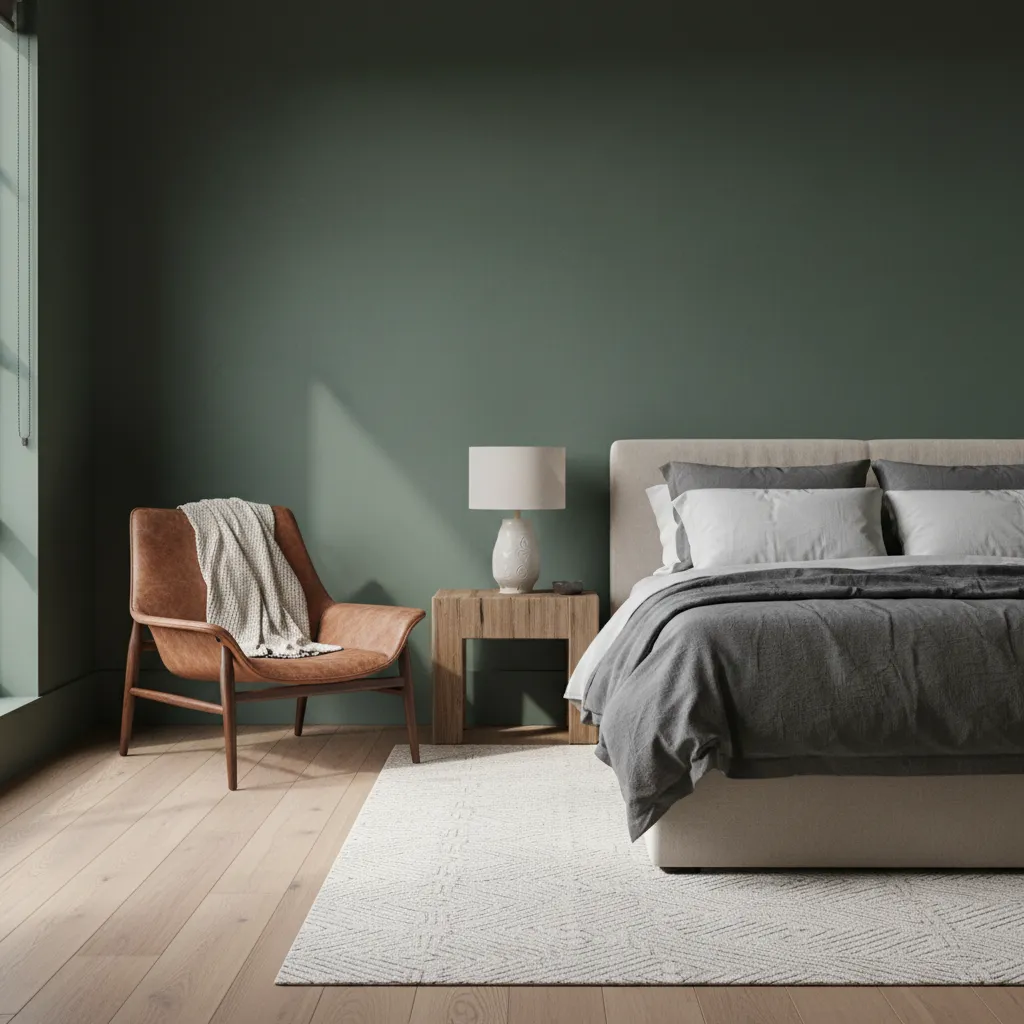
Once your base is set, introduce earth tones to add depth. These colors mimic the environment outside, blurring the lines between indoors and outdoors.
Sage green, burnt terracotta, and charcoal gray are excellent choices for accent walls or wainscoting.
These darker hues absorb light, creating a “cocooning” effect that is perfect for a sleeping space.
The texture of the paint matters here. A matte or eggshell finish feels organic and velvety, while high-gloss finishes can look too synthetic.
Use these colors strategically behind the bed to create a focal point without overwhelming the spatial flow of the room.
| Color Family | Best Application | Atmospheric Effect |
|---|---|---|
| Warm Whites (Cream, Alabaster) | Main Walls, Ceilings | Reflects light, expands space, feels airy but cozy. |
| Forest Greens (Sage, Pine) | Accent Walls, Cabinetry | Grounding, restorative, brings nature indoors. |
| Deep Minerals (Charcoal, Slate) | Trim, Doors, Bed Wall | Adds drama, modernizes rustic wood, creates depth. |
| Earthen Reds (Terracotta, Clay) | Textiles, Nooks | Adds physical warmth, energy, and vintage charm. |
Designer’s Earthy Edit
- Opt for matte or lime-wash finishes on earth-toned accent walls to enhance the organic feel and minimize artificial light reflection.
- To achieve a true cocooning effect, paint your trim and baseboards in the same charcoal or sage hue as the wall for a seamless, modern look.
- Introduce a ‘bridge texture’ like reclaimed wood or raw linen to help transition between contrasting tones like forest green and terracotta.
Testing Your Palette
Paint looks different in a mountain setting due to the unique quality of light. High-altitude sunlight can be intense and blue-toned.
Always test your paint swatches on different walls. Observe them in the morning sun and under artificial lighting at night.
A color that looks beige in the store might read as pink in your bedroom. Testing ensures the “earthy” vibe remains true to nature.
When choosing whites for a mountain home, I always lean towards creamy, limestone-like hues. They have a weight to them that stands up to heavy timber and stone, whereas a bright gallery white just falls flat.
Shea McGee, Studio McGee Design Guide
Checklist for Paint Selection
- Identify Undertones: Ensure your white paint has a warm base (yellow/brown) to counter cool outdoor light.
- Consider Material Contrast: Hold paint chips against your flooring and wood beams to check for clashing tones.
- Test the Finish: Opt for matte or flat enamel for walls to hide imperfections and enhance the rustic “plaster” look.
- Audit the Light: Watch how the color changes during the “golden hour” before sunset.
The Alpine Aesthetic Hack
- Paint large 2-foot by 2-foot sample boards instead of using small chips to truly see how the color interacts with massive timber beams and stone features.
- Test your swatches in north-facing rooms separately, as high-altitude shadows can turn even the warmest neutrals into cool, flat grays.
- View your paint samples directly against your actual wood flooring and stone masonry rather than white drywall to ensure undertones remain harmonious.
Layer High-Contrast Textures like Sheepskin, Leather, and Linen
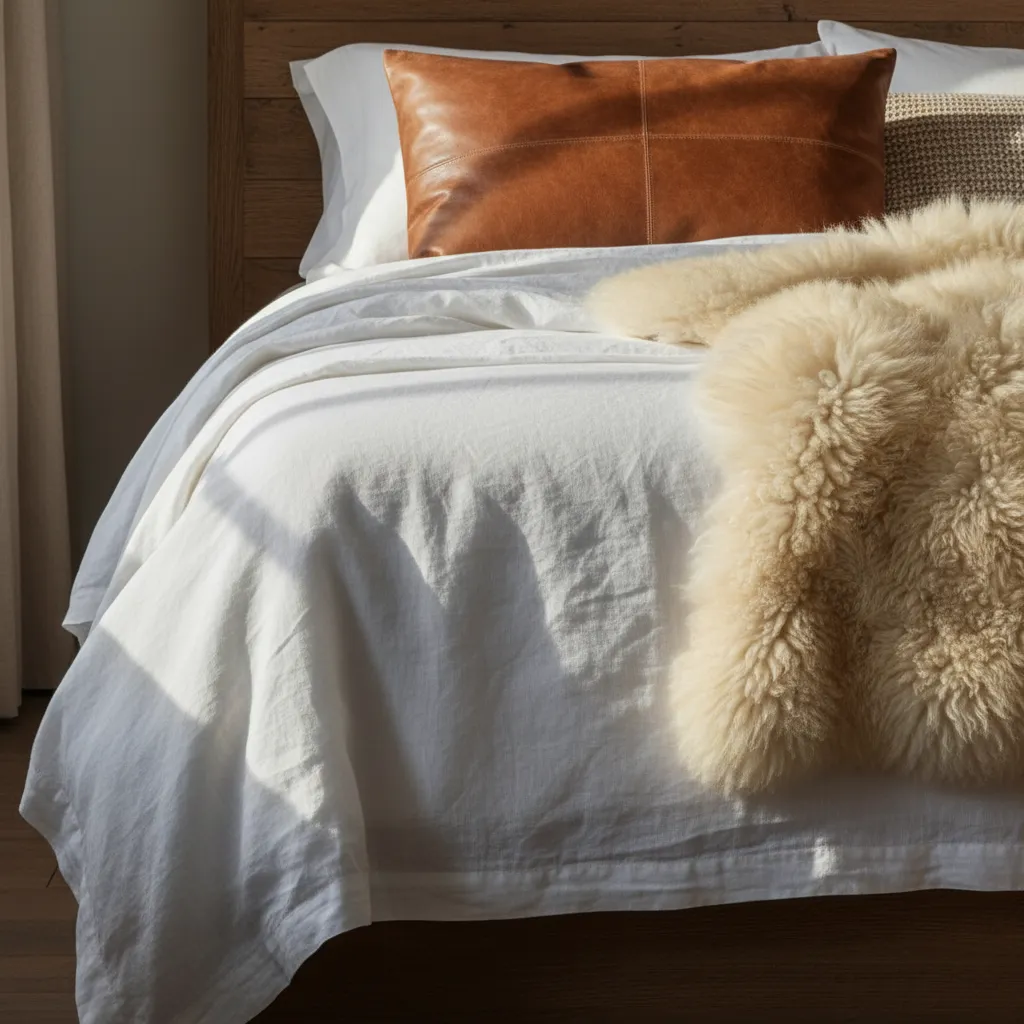
To master the modern mountain aesthetic, you must look beyond color. Texture is the primary tool for creating depth and interest in a neutral space.
In a room with minimal colors, the interplay of materials prevents the design from feeling flat. It creates a space that begs to be touched.
True luxury in a mountain home isn’t about gold accents; it is about the richness of the materials you touch every day.
The Texture Playbook
- Contrast is key: drape a plush sheepskin over a structured leather chair to soften the lines while adding immediate visual warmth.
- Use linen as your neutral anchor for bedding or upholstery to provide a crisp, matte backdrop that allows richer, heavier materials like hide or wool to pop.
- Balance your tactile elements by distributing them across different heights; pair a chunky knit rug on the floor with a smooth leather sofa and airy linen drapes.
The Foundation of Organic Linen
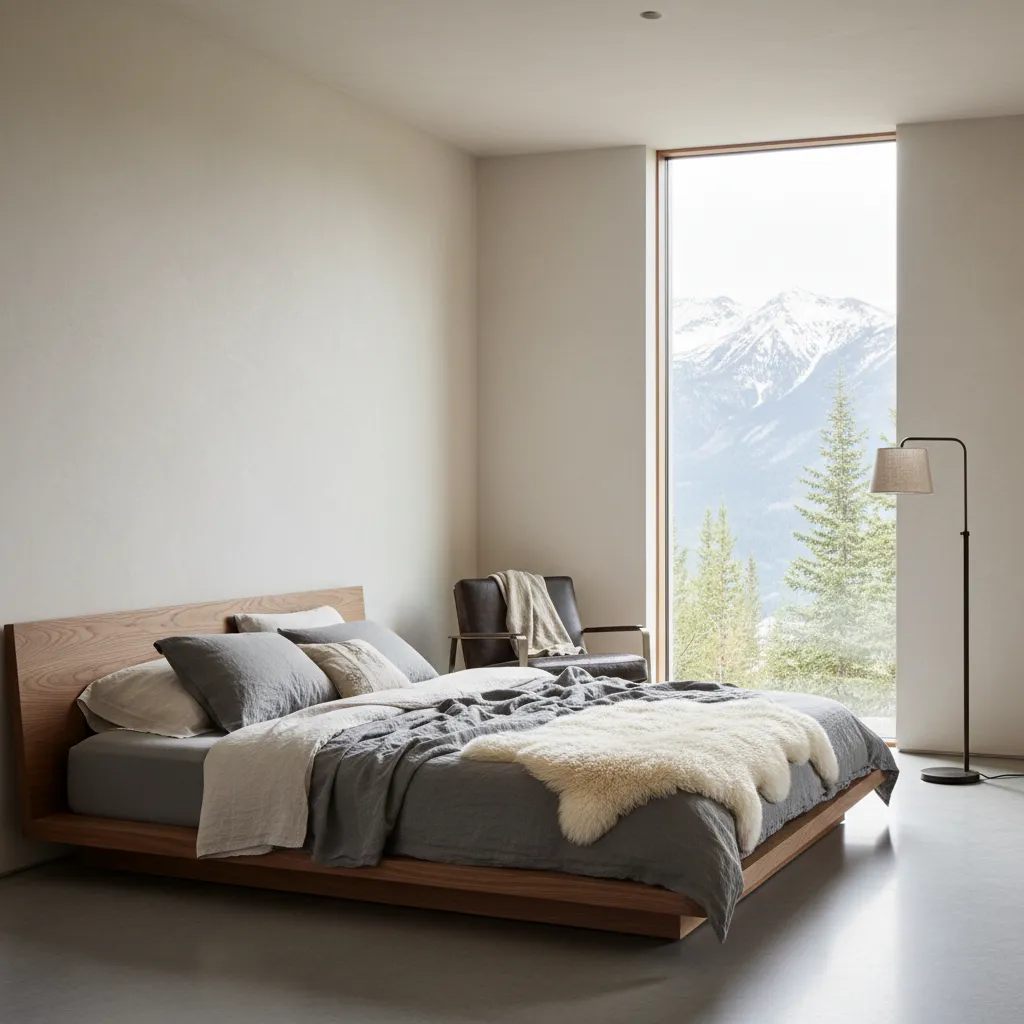
Start your design with high-quality linen bedding. This material offers a breathable and relaxed look that feels inherently organic.
Avoid pressing your sheets to perfection. The natural crinkles of washed linen add a visual softness that contrasts with architectural elements.
If you are looking for more ways to make your sleeping space inviting, explore our guide on how to create a cozy winter bedroom look.
The Linen Edit
- Tumble dry your linen on a low heat setting and remove while slightly damp to maintain its signature soft, rumpled texture.
- Layer different weights of linen, such as a heavy waffle-weave throw over crisp flax sheets, to create a sophisticated, tactile depth.
- Opt for a palette of soft neutrals like oatmeal or stone to lean into the organic aesthetic and allow the fabric’s natural weave to shine.
Anchoring with Leather Accents
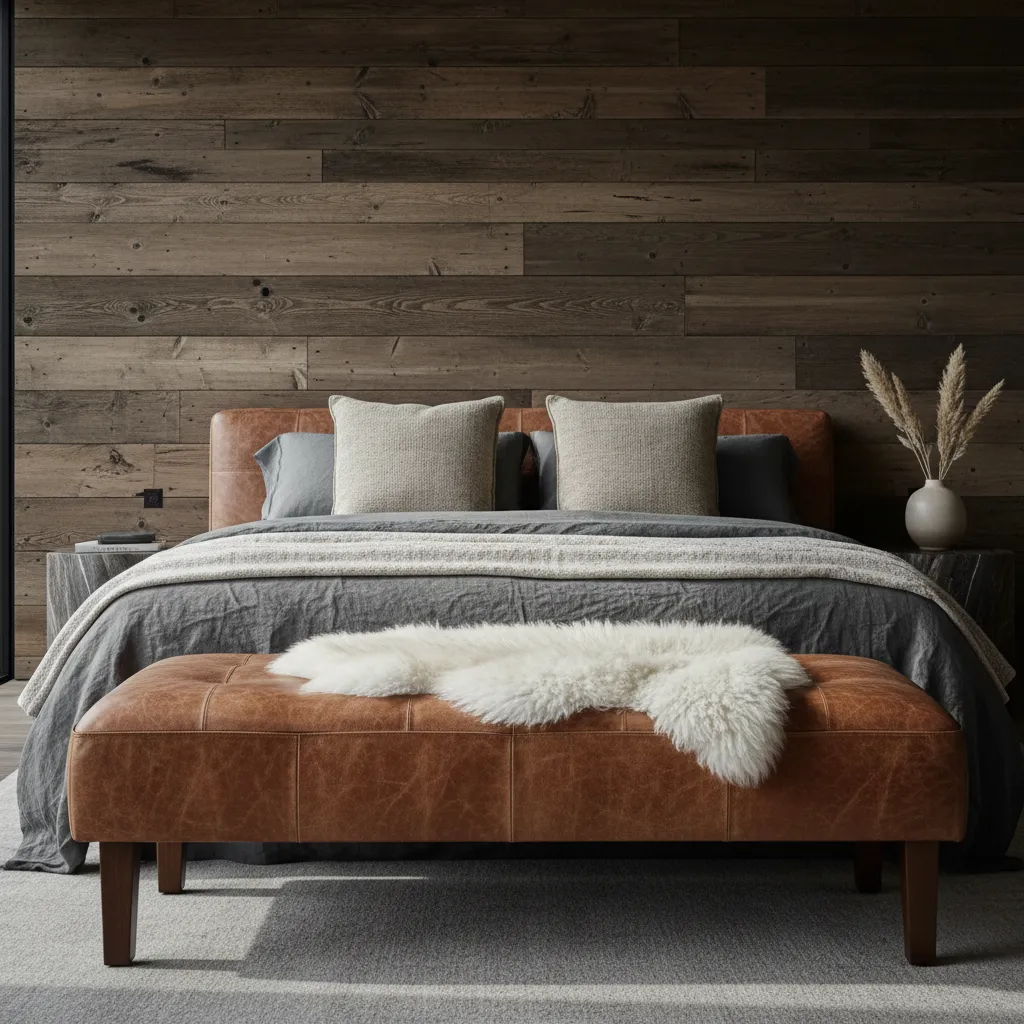
Leather brings a necessary masculine edge to the bedroom. It provides a sleek and smooth surface that reflects light differently than fabric.
Consider a cognac leather bench at the foot of the bed. You could also incorporate a leather headboard for a bold focal point.
This material adds a sense of history and durability. It grounds the airy nature of linen and connects the interior to the rugged outdoors.
The most successful rooms have a mix of textures. If everything is new and shiny, it feels flat. You need that friction between the rough and the smooth.
Amber Lewis, Architectural Digest
The Leather Edge
- Mix your leather with organic fabrics like linen or chunky wool to create a sophisticated balance between rugged and soft textures.
- Opt for cognac or tobacco tones to ground the room with warmth while maintaining a polished, masculine aesthetic.
- Focus on functional leather details like a bench at the foot of the bed or even leather drawer pulls to introduce durability and character.
Softening with Sheepskin and Wool
To balance the coolness of leather and the crispness of linen, you need extreme softness. Sheepskin is the ultimate solution for this.
Drape a genuine sheepskin pelt over a reading chair. You can also place small sheepskin rugs on either side of the bed for morning warmth.
This high-pile texture absorbs light and dampens sound. It creates an immediate sense of sanctuary that is essential for cabins and cottages in the woods.
Texture Pairing Menu
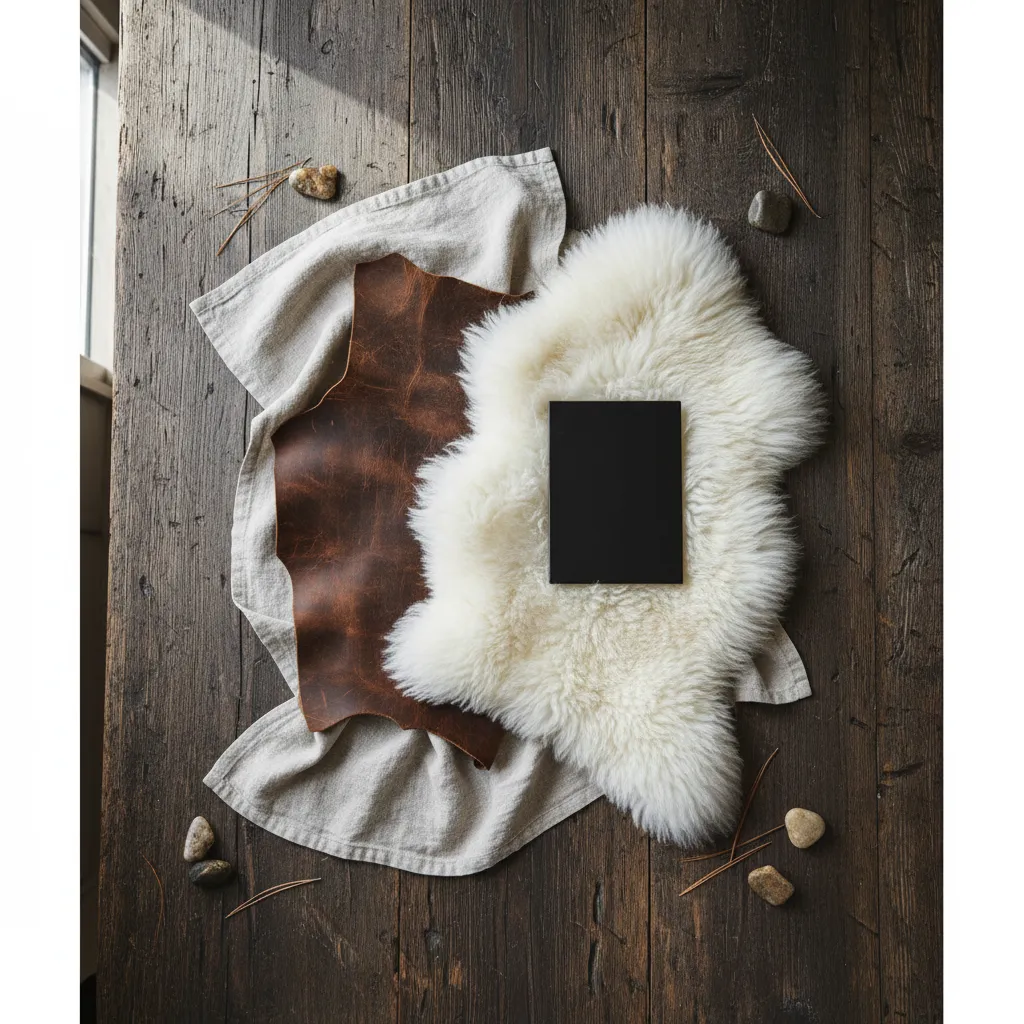
Use this guide to mix materials without overwhelming the space. The goal is to create tension between surfaces.
| Base Material | Pair With (Accent) | Why It Works | Where to Use |
|---|---|---|---|
| Washed Linen | Aged Leather | Soft matte fabric vs. smooth sheen creates visual grip. | Bedding & Headboard |
| Raw Wood | Cream Sheepskin | Hard and rugged meets soft and luxurious. | Flooring & Rugs |
| Matte Metal | Chunky Wool Knit | Cold industrial feel meets warm handmade comfort. | Lighting & Throws |
| Velvet | Rough Stone | Plush elegance contrasts with natural grit. | Accent Pillows & Fireplace |
The Softness Secret
- Use a metal pet brush or wide-tooth comb to gently brush your sheepskin pelts every few months to maintain their signature high-pile loft and prevent matting.
- Layer sheepskin over a larger, flat-weave rug like jute or sisal to create a high-contrast ‘island’ of comfort that feels intentional and grounded.
- Drape a chunky wool throw unevenly over the corner of a leather sofa to instantly break up the large, cold surface area and invite lounging.
Balance Rustic Wood Accents with Sleek Modern Furniture Profiles
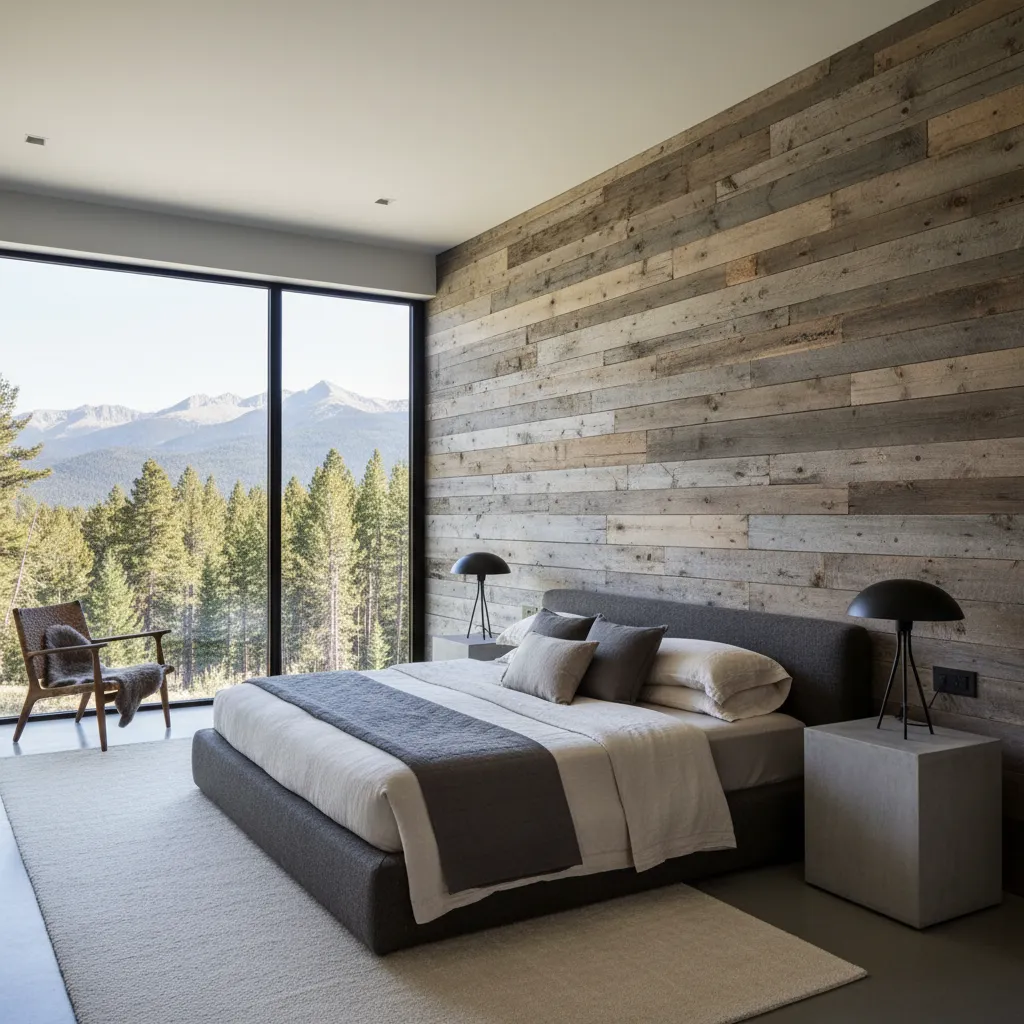
Achieving the perfect modern mountain aesthetic requires a delicate dance. You want the warmth of wood without the visual clutter of a lodge.
The goal is to let natural textures shine while keeping the spatial flow airy. This contrast prevents the room from feeling dark or heavy.
By pairing raw timber with clean lines, you create a sophisticated vibe. This approach ensures your sanctuary feels curated rather than kitschy.
Selecting the Right Wood Tones
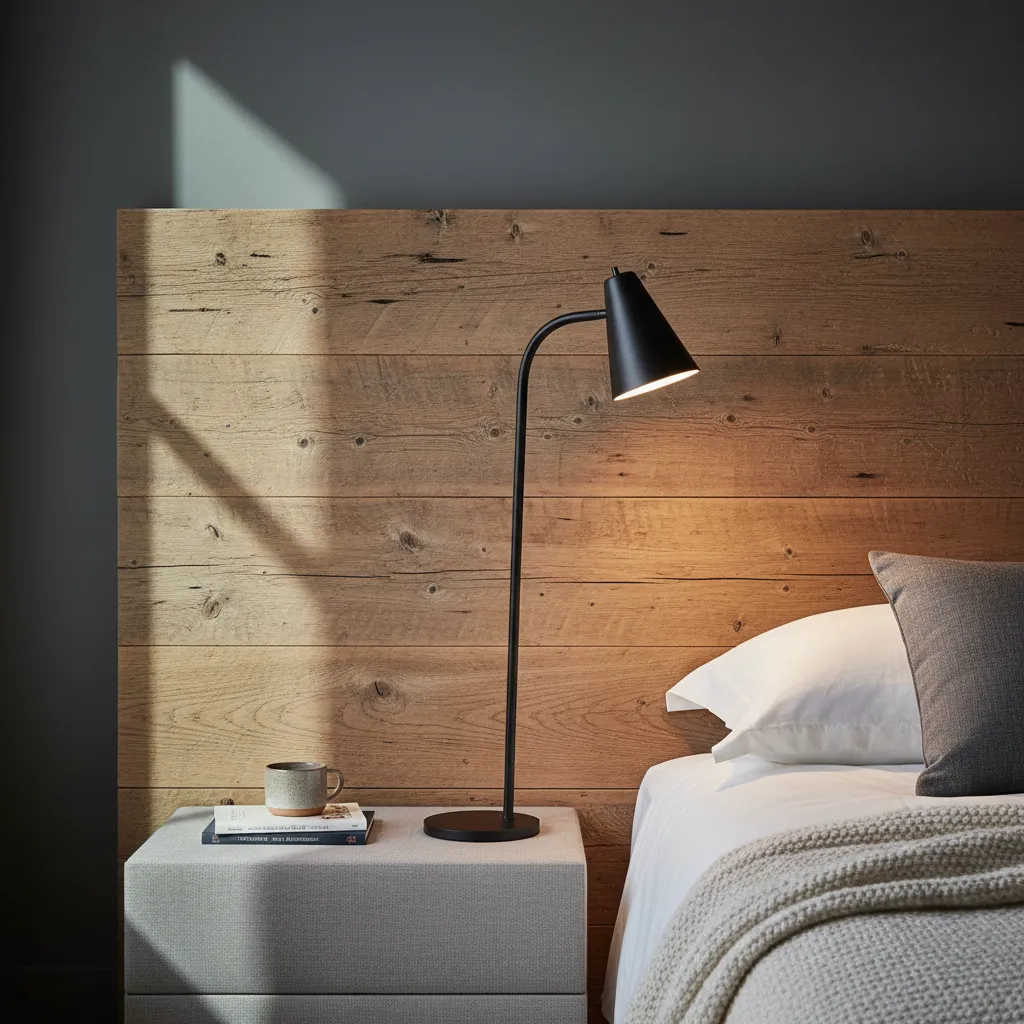
Start by choosing wood finishes that feel organic rather than polished. Matte white oak or walnut brings inherent warmth to the space.
Avoid high-gloss varnishes that can look dated or artificial. The texture should feel real to the touch, enhancing the sensory experience.
If you have exposed beams, match your flooring tone to them. This creates a cohesive palette that allows modern furniture to pop.
For inspiration on integrating these natural elements, look at designs for cabins and cottages in the woods.
Every room needs a little bit of wood to warm it up. It adds life and history to a space that might otherwise feel stark.
Emily Henderson, Style by Emily Henderson
Streamlining Furniture Silhouettes
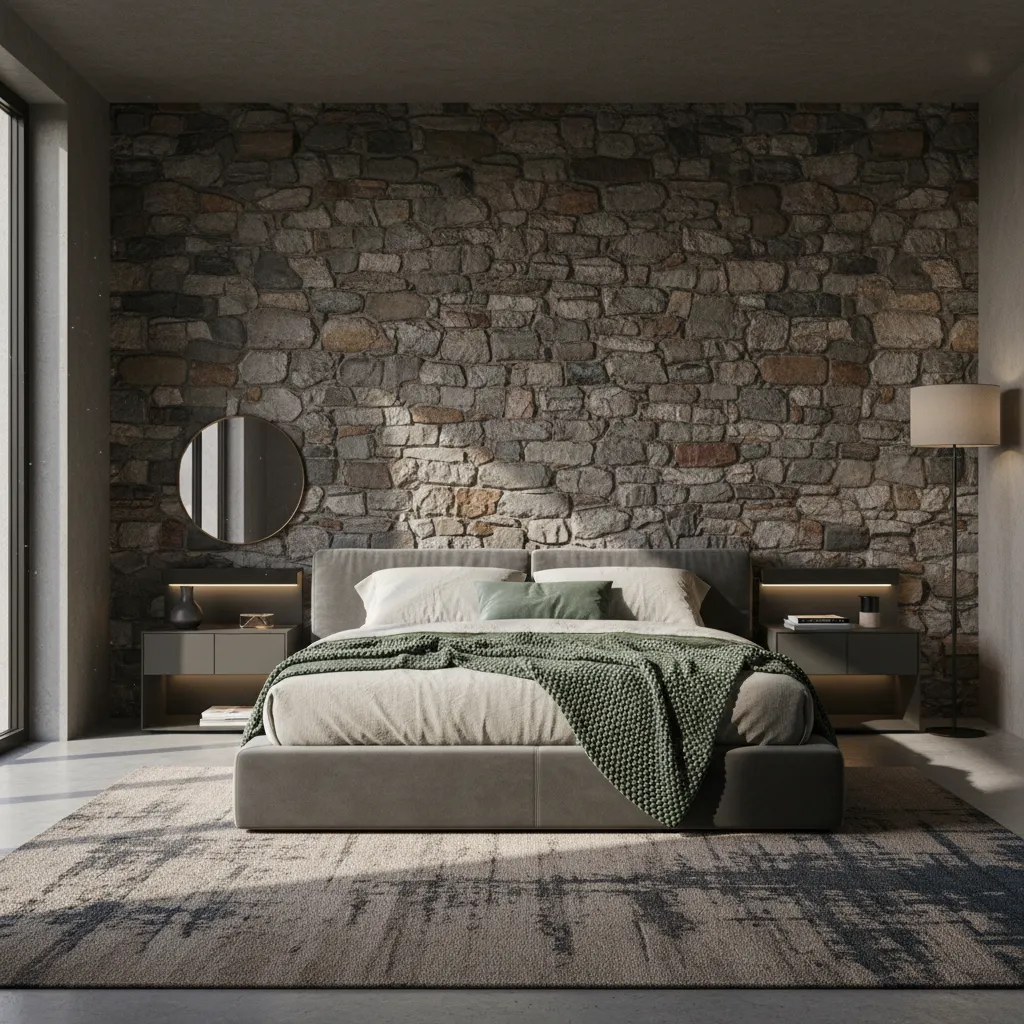
Counteract heavy architectural details with furniture that sits low. A platform bed with clean lines keeps the visual weight balanced.
Incorporate materials like boucle, linen, or velvet on headboards. These soft fabrics break up the hardness of wood and stone surfaces.
Choose nightstands with thin metal legs to maintain an open feel. This allows light to travel freely under furniture, expanding the room.
Consider placing a sleek leather armchair near a heat source. This mimics the classic warmth found in cozy fireplace looks for any room.
The Rustic-Modern Mix Checklist
Use this simple guide to ensure your elements are perfectly weighted. A successful design relies on opposing forces working in harmony.
- The Bed: Pair a rough-hewn wood wall with a smooth, upholstered fabric headboard.
- Lighting: Offset raw timber beams with matte black or brushed brass geometric fixtures.
- Storage: Balance open grain dressers with smooth marble or concrete tops.
- Textiles: Soften hard hardwood floors with high-pile Moroccan or wool rugs.
- Seating: Mix a vintage leather accent chair with a minimalist side table.
The secret to a modern mountain retreat is whispering rustic details while shouting modern comfort.
The Contrast Code
- Opt for a ‘dead flat’ matte finish on reclaimed wood to highlight its natural history while keeping the look sophisticated and high-end.
- Pair chunky wooden architectural elements with ‘floating’ furniture styles, like nightstands with thin metal legs, to maintain a light and airy spatial flow.
- Soften the hard lines of timber and steel by layering organic textures like a chunky wool rug or a boucle accent chair to bridge the gap between rustic and modern.
Create Intimacy with Warm, Layered Lighting Fixtures
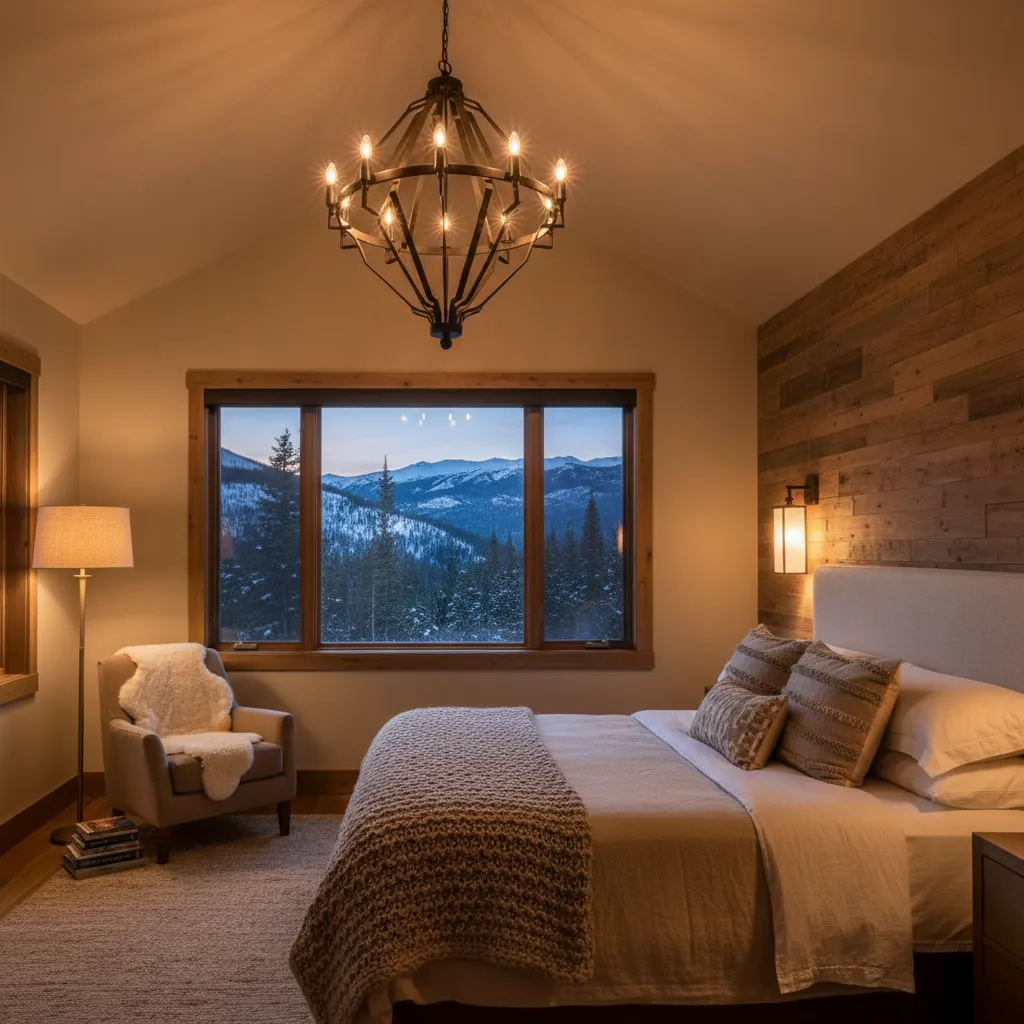
Lighting transforms a mountain bedroom from a dark cave into a sanctuary. In spaces with wood paneling or stone walls, light absorption is high.
You must counteract these heavy materials with strategic illumination. The goal is to create pockets of warmth that invite relaxation and rest.
Glow Like a Pro
- Swap standard bulbs for warm-toned LEDs (2700K) to mimic the cozy flicker of a fireplace without the heat.
- Install dimmer switches on all overhead and bedside fixtures to instantly shift the mood from functional to romantic.
- Use battery-operated puck lights inside open shelving or behind stone features to highlight textures and add depth to the room.
Anchoring with Organic Statement Pieces
A central fixture defines the scale of the room. In modern alpine design, avoid the cliché of heavy, unrefined log chandeliers that feel dated.
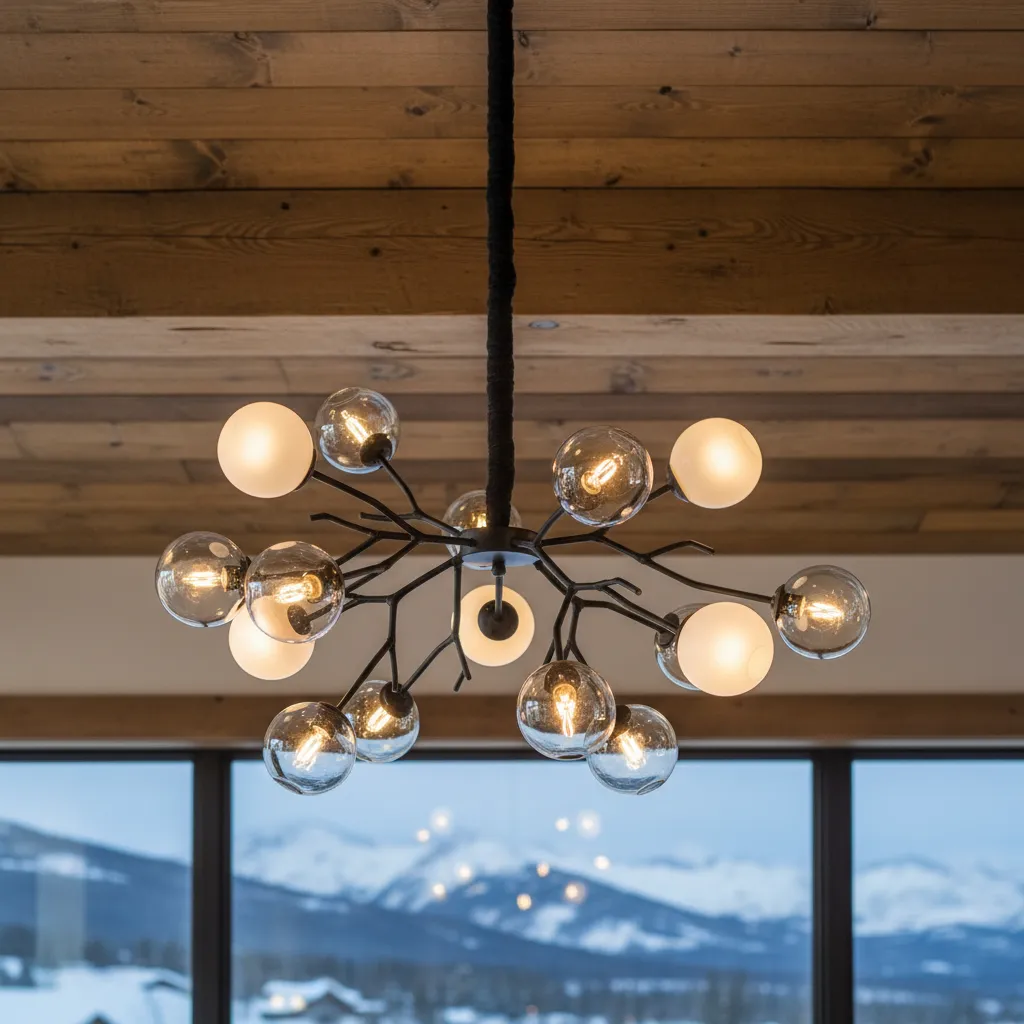
Opt for fixtures with organic curves or matte black iron finishes. These materials contrast beautifully against raw timber ceilings found in many mountain dream homes.
Consider blown glass pendants for an airy feel. They reflect natural light during the day and provide a soft, unobstructed glow at night.
Lighting in a mountain home should feel like a warm embrace, balancing the rugged outdoors with soft interior comfort.
The Alpine Glow Secret
- Choose fixtures with dimmable warm-toned LEDs to replicate the soft amber hue of a fireplace.
- Ensure your statement piece hangs at least 30 to 36 inches above surfaces to maintain clear sightlines while still commanding attention.
- Pair dark iron finishes with light-colored timber to create a sophisticated visual contrast that highlights the home’s architecture.
Functional Bedside Sconces
Nightstand space is often limited in cozy cabin layouts. Wall-mounted sconces are a practical solution that frees up valuable surface area.
Choose articulating arms in brass or bronze. This allows you to direct light exactly where you need it for reading without waking your partner.
Hardwired options offer a seamless look without messy cords. If you are renting, plug-in sconces with cord covers provide the same visual appeal.
I always recommend 2700K LEDs. It is the closest to warm incandescent light and makes a room feel cozy and inviting.
Emily Henderson, Lighting 101: Kelvin Explained
The Bedside Brief
- Position your sconces so the bottom of the shade is roughly 20-22 inches above the mattress to ensure the light hits your book without causing glare.
- If using plug-in models, use paintable cord covers that match your wood or wall color to achieve a custom, built-in appearance without the electrical work.
- Install a dimmer switch or use smart bulbs to easily transition your lighting from a focused reading task to a soft, cozy evening glow.
Softening Corners with Ambient Layers
Dark corners can make a room feel smaller than it is. Use floor lamps to illuminate these edges and visually expand the spatial flow.
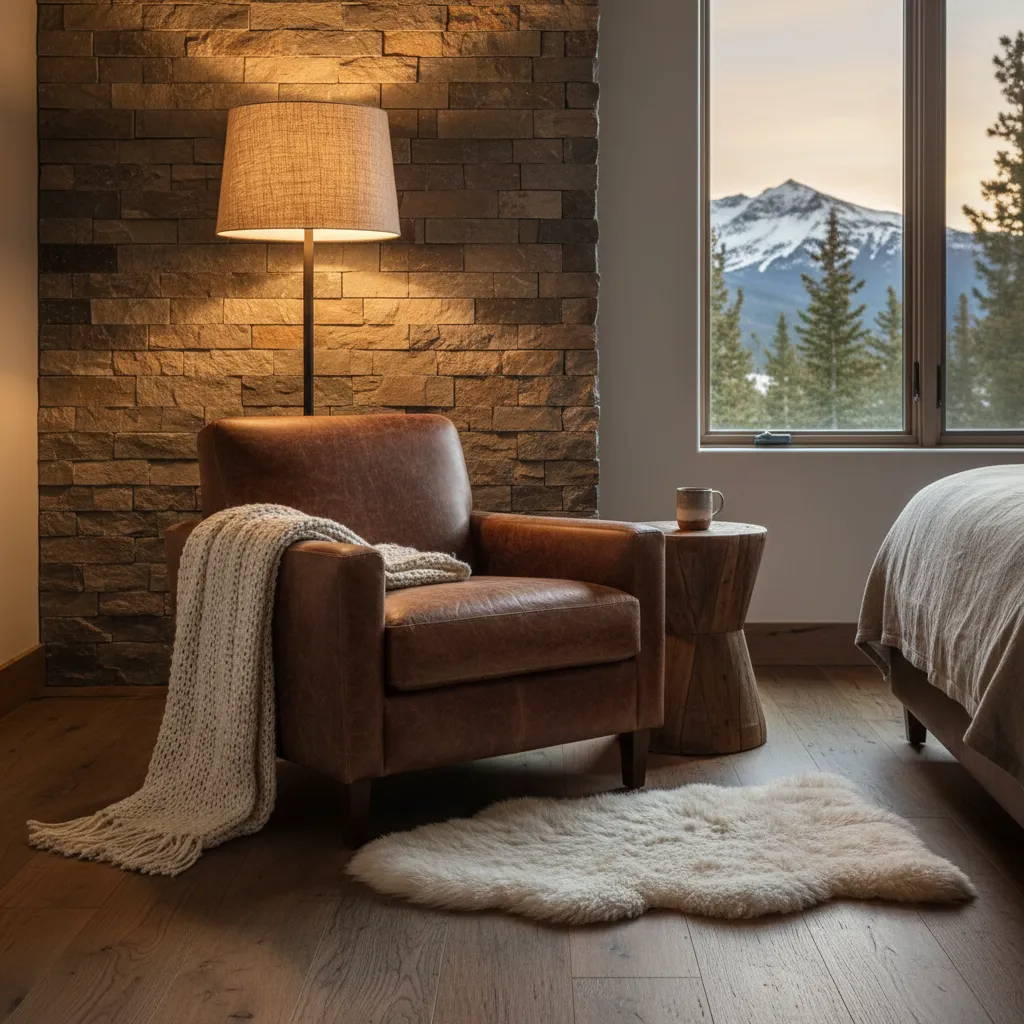
Select shades made of linen or woven fabric. Texture is key here, as it diffuses light softly to mimic the glow of cozy fireplace looks.
Install dimmer switches on every light source. This gives you total control over the atmosphere, shifting from bright functional light to a moodier vibe.
The Lighting Temperature Checklist
achieving the right “mountain glow” requires strict attention to bulb temperature. Cool lighting can make wood tones look sickly or gray.
- 2700K Bulbs: Best for bedside lamps and ambient floor fixtures. Creates a golden, candlelight effect.
- 3000K Bulbs: Ideal for overhead recessed cans. It is crisp enough for cleaning but still warm enough for relaxation.
- Matte Finishes: Use bulbs with a frosted finish to prevent harsh glare against reflective wood varnish.
- Lumens Count: Keep bedside bulbs around 450 lumens to ensure the light is soft enough for winding down.
Illumination Intel
- The Smart Bulb Swap: No dimmer switch? Use smart bulbs to control brightness and color temperature directly from your phone, allowing you to transition from crisp 3000K task lighting to a cozy 2700K sunset glow instantly.
- The Gold Lining Trick: To amplify warmth without changing bulbs, opt for lamp shades with a metallic gold or copper interior to reflect a richer, fire-like glow.
- Visual Expansion: Place a floor lamp in a dark corner and aim it upward. Bouncing light off the ceiling eliminates shadows and makes compact rooms feel significantly airier.
Maximize Natural Light with Minimalist, Unadorned Window Treatments
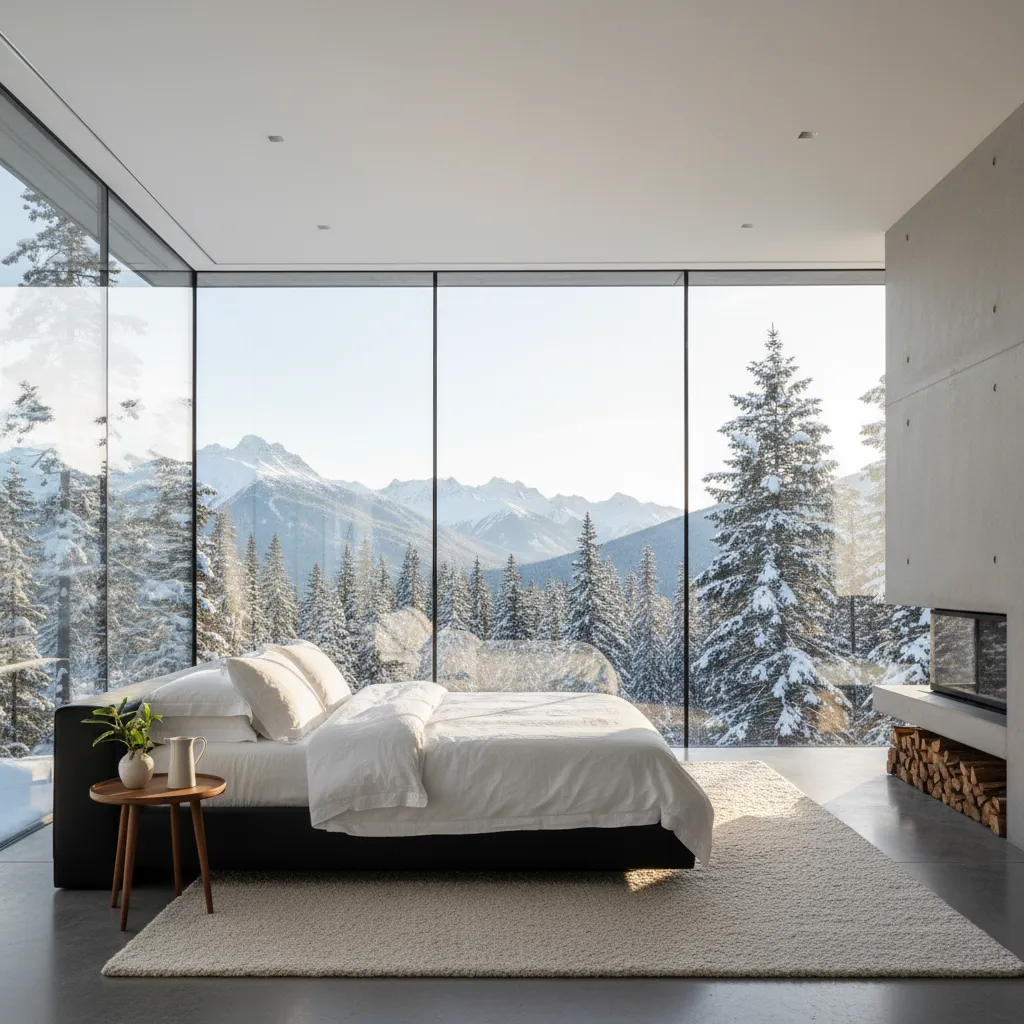
In a modern mountain home, the landscape outside is your most valuable art piece. Heavy drapery often distracts from the raw beauty of the outdoors.
We recommend unadorned windows to maximize the flow of ambient light. This creates a seamless transition between your interior and the forest.
If privacy is a concern, consider recessed roller shades. These disappear into the ceiling to maintain a clean and uncluttered visual line.
True luxury in the mountains is waking up to the sunrise without a barrier between you and the horizon.
Choosing the Right Textures
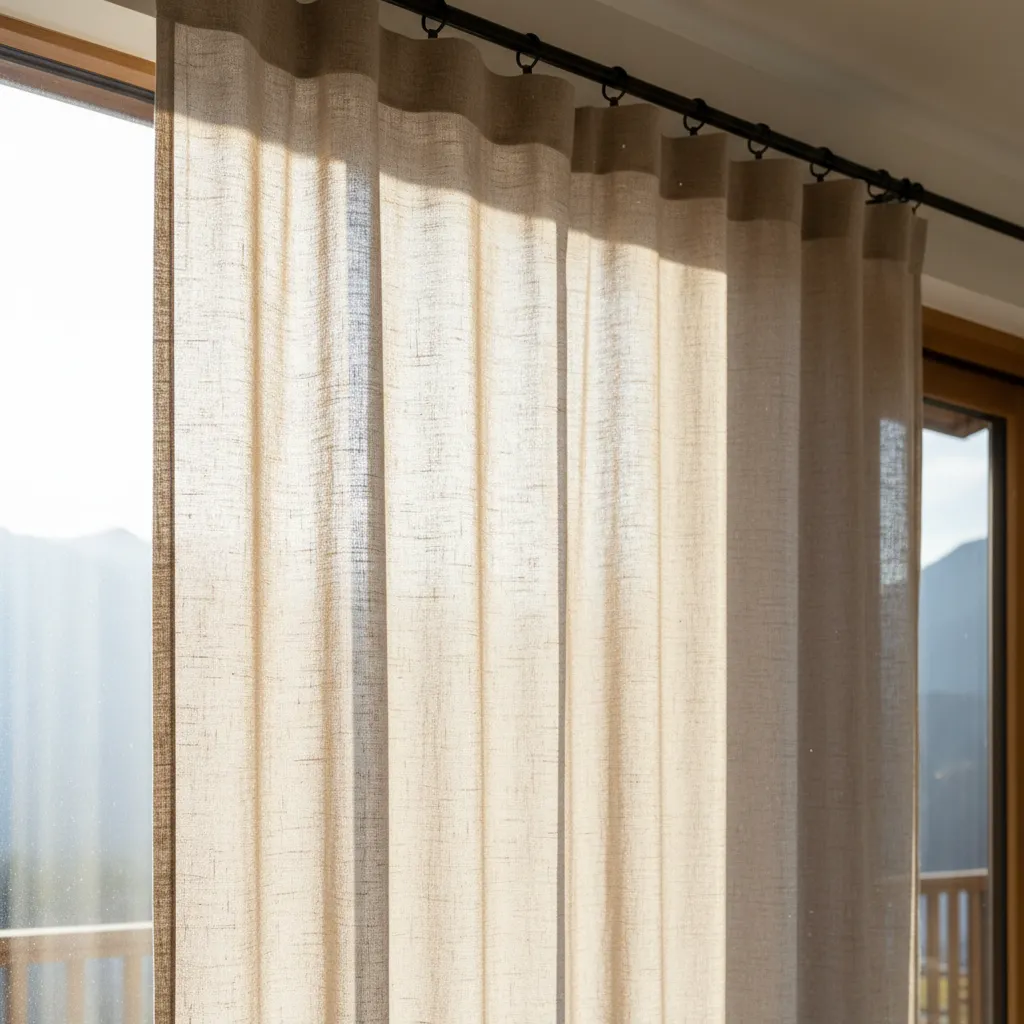
When soft treatments are necessary, opt for organic materials like Belgian linen. These fabrics filter harsh glare without blocking the glow.
Select varying shades of oatmeal, charcoal, or crisp white. These tones complement the natural wood often found in mountain dream homes.
The weave of the fabric should be loose enough to see through. This maintains that critical connection to the exterior environment.
Hardware and Placement
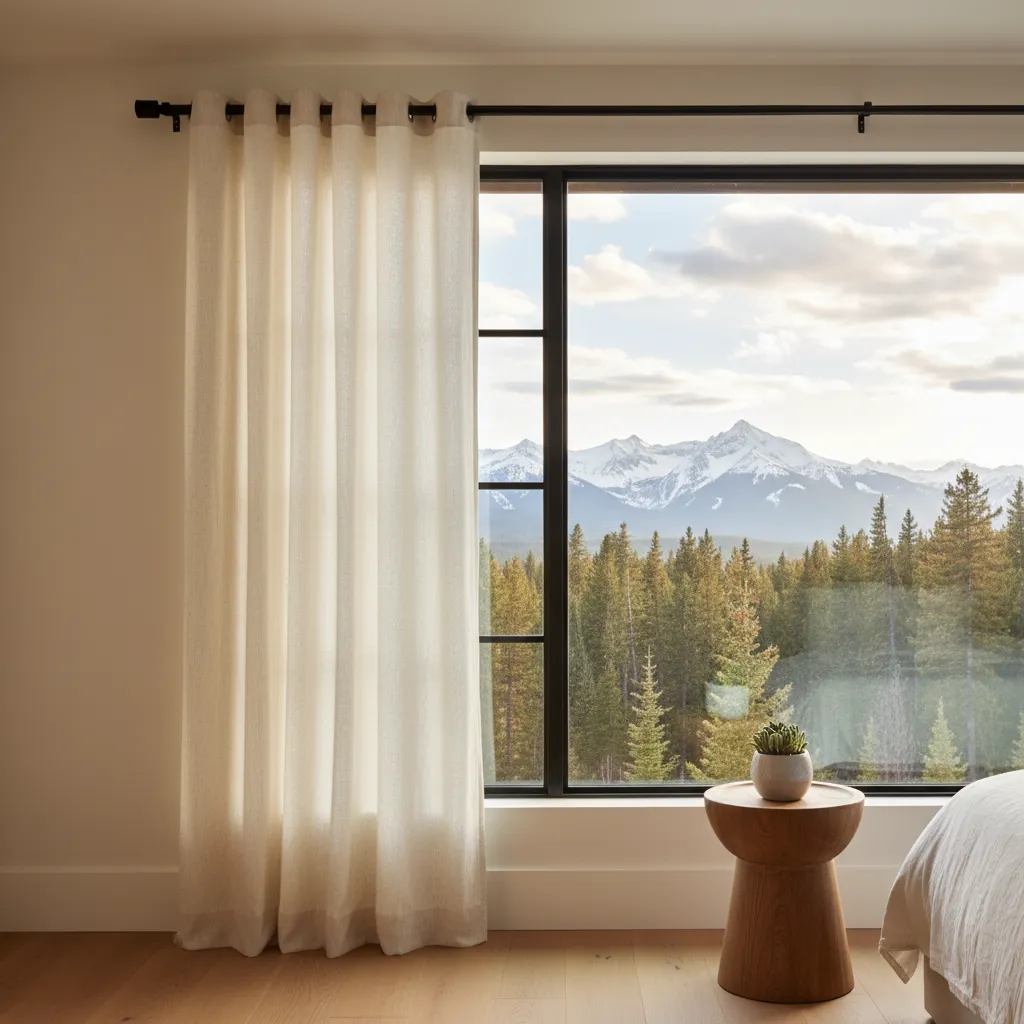
Hardware should be functional and barely noticeable. Avoid ornate finials that feel dated or overly traditional for this aesthetic.
Matte black rods provide a grounding contrast against white walls. This echoes the industrial steel beams often seen in modern house floor plans.
Always extend the rod at least ten inches past the window frame. This allows the fabric to stack against the wall rather than covering the glass.
Hanging curtains as high and wide as possible makes windows look larger and ceilings taller. It’s the oldest trick in the book, but it works every time.
Bobby Berk, Architectural Digest
Comparison of Minimalist Light Control Options
Choosing the right treatment balances aesthetics with functionality. Use this guide to determine which option suits your specific lighting needs.
| Treatment Type | Light Filtration | Privacy Level | Best Aesthetic Match |
|---|---|---|---|
| Sheer Linen Drapes | Diffused Glow | Low / Moderate | Soft & Romantic |
| Solar Roller Shades | UV Protection | High (Daytime) | Sleek & Technical |
| Woven Wood Shades | Dappled Light | Moderate | Rustic & Organic |
| Smart Glass | Complete Control | Variable | Ultra-Modern |
Layering is also an option for versatility. You can pair woven wood shades with stationary side panels for a look that offers depth and texture.
Ultimately, the goal is to frame the view, not hide it. Keep the lines straight and the operation simple for a truly relaxing retreat.
The View-First Formula
- Extend curtain rods 10 to 12 inches beyond the window frame so that fabric stacks against the wall, leaving every inch of glass and scenery exposed.
- Mount hardware as close to the ceiling as possible to draw the eye upward and emphasize the grand scale of mountain-view windows.
- Choose motorized recessed shades that disappear into a ceiling pocket, allowing for a completely unobstructed architectural look during the day.
Your Private Alpine Sanctuary
Designing a modern mountain bedroom is about balance. It merges the rugged beauty of the outdoors with the clean lines of contemporary living.
Remember that your color palette sets the mood. Stick to warm whites and grounding earth tones to create a canvas that feels open yet secure.
Do not be afraid to experiment with textures. Layering soft wools against matte paints adds the depth required for a truly sophisticated retreat.
Ultimately, your bedroom should be a place to recharge. Let nature guide your choices, and you will create a space that feels timeless and restful.
Design Dilemmas Solved
Focus on sleek silhouettes and editing. Use raw wood sparingly as an accent rather than covering every wall. Keep your linens simple and lighting modern.
Absolutely. The aesthetic relies on color and texture. Use warm neutrals, stone accents, and organic fabrics to evoke the vibe regardless of location.
Wide-plank oak with a matte finish is ideal. It feels historic yet current. Always layer with plush rugs for warmth and acoustic dampening.
Avoid cool grays, which turn dreary in low light. Opt for a creamy alabaster or a soft beige to artificially warm the space and reflect the glow.
