

Is your dining table still holding the heavy, warm glow of winter decor? As the world outside begins to lighten and bloom, does the center of your dining space feel stuck in the last season, not quite ready for a fresh start? You’re in the right place to change that.
A spring dining table centerpiece shouldn’t just be a vase of flowers; it should be a piece of living art, a reflection of the clean, hopeful energy of the season. A backdrop for bright brunches, light-filled dinners, and the crisp, optimistic feeling of new beginnings.
This is your creative playbook for transforming your table into a feature that’s not only a celebration of spring but is also chic, sculptural, and unapologetically modern.
We’ll explore minimalist designs, decode the secrets of contemporary styling, and walk through the practical steps to bring it all to life.
By the end, you’ll see your table not as a surface to fill, but as a gallery for a stunning seasonal masterpiece.
Before You Begin: Curating Your Modern Vision
The most impactful modern centerpieces start with a strong concept, not just a trip to the flower market. Before you place a single stem, let’s lay the groundwork for a design that feels intentional, artistic, and refreshingly uncluttered.
Secrets of a Modern Spring Style: Simple Rules for a Stunning Look
Modern design is a philosophy of “less is more.” Applying it to a spring centerpiece is about celebrating nature’s beauty with restraint and intention. Here are a few simple secrets:
- Edit, Edit, Edit: The core of modern style is simplicity. Instead of a dense, mixed bouquet, choose one type of flower or one dramatic branch. The empty space around the object is just as important as the object itself, as it allows the form and beauty of the single element to truly shine.
- Focus on Form and Shape: Modern design celebrates the inherent shape of things. Look for flowers with interesting silhouettes (like the curve of a tulip stem) or branches with a sculptural, angular quality. The vessel is equally important choose vases with clean, geometric shapes in materials like ceramic, glass, or concrete.
- Embrace Asymmetry: A traditional centerpiece is often a single, symmetrical arrangement in the exact center of the table. A modern approach plays with asymmetry. A low line of bud vases placed off-center or a single, tall vase balanced by a small, low bowl creates a more dynamic and visually interesting composition.
- Use a Controlled Color Palette: Rather than a riot of spring color, a modern centerpiece uses color with intention. Stick to a monochromatic palette (all white or all green) or a neutral base with one single, powerful pop of color (like bright yellow daffodils in a simple grey vase).
What’s the Real Cost? A No-Fuss Budget Breakdown
| The Approach | Estimated Cost | What Your Money Buys | The Little Extras (Don’t Skip These!) |
| The Minimalist Moment | $15 – $40 | • A single, beautiful branch or a few stems • An affordable glass or ceramic vase • Foraged natural elements | • A simple, clean table surface (no cloth) • A good pair of floral shears • A critical eye for editing |
| The Curated Collection | $50 – $120 | • A series of matching bud vases • A higher-quality bouquet of a single flower type • A modern planter or vessel | • A simple, high-quality linen runner • Sleek, modern candle holders • A decorative tray to ground the arrangement |
| The Gallery Installation | $150+ | • A large, sculptural vessel • A professionally arranged architectural centerpiece • High-end, unique potted plants | • A consultation with a florist • Coordinating modern tableware • A statement piece that commands attention |
The Design Menu: Finding Your Signature Style
Here are 17 spring dining table centerpieces with a modern flair. Each one comes with a breakdown to help you create with confidence.
1. The Single, Dramatic Branch
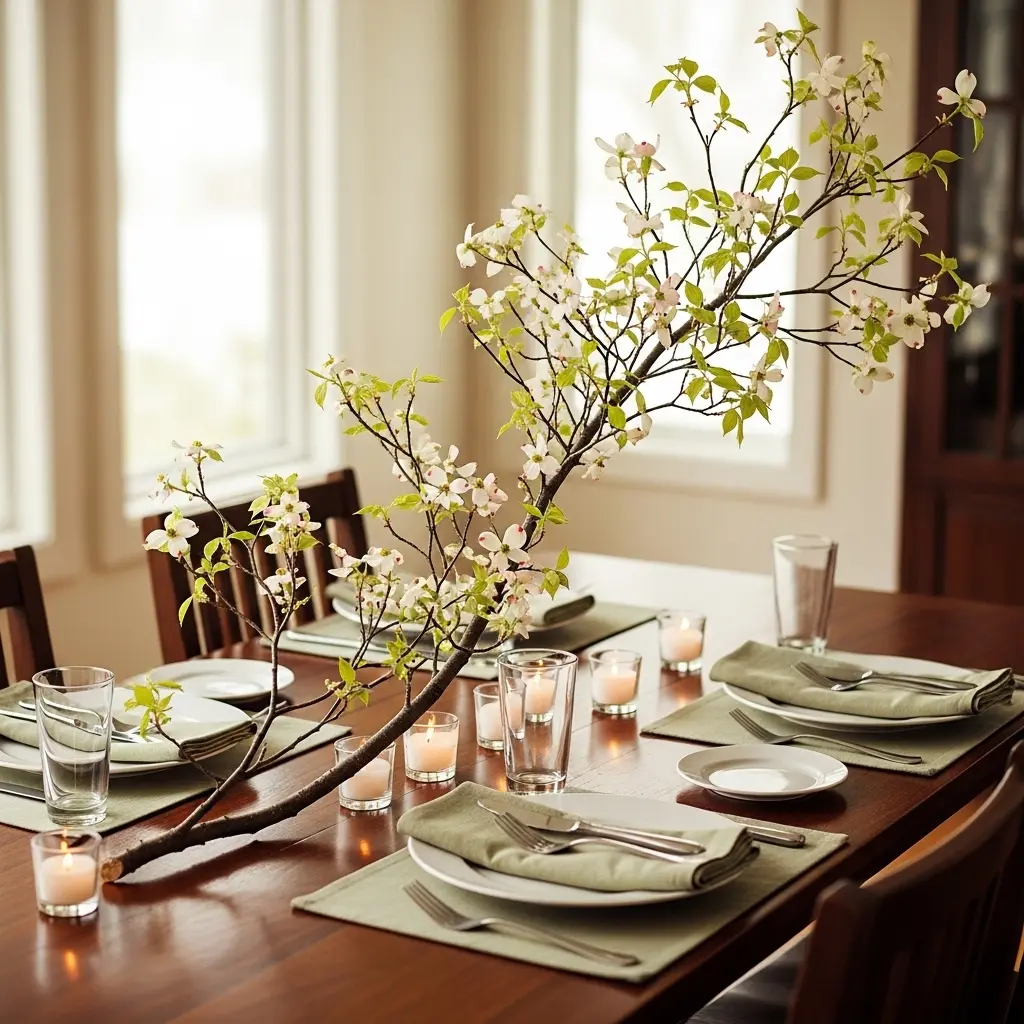
- Best For: The ultimate minimalist statement that celebrates natural, sculptural beauty.
- Key Consideration: The branch is the art. Look for one with an interesting, angular shape, and ideally, a few delicate buds or leaves.
- Pro-Tip: Choose a tall, heavy-bottomed vase with a narrow opening. This will keep the branch upright and secure without needing any floral foam.
- Styling Cue: Place the vase off-center on the table to create a beautiful, asymmetrical balance.
2. A Straight Line of Bud Vases
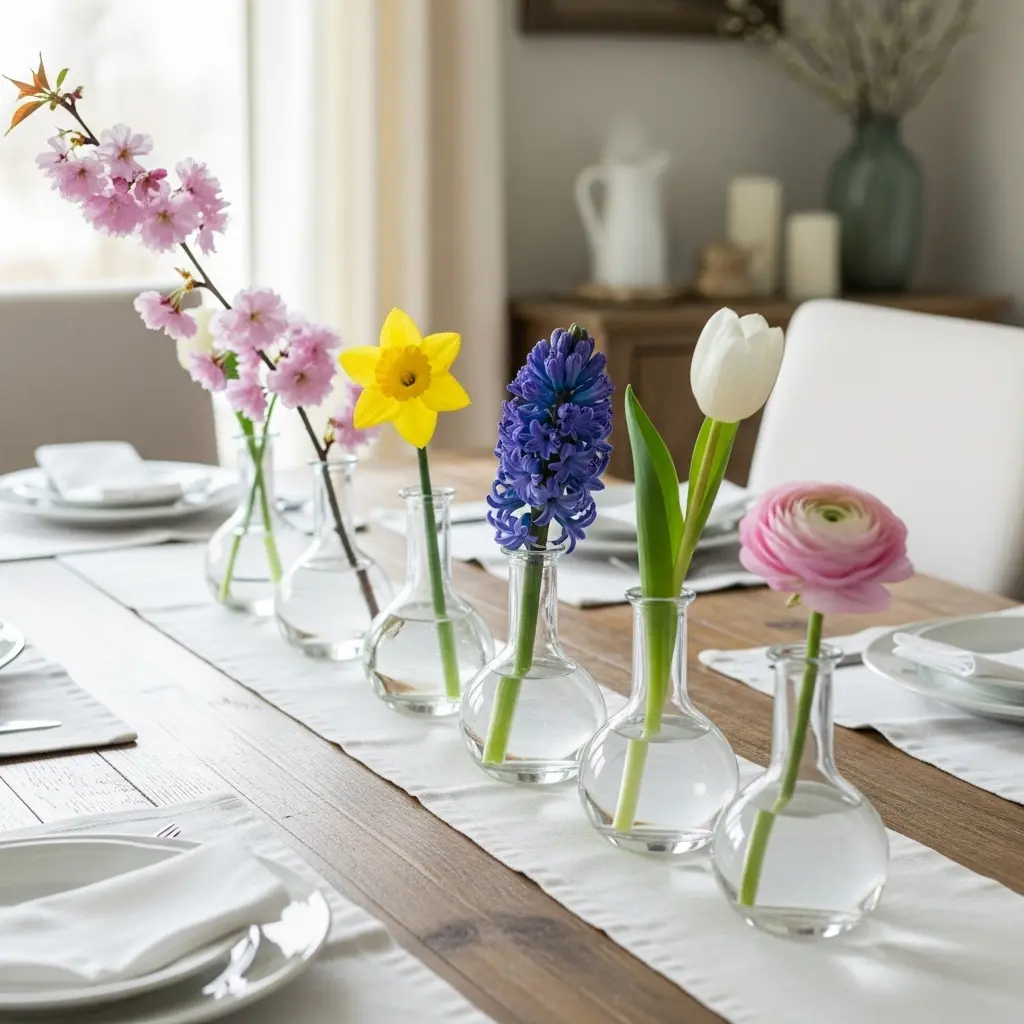
- Best For: A clean, linear, and rhythmic centerpiece that’s easy to assemble.
- Key Consideration: The power of this look comes from repetition. Use at least five to seven identical (or very similar) small bud vases.
- Pro-Tip: Place a single, perfect stem in each vase. Use the same type of flower throughout (like ranunculus or sweet peas) for a cohesive look.
- Styling Cue: Run the line of vases down the exact center of the table on a narrow linen runner for a look that’s both modern and classic.
3. The “Deconstructed” Tulip Arrangement
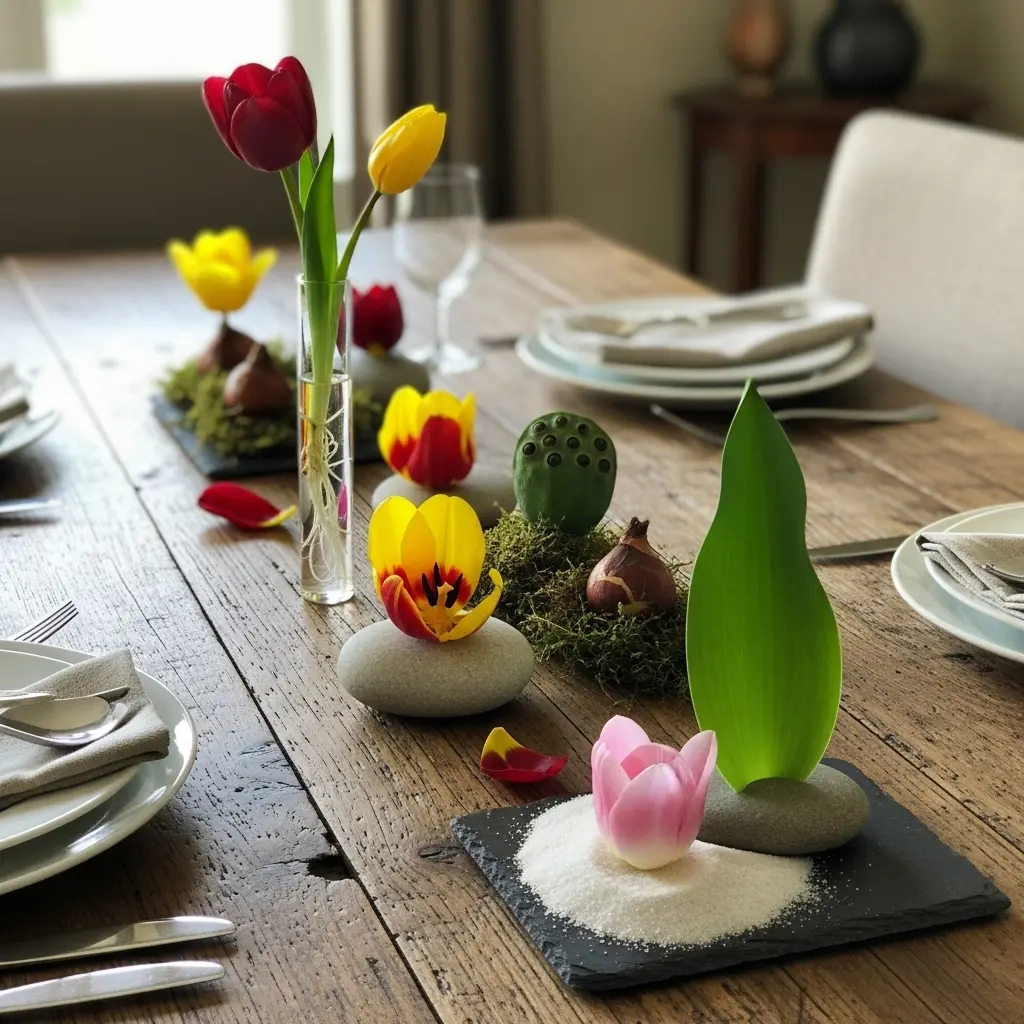
- Best For: Celebrating the elegant, natural droop and form of tulips.
- Key Consideration: This is about letting the flowers do what they want. Don’t fight their natural curve.
- Pro-Tip: Use a low, wide-mouthed bowl or vase. Place a flower frog or a ball of floral wire in the bottom to hold the stems, and arrange the tulips so they spill and lean out of the vase in an organic, artful way.
- Styling Cue: Give them plenty of space. This arrangement looks stunning on a bare wood or marble table where the elegant lines of the stems can be fully appreciated.
4. The Living Moss Runner
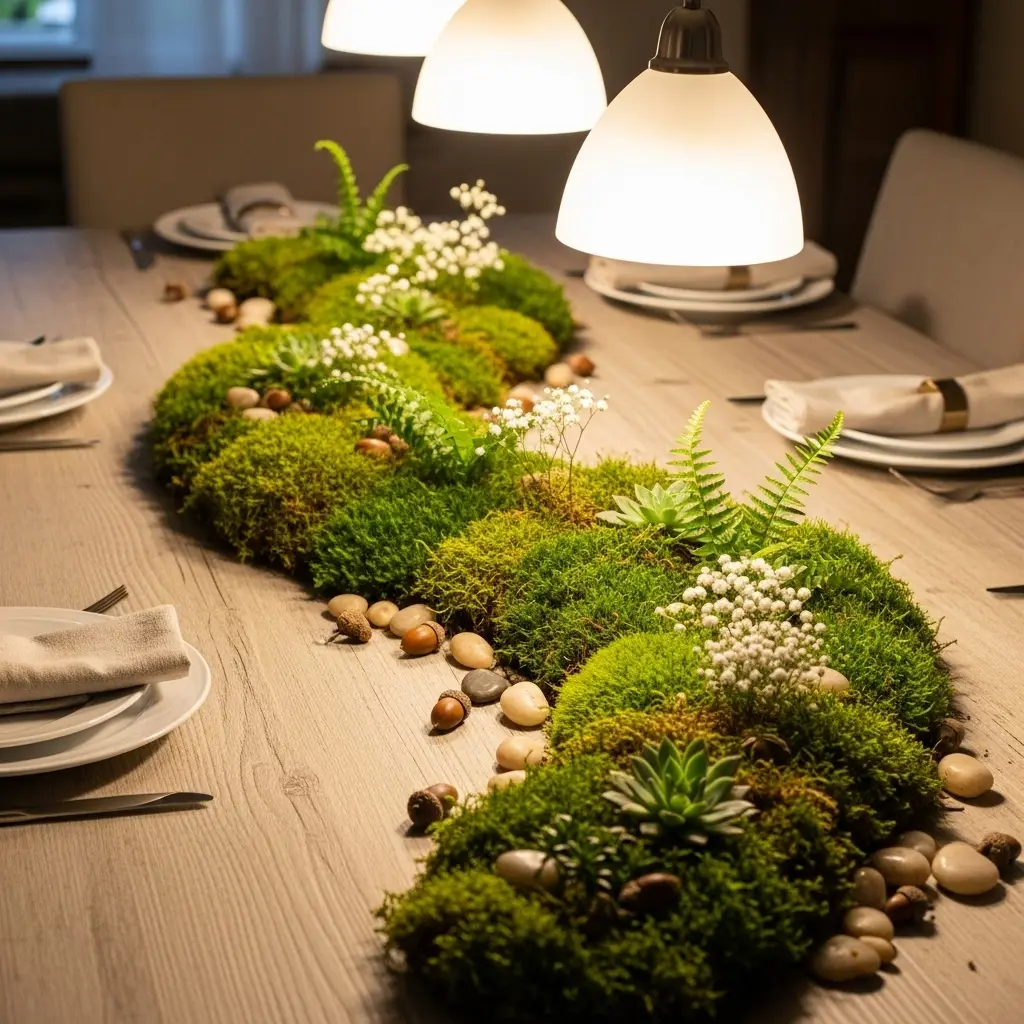
- Best For: An organic, textural, and long-lasting centerpiece that brings the forest floor indoors.
- Key Consideration: You can buy preserved sheet moss from a craft store or a florist.
- Pro-Tip: Lay a long, narrow strip of preserved moss directly down the center of your table. It requires no water and will look beautiful for weeks.
- Styling Cue: Place a few simple white pillar candles or a collection of small, sculptural stones directly on top of the moss for a serene, Zen-inspired look.
5. A Monochromatic Flower Cloud
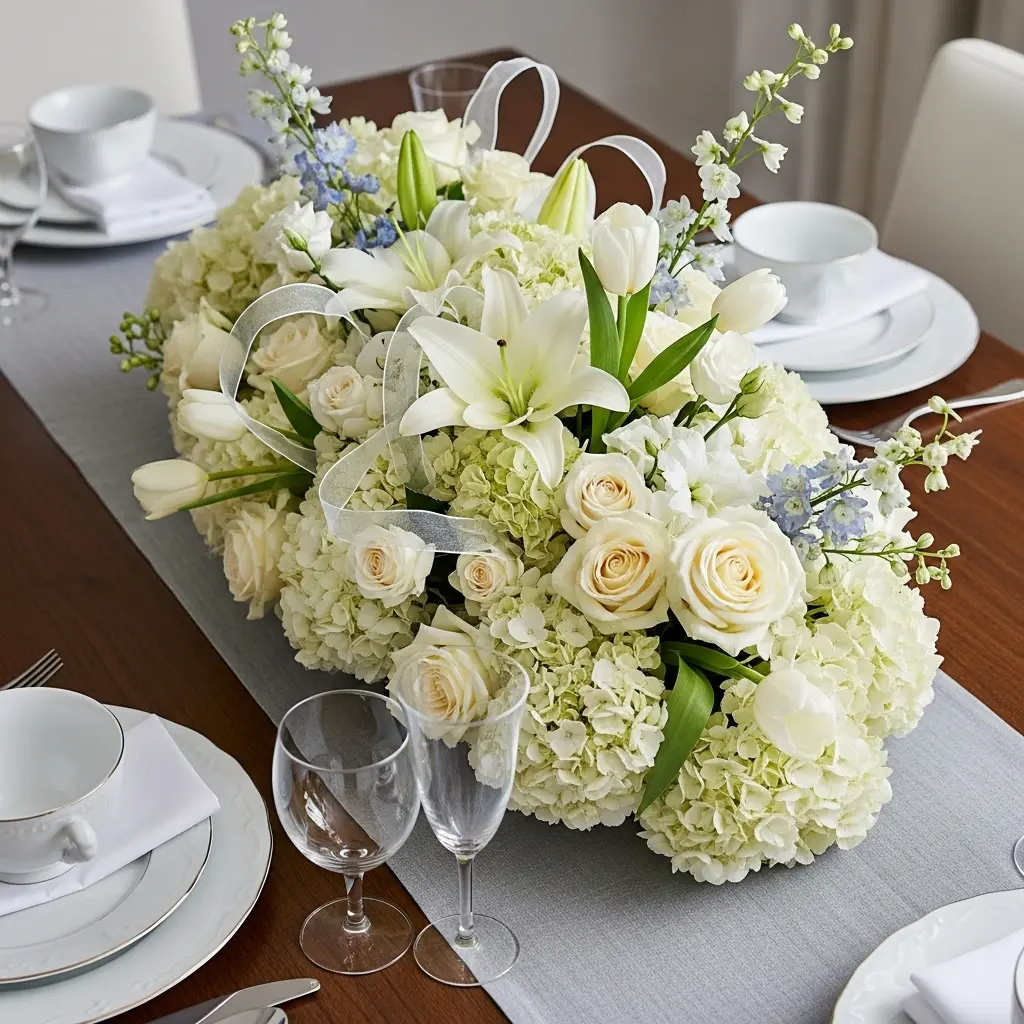
- Best For: A soft, ethereal, and incredibly chic statement piece.
- Key Consideration: Choose one type of fluffy, cloud-like flower and use it exclusively.
- Pro-Tip: A large, tight bunch of all-white baby’s breath, mimosa, or hydrangeas creates a stunning, singular textural statement.
- Styling Cue: Place the “cloud” in a simple, low ceramic or glass vase where the flowers themselves are the entire focus, not the vessel.
6. The Potted Plant Parade
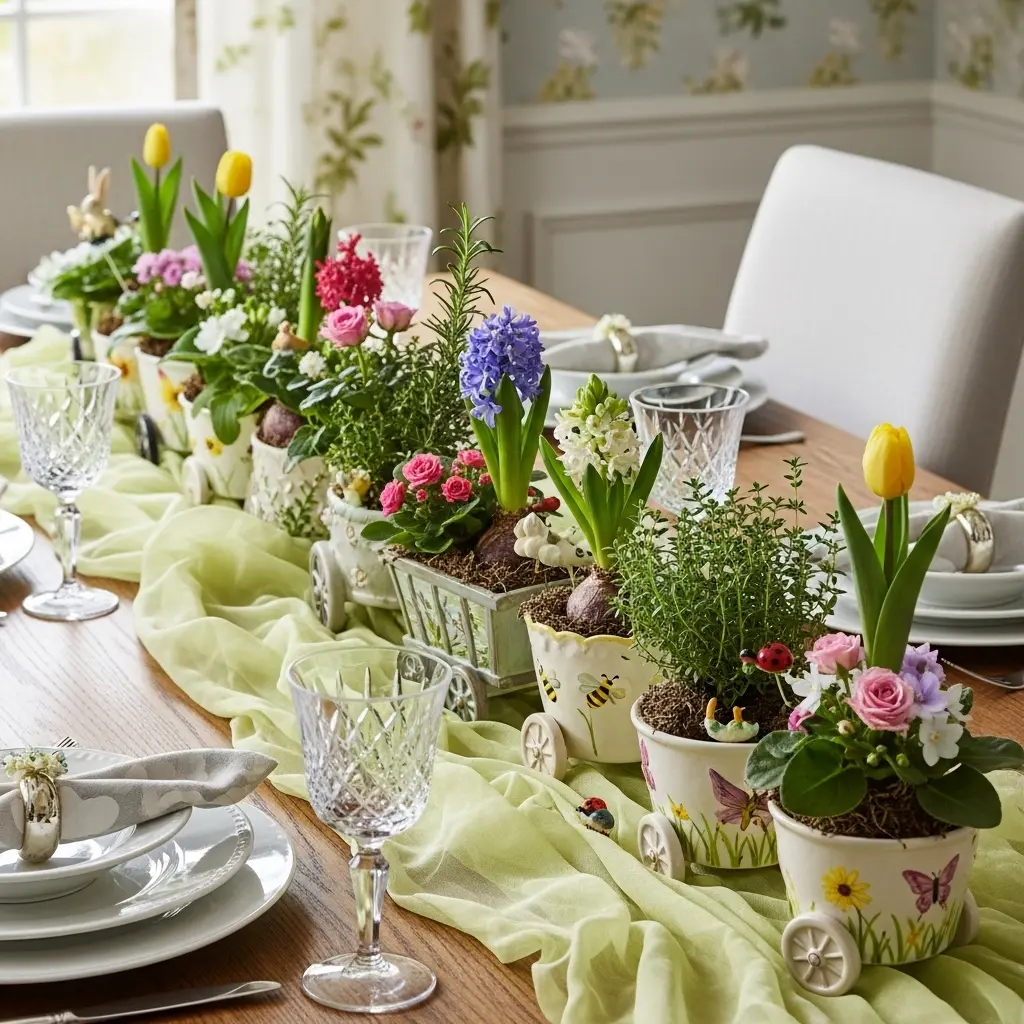
- Best For: A sustainable, long-lasting centerpiece for plant lovers.
- Key Consideration: The pots are as important as the plants. Choose matching or complementary modern planters.
- Pro-Tip: Select a series of small, sculptural plants like snake plants, ZZ plants, or interesting succulents.
- Styling Cue: Arrange three or five small plants in concrete or matte ceramic pots down the center of the table. It’s a living, breathing centerpiece.
7. The Floating Bloom Bowl
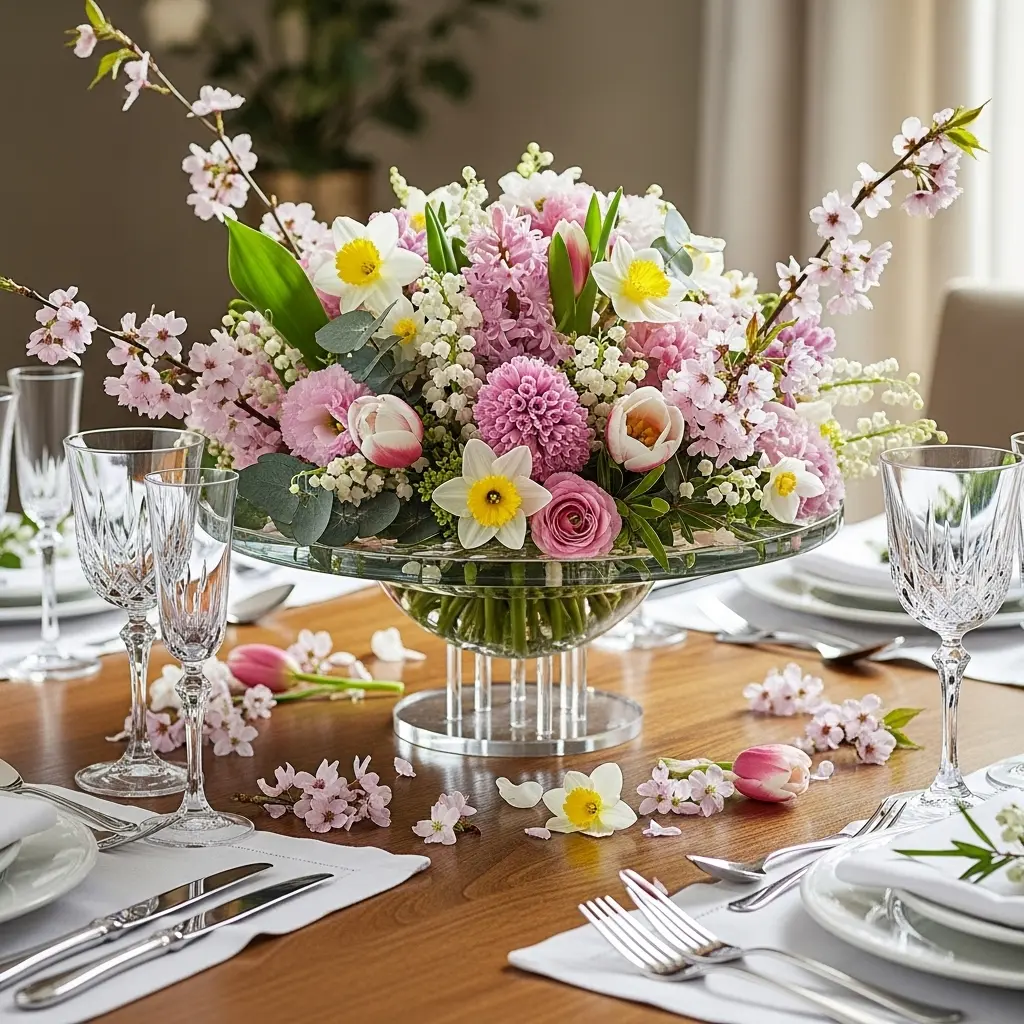
- Best For: A simple, delicate, and almost meditative centerpiece.
- Key Consideration: This works best with flowers that have a flat profile, like pansies, gardenias, or hellebores.
- Pro-Tip: Choose a beautiful, low, and wide bowl. Fill it with water and gently float a few perfect, de-stemmed blooms on the surface.
- Styling Cue: Add one or two floating candles to the bowl for a beautiful, flickering glow during an evening meal.
8. The Geometric Terrarium

- Best For: A self-contained, miniature modern world that adds a touch of architectural interest.
- Key Consideration: Choose a terrarium with a clean, simple frame in black or a warm metallic.
- Pro-Tip: Instead of a traditional soil-based terrarium, create a simpler “aerium.” Place a bed of sand or fine gravel in the bottom and add a few sculptural air plants (Tillandsia).
- Styling Cue: A single, beautiful terrarium can stand on its own as the sole centerpiece.
9. A Trio of Nested Bowls
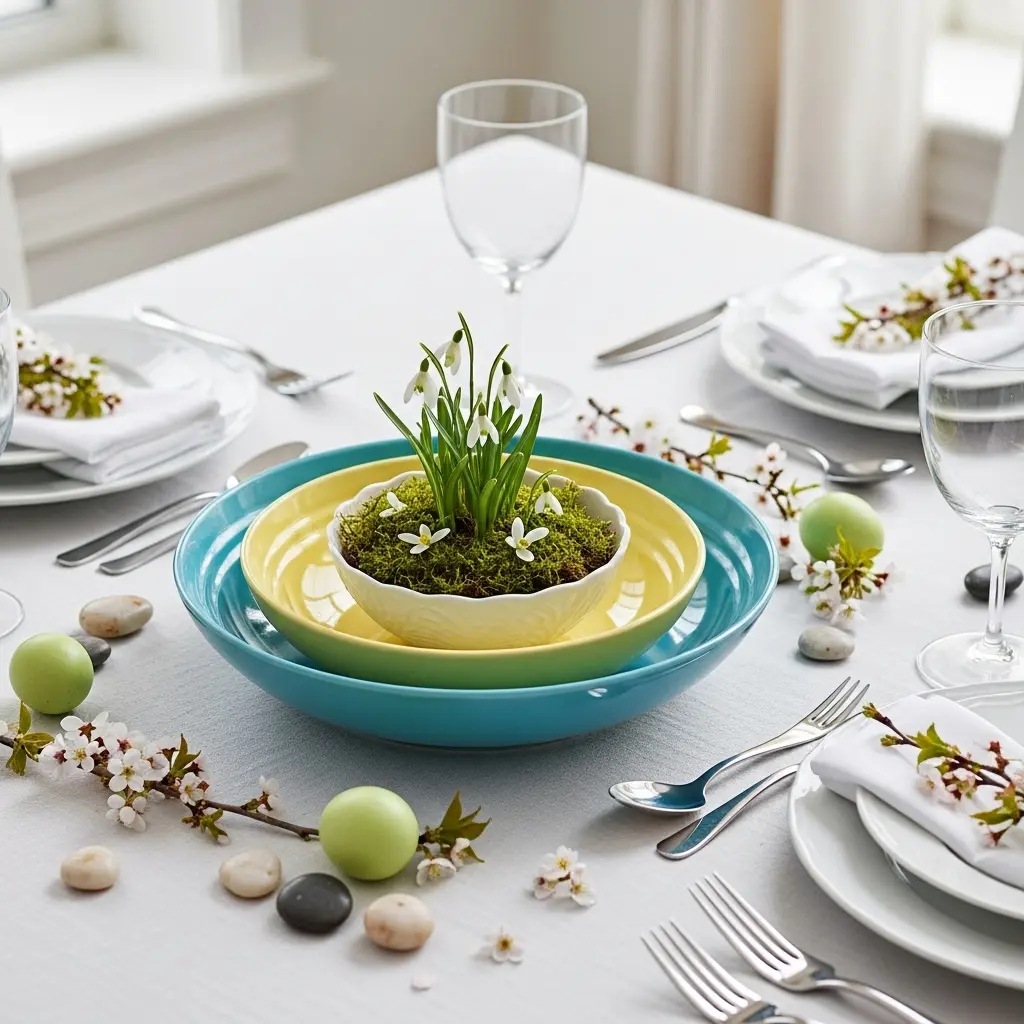
- Best For: A non-floral, highly sculptural centerpiece that plays with shape and negative space.
- Key Consideration: This is all about the quality and shape of the ceramics.
- Pro-Tip: Choose three low, wide bowls of different sizes but the same color or material (like matte white ceramic or rustic terracotta).
- Styling Cue: “Nest” them in an overlapping, off-center arrangement. You can leave them empty as a purely sculptural piece, or place a few stone-like “eggs” or a single air plant in the largest bowl.
10. The Concrete Planter
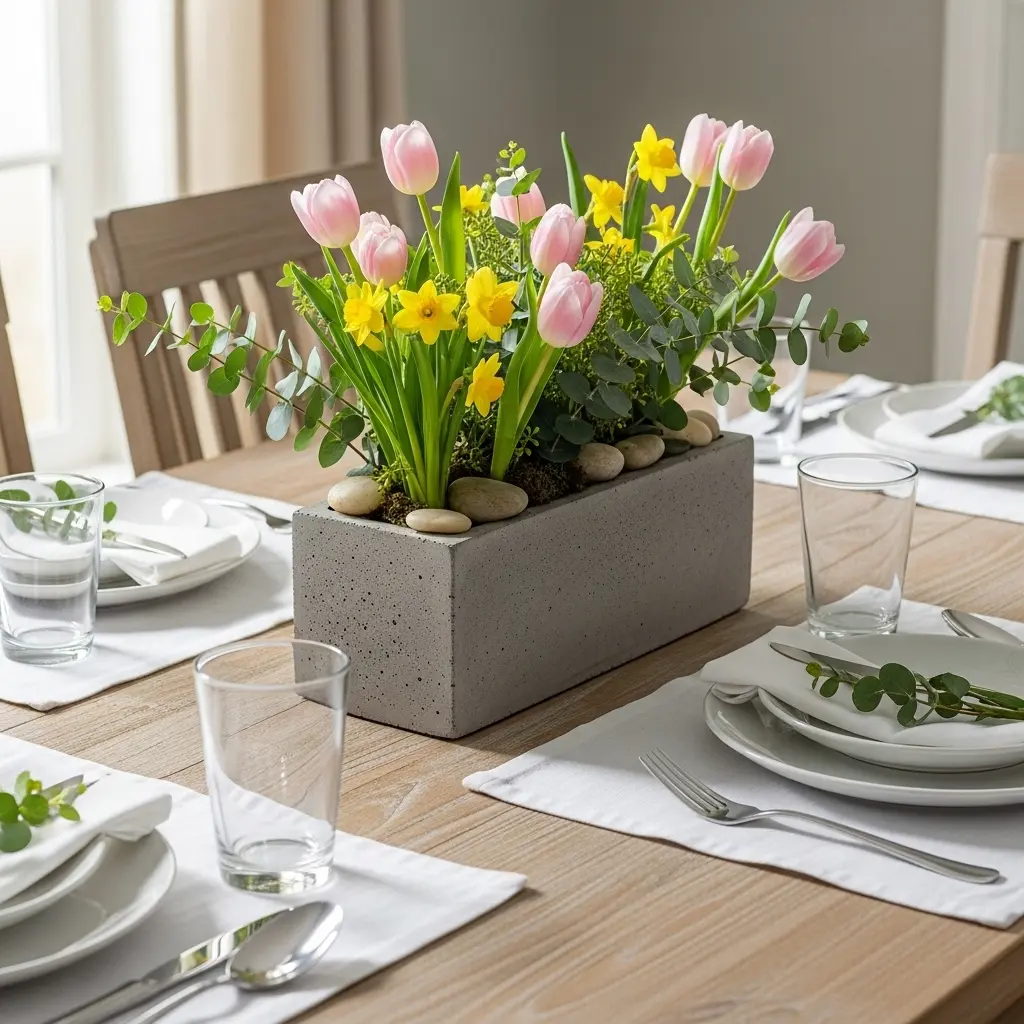
- Best For: A beautiful juxtaposition of a rough, industrial material with delicate spring life.
- Key Consideration: A low, rectangular concrete planter is a versatile and modern choice.
- Pro-Tip: Plant a row of wheatgrass or small Muscari (grape hyacinths) in the planter for a pop of vibrant green and blue that looks stunning against the grey concrete.
- Styling Cue: This single, substantial piece is all you need. Keep the rest of the table simple with linen napkins and plain white plates.
11. The Minimalist Candle Cluster
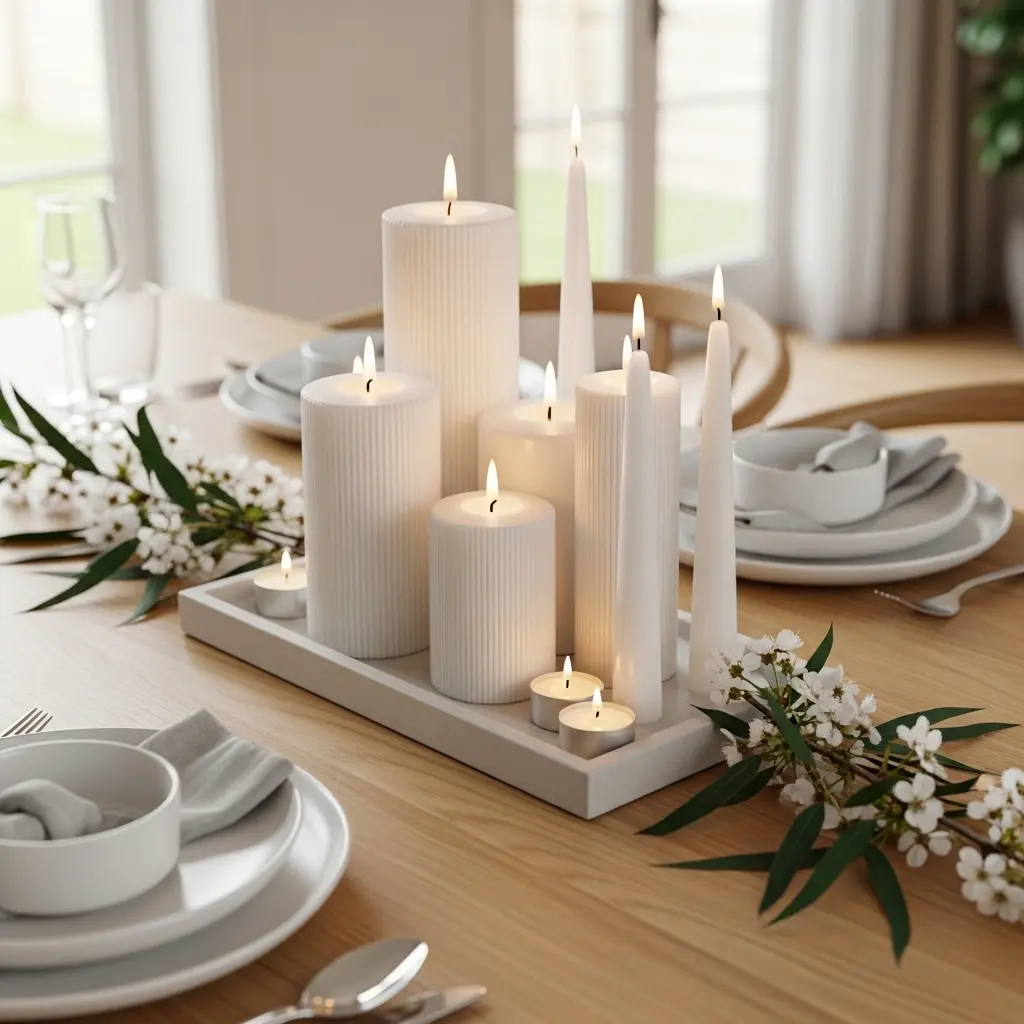
- Best For: An elegant, ambient centerpiece that’s all about clean lines and warm light.
- Key Consideration: The candle holders are the key design element.
- Pro-Tip: Choose a collection of sleek, modern candlestick holders in varying heights. Look for minimalist designs in matte black, brass, or brushed nickel.
- Styling Cue: Use high-quality, dripless taper candles in a single, neutral color like white, cream, or a chic putty gray.
12. The Fruit Feature
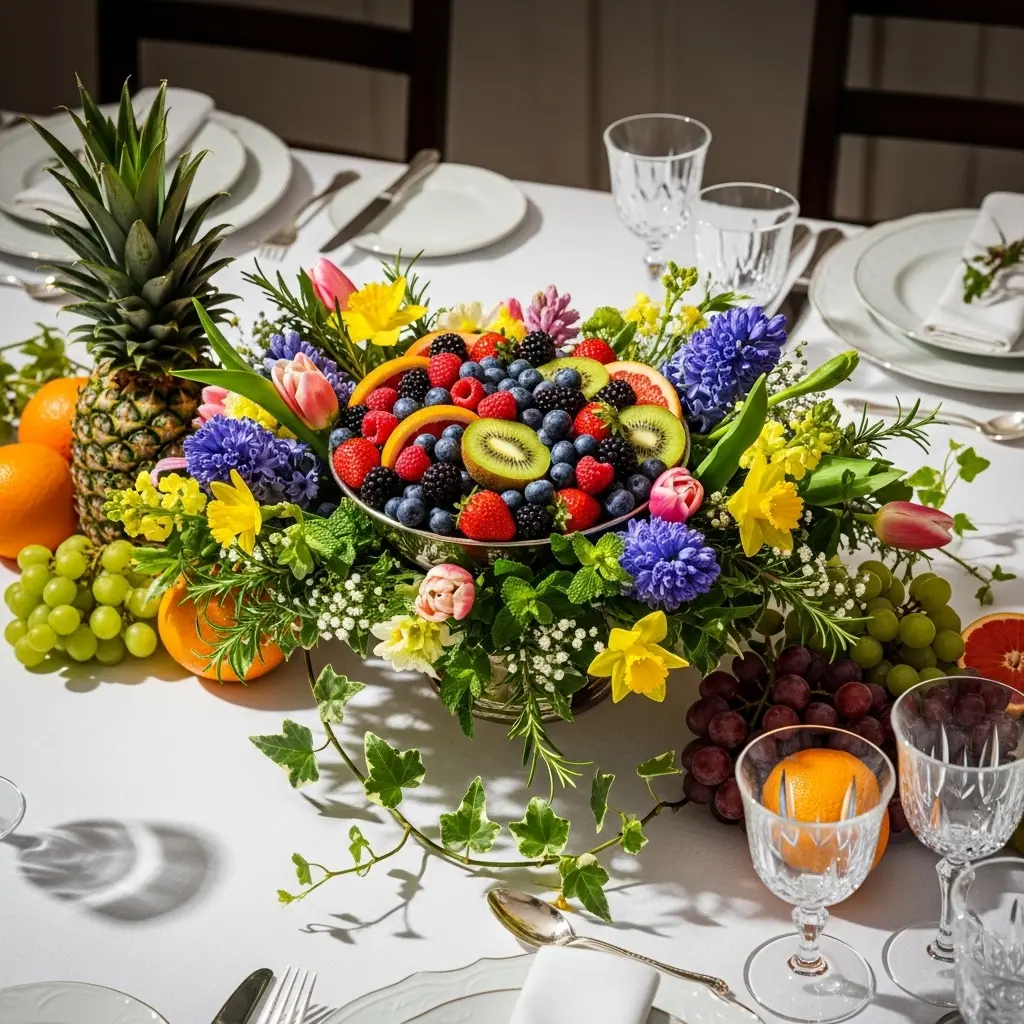
- Best For: A pop of natural, vibrant color that is simple and unexpected.
- Key Consideration: Choose one type of fruit and use it in abundance.
- Pro-Tip: Fill a long, low, and sleek white ceramic or wooden bowl to overflowing with bright yellow lemons or crisp green apples.
- Styling Cue: The single, bold block of color is the statement. Keep the rest of the table neutral to let it shine.
13. The Asymmetrical Greenery Runner
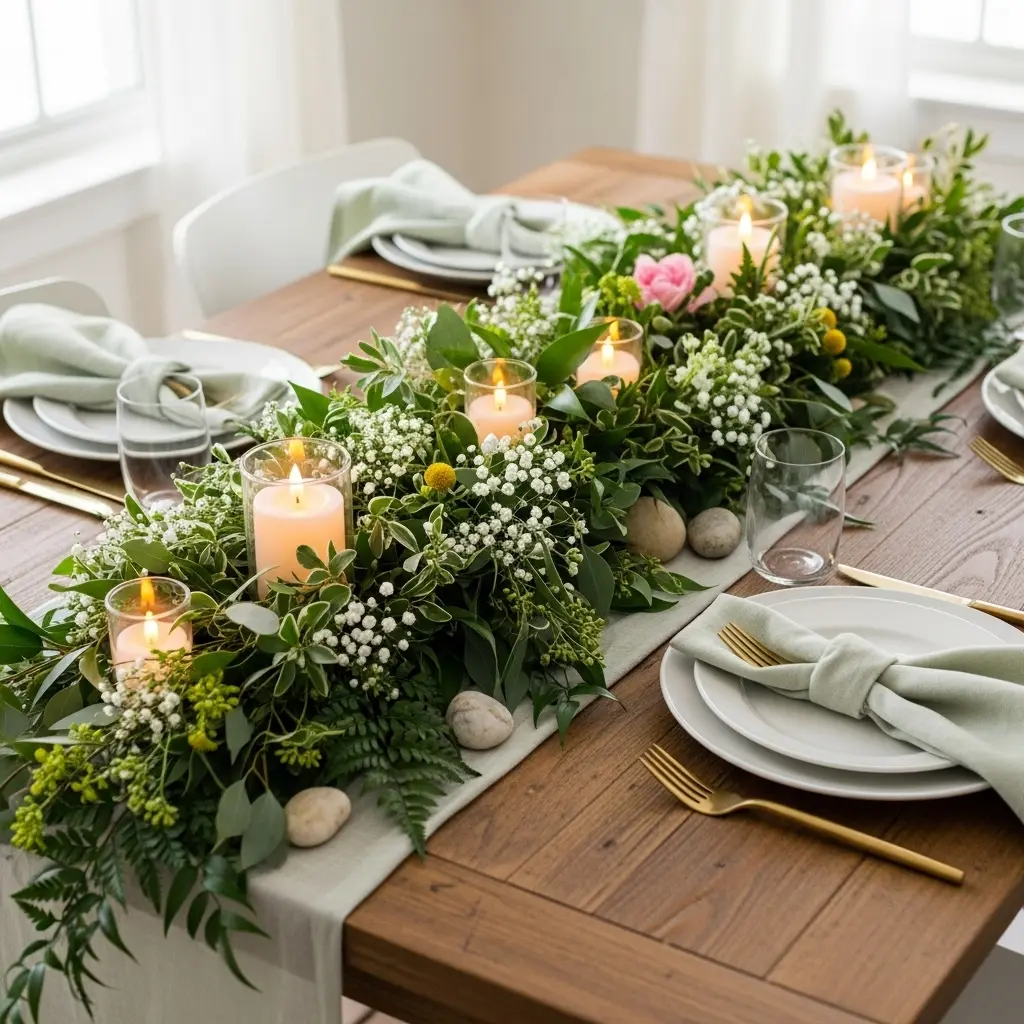
- Best For: A relaxed, organic, and modern take on a traditional garland.
- Key Consideration: This should feel light and airy, not dense and heavy.
- Pro-Tip: Instead of a thick, connected garland, lay a few long, separate strands of a drapey green, like seeded eucalyptus or olive branches, down one side of the table’s centerline.
- Styling Cue: Weave a few small votive candles in between the branches to create a beautiful, twinkling effect.
14. The “Cracked Egg” Vase
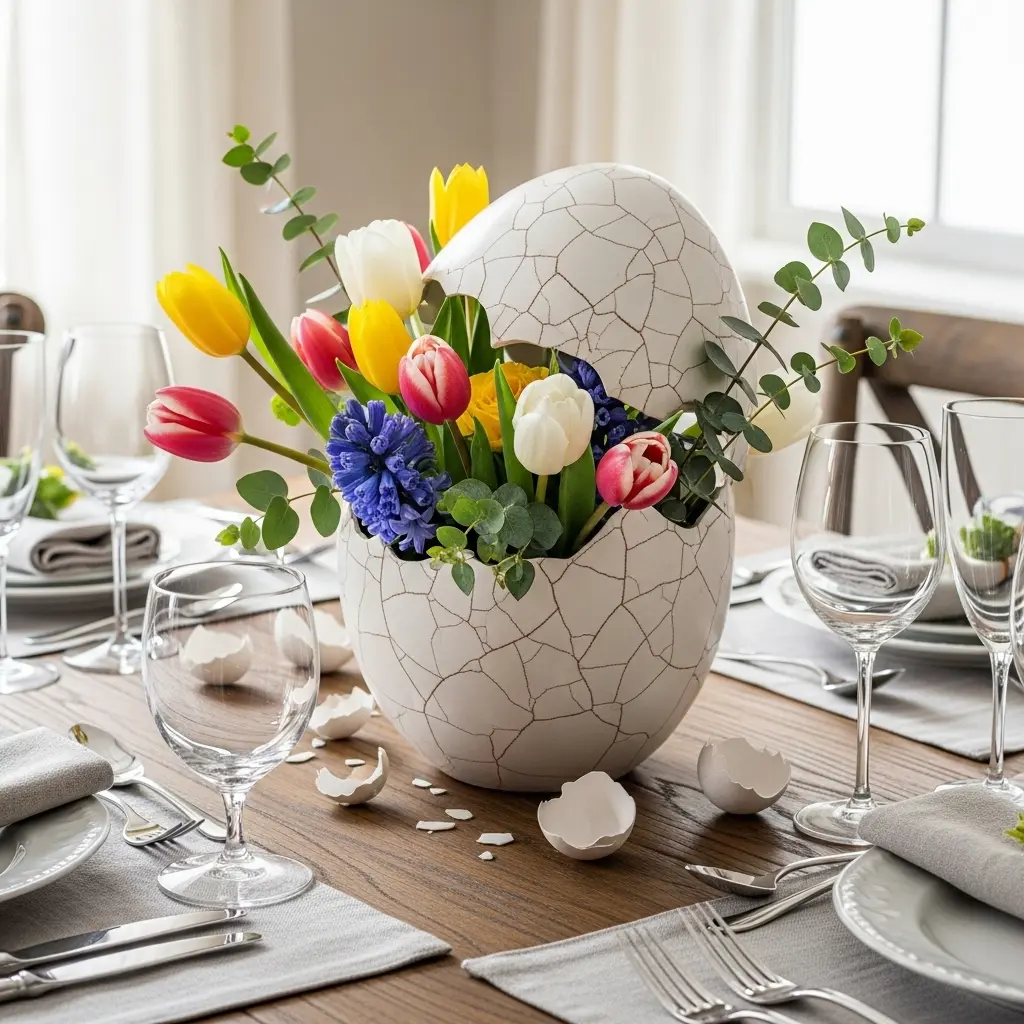
- Best For: A subtle, chic, and witty nod to the season.
- Key Consideration: Look for ceramic vases or bowls that are intentionally shaped like cracked eggshells.
- Pro-Tip: These small vessels are perfect for holding a few delicate stems of lily of the valley, a single pansy, or even just a small, vibrant green tuft of moss.
- Styling Cue: Group a few of these small “egg” vases together on a tray for a collected, curated look.
15. The Single Statement Leaf
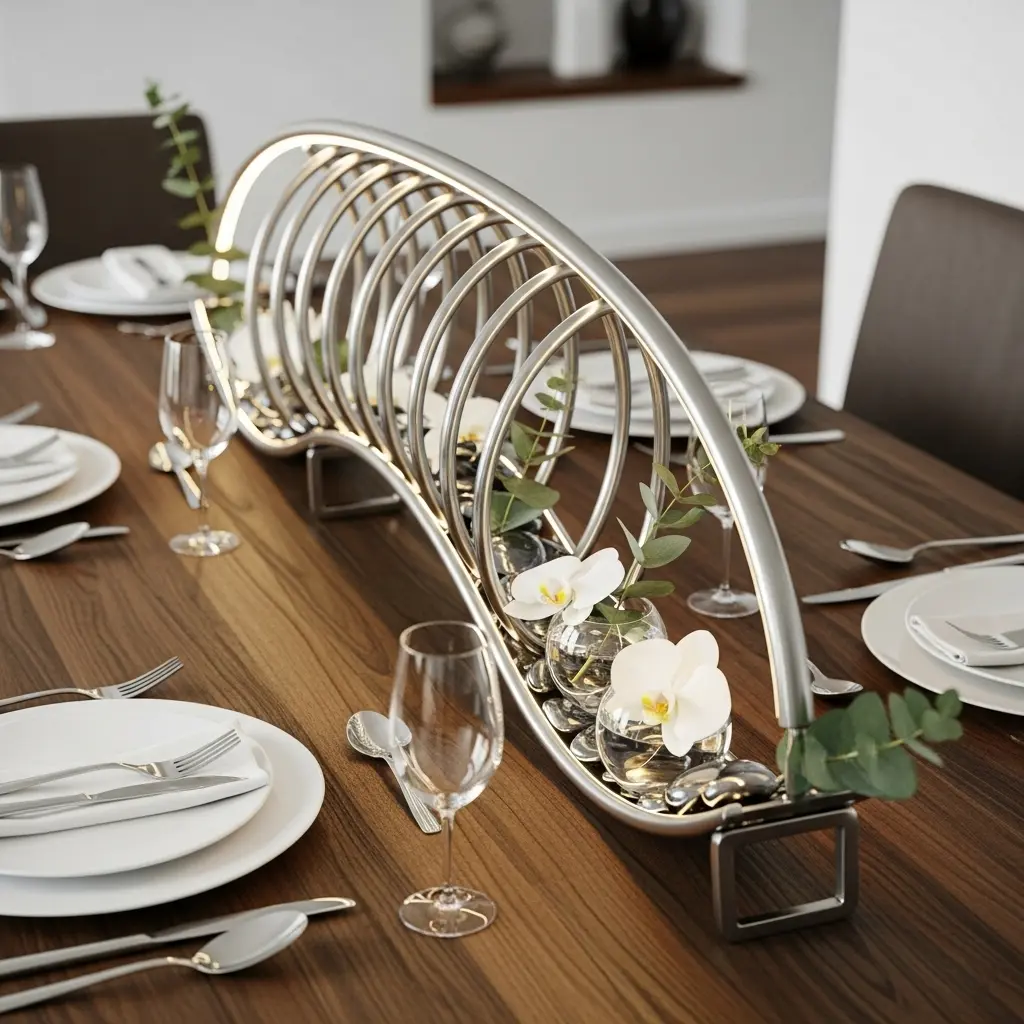
- Best For: The absolute peak of minimalism and sculptural simplicity.
- Key Consideration: The leaf must be large, fresh, and have a beautiful shape.
- Pro-Tip: A single, perfect Monstera leaf, a large palm frond, or a glossy philodendron leaf in a simple, clear glass vase is all you need.
- Styling Cue: This look is about confidence and restraint. The single leaf is the art. Let it have the entire center of the table to itself.
16. A Collection of Glass Vessels
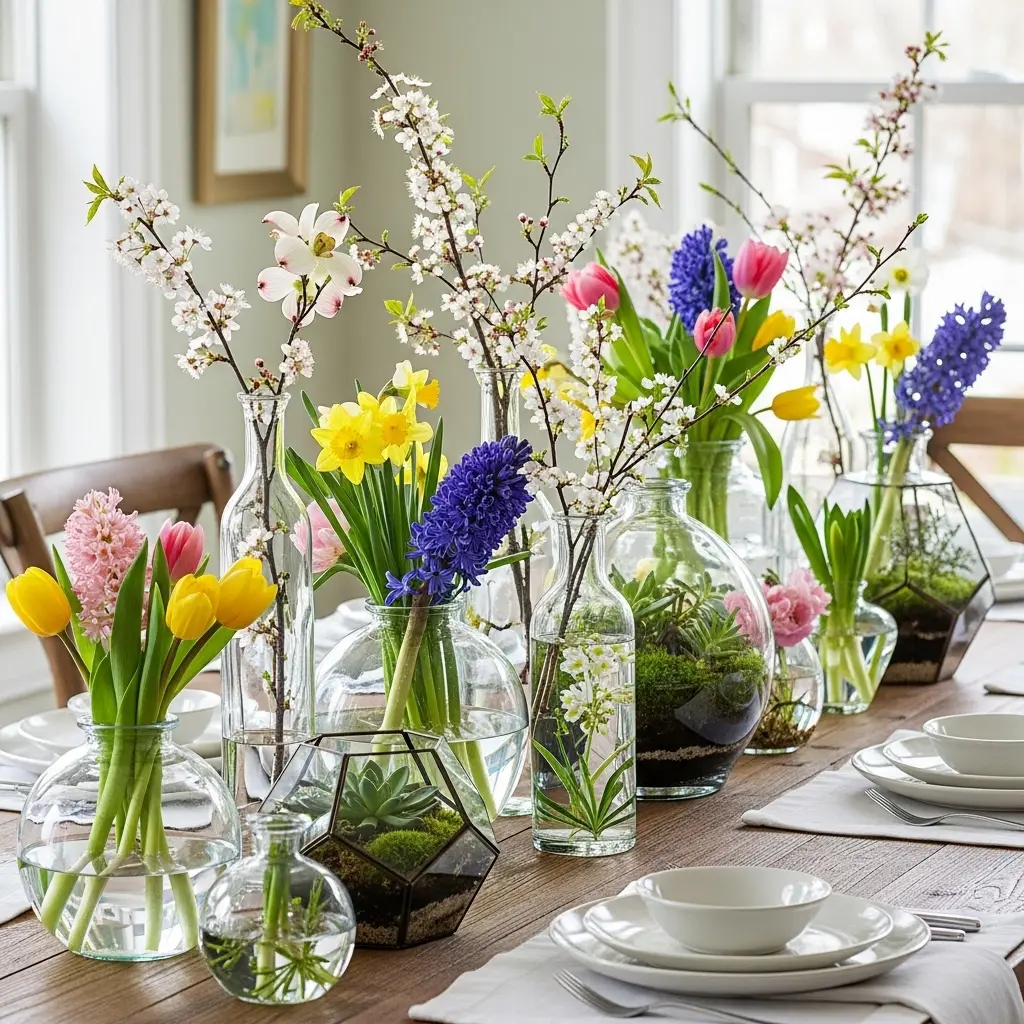
- Best For: Playing with light, transparency, and reflection.
- Key Consideration: The shapes of the vessels are the main attraction.
- Pro-Tip: Gather a collection of simple, clear glass bottles and vases in a variety of heights and shapes.
- Styling Cue: Leave most of them empty to appreciate their form. Place a single, delicate green stem or a white flower in just one or two of the vessels for a subtle, artistic touch.
17. The Layered Tray Foundation
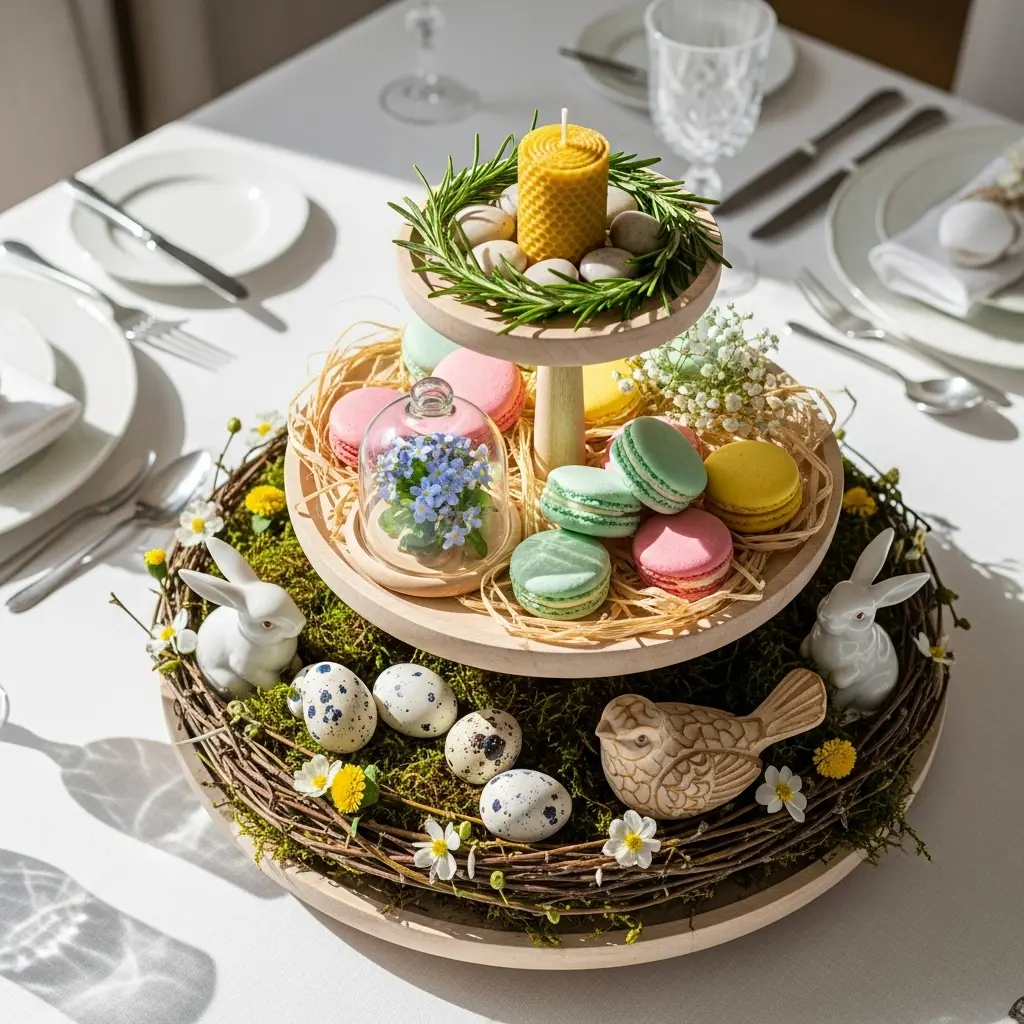
- Best For: Grounding a smaller arrangement and making it feel more intentional and substantial.
- Key Consideration: The tray acts as a “stage” for your centerpiece.
- Pro-Tip: Choose a tray with a clean, modern feel think a simple round wooden tray, a rectangular marble slab, or a sleek metal platter.
- Styling Cue: Place your main centerpiece element (like a small vase of flowers or a candle cluster) on the tray, and add one or two smaller supporting objects, like a small bowl and a decorative object, to create a contained and styled vignette.
Conclusion: Your Table, Rejuvenated
And just like that, you’re no longer just setting a table; you’re creating a modern art installation that celebrates the essence of spring.
You have the ideas, the inspiration, and the modern design secrets to craft a centerpiece that is fresh, sculptural, and a true reflection of you.
This isn’t just about making a pretty table; it’s about creating a clean, hopeful, and beautiful space to welcome the new season with style.
It all starts with a single choice. Pick one idea that felt like a breath of fresh air, and take the first small step.You’ve got this. Happy decorating.
