
Table of Contents
- High-Efficiency Floor-to-Ceiling Windows for Alpine Vistas
- Fire-Resistant Architecture and Wildfire-Resistant Landscaping
- Reinforced Structural Engineering for Heavy Snow Loads
- Winter-Proofed Septic Systems and Heated Luxury Amenities
- Sustainable Open-Concept Living with Vaulted Great Rooms
- Your Alpine Sanctuary Awaits
- Design Dilemmas Solved
Creating an alpine retreat is about more than just wood beams and stone hearths; it is about crafting a sanctuary that mirrors the majesty of the surrounding landscape.
Whether you are nesting in a modest cabin or a sprawling estate, the goal is to blend high-end aesthetics with the undeniable warmth of a mountain home. Every choice should feel intentional, grounding your space in comfort while reaching for a sophisticated finish.
To achieve this look, focus on layering textures and using natural materials that age gracefully over time. Consider how light interacts with raw timber and soft wool, as these elements provide the functional foundation of a cozy interior.
Practicality remains at the forefront of good design, ensuring that every corner of your home serves a purpose while maintaining a sense of effortless style.
You do not need a massive renovation budget to transform your living area into a mountain dream home. Simple updates like refreshing cabinet hardware or selecting the perfect area rug can make a significant impact without breaking the bank.
By combining expert design principles with creative DIY solutions, you can build a space that feels both luxurious and uniquely yours.
High-Efficiency Floor-to-Ceiling Windows for Alpine Vistas
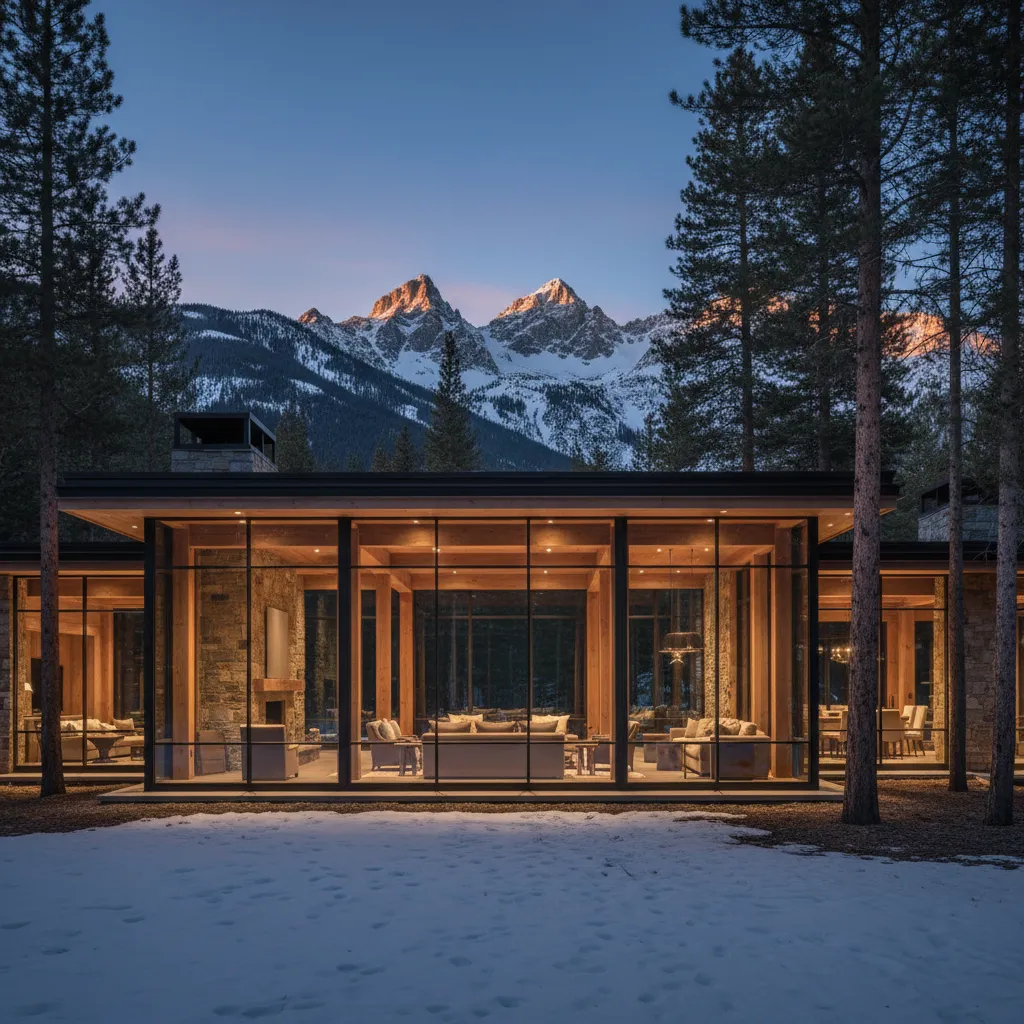
Massive glass walls bridge the gap between indoor luxury and the wild, rugged beauty of the snowy mountain peaks.
They flood the room with crisp, blue-toned natural light while showcasing the organic textures of nearby fir trees.
A view of the mountains is the only art a room truly needs.
Strategic placement of these windows maximizes spatial flow, making even a compact cabin feel airy and expansive.
To maintain warmth, you should choose frames with thermal breaks to stop cold air from leaching into the house.
By integrating hygge living room ideas, you can balance the vast glass with plush rugs.
Advanced Glazing and Thermal Comfort

High-efficiency glazing prevents heat loss, ensuring your living space stays warm during biting winter storms.
Triple-pane glass with low-E coatings blocks UV rays, protecting your curated furniture from fading over time.
These units also reduce external noise, allowing you to enjoy a peaceful, silent retreat regardless of the wind.
This insulation is vital when you want to create a cozy winter bedroom look that feels secure and warm.
| Window Feature | Benefit for Alpine Homes | Efficiency Level |
|---|---|---|
| Triple Glazing | Maximum thermal insulation | Very High |
| Low-E Coating | Reflects heat back inside | High |
| Argon Gas Fill | Reduces heat transfer | High |
The goal is to create a seamless transition where the glass almost disappears, leaving only the landscape.
Tom Kundig, Architectural Digest
Framing the Perfect Mountain Vignette
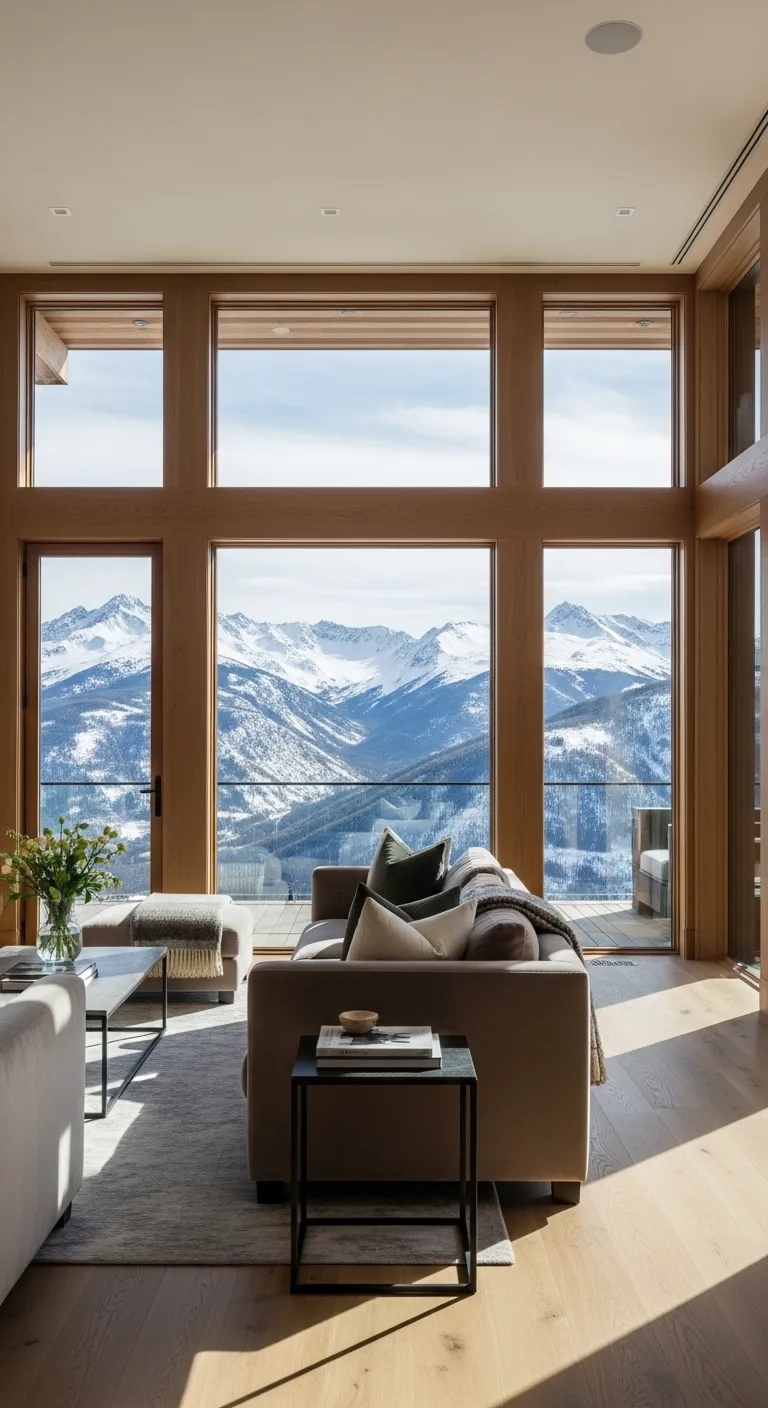
Using slim, dark metal frames creates a modern focal point that does not distract from the alpine scenery.
The contrast of cool glass against raw oak beams creates a striking visual balance that defines modern mountain style.
Positioning a statement piece of furniture near the window invites residents to pause and admire the changing weather.
The ambient lighting from the sun shifts throughout the day, altering the mood from energizing to serene and golden.
Alpine Intel
- Use motorized solar shades with a 1-3% openness factor to preserve your mountain view while cutting midday glare and protecting luxury fabrics from UV damage.
- Apply a hydrophobic treatment to the exterior glass surface to prevent snowmelt and mineral streaks from obstructing your vista during the winter months.
- To achieve a truly seamless look, match the interior window frame color to your wall paint to minimize visual breaks and make the glass feel like it disappears into the landscape.
Fire-Resistant Architecture and Wildfire-Resistant Landscaping
Building a mountain home demands a blend of raw beauty and high-level resilience. This approach protects both the structure and the scenery.
Materials like stone and metal offer a sleek finish. They provide vital protection while looking grounded in the rocky terrain.
Selecting Resilient Materials

Fire-rated materials like fiber cement siding offer a clean, modern look. They mimic the grain of raw wood without the inherent risk.
This choice improves the longevity of the home. It also creates a low-maintenance exterior that stands up to harsh mountain elements.
You can achieve a high-end look using modern exterior colors. Dark bronzes and deep greys complement the organic surroundings.
Safety and style coexist when we treat the landscape as a living shield and the architecture as a timeless fortress.
Strategic Defensible Landscaping
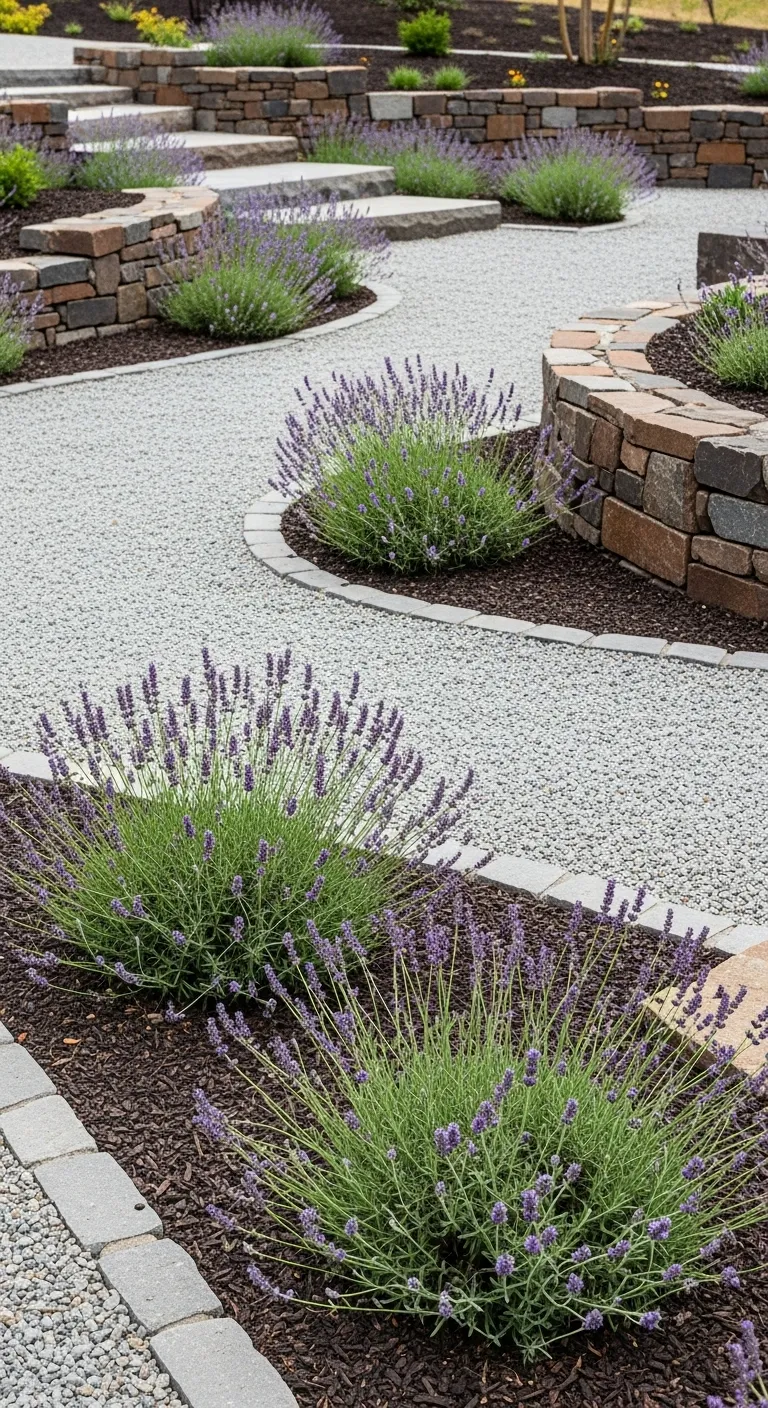
Landscaping plays a vital role in protection. Designers use gravel paths and stone walls to create natural firebreaks in the garden.
Choosing fire-resistant plants like lavender or succulents adds a curated, organic feel. These species hold moisture longer than dry brush.
The following table outlines how to structure your outdoor space for maximum safety without losing that cozy, mountain aesthetic.
| Zone | Distance | Design Elements |
|---|---|---|
| Zone 0 | 0 to 5 feet | Gravel paths, stone pavers, metal planters. |
| Zone 1 | 5 to 30 feet | Lush green lawns, low-growing native shrubs. |
| Zone 2 | 30 to 100 feet | Thinned tree canopies, cleared dry undergrowth. |
Functional design choices like stone yard dividers provide structure. They also serve as permanent barriers against heat.
The goal is to harden the home so that it can survive a wildfire without the need for firefighter intervention.
Daniel Gorham, Insurance Institute for Business & Home Safety
Ambient lighting along gravel paths improves safety at night. It also highlights the rugged textures of the mountain-inspired garden.
This thoughtful planning ensures your mountain retreat remains a peaceful sanctuary. It provides beauty that is built to last for generations.
Visual Cue: A modern mountain facade using slate-colored metal and light grey stone, surrounded by a minimalist gravel garden and native shrubs.
The Resilience Blueprint
- Swap traditional wood mulch for decorative river rock or crushed slate to create a stylish, non-combustible barrier directly around your foundation.
- Install fine-mesh metal screens over all attic and crawlspace vents to prevent wind-borne embers from entering the home’s structure.
- Prune tree limbs at least 10 feet from the ground in Zone 2 to eliminate ladder fuels and prevent fire from climbing into the canopy.
Reinforced Structural Engineering for Heavy Snow Loads
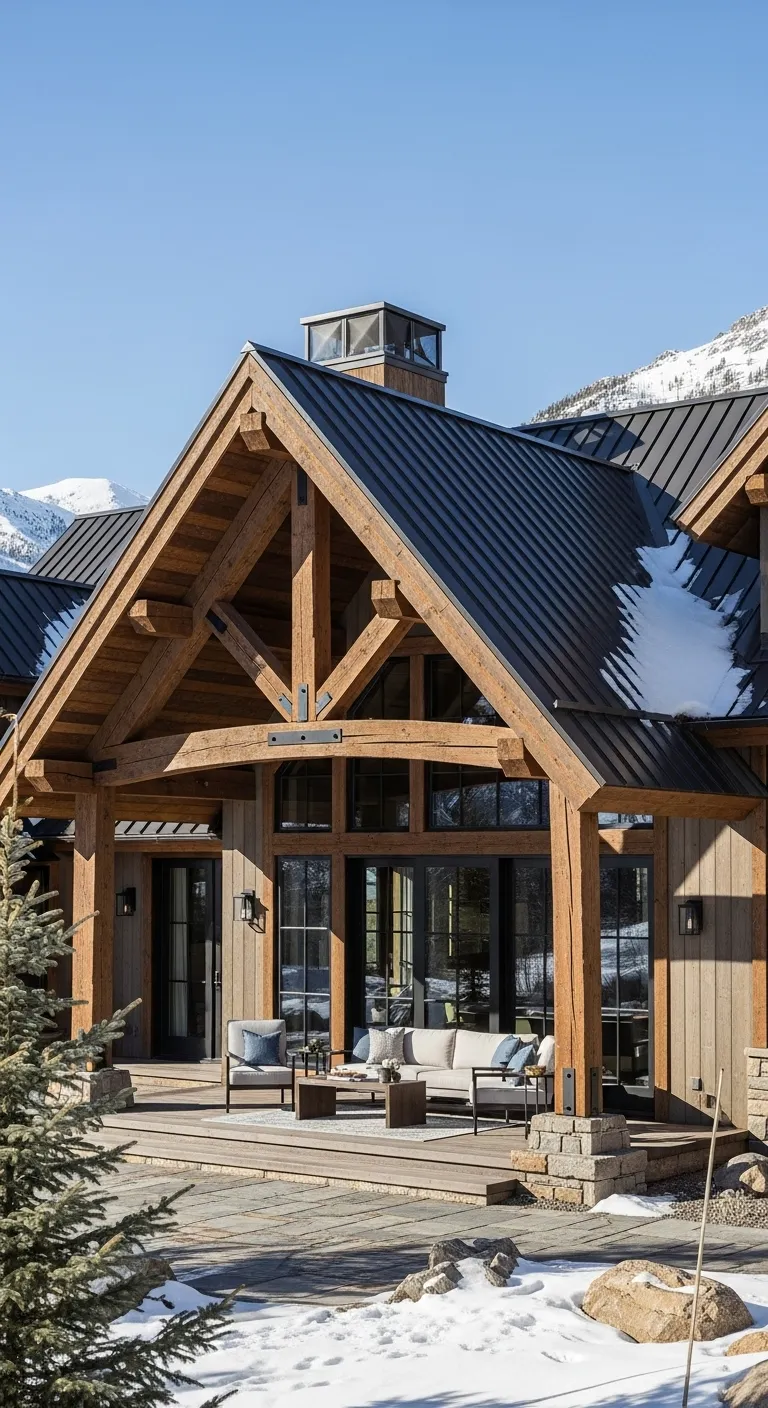
Building a mountain dream home requires a deep respect for the elements. Snow accumulation can create immense pressure on a building.
Engineers focus on reinforced framing to ensure safety. This involves using heavy-duty materials that can withstand thousands of pounds.
The visual impact of these structures is often breathtaking. Exposed timber beams add a curated, organic feel to the interior space.
These beams create a sense of security and warmth. They guide the spatial flow, leading the eye toward large, scenic windows.
Material Selection for Ultimate Durability

Steel and wood are the primary choices for mountain builds. Steel provides the necessary tension strength, while wood adds tactile depth.
Combining these creates a mid-century modern aesthetic. It feels both industrial and cozy, perfect for a high-altitude sanctuary.
You can pair this sturdy exterior with a hygge living room to balance the strength with softness.
Heavy timber trusses provide a warm, ambient glow when paired with soft lighting. They serve as a focal point while holding the weight of the sky.
A dream home in the mountains is only as beautiful as its ability to weather the storm.
Roof Pitch and Snow Management

A steep pitch is a functional necessity for snow. It allows gravity to do the work, preventing dangerous ice dams from forming.
According to FEMA, snow loads in mountainous regions can often exceed 100 pounds per square foot. This requires specialized engineering.
Choosing modern exterior colors can also help. Darker shades absorb sunlight, which helps melt snow more efficiently.
This functional choice improves the usability of the home. It reduces the need for manual snow removal and protects the foundation.
Structural honesty in mountain architecture means the house must look as strong as the landscape it inhabits.
Reid Smith, Reid Smith Architects
To ensure your mountain retreat remains a sanctuary, consider these essential structural features:
- Glulam Beams: These offer superior strength and allow for wide, open-concept floor plans.
- Metal Roofing: Smooth surfaces help snow slide off easily, preventing weight buildup.
- Steel Connectors: Blackened steel plates add an industrial finish and reinforce joints.
- Reinforced Foundations: Extra-deep footings prevent shifting during freeze and thaw cycles.
Each choice ensures that your home is not just a seasonal escape, but a lasting legacy. Stability and style go hand in hand here.
Peak Performance Secrets
- Opt for dark-toned metal roofing to leverage passive solar heat, which helps melt accumulated snow faster and reduces weight stress on the structure.
- Install integrated heat cables in gutters and along roof eaves to prevent dangerous ice damming that can compromise even the strongest structural framing.
- Combine glulam beams with blackened steel gusset plates for a structural honesty look that provides industrial-grade strength with a refined mountain aesthetic.
Winter-Proofed Septic Systems and Heated Luxury Amenities

Winter-proofing is the backbone of any mountain retreat. It ensures your home stands strong against the harshest elements. This blend of tech and style creates a true sanctuary.
Septic systems in alpine regions face unique challenges. Deep frost can penetrate the soil and freeze standard lines. Insulation and proper slope are essential for success.
Invisible Resilience: Winter-Proof Septic Design

Properly insulated septic pipes are vital. They prevent frozen lines during deep freezes. This ensures your mountain retreat remains functional and stress-free all winter long.
Consider installing heat tape along vulnerable exterior segments. This small addition offers huge peace of mind. It protects your infrastructure from extreme cold and costly repairs.
Vegetation also plays a role in soil warmth. Thicker ground cover acts as a natural blanket for your system. It keeps the ground temperature stable during the coldest months.
In mountain environments, radiant floor heating is not just a luxury, it is a primary heat source that provides consistent, draft-free warmth.
Jamie Daugaard, Centre Sky Architecture
The Warmth of Luxury: Heated Amenities
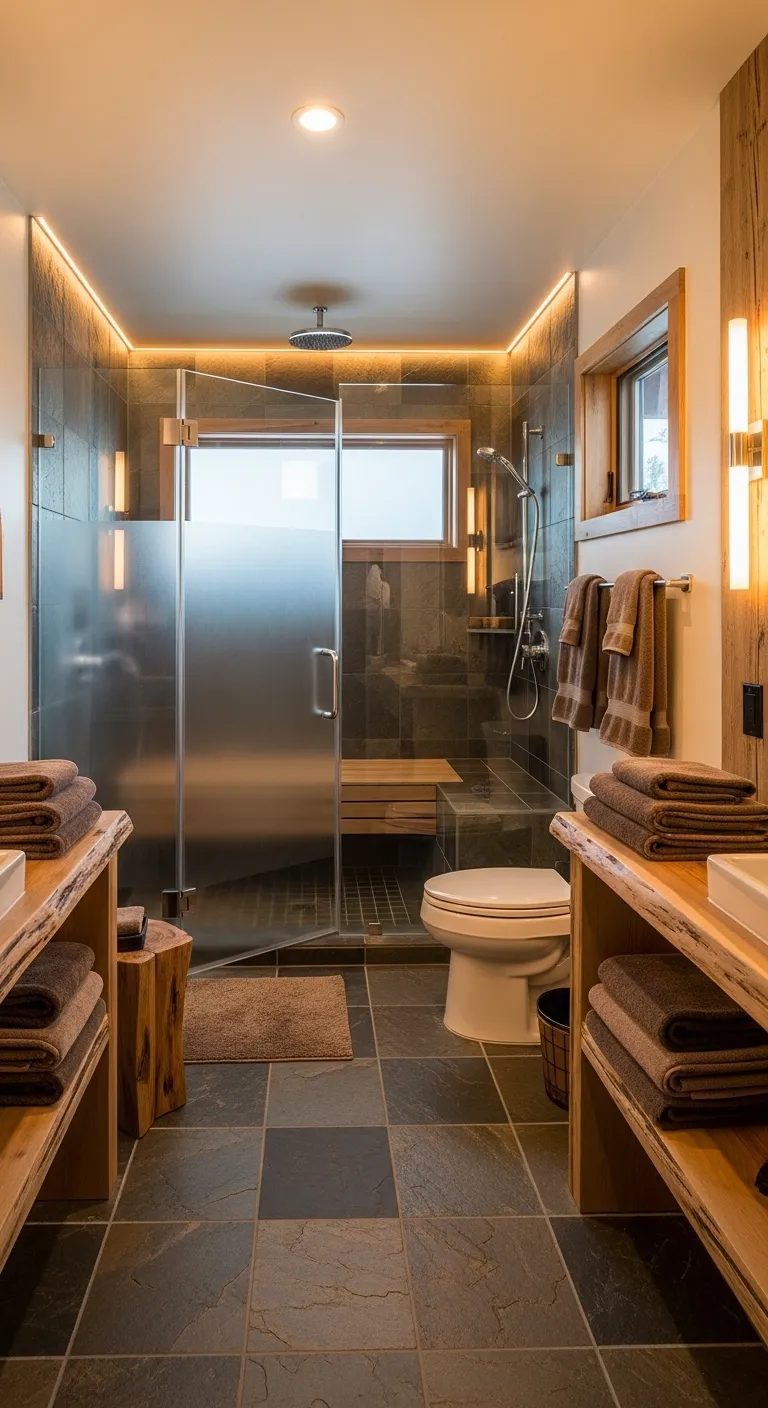
Radiant floor heating transforms the feel of a room. Imagine stepping onto warm slate or oak after a long day of skiing. It provides a soft, ambient glow of heat throughout.
This system improves spatial flow by removing bulky radiators. It allows for cleaner lines and more furniture placement options. It also pairs well with how to create a cozy winter bedroom look for total comfort.
Heated driveways are another game-changer for mountain living. They melt snow automatically, ensuring safe access to your home. No more early morning shoveling or icy slips on the pavement.
True mountain luxury is found where invisible engineering meets visible comfort, creating a sanctuary that thrives in every season.
Inside the home, consider adding a steam shower with heated seating. This tactile experience offers a spa-like retreat from the cold. It adds immense value and functionality to your primary suite.
You can also explore winter decor ideas for the home outside to try to complement these functional upgrades. A well-prepared exterior is the first step to interior coziness.
| Amenity | Material Highlight | Primary Benefit |
|---|---|---|
| Radiant Floors | Slate or Oak | Consistent, draft-free heat |
| Heated Driveway | Pavers or Concrete | Automatic snow removal |
| Steam Shower | Natural Stone | Muscle recovery and luxury |
| Insulated Septic | Polystyrene Foam | Prevents winter pipe bursts |
Every design choice should enhance the usability of the space. From the ground up, these features ensure your home is a refuge. They allow you to enjoy the beauty of the snow safely.
Alpine Excellence Tips
- Leave a layer of undisturbed snow over your septic tank and drain field as it acts as a natural insulator against deep frost penetration.
- Integrate your heated driveway and radiant flooring into a smart home system to automate heating cycles based on real-time weather forecasts.
- Schedule an annual fall septic inspection to ensure baffles are clear and levels are managed before the ground freezes and limits access.
Sustainable Open-Concept Living with Vaulted Great Rooms
<Header Image: wide architectural shot of a styled room>
Vaulted ceilings create a sense of awe. They mimic the grand scale of the peaks outside. This design choice opens up the floor plan effortlessly.
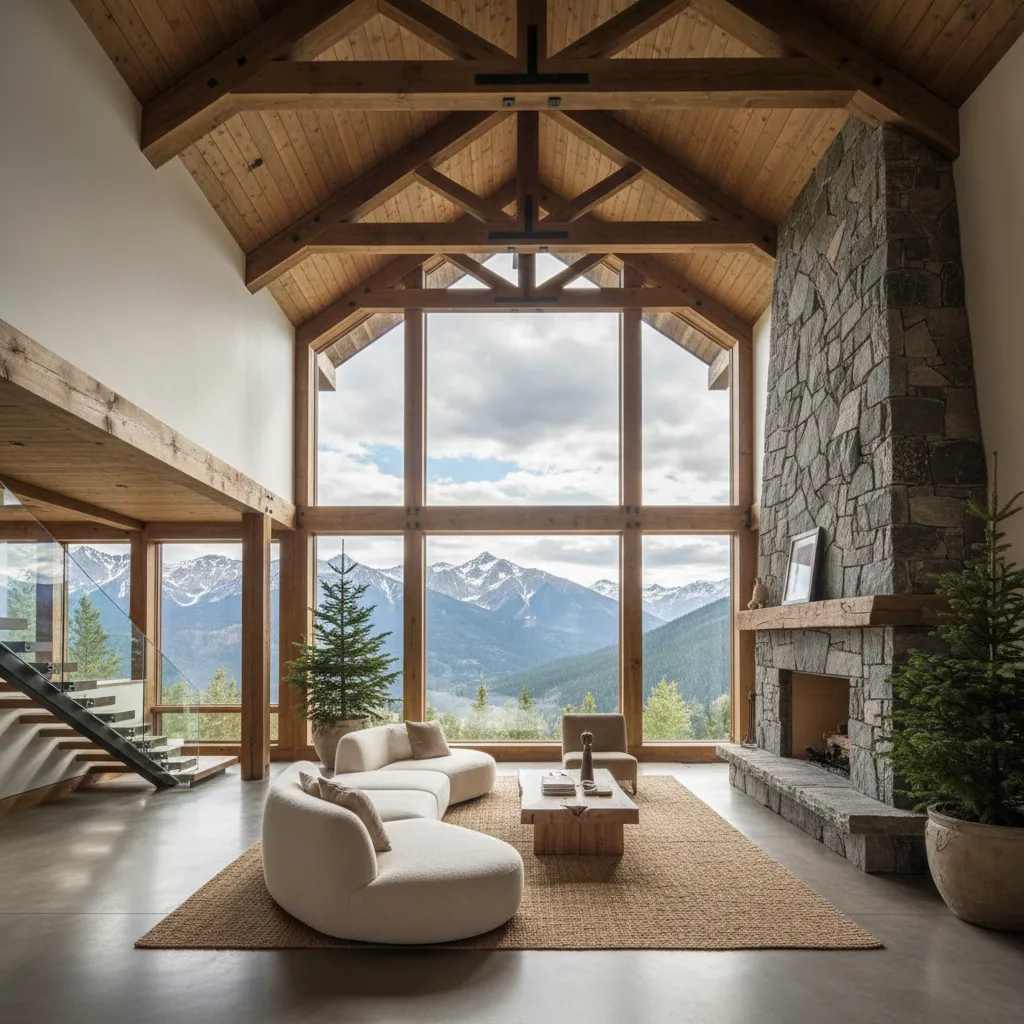
Reclaimed wood beams add a rustic layer. These materials bring history into modern builds. They create a grounded atmosphere in your living space.
Large windows are essential. They invite natural light to flood the room. This reduces the need for artificial lighting during the day.
A vaulted room captures the spirit of the mountains, turning a simple home into a sanctuary.
Maximizing Spatial Flow and Comfort

An open layout improves usability. It allows for better air circulation. This keeps the home cool in summer and warm in winter months.
To keep the space cozy, use organic textures. Soft wool rugs and linen pillows balance the high ceilings. This creates a peaceful, lived-in feel.
Incorporate elements from 20 hygge living room ideas to add warmth. Candlelight and soft throws make large rooms feel intimate.
Sustainable design is not just about the materials you choose, but how you use the natural environment to heat and light your home.
Mary Jo Peterson, Kitchen & Bath Design News
Sustainable Material Choices
Choosing the right materials impacts durability. Stone and metal are popular for mountain dream homes. They resist wear and provide a timeless look.
- Reclaimed Timber: Lowers carbon footprint and adds character.
- Low-E Glass: Prevents heat loss through large windows.
- Local Stone: Reduces transport emissions and looks organic.
A central hearth often serves as a focal point. You can explore various 22 cozy fireplace looks to find your perfect style match.
Sustainability also involves energy efficiency. According to the U.S. Department of Energy, energy-efficient windows can reduce energy bills by about 12 percent on average.
| Material | Benefit | Texture |
|---|---|---|
| Reclaimed Oak | Eco-friendly | Grained and Raw |
| Slate Stone | Thermal Mass | Cool and Smooth |
| Recycled Steel | High Strength | Sleek and Matte |
This combination of height and sustainability defines modern mountain living. It offers a luxury experience that respects the natural world.
Eco-Elevation Secrets
- Install high-efficiency ceiling fans with a reverse function to push trapped warm air down from the vaults during winter, significantly lowering heating costs.
- Layer your lighting with low-hanging pendants and wall-mounted sconces to create a human-scale feel that prevents the vast open space from feeling cold at night.
- Utilize thermal-lined linen curtains on large windows to maintain the mountain views while adding an extra layer of insulation against evening chills.
Your Alpine Sanctuary Awaits
Designing a mountain home is about balancing raw nature with modern comfort. It is where high-efficiency glass meets the rugged soul of the peaks.
By prioritizing resilient materials and cozy textures, you create a haven that lasts. Every window view becomes a living canvas for your daily life.
Whether you are building from scratch or renovating a cabin, focus on the flow. Your dream retreat should feel as timeless as the mountains themselves.
Design Dilemmas Solved
Use triple-pane glass and frames with thermal breaks. These features stop cold air from leaching in, keeping your interior warm during storms.
Opt for stone, metal, and fiber-cement siding. These materials offer a sleek, modern look while providing a vital shield against wildfire risks.
Layer plush rugs with raw textures like oak beams. Incorporating hygge elements balances the vastness of the windows with intimate warmth.
Slim, dark metal frames act like a picture frame for the landscape. They provide a modern focal point without distracting from the natural scenery.
