
Table of Contents
- Waterproof Flooring Solutions: Concrete and Luxury Vinyl for Wet Lake Feet
- Performance Upholstery: Choosing Fabrics That Withstand Wet Swimsuits
- Modern Rustic Aesthetics: Mixing Raw Stone Textures with Sleek Minimalism
- The View-Centric Layout: Positioning Minimalist Furniture for Maximum Visibility
- Indoor-Outdoor Flow: Integrating Sliding Glass Walls with Durable Patio Styling
- Anchoring Your Modern Waterfront Retreat
- Lake Life Design Dilemmas Solved
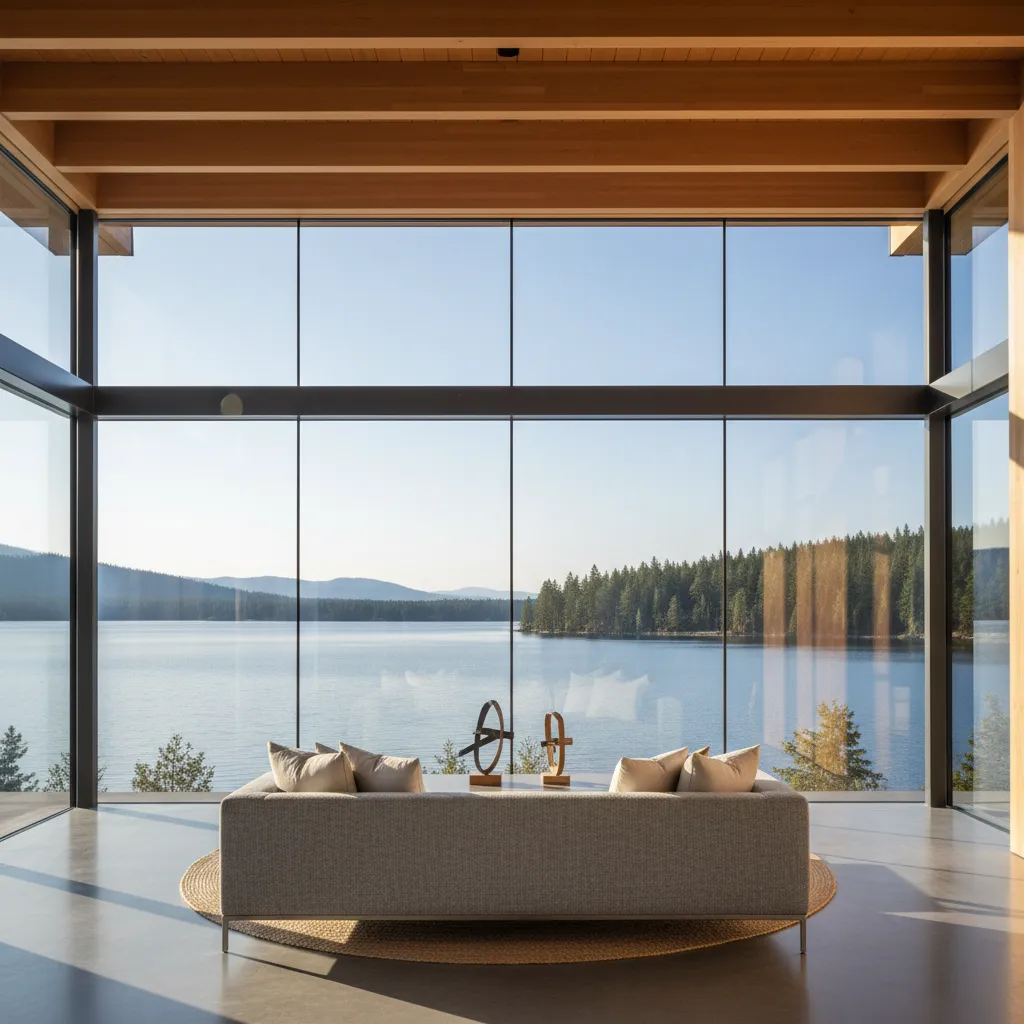
Creating the perfect modern lake house is about capturing the serenity of the water and bringing it indoors.
You do not need floor-to-ceiling windows to achieve that breezy, sophisticated atmosphere.
It starts with a palette inspired by nature, mixing soft neutrals with organic textures that mimic the landscape outside.
Functionality is just as crucial as aesthetics when styling a lakeside retreat. We will explore how to select durable fabrics that withstand wet swimsuits and muddy paws while maintaining a chic look.
Whether you are remodeling a kitchen or simply refreshing a corner with new accessories, the goal is effortless luxury that feels inviting rather than untouchable.
This guide covers everything from lighting fixtures that mimic the glow of a sunset to clever storage solutions for weekend gear.
We have gathered practical tips and budget-friendly hacks to help you curate a space that feels deeply personal. Get ready to transform your home into a modern sanctuary that celebrates the view without competing with it.
Waterproof Flooring Solutions: Concrete and Luxury Vinyl for Wet Lake Feet
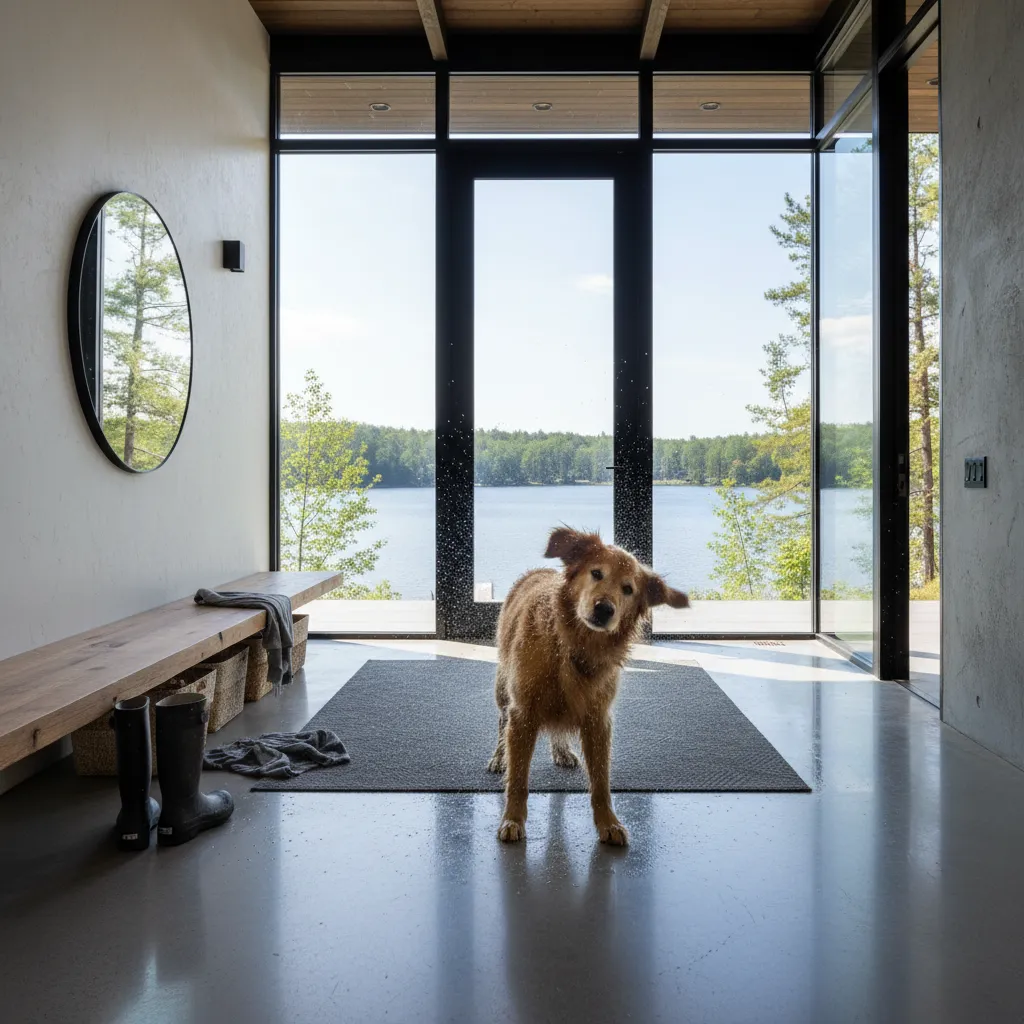
Lake life effortlessly blurs the boundary between the outdoors and your interior living space. This constant flow creates a relaxed atmosphere.
However, it also brings nature inside in the form of wet swimsuits, muddy paws, and sand. Your flooring must withstand these elements daily.
Traditional hardwood often warps under the high humidity levels typical of waterfront properties. This makes durability a primary concern.
Modern design favors materials that are impervious to water while maintaining a sophisticated aesthetic. Functionality does not mean sacrificing style.
The best luxury is a home where you don’t have to worry about ruining the floors.
The Industrial Elegance of Polished Concrete
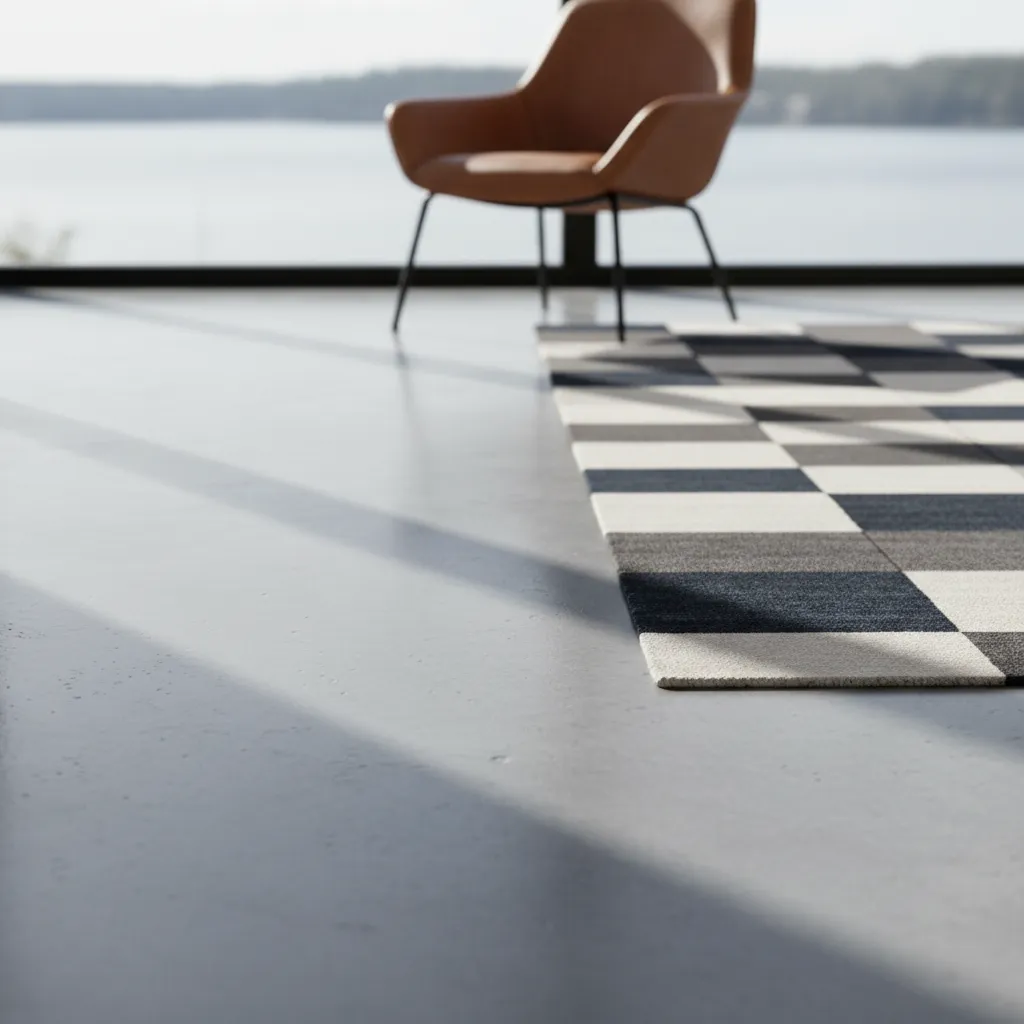
Polished concrete offers a seamless and cool aesthetic that defines modern minimalism. It reflects light to make spaces feel larger.
The slate gray tones of concrete create a beautiful contrast against the organic greens and blues outside. It acts as a neutral canvas.
This material is virtually indestructible and handles standing water without issue. It is easy to sweep sand away without scratching the finish.
Concrete can feel cold underfoot during cooler months. Many designers install radiant heating systems underneath for year-round comfort.
This flooring choice works exceptionally well if you are designing open layouts. For inspiration on layouts, check our 15 Modern House Floor Plans for Stylish Living Guide to see how flow matters.
Luxury Vinyl Plank (LVP): The Wood Look Alternative
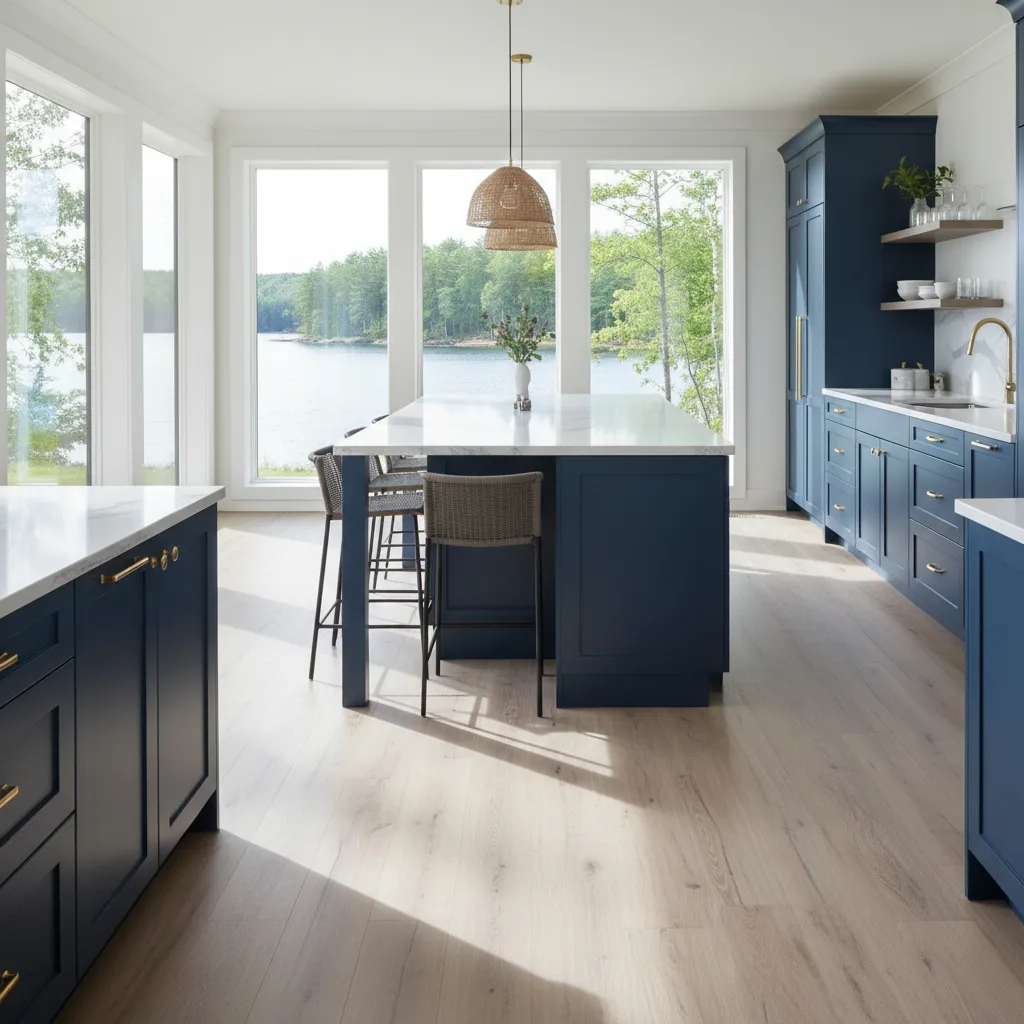
If you crave the warmth of wood without the maintenance, Luxury Vinyl Plank is the answer. It mimics the grain and texture of real oak.
LVP is completely waterproof and will not swell when exposed to lake humidity. This makes it ideal for bathrooms and entryways.
Modern manufacturing gives these planks a realistic matte finish. They add a tactile, organic element to the room without the risk of rot.
It creates a cozy vibe that suits rustic renovations perfectly. See our Cabins and Cottages in the Woods Mountain: Design Guide for more rustic inspiration.
LVP is also softer underfoot than concrete or tile. This provides better acoustic dampening in large rooms with high ceilings.
When selecting flooring for a lake house, avoid solid hardwood which expands with moisture. Engineered wood or high-quality luxury vinyl plank offers stability and the aesthetic of wood without the warping risks.
Emily Henderson, Style by Emily Henderson
Comparing Durability and Style
Choosing between concrete and vinyl depends on your specific lifestyle needs. Review this comparison to decide which material suits your lake house best.
| Feature | Polished Concrete | Luxury Vinyl Plank (LVP) |
|---|---|---|
| Water Resistance | Excellent (Impervious) | Excellent (100% Waterproof) |
| Comfort/Warmth | Cold (Requires rugs/heating) | Warm and softer underfoot |
| Aesthetic | Industrial, Modern, Sleek | Traditional, Cozy, Organic |
| Maintenance | Low (Resealing occasionally) | Low (Standard mopping) |
| Installation | High Cost (Professional only) | Moderate Cost (DIY friendly) |
Ultimately, both options allow you to enjoy the lake without fretting over the floors. The right choice blends durability with your design vision.
Lakeside Design Secret
- Combat the chill of polished concrete by installing radiant floor heating systems; it turns a cold industrial surface into a cozy year-round feature.
- Use washable area rugs over concrete in high-traffic zones to trap sand and add softness to the room without sacrificing the durability of your base flooring.
- When choosing Luxury Vinyl Plank, opt for wide-plank styles with a matte finish to most accurately replicate the organic look and feel of real timber.
Performance Upholstery: Choosing Fabrics That Withstand Wet Swimsuits
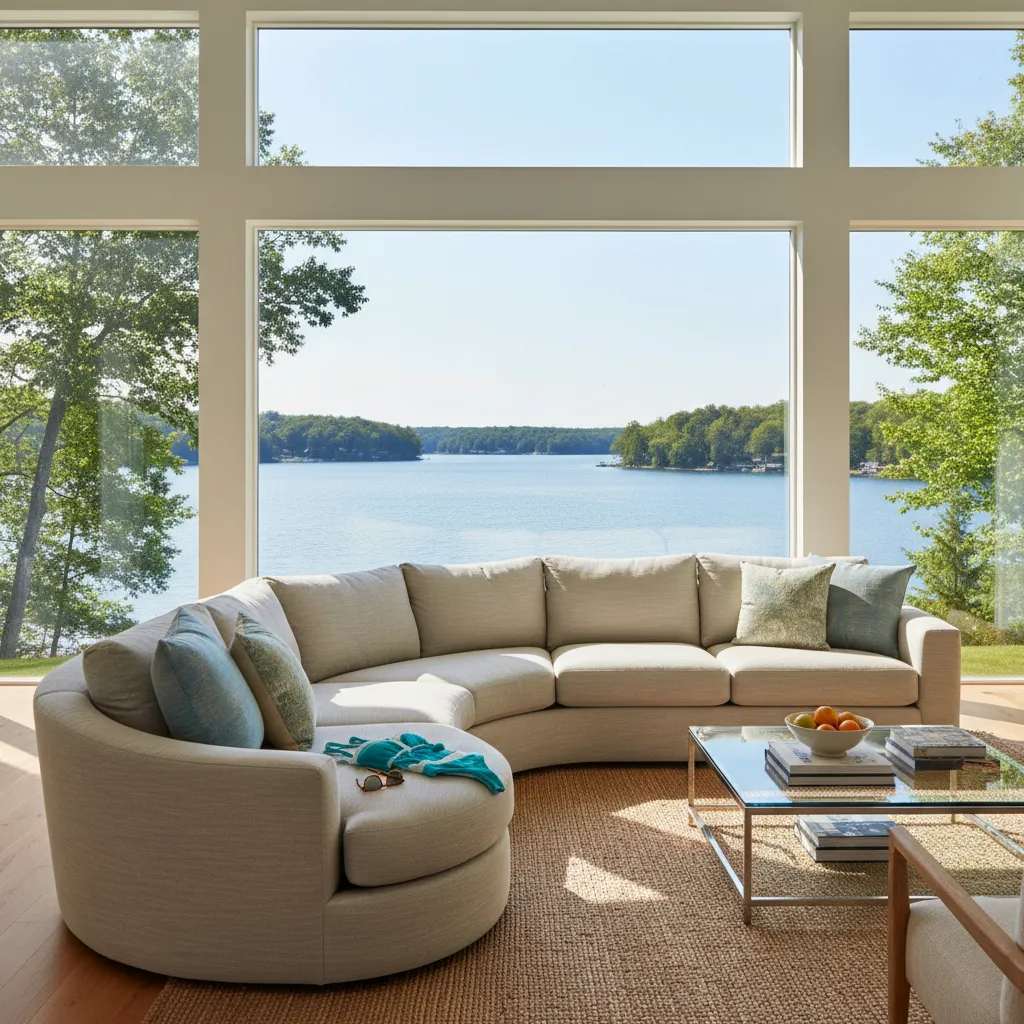
Living by the water blurs the lines between indoors and out. Your furniture must handle wet swimsuits without losing its sophisticated edge.
Gone are the days of stiff outdoor covers. Modern performance fabrics offer the soft touch of linen or velvet with incredible resilience against moisture.
Choosing the right material ensures a seamless flow from your dock to your living room. It pairs perfectly with chic backyard landscaping designs that encourage outdoor living.
True luxury in a lake house is not worrying about the furniture when your guests walk in from the dock.
The Power of Solution-Dyed Acrylics
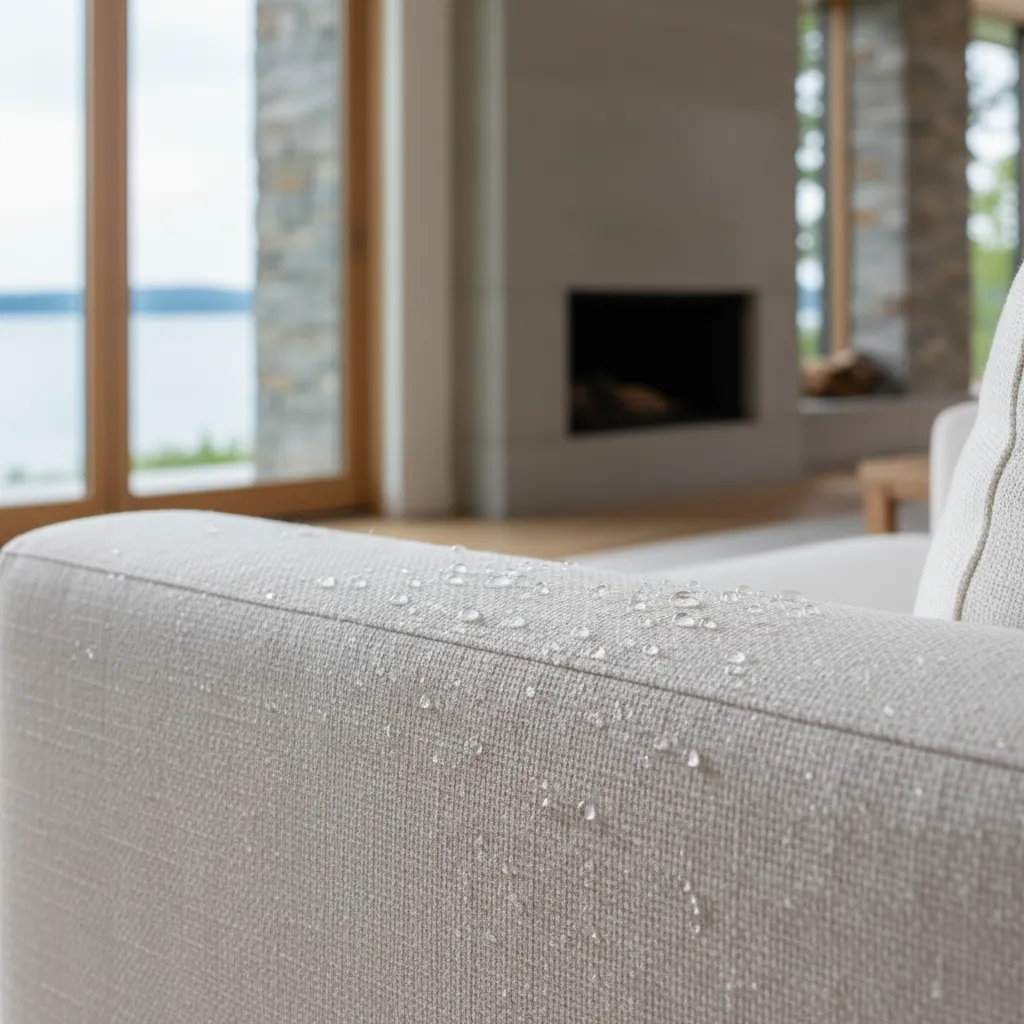
Solution-dyed acrylics are the gold standard for lakefront interiors. The color penetrates the fiber core to prevent fading from harsh reflected sunlight.
These fabrics are often bleach-cleanable and resistant to mildew. This functionality keeps your white sectional pristine after a busy summer weekend.
Performance fabric is a no-brainer for high-traffic areas… It repels water and resists stains, making it perfect for families and pet owners.
Shea McGee, Studio McGee Design Guide
Textured Weaves and Slipcovers
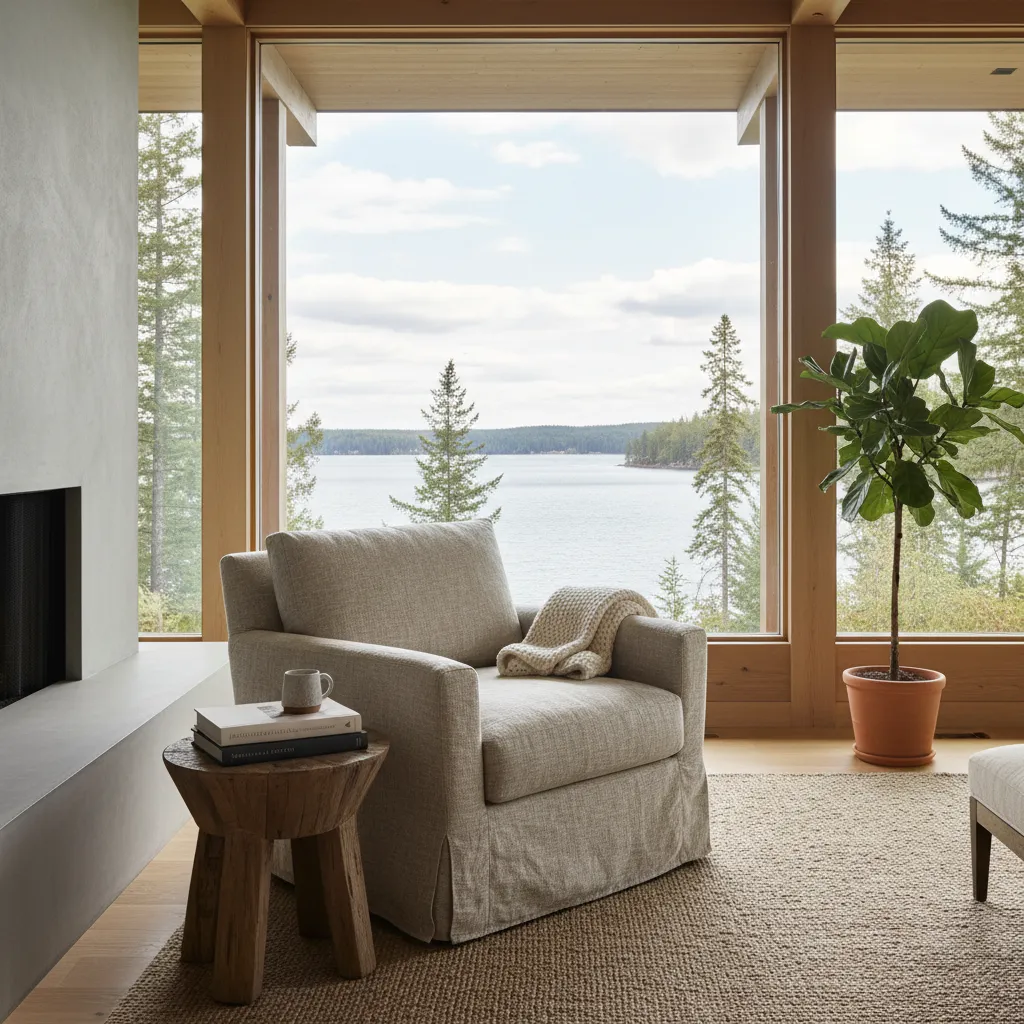
Incorporate tactile depth with boucle or chenille performance blends. These textures hide small water marks better than flat weaves while adding warmth.
Removable slipcovers create a relaxed, organic vibe. They allow you to wash away sandy footprints easily, ensuring the space remains hygienic and fresh.
If you prefer a darker palette to hide soil, deep charcoal performance velvet is excellent. It complements farmhouse living room ideas for a gray couch while adding a modern touch.
Top Upholstery Features for Lake Living
- Hydrophobic Coatings: Look for “Nanotex” or similar finishes that cause liquids to bead up on the surface for easy wiping.
- UV Resistance: Essential for rooms with large windows; ensures your navy blues and deep greens do not turn grey over time.
- Double Rub Count: Select fabrics with over 30,000 double rubs. This durability withstands the friction of wet denim and towels.
- Bleach Cleanability: A crucial feature for white or cream interiors, allowing you to sanitize without damaging the fiber integrity.
Lakeside Living Hack
- Pair your performance fabric with reticulated foam inserts, which allow water to drain through the cushion quickly rather than trapping moisture inside.
- Always perform a ‘bead test’ on fabric swatches by dropping water on the surface; if it doesn’t roll off immediately, look for a higher-grade hydrophobic finish.
- Keep a basket of oversized Turkish towels near the main entry points to encourage quick drying before guests transition from the dock to the indoor upholstery.
Modern Rustic Aesthetics: Mixing Raw Stone Textures with Sleek Minimalism
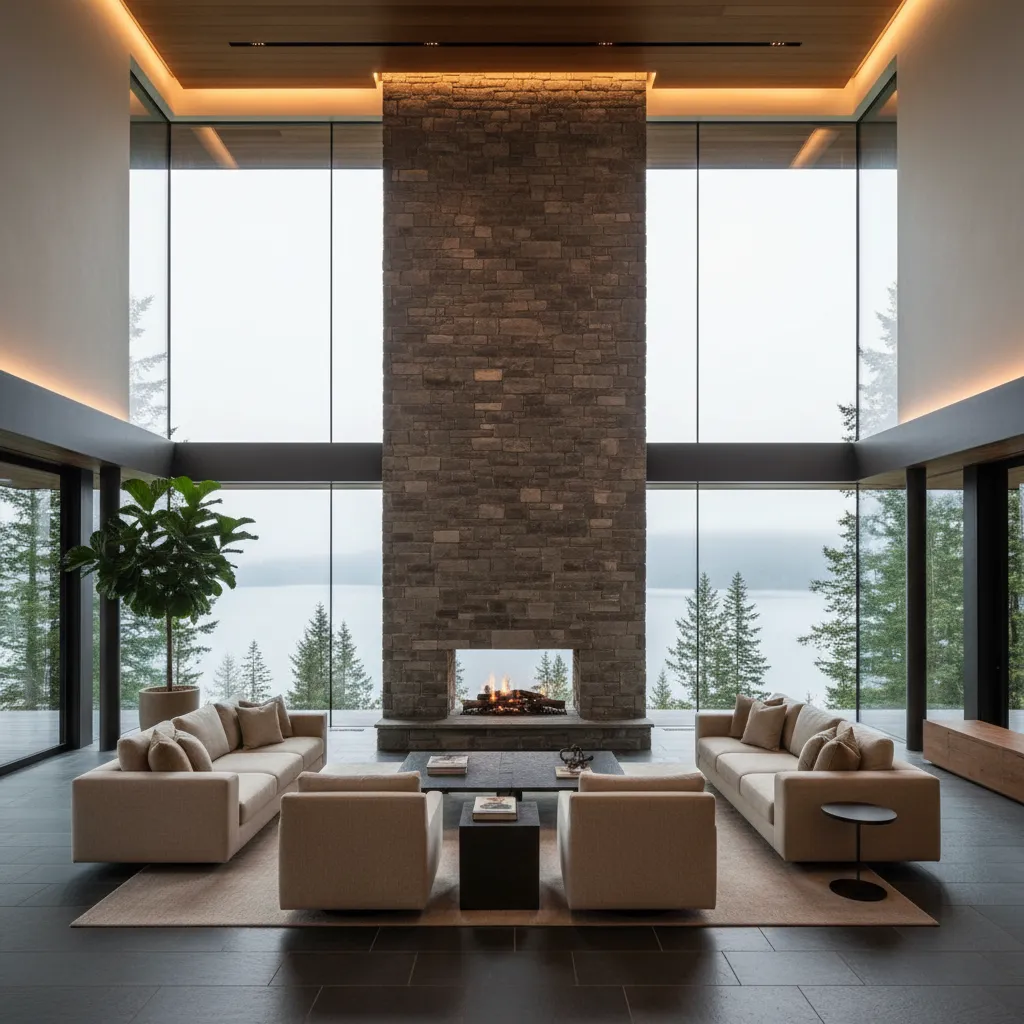
Modern rustic design thrives on high-contrast pairings. It merges the rugged beauty of a lakeside setting with contemporary precision.
The goal is to honor the natural landscape without sacrificing luxury. This aesthetic relies on a balance between heavy textures and airy voids.
You achieve this by mixing raw organic elements with polished finishes. The result is a home that feels grounded yet refreshingly modern.
True modern rustic style isn’t about clutter; it is about letting the materials speak for themselves.
Anchoring the Space with Natural Stone
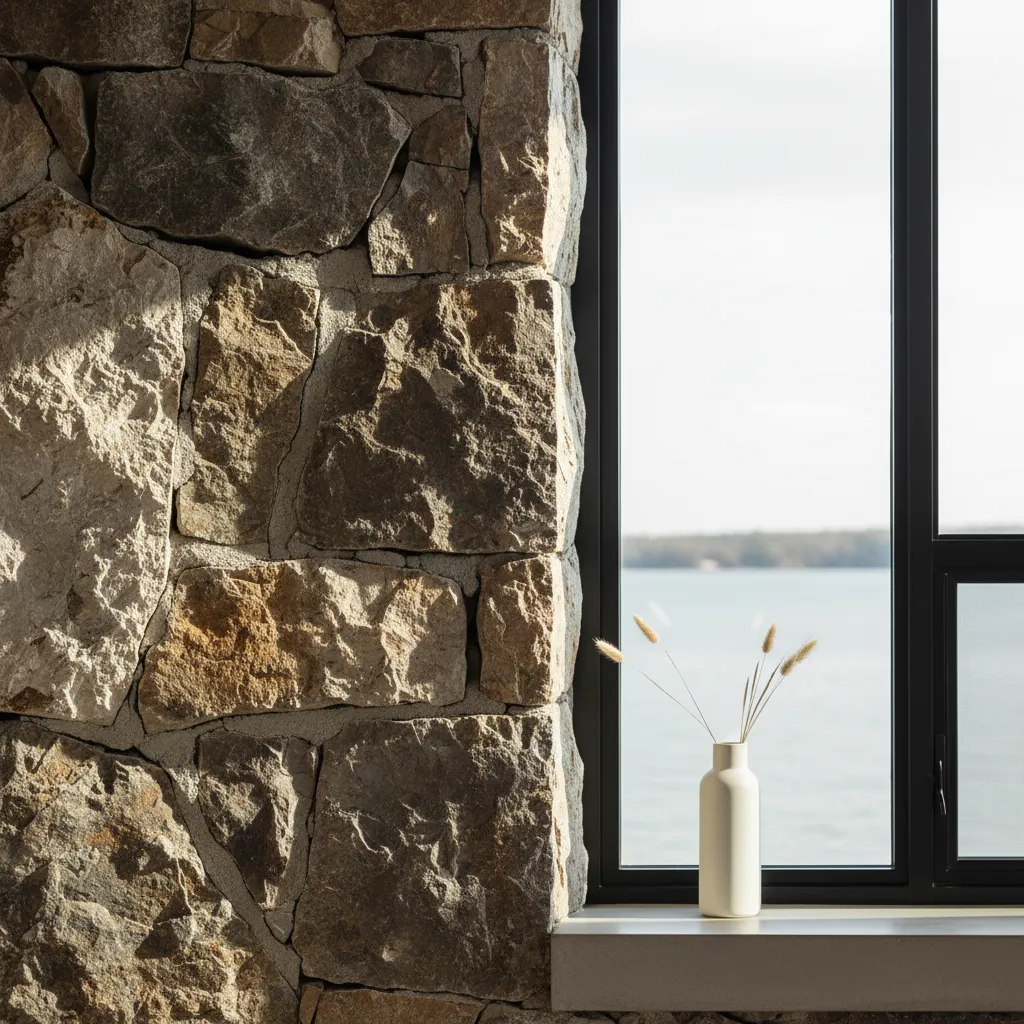
Stone features act as the primary visual anchor in these spaces. A floor-to-ceiling fireplace often creates an immediate focal point.
Using locally sourced fieldstone connects the interior to the outdoors. This blurs the line between the architecture and the lakefront.
To keep the look modern, avoid over-grouting the stonework. A dry-stack technique looks cleaner and emphasizes the shadow lines of the rock.
If you are looking for specific inspiration on heating elements, explore 22 cozy fireplace looks for any room to find a style that fits.
Texture is the thing that makes a room feel alive… It’s the dialogue between the raw and the refined that makes a space interesting.
Athena Calderone, Architectural Digest
Balancing Weight with Sleek Furniture
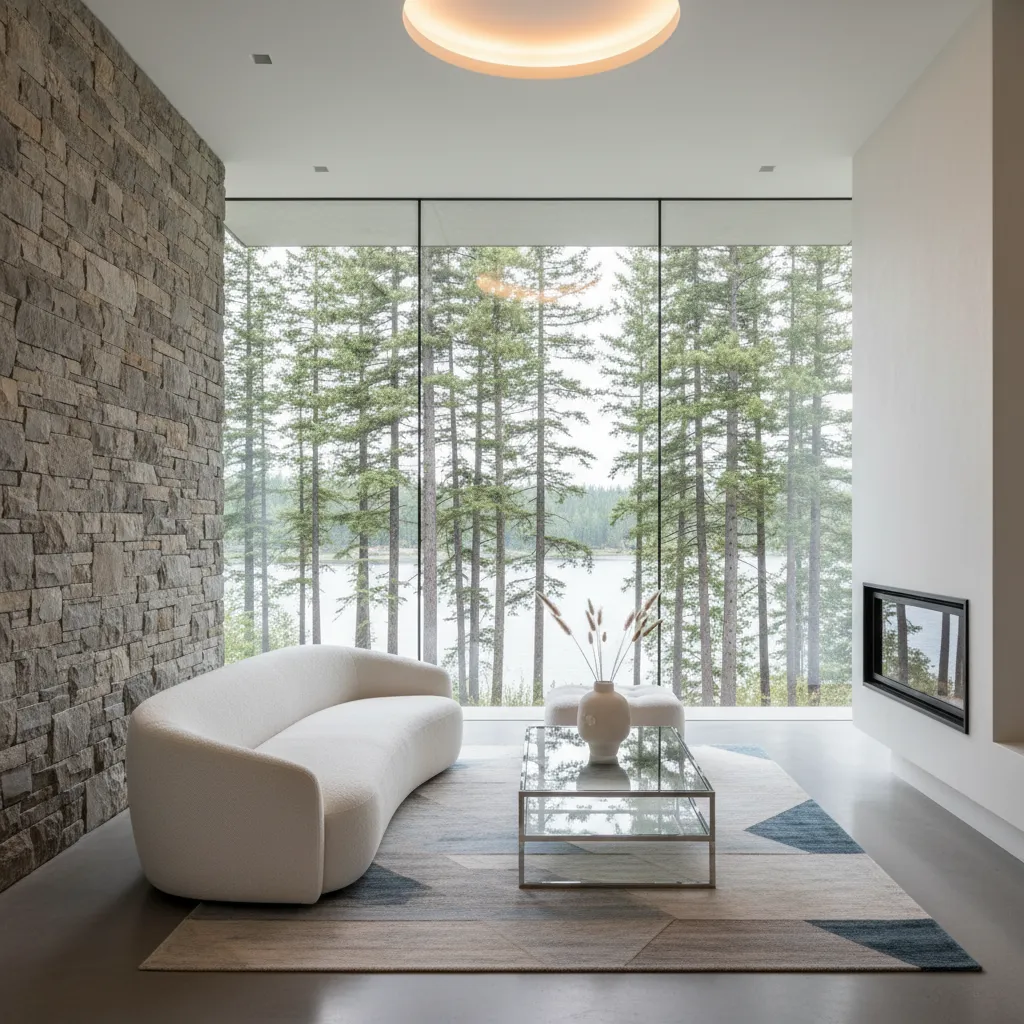
Balance heavy masonry with lightweight furniture forms. Choose pieces with clean lines to prevent the room from feeling dark or cave-like.
Low-slung sofas are essential for maintaining sightlines. They ensure that your furniture does not block the view of the water.
Incorporate tactile fabrics to soften the hard surfaces. Boucle, linen, and worn leather add warmth without adding visual clutter.
This approach shares similarities with styling modern mountain home bedroom interiors tips where texture reigns supreme.
Material Pairing Guide
Successful modern rustic design depends on the specific combination of materials. Use this guide to pair raw elements with their modern counterparts.
| Raw Element | Modern Pairing | Why It Works |
|---|---|---|
| River Rock Fireplace | Matte Black Metal | The industrial sleekness of metal sharpens the round, organic shapes of the stone. |
| Rough-Sawn Beams | Frameless Glass | Invisible glass barriers allow the heavy wood grain to stand out as a sculpture. |
| Slate Flooring | Cream Wool Rugs | Soft, light textiles break up the dark visual weight of cold stone floors. |
| Live-Edge Wood | Polished Concrete | The warmth of the wood grain offsets the cool, industrial feel of the concrete. |
Lighting also plays a crucial role in these pairings. Warm ambient light emphasizes the deep crevices in rock walls.
Avoid harsh overhead lighting in favor of layered lamps. This creates a soft glow that enhances the cozy atmosphere in the evening.
The Refined Rustic Edit
- Opt for a dry-stack masonry technique on stone walls to minimize grout lines and maintain a sharp, modern architectural profile.
- Counteract heavy stone features by selecting furniture with slim metal frames or low-slung silhouettes to preserve open sightlines to the outdoors.
- Use warm-toned ‘grazing’ light from floor lamps or recessed spots to emphasize the deep, natural textures of raw rock surfaces at night.
The View-Centric Layout: Positioning Minimalist Furniture for Maximum Visibility
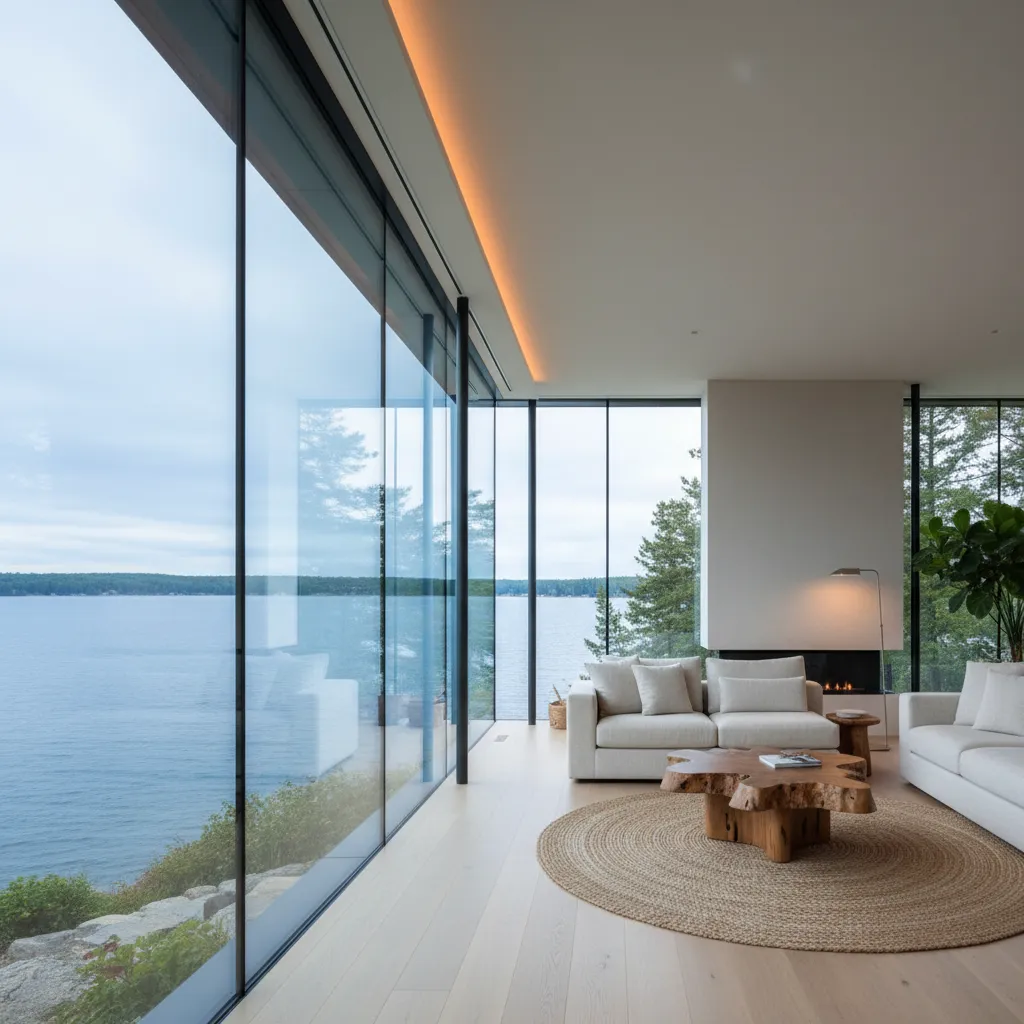
The primary goal of modern lake house design is simple. You must prioritize the connection to the outdoors. The view is your main art piece.
Avoid placing large entertainment units in front of windows. Instead, arrange your seating to face the water. This encourages quiet contemplation.
A view-centric layout relies on negative space. Allow room for energy to flow between furniture pieces. This mimics the openness of the lake itself.
Let the landscape dictate the layout; the best interiors are humble servants to the view outside.
Anchoring the Space with Low Profiles
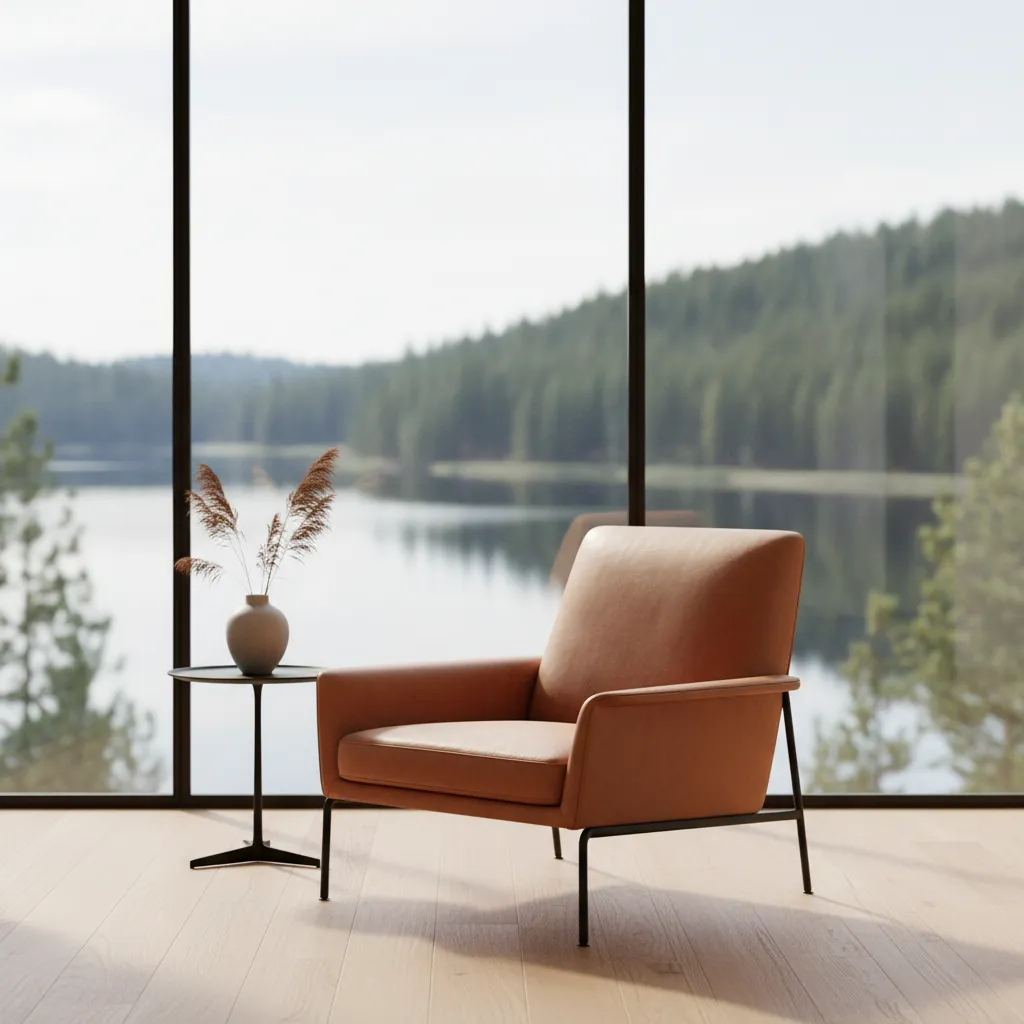
Select furniture that hugs the floor. Low-back sofas and chairs ensure your sightlines remain uninterrupted. This is critical for visual flow.
Choose pieces with clean, horizontal lines. These shapes echo the horizon line of the water. It creates a subconscious sense of harmony.
In terms of texture, opt for tactile materials. A boucle armchair or a velvet ottoman adds warmth without demanding too much visual attention.
If you are planning a renovation to maximize these views, reviewing modern house floor plans can help you visualize structural changes.
Don’t push furniture against the walls. Floating furniture away from the walls creates a more intimate conversation area and better flow.
The Spruce Editors, Common Living Room Layout Mistakes
Transparency and Material Selection
Incorporate transparent elements to reduce visual bulk. A glass coffee table or acrylic side chair allows light to pass right through them.
This technique makes the room feel airy. It prevents the space from feeling cluttered, which distracts from the exterior beauty.
For smaller lakeside cabins, mastering this balance is vital. You can adapt living and dining room combo ideas to keep open zones distinct yet unified.
Lighting plays a huge role here too. Use floor lamps with slim profiles. They provide a warm evening glow without blocking the daytime scenery.
Furniture Selection Checklist for Views
When shopping for your lake house, use this checklist to ensure every piece supports the view rather than obstructing it.
| Furniture Type | Recommended Feature | Why It Works |
|---|---|---|
| Sofa / Sectional | Low back, under 32 inches | Preserves the horizon line through windows. |
| Accent Chairs | Swivel base | Allows guests to turn from conversation to the view. |
| Coffee Table | Glass or Lucite top | Disappears visually to maintain an open feel. |
| Lighting | Slim floor lamps | Adds verticality without bulk or visual noise. |
| Window Treatments | Sheer linen panels | Filters light softly while maintaining visibility. |
The Sightline Secret
- Opt for swivel-base accent chairs to give guests the freedom to transition seamlessly from conversation to lake-gazing without rearranging the room.
- Keep your sofa height at least 2 inches below the bottom of the window frame to maintain a completely unobstructed horizon line.
- Utilize ghost materials like acrylic or glass for coffee and side tables to reduce visual weight and let the natural landscape shine through.
Indoor-Outdoor Flow: Integrating Sliding Glass Walls with Durable Patio Styling
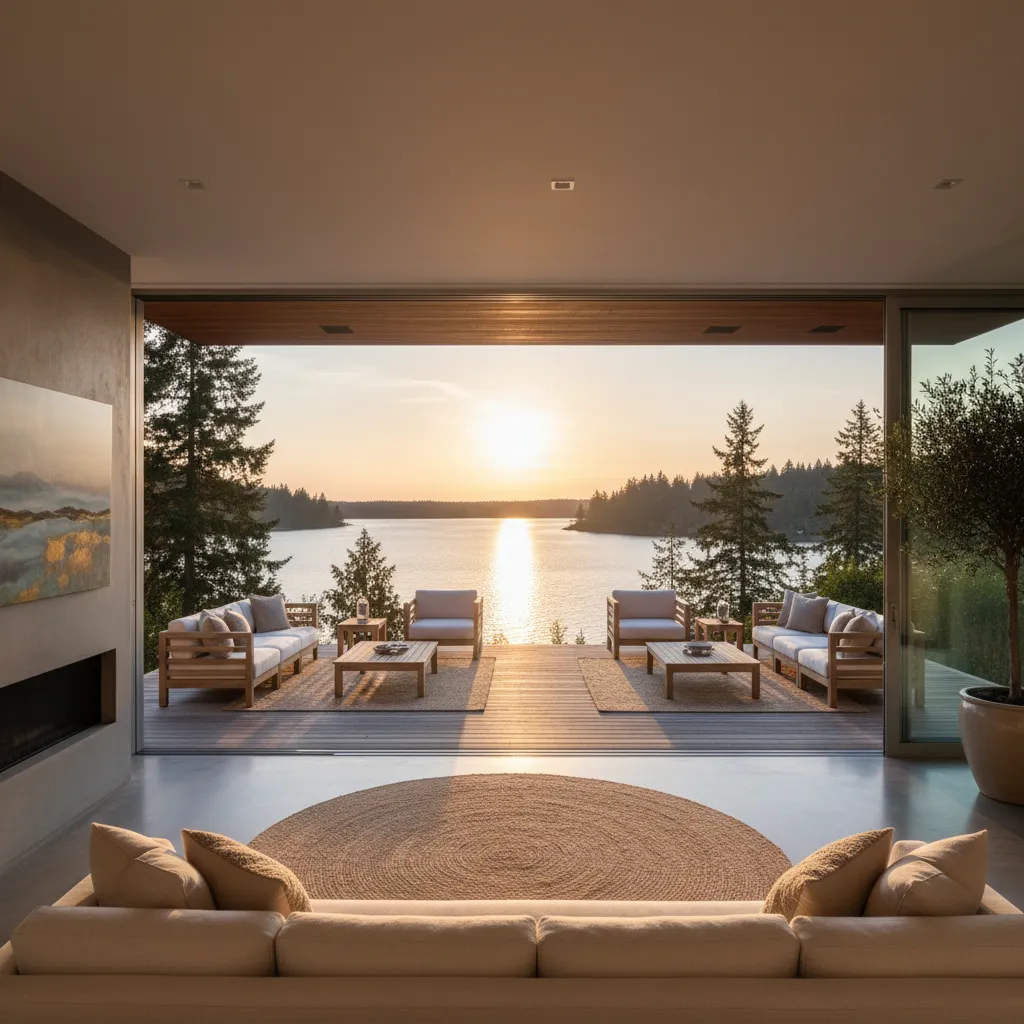
Modern lake living relies on blurring the lines between inside and out. The goal is to make the water feel like part of your living room.
Large sliding glass walls are the gold standard for this aesthetic. They allow natural light to flood the space while framing the view.
When open, these doors double your entertaining space instantly. This creates a spatial flow that feels airy, expansive, and incredibly social.
Nature is not just a view; in a lake house, it is the primary design element.
Choosing the Right Glazing System
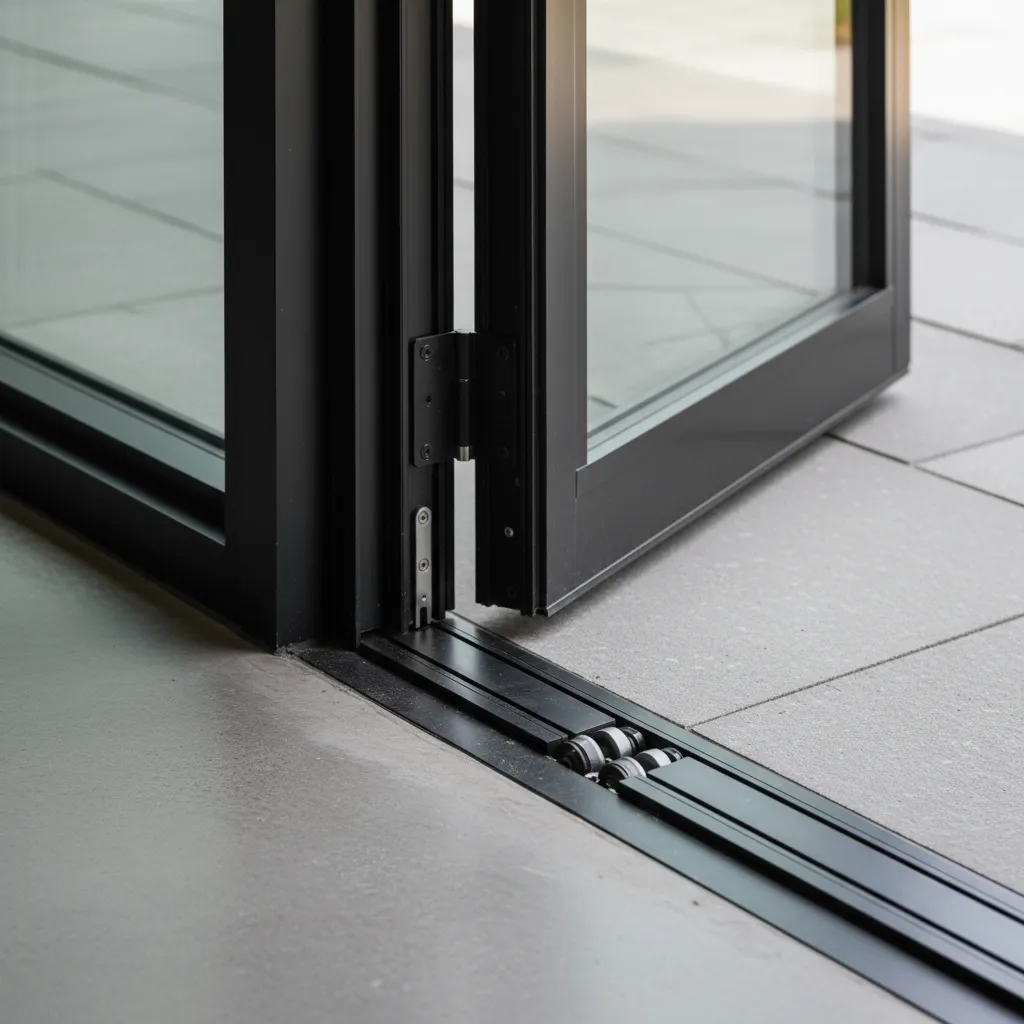
The mechanism you choose impacts both functionality and style. Accordion doors fold back completely to remove all visual barriers.
Pocket doors slide into the wall and disappear entirely. This option requires thicker walls but offers the cleanest possible look.
Ensure your glass has a thermal break to handle temperature shifts. This prevents condensation during chilly mornings on the lake.
Cohesive Styling and Materials
To achieve a seamless look, use consistent materials indoors and out. Your patio furniture should be as stylish as your interior decor.
Opt for performance fabrics that mimic the texture of indoor linen. Solution-dyed acrylics resist fading and are easy to clean.
Consider adding a statement piece to the deck. A hanging seat can add whimsy; check out these DIY modern outdoor swing design ideas for inspiration.
The most successful indoor-outdoor spaces treat the exterior as another room of the house. Use rugs, lamps, and comfortable seating to bridge the gap.
Shea McGee, Outdoor Styling Tips for Summer
Material Durability Guide
Lake environments can be damp, so material choice is critical. Select finishes that withstand moisture without sacrificing elegance.
| Material | Aesthetic Vibe | Maintenance Level | Best Application |
|---|---|---|---|
| Teak Wood | Organic, Warm, Spa-like | Medium (requires oiling) | Dining tables and lounge framing |
| Powder-Coated Aluminum | Sleek, Minimalist, Modern | Low (rust-resistant) | Accent chairs and side tables |
| Concrete Composite | Industrial, Raw, Textural | Low (very durable) | Coffee tables and fire pits |
| Polypropylene Rope | Nautical, Woven, Airy | Low (fade-resistant) | Seat backs and decorative accents |
Flooring continuity is another trick to visually expand the room. Use stone or tile that runs from the kitchen out to the terrace.
If you are working with a yard beyond the deck, smooth transitions matter. You can explore chic easy backyard landscaping designs to complete the look.
Finally, layering textures creates a cozy vignette near the glass. Place a chunky knit throw on an outdoor chair to invite relaxation.
Designer Flow Hack
- Align your indoor and outdoor flooring materials and grout lines to trick the eye into seeing one continuous, expansive living space.
- Opt for recessed floor tracks for your sliding glass walls to ensure a flush, ‘zero-entry’ transition that eliminates physical and visual barriers.
- Mirror your interior lighting style on the patio by using weatherproof floor lamps and pendants that share the same aesthetic as your indoor fixtures.
Anchoring Your Modern Waterfront Retreat
Designing a modern lake house requires a delicate balance between sleek aesthetics and rugged durability.
By embracing waterproof flooring like concrete or luxury vinyl, you ensure your home handles wet feet with grace.
Remember to prioritize large windows that frame the water, creating a seamless connection to the outdoors.
Ultimately, your space should be a sanctuary that reflects the calm of the lake while standing up to nature’s elements.
Lake Life Design Dilemmas Solved
Polished concrete and Luxury Vinyl Plank (LVP) are top choices. They resist high humidity and wet feet while offering a sleek, modern look that mimics natural textures.
Incorporate radiant floor heating during installation. Visually, add texture with plush area rugs and layered textiles to soften the industrial industrial aesthetic.
Solid hardwood is hygroscopic, meaning it absorbs moisture from the air. High lake humidity causes it to warp, cup, and expand, ruining the finish over time.
Stick to organic neutrals like slate greys, warm whites, and sandy beiges. These tones complement the outdoor scenery without competing with the view.
