
Table of Contents
- The Sanitary Upcycled Bottle Silo: Engineering for Finch Health
- Weather-Resistant Pinecone Feeders: A Kid-Friendly Suet Project
- The Tilted Teacup Station: Aesthetic Feeding for Small Songbirds
- Squirrel-Proofing Your Mason Jar Gravity Feeder Design
- Seasonal Citrus Cups: Biodegradable Solutions for Migratory Birds
- Crafting a Sanctuary for Songbirds
- Avian Design Dilemmas Solved
Transforming your outdoor space into a sanctuary requires more than just lush greenery; it demands thoughtful details that invite life and movement. A well-placed bird feeder serves as a functional focal point that bridges the gap between sophisticated design and natural beauty.
By choosing materials that complement your garden architecture, you create a cohesive look that feels both curated and welcoming.
Creating these pieces at home allows for a level of customization that store-bought options rarely provide. You can repurpose vintage glassware or use clean, modern silhouettes to match your personal style without exceeding your budget.
These projects prove that practicality does not have to sacrifice elegance, as each feeder provides essential nourishment while doubling as a charming piece of garden art.
In this guide, we explore five straightforward projects designed to elevate your backyard experience. Whether you are a seasoned DIY enthusiast or a newcomer looking for a weekend craft, these methods focus on durability and visual appeal.
Prepare to transform your garden into a vibrant retreat where every bird visit feels like a rewarding design achievement.
The Sanitary Upcycled Bottle Silo: Engineering for Finch Health
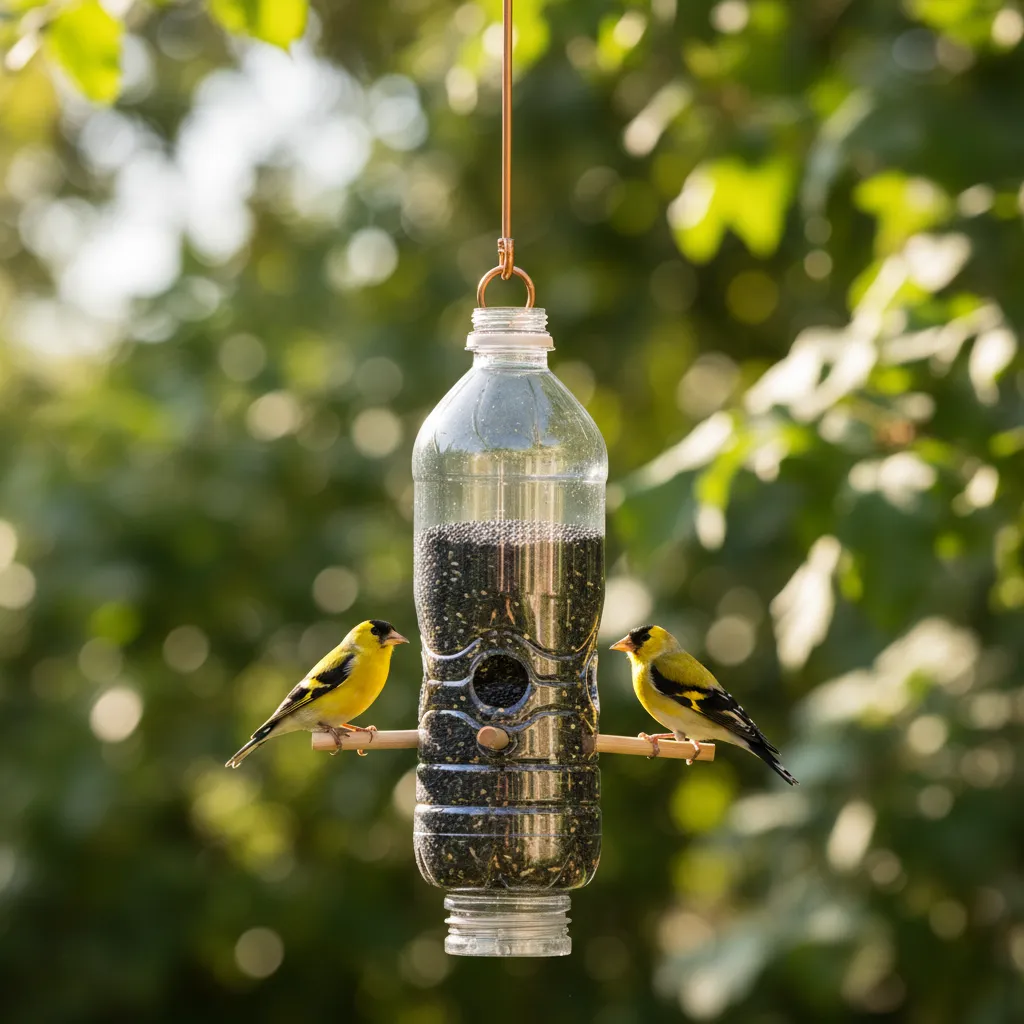
Transforming a simple PET bottle into a functional dining spot for finches requires precision. It creates a modern, transparent aesthetic in the garden.
The clear plastic catches the sunlight, creating a sparkling focal point that feels airy and minimal. This transparency also serves a vital purpose.
You can easily monitor seed levels and check for spoilage. Finches are social birds, but they are highly susceptible to diseases at dirty feeders.
A vertical silo design minimizes contact between waste and food. This engineering choice ensures a cleaner feeding environment than open trays.
True eco-friendly design balances aesthetic reuse with the biological needs of the local ecosystem.
To elevate the look, consider integrating this feeder into a broader outdoor vignette. It pairs beautifully with creative spring decorating ideas for the home.
Drilling for Drainage and Airflow
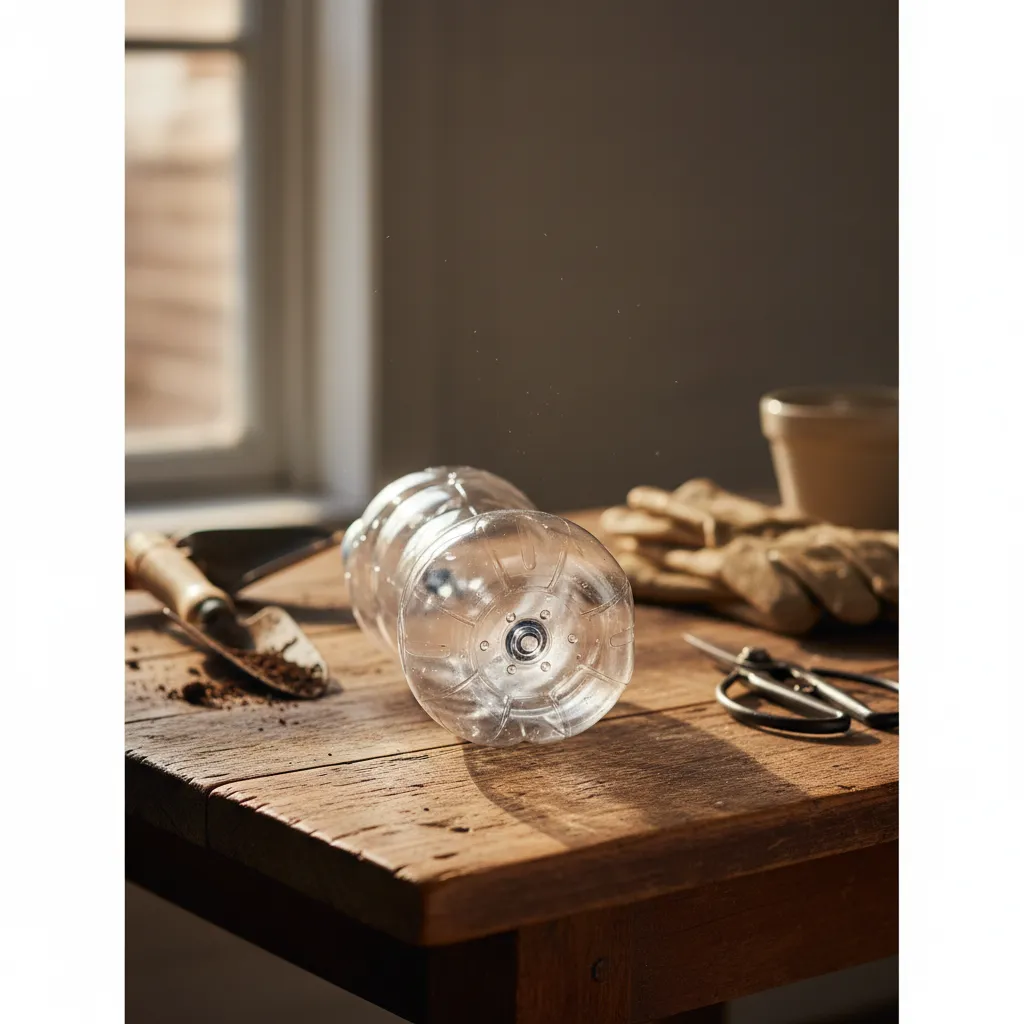
Moisture is the enemy of seed storage. Stagnant water creates mold quickly, which can be fatal to small songbirds like goldfinches and siskins.
You must drill small holes in the base of the bottle. This allows rainwater to pass through immediately rather than pooling at the bottom.
Ensure the holes are small enough to keep the thistle seed inside. A 1/8-inch drill bit usually provides the perfect balance of flow and retention.
To keep birds healthy, clean your feeders every two weeks… using a solution of nine parts water to one part bleach.
National Audubon Society, 3 Ways to Keep Your Feeder Disease-Free
Selecting the Right Perch Materials
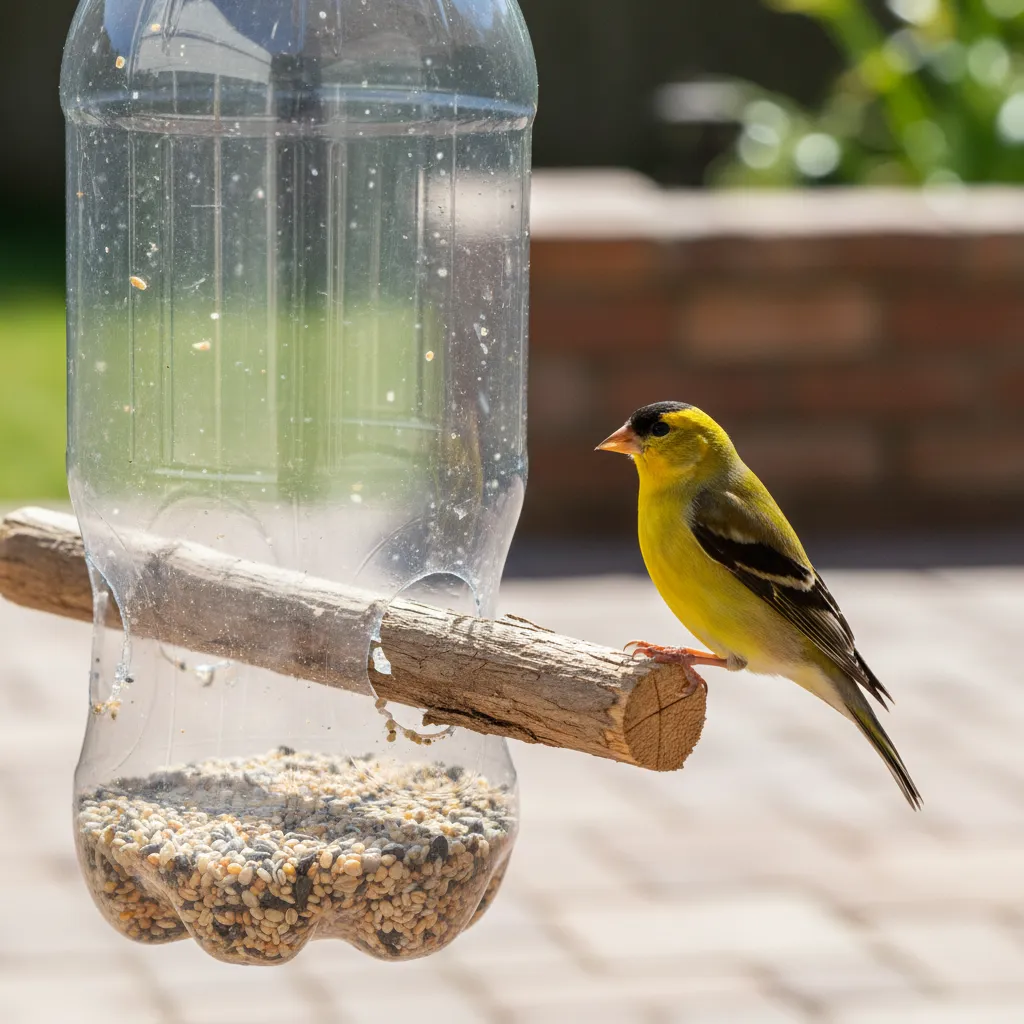
Plastic perches can be slippery for birds. Natural wood dowels offer the best grip for tiny talons and add an organic touch to the design.
Insert the dowels perpendicular to the bottle body. Ensure they extend out at least two inches on either side to accommodate multiple birds.
For a custom look, you can add texture to the dowels. Simple patterns created with wood burning techniques improve grip and style.
Below is a comparison of materials often used for silo bodies. Choosing the right vessel impacts both the longevity of the feeder and bird health.
| Material Type | Hygiene Rating | Durability | Best For |
|---|---|---|---|
| PET Plastic | High (Non-porous) | Medium (UV fade) | Thistle/Nyjer Seed |
| Glass Jar | Very High (Sanitizable) | High (Heavy) | Sunflower Hearts |
| Metal Mesh | Medium (Hard to clean) | Very High | Peanuts/Suet |
| Cardboard | Low (Absorbs moisture) | Low (Single use) | Dry Weather Only |
Always prioritize the “spatial flow” of your garden. Hang the silo at eye level in a quiet corner to encourage shy finches to visit.
Eco-Engineer’s Toolkit
- Rough up smooth wooden dowels with sandpaper or a wood-burning tool to create texture, providing finches with a slip-free grip that standard plastic perches often lack.
- Combat mold by adhering to a strict bi-weekly cleaning schedule using a 9:1 water-to-bleach solution, ensuring the bottle is bone-dry before refilling.
- Use a 1/8-inch drill bit for the base holes to strike the perfect balance between allowing rainwater to escape immediately and keeping tiny thistle seeds securely inside.
Weather-Resistant Pinecone Feeders: A Kid-Friendly Suet Project
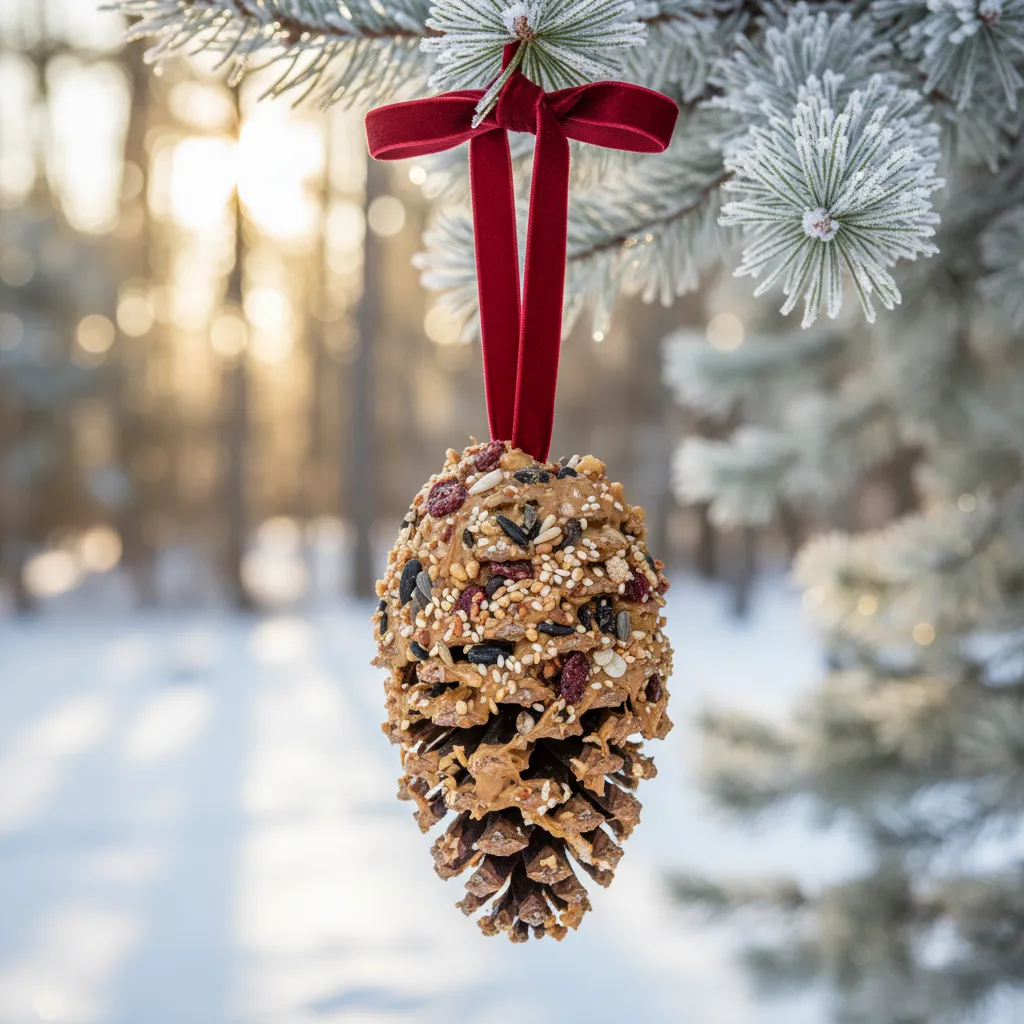
There is a distinct nostalgia attached to crafting pinecone feeders. It transforms a quiet afternoon into a lesson on nature and texture.
This project bridges the gap between outdoor play and functional garden decor. It introduces organic shapes to your patio while inviting local wildlife.
While peanut butter is the standard binder, it often drips in direct sun. Rendered suet provides a stable and weather-resistant alternative.
Suet creates a solid finish that withstands fluctuating temperatures. This ensures your handmade vignette remains tidy rather than becoming a sticky mess.
Engaging children in this process is highly rewarding. It is similar to other winter wonderland decorations for kids that merge creativity with nature.
True garden design cultivates a living ecosystem, turning every branch into a stage for nature’s quiet performance.
Selecting the Right Materials
The aesthetic success of this feeder relies on the quality of the pinecone. Look for large, open scales that provide deep crevices for the mixture.
Texture plays a massive role here. The rough, organic wood contrasts beautifully with the smooth, seed-studded filling.
Opt for high-quality bird seed with black oil sunflower seeds. These appeal to the widest variety of backyard birds and add visual depth.
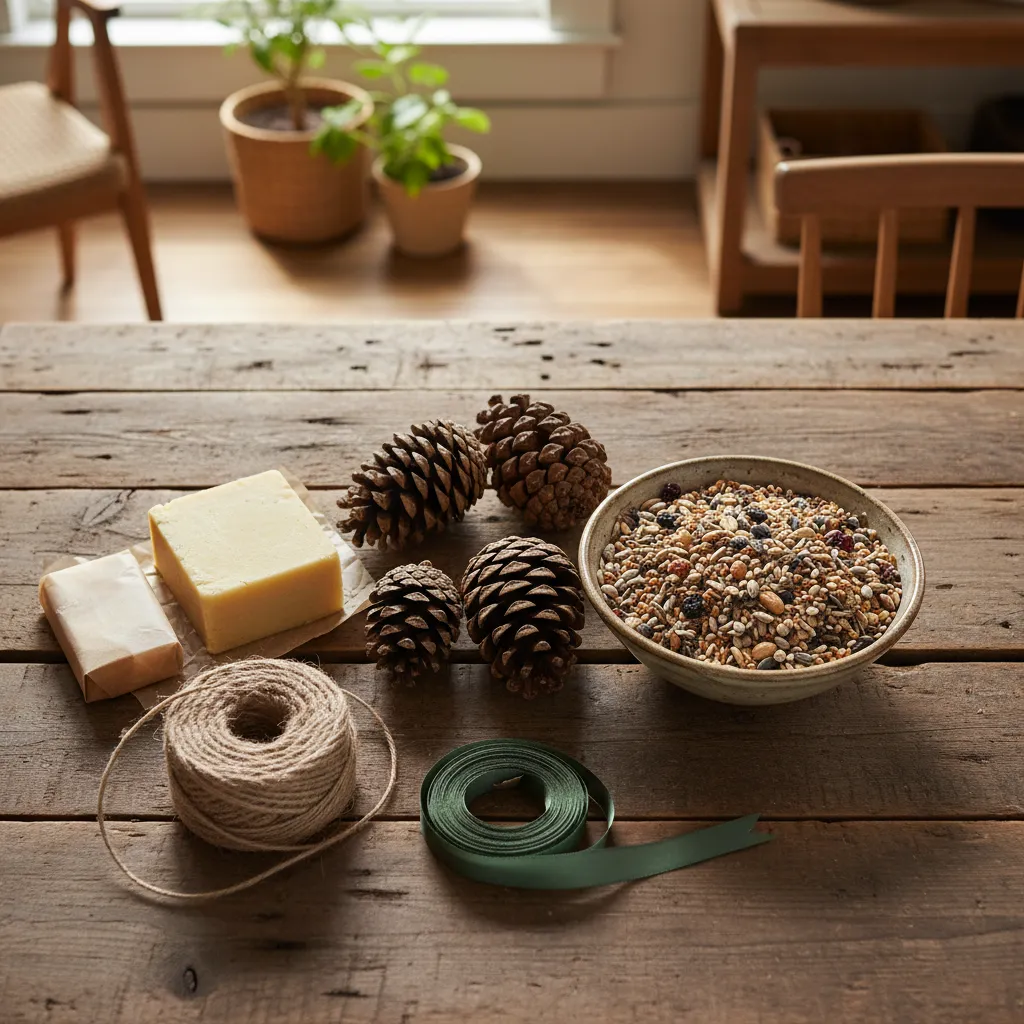
Step-by-Step Assembly
Creating these feeders requires patience to ensure durability. Follow this method to ensure the suet sets correctly within the pinecone scales.
- Prep the Cone: Bake pinecones at 200°F for 30 minutes to remove moisture and pests. Let them cool completely.
- The Mixture: Melt rendered suet gently over low heat. Mix in seeds once it cools slightly but is still pliable.
- Application: Use a small spatula to press the mixture deep into the scales. This ensures the food stays put during wind.
- Setting: Place the coated cones in the refrigerator for one hour. This hardens the fat for a weather-resistant finish.
To attract the greatest variety of birds… offer black oil sunflower seeds. They have a high meat-to-shell ratio and are nutritious.
The Cornell Lab of Ornithology, Types of Bird Seed: A Quick Guide
Elevating the Look with Ribbon
The hanging mechanism is where you can inject personal style. Replace standard string with materials that complement your exterior palette.
Velvet ribbons add a touch of luxury to the rustic pinecone. Choose deep burgundy or forest green to stand out against white snow or grey bark.
For a more cottage-core aesthetic, use braided jute or raw linen strips. These materials weather naturally and biodegrade over time.
You can even cluster these feeders to create a focal point. This technique works well when designing a DIY wreath for your front door using natural elements.
Aesthetic Material Pairings
Choosing the right hanging material changes the vibe of the feeder. Use this guide to match the texture to your garden’s design style.
| Design Style | Material Choice | Visual Texture | Best Placement |
|---|---|---|---|
| Modern Minimalist | Black Leather Cord | Sleek, Matte | Architectural trees, metal hooks |
| Rustic Farmhouse | Natural Jute Twine | Rough, Organic | Old oak branches, wooden pergolas |
| Vintage Cottage | Silk or Velvet Ribbon | Soft, Lustrous | Porch overhangs, low shrubs |
| Industrial | Copper Wire | Metallic, Shiny | Urban balconies, brick walls |
Hang your feeders at varying heights to create visual interest. This encourages birds to visit different levels of your garden canopy.
Ensure the location is visible from a window. This allows you to enjoy the activity without disturbing the feeding birds.
The Naturalist’s Notebook
- Line your baking sheet with parchment paper or foil when heating the pinecones to catch dripping sap and make cleanup effortless.
- For a professional finish, roll the suet-filled cone in a bowl of loose seeds immediately after application to create a fully encrusted, textured exterior.
- To protect delicate velvet or silk ribbons, attach a small wire loop to the pinecone first, then tie the decorative fabric to the wire to keep it clear of the suet.
The Tilted Teacup Station: Aesthetic Feeding for Small Songbirds
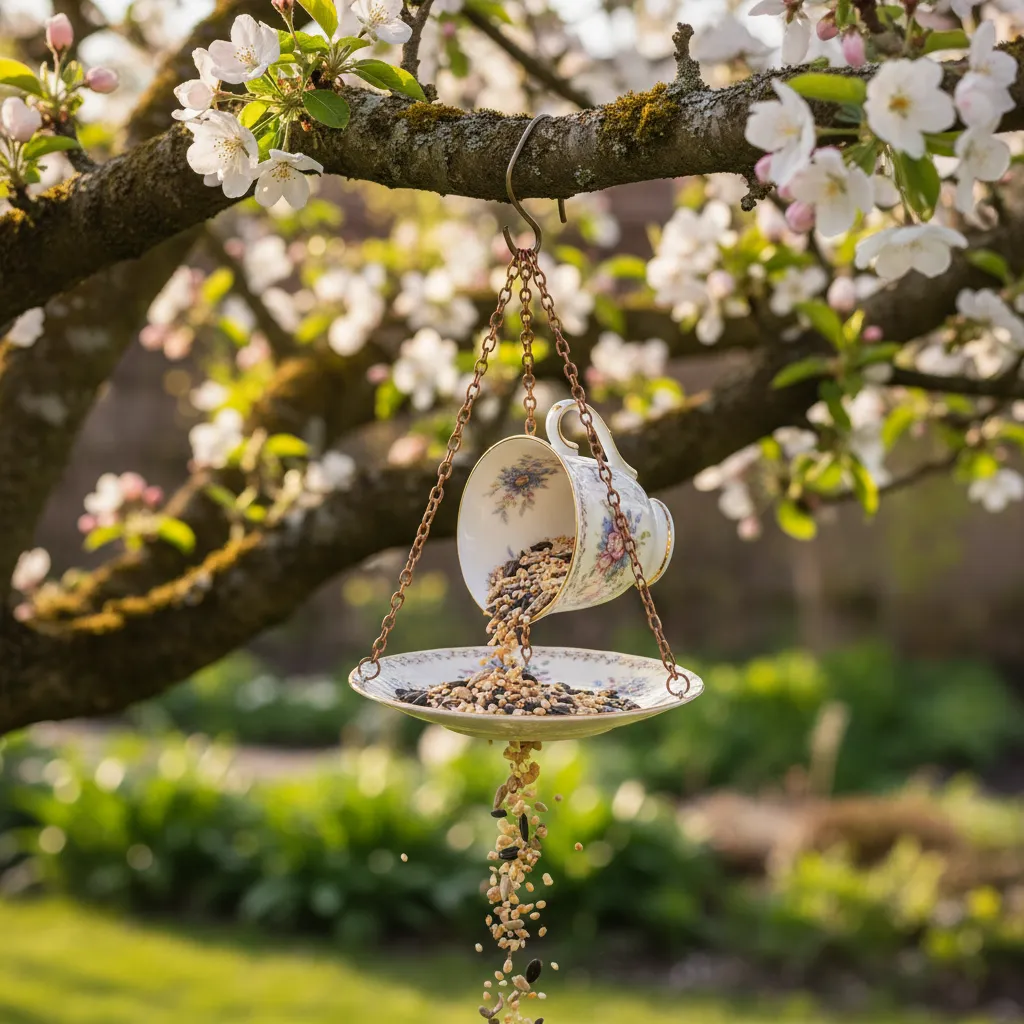
Transforming chipped china into a whimsical garden feature is a delightful way to repurpose heirlooms. This project brings a touch of magic to your yard.
The aesthetic is distinctly cottagecore, utilizing the delicate textures of porcelain to contrast with organic outdoor elements. It is charming.
Functionally, the saucer acts as a catch tray for stray seeds, while the cup handle offers a natural perch for smaller songbirds like chickadees.
The most beautiful gardens are those where nature and nostalgia meet in a curated vignette.
Constructing Your Hanging Vignette
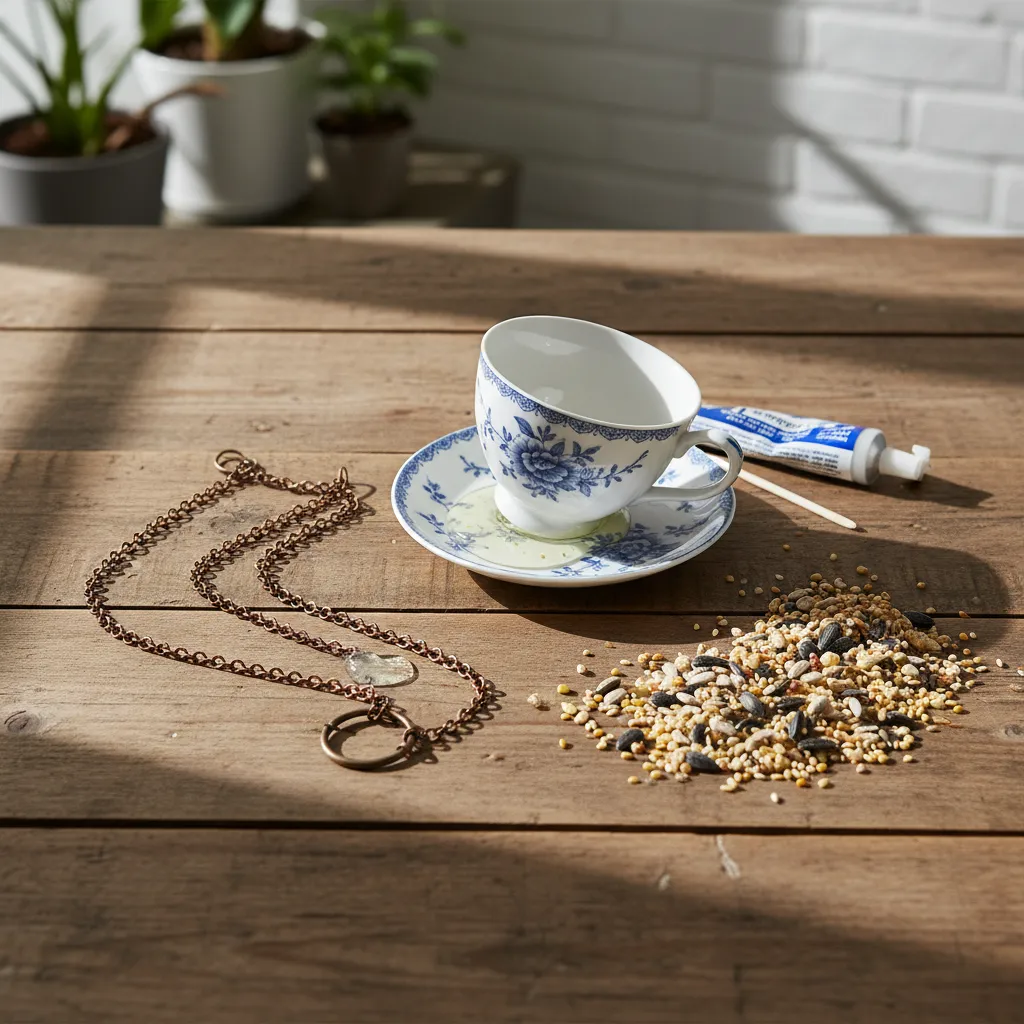
Creating this feeder requires precision to ensure the “spilled” effect looks intentional yet remains structurally sound against the wind.
If you love creative spring decorating ideas, this project fits perfectly into a blooming garden palette.
- Clean the Surface: Wipe the cup and saucer with rubbing alcohol. This removes oils and ensures the adhesive bonds permanently to the glaze.
- Position the Tilt: Place the cup on its side on the saucer. The handle should face upward to serve as a hanger loop.
- Apply Adhesive: Use a high-strength marine epoxy. Apply it to the contact points where the cup rim touches the saucer base.
- Cure Completely: Let the bond set for at least 24 hours. Do not rush this step, as the weight of the seed adds stress to the joint.
- Attach Hardware: Tie a weather-resistant twine or copper chain securely around the handle. Ensure it is balanced before filling.
Placement and Styling
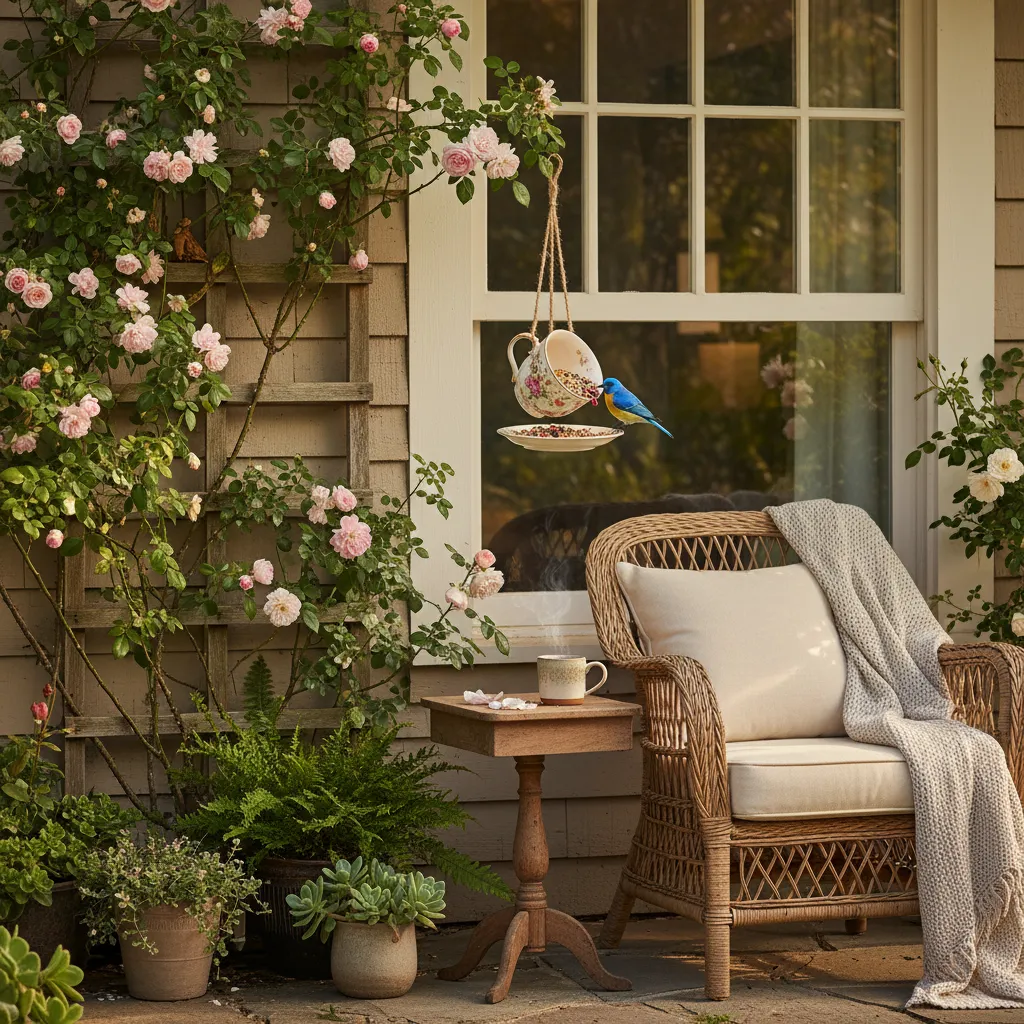
The visual success of this feeder relies on where you hang it. Avoid open spaces where strong winds might swing the ceramic into hard surfaces.
A sheltered spot near climbing roses or a trellis protects the delicate china and encourages shy birds to visit.
The white or floral finish of the china reflects ambient light, creating a bright focal point in shaded corners of your garden or patio.
Clean bird feeders and birdbaths regularly with a solution of one part bleach to nine parts water to prevent the spread of disease.
The Humane Society of the United States, Feeding Birds in Your Backyard
Ensure the glues you select are non-toxic once cured. Some industrial adhesives can release fumes, so always let the project air out outdoors.
Vintage Vignette Tips
- To prevent rainwater from spoiling your birdseed, use a diamond-tipped drill bit to create a tiny drainage hole in the lowest point of the saucer before gluing.
- Opt for hulled sunflower seeds or ‘no-mess’ mixes to keep the delicate porcelain saucer looking tidy and to attract neat-eating songbirds like finches.
- Add a decorative glass bead or a small vintage key to the hanging twine for a whimsical touch that provides extra weight to keep the feeder stable in light breezes.
Squirrel-Proofing Your Mason Jar Gravity Feeder Design
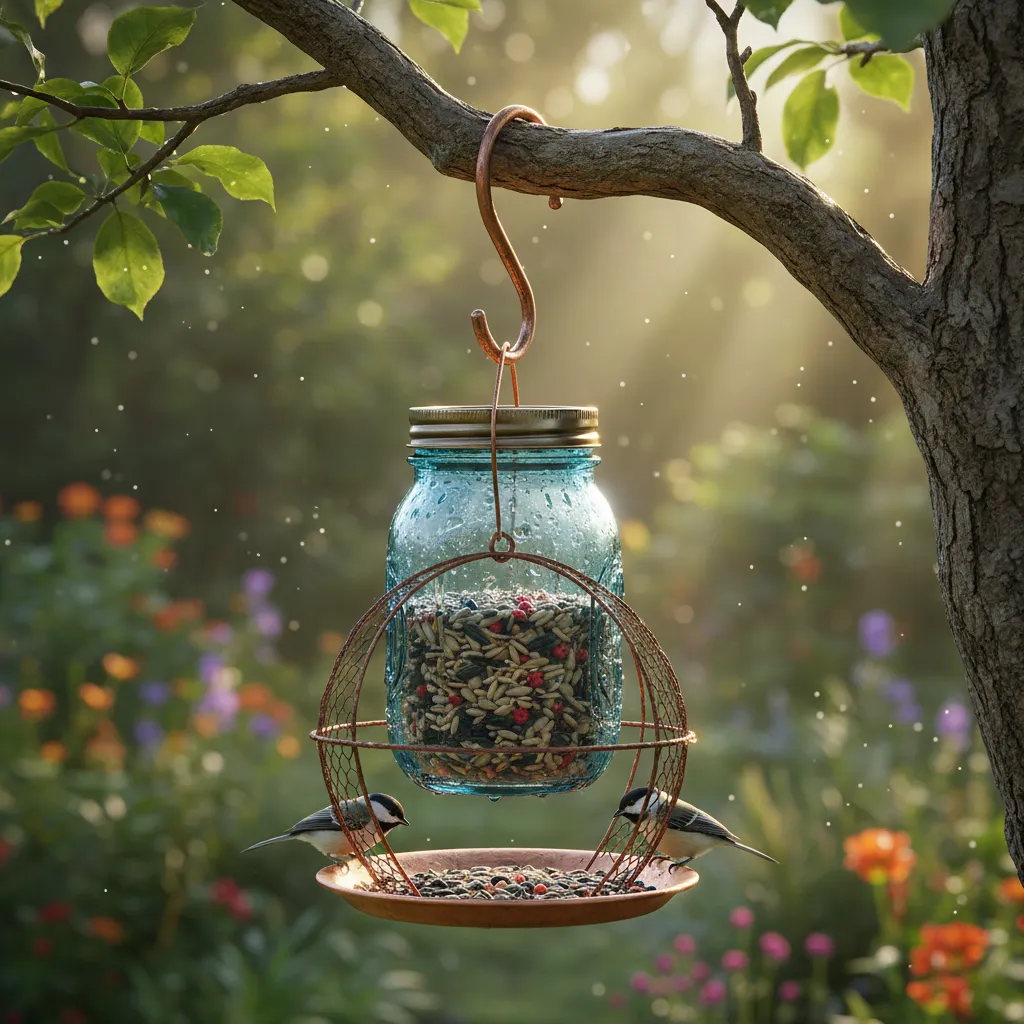
There is nothing quite as frustrating as watching a squirrel hijack your beautiful new feeder. These acrobats can drain a mason jar in minutes.
Designing a squirrel-proof station requires a blend of physics and aesthetics. You want to maintain the visual charm without sacrificing function.
By using specific barriers and smart placement, you can create a sanctuary that is welcoming to songbirds but frustrating for rodents.
The Art of Baffles and Domes
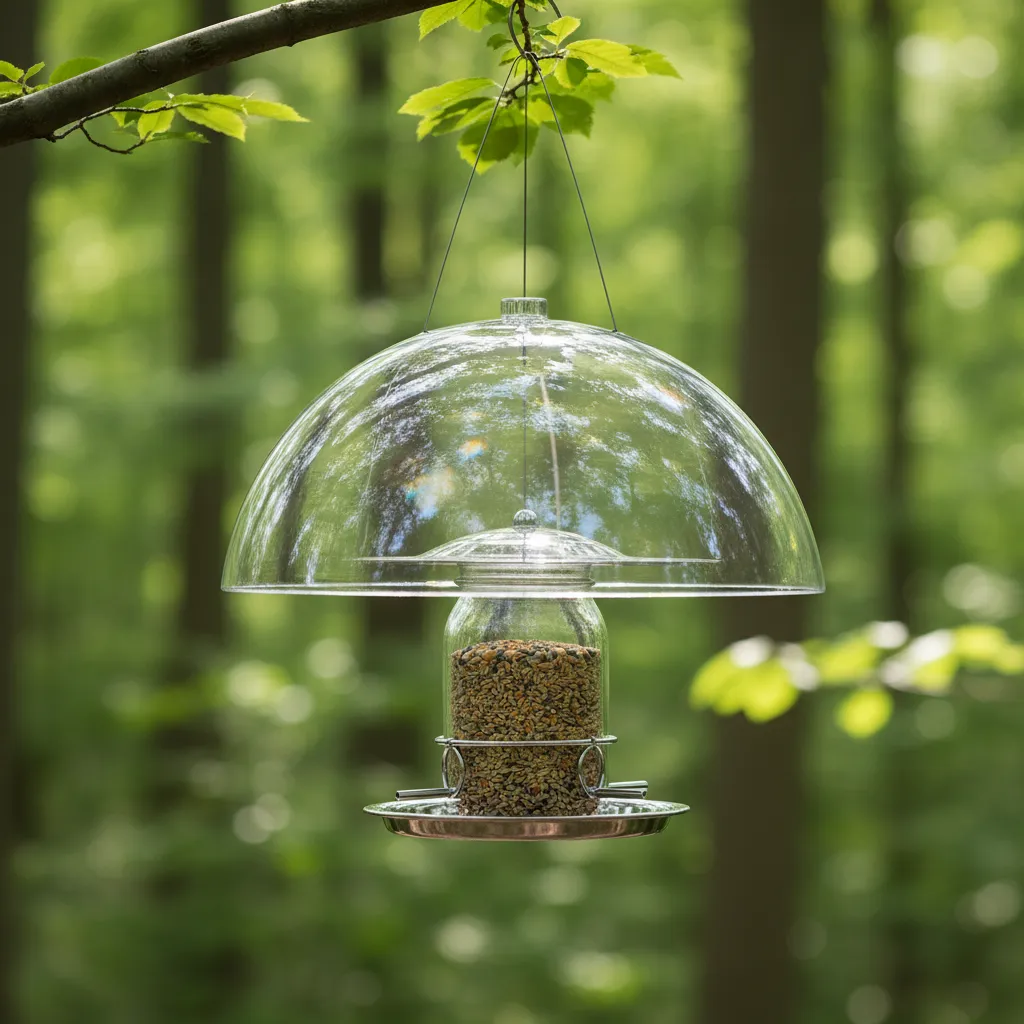
A baffle is your first line of defense. These dome-shaped guards sit above the feeder, tilting wildly when a heavy squirrel lands on them.
Opt for clear acrylic or aged copper finishes. These materials blend seamlessly with the garden, maintaining that curated, organic aesthetic.
The smooth texture prevents squirrels from finding a grip. This forces them to slide off before they can reach the seed ports below.
This simple addition protects the seed and prevents the mason jar from being knocked to the ground and shattering on hard patio stones.
Design is not just about how it looks, but how it functions in the wild. A squirrel-proof garden is a peaceful garden.
Strategic Placement and Spatial Flow
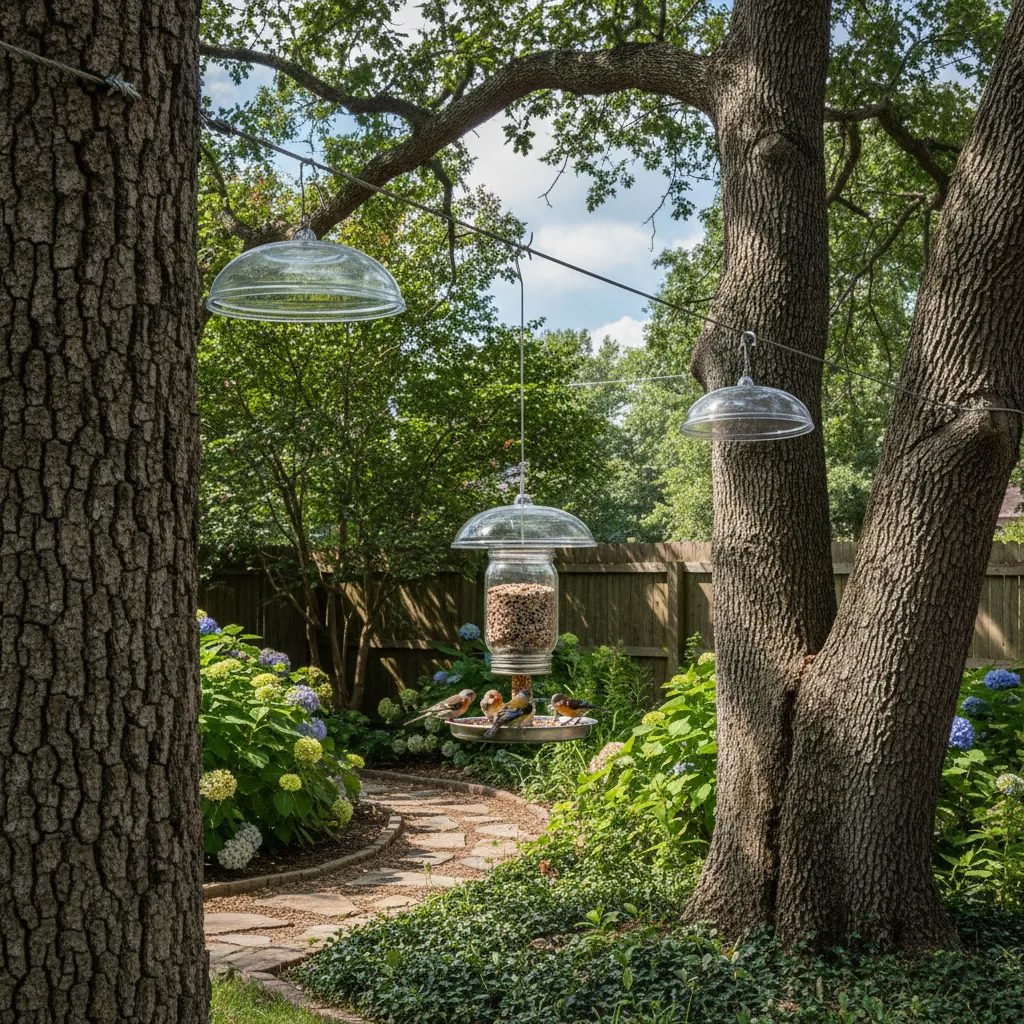
Location is everything. Squirrels are impressive jumpers, so you need to create a spatial flow that limits their access points.
Hang your feeder at least five feet off the ground. It should also be roughly ten feet away from tree trunks, thick branches, or porch railings.
If you are designing near a boundary, consider how your fence design impacts accessibility. A smooth surface is harder to climb.
Use a shepherd’s hook made of smooth metal. The lack of texture makes it difficult for squirrels to climb up the pole to reach the jar.
Squirrels can jump up to 5 feet vertically and 10 feet horizontally. To keep them away, place feeders on a pole in an open area, away from trees, decks, and other structures.
The Spruce Editors, How to Squirrel-Proof a Bird Feeder
Spicy Seeds and Scent Deterrents
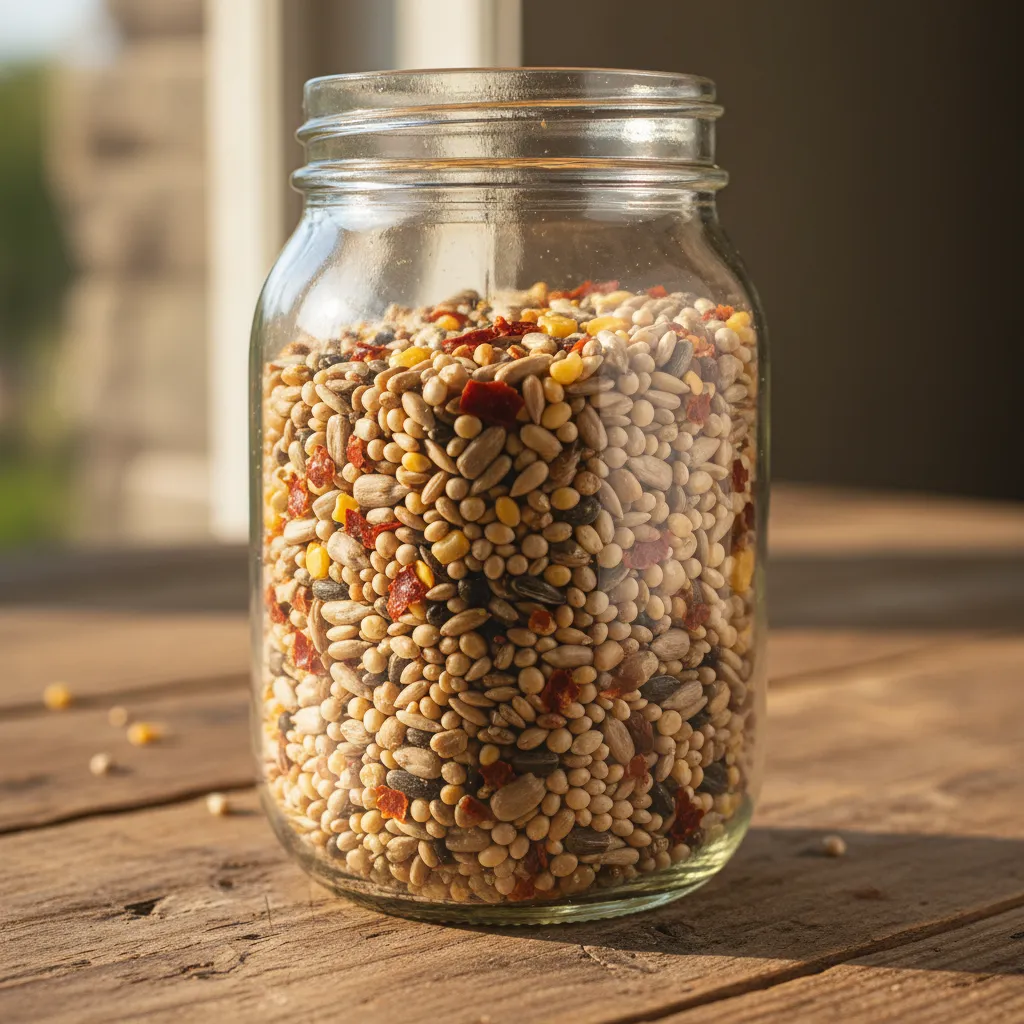
Changing the menu is a clever, invisible tactic. Birds cannot taste capsaicin, but mammals are incredibly sensitive to the heat of chili peppers.
Mix cayenne pepper into your seed or buy pre-treated blends. This adds a pop of red texture to the jar while keeping pests at bay.
Safflower seeds are another great option. Cardinals love them, but squirrels generally find the bitter taste unappealing and will move on.
The Squirrel-Proof Audit Checklist
Before filling your mason jar, run through this quick design audit to ensure your setup is secure and visually cohesive.
- The Distance Test: Ensure the feeder is 10 feet from the nearest launch point, such as a roof edge or backyard landscaping features.
- Surface Texture: Verify that the hanging pole or wire is smooth metal or PVC, offering no grip for claws.
- Baffle Placement: The top of the baffle should be at least four feet off the ground if mounted on a pole to prevent jumping.
- Secure Hardware: Check that the chain or rope holding the mason jar is thick enough to withstand gnawing attempts.
- Area Cleanup: Regularly rake the ground beneath the feeder. Spilled seed attracts squirrels and encourages them to look up.
The Anti-Acrobat Hack
- Apply a thin layer of car wax to your metal shepherd’s hook or mounting pole to create an ultra-slick surface that denies even the most persistent squirrels a grip.
- Swap natural twine or rope for a high-gauge steel wire when hanging your jar; squirrels can easily gnaw through cordage in seconds, but metal is completely teeth-proof.
- Install a metal slinky toy around the support pole to create a mechanical barrier that ‘shuttles’ climbing rodents back to the ground the moment they put weight on it.
Seasonal Citrus Cups: Biodegradable Solutions for Migratory Birds
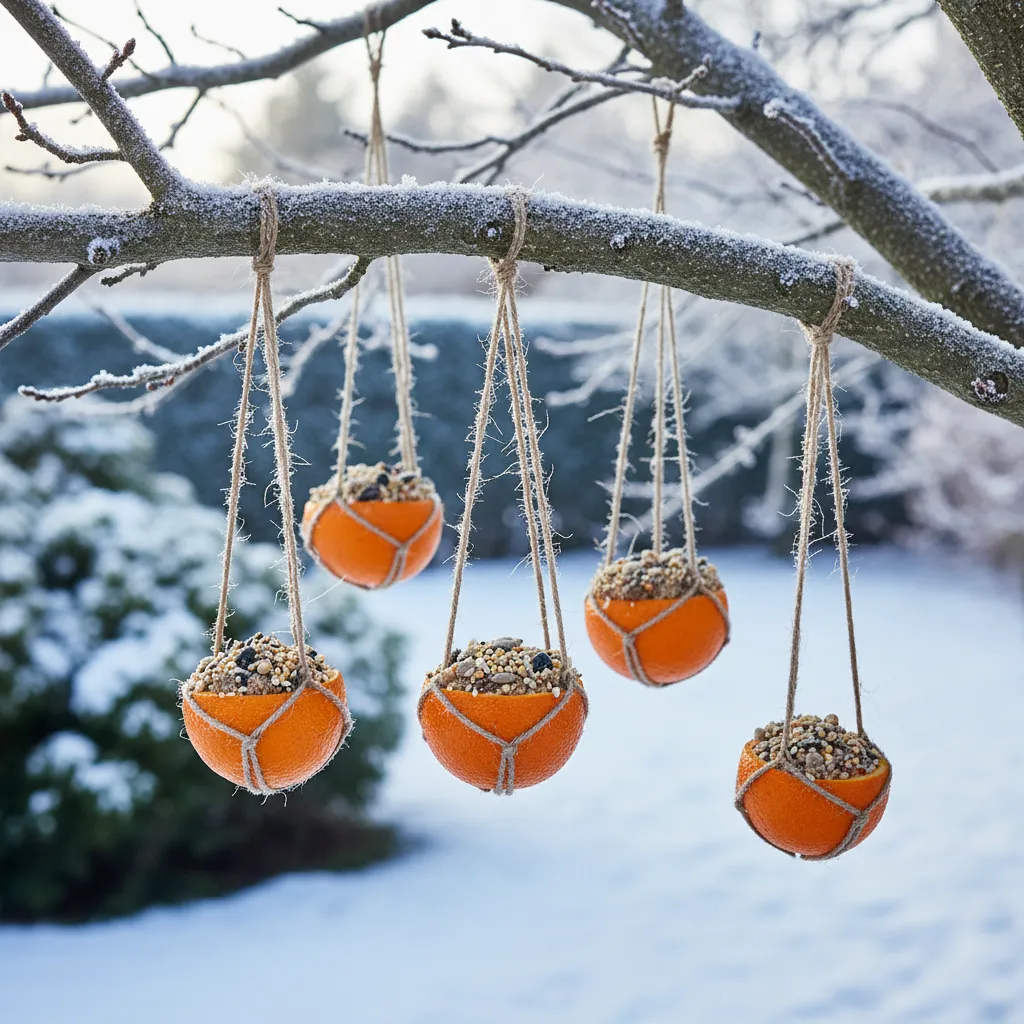
Citrus cups offer a vibrant splash of color against the often muted palette of a dormant garden. These feeders utilize the natural, waxy rind of oranges or grapefruits.
Using the peel as a vessel creates an organic look that blends seamlessly with outdoor surroundings. The texture of the fruit skin contrasts beautifully with rough jute twine.
This design choice is highly functional for busy homeowners. There is no need to scrub plastic containers or worry about rust on metal components.
True sustainability in design means creating beauty that returns to the earth without leaving a trace.
Once the feeder is empty or begins to wither, you can simply toss it into your compost bin. It is a zero-waste solution that benefits both your garden soil and the local wildlife.
To create these, slice a large orange in half and scoop out the flesh. Poke three holes near the rim and thread natural twine through them to create a stable hanging basket.
Consider the visual flow of your outdoor space when placing these. Hanging them at varying heights above flower bed borders adds vertical interest.
This draws the eye upward and creates a dynamic vignette. The bright orange hue acts as a focal point, guiding the gaze through your garden layout.
Fruit attracts many birds that don’t visit seed feeders… Orioles, robins, Cape May Warblers, and other birds with a sweet tooth will relish orange halves.
National Wildlife Federation, Feed the Birds
Selecting the Perfect Filler
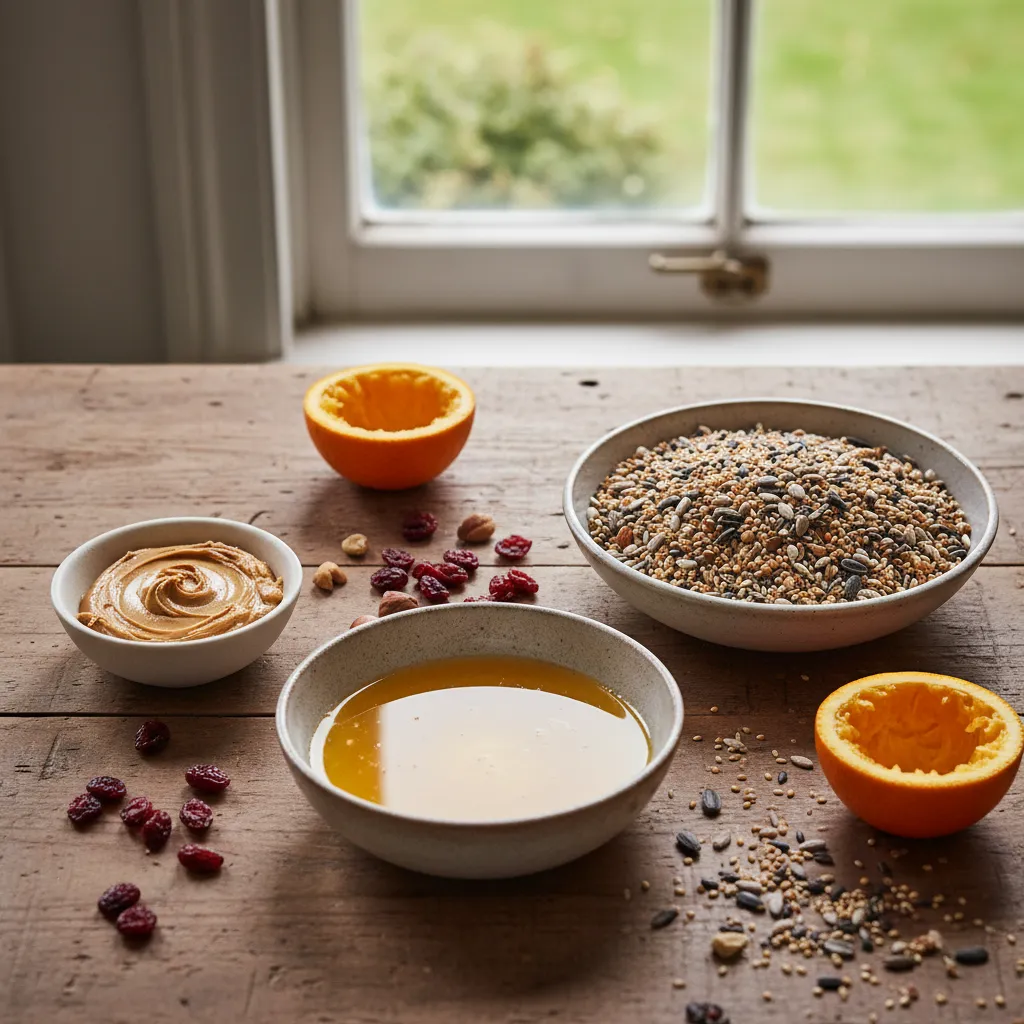
The content of your citrus cup is just as important as the vessel itself. Different fillings will attract specific bird species and alter the visual texture of the feeder.
Suet cakes pressed into the orange peel provide a smooth, dense look. Loose seeds offer a more rustic and speckled appearance that catches the sunlight.
Mixing melted fat with seeds creates a high-energy treat that holds its shape. This is crucial for maintaining a tidy appearance, as loose seeds can easily spill in the wind.
You can also coordinate these natural elements with other outdoor decor. They pair exceptionally well with a rustic spring wreath made from dried botanicals.
Consult the table below to choose the best filler for your local feathered friends. This ensures your DIY project is biologically appropriate for the season.
| Filler Type | Visual Texture | Best For (Bird Species) | Seasonal Benefit |
|---|---|---|---|
| Pure Suet & Seed | Smooth, speckled, dense | Woodpeckers, Chickadees | High calories for cold nights |
| Peanut Butter Mix | Creamy, rich, matte | Nuthatches, Wrens | Protein for muscle health |
| Fruit Jelly | Glossy, translucent, bright | Orioles, Mockingbirds | Sugar boost for migration |
| Dried Mealworms | Rough, organic, layered | Bluebirds, Robins | Essential fats for nesting |
Ensure you place these biodegradable cups in a shaded area if using suet or jelly. Direct sunlight can melt the contents quickly, ruining the aesthetic and spoiling the food.
The orange peel naturally hardens over a few days, becoming a sturdy bowl. This aging process adds a weathered charm that plastic feeders simply cannot replicate.
Monitoring the condition of the peel is essential. Remove the cup if you notice significant mold growth to keep the feeding station healthy for visitors.
Eco-Chic Styling Secret
- To increase durability, let your hollowed citrus peels air-dry for 24 hours before filling; this helps the rind harden and hold its shape longer against the elements.
- Hang your citrus cups near dense shrubs or evergreen branches to provide migratory birds with a safe ‘escape route’ from predators while they feed.
- Mix and match fruit sizes; like large grapefruits for suet and small lemons for jelly; to create a tiered, multi-tonal display that adds visual depth to your garden.
Crafting a Sanctuary for Songbirds
Creating your own hanging bird feeders brings vibrant life to your garden while repurposing household items. It is a sustainable choice with style.
Remember that hygiene is paramount. Proper drainage holes and regular cleaning schedules ensure your feathered guests stay safe and healthy year-round.
Whether using glass or recycled plastic, these functional accents blend nature with design. Enjoy the serene view of finches visiting your handiwork.
Avian Design Dilemmas Solved
Hang feeders five to six feet high near protective shrubs. Ensure a clear line of sight from your window, but keep it safe from jumping predators.
Scrub feeders every two weeks with a dilute bleach solution. This prevents mold and disease spread, which is absolutely critical for finch health.
Yes, but keep them in the shade to prevent seed spoilage. High heat can degrade plastic over time, so replace the bottle if it becomes brittle.
Tiny seeds like Nyjer (thistle) are ideal. Larger seeds like sunflower hearts require bigger drainage and port holes to prevent clogging.
