
Table of Contents
- 1. Float Furniture to Establish 36-Inch Clearances Between Doorways
- 2. Break the Bowling Alley Effect with Distinct Functional Zones
- 3. Soften Rigid Room Lines Using Round and Curved Furniture
- 4. Anchor Seating Areas and Guide Foot Traffic with Area Rugs
- 5. Utilize Printable Grid Planners for Your Specific Doorway Configuration
- Bring Harmony to Your Narrow Living Space
- Common Layout Dilemmas Solved
Transform your long, narrow living room into a sophisticated retreat that balances function and style.
While these awkward spaces often feel challenging, they offer a unique opportunity to create distinct zones for lounging and hosting.
With the right layout, you can turn a restrictive floor plan into a cozy sanctuary that feels both open and intimate.
Designing for depth requires a practical approach to furniture placement and scale.
Start by pulling pieces away from the walls to break up the linear flow; this simple trick prevents the room from feeling like a hallway.
Incorporating slender profiles and versatile multi-functional items allows you to maximize every square inch without sacrificing elegance or comfort.
Whether you are a dedicated DIY enthusiast or a lover of high-end aesthetics, these styling principles will help you master the art of the narrow room.
Focus on creating pathways that feel natural while using rugs and lighting to anchor your favorite areas. Your home should reflect your personal taste while remaining perfectly grounded in everyday livability.
1. Float Furniture to Establish 36-Inch Clearances Between Doorways
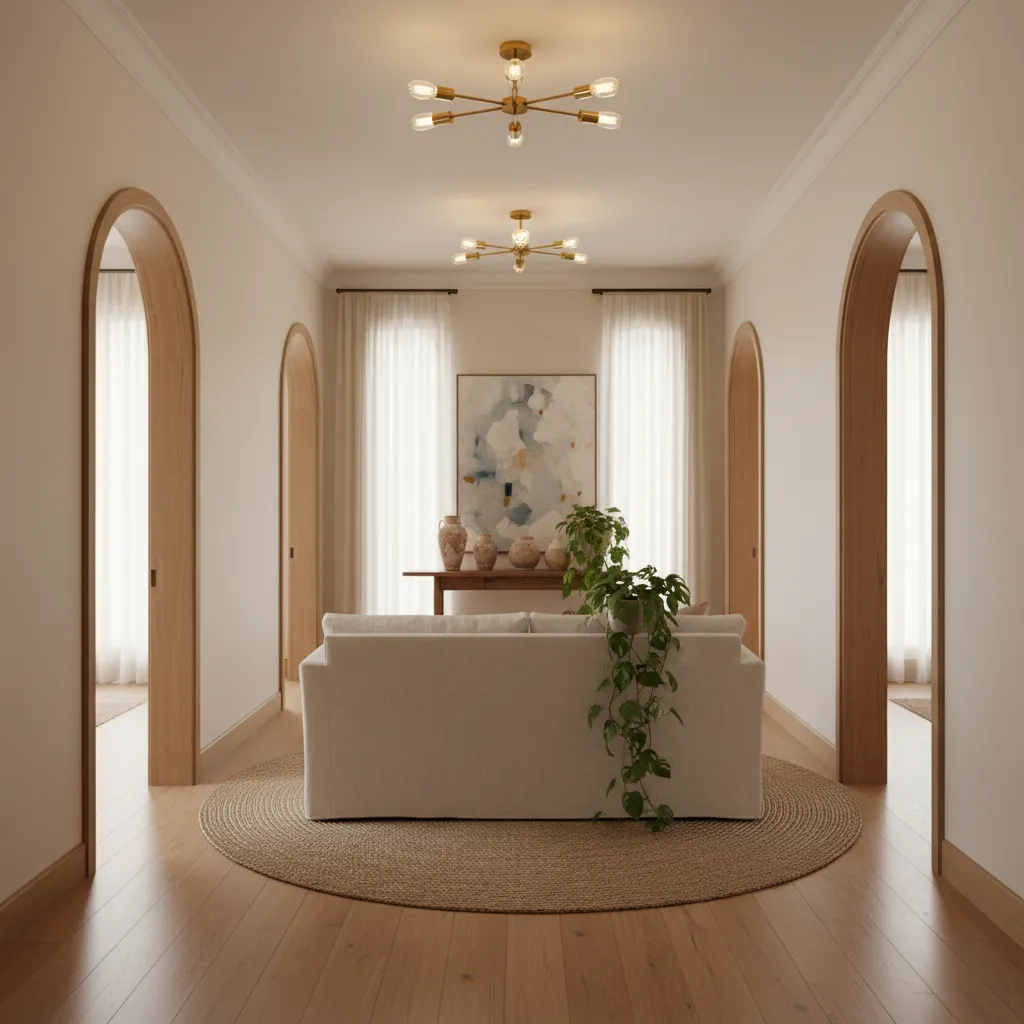
Floating your furniture away from the walls is the ultimate secret to mastering a tricky layout. Pushing a linen sofa against the wall only creates frustrating traffic jams in narrow spaces.
By pulling seating toward the center, you establish a cozy focal point. This arrangement opens up a clear 36-inch pathway behind the furniture, allowing traffic to flow smoothly between doorways.
Imagine soft sunlight catching the textured boucle fabric of your central seating area. The warm ambient glow from overhead brass fixtures highlights the beautifully exposed oak flooring walkways.
Floating your furniture transforms a narrow hallway into a curated, inviting living space.
Maintaining clear pathways is vital for shared spaces. Explore our living and dining room combo ideas to perfectly separate distinct zones without ever blocking your doorways.
Pull your furniture off the walls. It instantly makes a room feel larger and creates a much more intimate seating area.
Nate Berkus, Architectural Digest
Begin by anchoring the room with a plush textured rug in the center. Position your heaviest statement piece parallel to the longest solid wall, ensuring the back is fully visible and styled.
| Clearance Width | Best Used For | Atmosphere Effect |
|---|---|---|
| 18 Inches | Coffee table to sofa distance | Intimate and cozy |
| 24 Inches | Minor walkways between chairs | Slightly cramped, restricted flow |
| 36 Inches | Main pathways between doorways | Airy, accessible, and seamless |
| 48+ Inches | Grand entry halls | Can feel disjointed in small rooms |
Add a slim console table behind the floating sofa to complete the vignette. Decorate it with ceramic vases and trailing greenery to soften the edges while preserving your essential spatial flow.
Designer Layout Hacks
- Anchor your floating furniture arrangement with a plush, textured rug to clearly define the central seating zone.
- Place a slim console table behind your floating sofa to display decorative ceramic vases and trailing greenery.
- Maintain 18 inches between your coffee table and sofa for comfortable reach, but always reserve 36 inches for main doorways and pathways.
2. Break the Bowling Alley Effect with Distinct Functional Zones
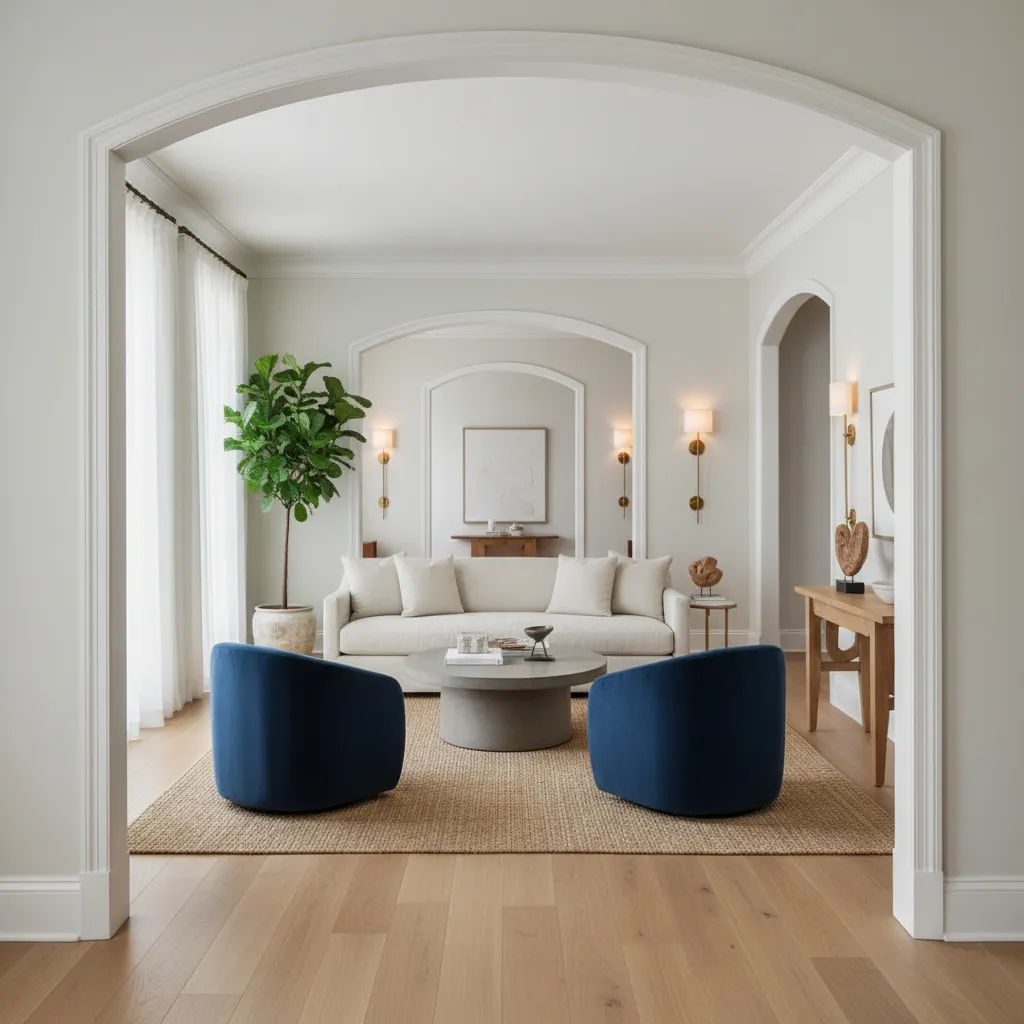
A long room often feels like a tunnel when furniture hugs the walls. Pushing everything to the edges highlights the narrow shape.
Instead, imagine dividing your floor plan into distinct squares. This approach instantly stops the room from looking like a hallway.
Zoning changes the spatial flow entirely. By grouping pieces in the center, you create intimate areas wrapped in a warm ambient glow.
You might create a main seating area alongside a workspace. Check out our living and dining room combo ideas for layout inspiration.
Divide your long room into purposeful squares to trade the hallway effect for intimate, curated vignettes.
When dealing with a long room, the best thing you can do is break it up into two or three distinct seating areas.
Emily Henderson, Style by Emily Henderson
Establishing Your Zones
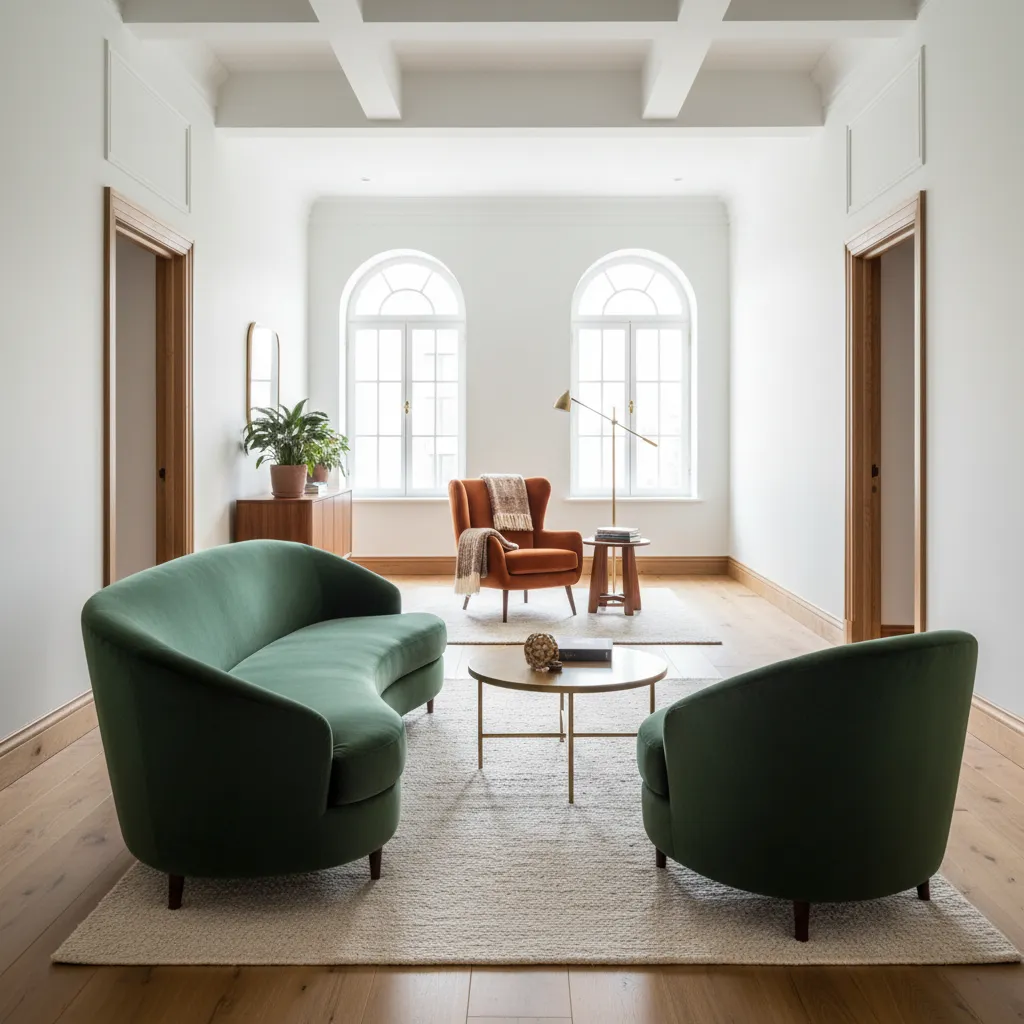
Start by anchoring your main seating area around the primary focal point. A plush velvet sofa facing a warm fireplace grounds the room.
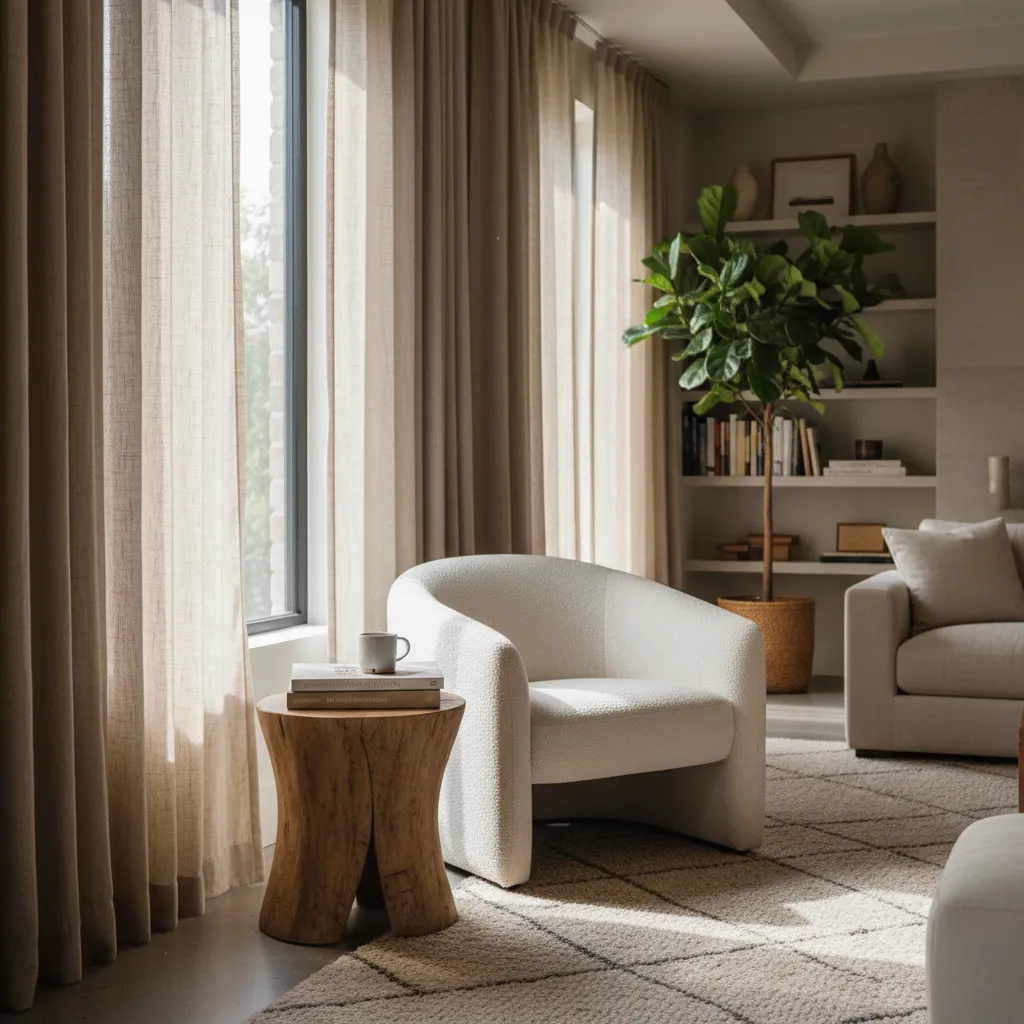
Leave the remaining space for secondary functions. A reading nook with a tactile linen chair and a brass floor lamp works beautifully.
This arrangement improves usability while adding visual weight. Traffic flows naturally past the zones rather than cutting through them.
| Room Length | Primary Zone Focus | Secondary Zone Idea |
|---|---|---|
| Under 15 Feet | Compact Velvet Sofa Area | Minimalist Window Desk |
| 15 to 20 Feet | Full Sectional Seating | Cozy Corner Reading Nook |
| Over 20 Feet | Large Entertaining Space | Round Dining Table Set |
Using Rugs to Define Space
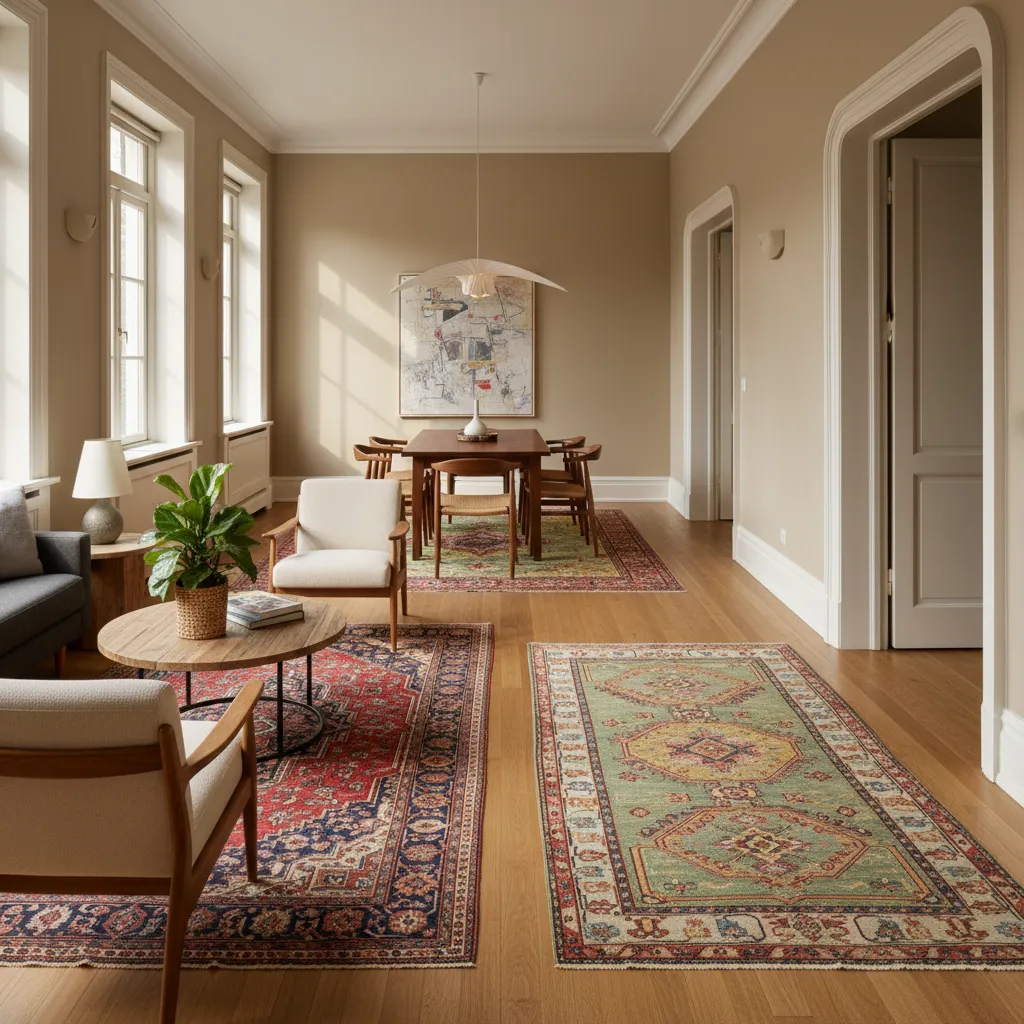
Area rugs act as visual boundaries for your new zones. Placing contrasting rugs on a raw wood floor immediately breaks up the length.
To keep the look cohesive, select rugs from the same color palette. A faded terracotta rug pairs perfectly with a thick, natural jute option.
Make sure all front legs of your furniture sit on the rug. This anchors the statement pieces and keeps the walking paths clearly open.
Adding a freestanding bookshelf between zones is a great trick. Explore our modern living room decor ideas for stylish room dividers.
Style Secret: Master the Art of Zoning
- Float your furniture away from the walls. Centering your main seating arrangement instantly disrupts the tunnel effect and creates a cozy, purposeful area.
- Use rugs with varying textures but cohesive color palettes, like pairing a plush wool rug with a natural jute one, to visually separate distinct spaces without clashing.
- Place a low console table behind a floating sofa or add an open-backed bookcase to subtly divide your main entertaining zone from a secondary workspace or reading nook.
3. Soften Rigid Room Lines Using Round and Curved Furniture
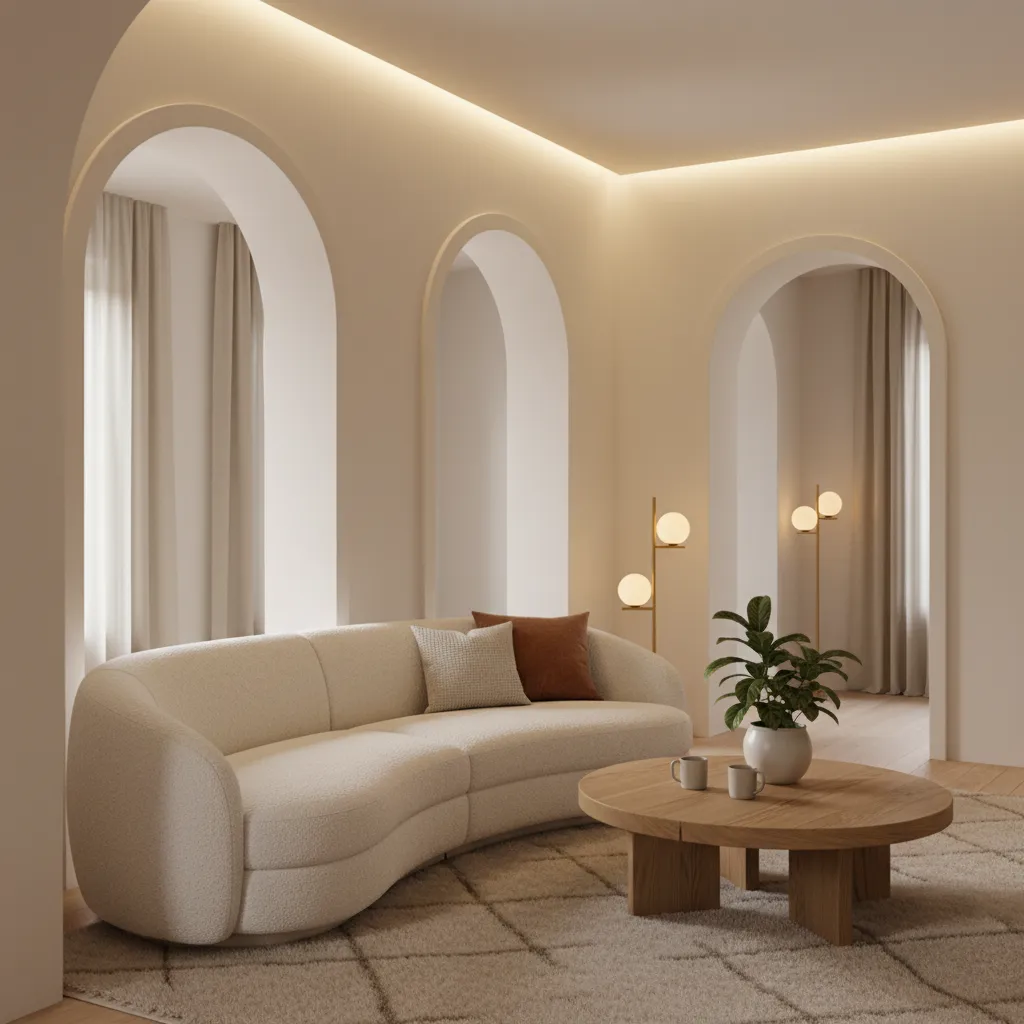
Long, narrow rooms often feel like bowling alleys. Adding curved furniture breaks up those harsh, parallel lines beautifully.
Round pieces naturally guide traffic around them. This prevents bumped shins and creates a fluid pathway between multiple doorways.
Curved furniture transforms a rigid hallway into a welcoming haven of organic comfort.
The Power of the Round Coffee Table
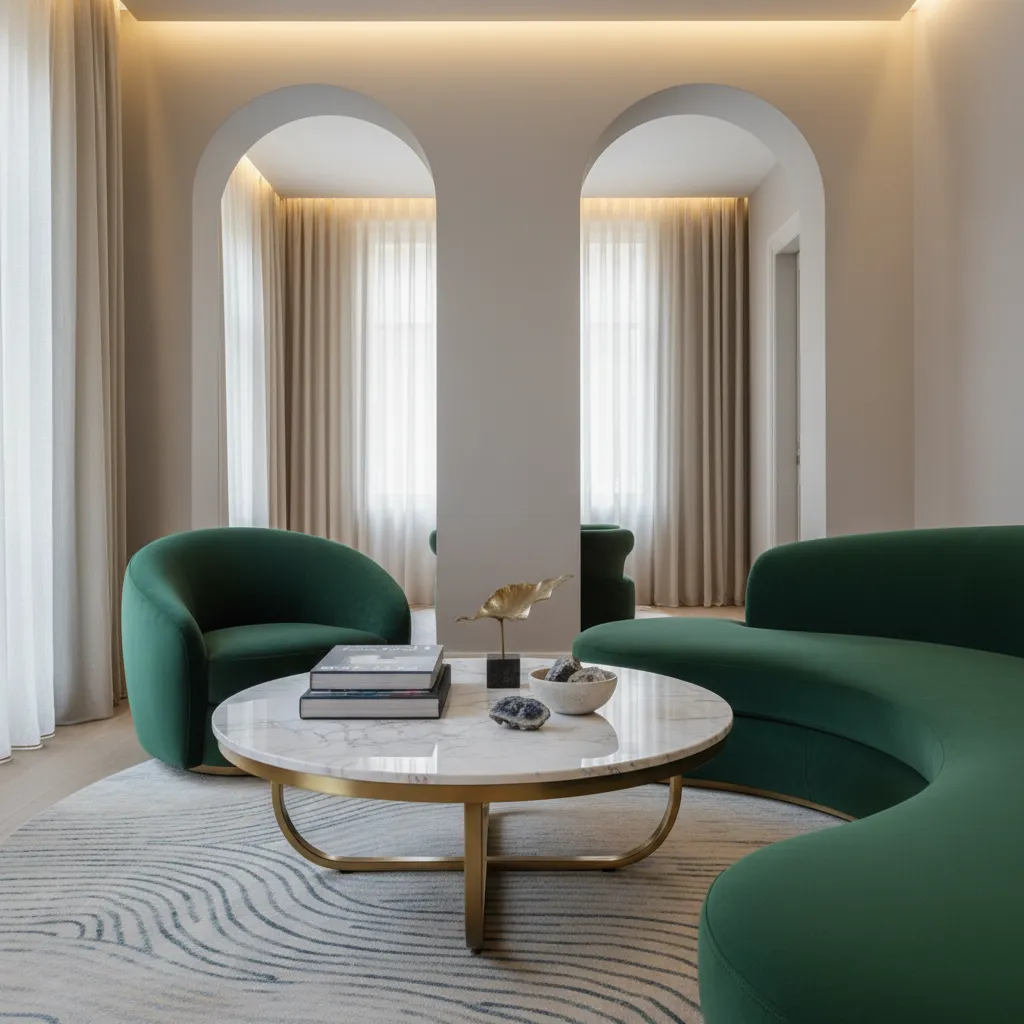
Swap a rectangular table for a round one. A plush velvet ottoman or a raw oak circular table instantly softens the room visually.
Exploring modern living room decor upgrades often highlights curves. They bring a welcoming, organic energy to rigid apartment layouts.
Incorporating round coffee tables and curved upholstery softens harsh architectural lines, making narrow rooms feel far more intimate.
Shea McGee, Studio McGee Design Tips
Curved Seating for Better Flow
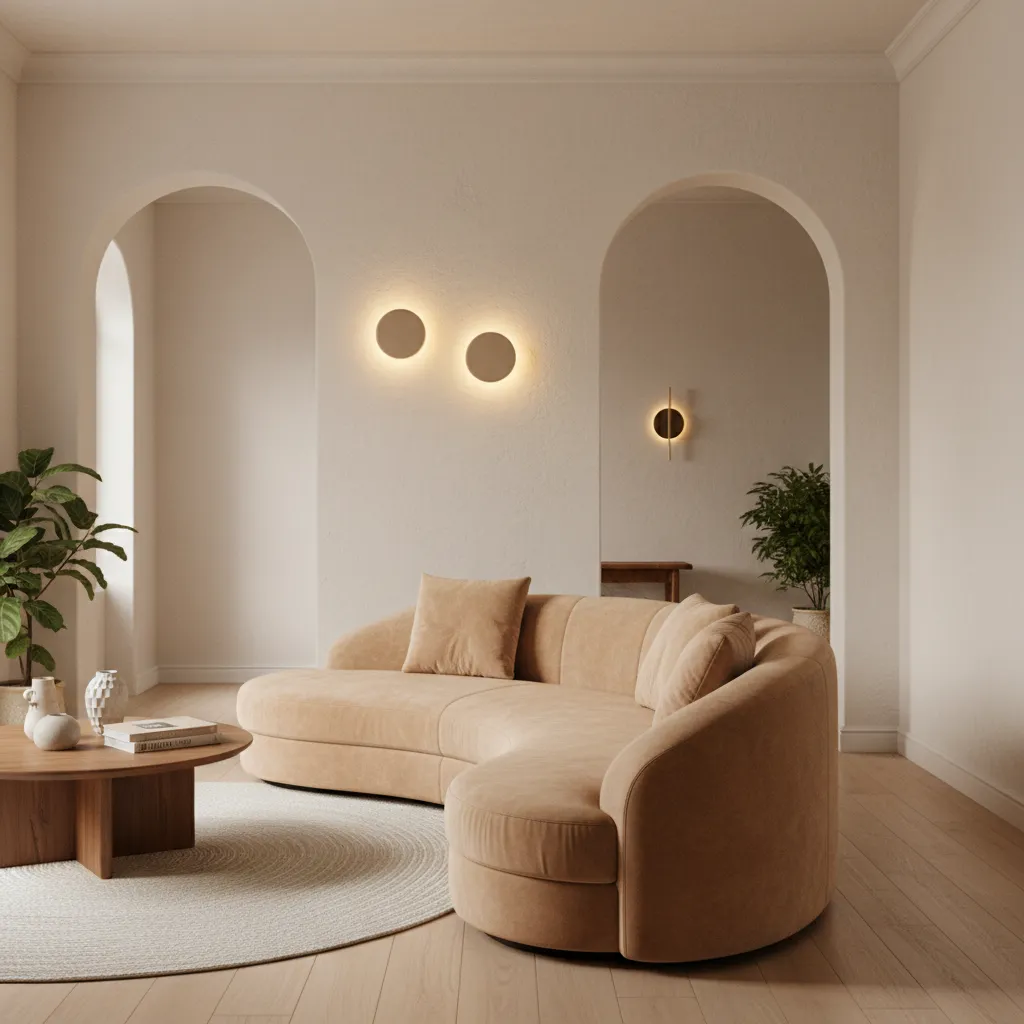
A curved sofa or rounded accent chairs are game changers here. They allow foot traffic to glide past doorways without awkward angles.
Pair a curved linen sofa with warm ambient lighting. A brass floor lamp tucked behind it creates a cozy, glowing focal point.
- Bouclé Swivel Chairs: These offer flexible viewing angles and remove harsh, blocky corners near tight entryways.
- Oval Console Tables: Perfect for narrow walls behind sofas. The rounded edges keep walkways clear and safe.
- Circular Area Rugs: A round rug under a square room immediately softens the floor plan and anchors the seating.
You can easily adapt tips on how to style a console table for these curved pieces. A round mirror above it doubles the soft, airy vibe.
Ultimately, balancing sharp architectural lines with organic curves brings harmony. Your narrow space will feel curated, not cramped.
Style Secret
- Anchor your seating area with a circular area rug and pair it with a round coffee table or plush ottoman to instantly break up harsh, parallel lines.
- Swap blocky armchairs for curved bouclé swivel chairs to improve foot traffic flow and prevent bumped shins near tight doorways.
- Place an oval console table behind your sofa to keep walkways clear, and hang a round mirror above it to double the soft, airy vibe.
4. Anchor Seating Areas and Guide Foot Traffic with Area Rugs
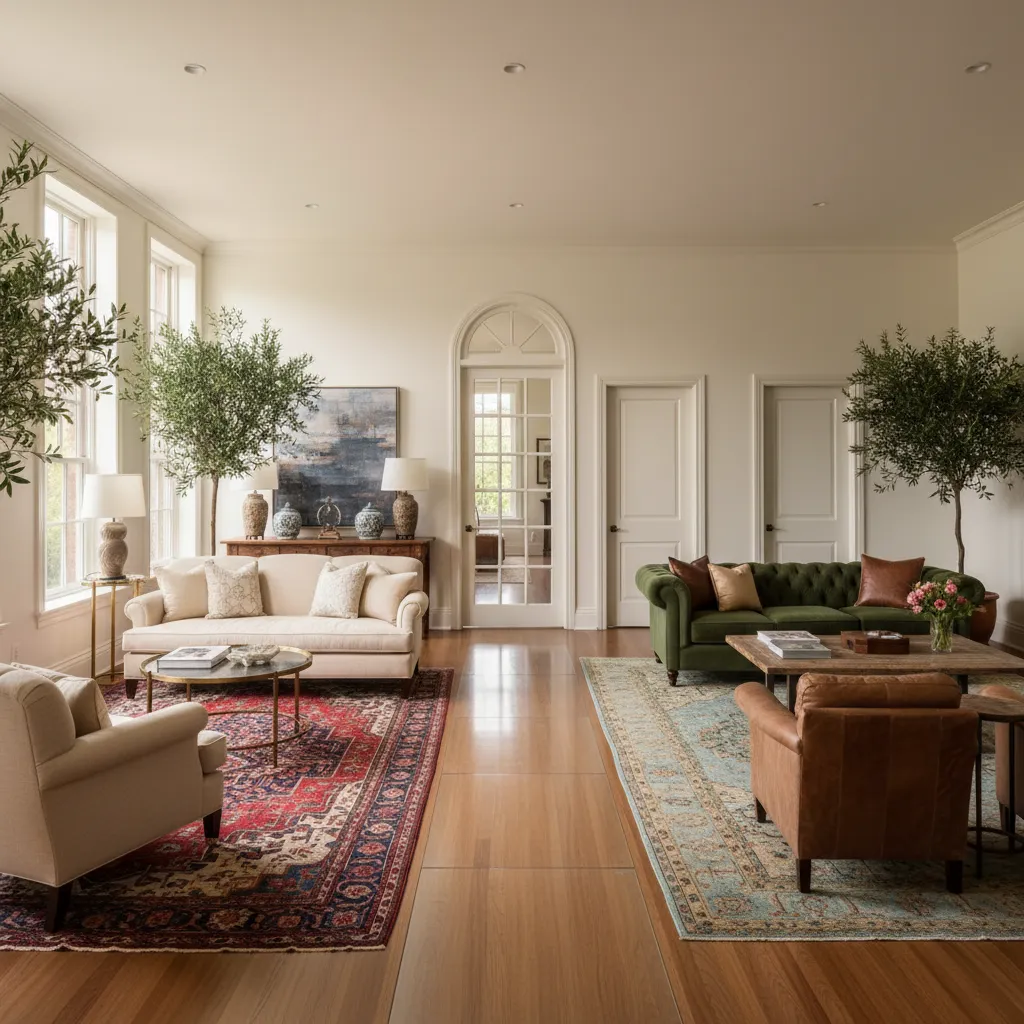
Area rugs act as visual anchors in long rooms. They establish distinct boundaries for seating zones without needing physical walls.
By leaving bare flooring exposed between rugs, you create a natural walkway. This guides foot traffic smoothly between multiple doorways.
When exploring top interior design styles living room ideas on a budget, rugs are essential.
A plush vintage rug adds incredible texture and tactile depth. The contrast against raw wood floors instantly warms the spatial flow.
Rugs are the easiest way to define zones in a long room. They tell your eye exactly where one space ends and another begins.
Bobby Berk, Bobby Berk Design
To master this look, you must scale your rugs correctly. Proper sizing prevents the space from feeling cluttered or visually disjointed.
- Leave breathing room: Keep twelve to eighteen inches of bare floor exposed along the walls.
- Ground the furniture: Ensure the front legs of sofas and chairs rest completely on the rug.
- Connect the zones: Use matching finishes or complementary color palettes between adjacent rugs.
A well-placed rug turns a passing walkway into a curated destination.
Doorways often disrupt furniture placement. You can balance this by setting up a small vignette near the entrance to catch the eye.
Learning how to style a console table in an entryway like a pro works perfectly for these transition gaps.
Pair your statement piece with warm ambient lighting. A soft glow highlighting an organic jute rug creates the ultimate hygge atmosphere.
The Layout Lowdown
- Opt for a rug large enough to sit under the front legs of all furniture pieces to instantly ground the conversation area.
- Maintain a clear 30-inch walkway of bare floor between rugs to create a logical path through a long room.
- Layer a smaller patterned rug over a larger neutral base to add visual weight and texture to your primary seating zone.
5. Utilize Printable Grid Planners for Your Specific Doorway Configuration
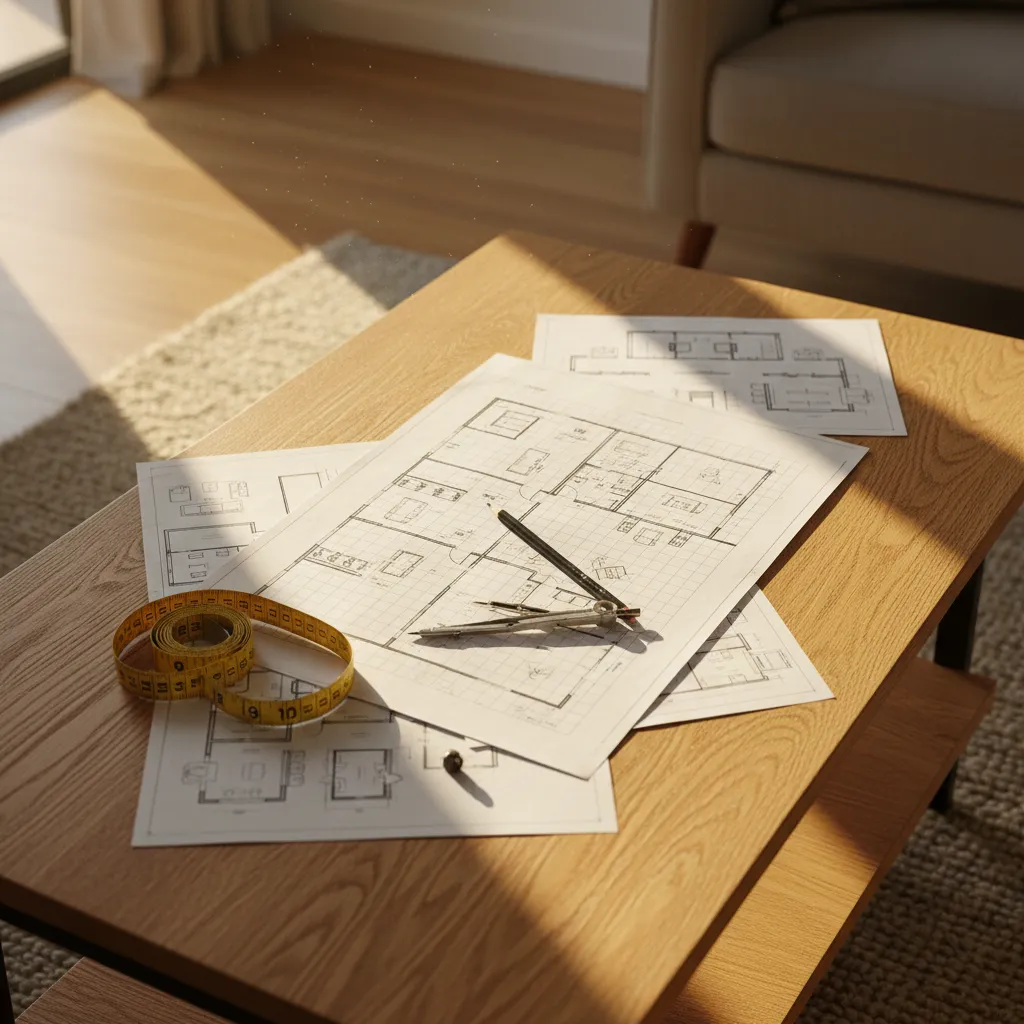
Visualizing a room layout before lifting heavy oak sofas saves immense time and effort. Paper grid planners offer a tactile way to experiment with space.
By mapping every architectural quirk on paper, you avoid blocking crucial walkways. This physical planning stage reveals hidden spatial flow opportunities.
Good design begins on paper, where mistakes are cheap and creativity flows freely.
Mapping Out Your Traffic Zones
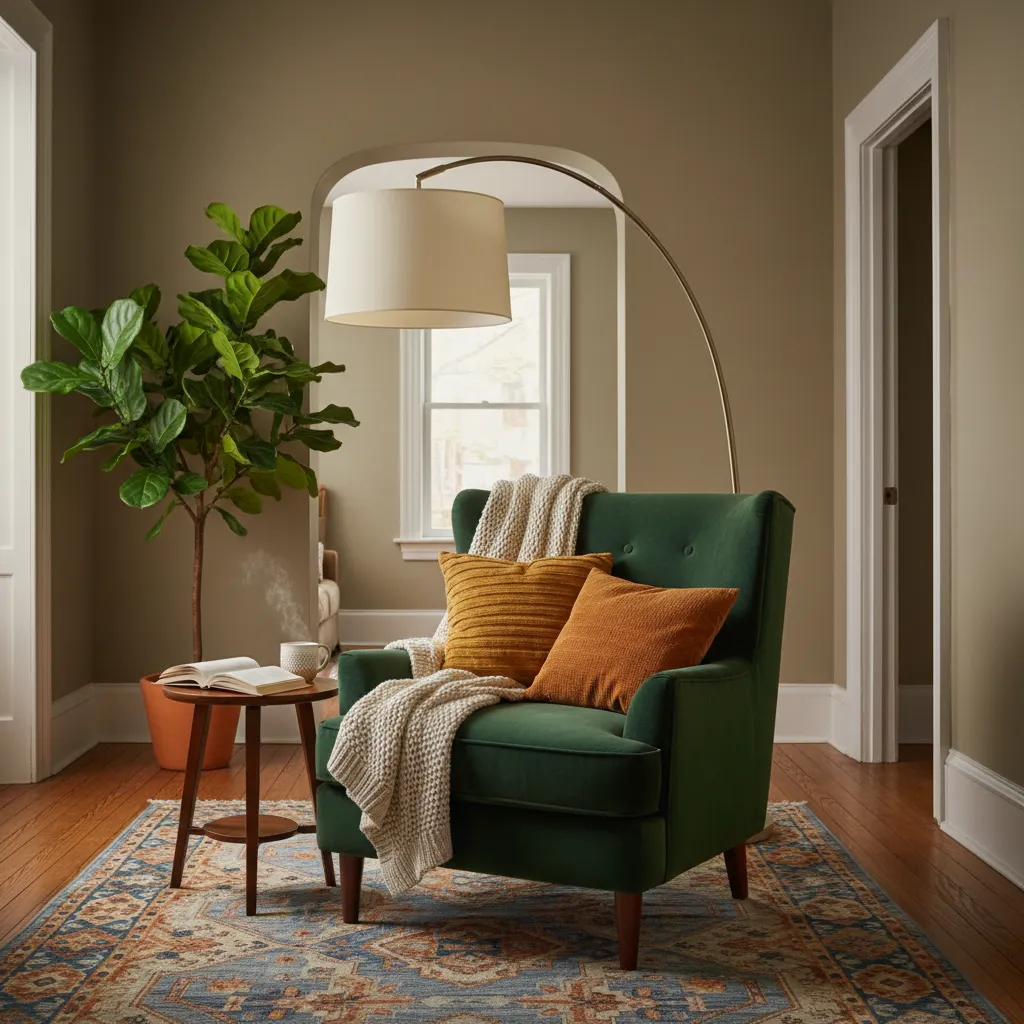
Start by measuring your entire room. Note the exact width of every doorway and window. This ensures your final floor plan accurately reflects the real space.
Draw your doorways with clear swing arcs. If a solid wood door opens inward, it instantly claims valuable floor real estate that you must keep completely empty.
This planning phase is ideal for integrating practical smart closet organization ideas. Proper scaling helps you see where a narrow brass cabinet fits perfectly.
The secret to a good layout is creating zones. This is especially true in open-plan spaces or long rooms.
Martin Waller, Homes & Gardens
To accurately recreate your long room on a simple sheet of paper, follow a systematic approach to capture every architectural detail.
- Measure the Perimeter: Record the exact length and width of the room.
- Mark the Doorways: Draw every entry point with its full door swing arc.
- Add Fixed Features: Include fireplaces, large windows, and built-in shelving.
- Draft the Pathways: Draw straight lines connecting the doorways to visualize traffic.
Using a standard quarter-inch scale keeps everything proportionate. A simple piece of graph paper becomes a powerful tool for visual harmony.
Cut out small paper rectangles to represent your linen sofa or velvet accent chairs. Moving these pieces is much easier than dragging heavy furniture.
Testing the Flow With Paper Templates
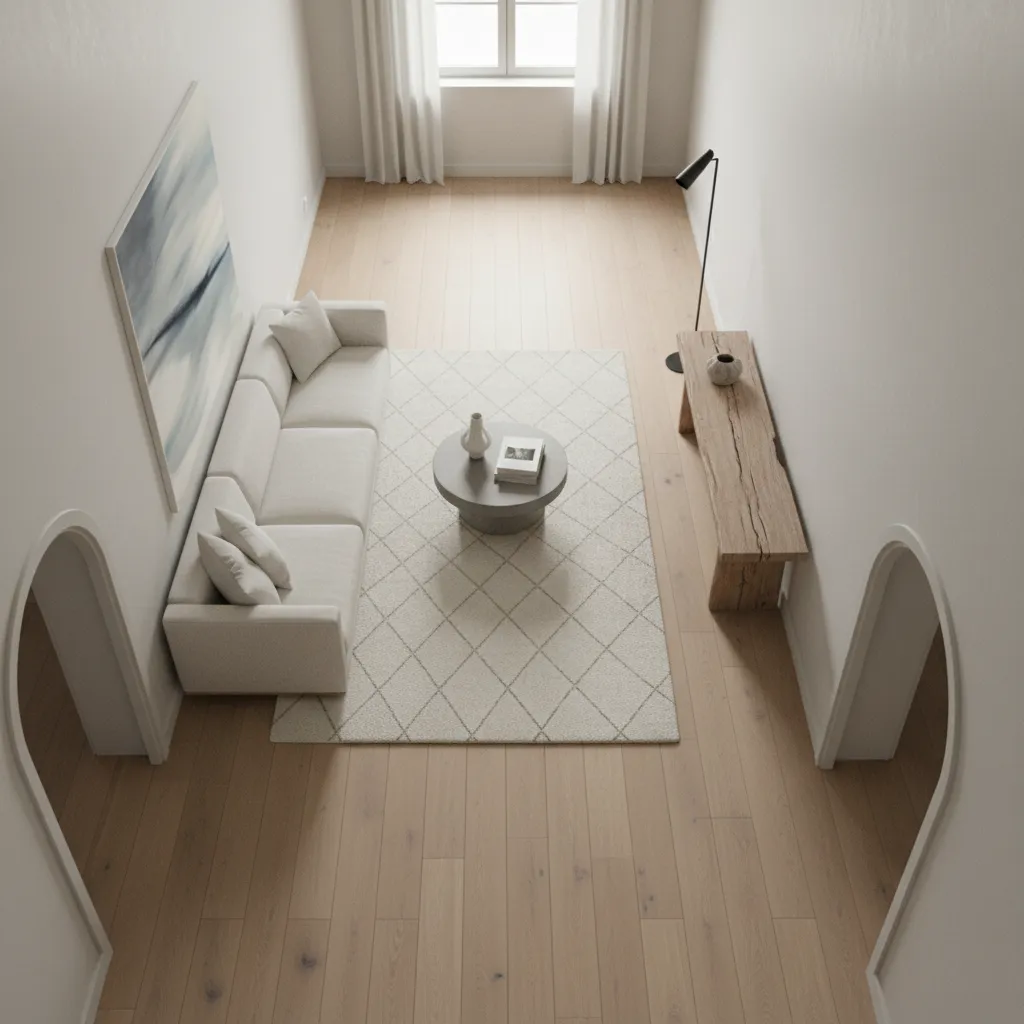
Once your grid is ready, place your paper furniture into the room. Try different configurations to see how they impact the ambient lighting and flow.
Leave at least three feet of walking space between major entryways. This generous spacing prevents the room from feeling cramped or deeply cluttered.
If you want to blend function with aesthetics, explore top interior design styles that embrace minimalism. Fewer pieces mean easier navigation.
A well-planned layout feels organic and incredibly inviting. Taking the time to grid your room ensures every curated piece sits exactly where it should.
The Planner’s Playbook
- Use painter’s tape to mark the ‘danger zones’ on your actual floor where door swings occur, ensuring you never accidentally place a rug or chair in the path of a door.
- Color-code your paper furniture cut-outs: use one color for your current pieces and another for ‘wish list’ items to instantly see how new additions impact the room’s flow.
- Snap a photo of your finalized grid layout on your phone so you have the exact dimensions and scale handy while shopping for new furniture or decor.
Bring Harmony to Your Narrow Living Space
Transforming a narrow living room with multiple doorways doesn’t have to be a layout nightmare.
By floating your furniture, you establish cozy focal points while keeping walkways clear.
Remember to divide the long room into functional zones to eliminate that bowling alley feel.
Embrace these strategies to craft a balanced, inviting space that flows effortlessly.
Common Layout Dilemmas Solved
Float your seating in the center of the room. This creates an intimate gathering space while leaving 36-inch pathways behind the furniture for easy doorway access.
Anchor the space with a textured rug and use distinct functional zones. Avoid pushing all furniture against the walls, as this only highlights the tunnel-like shape.
Aim for a 36-inch clearance for your primary pathways. This ensures traffic flows smoothly between doorways without making the room feel cramped or disjointed.
