
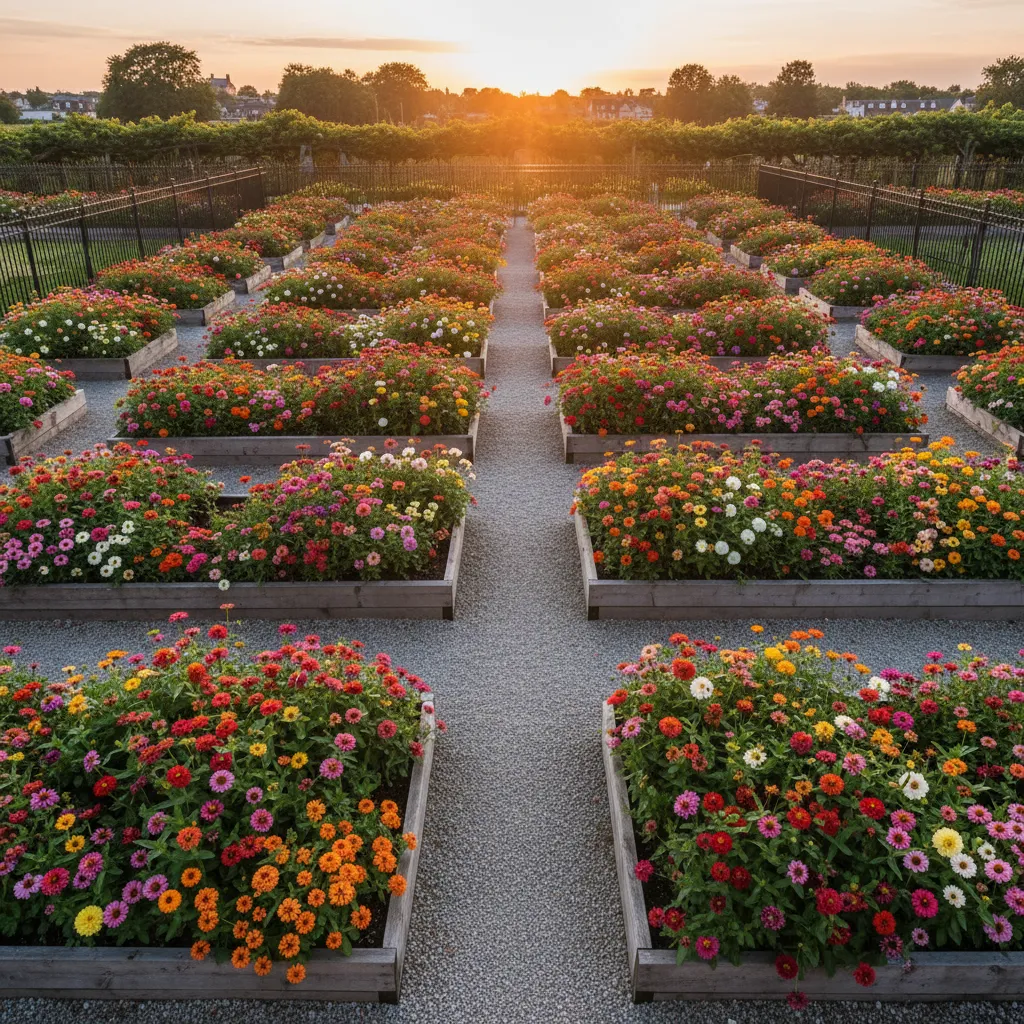
Table of Contents
- 1. The French Potager Grid Layout Using Square-Foot Formulas
- 2. The Suburban Cottage Garden Curve for Optimal Sunlight
- 3. The Raised Bed Island Setup Instead of Messy Straight Rows
- 4. The Mixed Border Design Combining Focal Flowers and Foliage
- 5. The Low-Maintenance Pathway Layout Designed for Weed Suppression
- Ready to Plant Your Dream Floral Retreat?
- Cultivating Confidence: Common Garden Design Questions
Transform your outdoor space into a personal sanctuary with a thoughtfully designed cut flower garden.
Whether you are working with a sprawling backyard or a modest balcony, the right layout bridges the gap between wild beauty and structured efficiency.
It is about more than just aesthetics; it is about creating a functional workspace that yields seasonal blooms.
Designing a cutting garden requires a blend of artistic vision and practical strategy.
Start by considering row orientation for optimal sunlight and easy access paths that keep your boots clean.
Incorporating tiered beds or raised containers can maximize your harvest while adding architectural interest to your landscape.
You do not need a professional budget to achieve a high-end look in your garden. Simple additions like cedar borders or reclaimed brick pathways elevate the entire design.
Focus on a layout that serves your lifestyle, ensuring every flower stems from a space that is as organized as it is beautiful.
1. The French Potager Grid Layout Using Square-Foot Formulas
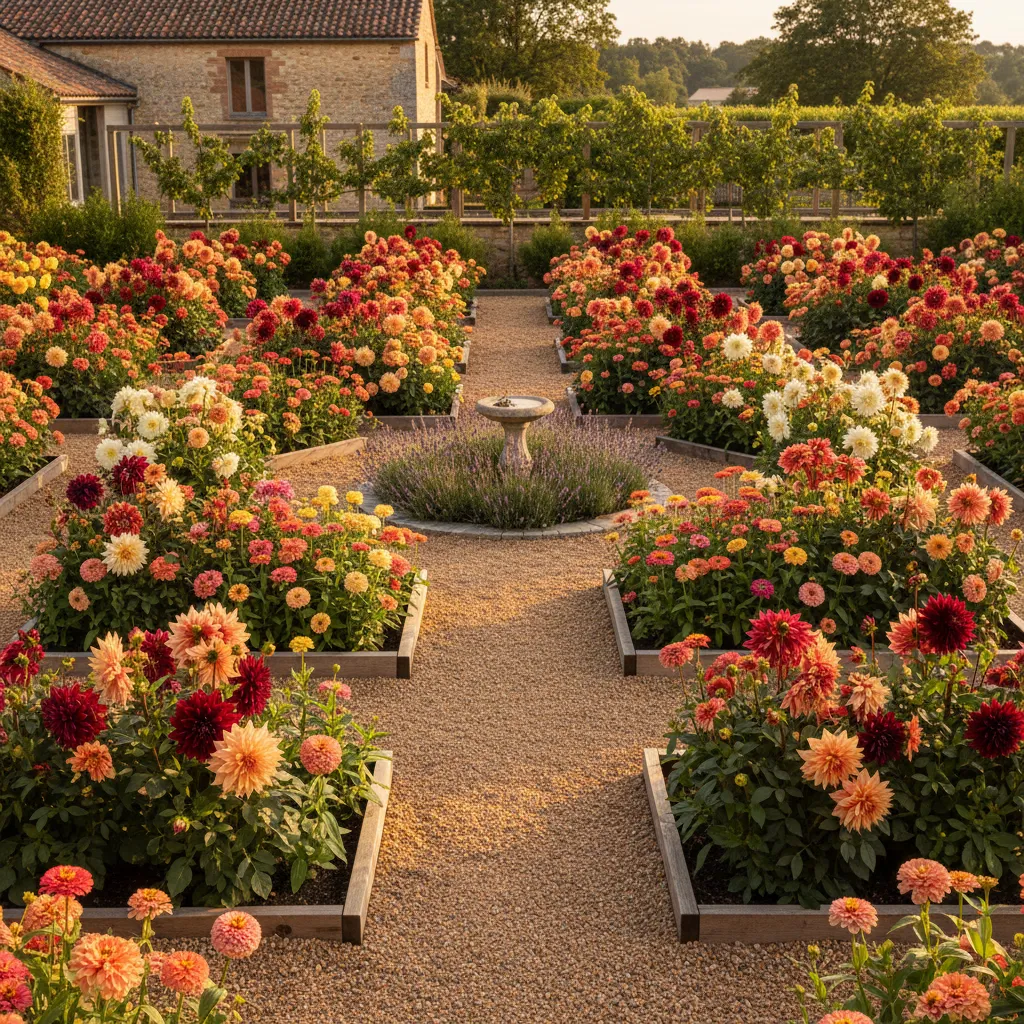
The French potager layout blends stunning aesthetics with high-yield practicality. It transforms a simple yard into an elegant, curated floral retreat.
Using square-foot formulas, this grid system maximizes every inch of soil. Symmetrical beds create clean sightlines and provide easy access for harvesting.
Building this structure often starts with choosing the right foundation. Exploring raised garden beds layout design ideas will give your grid instant architectural appeal.
The kitchen garden is a space that is as beautiful to look at as it is productive, creating a daily connection to nature.
Nicole Johnsey Burke, Gardenary Kitchen Garden Revival
To master this layout, strict spacing is essential. Knowing exactly how many plants fit into each square foot ensures a lush, overlapping canopy of blooms.
| Flower Variety | Plants per Square Foot | Average Blooming Height |
|---|---|---|
| Zinnias | 4 plants | 36 inches |
| Dahlias | 1 plant | 48 inches |
| Snapdragons | 9 plants | 24 inches |
| Cosmos | 1 plant | 48 inches |
Mastering the Symmetrical Grid Setup
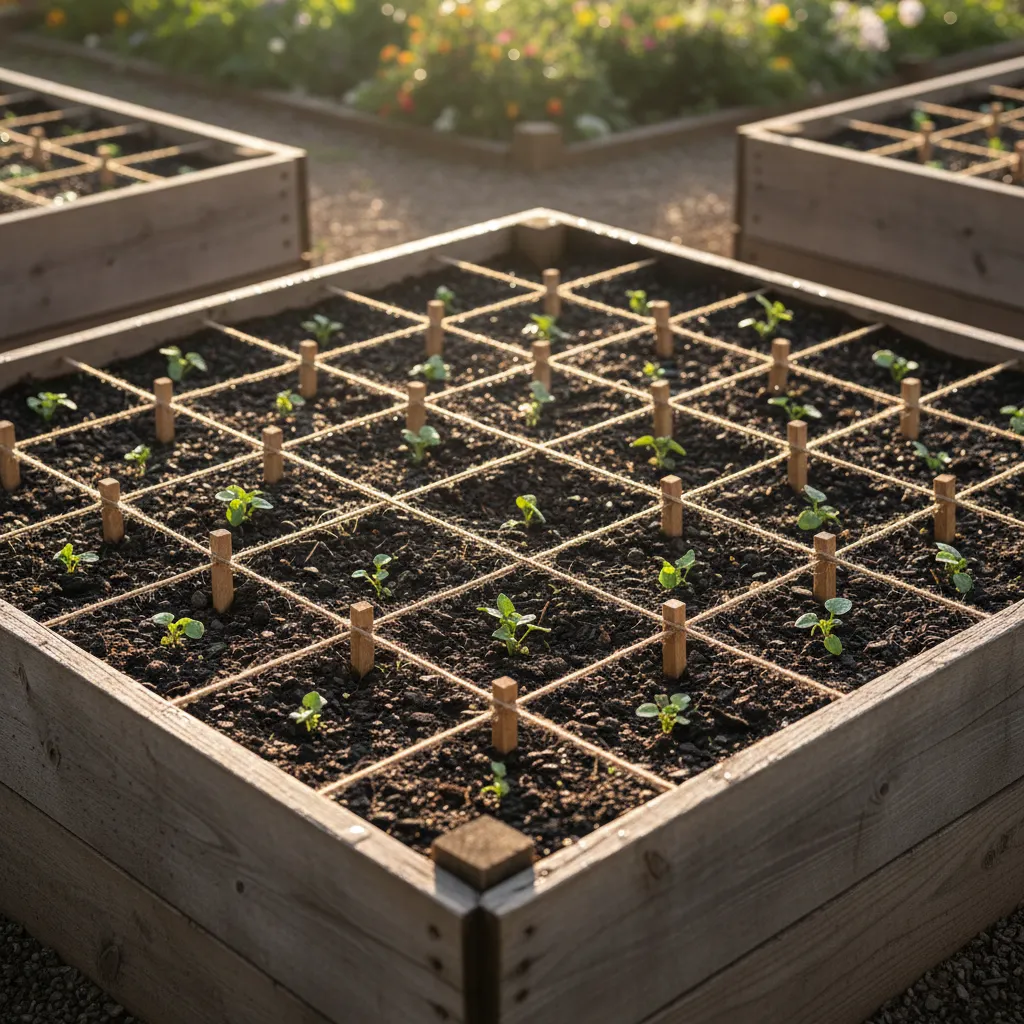
Incorporate tactile materials like raw cedar planks and crushed pea gravel. These earthy elements contrast beautifully with soft, delicate flower petals.
Divide your planting boxes using simple natural twine or thin wooden slats. This visual guide ensures precise planting and a perfectly balanced aesthetic.
The French potager garden proves that extreme functionality can still be breathtakingly beautiful.
Always leave ample room between your rustic planters for comfortable walking paths. A well-planned walkway keeps your shoes clean and makes daily flower snipping a joy.
Potager Style Secrets
- Use natural twine tied to small stakes to physically map out your square-foot grid over the soil, ensuring precise placement before you begin planting.
- Position taller, single-square plants like Dahlias in the center or back of your raised beds to prevent them from casting shade on denser, shorter plants like Snapdragons.
- Lay down landscaping fabric beneath your crushed pea gravel pathways to prevent weeds and keep your elegant walkways mud-free.
2. The Suburban Cottage Garden Curve for Optimal Sunlight
The Magic of Curved Garden Beds
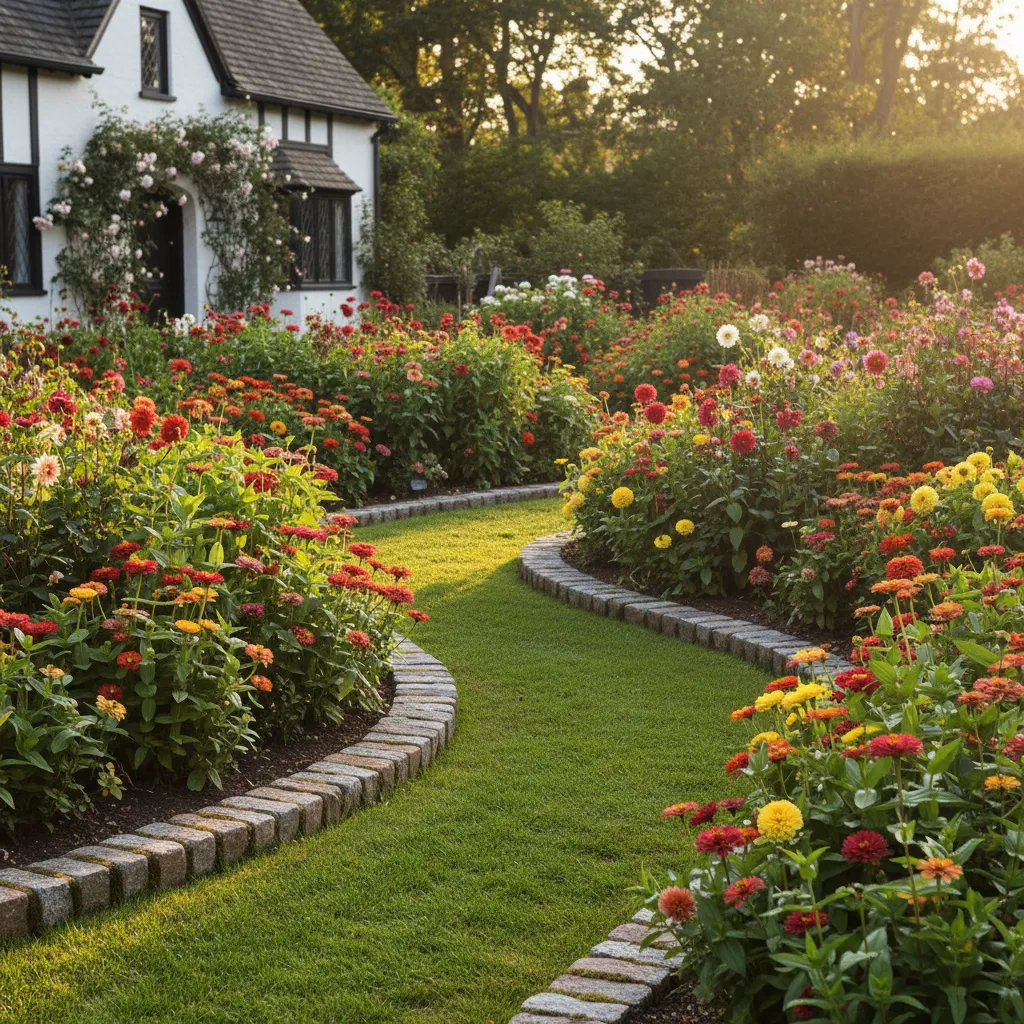
Curved garden beds instantly soften rigid property boundaries. This flowing layout mimics natural landscapes while catching sunlight from multiple angles.
Frame these sweeping curves with natural stone or raw oak logs. These textured borders anchor delicate blooms and define the spatial flow beautifully.
If you need budget-friendly inspiration, explore these outdoor flower bed border ideas to elevate your yard effortlessly.
Curves are naturally more relaxing to the eye. They soften the harsh lines of fences and make smaller outdoor spaces feel much larger.
Joe Swift, BBC Gardeners World
Maximizing Solar Gain for Blooms
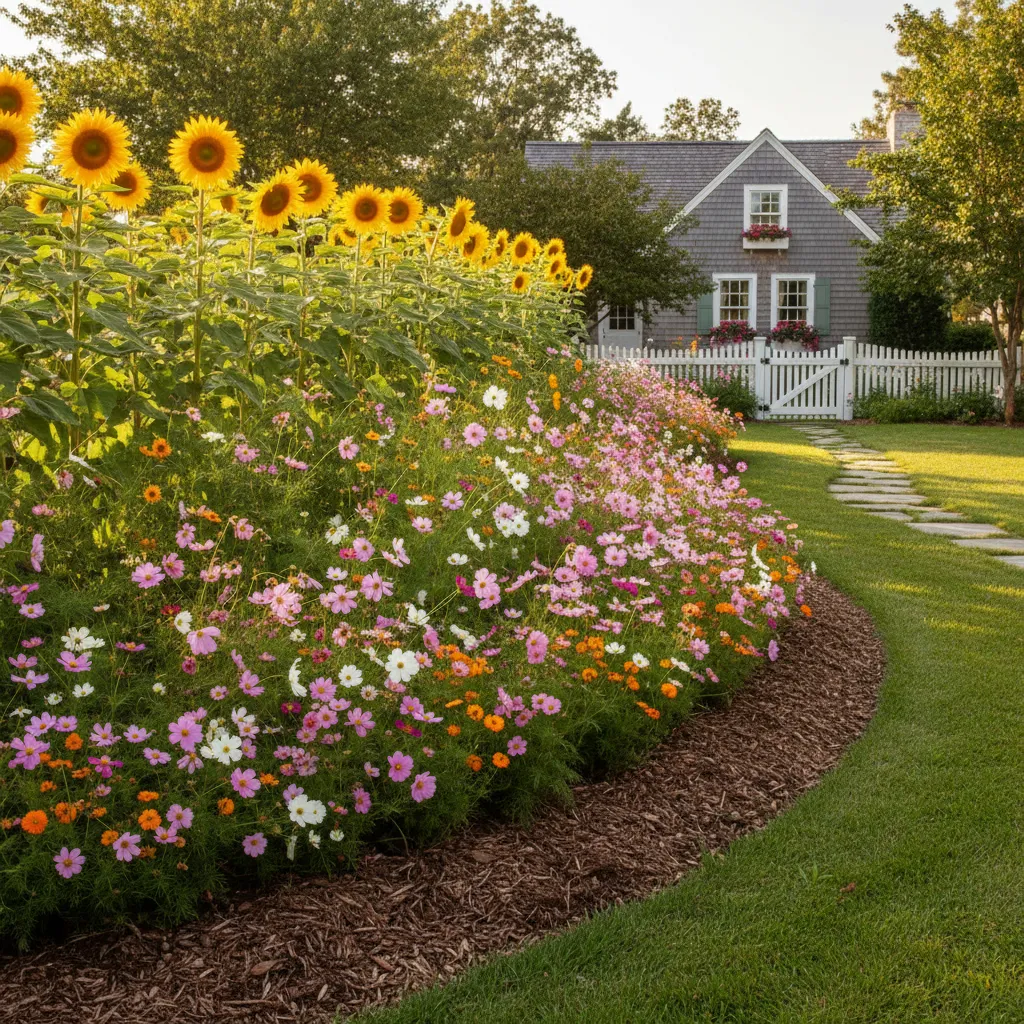
A crescent layout naturally cradles sun-loving flowers. By facing the inner curve toward the south, your blooms soak up a warm ambient glow all day long.
This shape improves usability by creating easy harvest access. You can stroll along the organic pathway without stepping on fragile root systems.
- Back Arch: Plant towering sunflowers or sweet peas here to block harsh winds without shading the rest of the garden.
- Middle Curve: Fill this zone with dense zinnias and snapdragons. They thrive in the protected, sun-drenched microclimate.
- Front Edge: Use low-growing trailing plants like nasturtiums. They spill beautifully over rough stone borders for a curated look.
A curved cottage garden does more than grow flowers. It conducts sunlight, creating a warm and inviting sanctuary of living color.
To complete the enchanting cottage aesthetic, consider adding vertical elements nearby. You can seamlessly integrate climbing roses along a porch trellis.
This layered approach perfectly balances wild, organic textures with highly practical sun management. The result is a breathtaking floral harvest.
Style Secret: Mastering the Curve
- Always orient the inner curve of your garden bed toward the south to create a natural sun-trap that keeps your blooms bathed in light all day.
- Use a tiered planting strategy by placing tall wind-blocking plants in the back arch, dense bloomers in the middle, and trailing spillers along the front edge.
- Choose flexible, natural edging materials like raw oak logs or small natural stones that easily conform to flowing shapes while adding rustic texture.
3. The Raised Bed Island Setup Instead of Messy Straight Rows
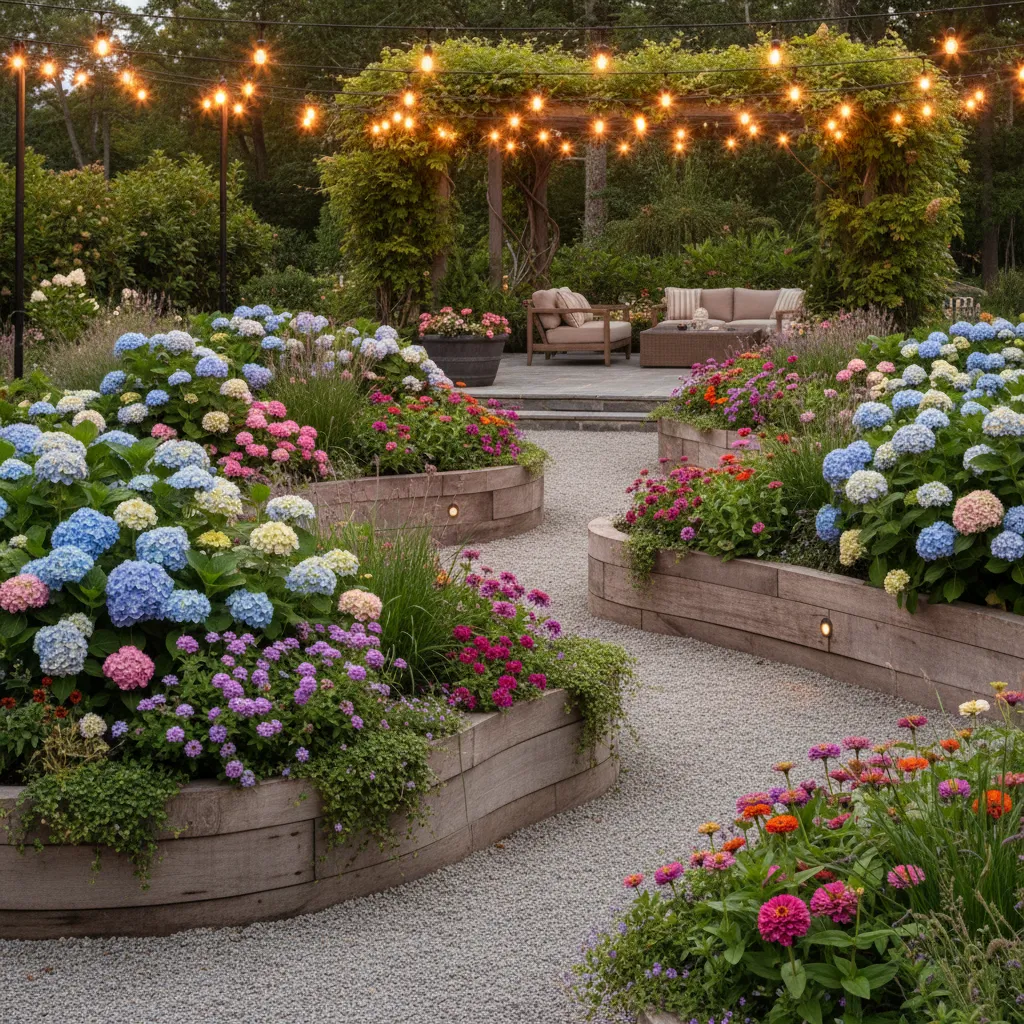
Stepping away from traditional farming lines changes everything. An island setup uses grouped raised beds to create a structured, highly curated aesthetic.
This layout improves spatial flow by allowing you to walk completely around each planter. Raw cedar or natural stone borders add tactile depth to the yard.
By bringing the soil level up, raised beds warm faster in spring and drain better, offering a massive advantage for root development.
Joe Lamp’l, The joegardener Show
Research shows raised beds increase bloom yields by up to twenty percent. Applying raised garden beds layout design ideas maximizes your harvest.
Enhance the atmosphere by adding warm ambient lighting along the pathways. A soft glow transforms these floral islands into a cozy evening focal point.
| Pathway Type | Ideal Width | Material Suggestion | Visual Effect |
|---|---|---|---|
| Main Thoroughfare | 3 to 4 feet | Crushed Pea Gravel | Airy, minimal, and highly accessible |
| Harvesting Path | 2 to 3 feet | Natural Flagstone | Organic, textured, and incredibly durable |
| Perimeter Border | 1 to 2 feet | Warm Cedar Mulch | Clean, defined, and earthy |
Filling the gaps between your islands with crunchy pea gravel or warm wood chips adds wonderful texture. This contrast beautifully grounds the space.
Treat your raised garden beds like islands of color, allowing the pathways to flow around them like a tranquil river.
Framing these islands with crisp edges keeps the design looking intentional. You can easily incorporate cheap outdoor flower bed border ideas here.
Island Layout Secret
- Limit each raised bed to a maximum width of four feet so you can comfortably reach the center from any side without stepping on and compacting the soil.
- Use varied pathway materials like pea gravel for main walkways and natural flagstone for narrow harvesting paths to visually distinguish the purpose of each route.
- Incorporate a central vertical element like a wooden obelisk or decorative trellis into your largest island to add height and create a sophisticated focal point.
4. The Mixed Border Design Combining Focal Flowers and Foliage
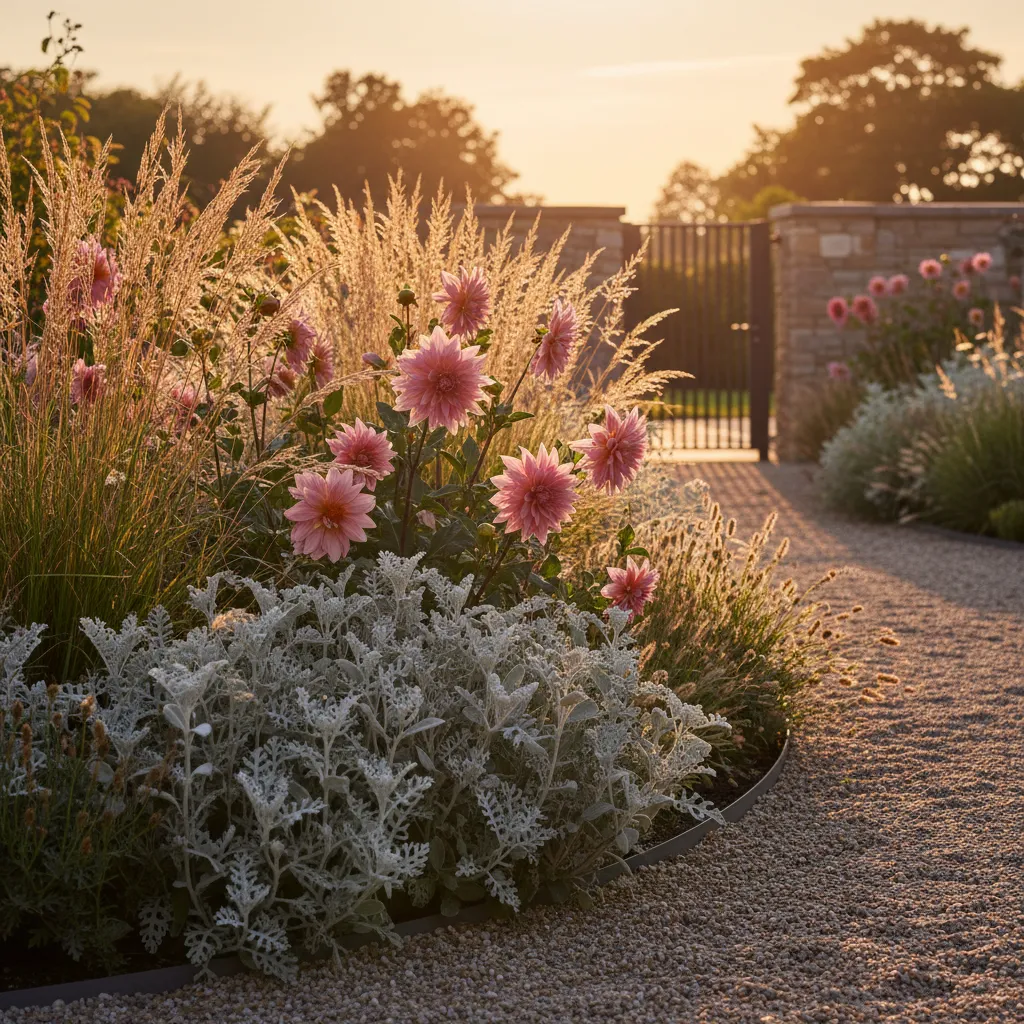
A mixed border beautifully blends stunning floral focal points with lush foliage. This curated layout keeps your space looking full and organic even after a heavy harvest.
Mixing delicate petals with velvety leaves adds incredible texture to your outdoor palette. It also improves spatial flow, creating a seamless transition from lawn to beds.
These layers elevate chic backyard landscaping, boosting both visual yield and style.
Foliage is the quiet anchor that allows your vibrant statement blooms to truly shine.
Strategic Plant Pairing for Mixed Beds
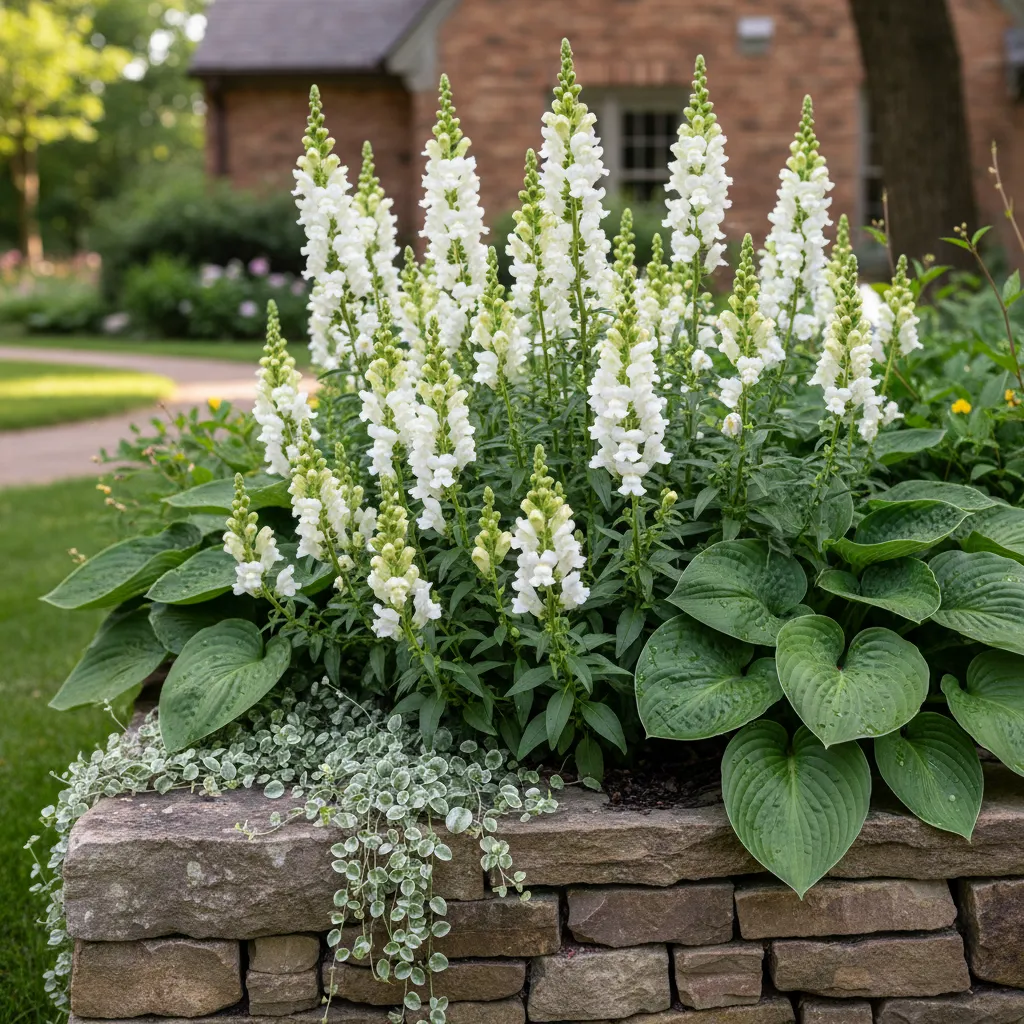
Pairing the right plants creates a harmonious vignette. Contrast a delicate, airy bloom with a broad, solid leaf for maximum visual impact in your space.
This strategy also significantly improves functionality. Dense greenery acts as a living mulch, retaining soil moisture and supporting taller, fragile stems.
I look at the plant, its structure, its character, and then its flower. Structure is the most important.
Piet Oudolf, NPR Landscape Interview
| Statement Piece | Ideal Foliage Partner | Aesthetic Vibe |
|---|---|---|
| Lush Peonies | Dusty Miller | Romantic, velvety, and soft |
| Bright Zinnias | Dark Opal Basil | Vibrant, organic, and grounded |
| Cafe au Lait Dahlias | Silver Drop Eucalyptus | Modern, airy, and sophisticated |
| White Cosmos | Ornamental Grasses | Whimsical, flowing, and wild |
Ambient lighting plays a massive role in how a mixed border feels. Plant your tallest foliage towards the back to capture the warm glow of the evening sun.
For practical usability, ensure you leave stepping stones between groupings. This protects soil structure while making daily cutting completely effortless.
Master simple flower gardening by using mixed borders for instant, lasting beauty.
Designer’s Layout Hack
- Plant focal blooms in odd-numbered clusters (3, 5, or 7) to mimic natural growth and prevent the border from looking overly manicured.
- Select evergreen or perennial foliage as your base layer so the garden retains its structure and privacy even after you have harvested all your seasonal focal flowers.
- Position dark-leaved foliage behind light-colored flowers to provide a high-contrast backdrop that makes pastel petals appear more vibrant.
5. The Low-Maintenance Pathway Layout Designed for Weed Suppression
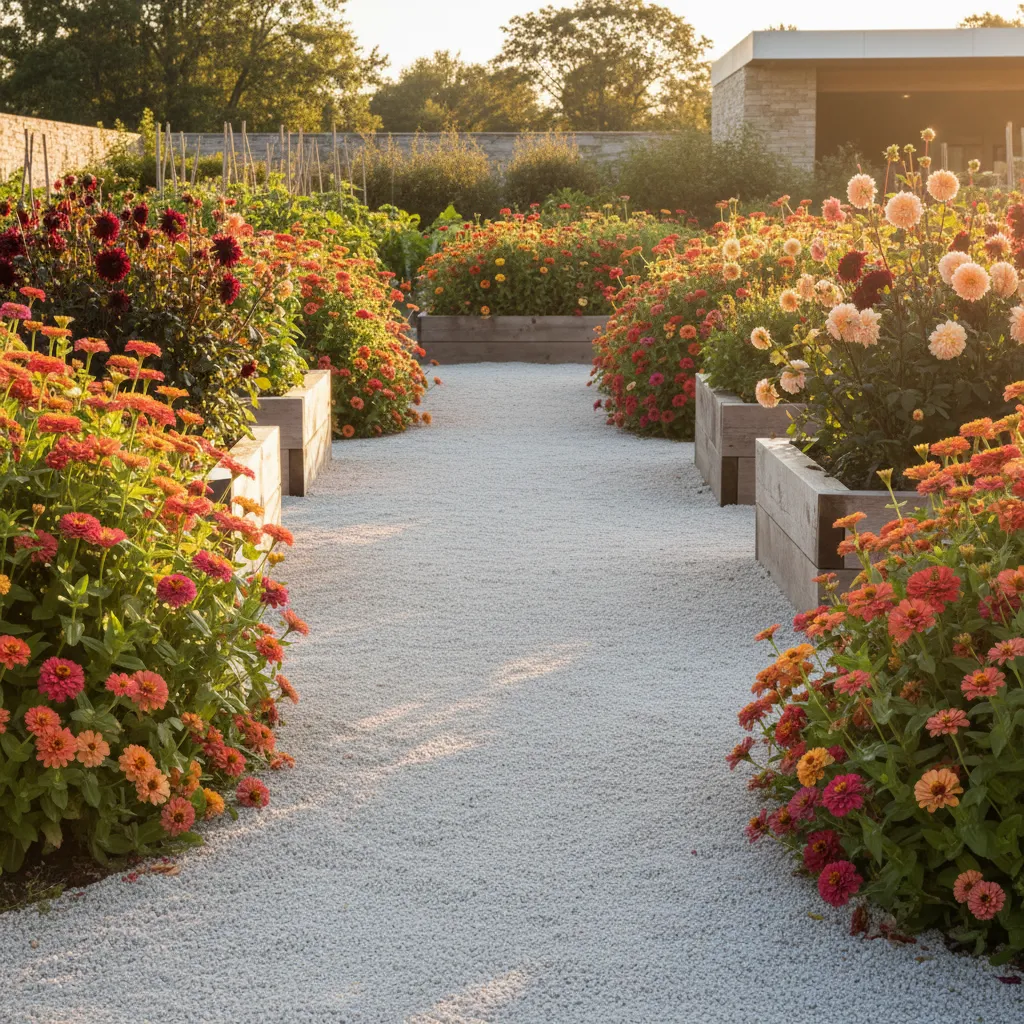
A thriving floral sanctuary should bring peace, not endless chores. Designing a layout with wide, clear pathways is the ultimate secret to a low-maintenance landscape.
Crisp gravel or rich mulch underfoot creates a stunning visual contrast against vibrant blooms. It also ensures proper spatial flow while keeping invasive weeds entirely at bay.
Building a solid foundation for your paths is a cornerstone of chic backyard landscaping designs. A clean border keeps your garden looking expertly curated.
A well-planned pathway is the quiet anchor of a garden, guiding the eye and easing the workload.
Let us explore the best tactile materials to ground your cutting garden oasis.
- Pea Gravel: Offers a satisfying crunch underfoot and excellent drainage. Pair it with landscape fabric for ultimate weed control.
- Cedar Mulch: Adds a warm organic scent and a rich color palette. It naturally repels certain pests while breaking down slowly over time.
- Stepping Stones: Set natural flagstone into a bed of creeping thyme for a whimsical cottage-inspired vignette that softens the hardscape.
Laying cardboard under your pathway mulch is a brilliant, zero-cost method to smother weeds while slowly feeding the soil below.
Kevin Espiritu, Epic Gardening
Establishing the Perfect Spatial Flow
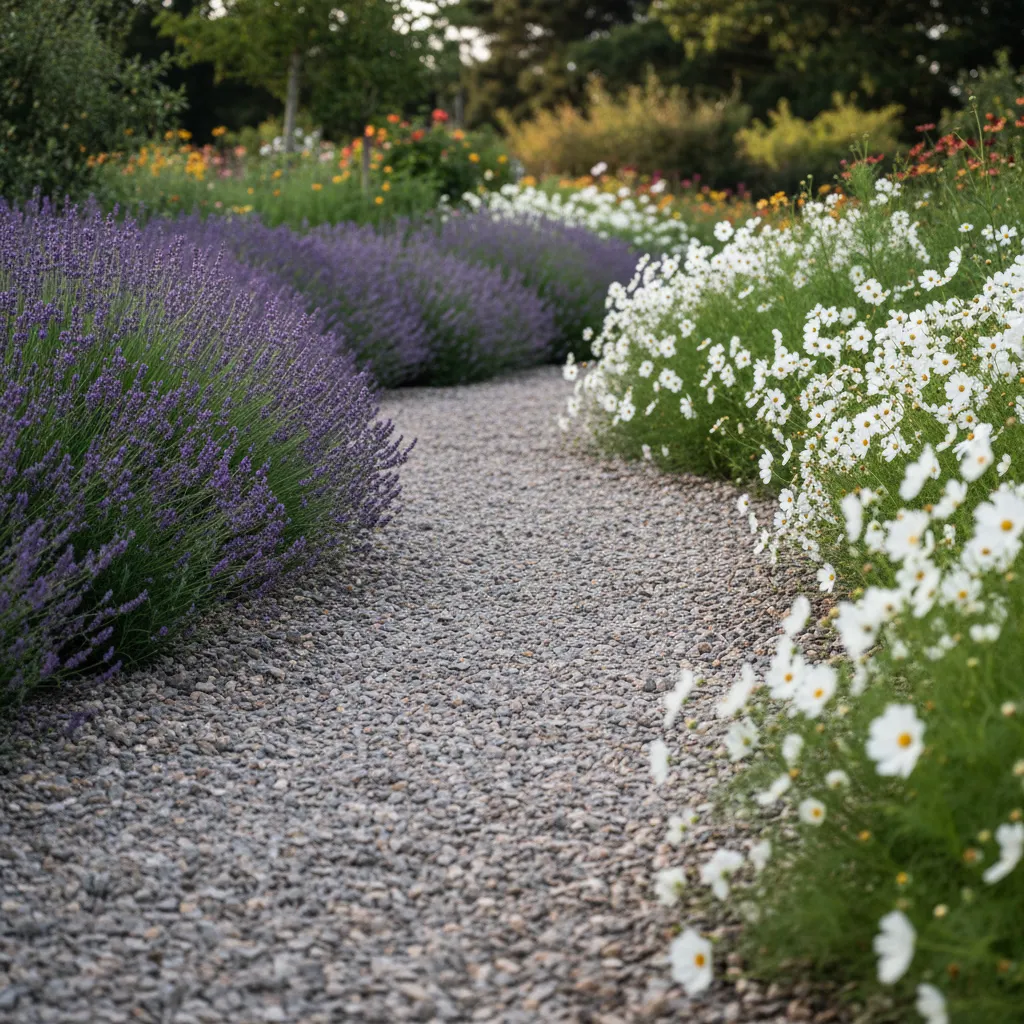
To truly enhance functionality, your main arteries should be at least three feet wide. This allows a wheelbarrow to glide smoothly without crushing delicate stems.
Secondary paths can be narrower, offering intimate access to the center of your planting blocks. This clever scaling creates a layered, highly curated aesthetic.
The Path to Perfection
- Layer thick cardboard or heavy-duty landscape fabric beneath your chosen material to create a permanent barrier against aggressive weeds.
- Measure your wheelbarrow’s width before finalizing path layouts; keeping main arteries at least 36 inches wide ensures effortless maintenance runs.
- Install deep metal or composite edging along your paths to prevent mulch or gravel from migrating into your floral beds over time.
Ready to Plant Your Dream Floral Retreat?
Designing a cut flower garden blends breathtaking beauty with daily utility.
Whether choosing a precise French potager grid or sweeping cottage curves, your yard will transform.
Start small, map out your sunlight, and remember that healthy soil is your best foundation.
Grab your favorite shears, step into the sunshine, and let your gorgeous garden bloom!
Cultivating Confidence: Common Garden Design Questions
A raised bed grid layout is ideal for beginners. It offers excellent soil control, precise plant spacing, and easy weed management.
Most blooming flowers require full sun to thrive. Aim for a layout that captures at least six to eight hours of direct sunlight daily.
Absolutely! The French potager style specifically blends edibles and florals. This beautifully attracts pollinators and maximizes space.
Walkways should be at least two to three feet wide. This ensures you can comfortably walk, kneel, and push a wheelbarrow through.
