
Table of Contents
- 1. Upcycle Modern Furniture with Dark Stains and Antique Brass Hardware
- 2. Anchor the Space with Deep Burgundy or Forest Green Paint
- 3. Build a Floor-to-Ceiling Thrifted Book Wall for Literary Charm
- 4. Curate a Moody Gallery Wall Using Free Classical Public Domain Art
- 5. Layer Warm Ambient Lighting and Immersive Dark Academia Scents
- Your Moody Scholarly Retreat Awaits
- Scholarly Secrets & Design Dilemmas Solved
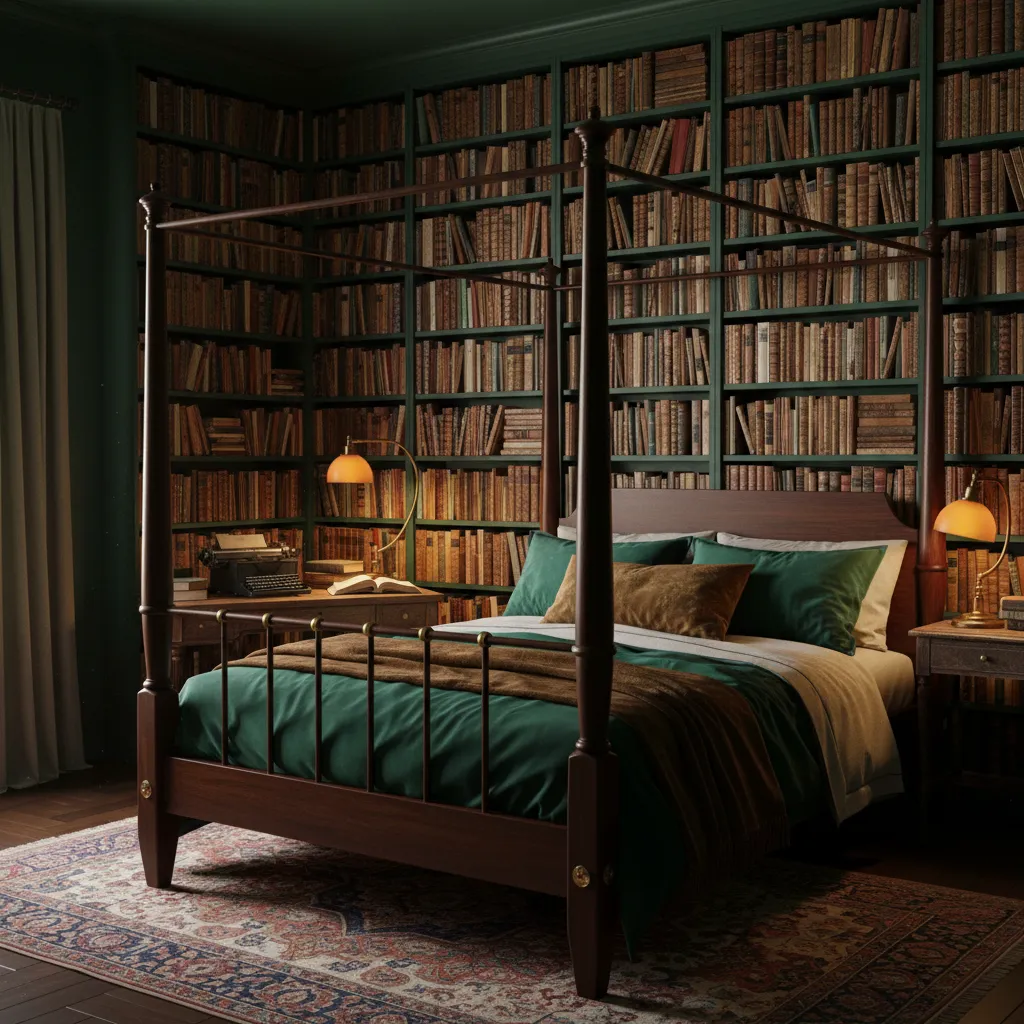
Transforming your bedroom into a sanctuary of scholarship and mystery does not require a massive renovation.
The dark academia aesthetic blends deep hues with vintage textures to create a space that feels both intellectual and incredibly intimate.
By layering rich colors and curated artifacts, you can achieve a sophisticated atmosphere that encourages late-night reading and quiet reflection.
Practicality remains at the heart of a successful design, even when leaning into moody vibes. Start by selecting a palette of charcoal, forest green, or burgundy to ground the room.
Whether you are painting a focal wall or simply swapping out your bedding, these small changes establish a cohesive foundation; it is about finding the balance between dramatic shadows and functional lighting.
You do not need an antique dealer budget to master this look. Thrifting gold-toned frames and stacking old books can provide the same charm as high-end decor.
Focus on tactile elements like velvet pillows or heavy drapes to add depth without overspending.
Your space should tell a story that is uniquely yours, blending timeless style with everyday comfort.
1. Upcycle Modern Furniture with Dark Stains and Antique Brass Hardware
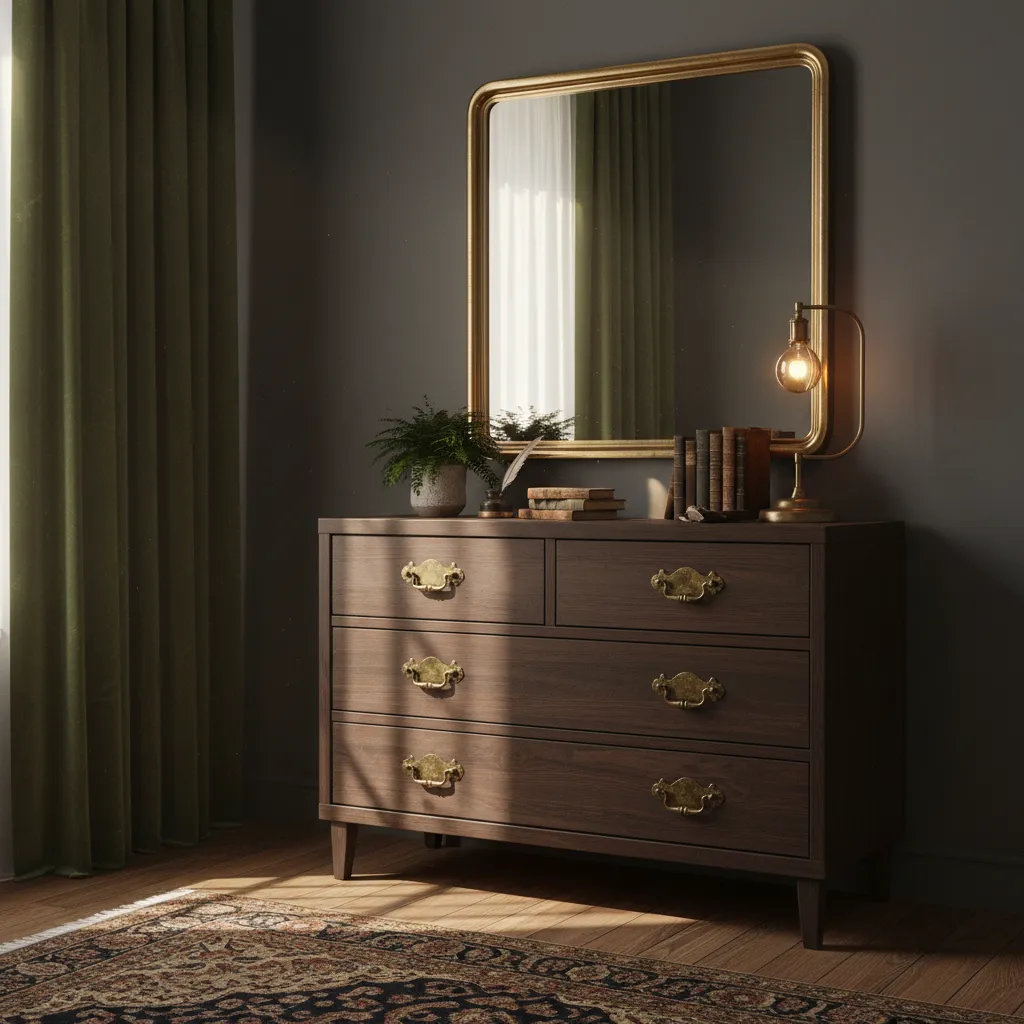
Transforming standard flat pack furniture into rich, scholarly pieces is the perfect foundation for a dark academia bedroom. It brings instant character and deep visual warmth.
Applying a dark walnut or espresso stain creates a luxurious, organic texture. This deep finish not only grounds the room but also protects the wood against daily wear and tear.
Rich wood tones and vintage brass hardware are the silent storytellers of a beautifully curated dark academia space.
Swapping generic knobs for heavy antique brass pulls immediately elevates the tactile experience. The sturdy metal improves grip while adding a subtle, sophisticated golden glow.
Hardware is the jewelry of a room. It is a small detail, but it can completely transform the look and feel of a space.
Nate Berkus, MasterClass Design Guide
Cohesive finishes naturally guide the eye around your room, improving spatial flow. If you mix woods, learning the best hardware color for honey oak cabinets is helpful.
| Wood Stain Finish | Aesthetic Mood | Practical Benefit |
|---|---|---|
| Dark Walnut | Deep, scholarly warmth | Hides scuffs and minor surface scratches easily. |
| Espresso | Bold, high-contrast minimalism | Reduces visual clutter by blending into shadows. |
| Classic Mahogany | Rich, vintage elegance with red hues | Highlights the natural wood grain beautifully. |
Warm ambient lighting reflects off the patinated brass, creating a soft and inviting glow. This strategic reflection prevents dark furniture from making the space feel too heavy.
Curator’s Secret
- Lightly sand your flat-pack furniture before applying a dark walnut or espresso stain to ensure the rich color absorbs evenly and creates a durable finish.
- Create an authentic vintage look by soaking new, shiny brass hardware in a vinegar and salt solution to force a rich, scholarly patina.
- Position warm-toned ambient lamps near your upcycled pieces to highlight the golden glow of the brass pulls and prevent the dark wood from making the room feel too heavy.
2. Anchor the Space with Deep Burgundy or Forest Green Paint
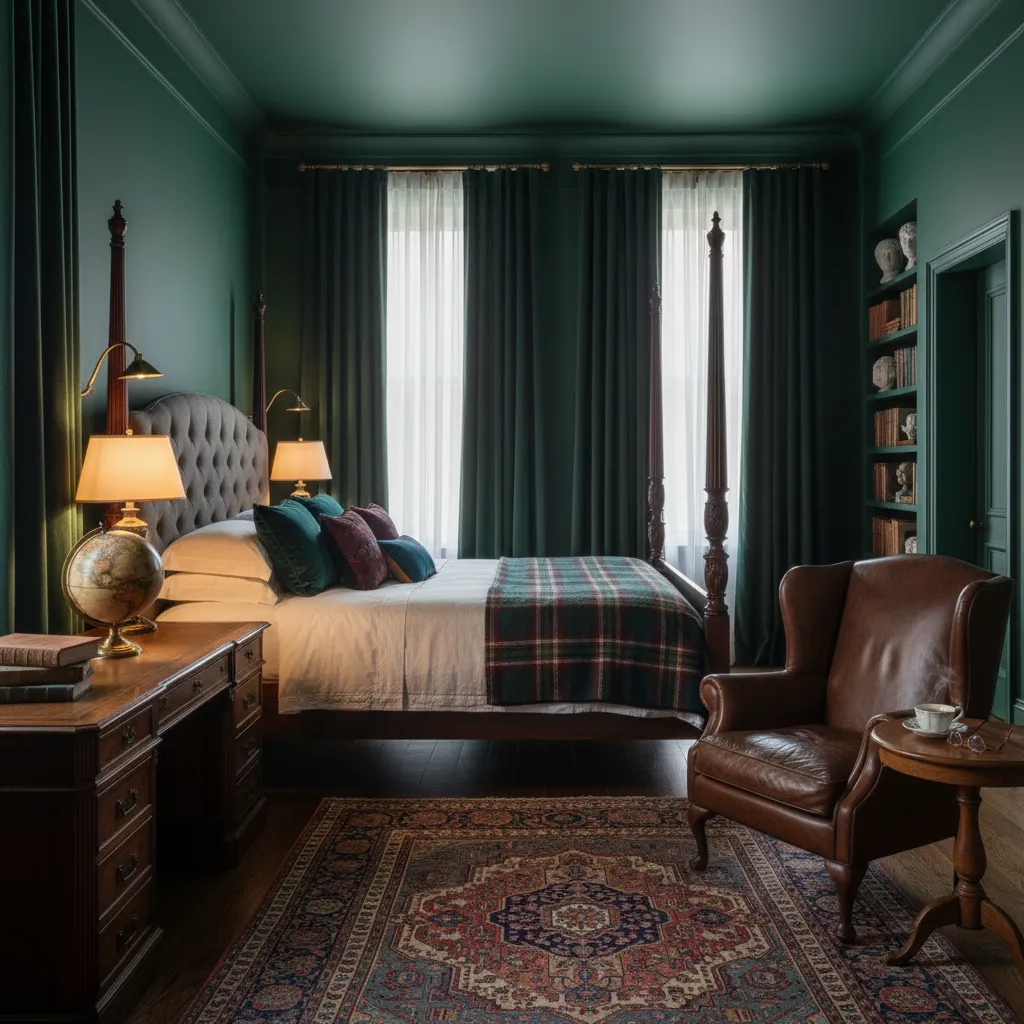
The foundation of any dark academia bedroom is a bold wall color. Deep burgundy and forest green instantly wrap the room in a cozy, intellectual embrace.
Dark paints absorb light, making the space feel incredibly intimate. This naturally promotes better sleep by mimicking the quiet shadows of an old library.
If your room lacks large windows, choose shades carefully. Proper paint color matching for rooms with limited natural light ensures walls feel rich rather than gloomy.
Painting a bedroom a dark, moody color is the easiest way to make it feel expensive, intimate, and deeply relaxing.
Shea McGee, Studio McGee
Always select an eggshell or matte finish for your chosen hue. These flat textures prevent harsh glares from ambient lighting and enhance the velvety look.
- Color Drenching: Paint the ceiling the same dark color to blur harsh visual lines and create a seamless, cocooning canopy.
- Trim Coordination: Paint baseboards and window frames matching the walls for a modern, uninterrupted spatial flow.
- Strategic Focal Point: If a full room feels too heavy, paint only the wall behind your headboard to beautifully anchor the bed.
Forest green brings a grounding, organic feel to the space. Deep burgundy, alternatively, injects a regal warmth that pairs beautifully with raw oak wood.
A moody palette turns an ordinary bedroom into a curated sanctuary of deep thought and restorative rest.
You can easily soften these intense colors with earthy textiles. Similar to sage green and terracotta bedroom decor, layered linens add cozy tactile depth.
Dark Academia Paint Secrets
- Paint the ceiling the same dark color as your walls to blur harsh lines and create a seamless, cocooning effect.
- Match your baseboards and window frames to the wall color for an uninterrupted, modern flow.
- Always opt for an eggshell or matte finish to prevent harsh glares and give your walls a rich, velvety texture.
3. Build a Floor-to-Ceiling Thrifted Book Wall for Literary Charm
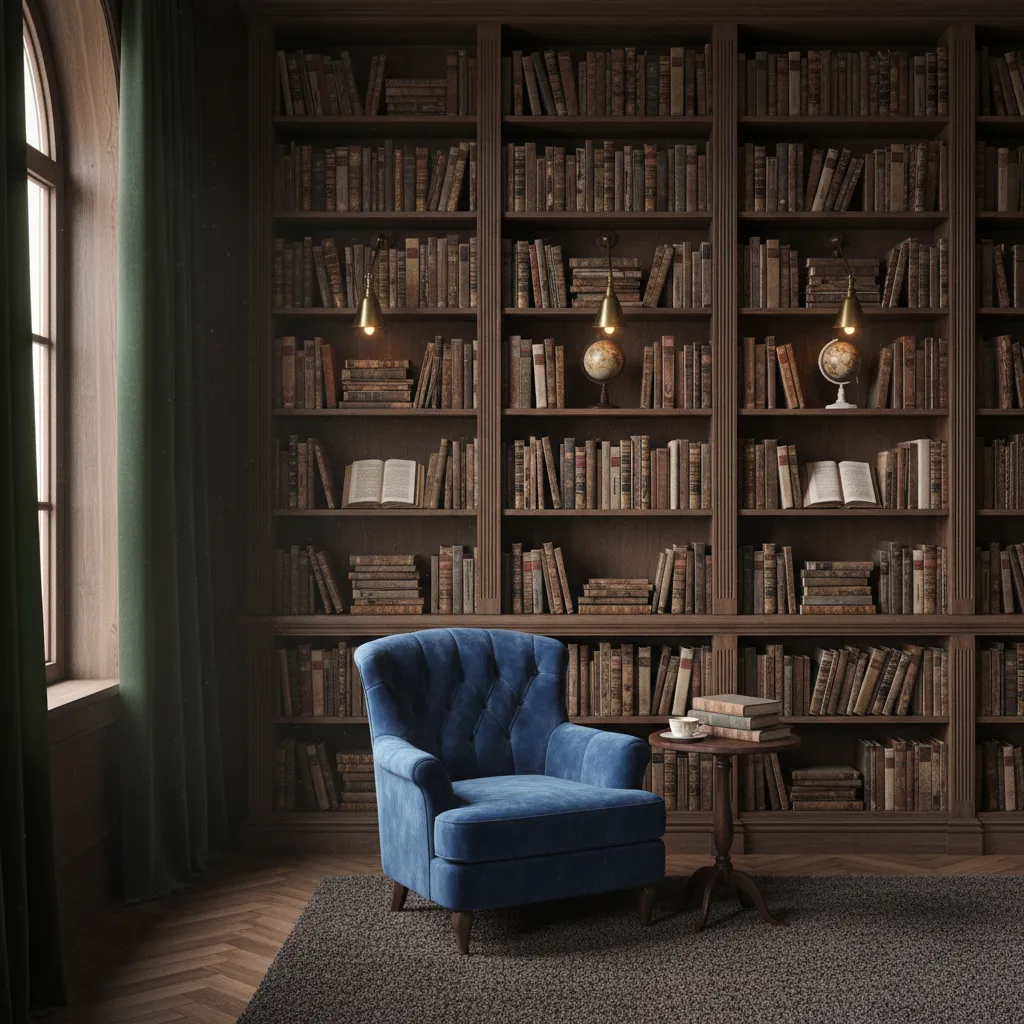
Nothing says dark academia quite like a massive wall of books. Creating a floor-to-ceiling library instantly anchors your bedroom with rich texture.
Thrift stores are goldmines for vintage hardcover novels. Look for raw linen covers, embossed gold lettering, and aged pages to build a scholarly vibe.
Paint the wall behind open shelves a deep hue. You can use paint color matching for rooms with limited natural light to ensure a warm, cozy finish.
The best decoration in the world is a roomful of books.
Billy Baldwin, Architectural Digest
Curating and Styling the Shelves
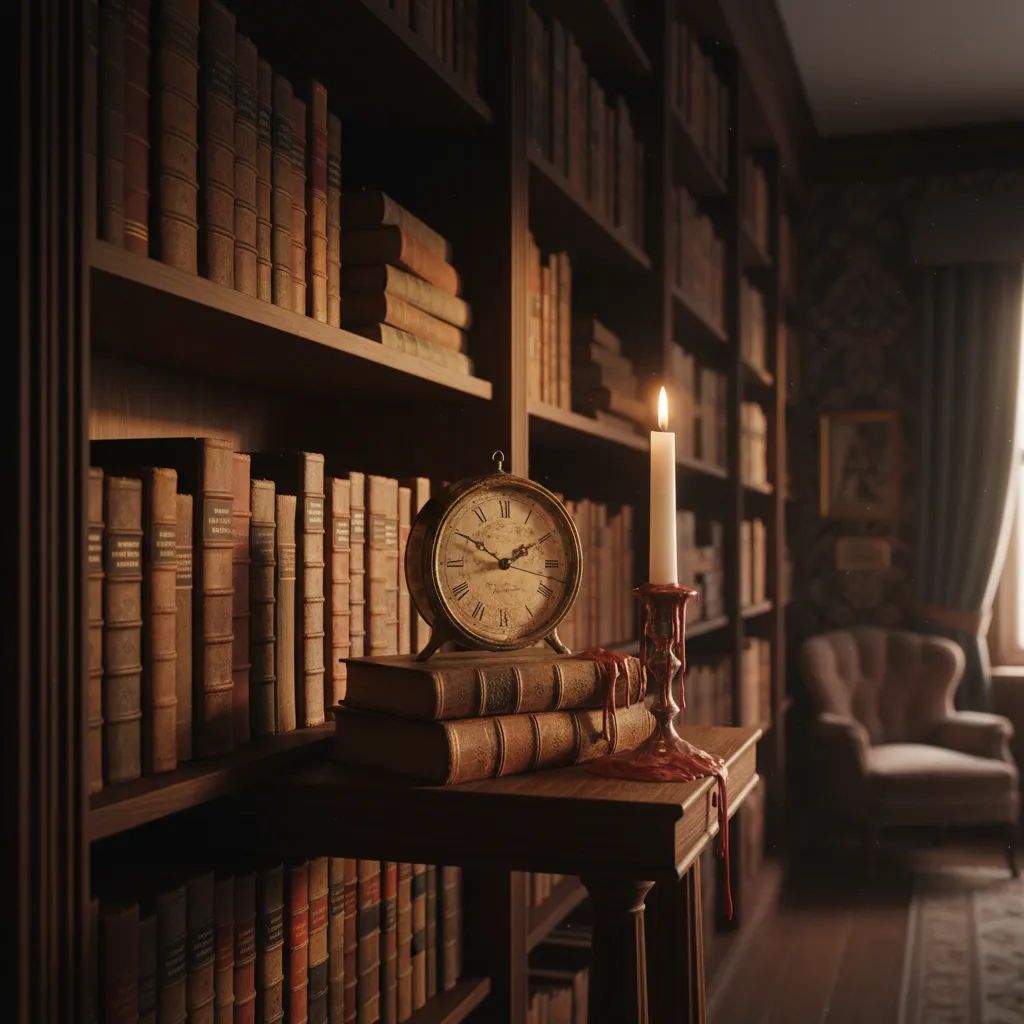
To avoid a cluttered look, alternate your arrangements. Stack some books vertically and pile others horizontally to create a dynamic visual flow.
Incorporate brass bookends or small stone busts to break up the paper textures. These heavy materials add weight and an academic feel to the room.
| Styling Element | Ideal Placement | Aesthetic Purpose |
|---|---|---|
| Horizontal Stacks | Base of the shelves | Anchors visual weight and creates risers for small vintage decor. |
| Vertical Rows | Eye-level shelves | Displays intricate spines and establishes a traditional library feel. |
| Brass Accents | Outer shelf corners | Reflects ambient light and adds a metallic contrast to matte paper. |
A bedroom without a stack of vintage books is just a room waiting for its story to begin.
Lighting Your Library Wall
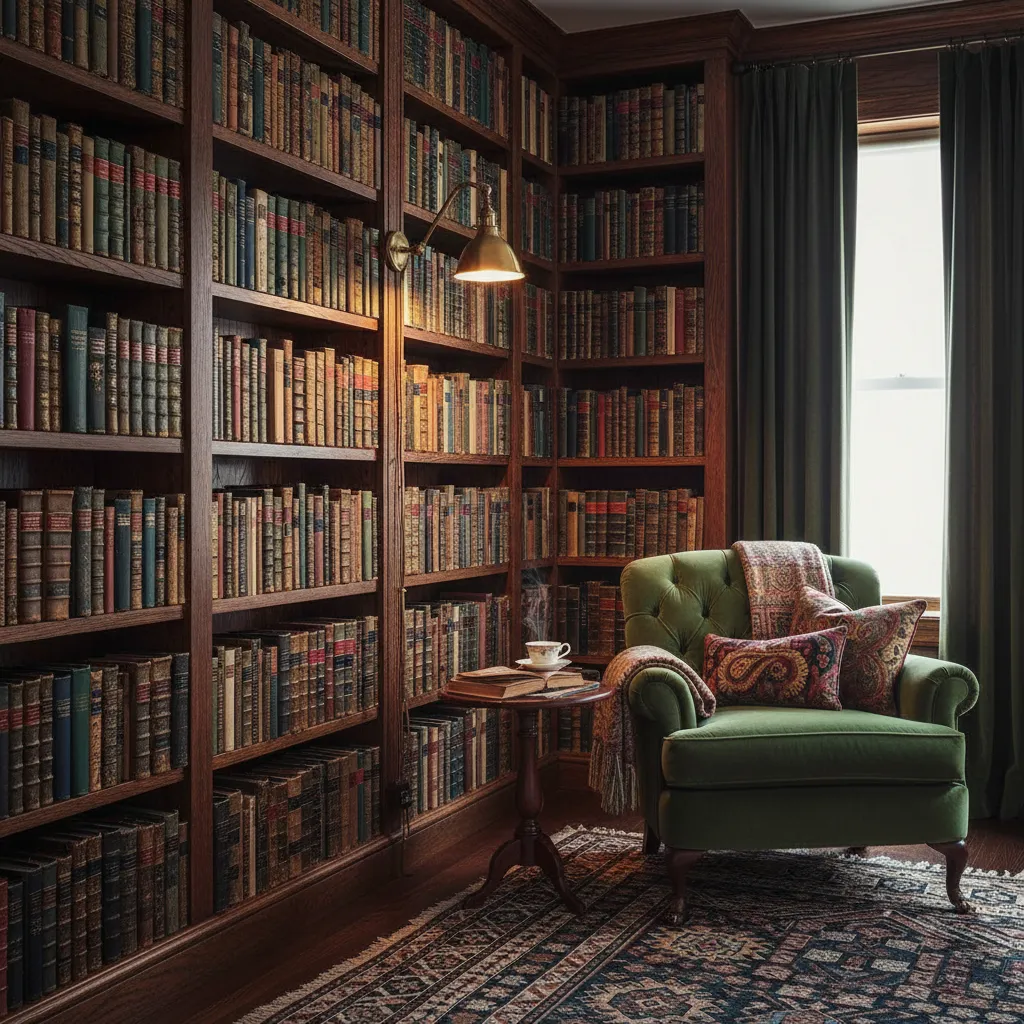
Proper lighting is essential to highlight your thrifted collection. Hardwired or battery operated brass picture lights work beautifully in this space.
A warm ambient glow highlights the embossed details on vintage spines. It also improves functionality by making late night reading much easier.
The Librarian’s Secret
- Remove modern dust jackets from thrifted hardcovers to reveal the raw linen or embossed boards underneath for an instant antique upgrade.
- Incorporate ‘breathing room’ by leaning a small vintage framed sketch or a dried botanical specimen against a stack of books to break up the visual weight.
- Apply felt pads to the bottom of heavy brass bookends or stone busts to prevent scratching the finish on your painted or wooden shelves.
4. Curate a Moody Gallery Wall Using Free Classical Public Domain Art
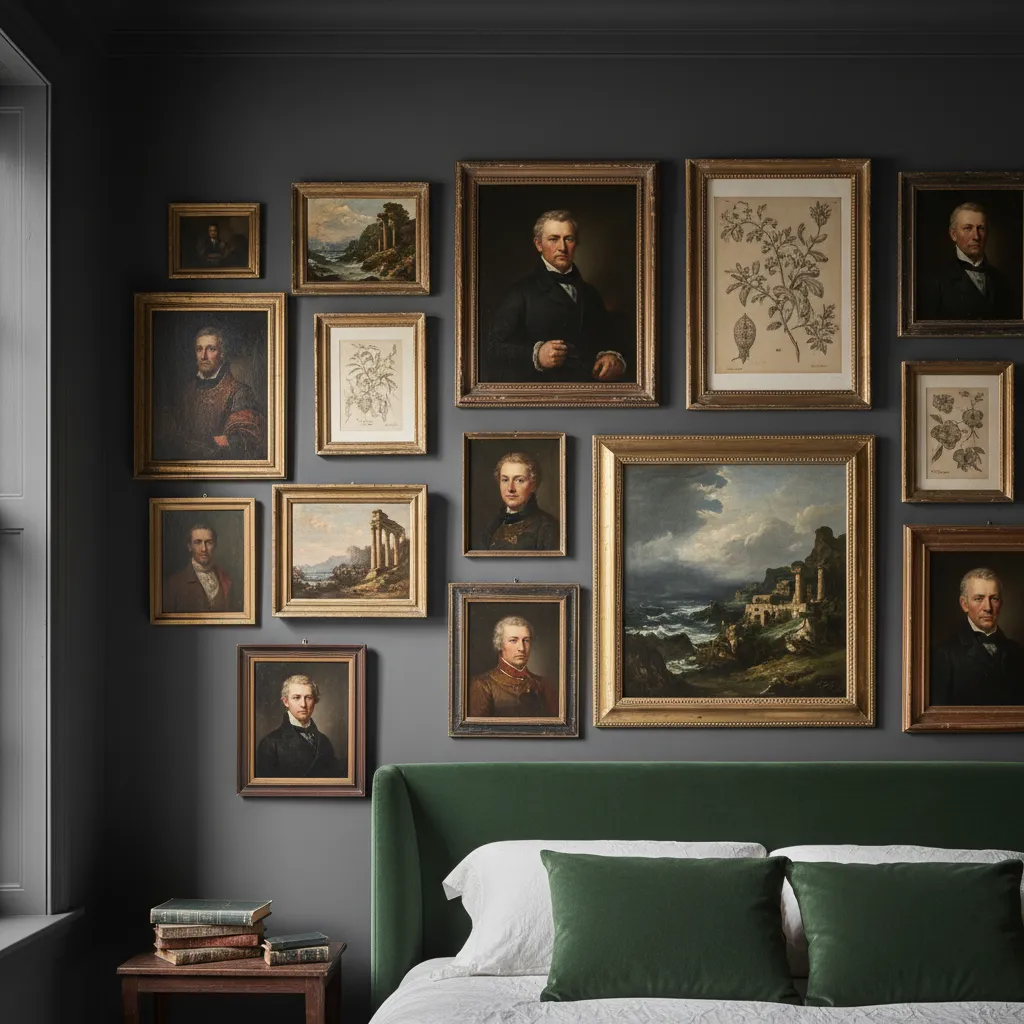
A dark academia bedroom relies heavily on classical artwork to build a scholarly, brooding atmosphere.
You can easily achieve this look without spending a fortune by sourcing free public domain art. Museums offer thousands of digital downloads.
Printing these historical pieces adds immediate visual weight to your space. It transforms an empty wall into a captivating focal point.
A room without art is a room without a soul. It is the easiest way to infuse your space with personality.
Emily Henderson, Style by Emily Henderson
Selecting the Right Classical Pieces
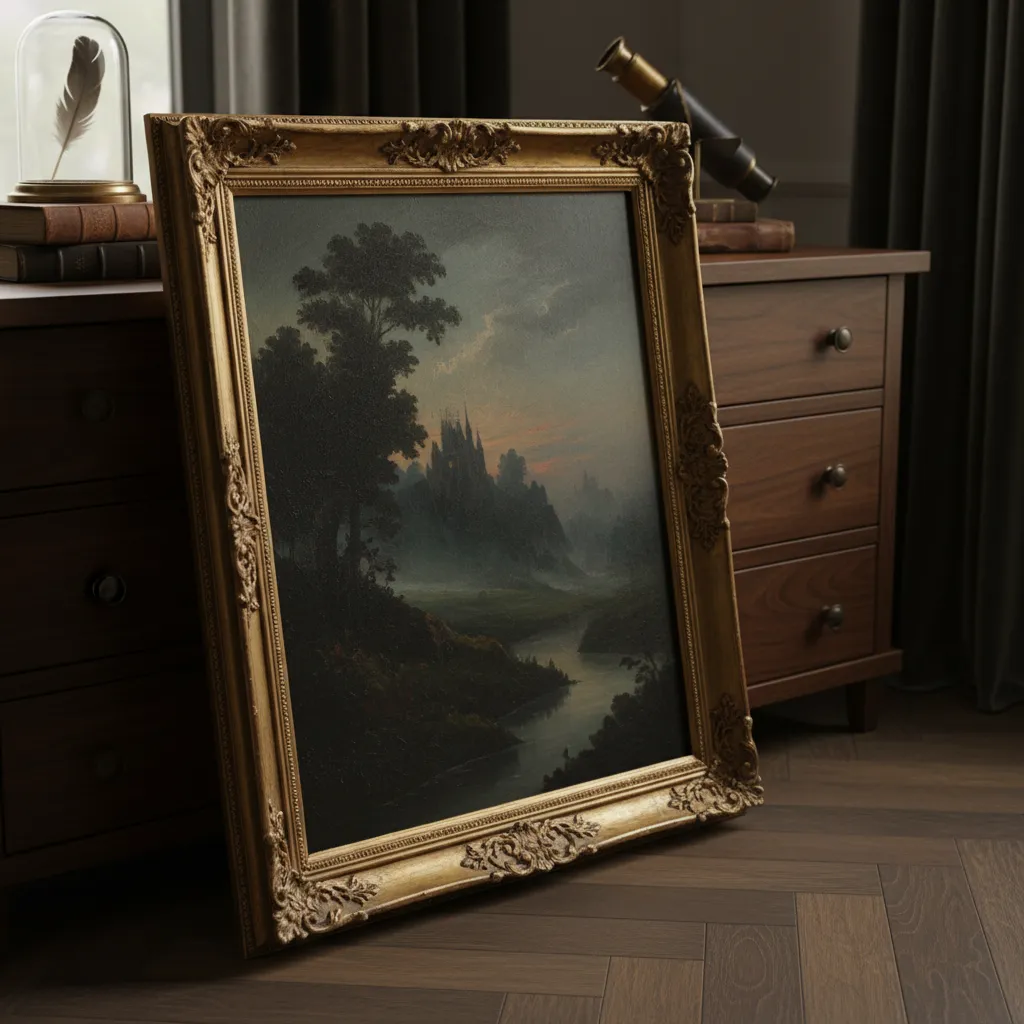
To capture the dark academia aesthetic, focus on specific subjects. Look for brooding landscapes, still life florals, and old portraits.
Websites like the Metropolitan Museum of Art provide high resolution files for free. These digital prints offer incredible depth and value.
Print your chosen artwork on matte canvas paper rather than glossy photo paper. This simple trick mimics the organic texture of real canvas.
This tactile finish prevents harsh glare from your ambient lighting. It ensures your vintage prints look authentic and highly sophisticated.
If you want to mix mediums, pairing framed art with decorative tapestries adds a rich layer of fabric texture.
Mastering Frame Textures and Spatial Flow
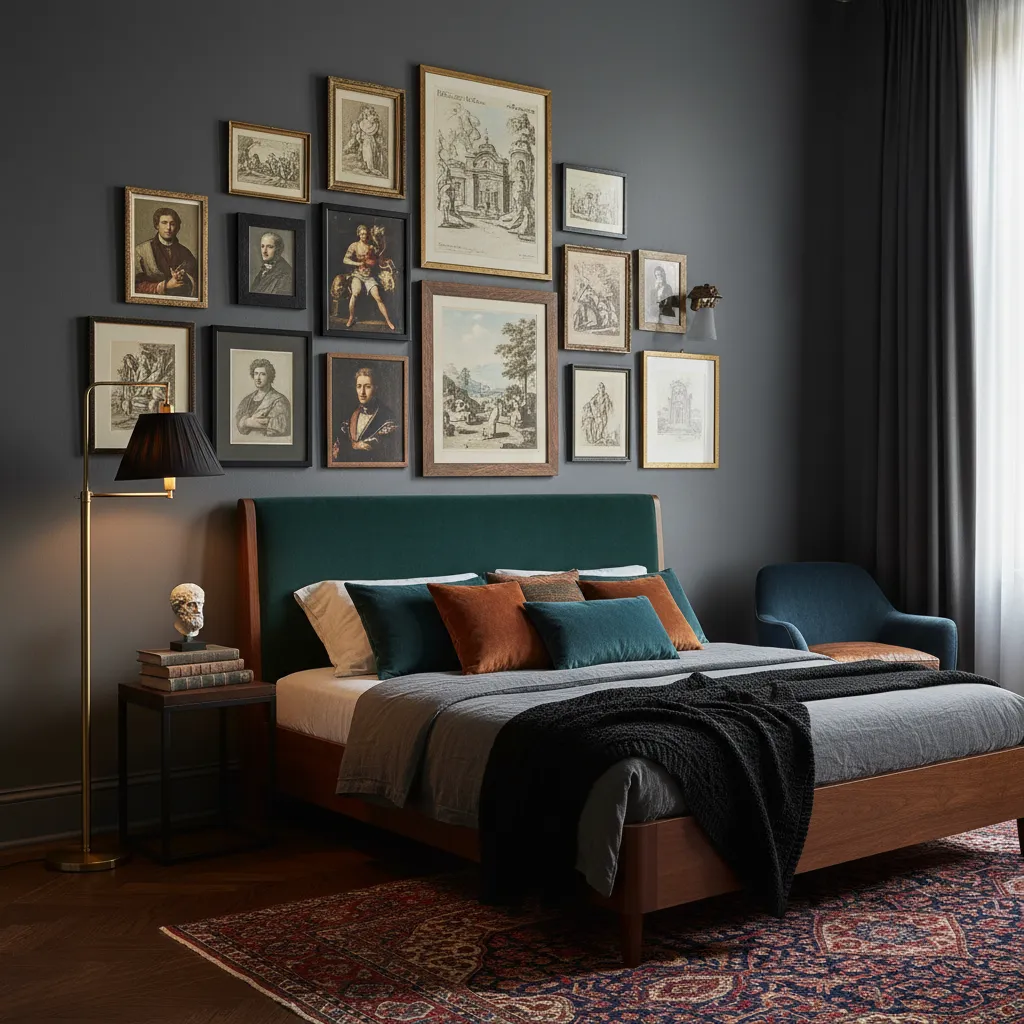
A successful gallery wall requires a deliberate mix of frame materials. Avoid matching your frames perfectly to keep the room feeling organic.
Combine heavy ornate brass frames with sleek matte black and distressed walnut. This varied palette creates excellent visual depth and warmth.
When arranging your pieces, start with a large statement piece in the center. Then build outward with smaller frames to guide the spatial flow.
An authentic dark academia space feels collected over centuries, not decorated in a single afternoon.
| Classical Art Subject | Aesthetic Vibe Created | Ideal Bedroom Placement |
|---|---|---|
| Dutch Still Life | Rich, scholarly elegance | Above a cozy reading nook |
| Romantic Landscapes | Expansive, brooding depth | Centered over the headboard |
| Renaissance Portraits | Intense, historical charm | Beside a dark wood wardrobe |
| Architectural Sketches | Academic, structured minimalism | Near a vintage writing desk |
You can apply similar layout principles when you style a console table in your bedroom to create a cohesive vignette.
The Archivist’s Edge
- Scour local thrift stores for authentic vintage frames; the more tarnished the brass or chipped the wood, the more it enhances the ‘inherited’ look of a Dark Academia room.
- Before printing your public domain art, use a simple photo editor to slightly increase the warmth and contrast to ensure the colors don’t look washed out against moody wall paint.
- Trace your frames onto brown craft paper and tape them to the wall first to experiment with the arrangement and spatial flow before committing to any nail holes.
5. Layer Warm Ambient Lighting and Immersive Dark Academia Scents
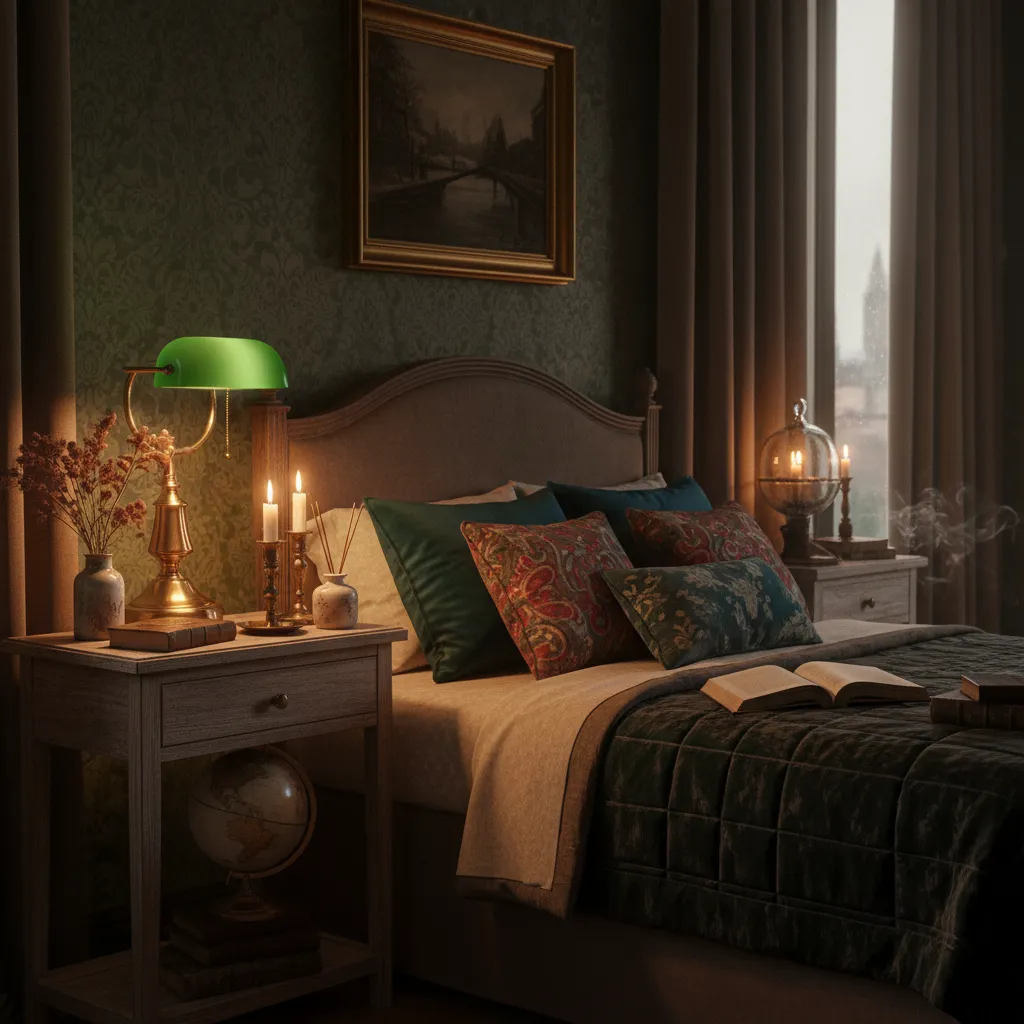
In a dark academia space, lighting sets the entire mood. Overhead fixtures often feel too harsh for a cozy, scholarly retreat.
Instead, rely on layers of warm ambient lighting to create a rich, inviting glow. This softens the room and highlights your textured decor.
Place a vintage brass task lamp on your desk to reduce eye strain while reading. Add a linen shaded floor lamp in a corner to cast soft shadows.
This layered approach improves the spatial flow of your room. It draws the eye to different vignettes while making the space highly functional.
Light is the magical ingredient that makes or breaks a space. It is one of the most important elements in all my interiors.
Benjamin Noriega-Ortiz, Elle Decor
Integrating Immersive Scents and Decor
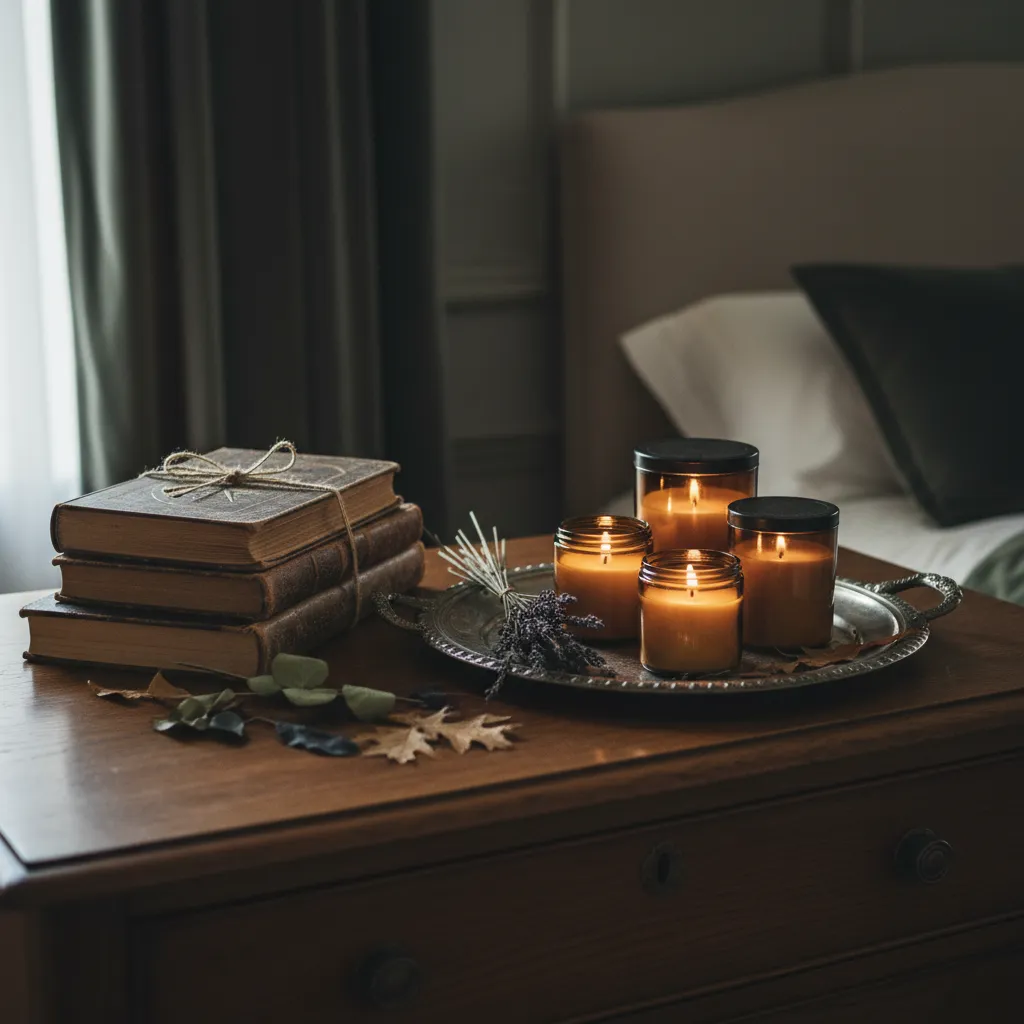
Scent heavily influences how you experience a room. To truly create a cozy winter bedroom look, use fragrances that mimic an old library.
Think rich notes of cedar, worn leather, and dried tea leaves. Display amber glass candles on an antique tray to protect your surfaces beautifully.
A true dark academia retreat relies on the gentle flicker of warm light and the grounding scent of old paper.
Consider thick curtains for bedroom insulation to trap these warm scents inside. Heavy velvet drapes ensure drafts do not ruin your cozy atmosphere.
To effortlessly blend lighting and fragrance, try matching specific scent profiles to different functional zones in your bedroom.
- The Scholar Desk: Pair a dimmable brass banker lamp with an aged leather and pipe tobacco scented candle for deep focus.
- The Reading Nook: Use an oil-rubbed bronze floor lamp alongside a bergamot and black tea reed diffuser to evoke a rainy afternoon.
- The Bedside Setup: Combine a low-wattage Edison bulb sconce with a warm cedarwood room spray for a calming sleep environment.
The Librarian’s Guide to Glow
- Swap standard white bulbs for warm-toned amber LEDs (2200K-2700K) to instantly mimic the flickering, soft atmosphere of a candlelit study.
- Tuck a reed diffuser behind a stack of vintage books to let notes of sandalwood or aged parchment waft through the room subtly and safely.
- Place a small brass mirror behind your desk lamp to double the warm light and add depth to your scholarly sanctuary.
Your Moody Scholarly Retreat Awaits
Creating a dark academia bedroom is about more than just aesthetics. It is about building a cozy, intellectual sanctuary that feels deeply personal.
By combining rich wood stains, antique brass hardware, and deep moody paint colors, you easily anchor the space with historical charm.
Whether reading late into the night or simply resting, your new room will wrap you in a warm, sophisticated embrace every single day.
Scholarly Secrets & Design Dilemmas Solved
Dark paint actually blurs the edges of a room, which can make it feel endless and intimate. Just add warm, layered lighting to keep it cozy.
Stick to warm undertones like walnut, espresso, and mahogany. Using cohesive antique brass hardware ties different wood pieces together beautifully.
Avoid harsh overhead lights. Instead, use brass desk lamps, vintage sconces, and warm amber bulbs to cast a soft, scholarly glow across the room.
Absolutely! Thrift flat-pack furniture, apply a dark gel stain, and swap out generic knobs for vintage pulls to instantly elevate the aesthetic.
