
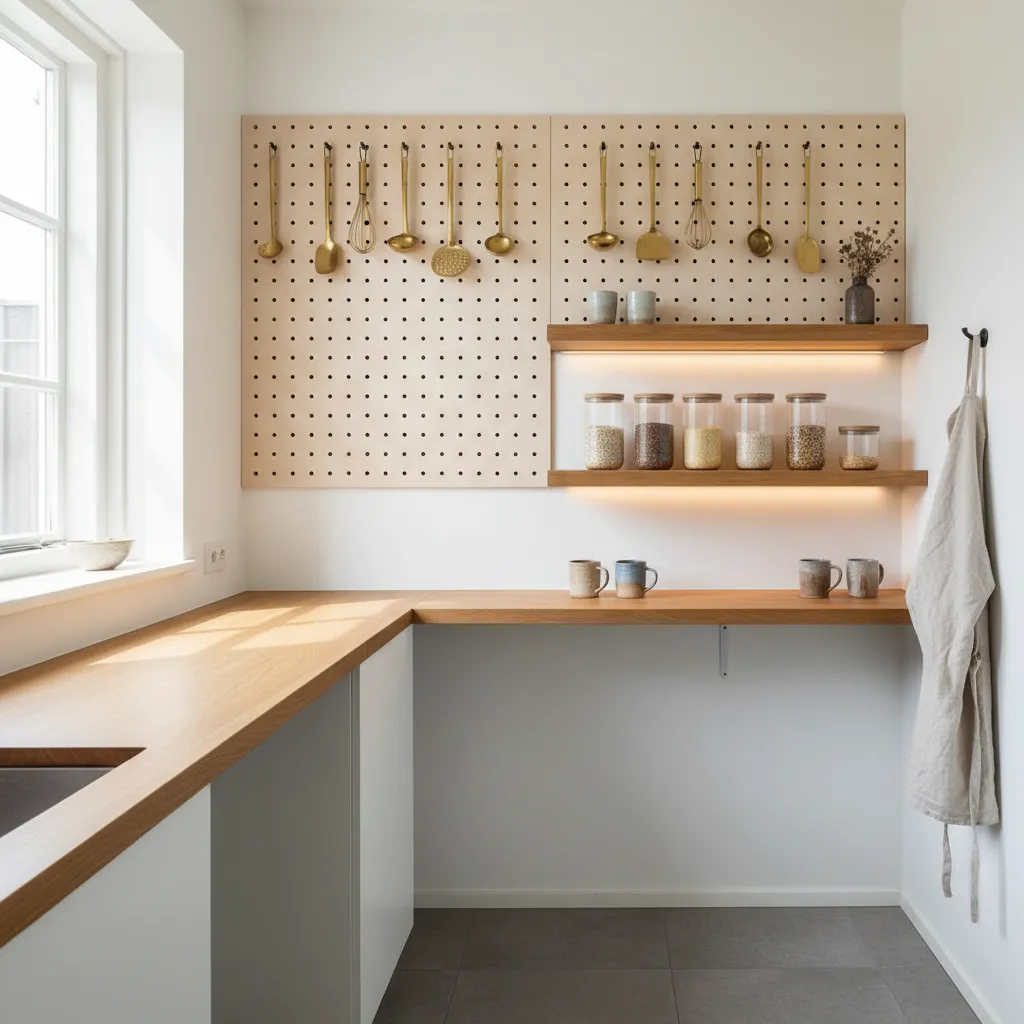
Table of Contents
- 1. Map Out Layout-Specific Food Zones Using a Downloadable Template
- 2. Maximize Vertical Wall Space with Pegboards and Floating Shelves
- 3. Repurpose Freestanding Furniture Like Bookshelves and Bar Carts
- 4. Optimize Existing Cabinet Space Using Risers and Pull-Out Drawers
- 5. Adopt Minimalist Inventory Management to Keep Clutter at Bay
- Your Curated Culinary Sanctuary
- Design Dilemmas Solved
A kitchen without a dedicated pantry often feels like a puzzle missing a crucial piece.
However, a limited footprint does not have to mean a compromise on elegance or efficiency. With a few strategic shifts, your culinary space can become a sanctuary of organized beauty.
Think like a designer and treat every vertical surface as an opportunity for curated display.
Wall-mounted rails and floating shelves offer a sophisticated way to store essentials while keeping them within reach. It is about blending form and function to create a space that feels intentional.
You do not need a massive renovation to achieve a professional look on a budget.
These seven practical tips will help you reclaim your counters and style your cabinets with confidence.
Let us transform your small kitchen into a functional masterpiece that reflects your personal style.
1. Map Out Layout-Specific Food Zones Using a Downloadable Template
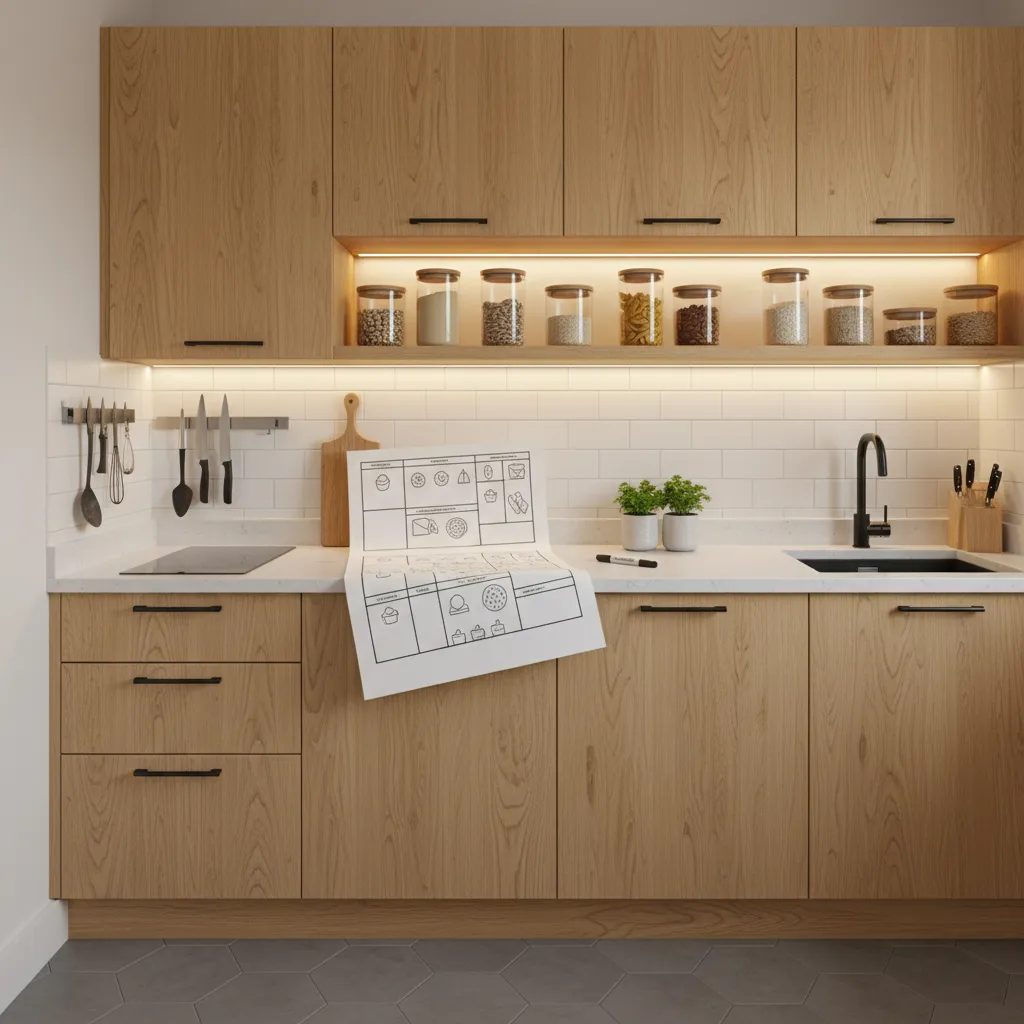
Organizing a small kitchen starts with intentional zoning. A warm ambient glow over clean oak counters instantly feels more inviting when visual clutter is hidden.
By assigning specific areas for baking, snacking, and cooking, you enhance the spatial flow. This functional layout ensures everything has a precise home.
Zoning is the key to a successful kitchen layout, ensuring that the space is efficient and ergonomic to use.
Richard Moore, Homes & Gardens
A downloadable template acts as your blueprint. It helps you visualize where to place heavy items and where to display beautiful glass jars for dry goods.
Designing Your Functional Food Stations
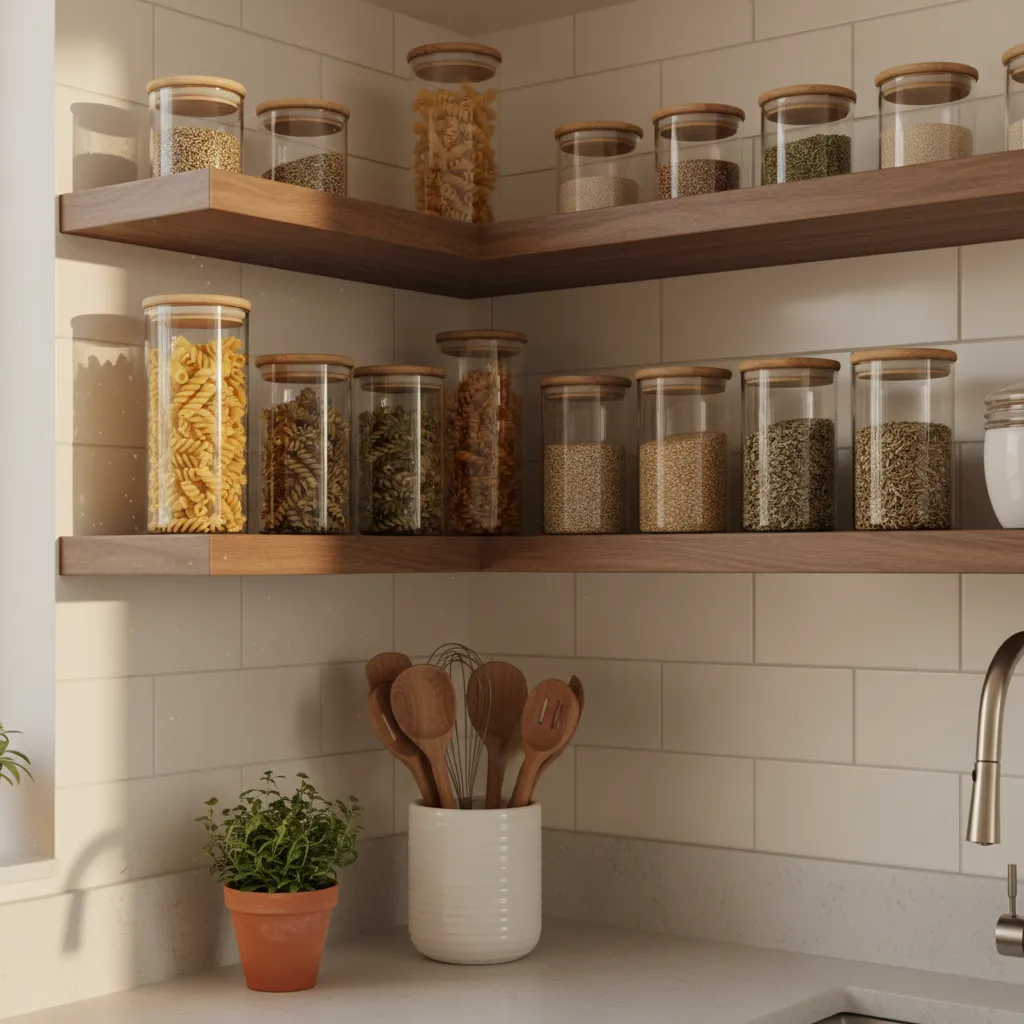
Designating a specific area for your morning routine adds daily joy. You can easily replicate a small coffee shop aesthetic right on your own countertop.
Tactile details matter in these curated vignettes. Woven rattan baskets and sleek brass scoops bring organic warmth to your functional storage stations.
| Storage Material | Best Food Zone | Visual Impact |
|---|---|---|
| Clear Glass Jars | Dry pasta and grains | Airy and minimal |
| Opaque Ceramic | Coffee and spices | Earthy and organic |
| Woven Rattan Bins | Snacks and breads | Textured and cozy |
Research shows that 77 percent of homeowners prioritize ample storage in their kitchen renovations according to Houzz data.
Intentional kitchen zones turn chaotic cabinets into a beautifully curated culinary sanctuary.
Your customized layout template will highlight unused vertical space. Installing simple raw wood shelves ensures your most used items remain within easy reach.
The Zone Strategy
- Color-code your template to clearly distinguish between high-traffic prep areas and long-term storage zones before moving a single jar.
- Perform a ‘vertical audit’ on your layout map to ensure daily staples stay at eye level while seasonal items move to higher, less accessible shelves.
- Test your spatial flow by tracing your most common paths; like from the fridge to the prep station; on your template to eliminate unnecessary steps.
2. Maximize Vertical Wall Space with Pegboards and Floating Shelves
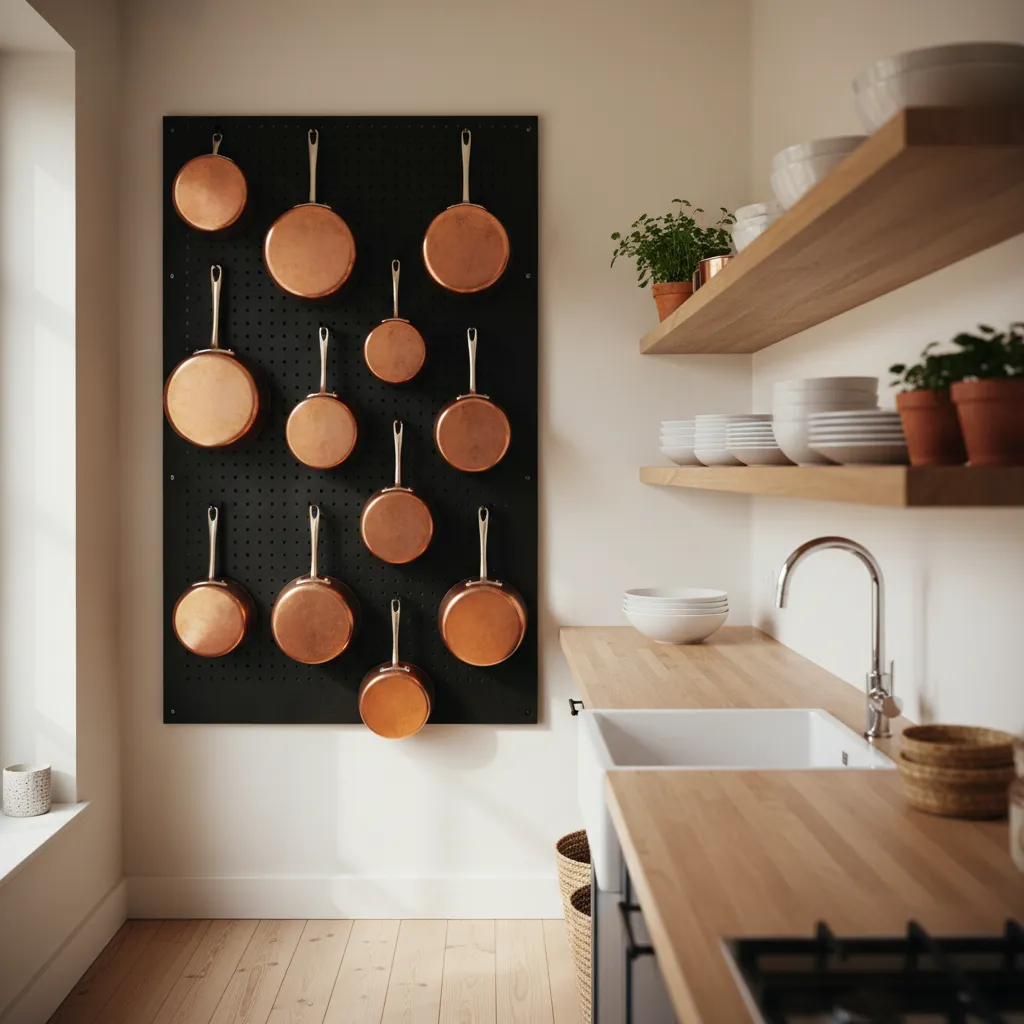
When square footage is tight, looking up is your best strategy. Blank walls offer incredible potential for both aesthetic charm and practical storage.
Installing vertical solutions instantly improves your spatial flow. Moving bulky items off the counter creates a more airy, minimal atmosphere.
The Magic of Modular Pegboards
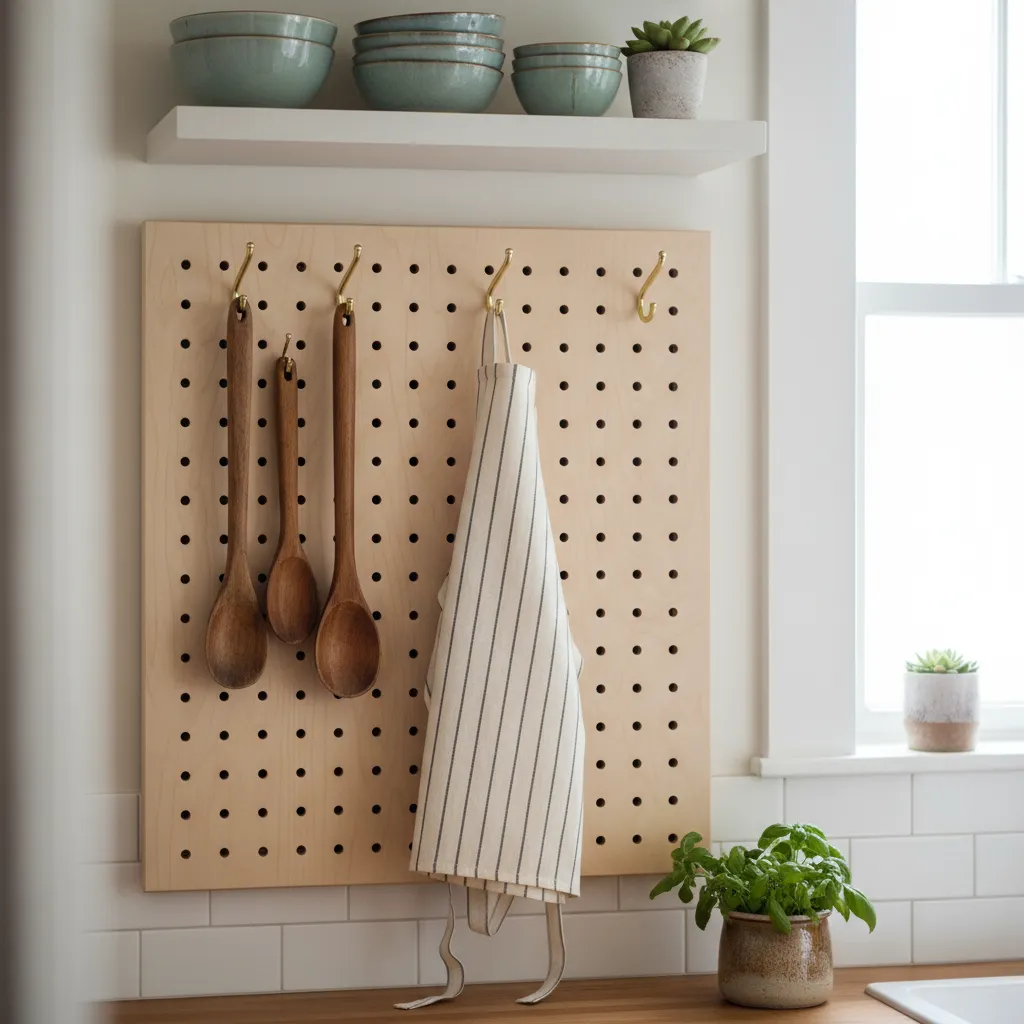
A raw birch or matte painted pegboard introduces beautiful texture. It acts as a curated focal point that shifts easily as your needs change.
Hang your most used tools like brass measuring cups or a linen apron. This keeps them highly accessible while adding tactile depth to the room.
When counter space is scarce, your walls become a blank canvas for both style and smart storage.
Styling Floating Shelves
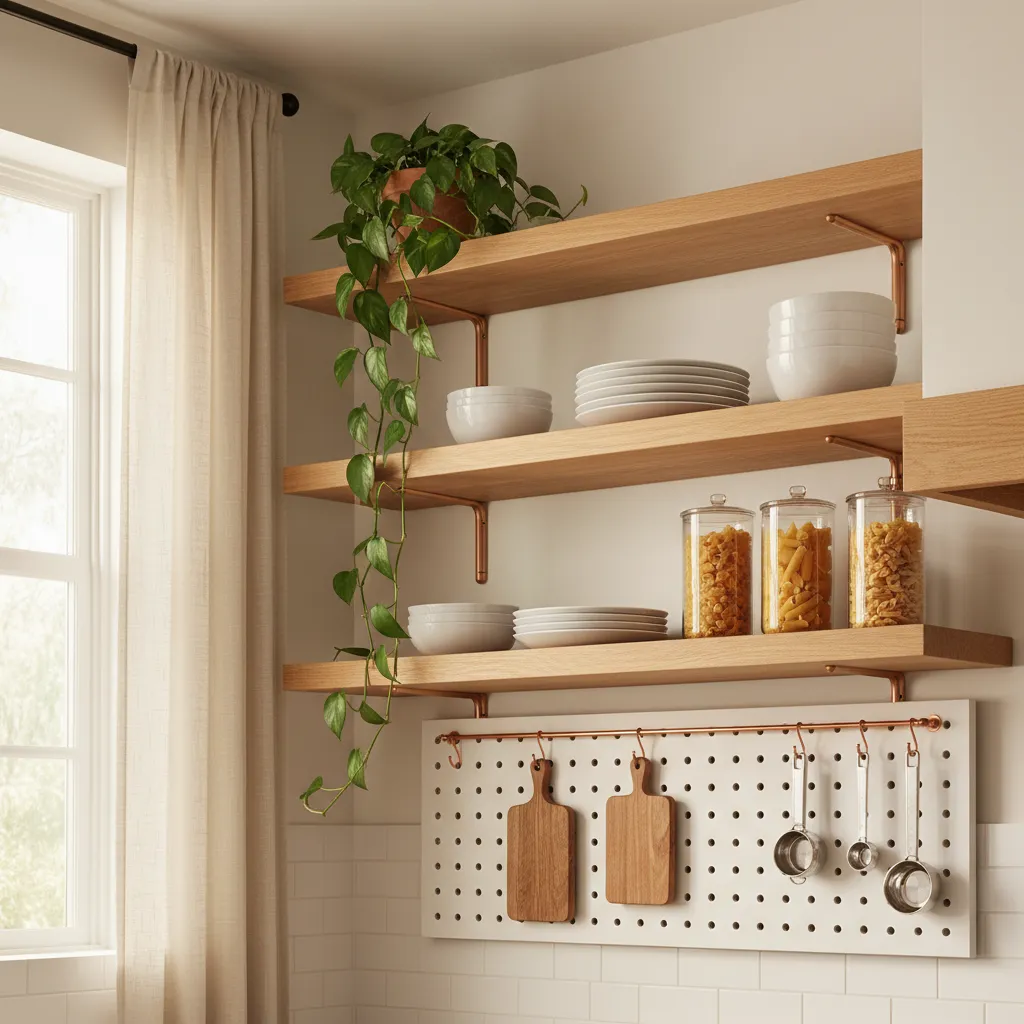
Thick oak floating shelves paired with warm under-shelf lighting create an inviting ambient glow. This setup beautifully eliminates dark shadows.
Use lower shelves for heavy ceramics and upper tiers for lighter decor. This balanced placement ensures safety while drawing the eye upward.
Arranging shelves strategically helps you execute top coffee bar ideas for small counter spaces with ease.
Storing items vertically makes them easier to see and access, creating a visually pleasing and functional environment.
Marie Kondo, KonMari Method
| Vertical Zone | Best Items to Store | Recommended Fixture |
|---|---|---|
| Low Visibility Zone | Daily dishes, heavy mugs, spices | Solid Wood Floating Shelves |
| Mid Reach Zone | Cooking utensils, small pans | Customizable Pegboard |
| High Ceiling Zone | Seasonal decor, large appliances | Deep Bracketed Shelving |
Incorporating organic materials like wood and metal transforms blank walls into highly functional, gorgeous vignettes.
The Upward Edit
- Install battery-powered LED strip lights under your floating shelves to eliminate shadows and highlight textures without the need for professional electrical work.
- Utilize the ‘Z-pattern’ styling rule: place your heaviest items on alternating ends of each shelf level to create a balanced, designer-inspired visual flow.
- Upgrade standard pegboard hooks to brass or matte black hardware to instantly transform a utilitarian storage wall into a sophisticated design feature.
3. Repurpose Freestanding Furniture Like Bookshelves and Bar Carts
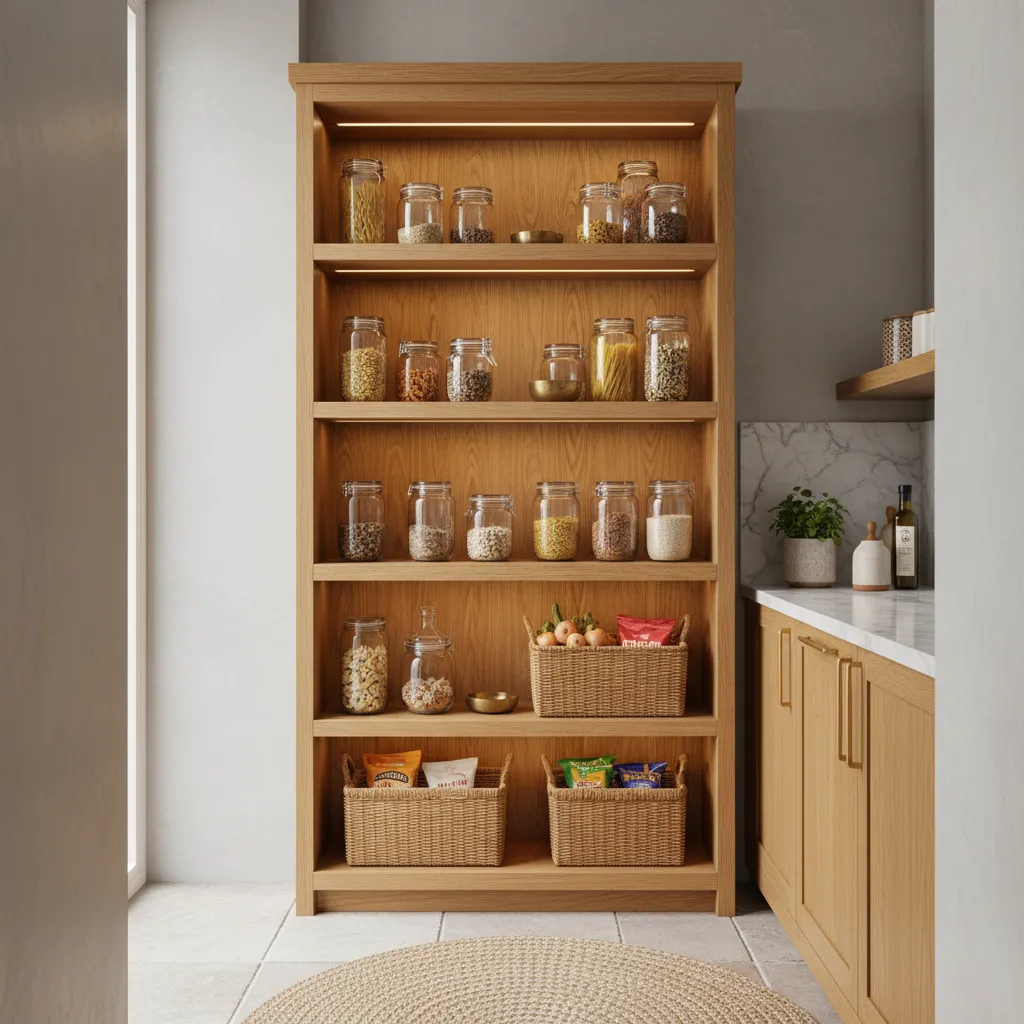
When cabinets are full, look beyond traditional kitchen storage. Freestanding furniture adds incredible character and instant utility to a cramped layout.
A well-placed bookshelf or a rolling bar cart acts as a striking focal point. These pieces offer flexible storage that improves your daily spatial flow.
The Magic of Open Bookshelves
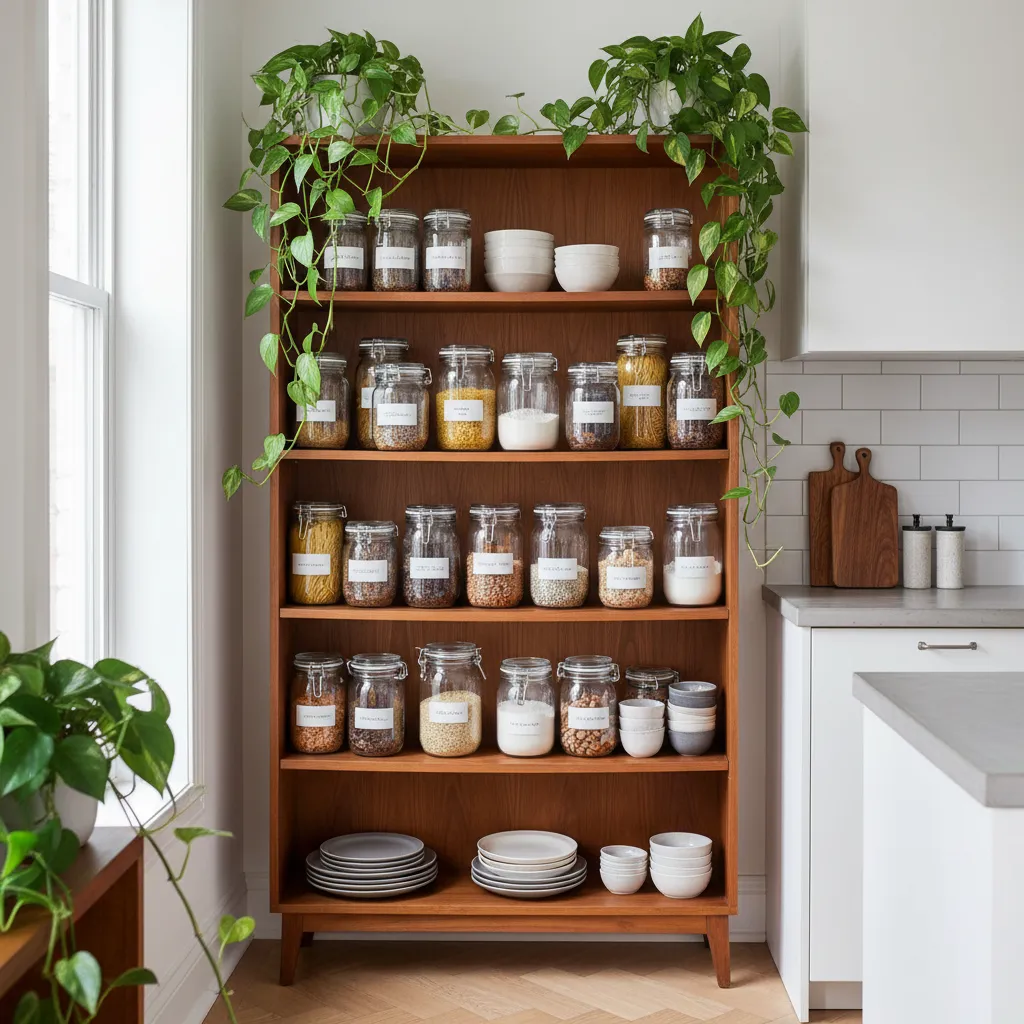
Tall, narrow bookshelves are perfect for tight corners. Opt for rich walnut or raw wood finishes to bring an organic, grounding texture into the room.
You can easily curate these shelves to hold dry goods. Store pasta and grains in clear glass jars to create a visually appealing, minimal display.
Use woven hyacinth baskets on the bottom shelves to hide bulky items. Similar to styling a sleek entryway console, visual balance is key here.
Consider these functional styling tips for open shelving:
- Group by use: Keep daily breakfast supplies at eye level for quick morning access.
- Add ambient lighting: Clip-on brass sconces cast a warm glow and highlight your jars.
- Mix materials: Combine smooth ceramics with textured linen napkins for depth.
Freestanding furniture turns pure utility into a curated, beautiful vignette.
Rolling Bar Carts as Mobile Pantries
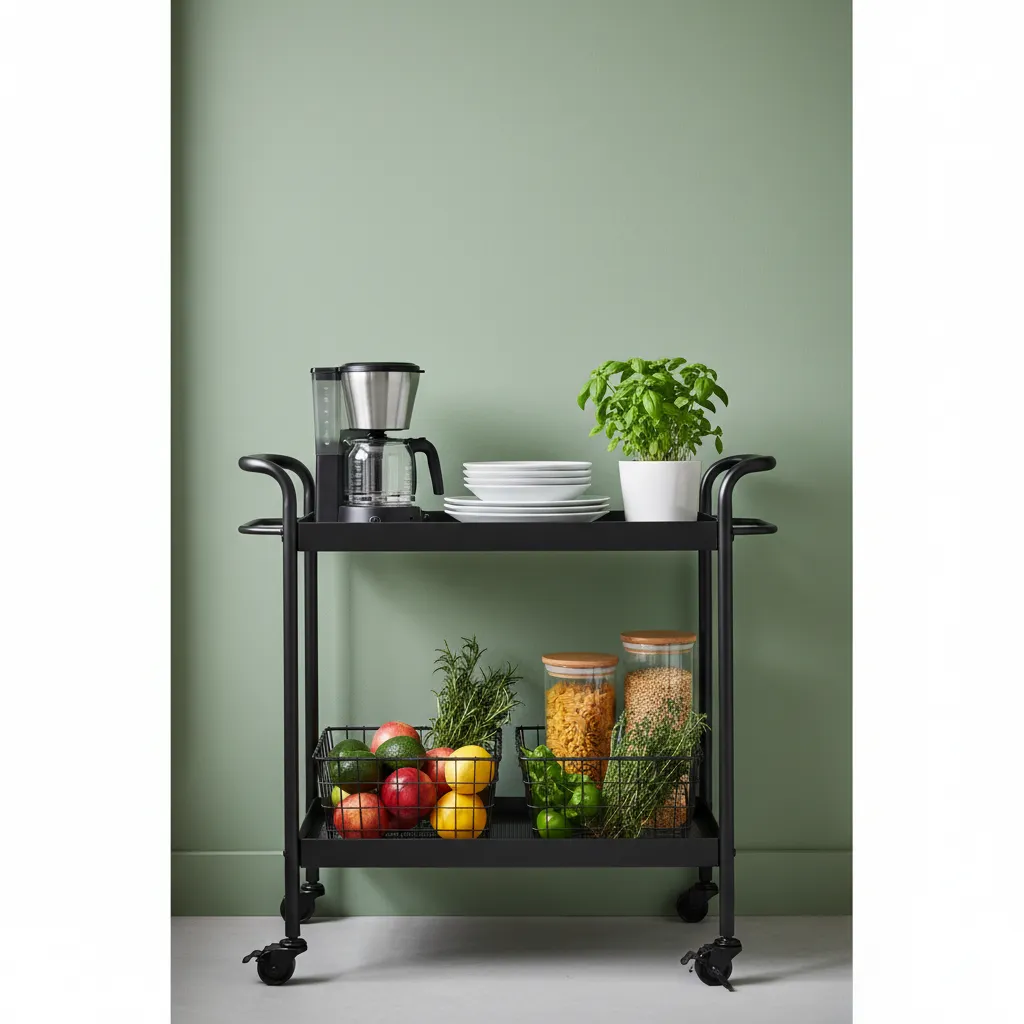
If floor space is truly limited, a rolling bar cart is a game changer. Its mobility allows you to push it aside when you need more room to cook.
A matte black or brass cart adds a touch of mid-century elegance. It is an excellent base for small counter coffee bar ideas and daily essentials.
Use the top tier for items you grab frequently, like spices or cooking oils. The bottom tiers are ideal for heavy cast iron pans or root vegetables.
A bar cart is one of the most versatile pieces you can own. It can hold produce, pantry staples, or appliances, acting as a mobile storage unit.
Maxwell Ryan, Apartment Therapy
These versatile pieces bring an undeniable sense of hygge to your home. They transform scattered pantry items into a stunning, functional display.
Stylist’s Storage Secrets
- Maximize vertical potential by adding S-hooks to the sides of your bookshelf or bar cart to hang mugs, tea towels, or lightweight copper measuring cups.
- Ensure visual cohesion by using a consistent color palette for your jars and baskets, which prevents open shelving from feeling cluttered in a small space.
- Line bar cart shelves with adhesive cork or silicone mats to prevent glassware and oil bottles from sliding or rattling when you move the unit.
4. Optimize Existing Cabinet Space Using Risers and Pull-Out Drawers
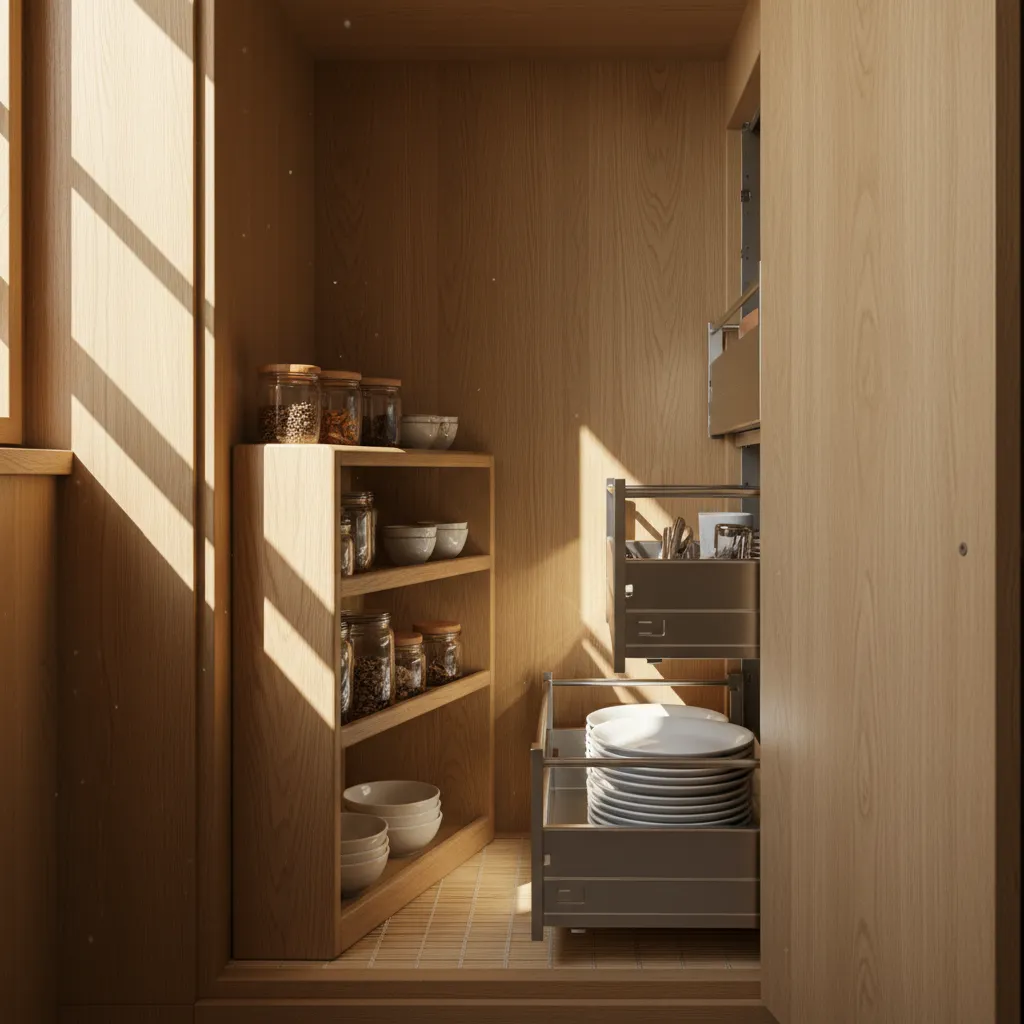
Standard cabinets often leave large gaps between shelves. This empty air is wasted potential.
Risers act as mini shelves to double your storage capacity instantly. Use brass finishes for a curated look.
These platforms create layered storage. Store heavy ceramic bowls on the bottom and delicate glassware above. This improves the spatial flow during busy meal prep by keeping items accessible.
Maximize every inch of vertical cabinet space to turn a cramped kitchen into a chef-worthy sanctuary.
The Power of Vertical Shelf Risers
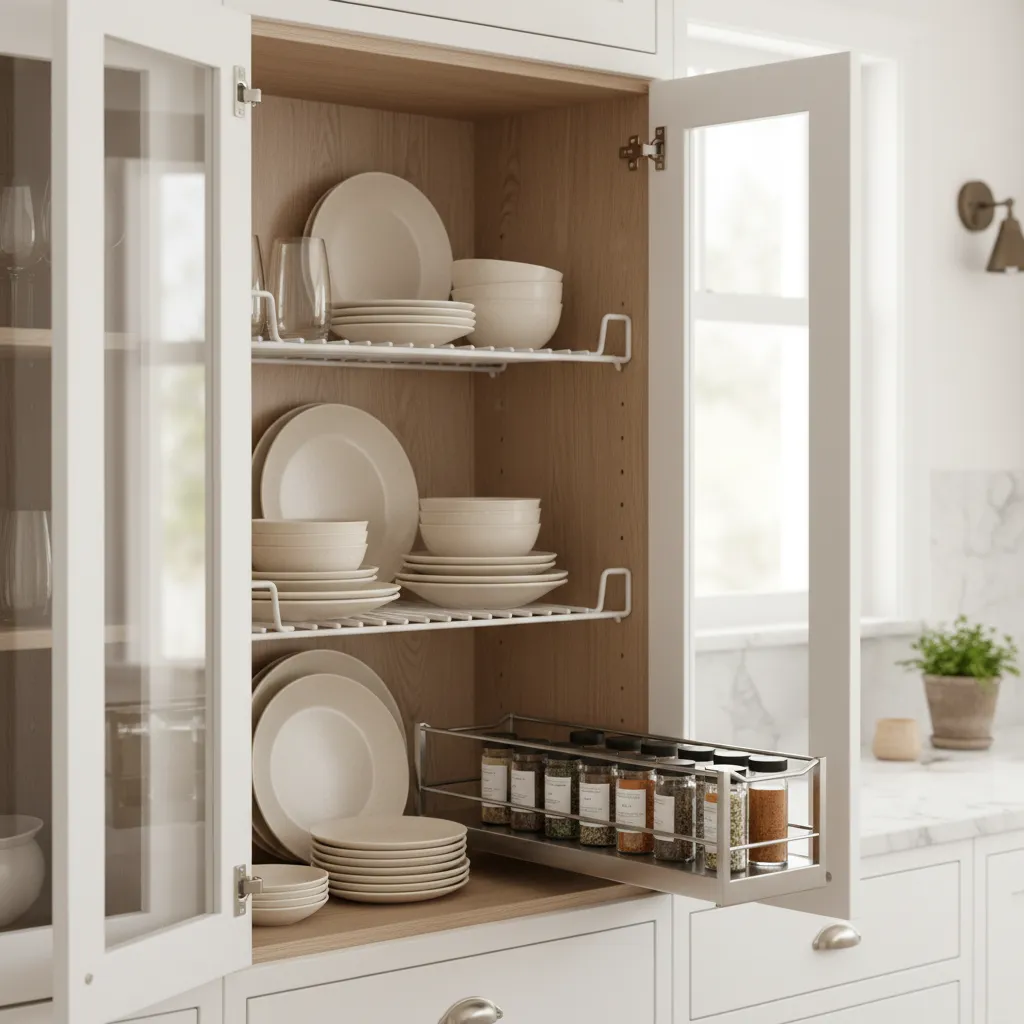
Shelf risers come in various materials that add tactile depth to your interiors. Choose powder-coated steel for a modern, industrial vibe. Bamboo options provide a warm and organic atmosphere.
Installing these tools eliminates the need for dangerous stacking. You no longer have to lift five plates to reach one bowl. This simple change drastically improves daily kitchen usability.
I recommend installing pull-out shelves in all bottom cabinets. They make every item visible and accessible, ending the search for lost lids.
Martha Stewart, Kitchen Organizing Tips
The Functionality of Pull-Out Drawers
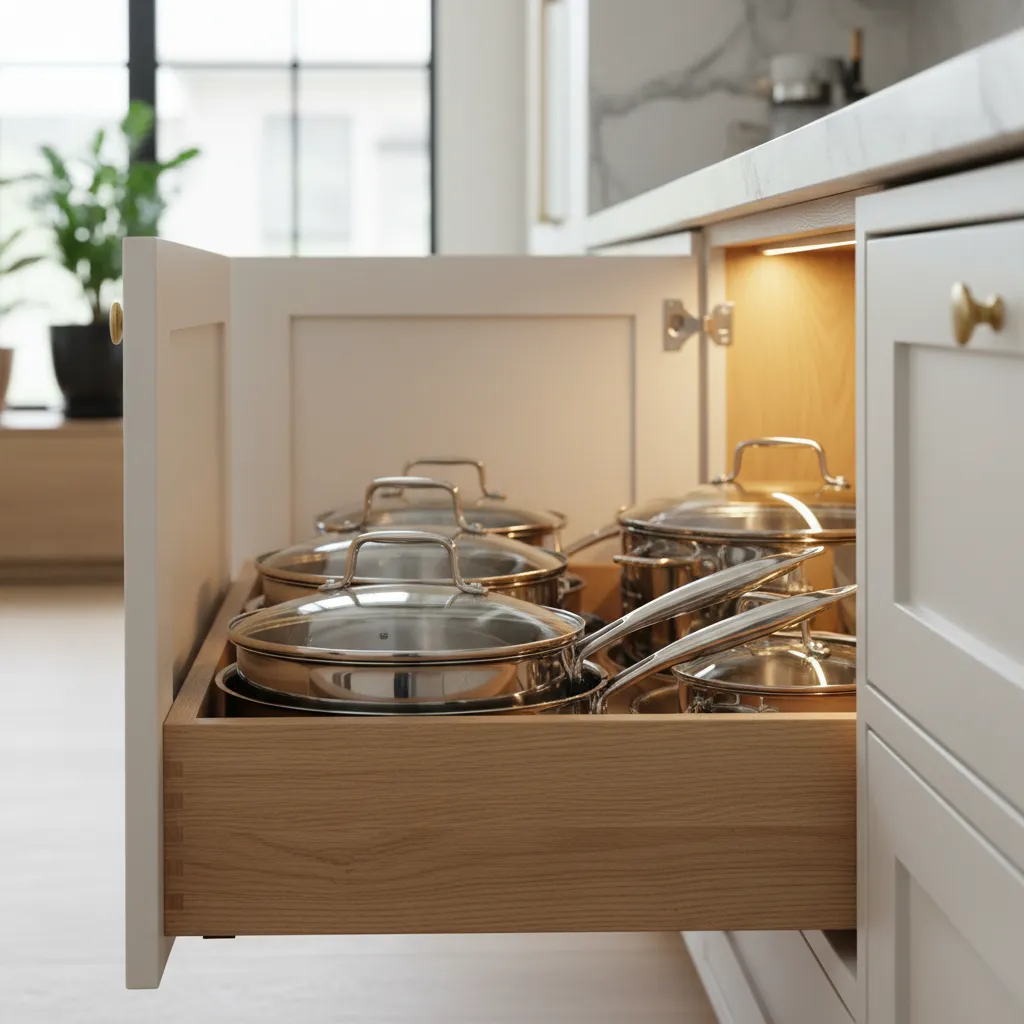
Deep lower cabinets are often where pots are forgotten. Installing wooden pull-out drawers transforms these dark caves into functional zones. The smooth glide adds a luxury feel to the space.
Much like smart closet organization, kitchen efficiency relies on visibility. If you see the back of the shelf, you will use every tool you own.
Consider adding battery-operated LED strips inside your cabinets. The warm ambient glow makes finding spices easier. It also highlights the beautiful grain of raw wood drawer fronts.
To choose the right hardware for your cabinet transformation, refer to the material benefits below:
- Powder-Coated Steel: This material offers industrial strength. It is perfect for heavy cast iron pans or large ceramic stacks.
- Natural Bamboo: Bamboo brings a hygge-inspired warmth. It is highly durable and resists moisture in humid kitchen environments.
- Clear Acrylic: These risers create an airy, minimal look. They are ideal for showing off a curated collection of colorful mugs.
- Raw Oak: Use oak for pull-out drawers to match traditional aesthetics. It adds a sophisticated, high-end finish to any cabinet interior.
The Designer’s Organization Edit
- Measure your tallest dinnerware stacks before purchasing risers to ensure a perfect fit that maximizes vertical clearance without crowding the shelf above.
- Pair clear acrylic risers with colorful glassware to create a floating effect that maintains an airy, uncluttered aesthetic in open or glass-front cabinets.
- Install battery-operated motion-sensor LED strips at the back of new pull-out drawers to instantly illuminate deep corners as soon as you slide them open.
5. Adopt Minimalist Inventory Management to Keep Clutter at Bay
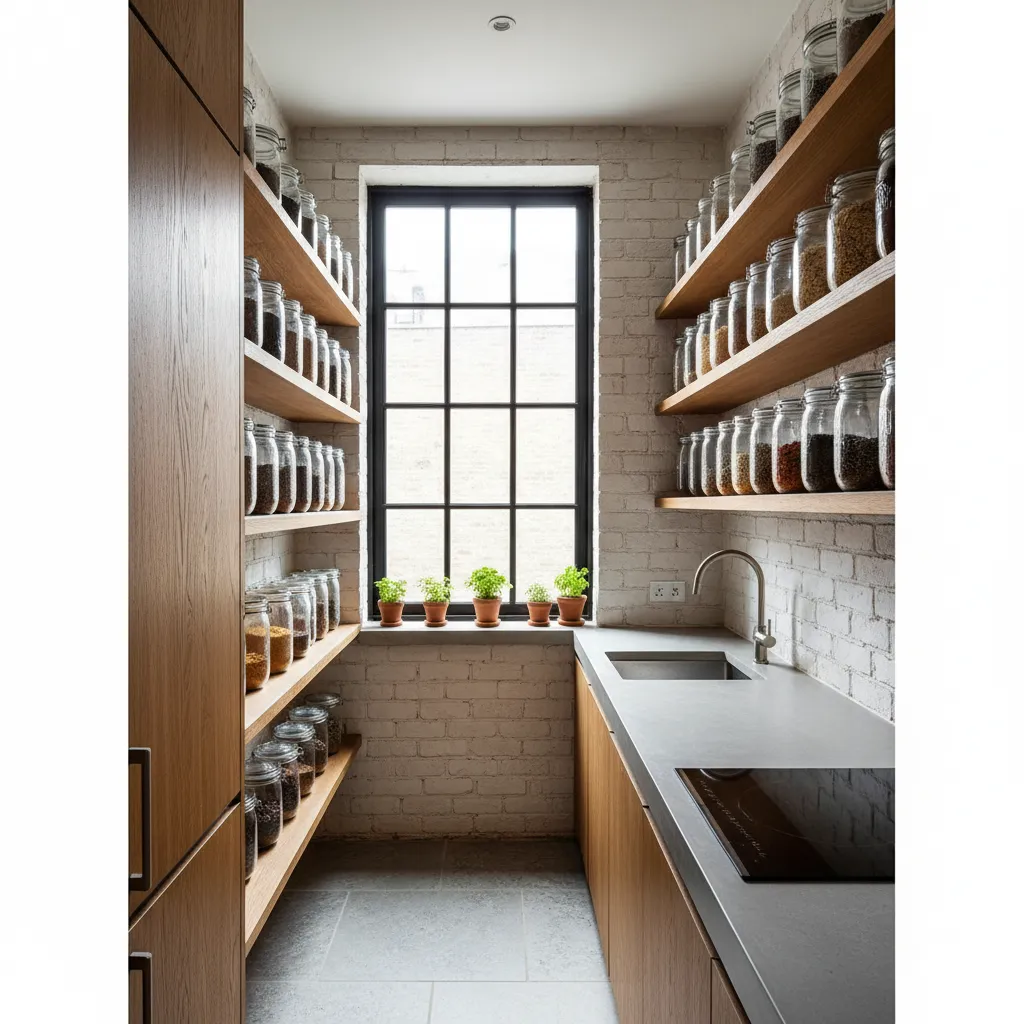
Minimalist inventory management transforms a cramped kitchen. Focus on buying smaller quantities of goods to fit your actual available shelf space.
Glass jars with bamboo lids offer a clean, organic look. These clear vessels allow you to monitor stock levels with a quick, effortless glance.
Texture plays a major role in a minimalist kitchen. Mix raw wood shelves with smooth ceramic containers to add tactile depth to your workspace.
A curated kitchen is not about owning less, it is about creating more space for the things that truly matter.
This approach mirrors a curated aesthetic by emphasizing natural materials. It ensures every item has a dedicated, visible home.
Use these smart closet organization ideas logic to categorize items. Grouping by daily use increases functional spatial flow.
The goal of organizing is to make your life easier, not to create more work. Keep only what you use, need, and love.
Shira Gill, Professional Organizer and Author
Strategies for a Lean Kitchen
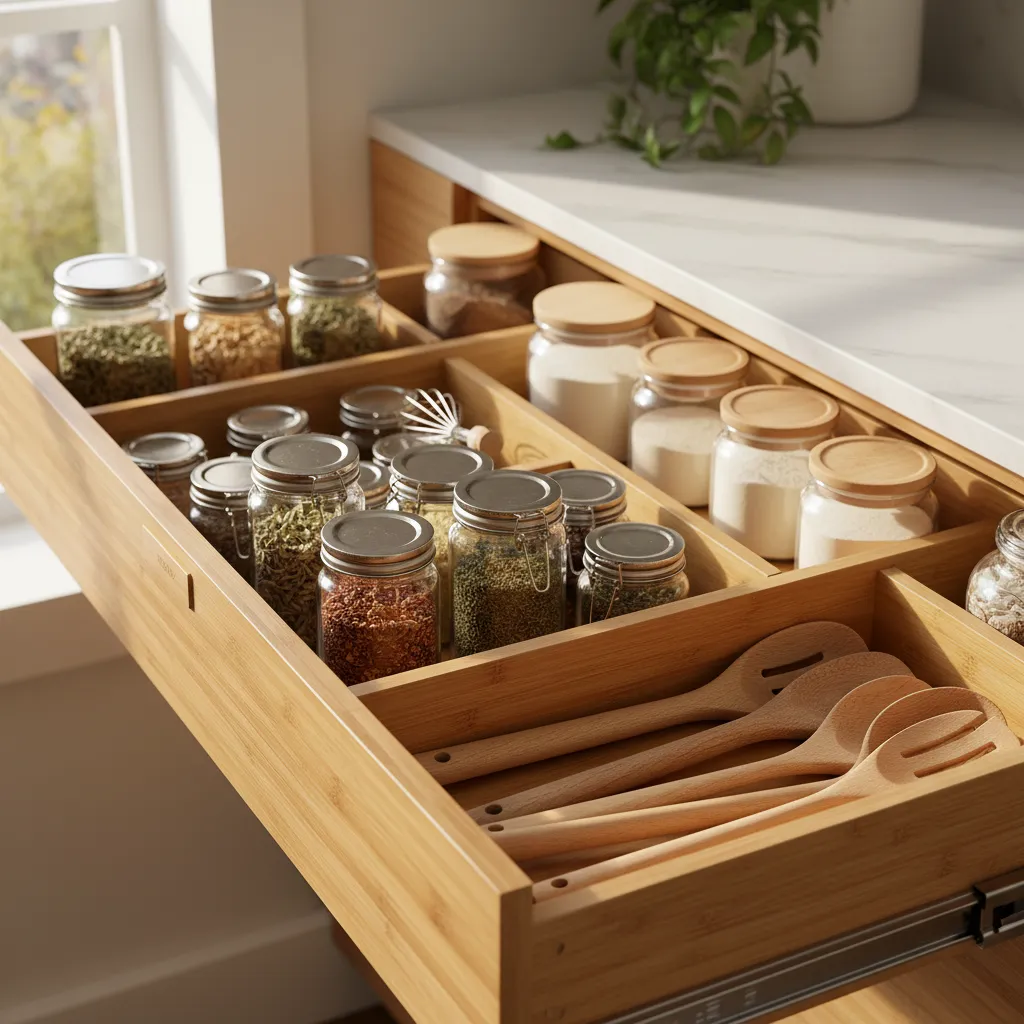
Maintaining a clutter-free zone requires consistent habits. Adopting a few simple rules prevents your small counters from becoming overwhelmed by stock.
- The One-In, One-Out Rule: Every new gadget or ingredient bottle must replace an old one to maintain a perfect balance.
- Decanting Bulk Goods: Transfer pasta and grains into uniform containers to eliminate bulky, mismatched cardboard packaging.
- Monthly Edits: Review your spices and dry goods once a month. This ensures you only keep fresh, usable items in your palette.
- Vertical Boundaries: Use shelf risers to create extra layers of storage. This maximizes the spatial flow of narrow cabinets.
Consider adding a rustic farmhouse backsplash to ground the space. It provides a tactile focal point for your minimal jars.
Effective management reduces food waste and stress. A well-organized inventory makes cooking a joyful, fluid experience rather than a daily struggle.
The Minimalist Edit
- Label the underside of your glass jars with expiration dates to maintain a clean aesthetic while keeping track of freshness.
- Implement the ‘Active Zone’ rule by placing daily essentials at eye level and storing occasional items on higher shelves.
- Take a quick photo of your pantry before shopping to prevent overbuying and protect your curated spatial flow.
Your Curated Culinary Sanctuary
Transforming a pantry-free kitchen into an organized sanctuary is all about intentionality. By embracing zoning and verticality, you turn every inch into a functional work of art.
Your small space doesn’t have to feel cramped. With tactile textures and smart layouts, your kitchen becomes a cozy, efficient heart of the home that inspires your daily rituals.
Design Dilemmas Solved
Stick to a cohesive color palette and use uniform glass jars. Grouping items by texture and height creates a curated, intentional look rather than a messy display.
Utilize deep lower cabinets or a stylish rolling cart. Keeping heavy items tucked away preserves your clean, oak counters for meal prep and decorative vignettes.
Use high-quality adhesive hooks for linens or over-the-door organizers. Tension rods can also create extra tiers inside cabinets without any permanent drilling.
Use a layout template to identify your most frequent tasks. Group tools and ingredients near their point of use, like a coffee station or a dedicated baking nook.
