

Table of Contents
- 1. Install Wood Planks or Shiplap Directly Over the Ceiling (Assess Joist Weight Limits)
- 2. Attach a New Layer of Lightweight Drywall and Safely Extend Electrical Boxes
- 3. Apply Glue-Up Decorative Ceiling Tiles Using a Cost-vs-Skill Matrix
- 4. Skim Coat Over the Texture to Create a Smooth Surface After Asbestos Testing
- 5. Mount a Suspended Drop Ceiling and Handle Crown Molding Transitions Perfectly
- Look Up: Your Beautifully Smooth Ceiling Awaits
- Common Ceiling Dilemmas Solved
Popcorn ceilings often feel like a relic of the past, casting unwanted shadows and dampening the modern aesthetic of a carefully curated home.
While many assume the only solution is a messy and laborious scraping process, there are far more elegant ways to reclaim your overhead space.
Achieving a professional look does not require a complete demolition of your existing surface.
You can transform these outdated textures into stunning architectural features that elevate the entire room.
By choosing materials like lightweight wood planks or decorative tiles, you introduce warmth and sophistication without the dreaded cloud of dust.
These practical solutions prioritize both form and function, ensuring your living environment feels as polished as a designer showroom.
Embracing a creative approach allows you to work smarter while staying within a realistic budget for your home improvement goals.
Whether you prefer the classic charm of beadboard or the sleek finish of modern panels, covering your ceiling is a strategic move for any enthusiast.
Explore these expert methods to refresh your sanctuary with a blend of style and functional ease.
1. Install Wood Planks or Shiplap Directly Over the Ceiling (Assess Joist Weight Limits)

Installing warm oak planks or crisp white shiplap over a textured ceiling instantly elevates the room. The smooth wood draws the eye upward, creating an expansive feel.
Beyond aesthetics, covering your ceiling with solid wood adds a durable layer of acoustic insulation. It softens harsh echoes and hides unsightly bumps perfectly.
Look up and see the potential. A beautifully planked ceiling transforms an outdated room into a curated, cozy sanctuary.
Before you begin, you must assess the weight capacity of your ceiling joists. Solid wood is heavy, so finding the structural beams is critical to prevent sagging.
Real pine planks add roughly 1.5 pounds per square foot to your ceiling load. This baseline statistic is vital for safe structural load calculations.
Incorporating raw elements is key for top interior design styles living room ideas on a budget, bringing organic warmth indoors.
Shiplap can be installed over drywall, plaster, or even popcorn ceilings, provided the framing is structurally sound to hold the extra weight.
Bob Vila Team, BobVila.com
| Ceiling Material | Weight Impact | Visual Atmosphere |
|---|---|---|
| Solid Oak Planks | Heavy (~2.5 lbs/sq ft) | Warm, rustic, and highly textural |
| Pine Shiplap | Moderate (~1.5 lbs/sq ft) | Crisp, coastal, and cleanly tailored |
| MDF Beadboard | Moderate (~2.0 lbs/sq ft) | Smooth, traditional, and subtly elegant |
Selecting Materials for Optimal Spatial Flow
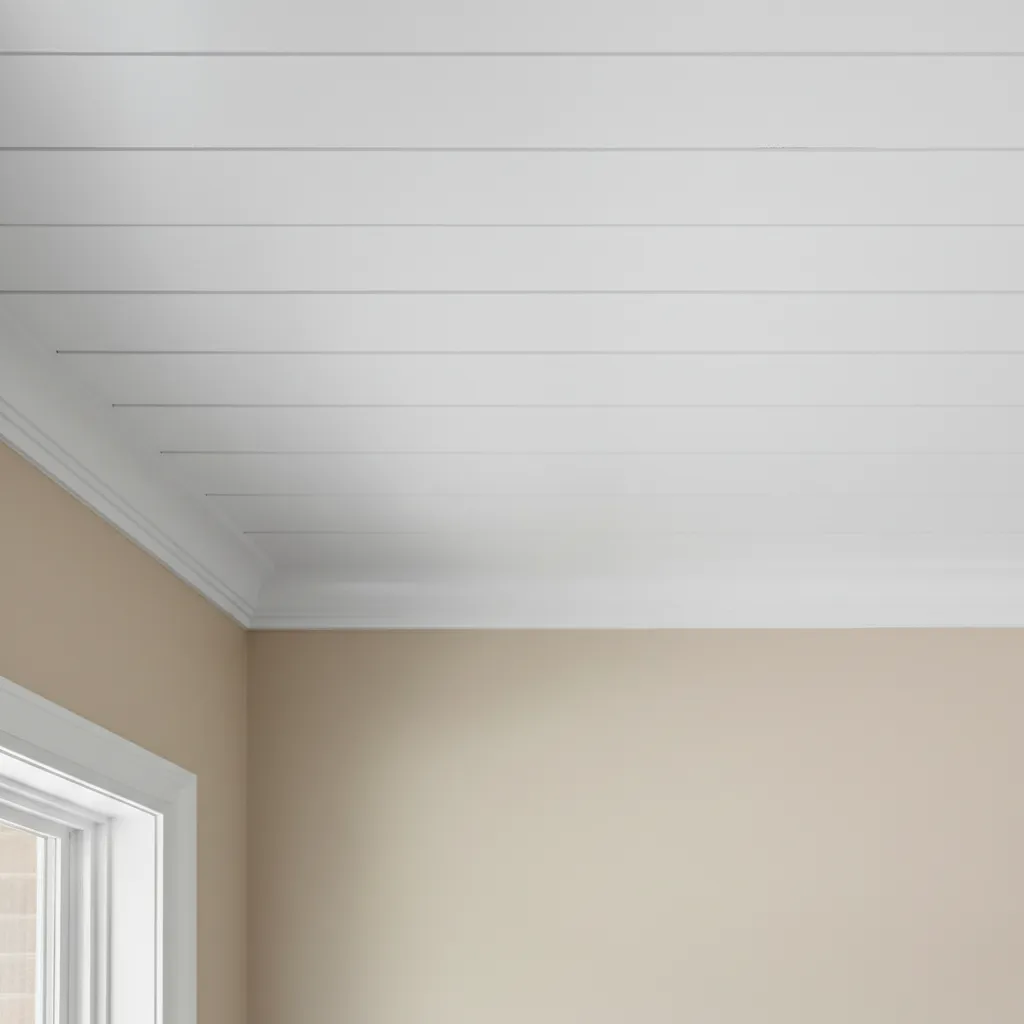
A bright white, matte finish on your ceiling planks reflects ambient lighting beautifully. This creates an airy, minimal atmosphere that opens up cramped living areas.
If you prefer a cozy, hygge aesthetic, opt for rich walnut or stained cedar. Darker woods lower the visual ceiling, creating an intimate and curated focal point.
- Locate Framing: Use a high-quality stud finder to mark every ceiling joist clearly.
- Add Furring Strips: Install thin wood strips perpendicular to the joists if the ceiling is uneven.
- Secure Planks: Shoot brad nails directly through the planks into the solid framing for absolute safety.
The Planking Playbook
- Acclimate your wood planks in the room for at least 48 hours before installation to prevent shrinking or warping after they are mounted.
- Snap chalk lines along the joists so you have a visible guide for every nail, ensuring a secure grip into the structural framing.
- Stagger your end joints across rows to create a more natural, professional appearance and better distribute the weight across the ceiling.
2. Attach a New Layer of Lightweight Drywall and Safely Extend Electrical Boxes
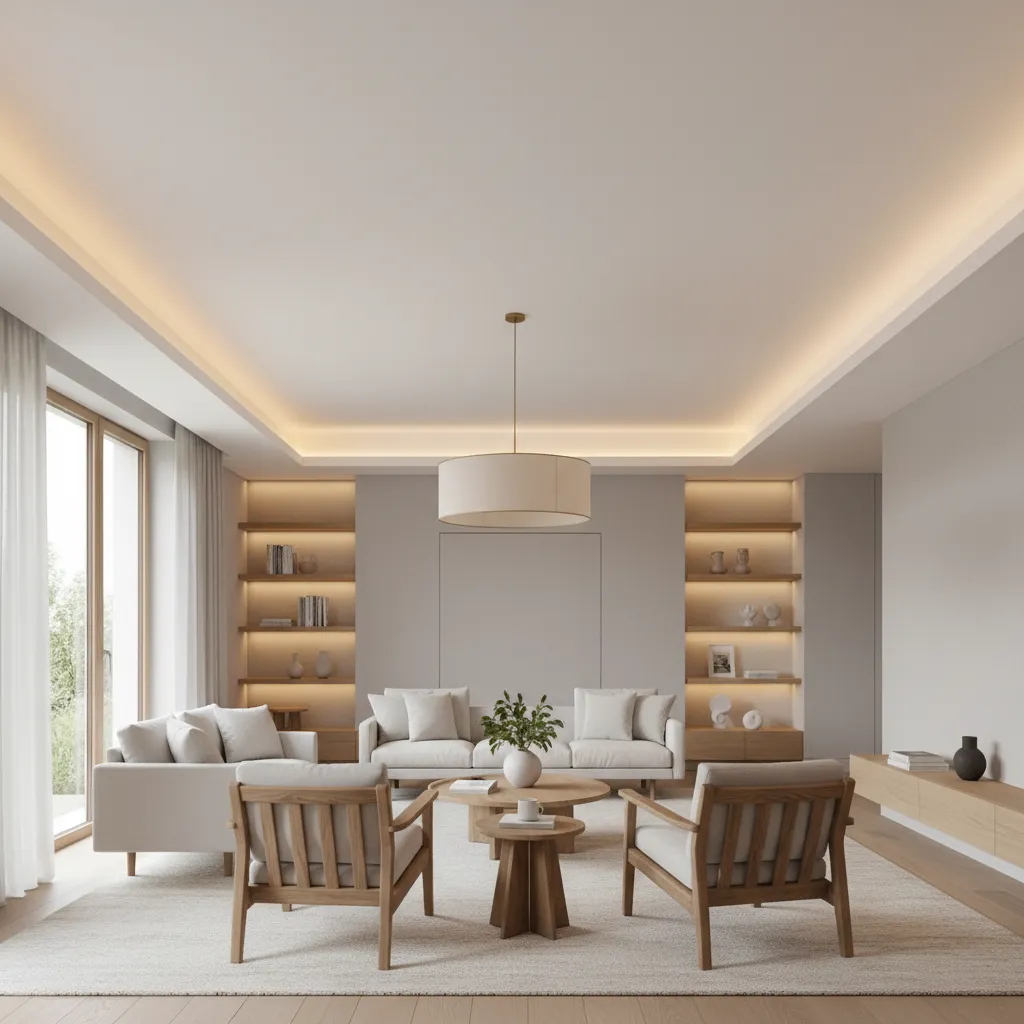
Installing a layer of lightweight drywall directly over your old ceiling creates a flawless finish. This modernizes your spatial flow beautifully.
A smooth ceiling acts as a blank canvas for warm ambient lighting. It bounces light evenly, enhancing your curated room palette without harsh shadows.
Ceilings must always be considered. They are the most neglected space in a room.
Albert Hadley, Architectural Digest
For this project, choosing the right material weight is critical for safety. Standard boards are too heavy, so ultralight drywall is highly recommended.
Before lifting any panels, you must locate and mark your ceiling joists. Securing the new layer directly into the wood ensures long-lasting durability.
If you are exploring top interior design styles living room ideas on a budget, a flat ceiling drastically elevates the entire aesthetic.
Handling Electrical Boxes and Lighting
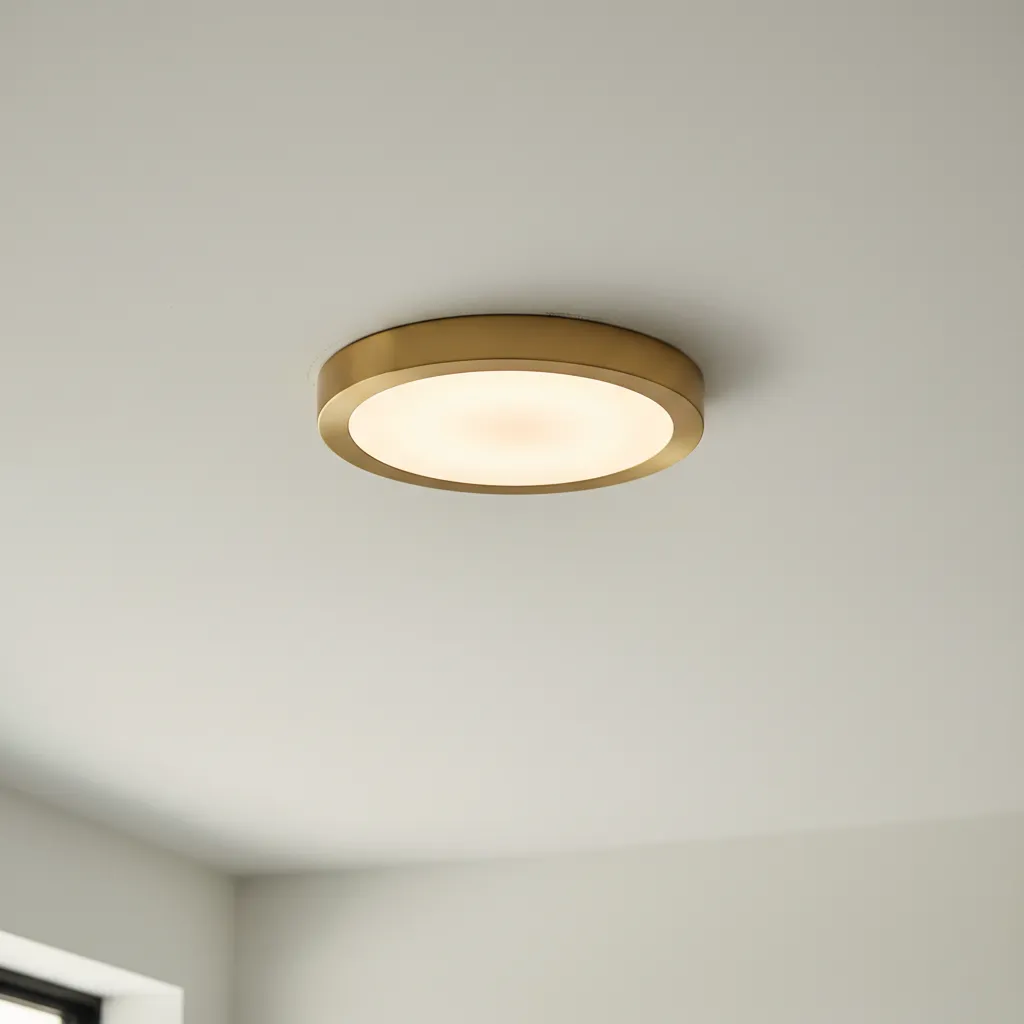
Adding a new drywall layer means your electrical boxes will suddenly be recessed. This creates a fire hazard if left unaddressed during installation.
You must install electrical box extenders to bring the wiring flush with the new surface. This simple step ensures your statement piece lighting is safe.
Always turn off the power at the breaker before adjusting any ceiling fixtures. Safety and structural integrity are the foundation of beautiful design.
- Mark the Joists: Use a stud finder to locate ceiling joists and mark their exact positions with a pencil.
- Install Extenders: Fit code-compliant plastic or metal box extenders over your existing electrical housings.
- Lift and Secure: Rent a drywall lift to safely hoist the panels and screw them firmly into the wooden joists.
- Tape and Mud: Apply joint compound and mesh drywall tape to all seams for an absolutely seamless finish.
A beautifully smooth ceiling acts as a seamless canvas, reflecting light and bringing effortless modern elegance to any room.
Selecting the correct drywall thickness is the secret to a successful ceiling encapsulation. The material must be light enough to hoist easily.
| Drywall Thickness | Weight Profile | Best Ceiling Application |
|---|---|---|
| 1/4 Inch Standard | Very Lightweight | Good for covering texture, but prone to sagging over time. |
| 1/2 Inch Ultralight | Moderate but Manageable | The ideal choice for ceilings, offering rigidity without excess bulk. |
| 5/8 Inch Firecode | Extremely Heavy | Unnecessary for basic residential ceilings and very difficult to lift. |
Once your ceiling is perfectly smooth, the room will instantly feel larger. It creates an organic, airy atmosphere that embraces minimalism perfectly.
The Precision Edit
- Stagger your drywall seams so they do not align with the existing layer’s joints; this cross-pattern reinforcement prevents future cracking and ensures a more stable, gallery-quality surface.
- When choosing screws, ensure they are at least 1-5/8 inches long to account for the added thickness of the new layer and provide a secure bite into the wooden joists.
- Always use a ‘non-conductive’ plastic box extender for a safer installation that eliminates the risk of electrical arcing against metal components during your fixture upgrade.
3. Apply Glue-Up Decorative Ceiling Tiles Using a Cost-vs-Skill Matrix
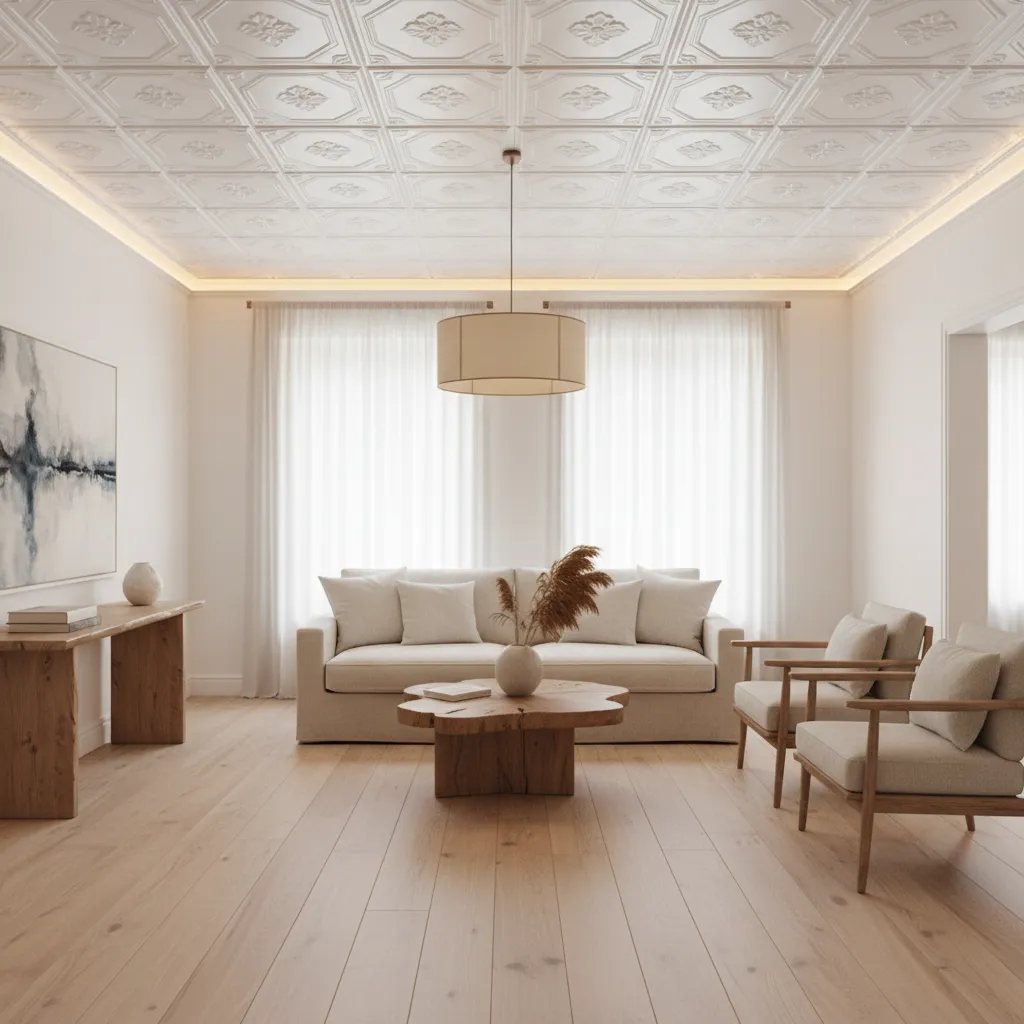
Glue-up decorative tiles offer a brilliant way to mask heavy ceiling textures. This method totally bypasses the messy scraping process while adding instant architectural charm to your home.
These lightweight panels install directly over existing drywall. By introducing embossed textures like faux tin or wood grain, you instantly elevate the spatial flow and perceived height.
A ceiling should never be an afterthought. Treating the fifth wall with texture or bold color completely transforms a room’s atmosphere.
Thom Filicia, Elle Decor
Choosing the right material changes the entire mood of your space. Reflective metallic finishes bounce warm ambient lighting, which works wonders for rooms with limited natural light.
Matte foam tiles provide a soft and minimal aesthetic. They absorb harsh echoes and create a cozy hygge atmosphere when paired with organic materials like raw oak floors and linen curtains.
Look up to level up. A beautifully textured ceiling turns a basic room into a curated masterpiece.
The Material Cost and Skill Matrix
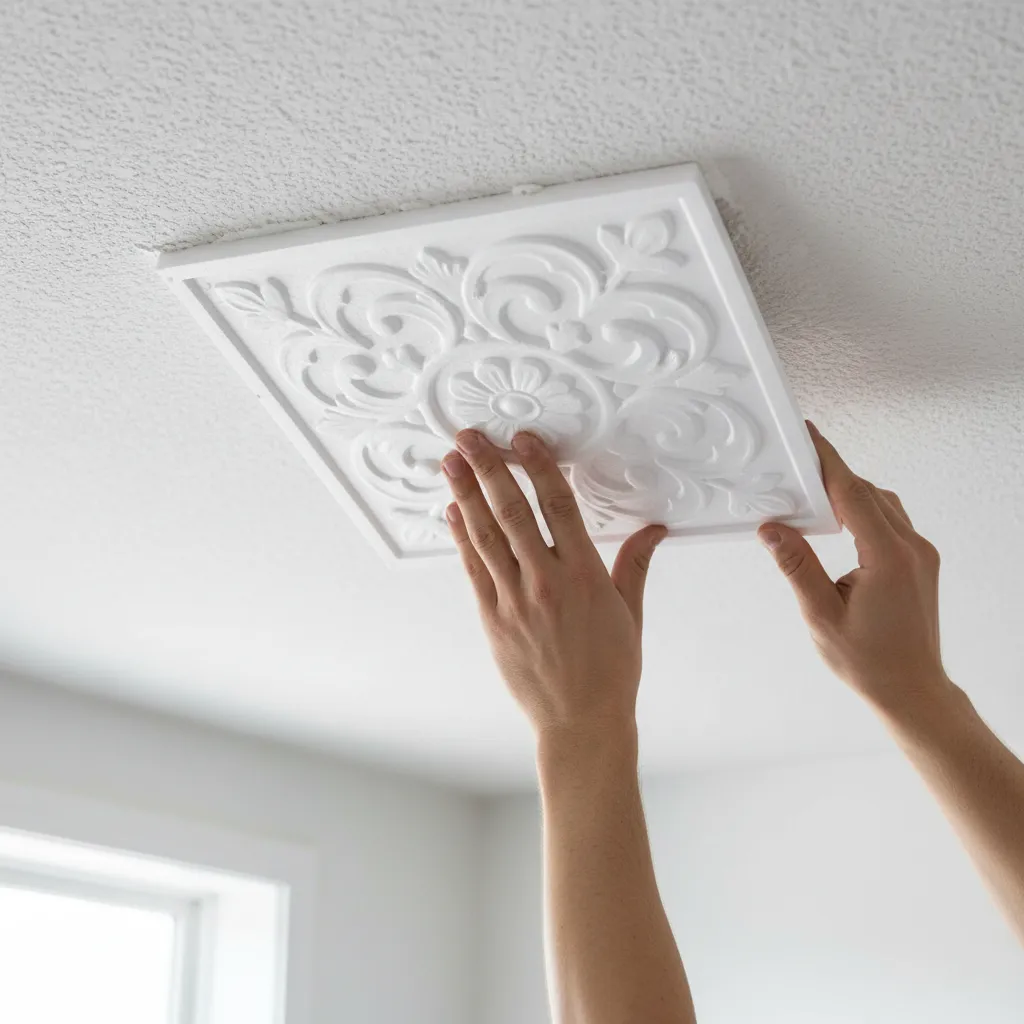
Before buying materials, evaluate your budget and DIY comfort level. The matrix below breaks down popular tile options by their cost, required skill, and overall aesthetic impact.
| Tile Material | Cost Profile | Skill Level | Best Vibe & Texture |
|---|---|---|---|
| Polystyrene (Foam) | Very Low | Beginner | Soft matte finish, minimal and airy. |
| PVC Faux Tin | Moderate | Beginner | Glossy or metallic, great for ambient glow. |
| Real Metal | High | Advanced | Authentic vintage charm, highly durable. |
| Faux Wood Fiber | Moderate | Intermediate | Organic texture, perfect for rustic warmth. |
Polystyrene tiles are incredibly forgiving for beginners. They cut easily with a basic utility knife and adhere securely with construction adhesive, making them practical for quick fixes.
If you want a more robust statement piece, PVC faux tin offers incredible durability. These tiles resist moisture, making them an excellent choice for upgrading kitchens and humid bathrooms.
Always apply your adhesive in a secure pattern. Place glue dabs in the center and corners of each tile. This ensures a tight bond against the uneven popcorn texture without any sagging.
Working from the center of the room outward creates a balanced look. This professional layout technique ensures any cut tiles are hidden along the outer edges for a seamless visual flow.
The Designer’s Ceiling Playbook
- Before starting, snap two perpendicular chalk lines to find the room’s true center, ensuring your layout remains perfectly symmetrical.
- Paint the original ceiling a color that matches your tile’s base shade to hide any hairline gaps or future shifting between panels.
- Use a clean, dry paint roller to apply even pressure across the tile surface, ensuring a firm bond without leaving fingerprint dents on softer foam materials.
4. Skim Coat Over the Texture to Create a Smooth Surface After Asbestos Testing
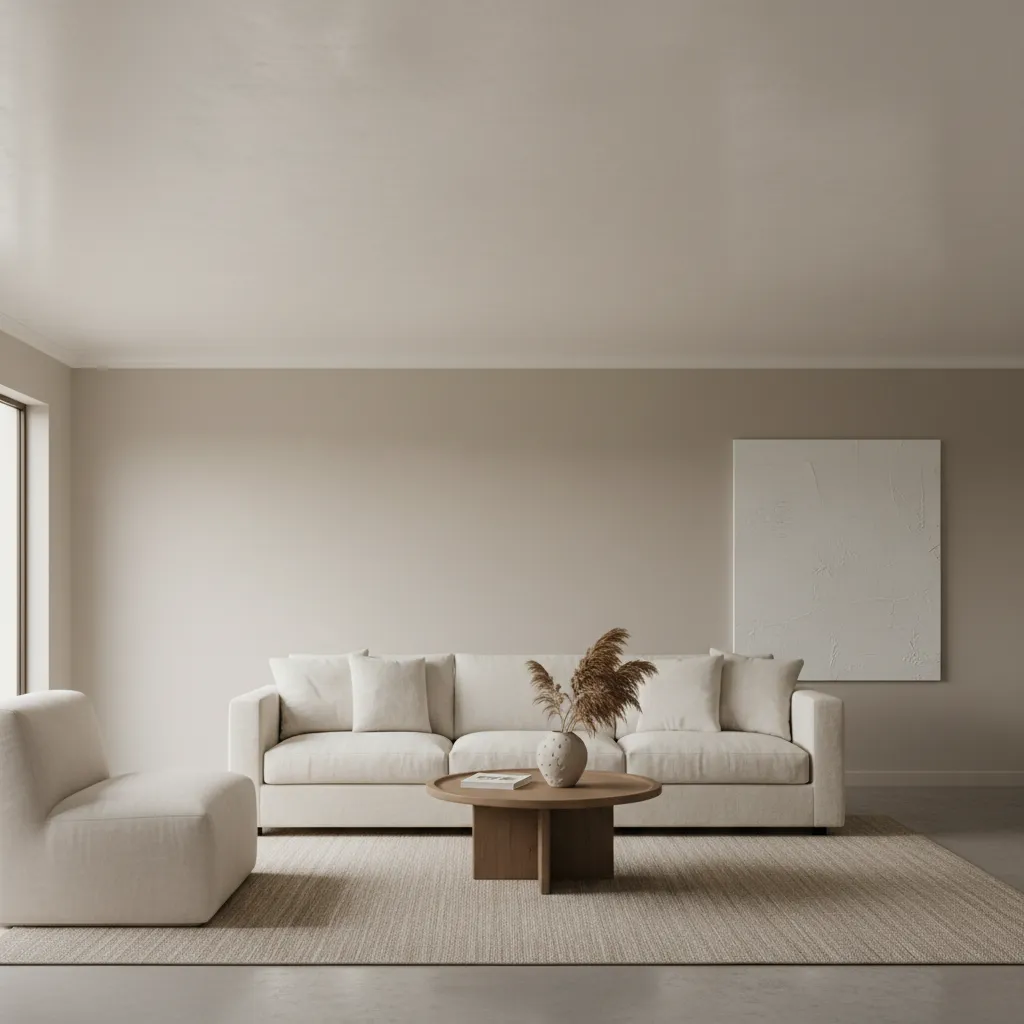
Transforming a heavily textured ceiling into a flawless, flat plane completely elevates a room. A perfectly smooth ceiling creates an illusion of height.
This sleek finish beautifully bounces ambient lighting around your space. The crisp surface improves spatial flow, making any layout feel open and curated.
A flat ceiling reflects light flawlessly. This is incredibly helpful when exploring paint color matching for rooms with limited natural light.
Essential Tools for a Flawless Finish

Achieving that minimalism and high-end look requires the right materials. Applying joint compound over texture is an art that demands precise execution.
- Wide Trowel: A twelve-inch metal drywall knife smooths compound quickly.
- Joint Compound: Lightweight mud is best for overhead organic layers.
- Pole Sander: Fine grit helps achieve that buttery, elegant finish.
A beautifully smooth ceiling is the quiet canvas that allows your curated statement pieces to truly shine.
The Layering Process and Texture Control
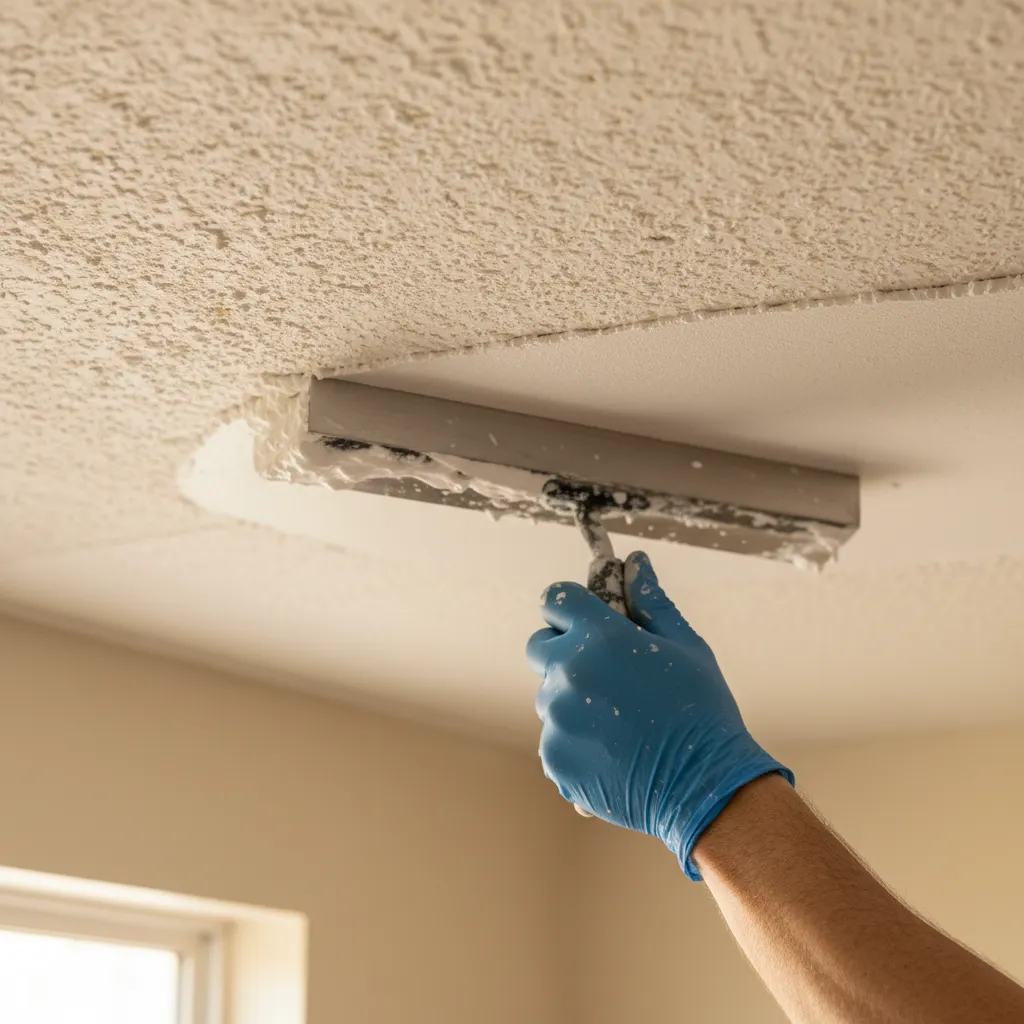
Skim coating involves applying multiple thin layers of mud. Instead of scraping, you fill the gaps between the bumps to build a solid, flat foundation.
The first layer rarely looks perfect, and that is completely normal. Allow it to dry fully before applying the second coat to build subtle, tactile depth.
Skim coating is the best way to make an old, damaged wall or ceiling look brand new. It takes practice, but the flawless results are worth the effort.
Tom Silva, This Old House
Once the final layer dries, gently sand the surface until it feels like soft velvet. A damp sponge can be used to smooth the edges without creating dust.
A beautifully flat ceiling acts as the perfect focal point for a striking mid-century chandelier. It grounds the room and highlights your color palette.
Industry surveys indicate that smooth ceilings are preferred by over 80% of modern home buyers. This survey data proves the value of this upgrade.
The Artisan’s Smooth Secret
- Mix your joint compound with a small amount of water to reach a pancake batter consistency; this ensures the mud glides smoothly without pulling on the existing texture.
- Position a high-lumen work light at a sharp angle against the ceiling while you work to reveal subtle shadows and imperfections you might otherwise miss.
- To minimize cleanup, use a vacuum-attached pole sander for the final pass, ensuring a dust-free environment while achieving that velvet-smooth surface.
5. Mount a Suspended Drop Ceiling and Handle Crown Molding Transitions Perfectly
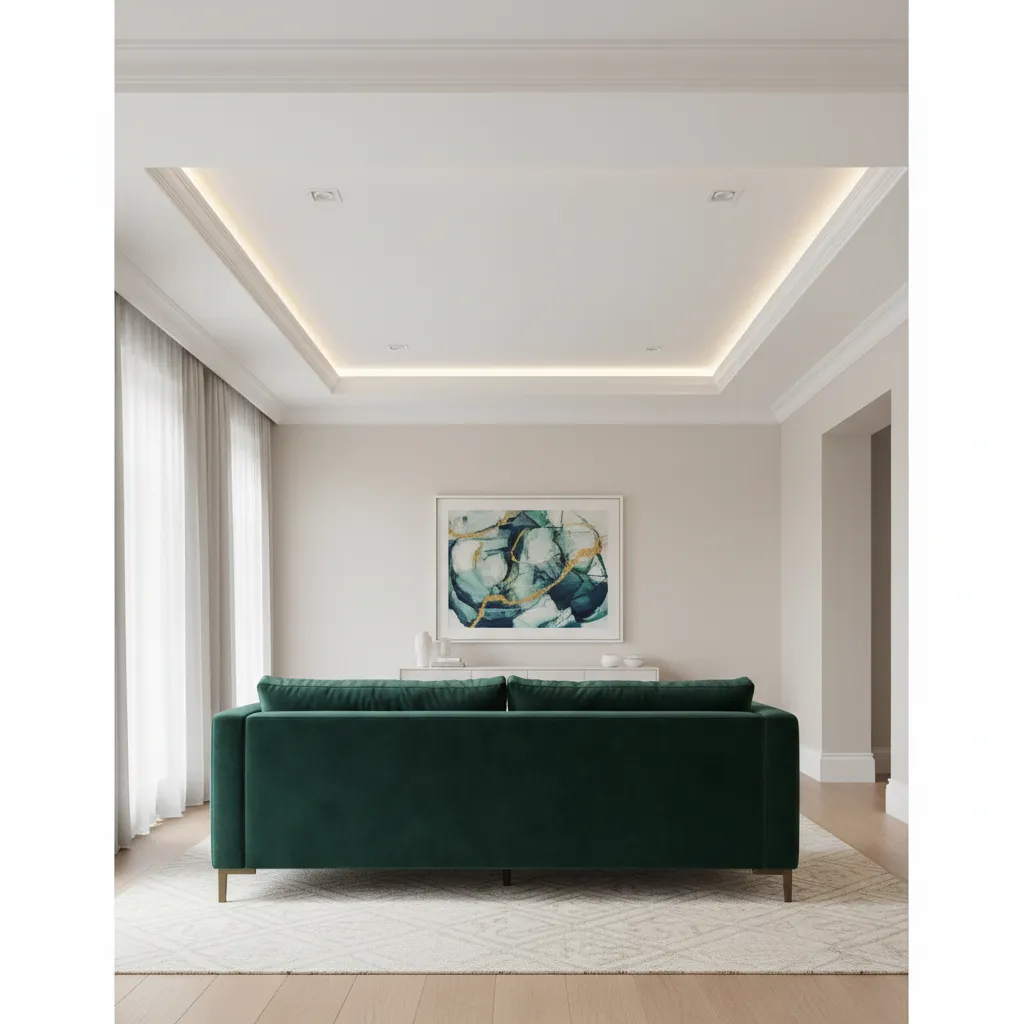
A suspended drop ceiling offers a brilliant way to conceal heavy popcorn textures. It lowers the visual plane slightly but adds a flawless architectural finish.
This approach instantly modernizes a room while hiding uneven surfaces. You can also discreetly run new wiring for warm ambient lighting behind the panels.
A perfectly executed drop ceiling turns an outdated texture into a modern architectural canvas.
Selecting the Right Suspension Materials
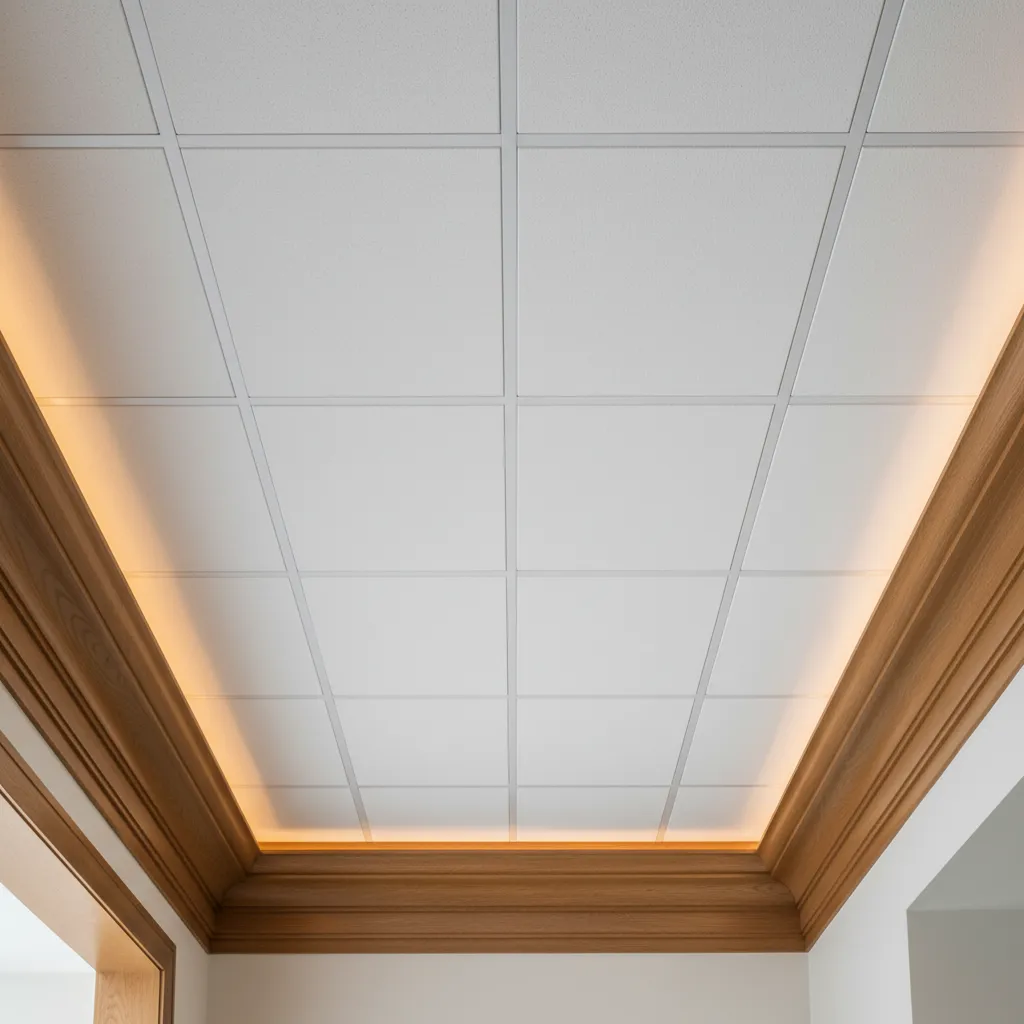
Choosing lightweight materials like acoustic panels or PVC tiles ensures safe installation. Matte white finishes keep the space feeling airy and expansive.
If you are modernizing your living room decor, a grid system provides a crisp look. It improves spatial flow and creates a curated focal point overhead.
- Concealed Utilities: Hide exposed pipes or find aesthetic ways to hide internet routers above the clean drop panels to keep your room tidy.
- Acoustic Dampening: Soft fiber tiles absorb harsh echoes, making the room feel noticeably quieter, warmer, and much cozier.
- Quick Access: Removable panels allow for easy maintenance and wiring adjustments without destroying your beautiful new ceiling finish.
Executing Flawless Crown Molding Transitions
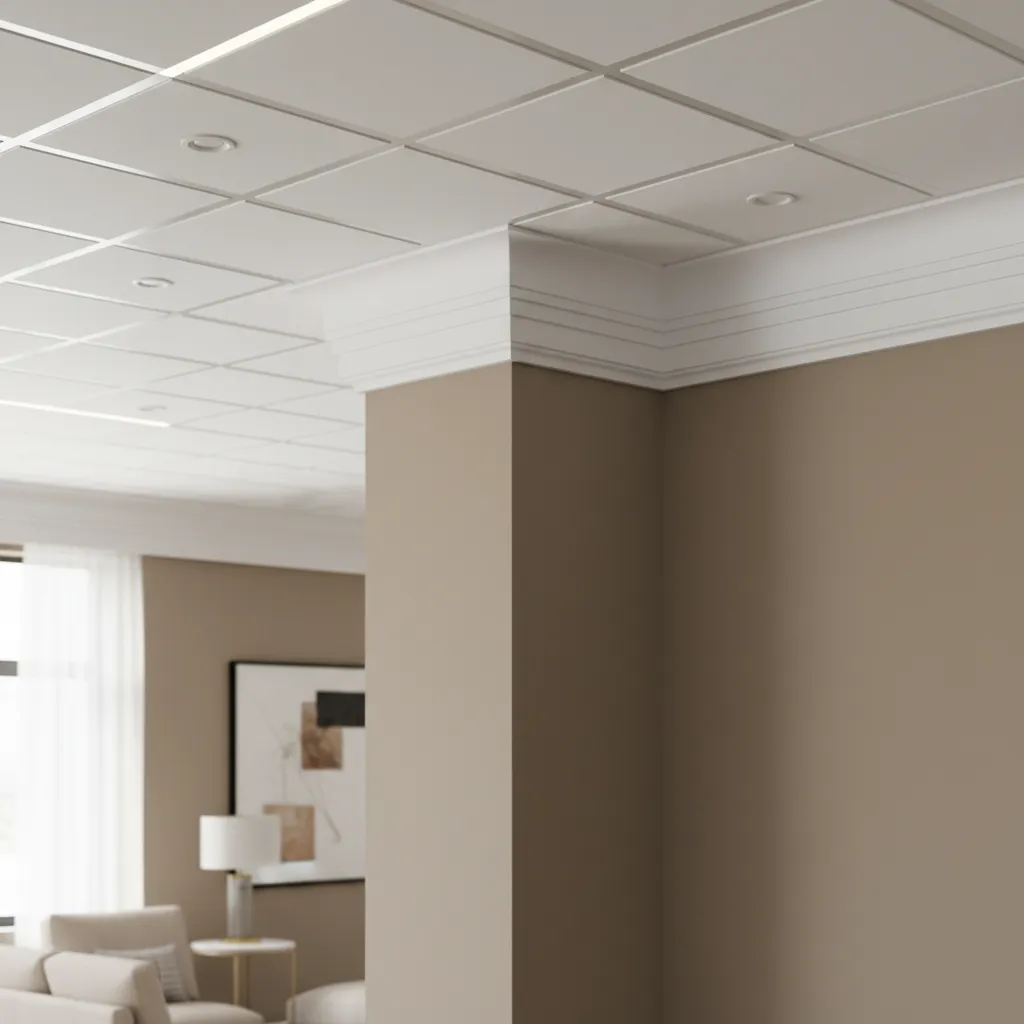
Crown molding serves as the perfect visual bridge between your new ceiling and the wall. It hides the perimeter grid and adds a sophisticated, tailored edge.
Crown molding acts as a beautiful architectural transition, seamlessly joining the ceiling and walls while adding incredible depth to the space.
Marie Flanigan, Homes & Gardens
Opt for wide, structural molding to gently draw the eye upward. Painting it in a high-gloss enamel creates a subtle reflective glow that enhances natural light.
Secure the molding directly to the wall studs just below the drop ceiling track. This floating method allows the ceiling panels to rest perfectly in place.
Caulk all seams along the wall side for a truly seamless look. A flawless transition makes the entire room feel incredibly intentional and beautifully finished.
The Elevated Edge
- Use a self-leveling laser to ensure the perimeter wall angle and crown molding are perfectly horizontal, preventing unsightly gaps at the ceiling line.
- Paint the metal grid members to match your panels exactly before installation to achieve a high-end, monolithic architectural look.
- Apply a small bead of paintable caulk at the crown-to-wall junction but leave the panel-to-molding edge free to allow for easy access to utilities.
Look Up: Your Beautifully Smooth Ceiling Awaits
Covering a popcorn ceiling is the ultimate way to refresh your room. You can skip the messy scraping and still achieve a flawless, modern look.
Whether you choose the cozy charm of wood planks or the crisp finish of fresh drywall, the transformation is stunning. It truly elevates your home.
Remember to always check your joist weight limits and prioritize safety. Now, grab your tools and get ready to look up and love your space again.
Common Ceiling Dilemmas Solved
Yes, covering it is often safer than scraping! Encapsulating the texture with drywall or wood prevents dangerous asbestos fibers from becoming airborne.
Not necessarily! Bright white shiplap or thin drywall barely drops the height. The smooth finish actually draws the eye up, feeling spacious.
It depends on your DIY comfort level. Wood planks are very DIY-friendly, but hanging new drywall often requires a heavy lift and taping expertise.
You will need to install electrical box extenders. This ensures your wiring safely reaches the new, lower ceiling surface without fire hazards.
