
Table of Contents
- Essential HVAC Airflow and Clearance Safety Checklist
- Build a Slatted Wood Cover for Style and Ventilation
- Apply a Color-Matched Vinyl Wrap for a Low-Profile Blend
- Integrate the Unit into a Custom Surround Bookshelf
- Install a Breathable Decorative Valance with Fabric Insets
- Designing for Discreet Comfort
- Design Dilemmas Solved
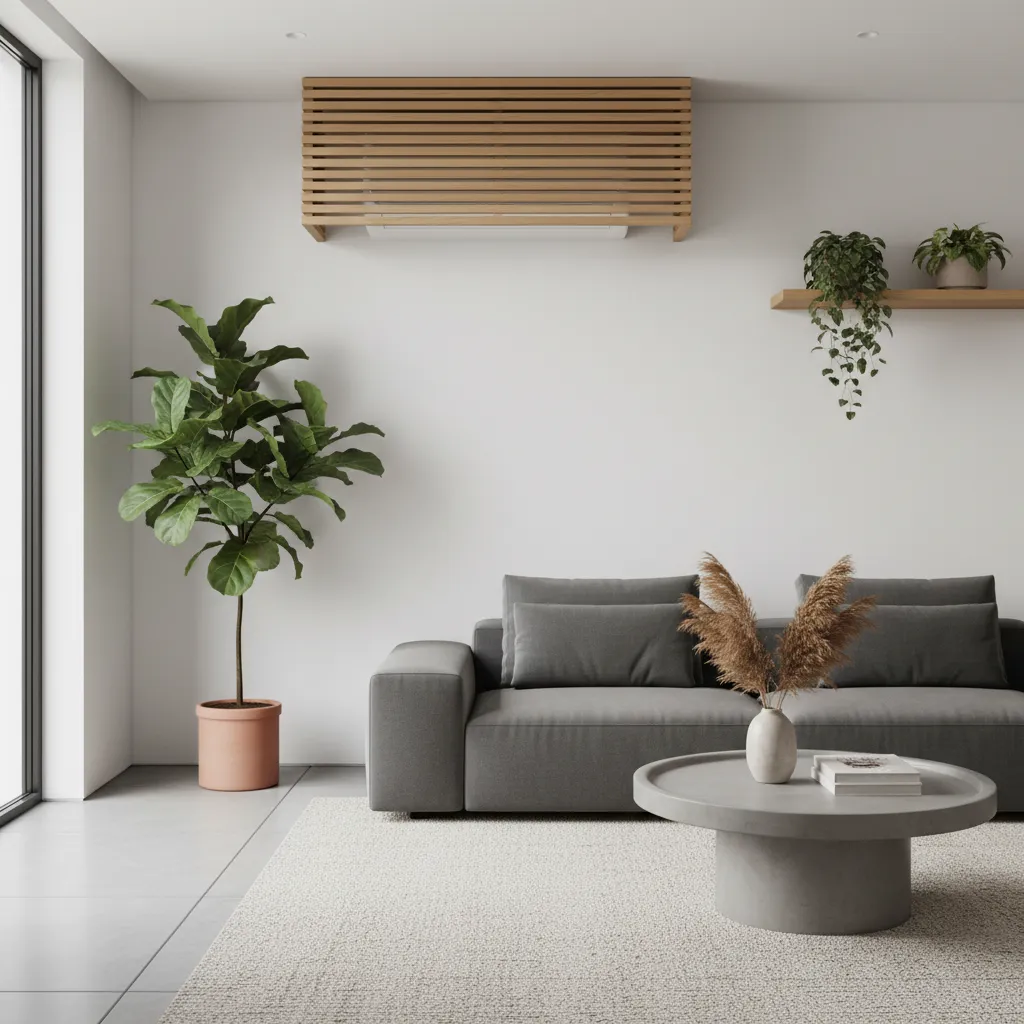
Modern cooling systems are essential for comfort, but their bulky plastic exteriors often clash with a carefully curated aesthetic.
Transforming a split AC unit from an eyesore into a seamless part of your decor is entirely possible with the right approach.
By blending functional cooling with intentional design, you can maintain a breezy atmosphere without sacrificing your personal style.
Achieving this look does not require a massive renovation or a professional contractor’s fee. Simple solutions like custom shelving, decorative screens, or strategic greenery can effectively draw the eye away from the appliance.
These practical tips focus on creating a cohesive visual flow that highlights your favorite furniture pieces instead of the utility hardware on the wall.
Every home deserves to feel like a sanctuary where every detail works in harmony.
Whether you prefer a minimalist look or a cozy, maximalist vibe, there is a creative camouflage technique that will fit your budget and skill level perfectly.
Let us explore how to integrate these cooling units with elegance so your living space feels as good as it looks.
Essential HVAC Airflow and Clearance Safety Checklist
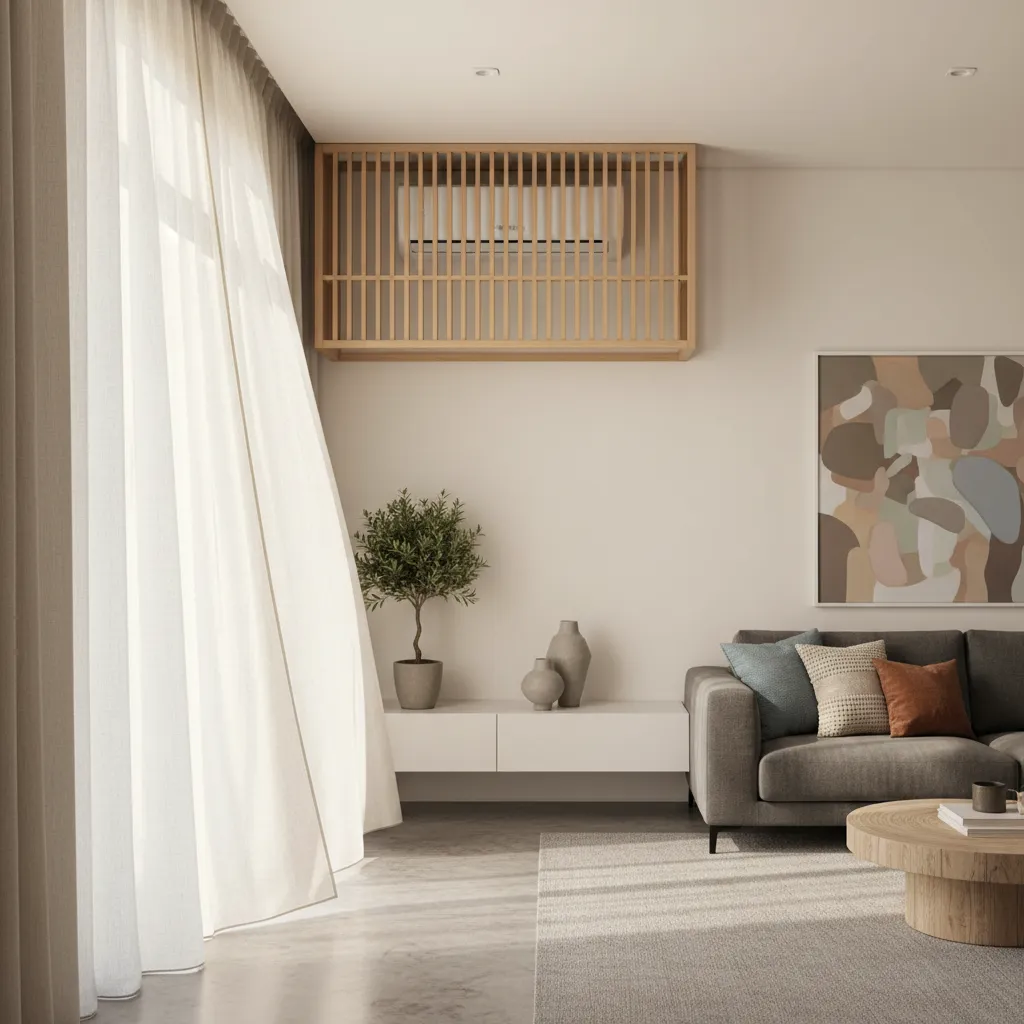
Camouflaging a split AC unit is a delicate dance between aesthetics and engineering. Proper airflow ensures your system runs efficiently while keeping your home cool.
Restricting the intake or output of air forces the motor to work harder. This lead to higher utility bills and a significantly shorter lifespan for the unit components.
Design should never compromise the mechanical integrity of your home comfort systems.
Minimum Clearance Requirements
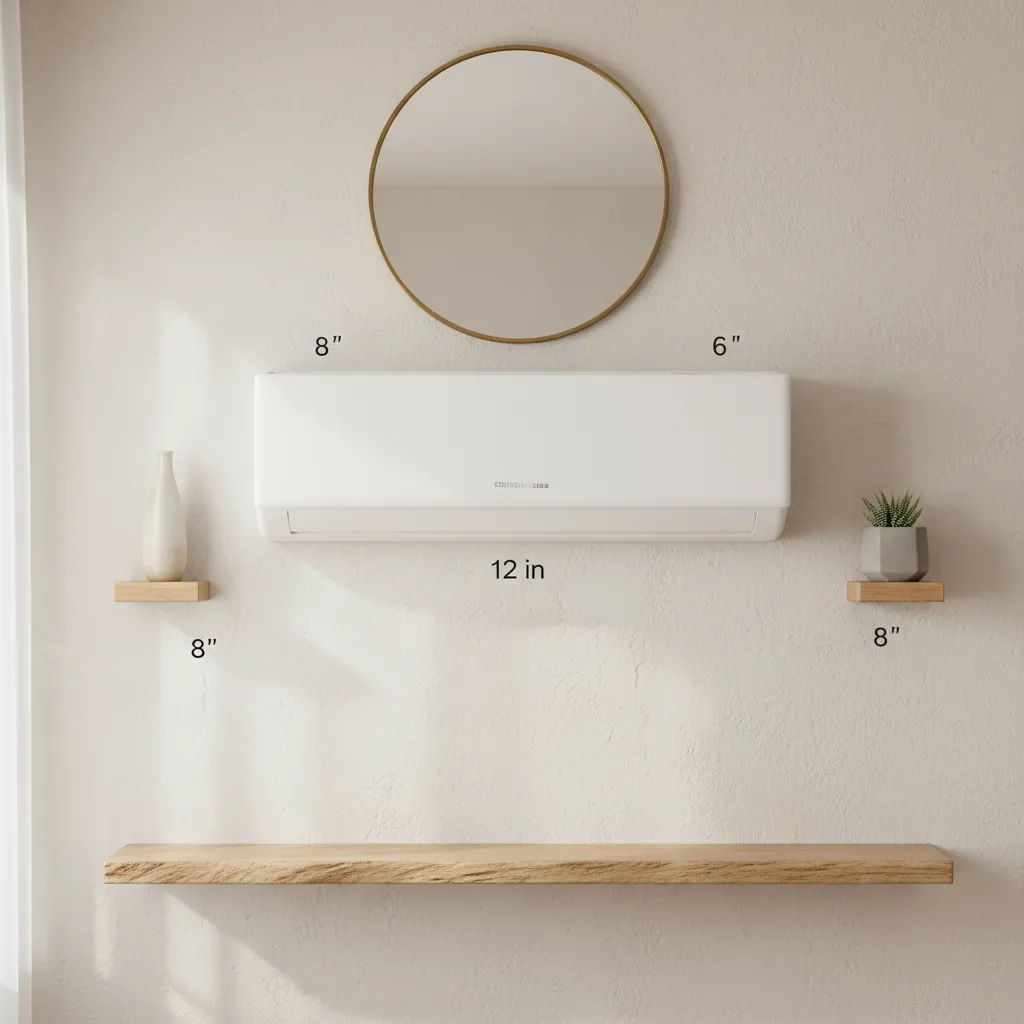
Most manufacturers recommend at least 2 to 4 inches of clearance on the top and sides. This space allows the unit to draw in enough air for the heat exchange process.
Leave at least 8 to 12 inches of open space below the unit. This ensures the cool air can circulate throughout the room without hitting immediate obstacles.
If you are planning modern living room decor ideas, ensure your shelving does not crowd these vital zones.
Air conditioners need room to breathe. Without proper clearance, your unit can overheat or freeze up, causing long-term damage.
Trane Specialists, Air Conditioner Clearance Guide
Material and Maintenance Checklist
The textures you choose for your camouflage must be porous. Raw wood slats, rattan, or laser-cut metal allow air to flow through the gaps while hiding the plastic casing.
A well-designed cover should feel like a natural extension of your walls. Use light oak or painted pine to match your existing trim and create a cohesive, organic look.
- Remote Sensor Access: Ensure the infrared eye on the unit is not blocked by solid panels.
- Filter Access: Design covers that are easily removable or have hinges for monthly filter cleanings.
- Drainage Safety: Keep the condensation drain line clear to prevent mold growth or water stains on your drywall.
- Material Weight: Use lightweight materials to avoid putting stress on the wall mounting brackets.
For more tips on hiding unsightly home elements, check out our guide on the best way to hide TV wires in small spaces.
Comparison of Camouflage Methods
| Method | Airflow Impact | Maintenance Access |
|---|---|---|
| Slotted Cabinet | Low to Medium | Excellent (with hinges) |
| Rattan Screen | Very Low | Good (removable) |
| Floating Shelf | Low | Easy Access |
| Paint Matching | None | Perfect Access |
Restricting air intake can lead to ice buildup on the coils. This not only stops the cooling process but can also cause water damage to your beautiful flooring.
Always prioritize the spatial flow of air over complete invisibility. A hidden unit that breaks down after one season is a costly design mistake you should avoid.
HVAC Harmony Hacks
- Perform a ‘Remote Check’ before finalizing any screen design by testing your remote at various angles to ensure the infrared sensor can still receive signals through the slats.
- Opt for magnetic catches or heavy-duty Velcro on custom AC covers to allow for instant, tool-free removal during monthly filter changes or emergency maintenance.
- Use the ‘Light Test’ to gauge airflow: if you cannot see a significant amount of light through your decorative screen, the unit likely cannot breathe efficiently either.
Build a Slatted Wood Cover for Style and Ventilation
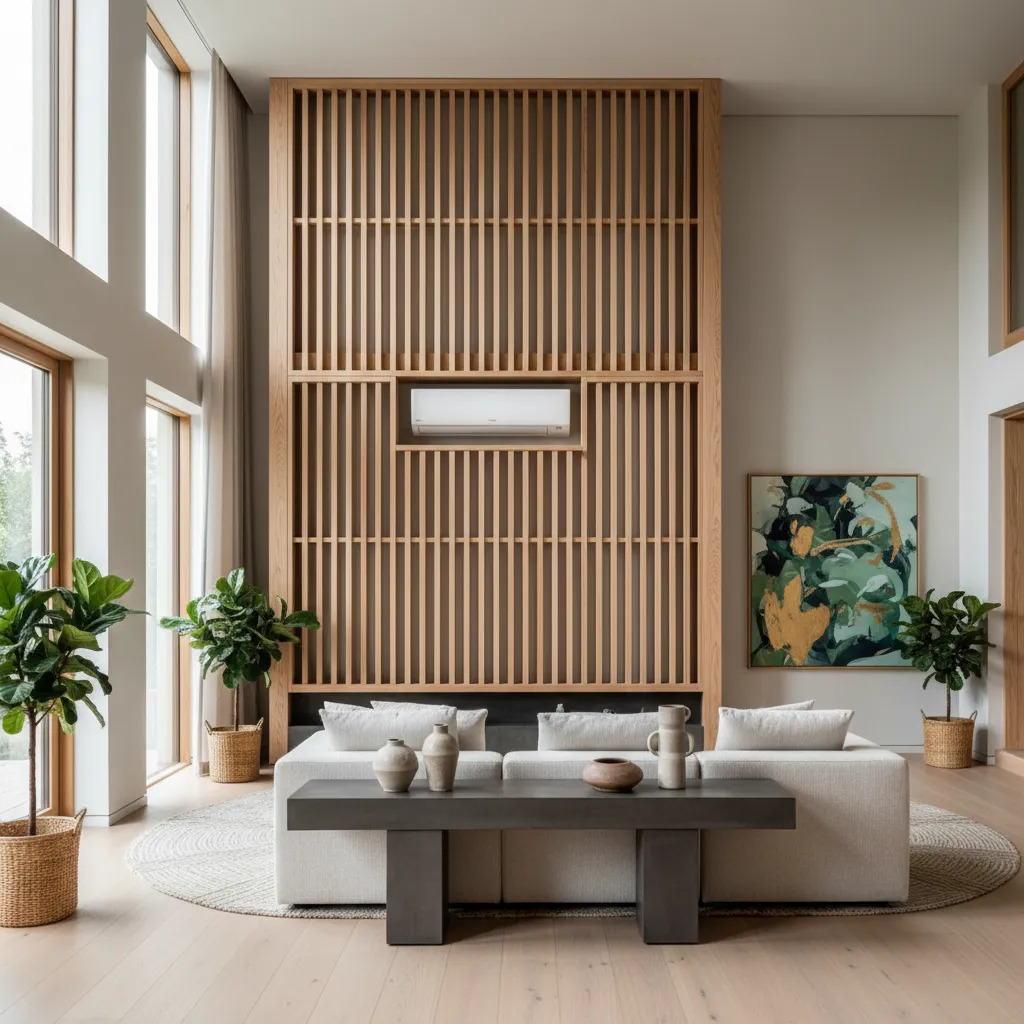
A slatted wood cover transforms a bulky plastic unit into a curated architectural feature. It blends raw wood textures with functional design.
The horizontal lines of the slats create a sense of movement. This visual trick makes the ceiling feel higher and the room more expansive.
Design is where beauty meets necessity, turning everyday appliances into quiet statements of style.
Selecting the Right Wood and Finish
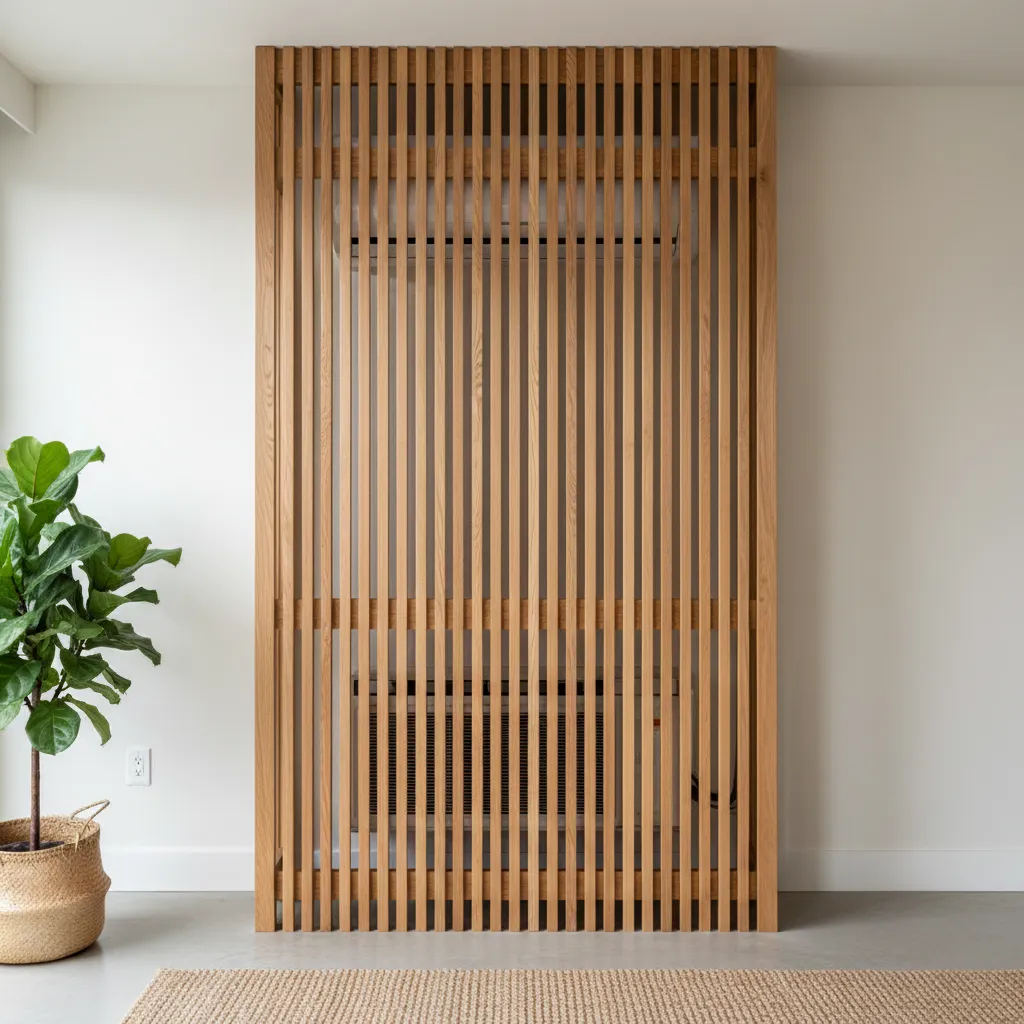
Using warm oak or rich walnut adds organic warmth to the space. These materials soften the technical look of the air conditioning hardware.
You can easily integrate this project into your latest modern living room decor ideas for a high end look.
For a minimal vibe, leave the wood raw and matte. For a more formal atmosphere, a dark stain adds a sense of luxury and depth to the wall.
Ensuring Optimal Airflow and Function
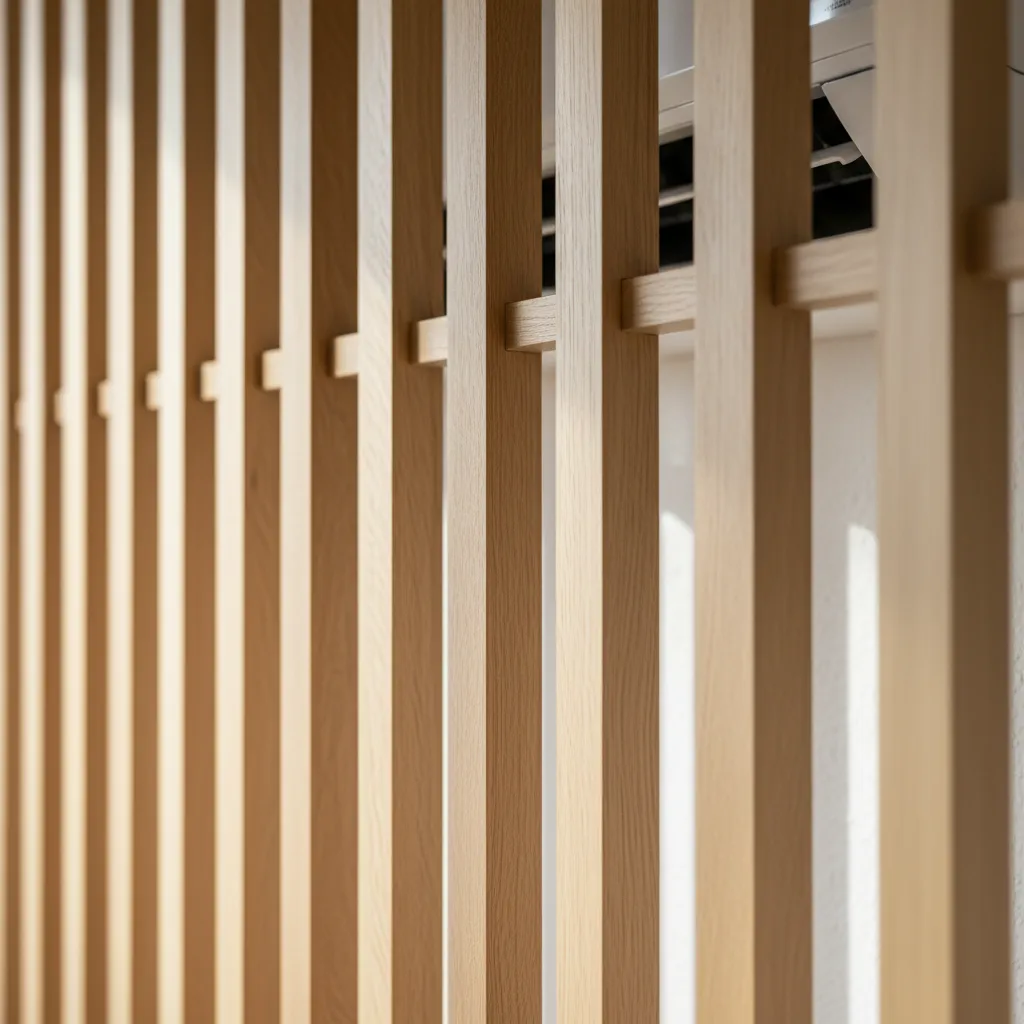
Spacing is the key to maintaining efficiency. Ensure a gap of at least one inch between each wood slat to allow for maximum air intake.
Proper ventilation prevents the system from overheating. It also ensures the remote sensor remains responsive to your temperature settings.
Airflow is the most critical consideration when building an AC cover. Without it, the unit will work harder and fail sooner.
Deane Biermeier, The Spruce
Restricting airflow can increase energy consumption by up to 15 percent. This makes the precision of your slat placement vital for your budget.
These covers work beautifully as living room ideas on a budget because they use affordable lumber.
Essential Materials for Your DIY Project
- Selection of Wood: Use pine for painting or oak for a natural, stained finish.
- Wood Glue: High strength adhesive ensures the slats remain perfectly aligned over time.
- Finish Nails: Use a brad nailer for clean, nearly invisible attachment points.
- Magnetic Latches: These allow you to remove the front panel easily for monthly filter cleaning.
- Level Tool: Essential to ensure the horizontal lines do not slope against the wall.
This design improves the spatial flow of your room. It hides the mechanical clutter while providing a sturdy surface for light decor items.
Mount the frame using heavy duty anchors. This ensures the weight of the wood does not damage the drywall or the cooling unit itself.
Designer’s DIY Edge
- Use a consistent spacer block during assembly to ensure every gap is perfectly uniform for a professional, high-end finish.
- Apply your stain or sealant to the individual slats before mounting them to the frame to prevent unsightly drips and ensure full coverage in hard-to-reach crevices.
- Install magnetic touch latches to make the front panel easily removable, allowing for effortless monthly filter maintenance without the need for tools.
Apply a Color-Matched Vinyl Wrap for a Low-Profile Blend
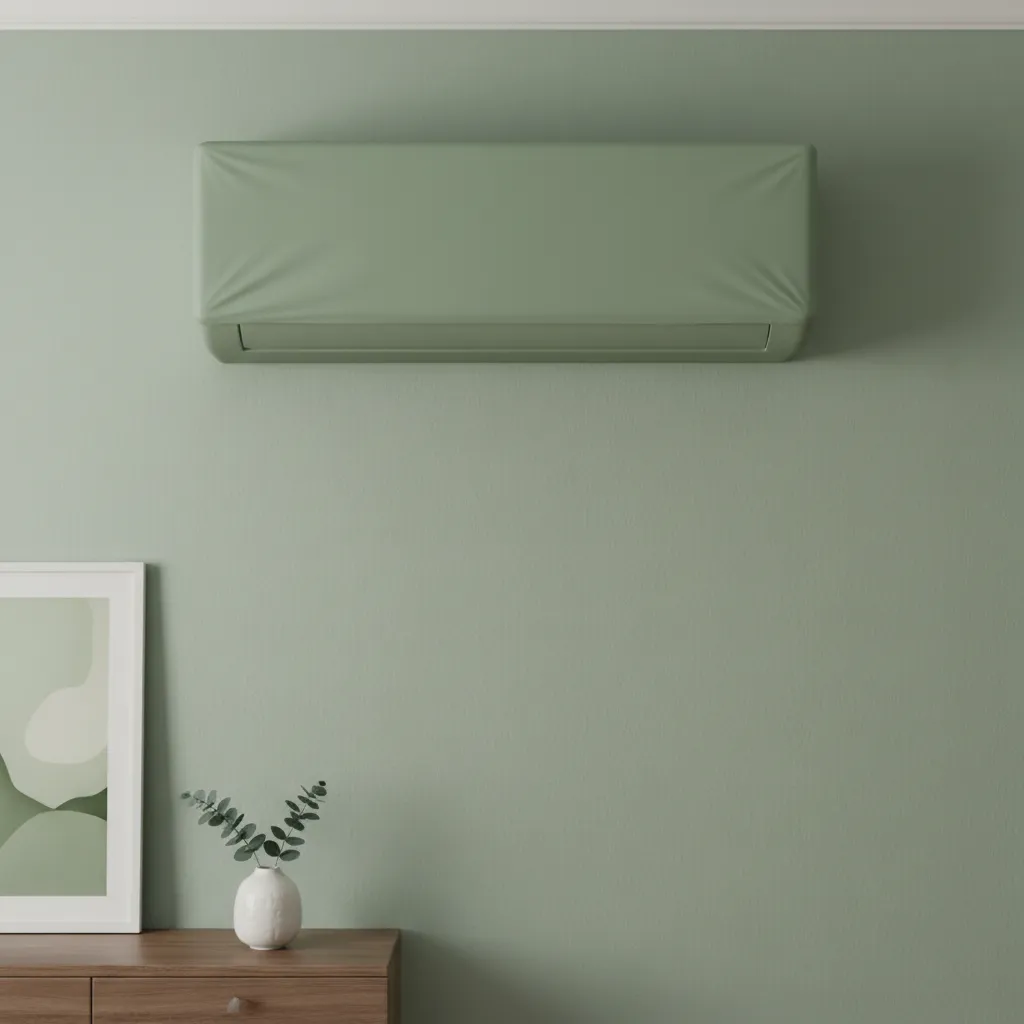
Vinyl wraps are high-quality adhesive films. They provide a heat-resistant surface that works perfectly for modern air conditioning units.
This method is ideal because it does not block airflow. It keeps the unit efficient while improving the room’s overall spatial flow.
True elegance is found in the details you don’t see. Wrap your technology to let your style breathe.
A velvety matte wrap absorbs light beautifully. It complements the warm ambient glow of your bedside lamps or overhead lighting fixtures.
For homes with paint color matching for rooms with limited natural light, a custom vinyl tone is essential.
Selecting Your Vinyl Texture and Finish
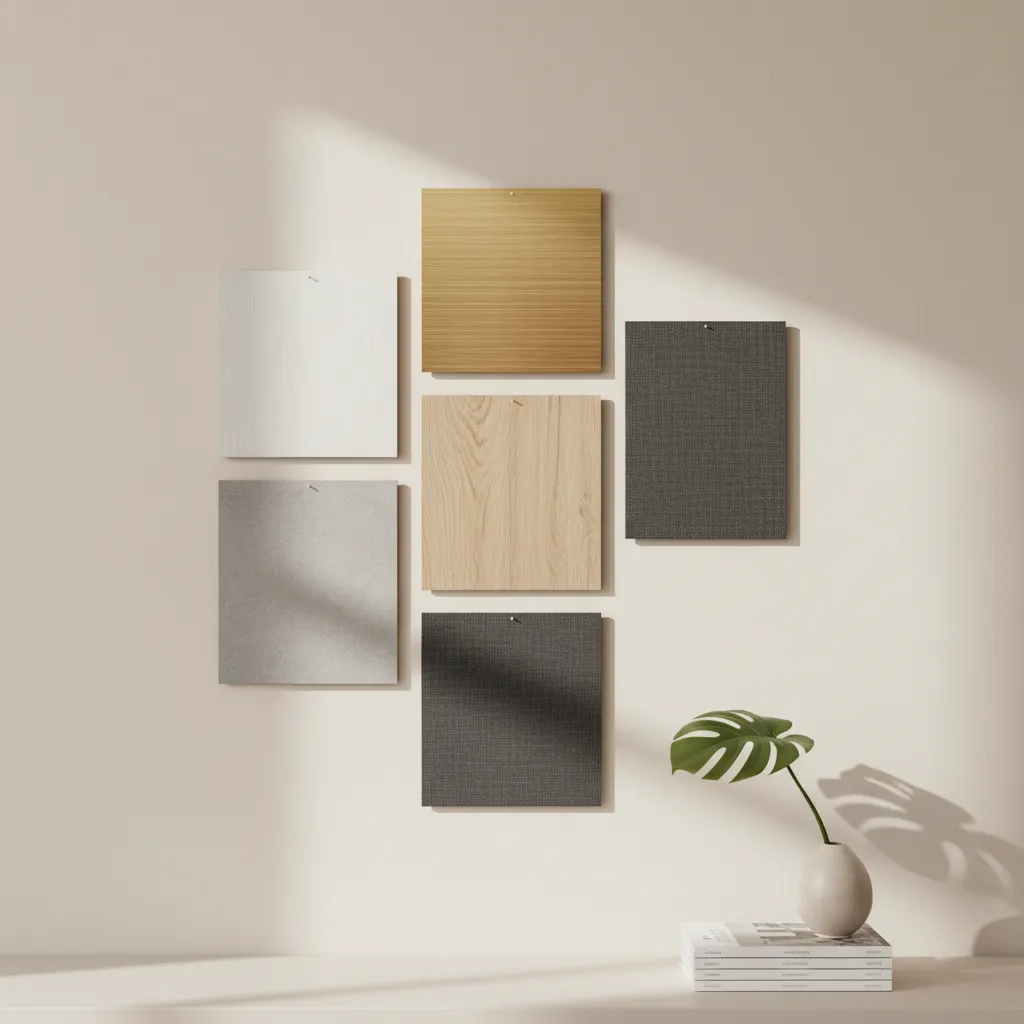
Using a matte finish helps prevent light reflections. This ensures the unit stays a quiet element rather than a shiny distraction.
This DIY project is renter-friendly and easy to remove. It allows for creative textures like brushed brass or organic raw wood grain.
Treat your appliances like part of the wall. Using a matching wrap or paint creates a seamless visual line that keeps the focus on your decor.
Nate Berkus, Architectural Digest
If you are looking for more 12 chic DIY summer home decor ideas for a fresh refresh, wrapping your AC is a great start.
Key Steps for a Flawless Application
Applying the film requires a sharp knife and patience. Be careful not to cover the remote sensor or the air intake vents during the process.
- Clean the Surface: Remove all dust and oils with rubbing alcohol for the best adhesion.
- Measure Twice: Cut the vinyl slightly larger than each panel to ensure full coverage.
- Use Heat: A hair dryer helps the vinyl stretch around the curved edges of the unit.
- Squeegee Bubbles: Start from the center and move outward to create a smooth, professional finish.
The thin film preserves the unit’s slim profile. Unlike bulky wooden covers, it maintains the airy and minimal vibe of a contemporary living space.
Start with a thoroughly cleaned surface to ensure the adhesive bonds. This small effort prevents the edges from peeling over time.
The Seamless Camouflage Guide
- Test your remote sensor before finalizing the wrap; use a small hole punch to keep the infrared receiver clear without compromising the look.
- Opt for a felt-tipped squeegee during application to avoid micro-scratches on matte vinyl, ensuring a high-end, gallery-ready finish.
- Take a physical paint swatch of your wall to a specialized vinyl supplier to ensure an exact color match rather than relying on digital screen previews.
Integrate the Unit into a Custom Surround Bookshelf
Integrating a split AC unit into a custom surround bookshelf is a masterclass in spatial flow. It transforms a plastic block into a curated library.
Using warm oak or walnut textures adds an organic touch to the room. This makes the sleek unit feel grounded and less like a modern intrusion.
This approach improves usability by adding valuable storage. You can see how this works in 15 modern office decorating ideas for more inspiration.
A well-designed bookshelf does more than hold books; it integrates the necessary into the beautiful.
Maximizing Vertical Storage and Style
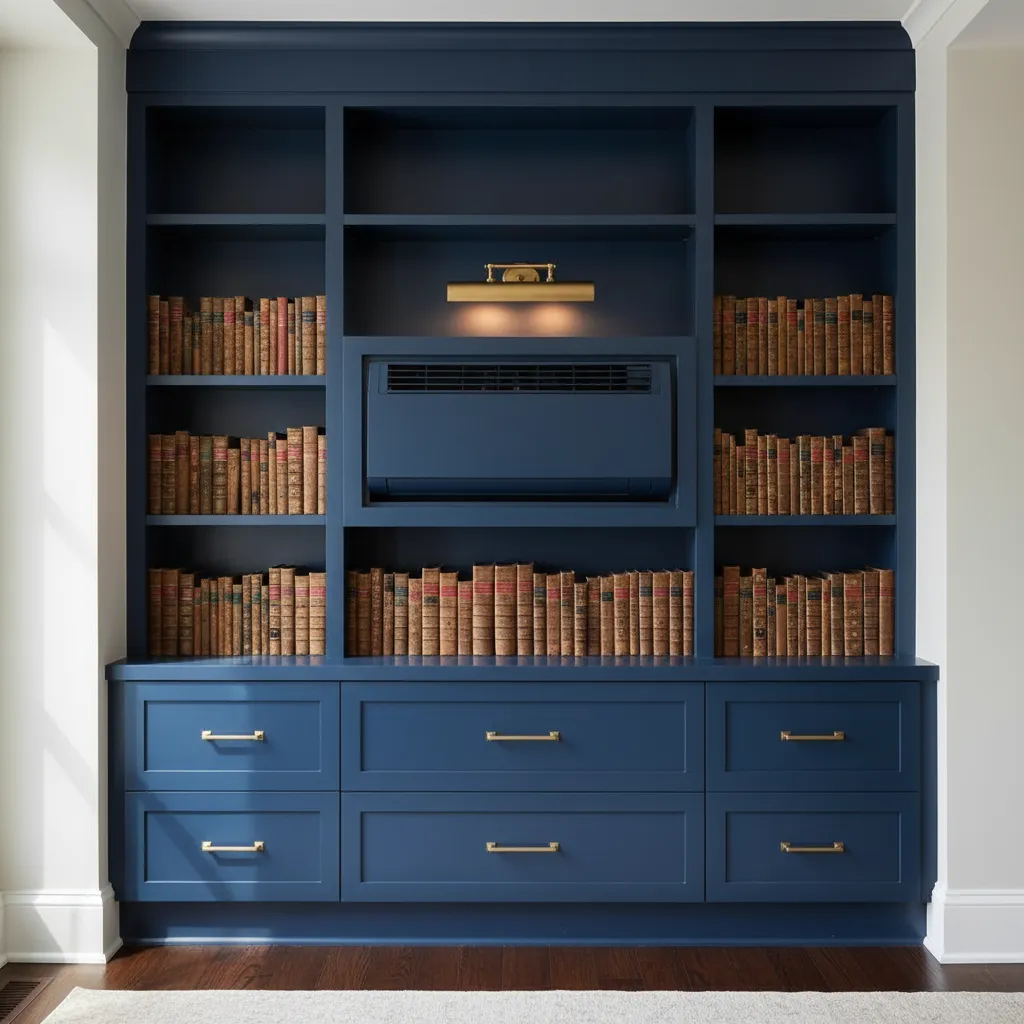
To maintain a zen atmosphere, ensure the unit sits at the top of the shelf. This keeps the line of sight clear for lower decor vignettes.
Warm ambient lighting from a picture light above the unit creates a soft glow. This draws the eye to your curated book collection instead.
For more ideas on how to organize custom units, explore smart closet organization ideas for better spatial flow in your living area.
When you can’t hide something, design around it so it looks like it was meant to be there from the very beginning.
Emily Henderson, Style by Emily Henderson
Technical Needs for Airflow
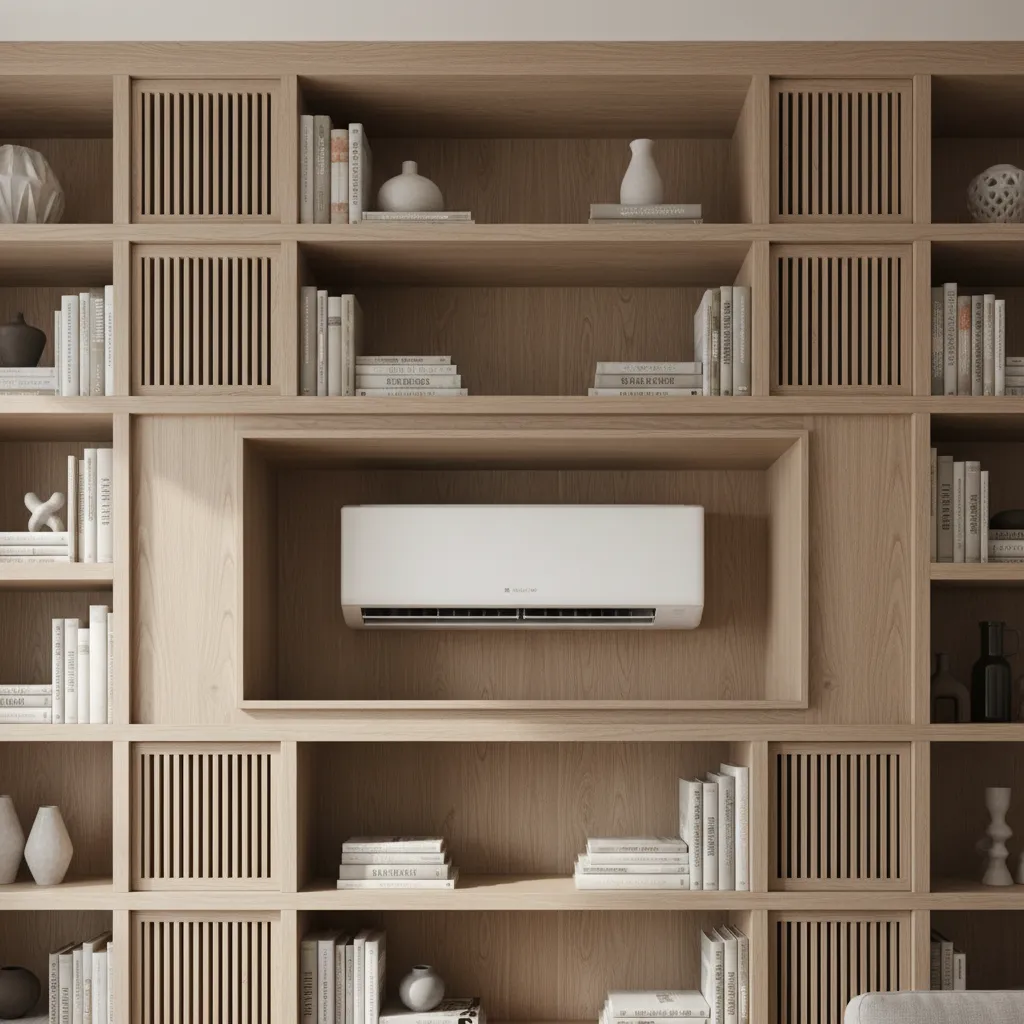
Functionality is key when building around an appliance. You must allow for proper air intake and output to avoid damaging the internal motor.
Using a lattice or slatted design on the cabinet door can hide the unit while allowing air to move freely throughout your living space.
- Maintain a 6 inch gap at the top for air intake.
- Keep at least 12 inches of clearance below the unit.
- Use breathable materials like cane or perforated metal.
- Ensure the remote sensor remains visible for easy use.
Selecting the right finish is essential. A matte paint matching the unit’s casing creates a seamless look that helps the machinery disappear.
| Feature | Design Choice | Benefit |
|---|---|---|
| Material | Raw Oak or Ash | Adds organic warmth |
| Lighting | LED Strip or Sconce | Shifts the focal point |
| Frontage | Slatted Wood Doors | Optimizes airflow |
Proper spatial flow ensures the room feels airy and minimal. Avoid overcrowding the shelves near the unit to prevent a cluttered aesthetic.
The Designer’s Blueprint
- Paint the AC unit’s plastic casing with a specialty matte paint that matches your cabinetry to create a seamless, built-in appearance.
- Install a magnetic slat panel in front of the unit for effortless access during filter cleanings without compromising the sleek bookshelf aesthetic.
- Use an infrared (IR) repeater if your shelving is deep to ensure your remote works perfectly even when the unit is partially recessed into the custom surround.
Install a Breathable Decorative Valance with Fabric Insets
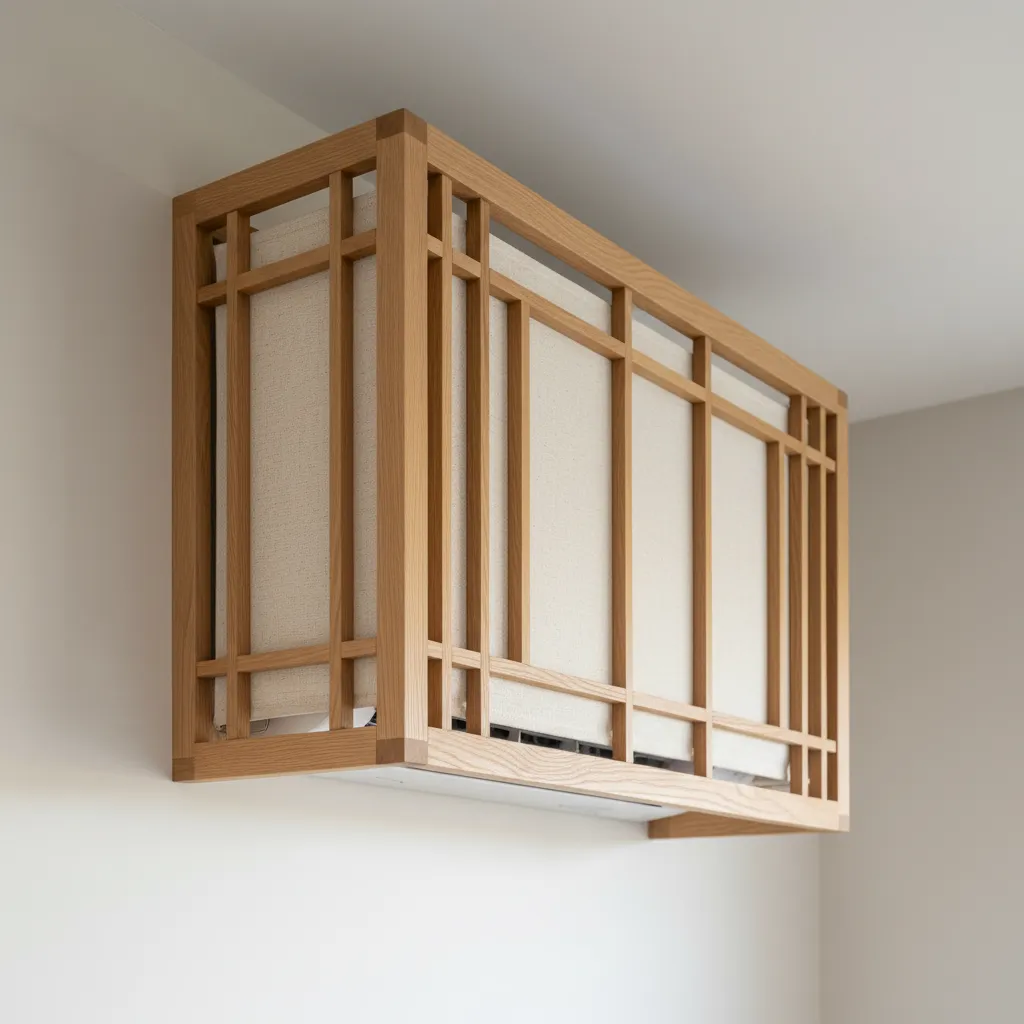
Installing a breathable valance is a smart way to hide an AC unit. It uses a frame to create a polished, built-in appearance.
The frame typically features a wood or metal border. The center is filled with fabric to soften the hard edges of the unit.
This design choice improves spatial flow by removing a visual eyesore. It makes the wall feel more intentional and curated.
Proper ventilation is the most important consideration when camouflaging your indoor HVAC units.
Anne-Marie Brunet, Houzz Interior Designer
Best Fabrics for Airflow
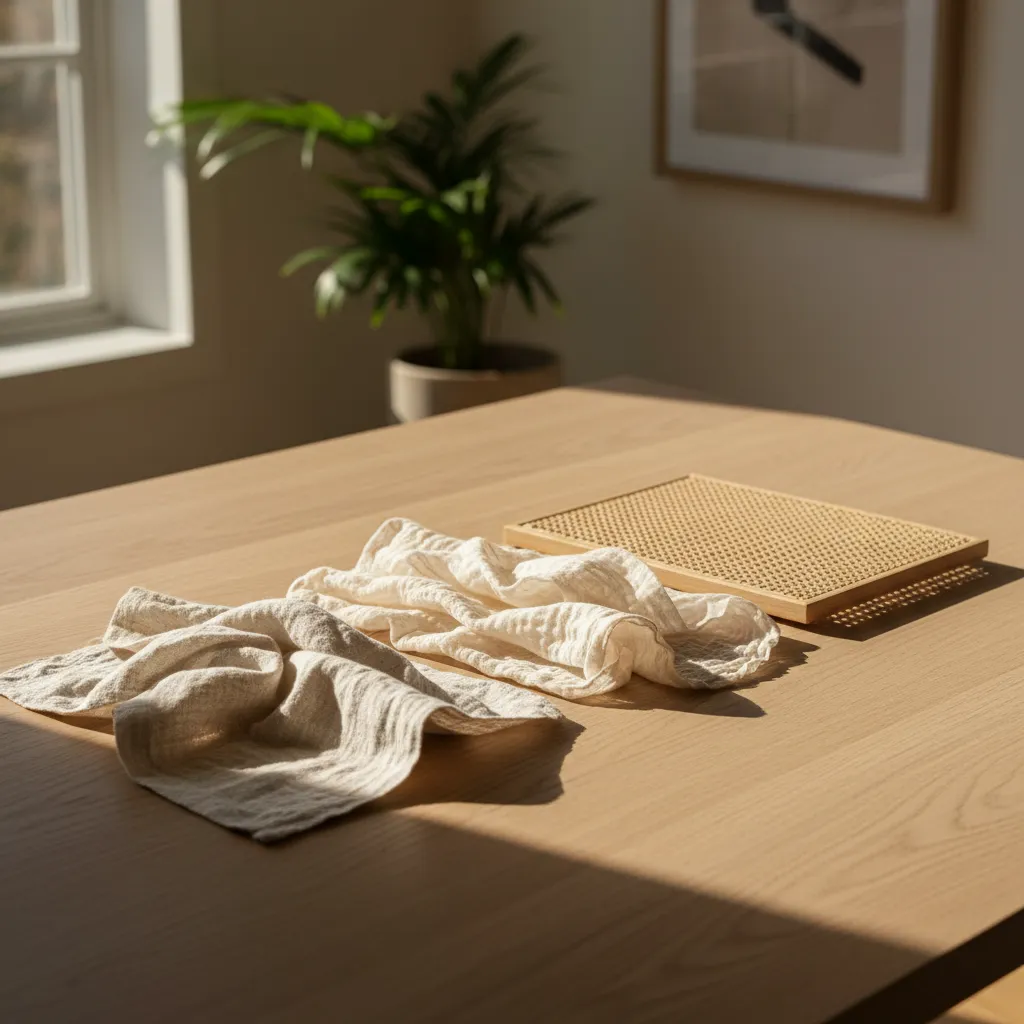
The key is choosing open-weave materials. Linen or thin cotton allow air to circulate freely, preventing any mechanical issues.
When selecting a fabric, consider how it matches your decorative tapestries to maintain a cohesive look.
| Fabric Type | Breathability | Style Profile |
|---|---|---|
| Linen | High | Organic and Airy |
| Cotton Gauze | Very High | Casual and Soft |
| Cane Webbing | Maximum | Modern and Scandi |
This method is similar to choosing blinds vs curtains for their thermal and aesthetic properties.
Design is successful when the functional elements of a room are disguised as beautiful textures.
Installation Tips for Longevity
Ensure there is at least a two-inch gap between the unit and the frame. This space allows for ambient lighting effects if desired.
- Use removable panels for easy filter cleaning.
- Select a finish that matches your existing molding.
- Mount the valance using sturdy wall brackets.
By blending textiles with a solid frame, you create a sophisticated vignette. This balance keeps the room feeling warm and inviting.
Pro Styling Secret
- Use heavy-duty Velcro strips to attach your fabric insets; this makes them easy to remove for regular washing and simplifies access to the AC filter.
- To check if a fabric is breathable enough, hold it up to a light source; if you can see pinpricks of light through the weave, it is perfect for maintaining HVAC efficiency.
- Add a battery-powered LED light strip inside the top of the frame to turn your camouflaged unit into an elegant ambient light feature.
Designing for Discreet Comfort
Integrating a split AC unit into your decor doesn’t have to be a chore. With the right materials, you can blend technology with timeless style effortlessly.
Remember that airflow is the priority. By respecting clearance rules and using porous textures, you ensure your home stays cool and looks stunning simultaneously.
Take the leap and transform that plastic eye-sore into a bespoke design feature. Your living space deserves a cohesive look that reflects your personal taste.
Design Dilemmas Solved
Yes, but use plastic-safe spray paint. Ensure the vents remain unblocked and the unit is unplugged. Painting helps the casing vanish into the background color.
Only if airflow is restricted. Use slats, rattan, or mesh to allow air to move freely. Always maintain the manufacturer’s recommended clearance distances.
Maintain your regular schedule. Ensure your cover is hinged or removable so you can access filters monthly without any hassle or heavy lifting.
Lightweight wood like pine is ideal. Rattan and cane webbing are also popular for their natural look and excellent breathability in warm climates.
