
Table of Contents
- 1. Upgrade to Multi-Purpose Acrylic or Sleek Wooden Furniture Crates
- 2. Tuck the Crate Under Stairs or Nestled Between Modern Shelving Units
- 3. Camouflage with Minimalist Room Dividers and Large Indoor Floor Plants
- 4. Seamlessly Blend with DIY Built-In Cabinets or Custom Sleek Slipcovers
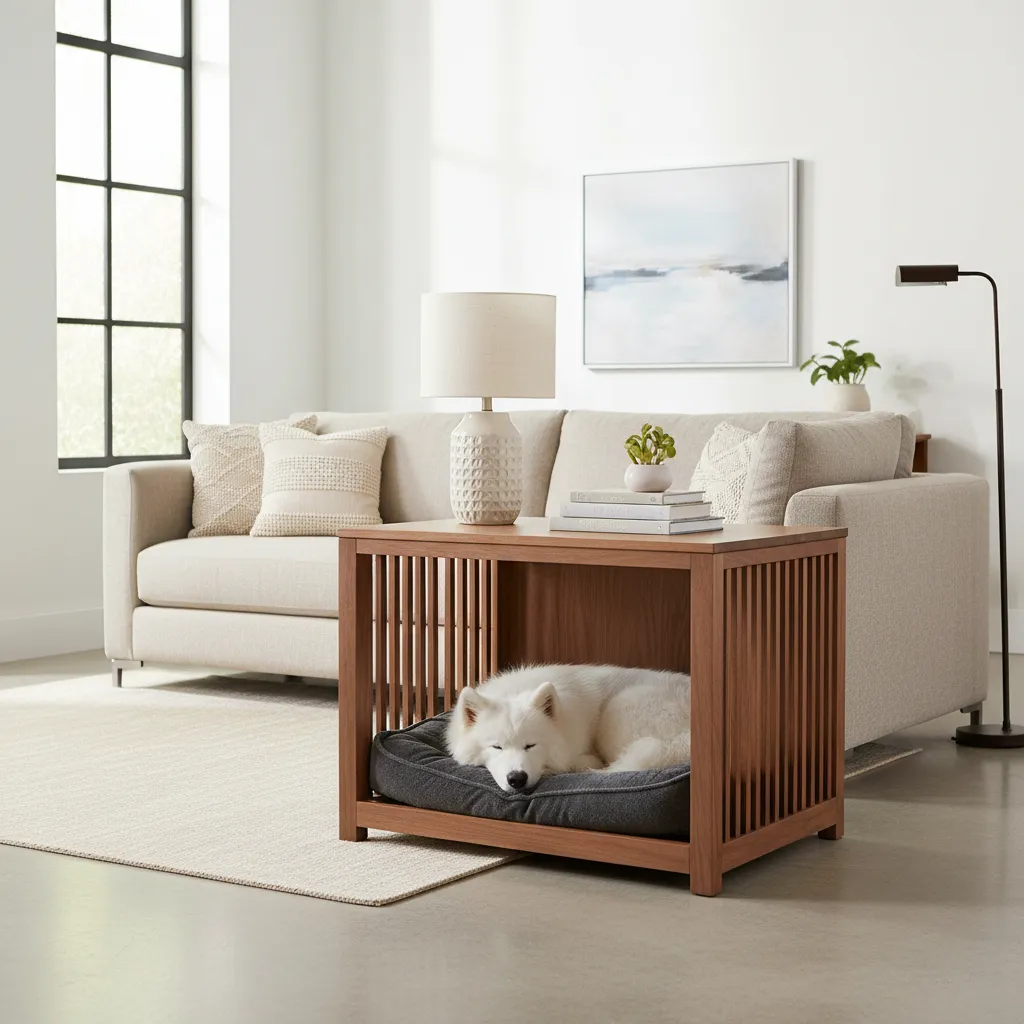
- 5. Craft a DIY Mid-Century Slatted-Wood Cover for Safe Airflow, Temperature Regulation, and Visibility
- A Stylish Sanctuary for Your Best Friend
- Design Dilemmas: Pet Edition
Welcoming a pet into your home should never mean sacrificing your design aesthetic. A bulky metal crate often feels like an eyesore in a modern living room, yet it remains a vital sanctuary for your companion. Integrating these functional pieces requires a thoughtful balance between high-end style and everyday utility.
You can easily turn a standard kennel into a sophisticated design element by treating it as a piece of furniture. Consider repurposing a sturdy console table or building a custom wooden frame to surround the wire mesh. These small adjustments create a cohesive look that honors your home’s architecture while providing a cozy retreat for your dog.
Our guide explores practical strategies to hide your crate in plain sight using textiles, clever placement, and stylish furniture swaps. From budget-friendly DIY hacks to elegant designer solutions, you can achieve a space that is both pet-friendly and visually stunning. Let us help you blend comfort with contemporary flair.
1. Upgrade to Multi-Purpose Acrylic or Sleek Wooden Furniture Crates
Swap the ugly wire cage for a piece that actually enhances your living space. A beautiful furniture crate easily doubles as a functional side table.
Imagine warm oak textures or crystal clear acrylic blending effortlessly into your curated room. This instantly improves your spatial flow and style.
By choosing a solid surface, you gain a brand new spot for ambient lighting or books. It maximizes your floor plan while keeping your pet cozy.
Upgrading standard wire kennels is one of the easiest modern living room decor ideas you can try today. It completely transforms your space.
Sleek Wood Finishes for Organic Warmth
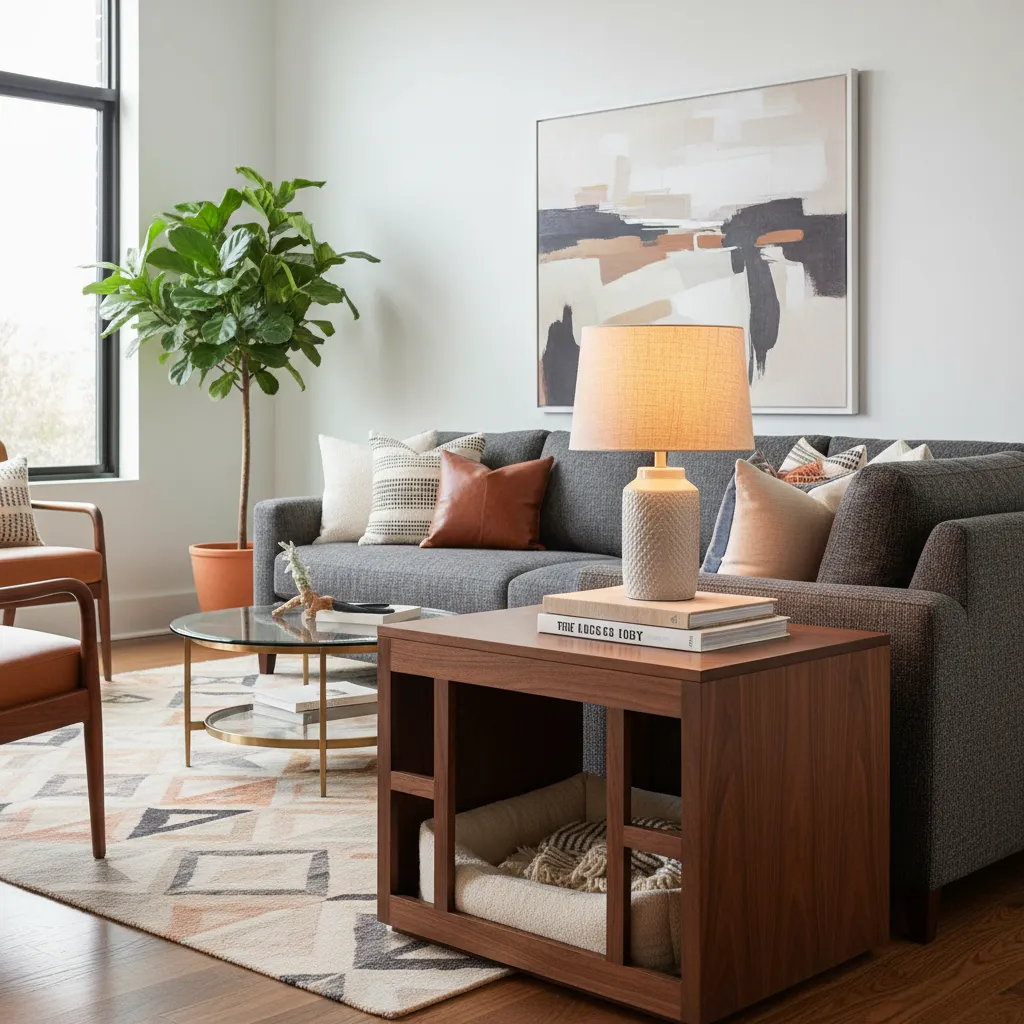
Wooden crates bring an organic touch to your palette. Walnut or light ash finishes work beautifully with mid-century or minimalist aesthetics.
The solid top creates a perfect vignette opportunity. Add a textured linen lamp or trailing greenery to make it a true statement piece.
Weathered finishes look amazing next to soft textiles. They blend effortlessly with farmhouse living room ideas to maintain a cozy hygge vibe.
Incorporating pet crates into your home design by choosing pieces that mimic your existing furniture ensures a seamless, cohesive look.
Kathy Barnes, The Spruce
Clear Acrylic for a Minimalist Aesthetic
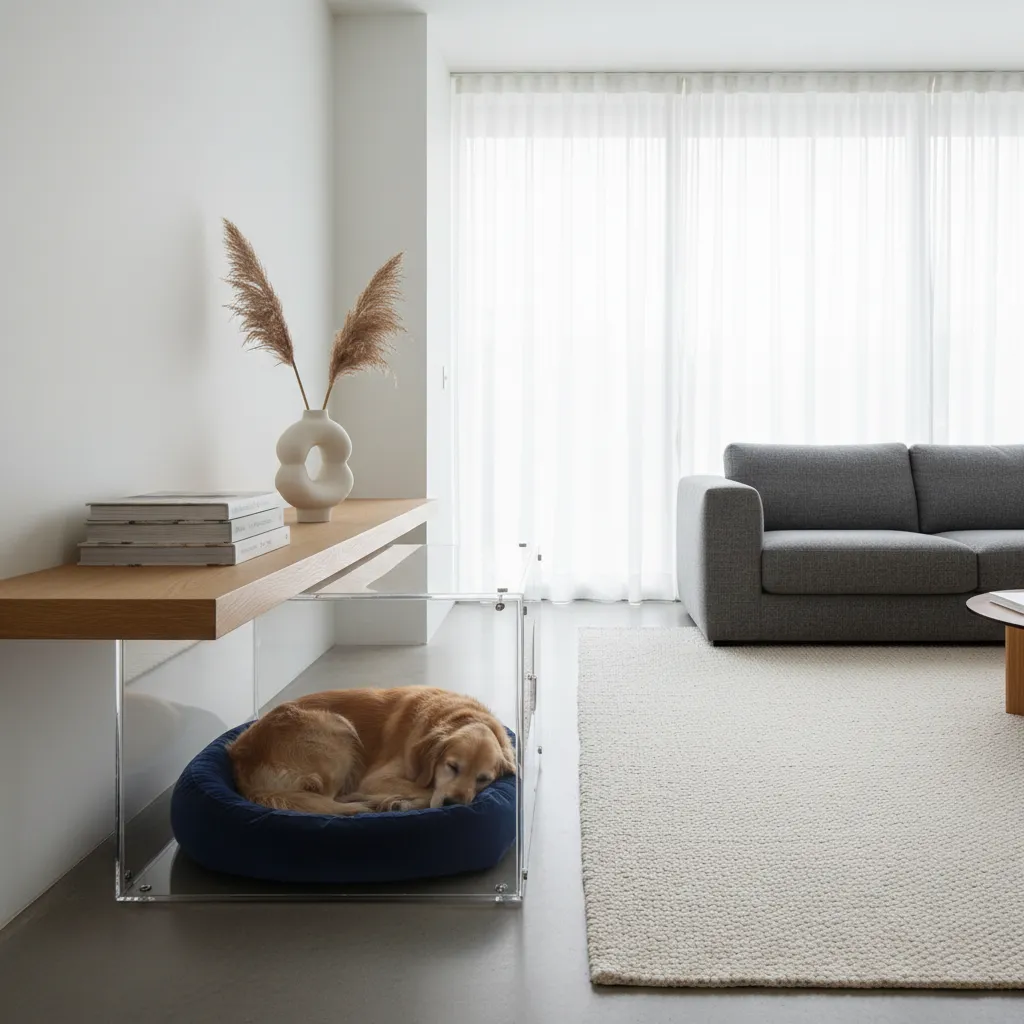
If your space leans toward minimalism, a lucite or acrylic kennel is a brilliant choice. It practically disappears right into the background.
This transparent material keeps sightlines completely open. It creates an airy atmosphere while allowing your dog to see their surroundings.
Pair a clear crate with a plush velvet mat inside. This beautifully contrasts the sleek finish with a warm texture your pet will absolutely love.
When your pet’s sanctuary doubles as a stunning side table, you elevate the entire atmosphere of your home.
| Crate Material | Best Decor Style | Key Benefit |
|---|---|---|
| Natural Walnut Wood | Mid-Century Modern | Provides a solid surface for styling a vignette. |
| Clear Acrylic | Minimalist Contemporary | Keeps visual sightlines open for an airy feel. |
| Distressed Oak | Rustic Farmhouse | Adds warm organic texture to your color palette. |
Designer Styling Secrets
- Treat your wooden crate like a true side table by adding a decorative tray on top to protect the wood finish from water rings or plant spills.
- Soften the ultra-modern look of a clear acrylic kennel by sliding in a plush velvet or faux fur pet bed for a luxurious pop of texture.
- Maximize your living room’s floor plan by positioning your furniture crate exactly where an end table would naturally go, such as tucked beside your sofa.
2. Tuck the Crate Under Stairs or Nestled Between Modern Shelving Units
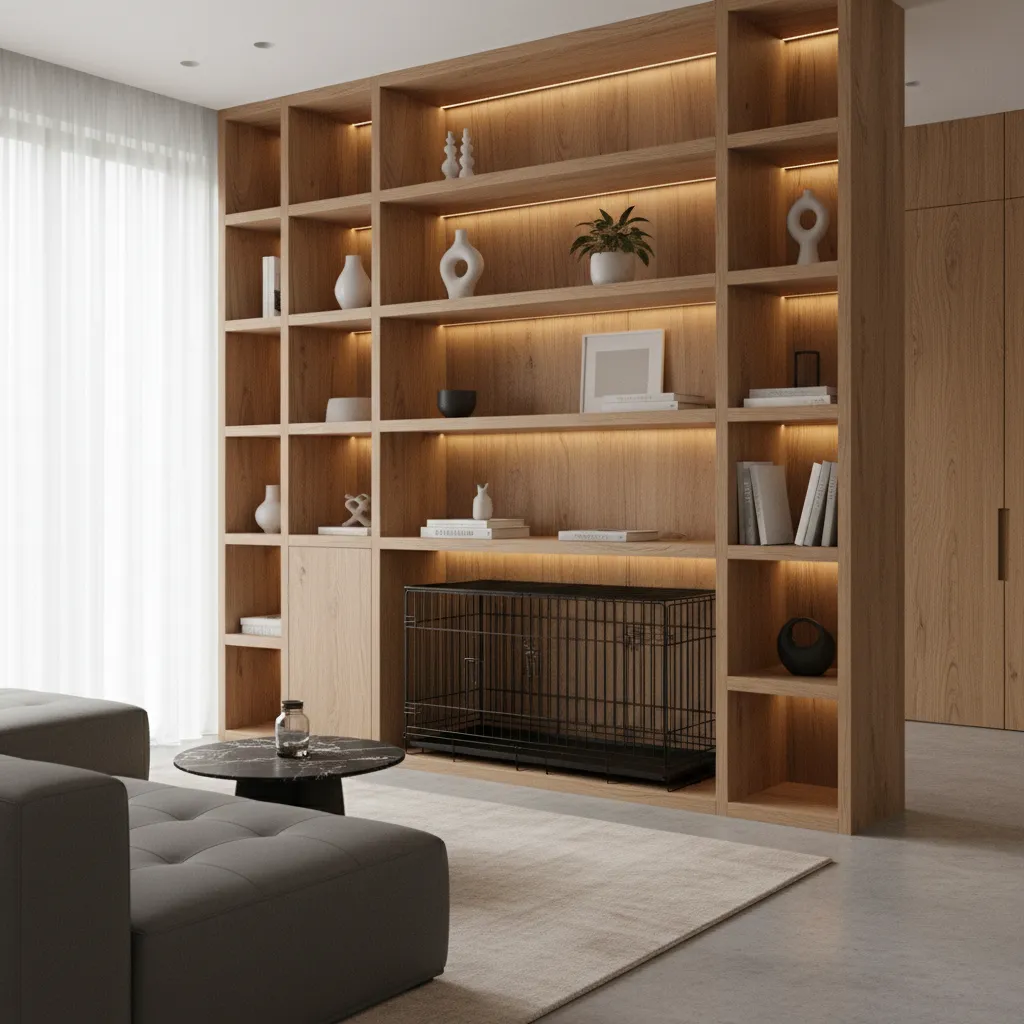
Maximizing awkward architectural nooks is a brilliant design strategy. The empty spot beneath your staircase offers prime real estate.
Transforming this dead zone into a cozy pet retreat improves your room spatial flow. It effortlessly keeps the bulky crate off the main floor.
If you lack a staircase, nestled built-in shelves work beautifully. Flank a matte black crate between tall raw oak shelving units.
If you have the space, a custom built-in crate is the most elegant solution. It utilizes otherwise wasted space and gives your dog a quiet retreat.
Editorial Team, Martha Stewart
This placement creates a stunning visual focal point. Add warm ambient lighting above the crate using LED strips for a curated, high-end look.
Integrating the crate into cabinetry makes it feel highly intentional. You can even adapt living room ideas on a budget using modular shelving.
Surround the crate area with trailing pothos plants and brushed brass accents. This softens the rigid metal bars and adds organic texture.
Great design hides the functional and highlights the beautiful. Turn a simple dog crate into a bespoke architectural feature.
How to Style a Built-In Crate Nook
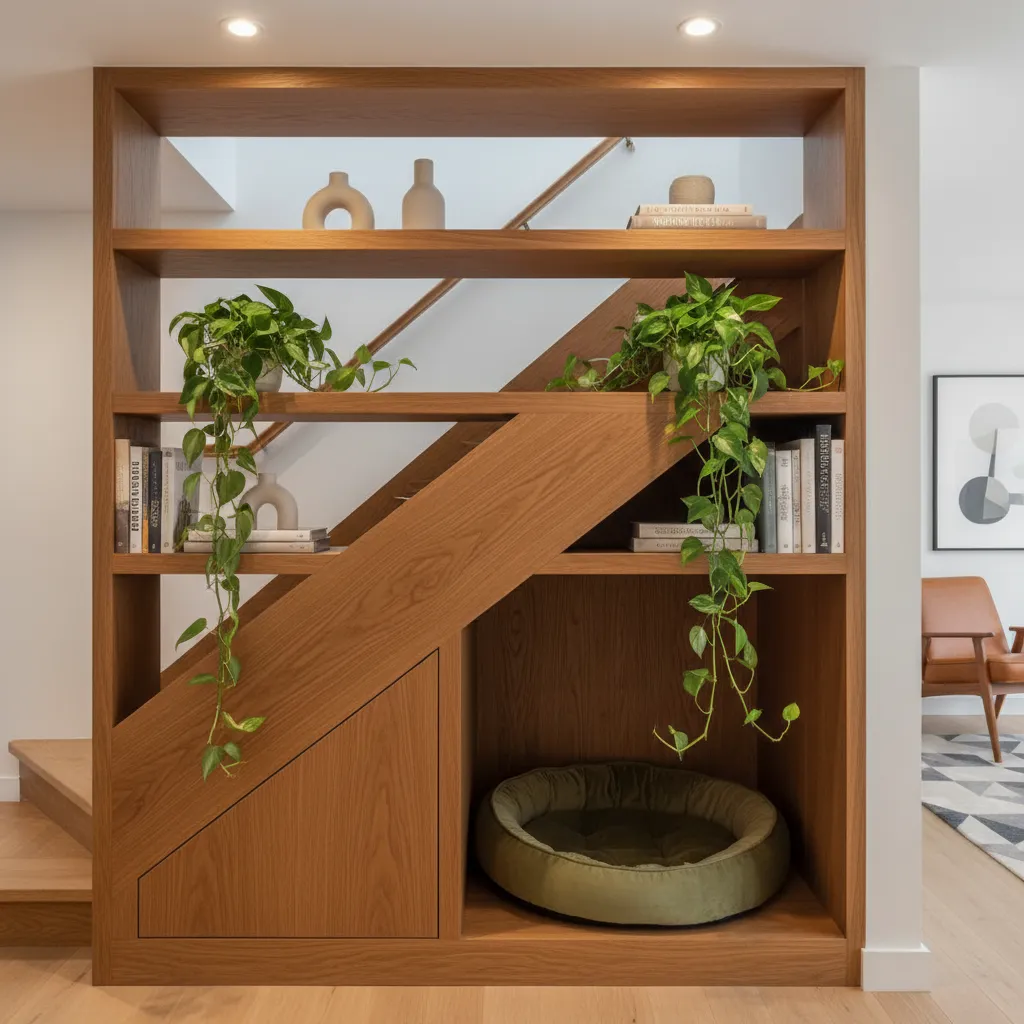
Creating a built-in look requires attention to detail. Blending the crate with your surrounding decor ensures a cohesive atmosphere.
- Prioritize Airflow: Always leave at least two inches of breathing room between the crate and the shelving walls.
- Coordinate Finishes: Match the crate finish to your room hardware. Spray paint standard wire to mimic wrought iron.
- Introduce Soft Textures: Layer a plush linen or crushed velvet bed inside to enhance the hygge vibe of the nook.
- Utilize Top Surfaces: Use the shelf directly above the crate to display a curated vignette of books and ceramics.
A hidden crate should never feel like a cage. By treating the surrounding shelving like luxury cabinetry, you elevate the entire room.
Designer Hack
- Install motion-activated LED adhesive strips along the inner ceiling of the nook for a warm, high-end glow that avoids the need for complex electrical work.
- Upgrade a standard wire tray by placing a custom-cut piece of quartz or polished wood on top of the crate to seamlessly extend your shelving’s surface area.
- Use matte-finish spray paint in charcoal or champagne gold on the crate bars to perfectly match your home’s existing cabinet hardware and fixtures.
3. Camouflage with Minimalist Room Dividers and Large Indoor Floor Plants
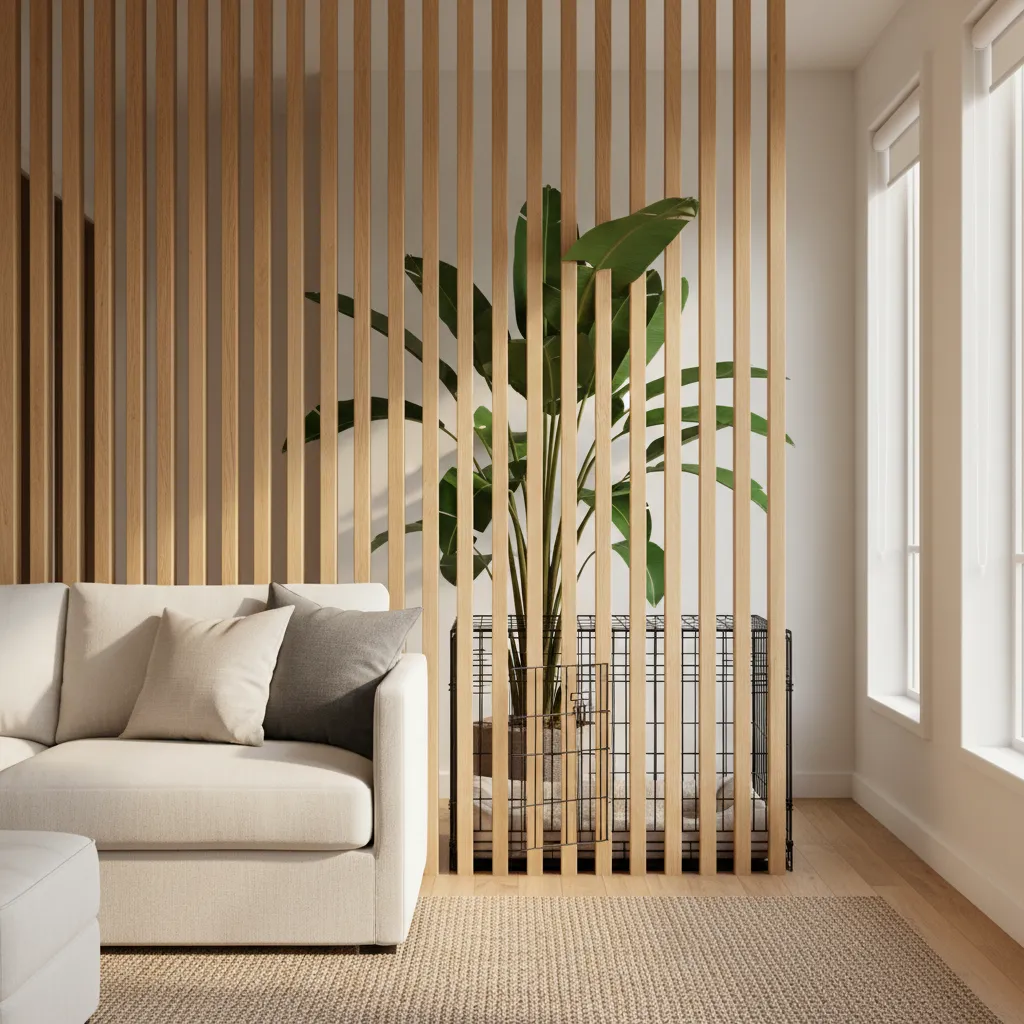
Integrating visual barriers is a brilliant way to conceal a pet cage while enhancing your home. Minimalist screens and lush greenery offer organic texture.
This approach improves spatial flow without making the area feel cramped. The open structure of a divider ensures your pet still enjoys proper ventilation.
Adding foliage is highly effective for visual camouflage. If you love green house living rooms interior ideas, potted plants easily mask harsh metal wires.
Choosing Minimalist Room Dividers
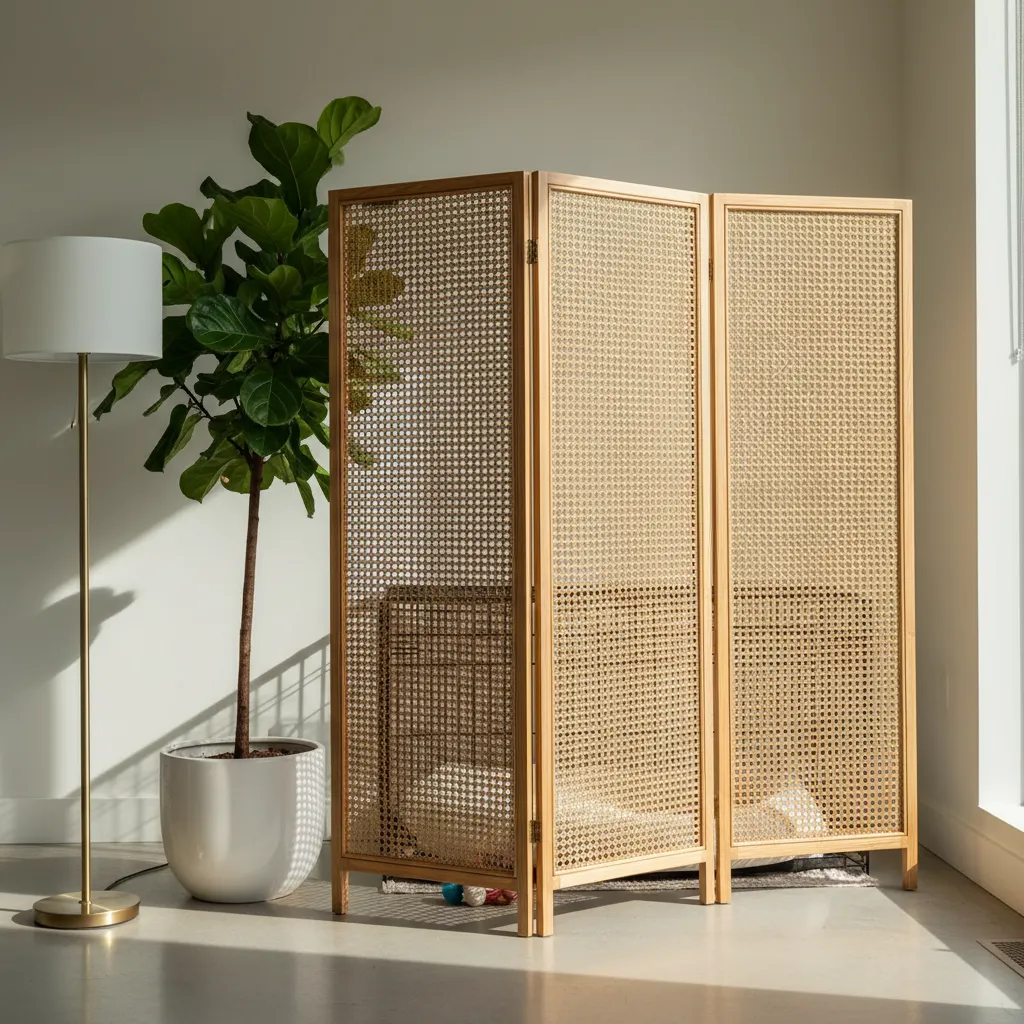
Select dividers made from natural materials like woven rattan or raw slatted oak. These finishes bring tactile depth and blend perfectly with modern decor.
A partially open design allows warm ambient glow to filter through. This prevents the corner from feeling like a dark box and keeps the crate well-lit.
Screens are a fantastic way to zone an open-plan living space or hide an unsightly element without blocking light.
Emma Sims-Hilditch, Homes & Gardens
Layering Large Indoor Plants
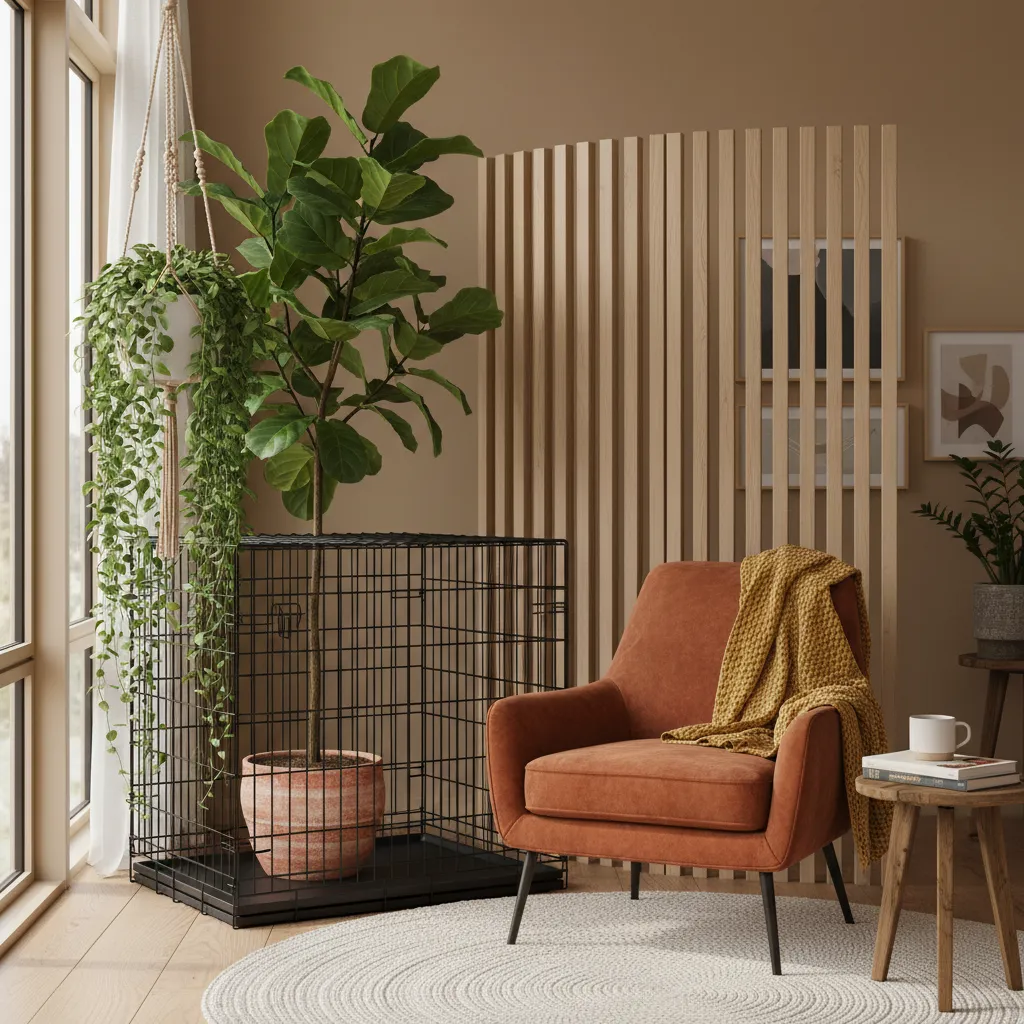
Positioning large potted greenery around the crate softens its rigid metal lines. This technique transforms a functional pet corner into a beautiful vignette.
If you want to create a cozy sanctuary, layering plants of varying heights is key. A tall floor plant acts as the main shield, while smaller pots add depth.
This visual trick is especially useful if you are exploring living and dining room combo ideas. Plants create natural borders in shared floor plans.
Safety is always the priority when placing greenery near your pet’s bed. Choose robust, non-toxic plants that thrive in ambient indoor lighting conditions.
- Parlor Palm: A leafy, tall option that creates a dense visual screen while being completely safe for curious dogs.
- Cast Iron Plant: Incredibly durable and low-maintenance, perfect for creating a lush ground-level barrier around the cage.
- Money Tree: Features a beautifully braided trunk and wide canopy, adding a sculptural focal point that draws the eye upward.
Organic textures and lush greenery can turn even the most functional pet corners into a beautiful design feature.
The Botanical Shield Strategy
- Use a folding screen with a slatted design to maintain maximum airflow while obscuring the cage from primary sightlines in the room.
- Layer your greenery by placing taller floor plants at the back and smaller, bushier plants on decorative stools to create a staggered, natural wall around the crate.
- Opt for heavy, stable ceramic or stone planters to ensure that any accidental bumps from your pet won’t tip over your living decor.
4. Seamlessly Blend with DIY Built-In Cabinets or Custom Sleek Slipcovers
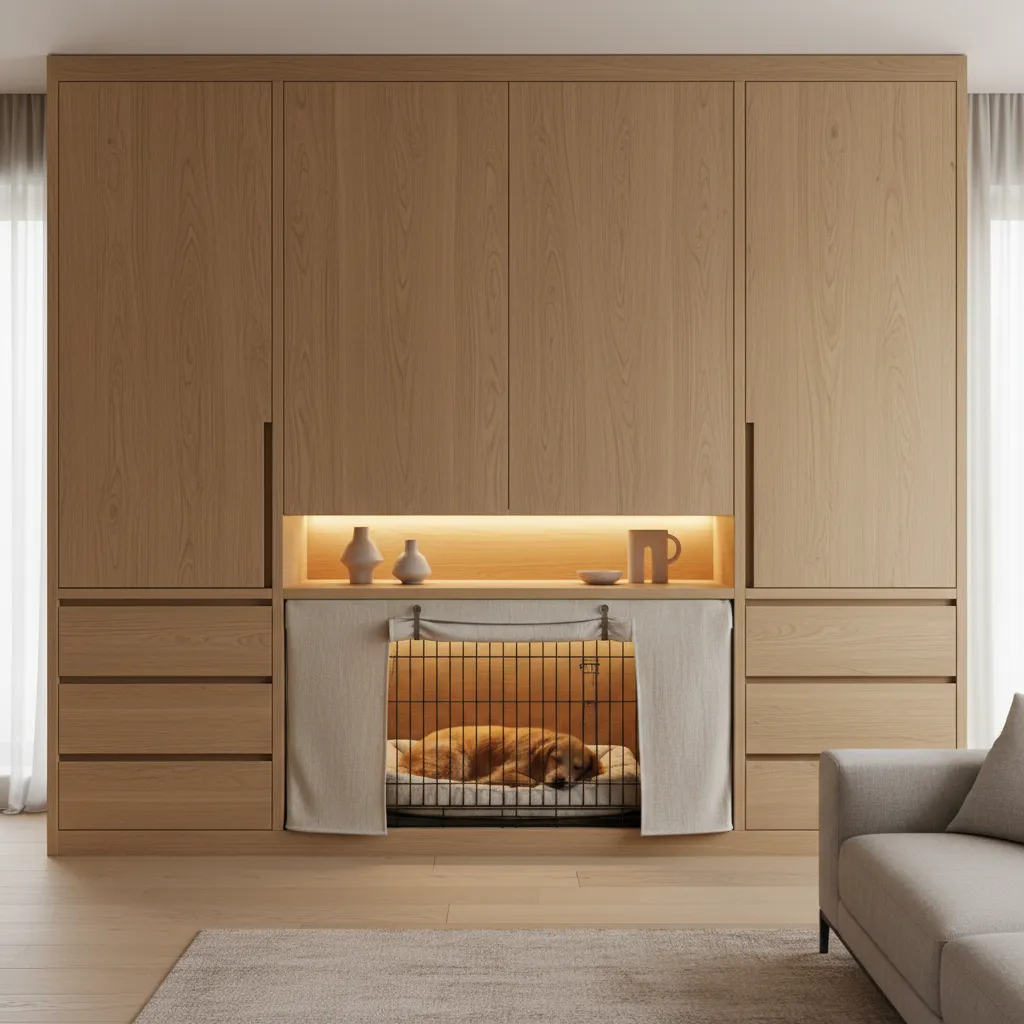
Custom built-in cabinets offer the ultimate seamless look for any home. They turn a bulky wire dog crate into a sophisticated architectural feature.
If built-ins feel too permanent, custom slipcovers provide a soft alternative. Tailored fabrics easily disguise metal bars and add soft texture.
Beautiful design and dogs are not mutually exclusive. Your home should reflect who you are and who you love, including your pets.
Vern Yip, Vern Yip Design Guide
Designing the Perfect Built-In
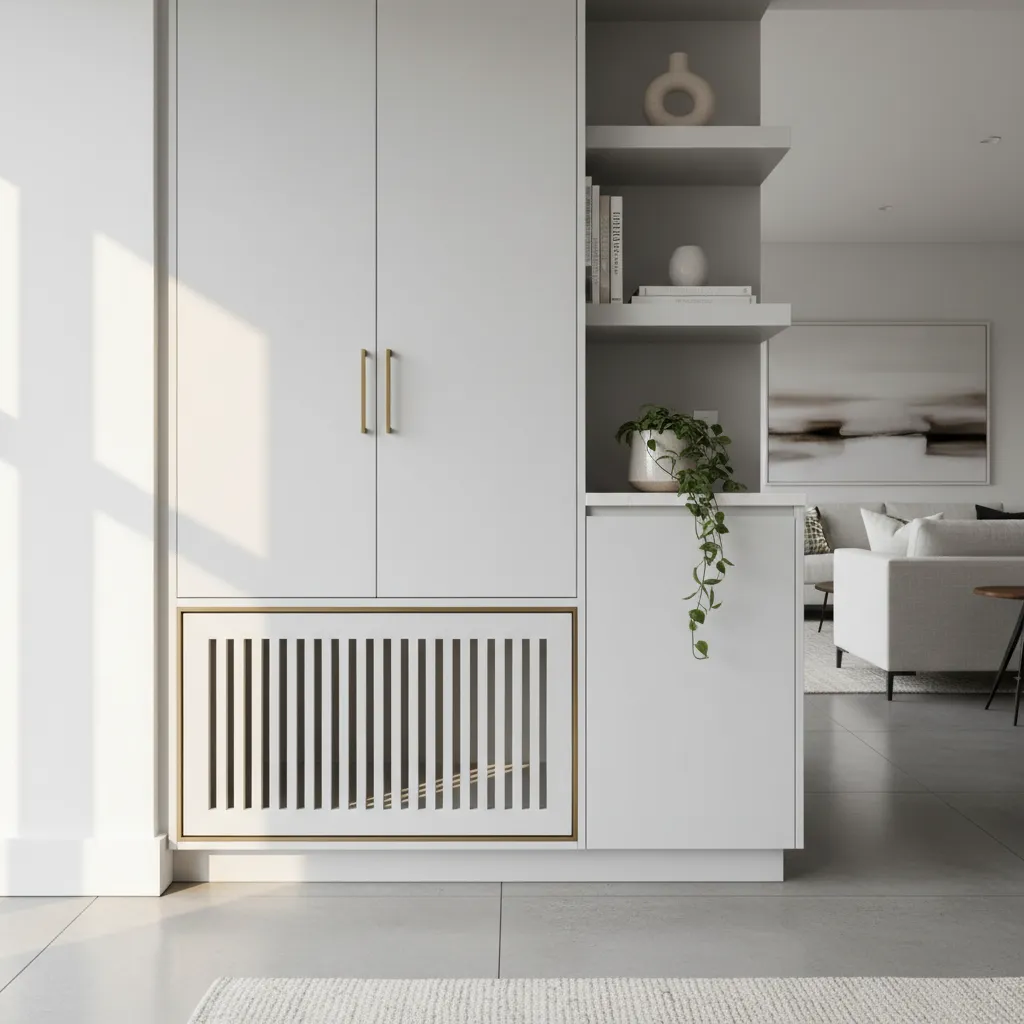
A custom DIY built-in cabinet maximizes vertical storage while grounding the room. It anchors the living space beautifully.
By dedicating the bottom section to your pet, you preserve valuable spatial flow. The crate simply vanishes into the woodwork.
Use raw oak or paint the wood to match your existing walls for a cohesive palette. Matte paint finishes work exceptionally well here.
This approach perfectly complements top interior design styles by keeping visual clutter completely hidden.
Built-ins also offer robust durability. They provide a sturdy top surface for styling your favorite curated vignettes or ambient lighting.
Elevating with Custom Slipcovers
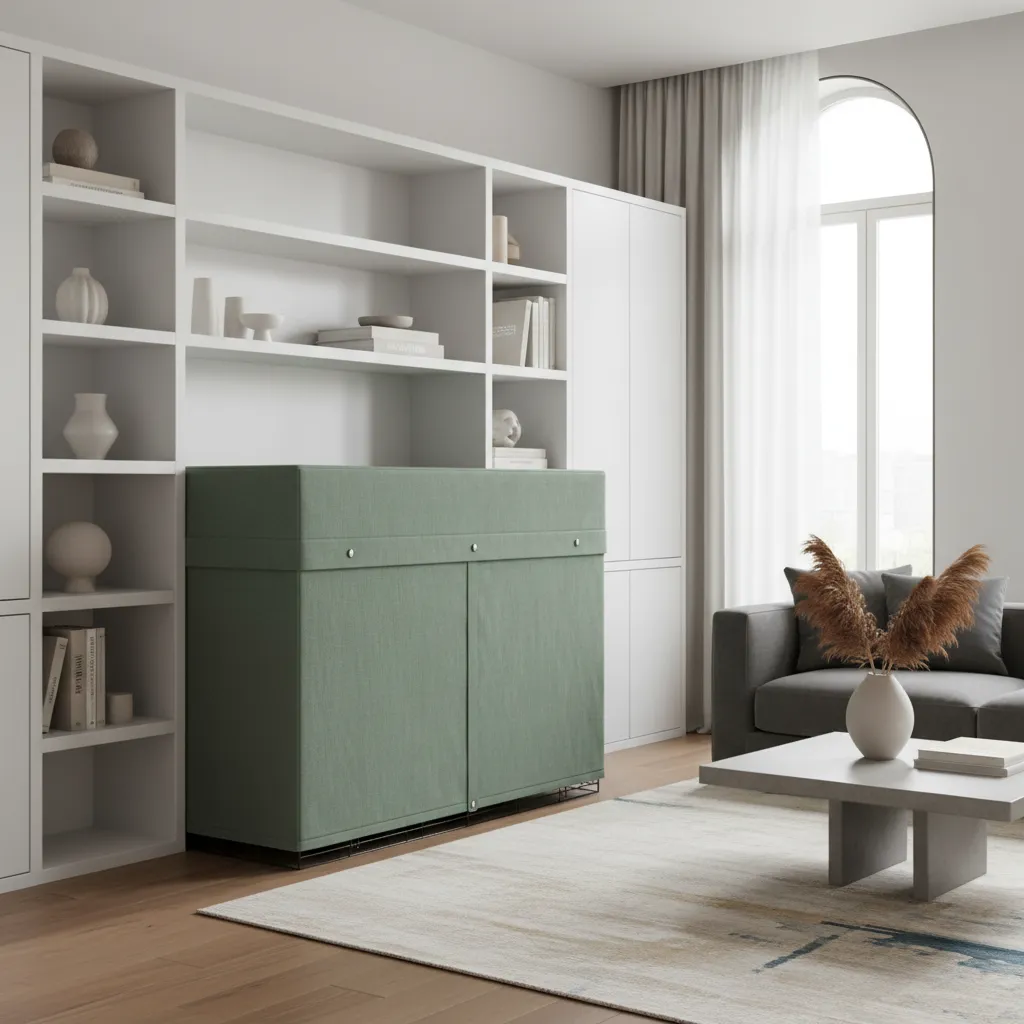
Slipcovers are an elegant and temporary way to conceal wire frames. They drape beautifully over standard metal crates.
Choose breathable textiles like heavy linen or thick cotton canvas. These natural materials ensure maximum comfort and airflow for your pet.
A tailored fit prevents a messy look. It brings an organic, soft texture directly into your curated living space.
Fabric covers are fantastic renter-friendly upgrades because they are fully machine washable and easy to swap.
Treat your dog’s crate as a canvas for creativity, blending tailored fabrics and custom wood finishes seamlessly into your living space.
Slipcover Material Selection Guide
To ensure your crate cover looks stylish and functions perfectly, select a fabric that balances aesthetics with durability.
| Fabric Type | Visual Vibe | Durability Level | Best Use Case |
|---|---|---|---|
| Heavy Linen | Organic, airy, minimalist | Moderate | Adding a hygge feel to quiet, low-traffic corners. |
| Cotton Canvas | Crisp, structured, clean | High | Active households needing frequent washing. |
| Performance Velvet | Luxurious, rich, cozy | High | Mid-century styling or darker, moody rooms. |
| Faux Leather | Sleek, masculine, modern | Very High | Spaces requiring an easy wipe-down surface. |
Always measure your crate carefully before ordering or sewing a slipcover. A snug fit is the secret to a high-end look.
The Tailored Touch
- To achieve a true ‘built-in’ look, use the same baseboard molding and paint color as your existing walls to make the crate cabinet feel like an architectural feature rather than a piece of furniture.
- When selecting slipcover fabrics, opt for ‘performance’ blends that offer the organic texture of linen with the stain resistance of outdoor materials to ensure longevity and easy maintenance.
- Place a sound-dampening mat or a cut-to-fit piece of remnant carpet inside the bottom of a built-in cabinet to eliminate rattling and protect the wood finish from claw scratches.
5. Craft a DIY Mid-Century Slatted-Wood Cover for Safe Airflow, Temperature Regulation, and Visibility
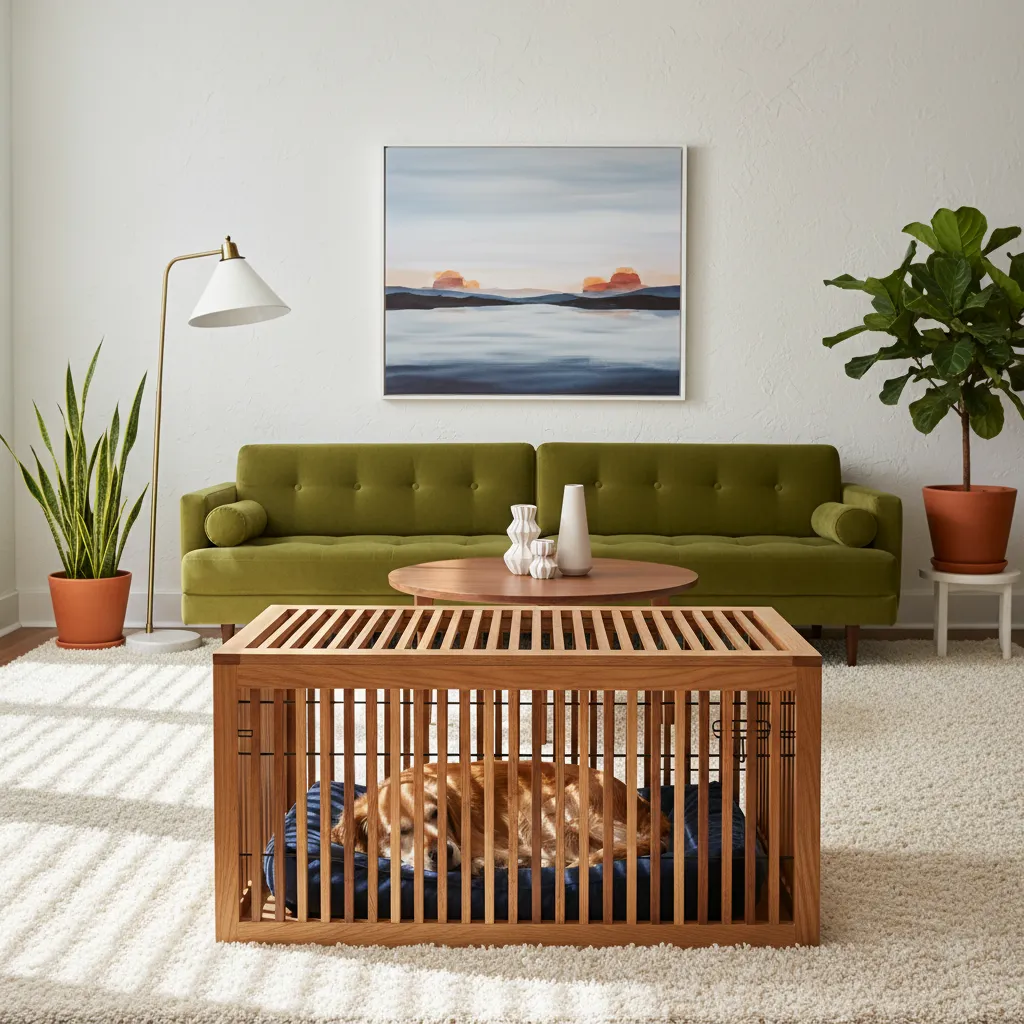
A slatted wood cover is a brilliant way to disguise a wire crate while maintaining the airy feel of mid-century design. Warm oak adds a rich texture.
The horizontal lines draw the eye across the room, improving spatial flow. This open design ensures your dog gets plenty of fresh air and visibility.
I always tell clients to treat a dog crate like an end table. If you build a wooden shell, leave the sides open or slatted so the dog can see out.
Nicole Lanteri, The Washington Post
Why Slatted Designs Excel
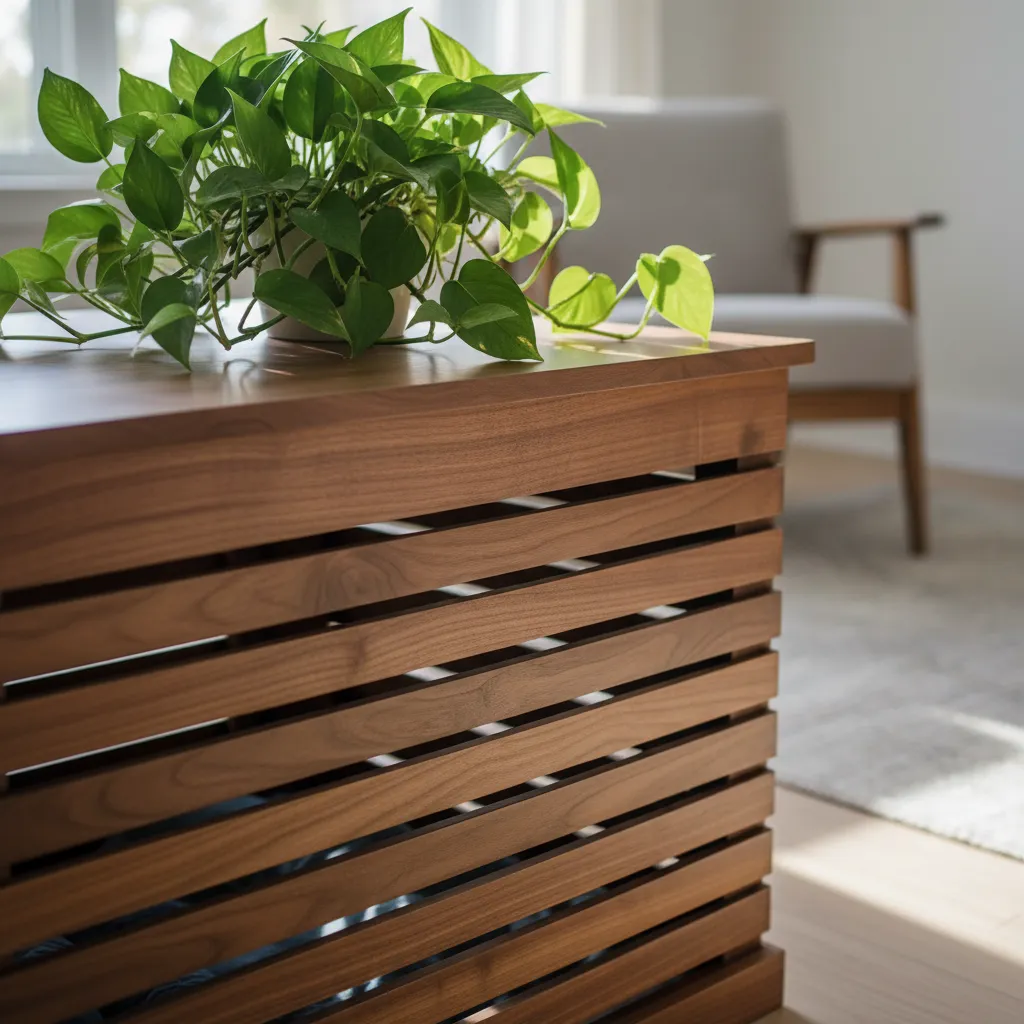
Solid wooden boxes can trap heat and make pets feel isolated. A slatted approach provides a perfect balance of privacy and connection to the family.
Research shows dogs have a normal body temperature of 101 to 102.5 degrees Fahrenheit. Proper ventilation, recommended by the American Kennel Club, keeps them cool.
This is especially vital in shared spaces. If you are decorating small areas, explore our tips on living and dining room combos for better layouts.
DIY Build Materials Checklist
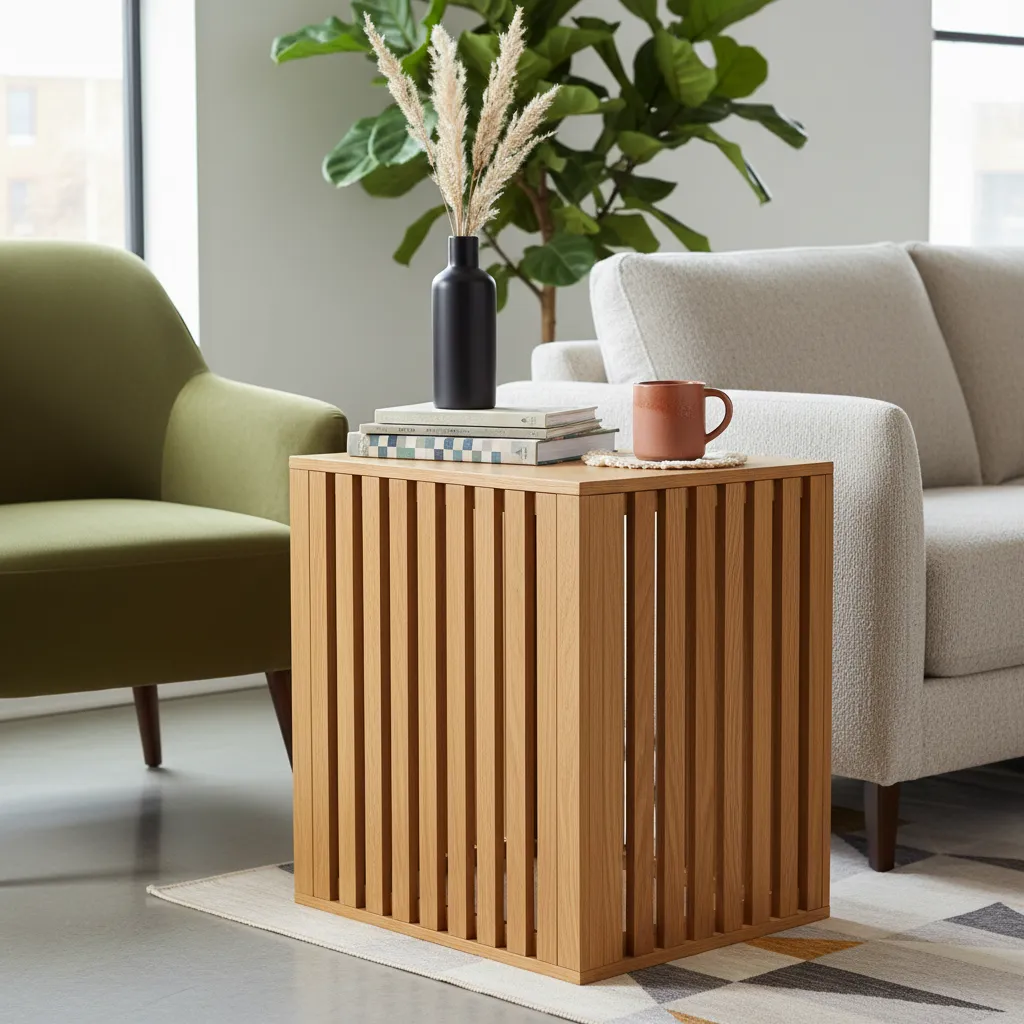
Creating a slatted cover is easier than it looks. You can build a beautiful surround over a weekend using simple tools and accessible materials.
- Raw Oak Slats: Choose thin wooden boards to create elegant horizontal lines that mimic classic mid-century furniture.
- Wood Stain: Opt for a warm walnut or teak finish to add an organic, curated feel to your living space.
- Matte Polyurethane: Seal the wood completely to protect your new focal point from water spills and muddy paws.
- Brass Hardware: Add sleek metal caps or elevated feet to raise the structure and enhance the custom look.
Stain the wood in a rich hue before assembling. The gaps allow ambient lighting to filter through, casting beautiful geometric shadows on the floor.
A well-designed home never forces you to choose between your pet’s comfort and your personal aesthetic.
Slatted crates are also ideal for dark corners. If your room lacks sunshine, learn about paint color matching for limited natural light to brighten the space.
Style the top surface with a trailing pothos plant or a stack of curated design books. It immediately turns an eyesore into a striking focal point.
Designer Hack
- Space your slats no more than 2 inches apart to ensure your pet’s safety while maintaining the perfect mid-century aesthetic and maximum airflow.
- Build your cover as a three-sided ‘sleeve’ that slides over the existing metal crate, making it easy to remove for deep cleaning or travel.
- Apply a clear museum wax or an extra layer of matte polyurethane to the top surface to protect your handiwork from water rings and plant drainage.
A Stylish Sanctuary for Your Best Friend
Hiding a dog crate doesn’t mean sacrificing your modern aesthetic. With the right materials, your pet’s cozy sanctuary can elevate the entire room.
Whether you choose sleek acrylic, warm wood, or clever built-in nooks, functionality and high-end design can easily coexist.
Embrace these creative strategies to maximize your living space. You and your furry friend deserve a beautiful, harmonious home.
Design Dilemmas: Pet Edition
Absolutely! Wooden and acrylic crates with solid tops are designed specifically to hold lamps, books, and decor just like a standard side table.
You can craft a custom wooden cover or drape a chic, tailored fabric over the top. This softens the harsh metal lines while keeping your pet comfortable.
Yes, as long as the space is well-ventilated and accessible. Never block the door, and ensure your dog has plenty of room to stand and turn around comfortably.
Clear acrylic or lucite is perfect for minimalist spaces. It keeps sightlines completely open, making the kennel practically disappear into your decor.
