
Table of Contents
- Modern Minimalist Lake Bedroom: Sleek Layouts with Benjamin Moore Hale Navy Accents
- The Rustic Cabin Retreat: Warm Earth Tones and DIY Faux Beam Installation
- Traditional Coastal Cottage: Classic Shiplap Walls and Soft Sherwin Williams Sea Salt
- The Ultimate Bunk Room: Custom Built-Ins for Maximizing Guest Capacity
- Organic Boho Lakeside: Layering Jute, Rattan, and Natural Light
- Anchoring Your Lakeside Retreat
- Lakeside Design Dilemmas Solved
Transform your lakeside retreat into a sanctuary of style and comfort.
Balancing modern clean lines with rustic textures creates a timeless aesthetic that feels both curated and lived in. This guide explores how to blend high-end design principles with practical, budget-friendly updates for your bedroom.
Focus on natural materials like reclaimed wood and soft linens to evoke the serenity of the water.
Adding layered textiles and soft lighting can instantly elevate a simple space into a sophisticated haven.
Whether you are refinishing an old dresser or selecting the perfect rug, functionality remains the core of every beautiful room.
Embrace the charm of the outdoors while maintaining a polished look. Small changes like hardware updates or strategic paint choices offer a high impact without a high price tag.
Let these ideas inspire you to craft a bedroom that serves as the ultimate backdrop for relaxation and lakefront living.
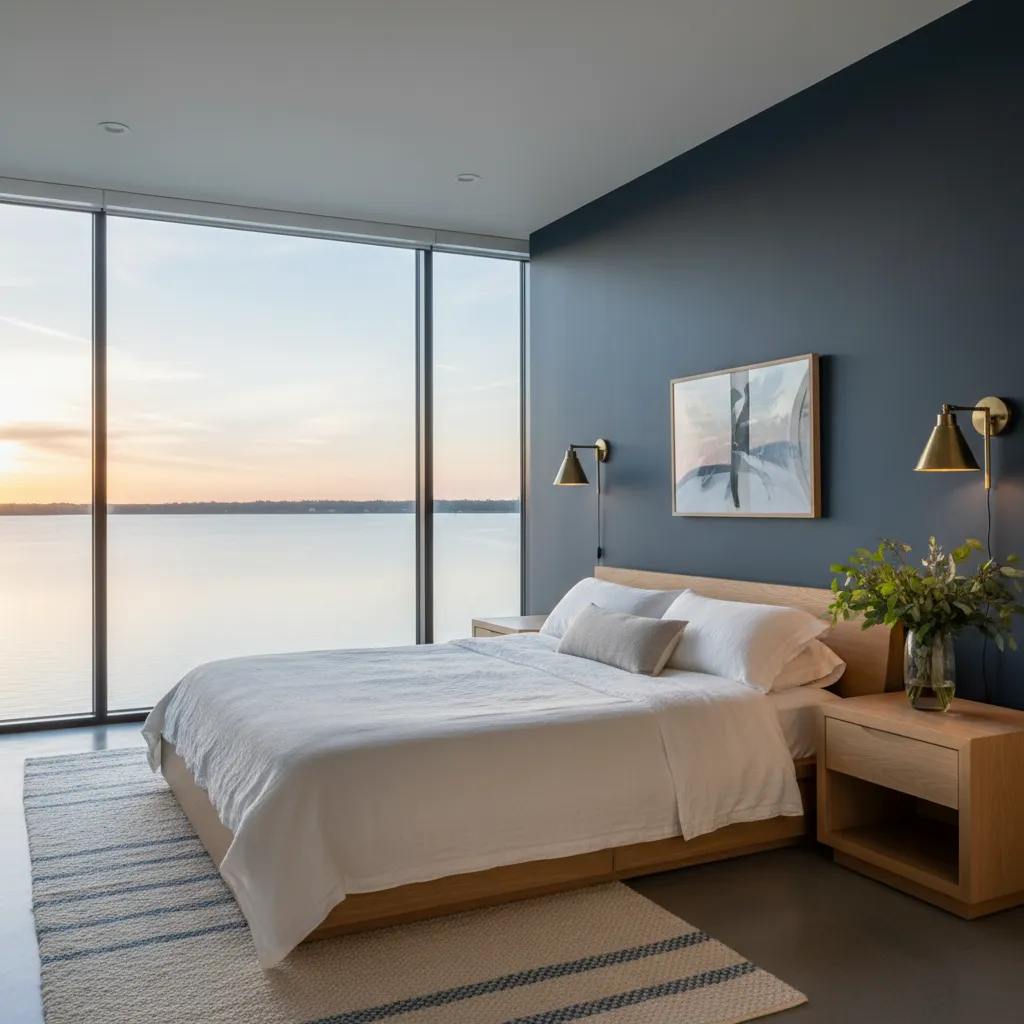
Modern Minimalist Lake Bedroom: Sleek Layouts with Benjamin Moore Hale Navy Accents
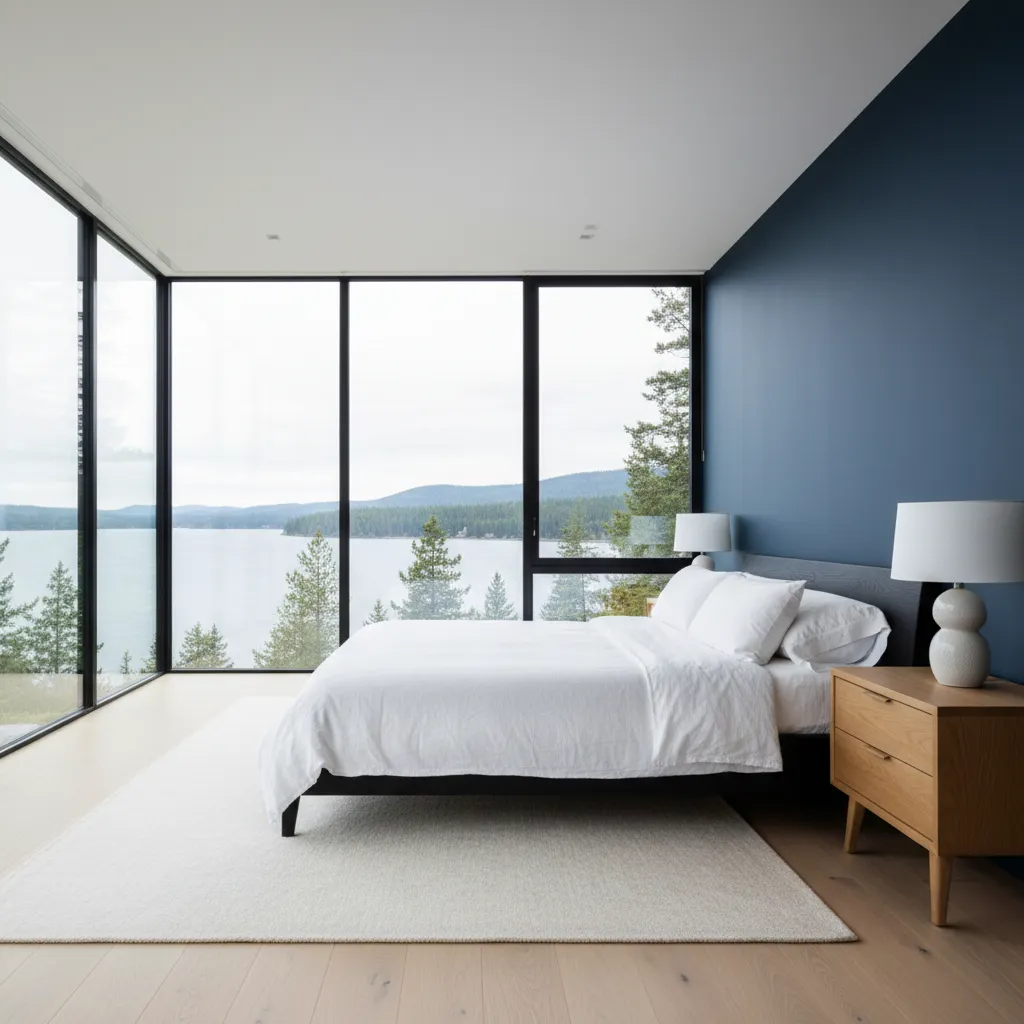
Creating a modern lake retreat requires a balance of simplicity and warmth. You want the design to frame the natural view, not compete with it.
A minimalist approach clears physical and visual clutter. This allows the serene movement of the water outside to become the room’s true centerpiece.
We rely on Benjamin Moore’s Hale Navy to ground the space. This deep, classic shade mimics the lake’s depth while maintaining a sophisticated edge.
Minimalism at the lake isn’t about having less; it’s about making room for the view that matters most.
Optimizing the Layout for Views
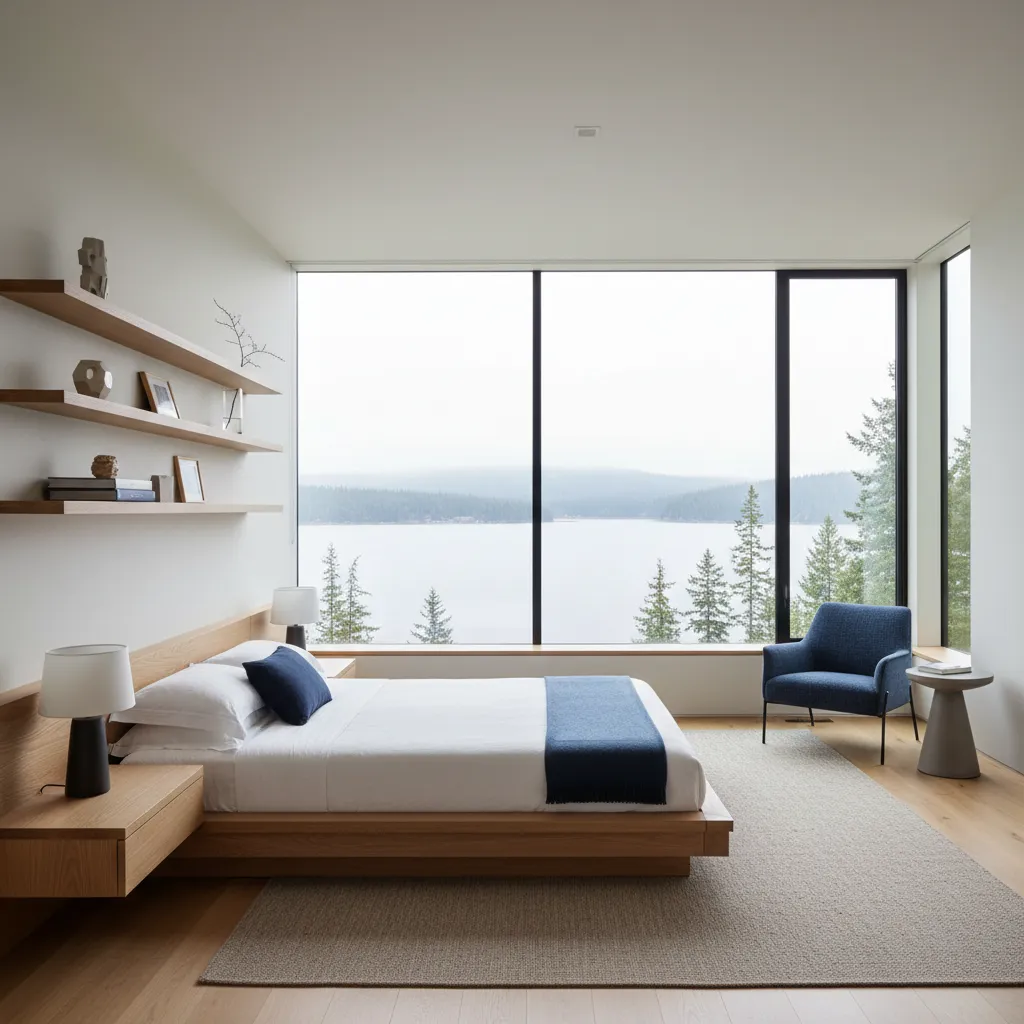
The furniture arrangement in a minimalist lake bedroom should dictate the flow of movement. Place the bed directly facing the primary window.
Choose low-profile furniture to preserve sightlines. A platform bed without a footboard ensures the water remains visible even when you are lying down.
Keep the perimeter clear. Avoid placing tall dressers against the window wall. This maximizes the amount of natural light flooding the space.
For more inspiration on structuring your space, explore our guide on Modern Lake House Interior Decorating Design Ideas.
Applying Hale Navy for Depth
Hale Navy is a transition color. It bridges the gap between the interior and the dark tones of the water at dusk. It creates an instant focal point.
Apply this shade to the wall behind the headboard. This anchors the bed and prevents the white walls from feeling too stark or clinical.
Contrast is key here. Pair the navy wall with crisp, white linen bedding. The visual break keeps the room feeling airy despite the dark accent.
Navy is a neutral. It plays well with other colors, but it also stands alone. It adds a level of sophistication and drama that you just can’t get with beige or gray.
Shea McGee, Studio McGee Design Advice
Selecting the Right Finish
The finish of your paint changes how the light interacts with the color. This is critical in a room with large windows and water reflections.
| Feature | Matte Finish | Eggshell/Satin Finish |
|---|---|---|
| Visual Effect | Velvety, absorbs light, hides wall imperfections. | Subtle sheen, reflects light, highlights texture. |
| Mood | Moody, calm, and deeply sophisticated. | Bright, energetic, and slightly more formal. |
| Durability | Lower scuff resistance; harder to clean. | Higher durability; easy to wipe down. |
| Best Use | Accent walls behind the bed for depth. | High-traffic areas or kid-friendly rooms. |
Warming Up with Texture
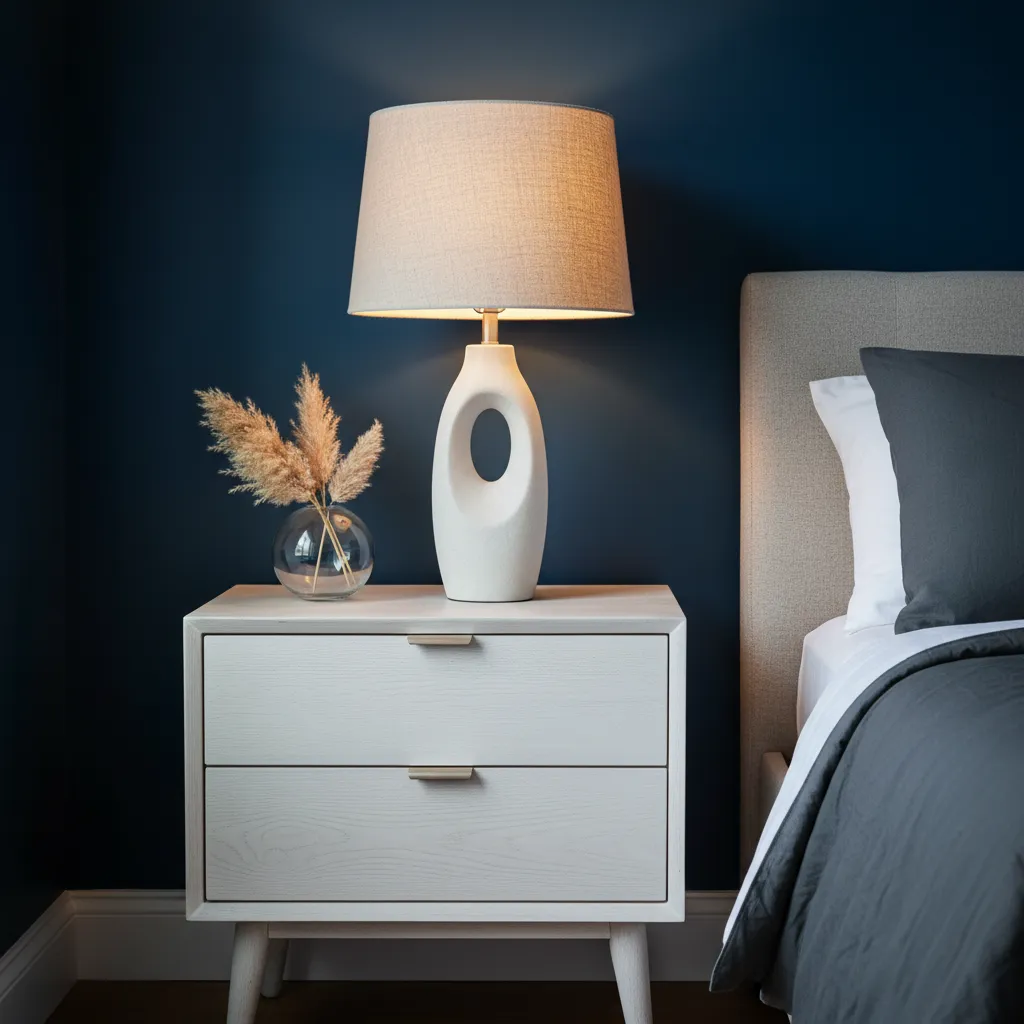
Minimalism can feel cold without the right textures. Introduce organic materials to soften the sleek lines and dark paint.
Incorporate light oak or walnut furniture. The warmth of the wood grain pops beautifully against the cool undertones of Hale Navy.
Layer the bed with a chunky knit throw or a waffle-weave blanket. These tactile elements invite touch and increase the “hygge” factor.
If you love blending natural elements with modern design, check out our tips on Styling Modern Mountain Home Bedroom Interiors.
Lighting and Accessories
Lighting should be functional but sculptural. Choose matte black sconces or brass pendants to flank the bed. Brass adds a nautical nod without being cliché.
Keep accessories intentional. A single piece of abstract art or a clear glass vase with greenery is often enough to complete the vignette.
Lakeside Design Secret
- Select a low-profile platform bed without a footboard to ensure your sightlines to the water remain uninterrupted, even while lying down.
- Opt for a matte finish on your Hale Navy accent wall to absorb light and create a velvety depth that minimizes glare from large windows.
- Warm up the cool blue tones by incorporating brass lighting fixtures or light oak furniture for a subtle, modern nautical nod.
The Rustic Cabin Retreat: Warm Earth Tones and DIY Faux Beam Installation
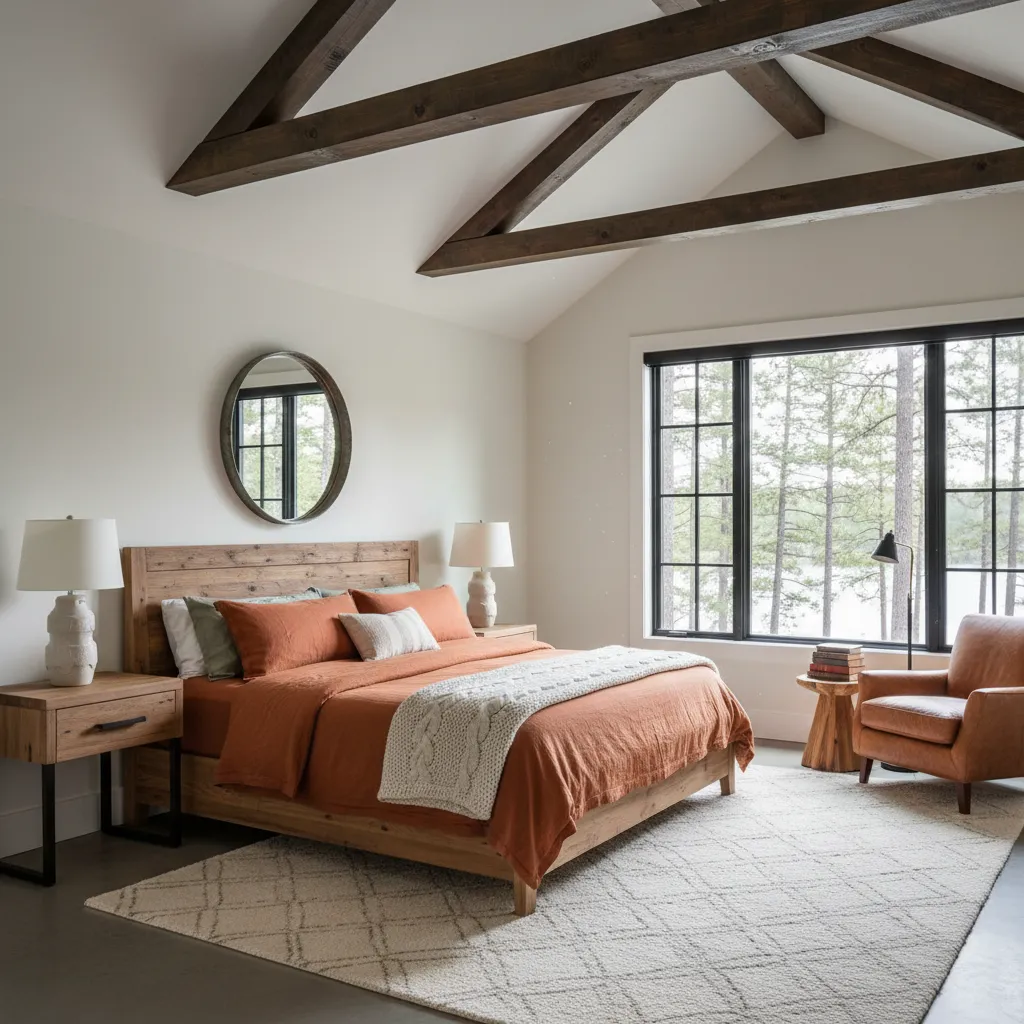
Creating a sanctuary that mirrors the natural world outside is the essence of the rustic cabin aesthetic. This look relies heavily on texture and warmth.
The goal is to design a space that feels grounded and established, even if the home was built recently. We achieve this through specific material choices.
You want the room to feel like a warm hug after a long day on the water. This requires a departure from stark whites and cool grays.
Instead, we embrace a palette that pulls directly from the forest floor and the shoreline. Think deep greens, muddy browns, and soft clays.
Functionality is key here. The design must accommodate wet swimsuits and sandy feet while maintaining high style. Use durable, washable fabrics.
True rustic design isn’t about being rough around the edges; it is about honoring the raw beauty of natural materials.
Curating the Earth Tone Palette
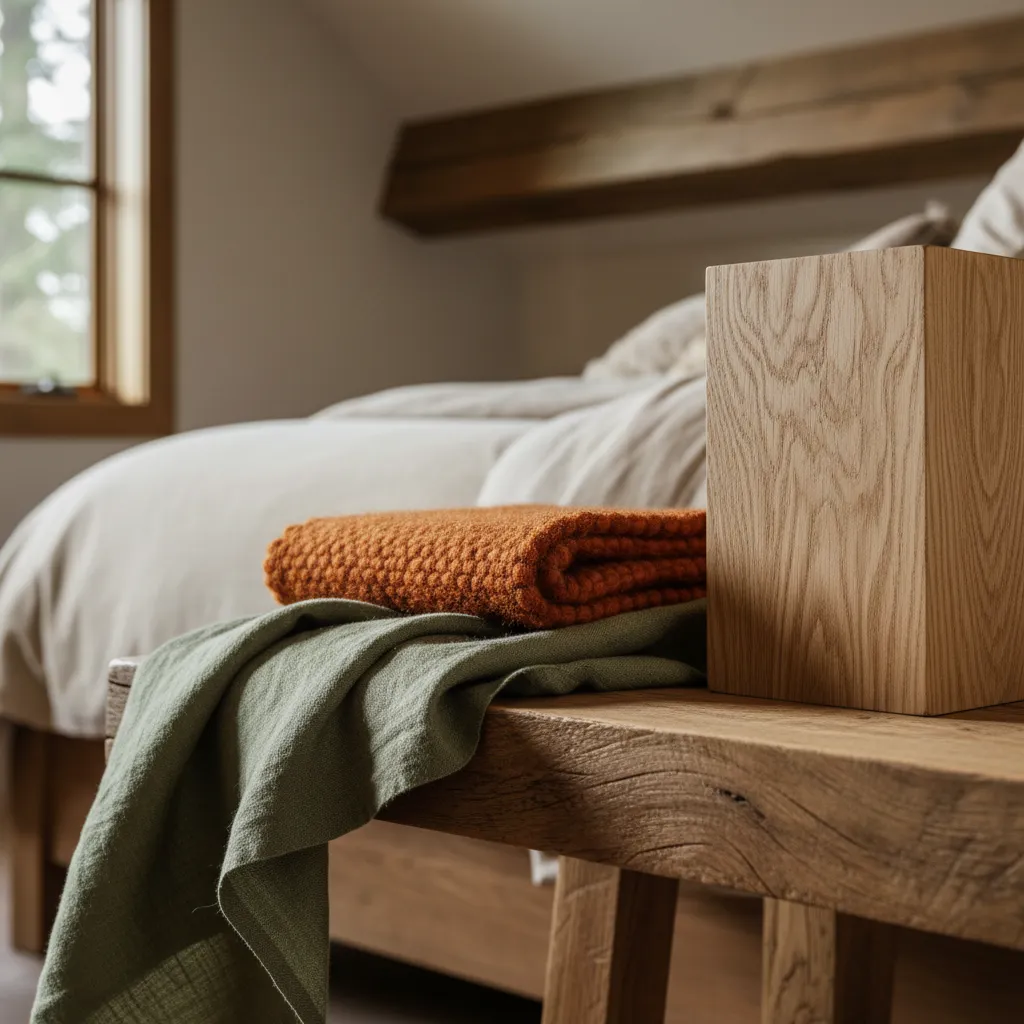
The foundation of a rustic retreat lies in its colors. We move away from the bright blues often associated with coastal decor.
Instead, we favor warmer hues that create a cozy cavern effect. Start with a base of creamy off-white or warm taupe for the walls.
Layer in accents of burnt sienna, olive green, and rich ochre through textiles. These colors hide dirt well, making them practical for lake life.
If you love cabins and cottages in the woods, this deeper palette will resonate with you. It bridges the gap between indoors and outdoors.
To keep a rustic room from feeling too heavy, balance dark wood tones with plenty of light, neutral textiles. The contrast is what makes the wood pop.
Amber Lewis, Amber Interiors Design Blog
The DIY Faux Beam Guide
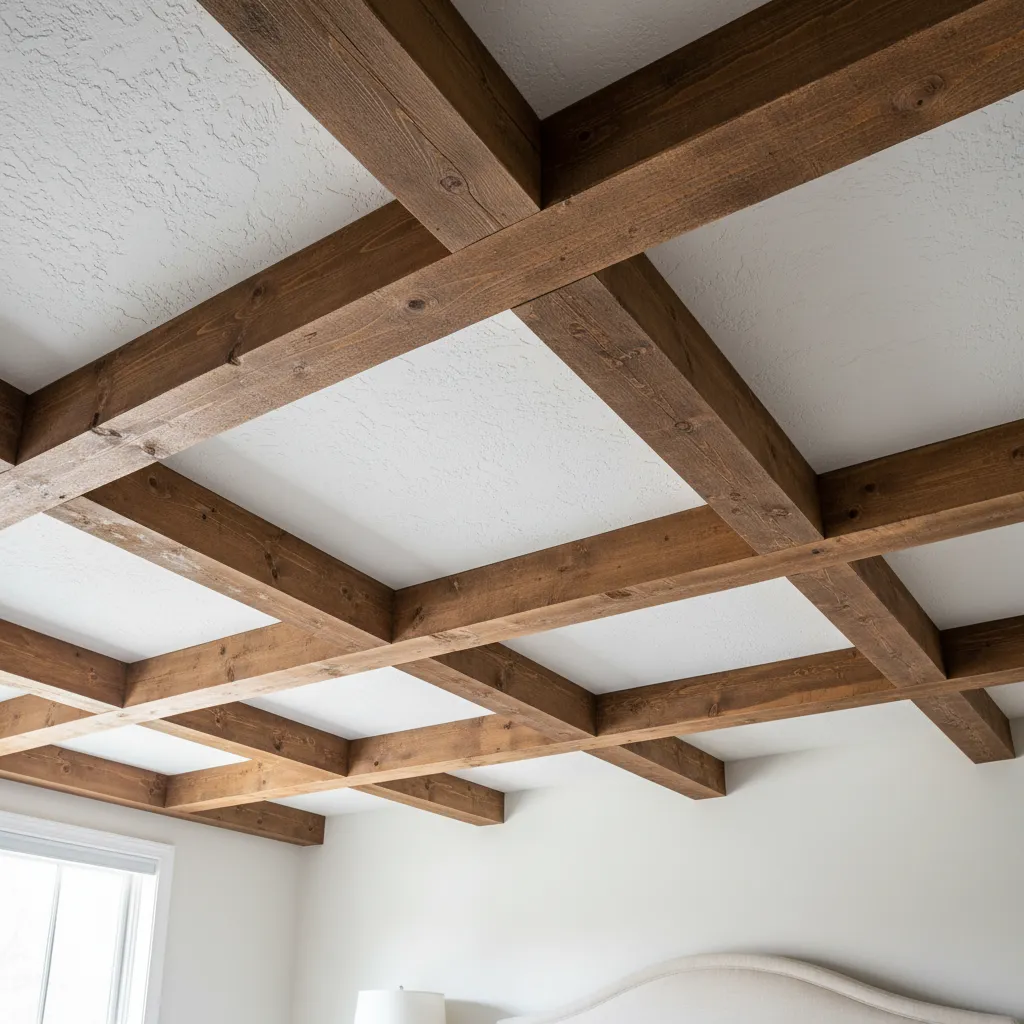
Nothing says “cabin” quite like exposed ceiling beams. However, installing real structural beams is heavy and expensive.
Faux beams are a lightweight alternative that you can tackle over a weekend. They add instant architectural history to a plain boxy room.
This project draws the eye upward, making the room feel grander yet cozier. It breaks up the expanse of a flat white ceiling.
Here is a simplified checklist for creating your own box beams to achieve that custom look without the structural weight:
- Select Your Lumber: Use lightweight pine boards. You will need one bottom board and two side boards for each beam.
- Distress the Wood: Before assembly, beat the wood with chains or a hammer to create a reclaimed, aged texture.
- Stain Prior to Install: Apply a dark walnut or special oak stain. Let it dry completely to avoid fumes in the bedroom.
- Install Cleats: Screw 2×4 blocking into your ceiling joists where you want the beams to run. This acts as the anchor.
- Mount the Box: Slide your U-shaped wood beam over the cleats and nail it from the sides using a finish nailer.
Once the beams are up, the acoustic quality of the room changes. It feels softer and more insulated, perfect for sleeping in.
This architectural detail pairs beautifully with creating a cozy winter bedroom look that transitions seamlessly into summer.
To finish the space, add soft ambient lighting. Warm bulbs in brass sconces will highlight the grain of your new beams.
Cabin Style Secrets
- To achieve an authentic aged look on new pine boards, physically distress the wood with a chain, hammer, or heavy wire brush before applying stain; the color will pool in the dents to mimic centuries-old reclaimed timber.
- When selecting lighting to pair with faux beams, stick to warm white bulbs (2700K-3000K); cooler daylight bulbs can make wood tones look gray and wash out the cozy atmosphere.
- Prioritize performance fabrics like solution-dyed acrylics for upholstery in these earth-toned spaces; they resist fading from sunlight and handle damp swimsuits or muddy paws without ruining the aesthetic.
Traditional Coastal Cottage: Classic Shiplap Walls and Soft Sherwin Williams Sea Salt
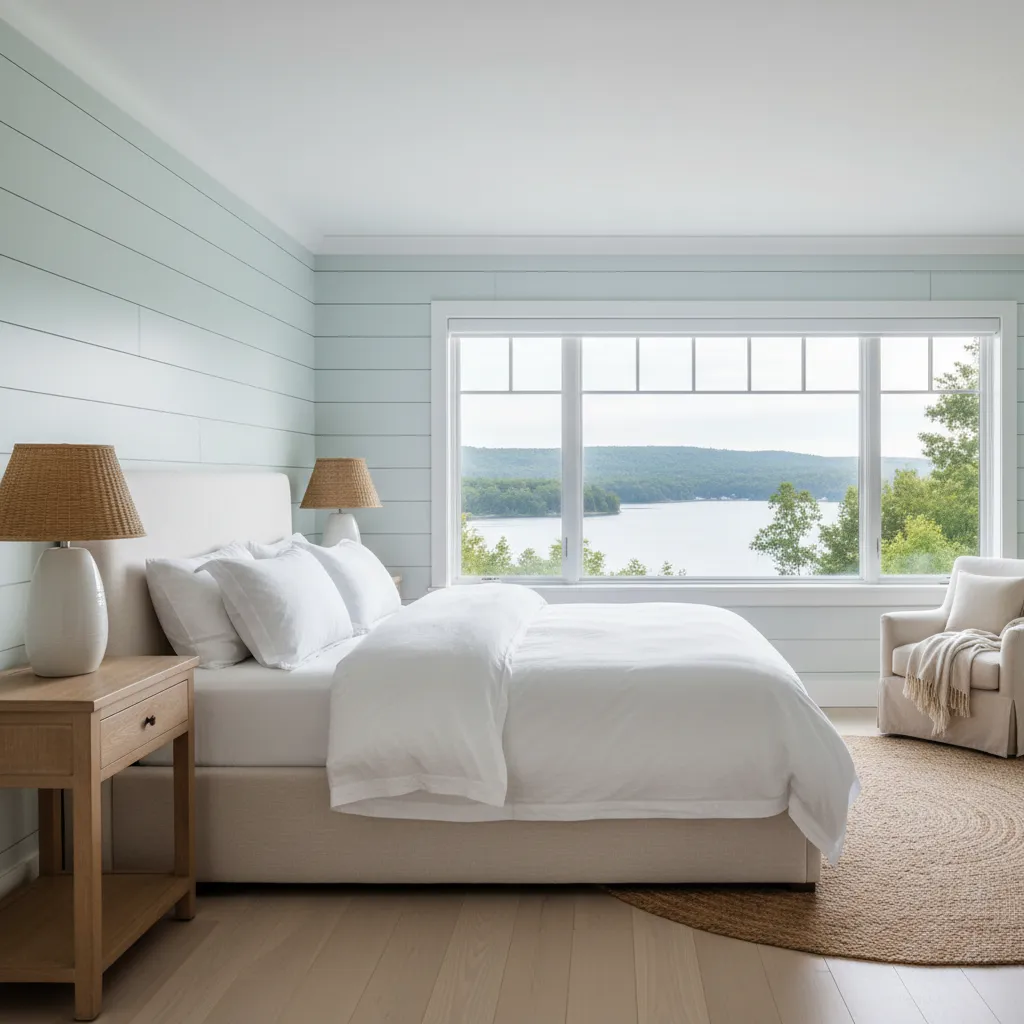
Nothing defines a traditional cottage aesthetic quite like the crisp, clean lines of shiplap. This architectural detail adds instant history to a room.
Shiplap creates a tactile backdrop that drywall simply cannot match. It offers durability that withstands the wear and tear of a busy vacation home.
When you pair this woodwork with Sherwin Williams Sea Salt, the magic happens. This specific shade is a chameleon that shifts with the daylight.
The most restful lake interiors echo the colors of the water, pulling the horizon line right into the room.
In bright morning light, Sea Salt reads as a soft, refreshing green. As the sun sets, it settles into a calming, misty grey that induces sleep.
This palette choice improves the spatial flow of the room. It blurs the boundaries between the indoors and the view outside the window.
For a deeper dive into overall layouts, explore our modern lake house interior guide to see how this style connects.
Balancing Warmth and Cool Tones
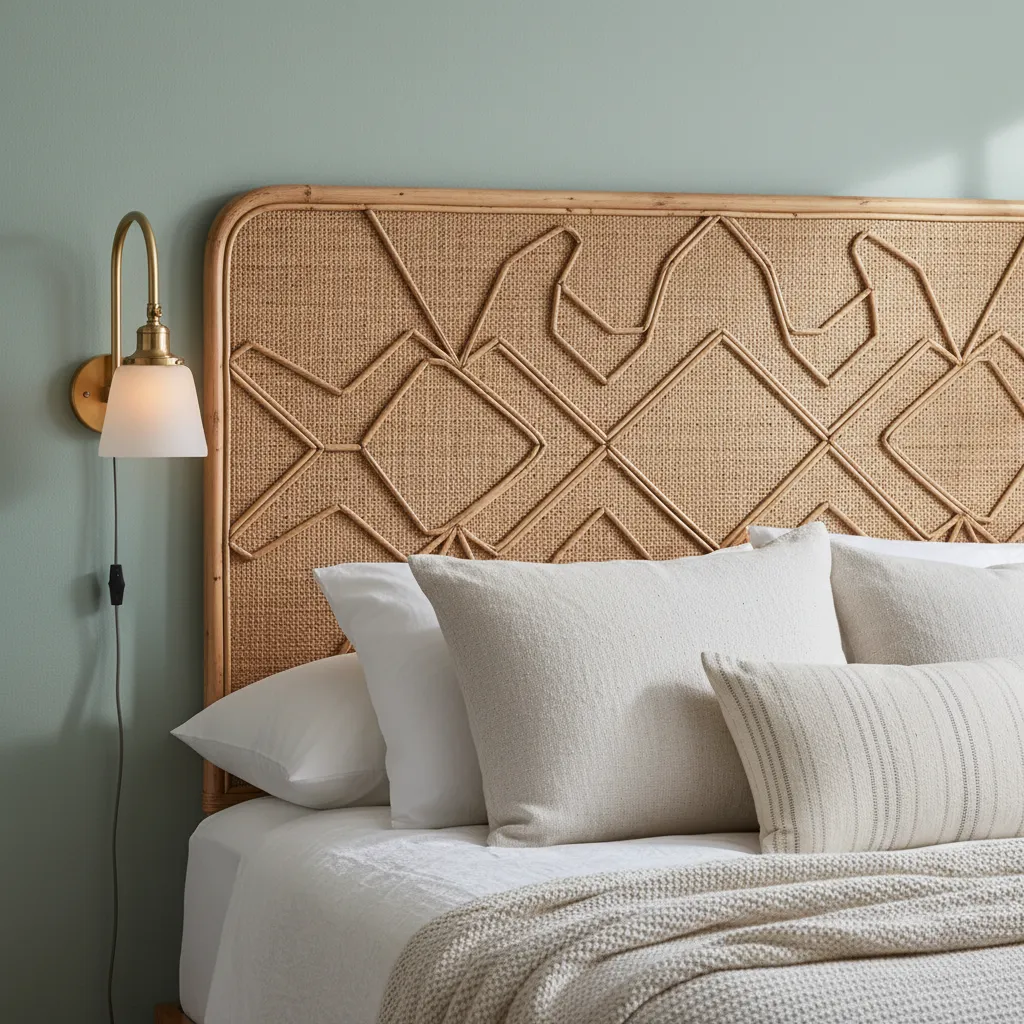
Because the wall color is cool, you must introduce warmth through furniture. Avoid chrome or silver metals, which can make the space feel sterile.
Opt for unlacquered brass or oil-rubbed bronze hardware instead. These finishes add a vintage touch that feels curated and timeless.
Natural wood tones are essential here. A raw oak dresser or a walnut bed frame grounds the airy paint color and adds necessary visual weight.
We recommend layering textiles to increase the “hygge” factor. Think chunky knit throws and breathable linen curtains that sway in the breeze.
When using cool tones like sea glass green or mist grey, always counterbalance with texture. A sisal rug or woven shade is not just decorative; it warms up the acoustics and visual temperature of the room.
Erin Gates, Elements of Style
Flooring choices also play a critical role in this aesthetic. Wide-plank engineered hardwood in a light stain complements the cottage vibe perfectly.
If you prefer a more rustic approach, compare this look with our woodland cabin design guide for warmer, darker alternatives.
Material Palette Checklist
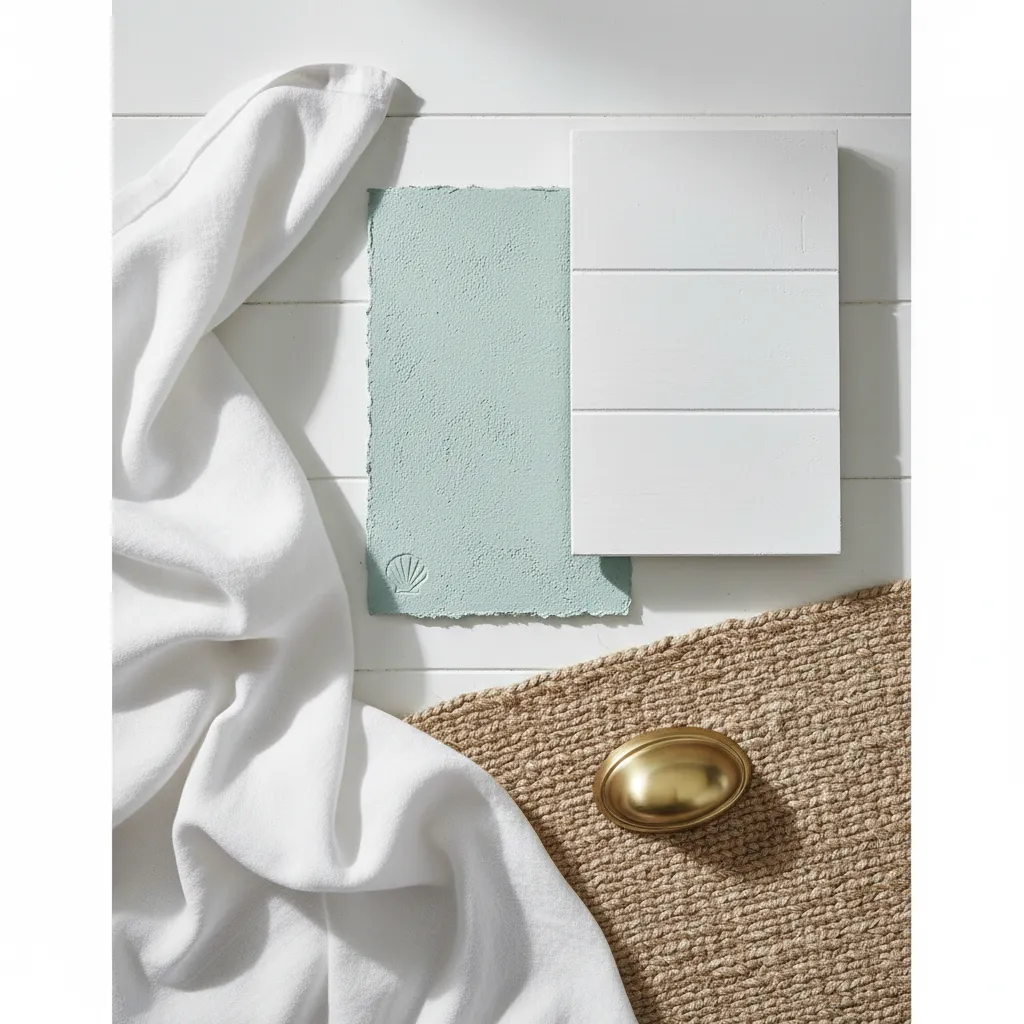
To achieve a cohesive look, stick to materials that feel organic and weathered. The goal is a space that feels lived-in rather than precious.
| Material Element | Recommended Finish | Why It Works |
|---|---|---|
| Metals | Antique Brass or Matte Black | Provides contrast against the soft pastel walls. |
| Bedding | Washed Belgian Linen | Adds wrinkled, relaxed texture that suits lake life. |
| Rug | Jute or Wool Blend | Hides sand and brings an earthy element to the floor. |
| Window Treatment | Bamboo Blinds | Filters light warmly while adding wood tones. |
Functionality should drive your decor choices. Choose bedside tables with closed storage to keep clutter hidden and maintain a serene environment.
Install dimmable wall sconces directly on the shiplap. This saves nightstand space and allows you to control the ambient lighting for reading.
Cottage Style Secrets
- Test Sherwin Williams Sea Salt on multiple walls before committing; its ‘chameleon’ nature means it shifts from minty green to moody grey depending on the light direction.
- Use a literal nickel as a spacer between shiplap boards during installation to achieve the perfect, authentic ‘nickel gap’ shadow line without measuring every time.
- Avoid chrome hardware with this palette; choose unlacquered brass that will patina over time to add warmth and history against the cool, crisp walls.
The Ultimate Bunk Room: Custom Built-Ins for Maximizing Guest Capacity
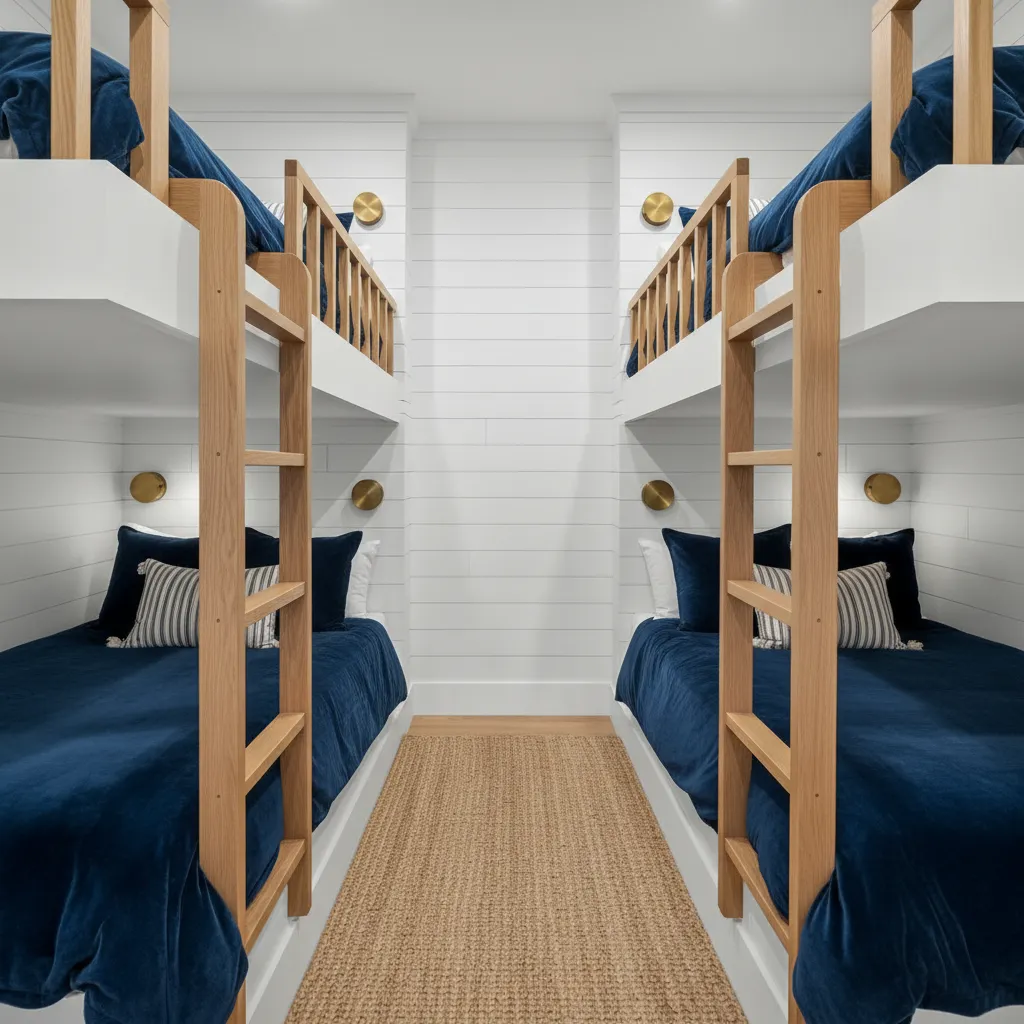
Lake houses are magnetic; friends and family naturally gravitate toward the water. This often creates a sleeping capacity challenge.
The most sophisticated solution is the custom built-in bunk room. It maximizes vertical space while creating a cozy, ship-like atmosphere.
Unlike freestanding furniture, built-ins become part of the architecture. They offer stability and silence, eliminating the creaks of metal frames.
A well-designed bunk room isn’t just about saving space; it’s about creating a shared experience that guests remember forever.
Bunk Room Brilliance
- Incorporate individual wall-mounted reading lights and USB charging ports for each bunk to give guests personal control and convenience.
- Add heavy-duty privacy curtains to each berth to create a cozy, secluded feel even in a shared room.
- Utilize the space beneath the bottom bunks for deep pull-out drawers to store extra linens or guest luggage without cluttering the floor.
Architectural Layout and Flow
When planning your layout, consider the traffic flow first. The aisle between bunks must be wide enough for two people to pass comfortably.
Symmetry creates a calming visual effect. Placing bunks on either side of a central window maximizes natural light and enhances the view.
For a rugged yet refined look, incorporate elements from a modern mountain aesthetic using raw timber beams or reclaimed wood trim.
Safety is paramount in these designs. Ensure guardrails are sturdy and ladders are permanently fixed to the structure to prevent accidents.
Architect’s Edge
- Integrate recessed LED lighting within each bunk nook to provide individual utility without encroaching on the central walkway.
- Install under-bunk storage drawers to eliminate the need for bulky dressers, keeping the traffic flow open and unobstructed.
- Use a staggered or L-shaped bunk configuration if the room is narrow to maximize vertical clearance and prevent a boxed-in feeling.
Creating Private Sanctuaries
The key to a successful bunk room is giving each guest a sense of privacy. Even in a shared room, personal space is a luxury.
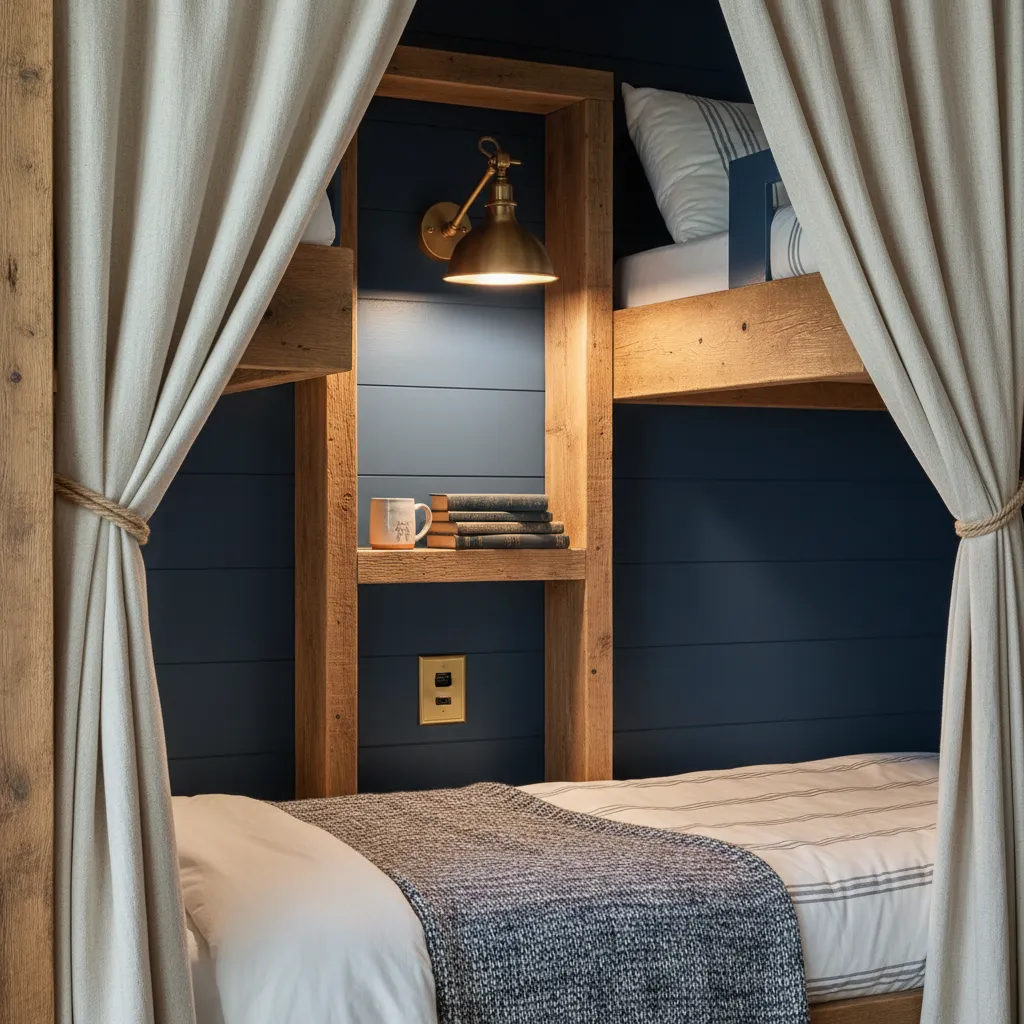
Install heavy linen or velvet curtains on a hidden track. This allows night owls to read without disturbing early risers in the adjacent bunk.
Treat each bunk like a micro-hotel room. Every sleeping nook requires its own dimmable sconce, a small niche shelf, and an electrical outlet.
In a bunk room, you want to create a ‘room within a room’ feeling. Sconces and individual charging stations are non-negotiables for modern guests.
Emily Henderson, Mountain House Design Reveal
Sanctuary Secrets
- Add a small recessed niche next to the pillow to act as a built-in nightstand for phones, glasses, and books.
- Use blackout lining on your bunk curtains to provide total darkness for sleepers, regardless of room lighting.
- Install individual USB-integrated outlets inside each nook so guests can charge devices without leaving their bed.
Smart Storage Integration
Clutter can quickly overwhelm a room sleeping six or eight people. Built-ins offer hidden storage opportunities that freestanding beds lack.
Utilize the space under the bottom bunks for deep, rolling drawers. These are perfect for storing extra blankets or guests’ travel bags.
If you have the floor area, consider staircase drawers. These mimic the utility found in efficient utility room designs where every inch serves a purpose.
Essential Bunk Room Features Checklist
- Individual Sconces: Wall-mounted lights with separate switches for late-night reading.
- Niche Shelving: A recessed box for water glasses, phones, and books.
- Charging Ports: USB or standard outlets installed inside the niche.
- Under-Bed Drawers: heavy-duty storage for luggage to keep walkways clear.
- Privacy Curtains: Thick fabric to block light and dampen sound.
By focusing on these details, you transform a simple dormitory style into a high-end retreat. The result is a room that is functional and beautiful.
Smart Space Secrets
- Color-code or number each storage drawer to match the specific bunk level, helping guests identify their designated gear zone instantly.
- Line your recessed niche shelves with felt or silicone pads to prevent phones from vibrating against the wood and to stop glasses from sliding.
- Install battery-operated motion sensor lights inside deep under-bed drawers so guests can find their belongings at night without turning on the main room lights.
Organic Boho Lakeside: Layering Jute, Rattan, and Natural Light
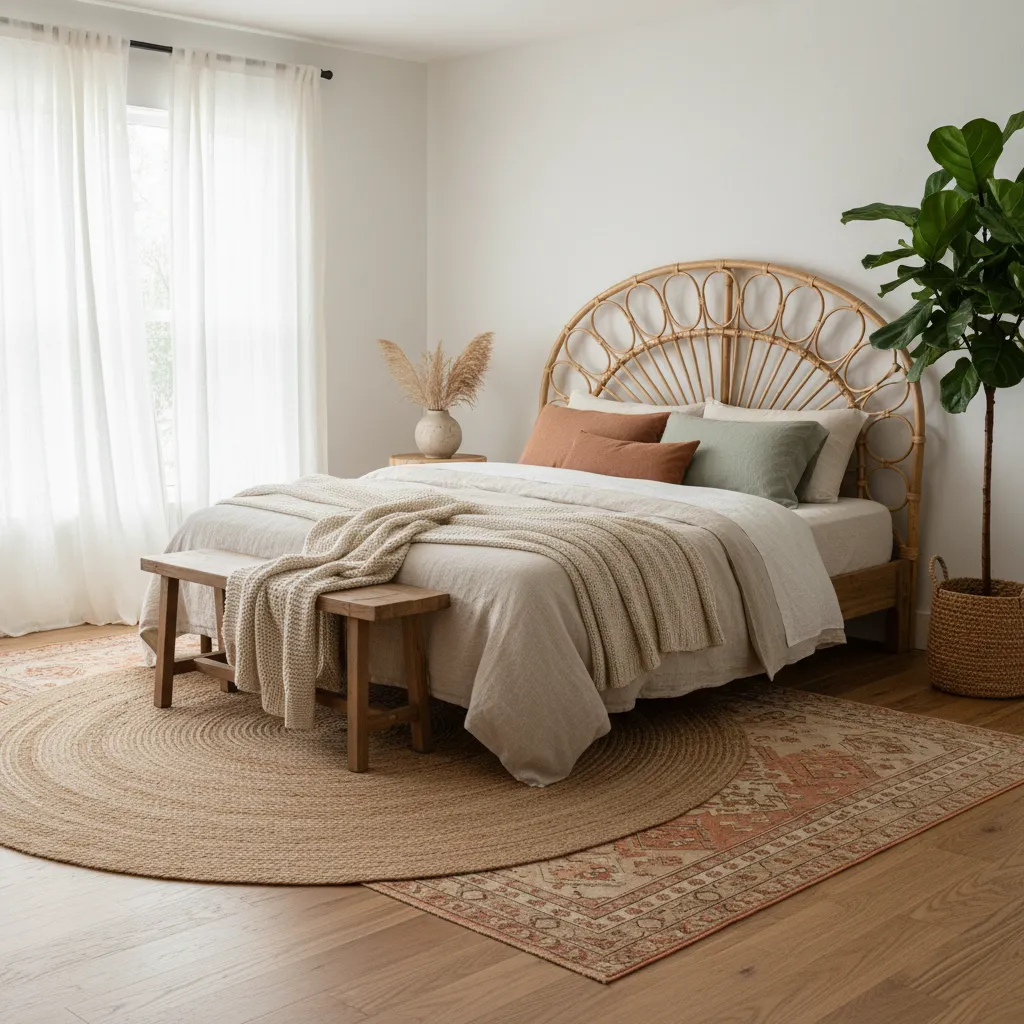
The organic boho aesthetic fits a lakeside setting perfectly. It bridges the gap between the wild outdoors and a curated interior.
This style relies heavily on raw materials. Think unpolished woods, woven grasses, and tactile fabrics that beg to be touched.
By using an earthy palette, you create a vignette that feels grounded. It transforms a simple bedroom into a restorative sanctuary.
True comfort in a lake house comes from mimicking nature’s textures within your own four walls.
Anchoring the Space with Woven Textures
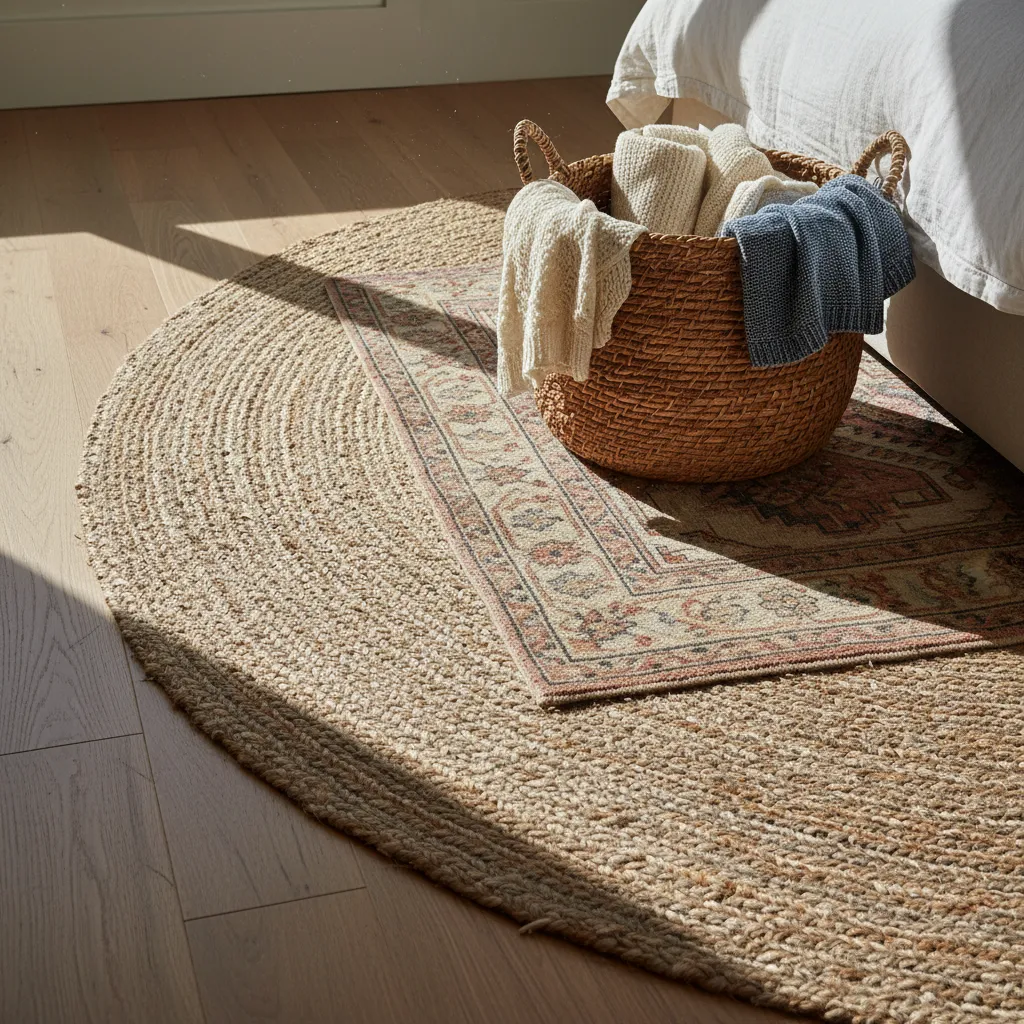
Flooring sets the tone for the entire room. Start with a large jute or sisal rug to cover most of the floor area.
These natural fibers are durable and hide lake sand effectively. They provide a neutral, sandy-colored base that warms up the space.
To increase comfort underfoot, layer a smaller, softer rug on top. A vintage wool runner adds a pop of color and history to the room.
If you enjoy wall art, consider extending these textures vertically. Decorative tapestries made of macramé or wool add softness to hard walls.
Rattan and Wood Furniture Choices
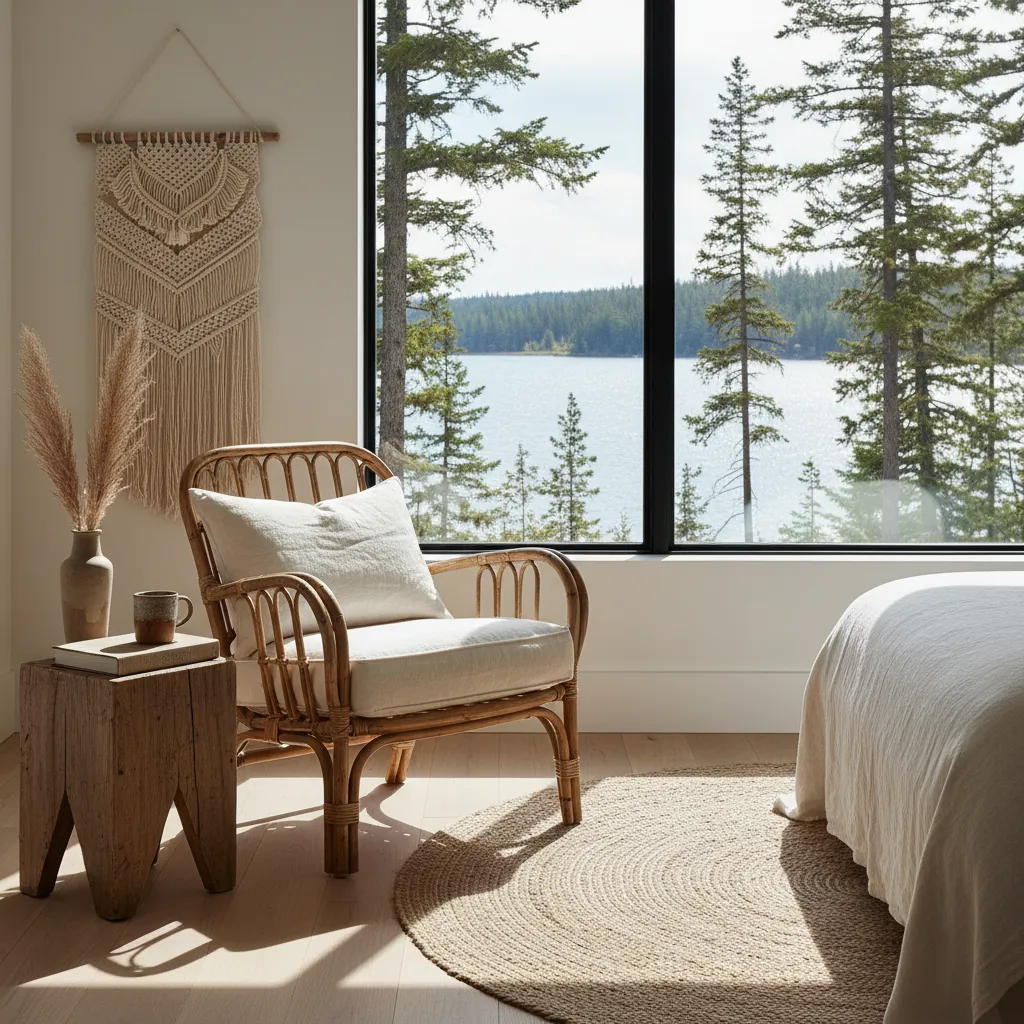
Furniture in an organic boho room should feel light and airy. Rattan headboards are a classic choice that allows light to pass through.
Unlike heavy upholstered beds, cane or wicker frames keep the spatial flow open. This is crucial in smaller lakefront rooms.
Mix wood tones for a collected look. A raw oak nightstand pairs beautifully with a darker walnut dresser or bamboo accent chair.
Natural materials like rattan and bamboo add instant warmth and character to a room. They have a way of making a space feel traveled and storied, yet utterly relaxed.
Justina Blakeney, The Jungalow
Maximizing Natural Light
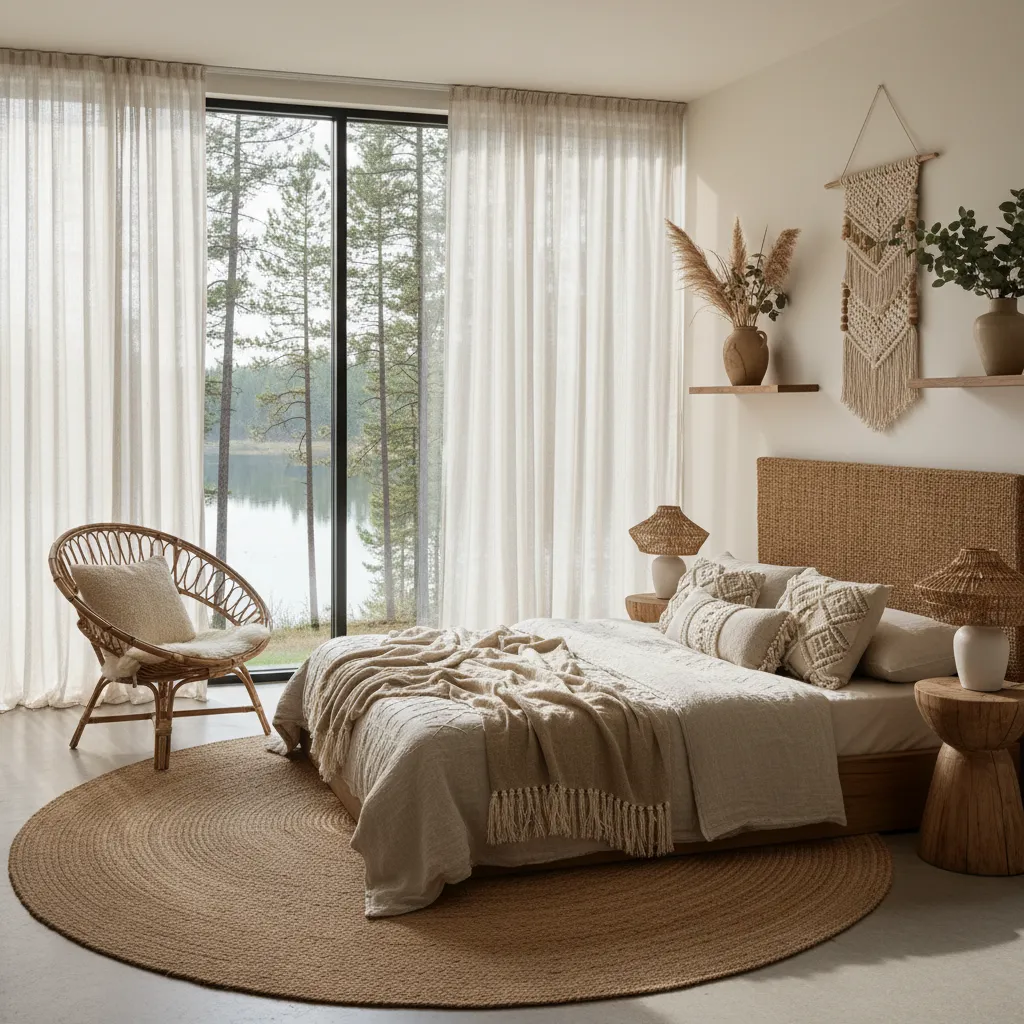
Lighting is the final layer of design. In a lake house, the goal is to maximize the view while maintaining privacy.
Avoid heavy velvet drapes that block the breeze. Opt for sheer linen panels that diffuse sunlight into a soft, ambient glow.
Position mirrors opposite windows. This trick reflects the lake view, effectively doubling the natural light in the room.
When the sun goes down, you still need warmth. Learning how to create a cozy winter bedroom look involves layering varied light sources, which applies here too.
Key Elements of Organic Boho Style
To achieve this look without it feeling cluttered, focus on these core elements. They balance aesthetics with lakeside functionality.
- The Statement Headboard: Choose rattan, cane, or raw wood to anchor the bed without visual bulk.
- Layered Lighting: Combine overhead woven pendants with ceramic table lamps for a warm evening atmosphere.
- Living Greenery: Large plants like Bird of Paradise or Olive trees blur the line between indoors and outdoors.
- Textural Bedding: Washed linen sheets in oatmeal, terracotta, or sage green offer breathable luxury.
- Organic Imperfection: Embrace handmade pottery or driftwood accents that celebrate natural irregularities.
Natural Nesting Notes
- Mix your weaves by pairing a chunky-knit jute rug with a fine-caned rattan headboard to create visual depth without adding color clutter.
- Maximize the lakeside glow by using sheer linen cafe curtains that cover only the bottom half of the window, preserving your view while ensuring privacy.
- Incorporate ‘found’ decor like smoothed driftwood or locally sourced lake stones in a handmade ceramic bowl to ground the room in its specific environment.
Anchoring Your Lakeside Retreat
Designing the perfect lake house bedroom isn’t just about style; it is about capturing the tranquility of the water right outside your window.
By combining sleek layouts with the depth of Benjamin Moore’s Hale Navy, you create a space that feels both modern and timelessly sophisticated.
Remember to keep your lines clean and your textures cozy. Let the view be the hero while your decor provides a soft, practical place to land.
Lakeside Design Dilemmas Solved
While Hale Navy is a classic, soft sage greens, warm driftwoods, and creamy whites also complement the natural landscape beautifully without overwhelming the view.
Hardwood or luxury vinyl plank is best for lake houses. They handle humidity and moisture better than carpet and clean up easily after sandy feet.
Opt for motorized solar shades or sheer linen curtains. You want to ensure privacy at night without blocking that stunning morning scenery.
Layering is your secret weapon. Use nubby wool throws, woven baskets, and matte wood finishes to soften clean lines and cool paint colors.
