
Table of Contents
- Selecting Fragrant Climbers: Top Varieties Like New Dawn and Eden for Porches
- Installing Structural Supports: Wire Systems That Save Siding and Trim
- Training Techniques: Wrapping Pillars While Preventing Wood Rot
- Safety Pruning: Managing Thorns Near High-Traffic Front Doors
- The Cottage Look: Companion Planting for Full-Season Porch Appeal
- Curating Your Cottage Entrance
- Design Dilemmas Solved
There is nothing quite so quintessentially charming as a cascade of climbing roses framing a front porch. This iconic element of cottage garden design transforms a simple entryway into a fragrant, welcoming embrace.
It suggests a storybook connection between the home and its landscape, creating an immediate sense of warmth and timeless appeal for all who arrive.
Achieving this classic look, however, involves more than just planting a rose and hoping for the best. Success lies in understanding the specific needs of climbing varieties, from providing the right support structure to performing the correct pruning.
A bit of practical knowledge is the key to cultivating a display that is both lush and healthy, rather than unruly and sparse.
This guide offers a clear, step-by-step path to creating your own stunning rose-covered porch. We will cover everything from selecting the ideal rose for your climate and home style to planting, training, and long-term care. Prepare to cultivate an entrance that not only looks beautiful but also feels like a true extension of your home’s heart.
Selecting Fragrant Climbers: Top Varieties Like New Dawn and Eden for Porches
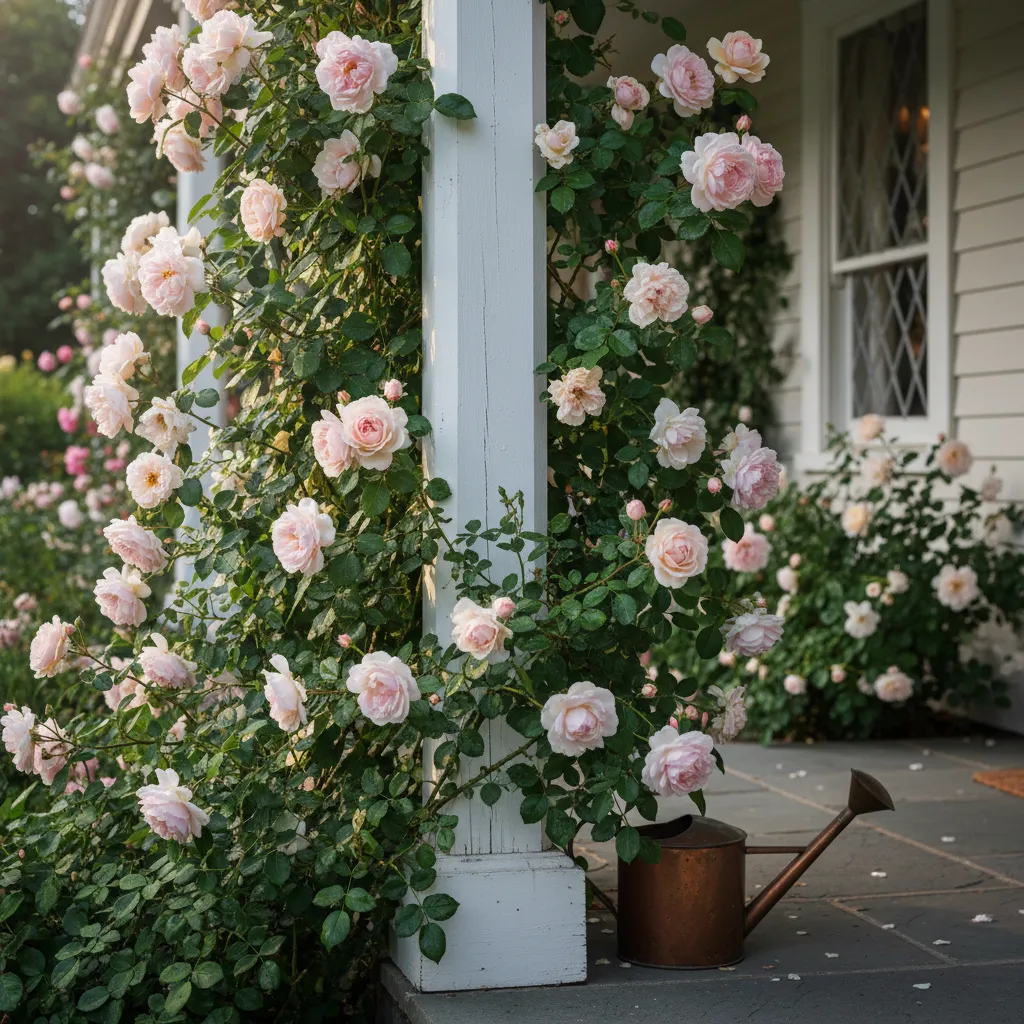
Scent is the invisible layer of exterior design. It transforms a simple porch into a sensory retreat. When choosing climbers, prioritize fragrance to create a welcoming spatial flow.
Selecting the right variety ensures your cottage garden feels curated, not chaotic. You want blooms that offer a velvet texture and a scent that lingers in the evening air.
A garden without fragrance is like a painting without light; the scent is the soul of the entrance.
The Romantic Classic: New Dawn
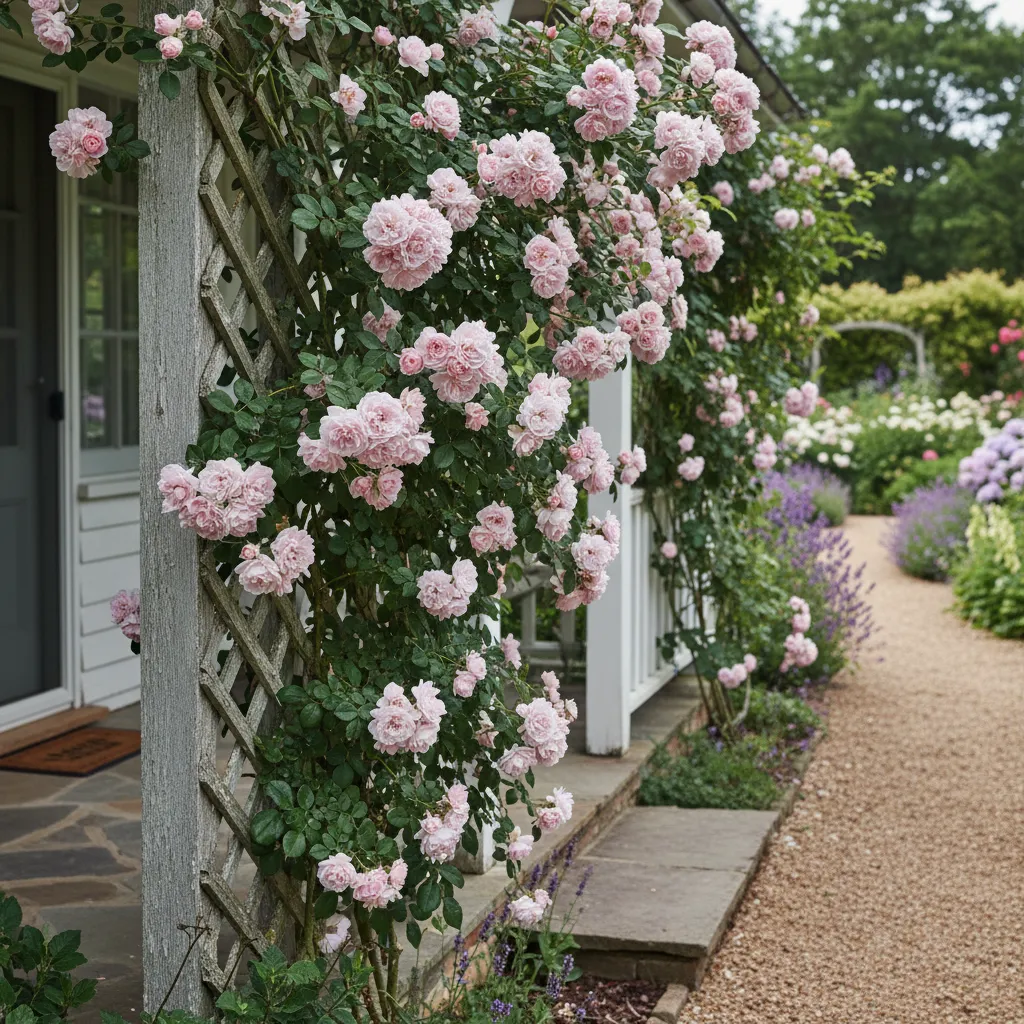
‘New Dawn’ is cherished for its silvery-pink petals. It blooms profusely and offers a sweet, fruity fragrance. The glossy foliage reflects ambient lighting beautifully at twilight.
This variety is vigorous and needs sturdy support. It looks stunning against dark siding or brick. The soft color palette bridges the gap between modern and vintage styles.
Ensure you have a robust structure in place. For inspiration on sturdy supports that look chic, explore beautiful yard divider and fence ideas for your trellis.
The Old-World Charmer: Eden (Pierre de Ronsard)
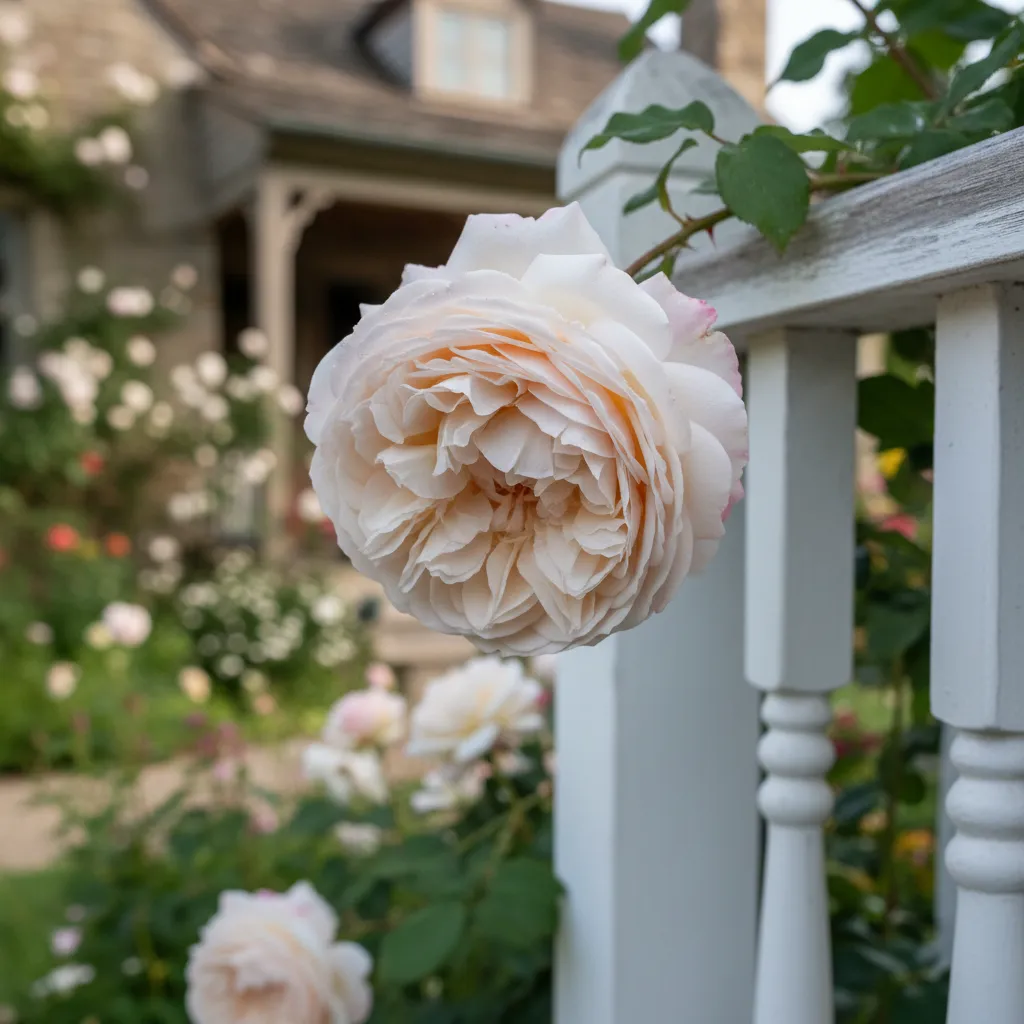
The ‘Eden’ rose creates an instant focal point. Its large, cabbage-like blooms are creamy white with a pink rim. This variety adds a heavy, luxurious texture to any vignette.
The scent is light but distinctively floral. It creates a romantic atmosphere without overpowering the space. Train the canes horizontally to encourage maximum blooming.
Consider the backdrop of your home when planting. These creamy blooms pop against dark paint. Check out these modern exterior colors that wow to find the perfect contrast.
When selecting climbing roses for a porch, always consider the mature size. A climber that grows to 20 feet is wonderful for a two-story home but can overwhelm a small cottage entrance.
Paul Zimmerman, Paul Zimmerman Roses
Comparison: Best Climbers for Porch Life
Choosing between varieties often comes down to maintenance and thorniness. Use this guide to match the rose to your lifestyle and porch traffic.
| Rose Variety | Fragrance Intensity | Thorn Status | Best Design Application |
|---|---|---|---|
| New Dawn | Moderate (Fruity) | Thorny | Large trellises away from walkways |
| Eden | Light (Classic Rose) | Lightly Thorny | Pillars and archways |
| Zephirine Drouhin | Strong (Raspberry) | Thornless | High-traffic entryways and doors |
| Lady of Shalott | Medium (Tea/Clove) | Medium Thorns | Warm-toned cottage aesthetics |
Thornless Options for High-Traffic Zones
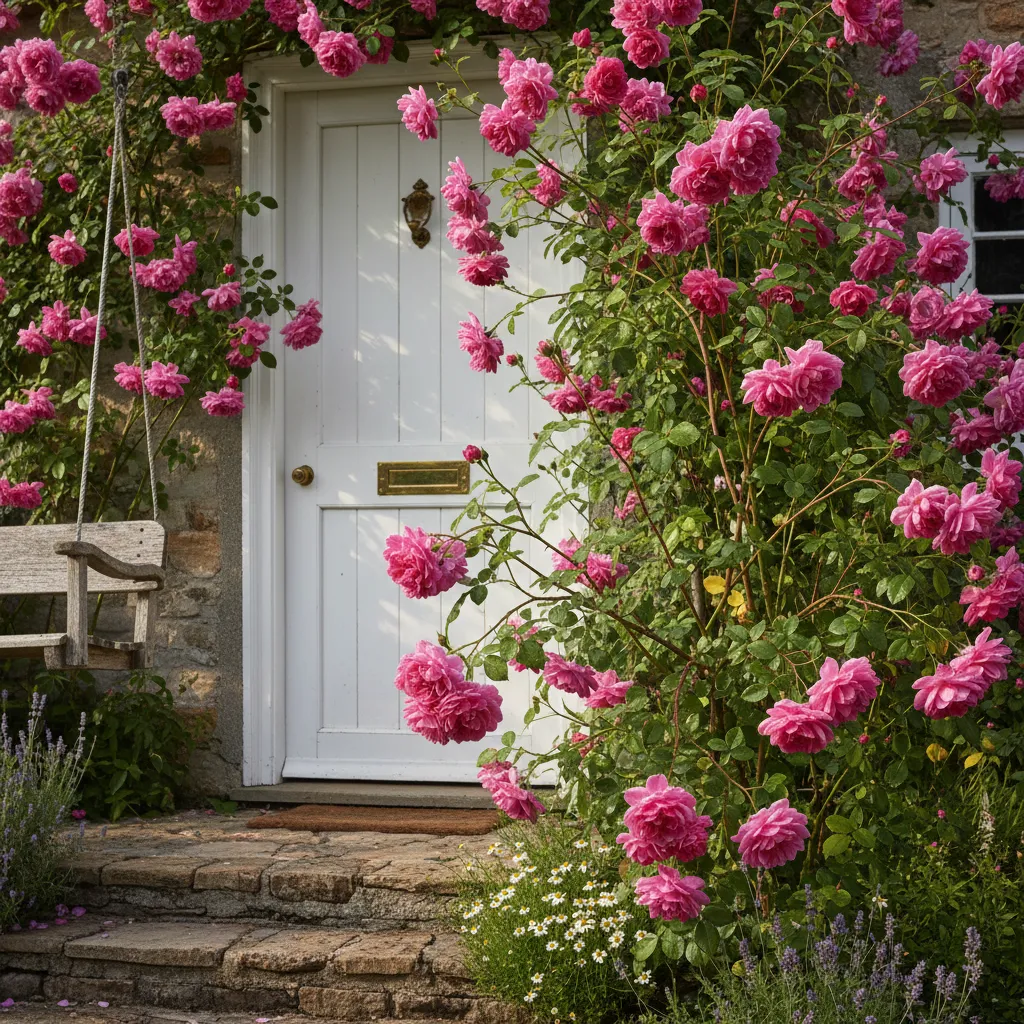
Functionality is critical near doorways. ‘Zephirine Drouhin’ is the top choice for high-traffic zones. It is completely thornless, saving guests from snags.
The deep pink blooms offer a striking contrast to white trim. Its strong raspberry scent greets visitors instantly. This variety tolerates shade better than most.
Using thornless varieties improves the usability of the space. You can place seating right next to the blooms. It allows for an immersive, worry-free experience.
Garden Design Secret
- Maximize your bloom count by training the main canes of varieties like the ‘Eden’ horizontally rather than vertically; this encourages the plant to produce lateral shoots, creating a wall of flowers instead of just top-heavy blooms.
- Map your climbers to your movement: install thornless options like ‘Zephirine Drouhin’ on archways and pillars near high-traffic seating to prevent clothing snags, saving thorny varieties for distant trellis backdrops.
Installing Structural Supports: Wire Systems That Save Siding and Trim
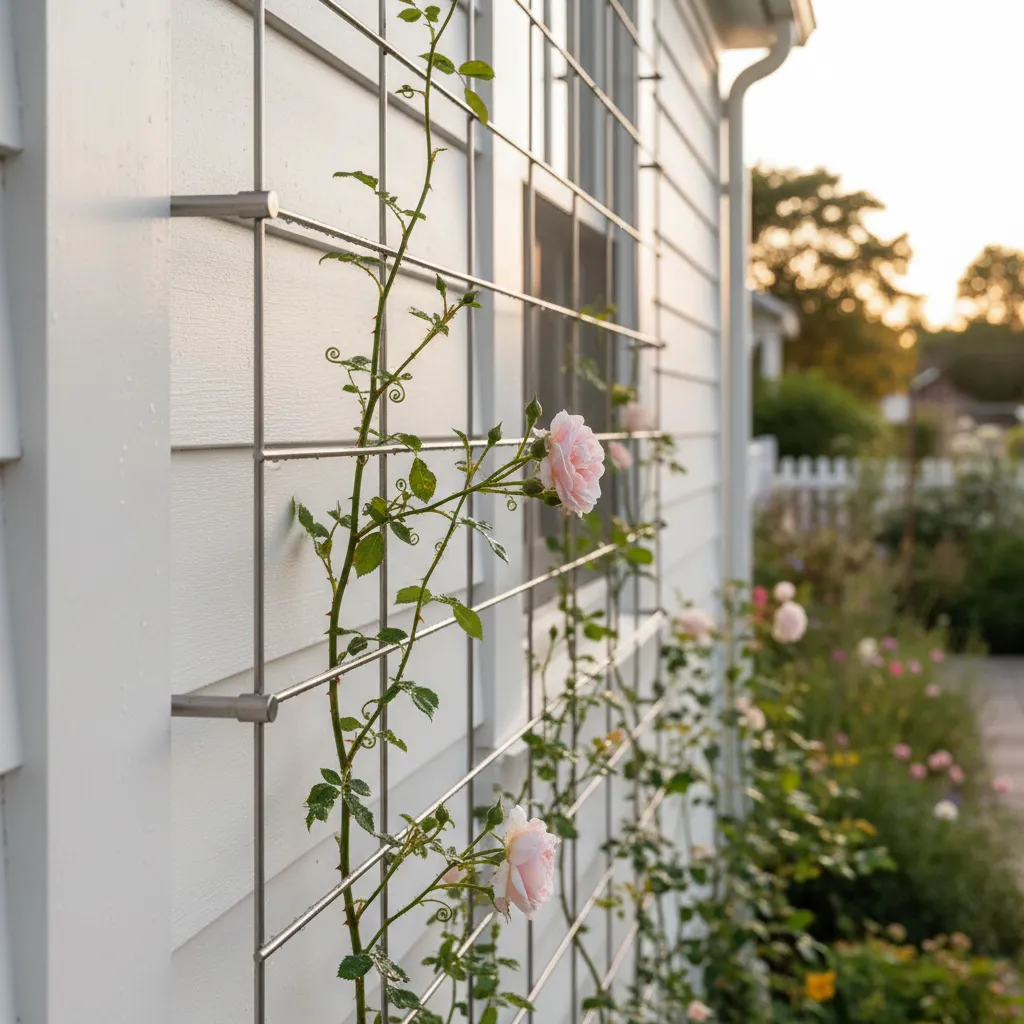
Traditional wooden trellises can sometimes look heavy or cluttered against a delicate porch design. They often obscure the very architecture you want to highlight.
A wire tension system offers a sophisticated and minimalist alternative. It creates the illusion that your roses are floating effortlessly near the facade.
This method is currently the gold standard for preserving the integrity of your home’s exterior. It prevents the vines from attaching directly to the wood.
If you have recently updated your home with one of those stunning modern exterior colors, this system protects that investment.
The most elegant garden design supports the architecture of the home without obscuring its soul.
The Designer’s Secret
- Opt for marine-grade stainless steel hardware to ensure the system doesn’t rust and leave unsightly streaks on your fresh siding.
- Install the wires at least 3 inches away from the wall to create an air gap; this prevents moisture buildup that causes wood rot and allows the vine to breathe.
- Map out a geometric pattern with painter’s tape before drilling; diamonds or fan shapes make the structure look like architectural art even in winter when the vines are bare.
Creating the Essential Air Gap
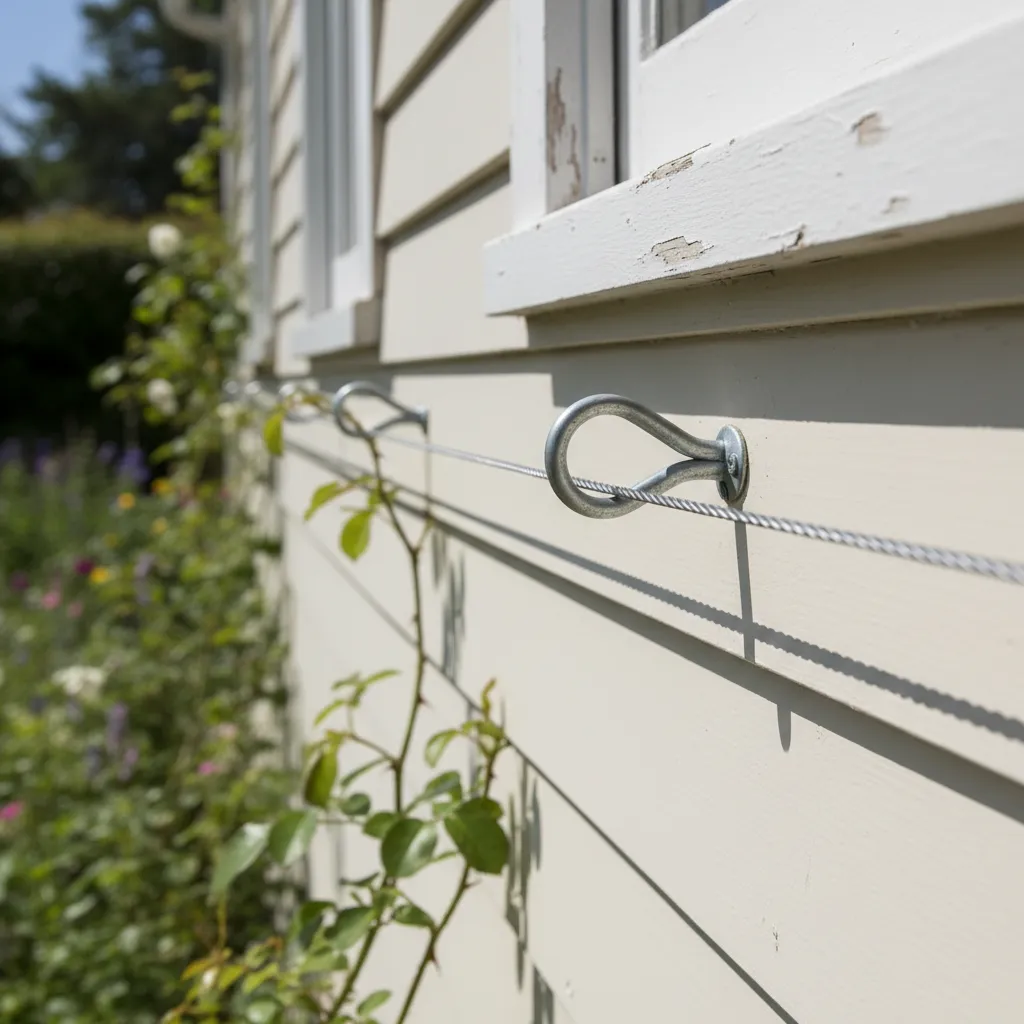
The primary function of a wire system is to create a physical gap between the plant and your siding. This is critical for preventing rot and mildew.
Moisture can get trapped behind dense foliage. A wire system held by long eye bolts keeps the foliage about three inches away from the wall.
This allows for necessary airflow. The wind can dry out the siding after a rainstorm, preventing moisture damage to your paint or stucco.
This spacing also discourages pests from nesting directly against your house. It creates a healthier environment for both the structure and the rose.
If you are training a rose against a wall or fence, run horizontal wires… spaced 30-45cm (12-18in) apart. Use vine eyes to hold the wires in place.
Royal Horticultural Society, Pruning and Training Climbing Roses
The Airflow Advantage
- Select stainless steel hardware to prevent rust streaks from marring your siding over time.
- Use heavy-duty wall anchors when installing eye bolts into masonry to support the significant weight of a mature climbing rose.
- Check wire tension every spring before the growing season to ensure your air gap remains consistent as the plant gains mass.
Hardware Selection for Durability
Selecting the right metal finish is vital for preventing rust stains on your porch. Cheap galvanized metal will eventually corrode and streak.
Marine-grade stainless steel is the superior choice for outdoor durability. It resists weathering and maintains a clean, silver shine.
Use turnbuckles to keep the wires taut. Climbing roses can become heavy when in full bloom, causing loose wires to sag.
A tight wire provides the sturdy framework needed for training main canes. This ensures your spatial flow remains intentional and tidy.
Recommended Hardware Components
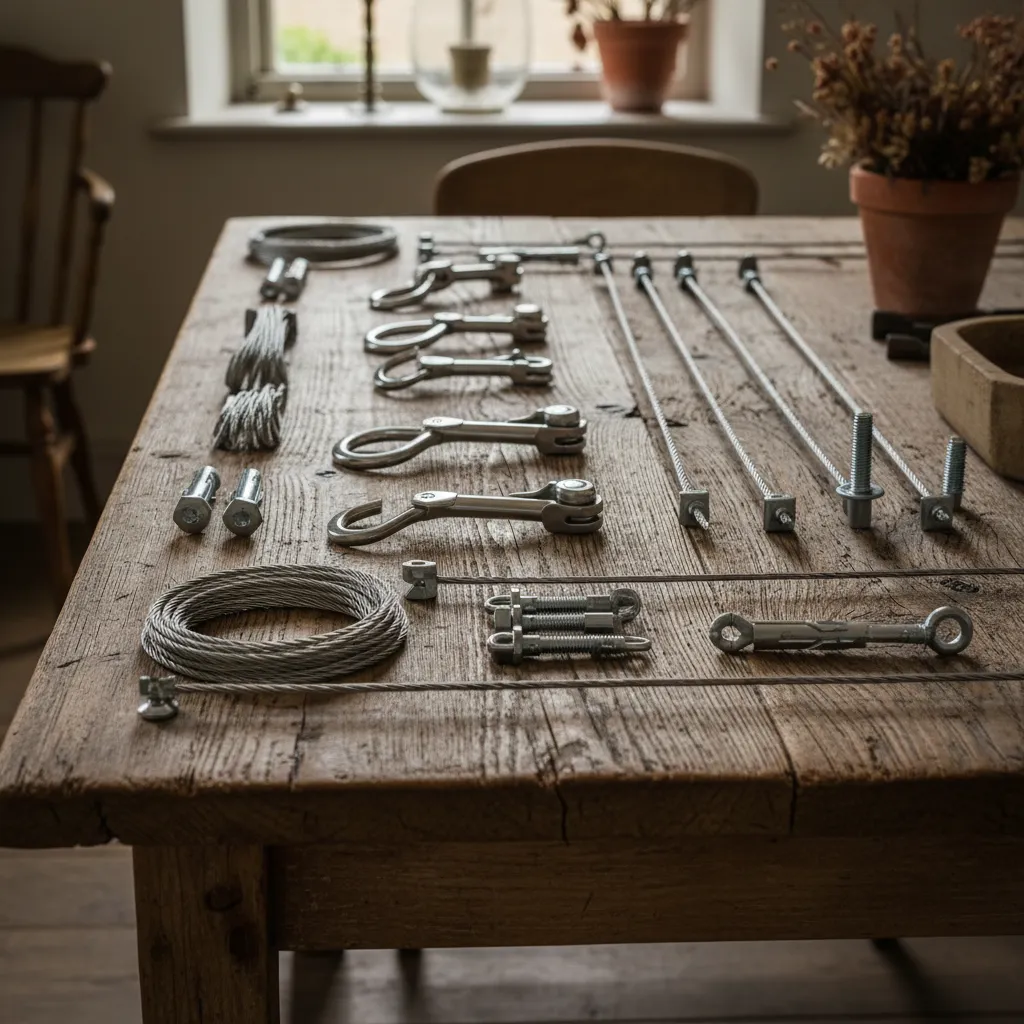
To build a system that lasts, ensure you gather the correct components. Here is a breakdown of the essential parts needed for a secure installation.
| Component | Material Spec | Function |
|---|---|---|
| Wire Rope | 316 Stainless Steel (1/8 inch) | Supports the weight of mature, woody canes without snapping. |
| Turnbuckles | Hook & Eye Style | Allows you to re-tighten the system as wires stretch over time. |
| Wall Anchors | Lead or Masonry Sleeves | Secures eye hooks firmly into brick or stone without cracking it. |
| Stand-off Posts | 3-inch Stainless Columns | Pushes the wire away from the wall to ensure proper airflow. |
By using these specific materials, you ensure the structure disappears visually. This lets the texture of the rose leaves and blooms take center stage.
The Durability Blueprint
- Opt for 316-grade stainless steel to prevent ‘tea staining’ and corrosion, especially in humid or coastal environments.
- Perform a ‘tension check’ every spring to adjust turnbuckles, as wires naturally stretch under the weight of new seasonal growth.
- Ensure stand-off posts provide at least 3 inches of clearance to facilitate airflow and prevent moisture-related diseases on your rose canes.
Training Techniques: Wrapping Pillars While Preventing Wood Rot
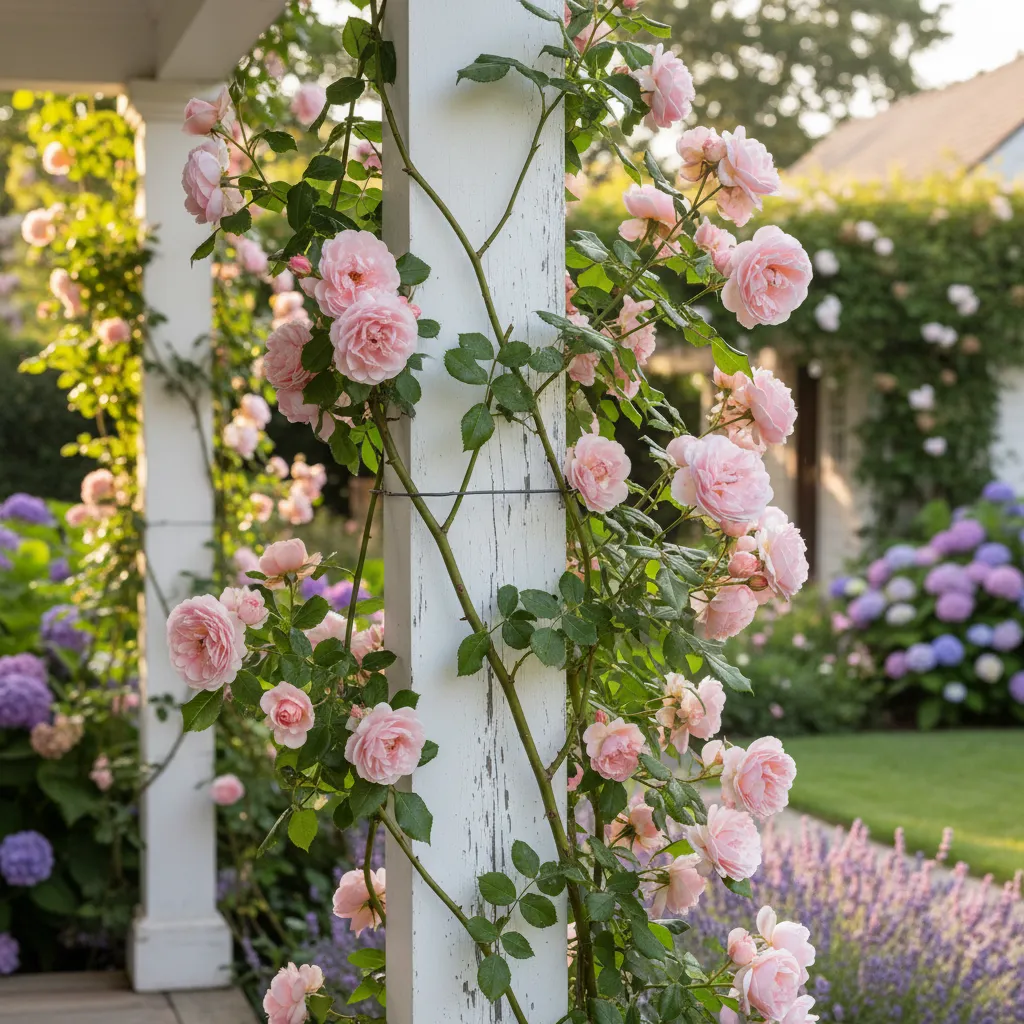
Transforming a bare post into a floral masterpiece requires more than just planting a rose. Direct contact between thick vines and wood is a recipe for moisture damage.
When damp foliage clings to timber, it prevents the surface from drying. This trapped moisture accelerates rot, potentially compromising the structural integrity of your porch.
To maintain a cozy and safe entrance, you must create a physical barrier. This buffer zone allows air to circulate freely behind the foliage, keeping the wood dry.
True garden design marries the romance of nature with the discipline of engineering.
Structure & Stem Strategy
- Install a galvanized wire mesh or trellis at least one inch away from the timber to ensure moisture-wicking airflow.
- Use stainless steel spacers to mount your support system, preventing direct contact between damp vines and the wooden surface.
- Prune internal foliage regularly to reduce density against the pillar, allowing the sun to dry the wood after heavy rain.
The Invisible Tension Wire Method
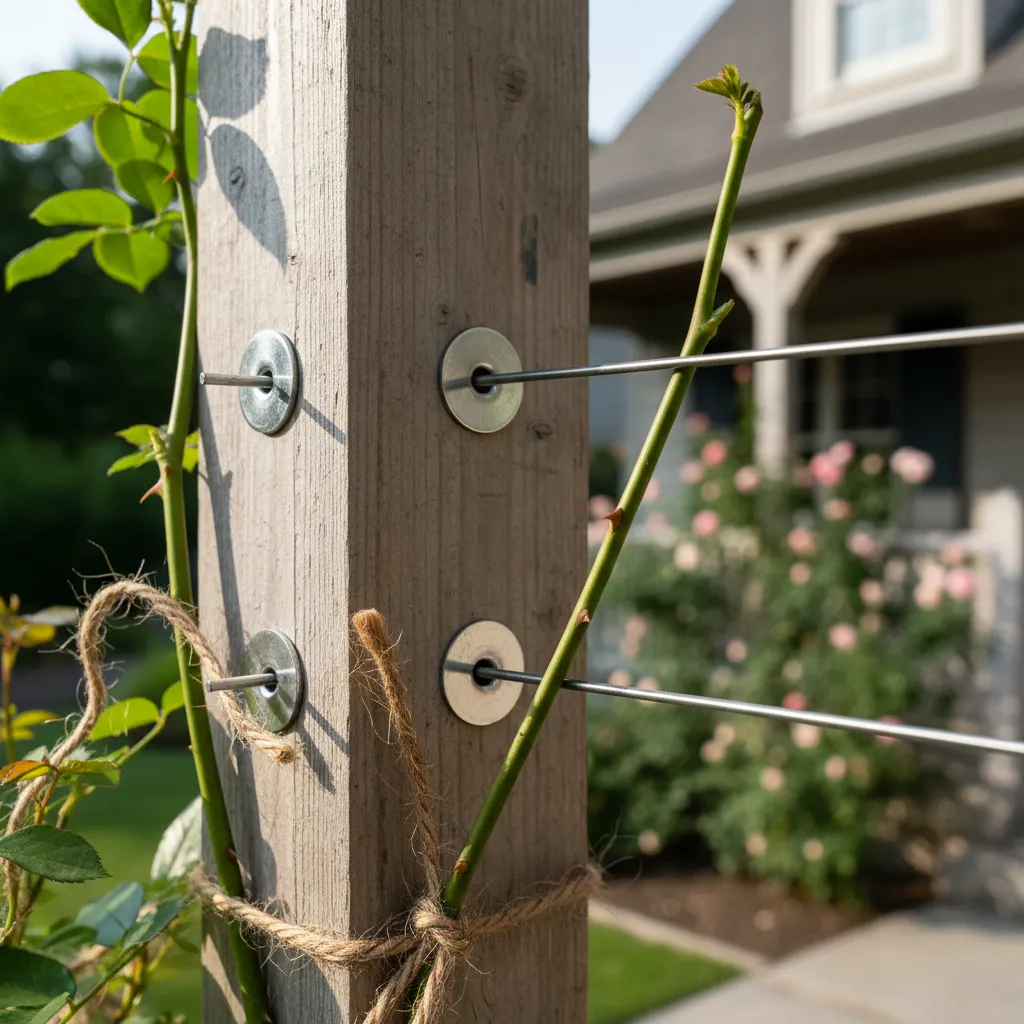
The most sophisticated way to train roses without touching the wood is using a tension wire system. It looks seamless and offers the necessary “air gap” for preservation.
Install stainless steel eye hooks vertically up the pillar, spaced about 12 inches apart. Crucially, place a small nut or washer between the wood and the eye hook.
This tiny spacer ensures the wire sits an inch off the pillar. It creates a floating effect where the front porch decor feels organic yet structured.
Run vertical wires through these hooks. The rose canes are then tied to the wire, never touching the actual column. This protects your paint finish and prevents mold.
Support is critical. A climbing rose is not a clinging vine… it needs to be tied to a structure. Use strong supports that allow for air circulation to prevent fungal diseases.
The Morton Arboretum, Climbing Roses Care Guide
The Architect’s Edge
- Opt for soft garden twine or flexible rubber ties to secure canes to the wire; this prevents bark damage and allows the stems to expand naturally as they mature.
- Check wire tension annually every spring; extreme temperature shifts can cause stainless steel to expand or contract, requiring a quick turn of the eye hook to keep the lines taut.
- For a truly ‘invisible’ finish, paint the eye hooks the exact shade of your porch pillars before installation so they blend seamlessly into the architecture.
Spiral Wrapping for Maximum Blooms
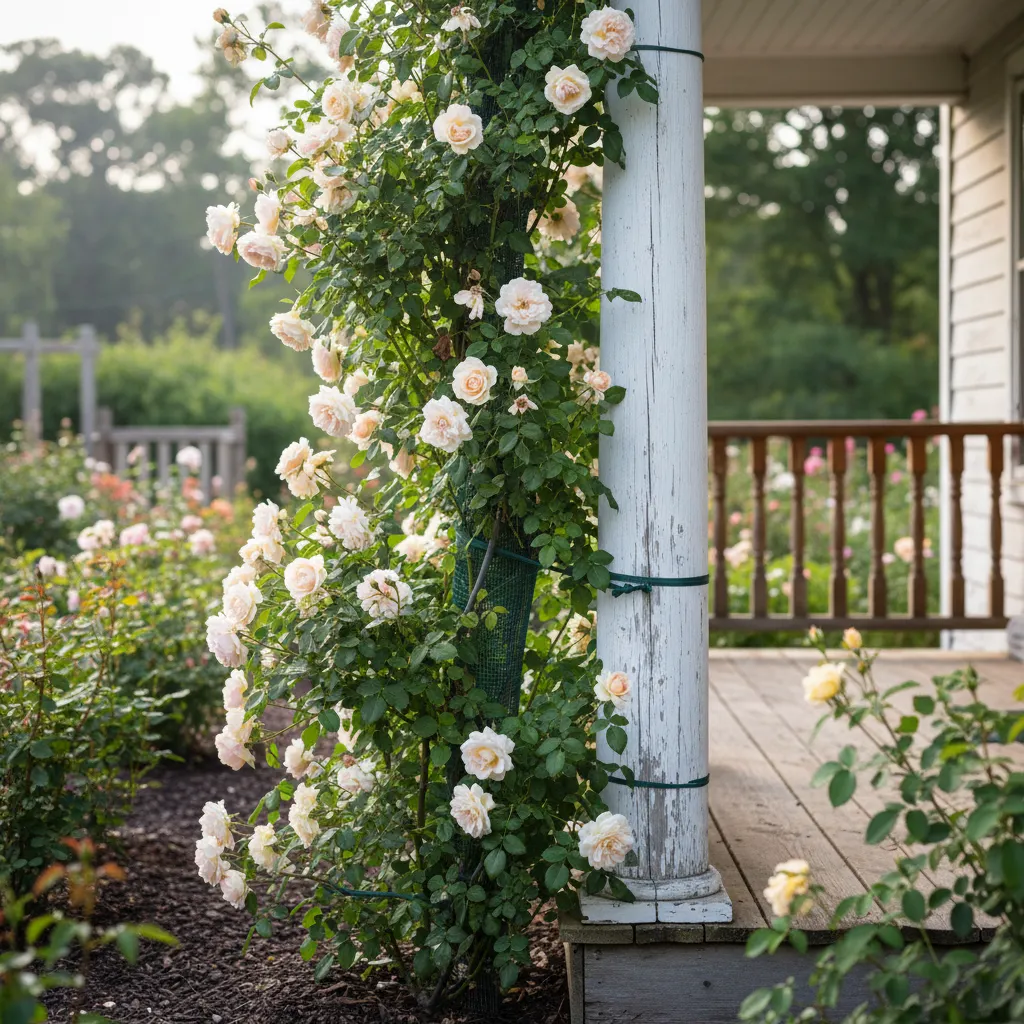
Once your protective structure is in place, the way you train the canes dictates the floral display. Avoid letting canes shoot straight up, which causes “bare legs.”
Instead, gently wrap the main canes around the pillar in a loose spiral. This horizontal orientation slows the flow of sap, encouraging lateral shoots to break.
These lateral shoots are where the blooms appear. The result is a column clothed in velvet-soft petals from top to bottom, rather than just a flower cluster at the roofline.
Secure the canes to your wire framework using soft materials. This mimics the charm of beautiful yard divider ideas where structure meets nature.
Best Materials for Securing Canes
Choosing the right tie material is vital to prevent damage to the rose canes as they expand. Here is a comparison of materials to use on your porch pillars.
| Material | Aesthetic Impact | Durability | Best Use Case |
|---|---|---|---|
| Jute Twine | Natural, invisible, rustic | Low (1 Season) | Young, green stems that need gentle guidance. |
| Flex Tie (Rubber) | Subtle dark green | High (Multi-year) | Thick, woody main canes that need strong support. |
| Velcro Garden Strips | Noticeable green tape | Medium | Temporary adjustments while training new growth. |
| Nylon Pantyhose | Neutral (if tan) | Very High | Heavy, old canes requiring soft but firm tension. |
The Bloom Booster’s Secret
- Angle your canes at roughly 45 degrees as you wrap; this perfect tilt maximizes sap distribution for the most prolific lateral flowering.
- Leave a two-finger gap between the cane and the pillar when tying to prevent the support material from ‘choking’ the stem as it grows thicker.
- Train your roses in early spring while the new growth is still pliable, as older wood becomes brittle and prone to snapping if bent too sharply.
Managing Weight and Pruning
A mature climbing rose is surprisingly heavy. Ensure your pillar is structurally sound before starting. The wet weight of foliage and blooms adds significant load.
Prune regularly to keep the vine within the bounds of your floating wire system. If a cane slips behind the wire and touches the wood, gently guide it back out.
This ongoing maintenance ensures your spatial flow remains airy. It keeps the entry feeling curated and intentional, rather than overgrown and chaotic.
The Art of Restraint
- Check your pillar’s stability after heavy rainfall, as the added weight of wet foliage and blooms creates the maximum load your structure will ever face.
- Use soft garden twine to redirect stray canes back to the wire system immediately, preventing them from wedging against the pillar and causing moisture traps or wood damage.
- Thin out the oldest canes every few seasons to encourage fresh growth and maintain the airy, curated look that prevents the entry from feeling claustrophobic.
Safety Pruning: Managing Thorns Near High-Traffic Front Doors
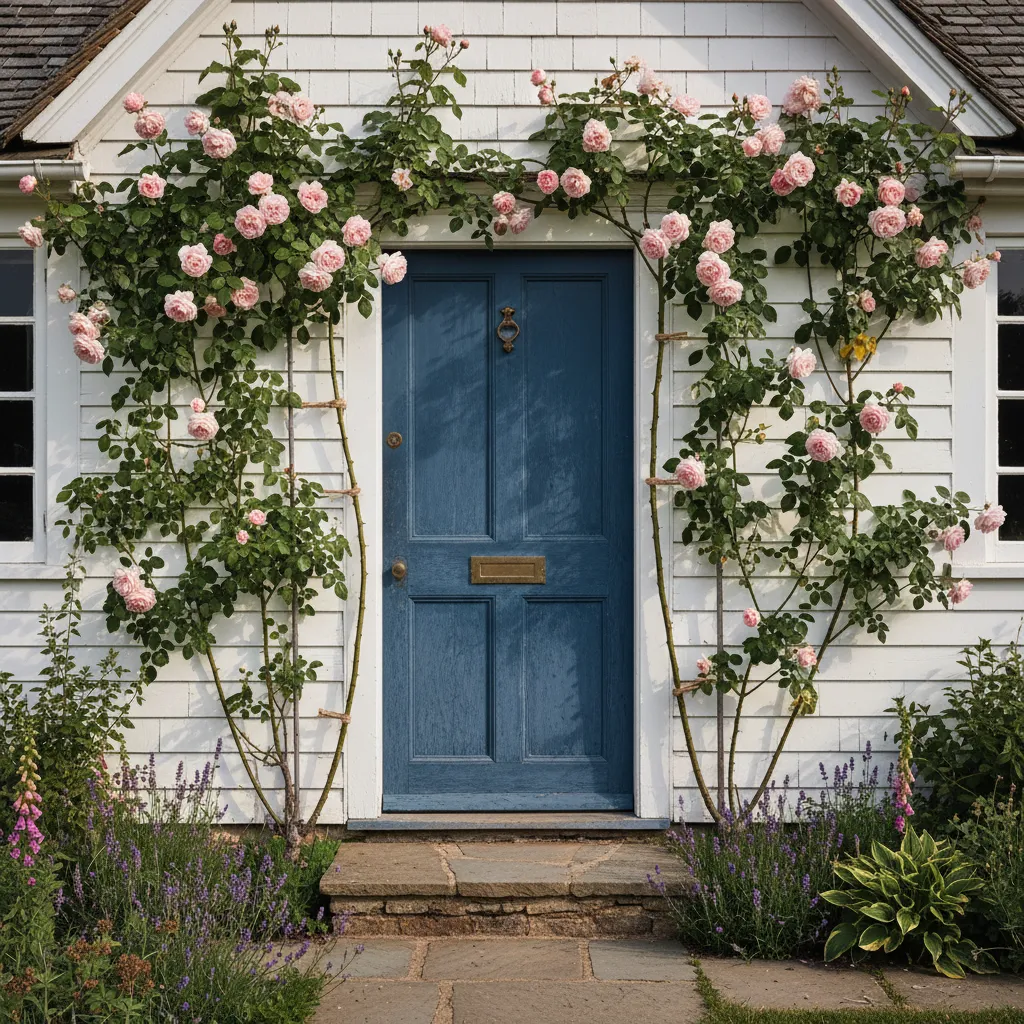
The romance of a cottage garden often meets reality at the front door. While lush blooms look stunning, thorny canes can snag clothing and scratch guests.
Creating a safe transition from the garden to your entryway requires a balance of aesthetics and strict discipline. Functionality is key here.
You must maintain a clear visual and physical path. This ensures your home feels welcoming rather than overgrown or hazardous to visitors.
A truly welcoming entrance offers the fragrance of roses without the sting of their thorns.
Start by assessing the spatial flow of your porch. Observe where people naturally reach for the doorbell or lean against the railing.
Any cane protruding into this “active zone” must be tied back or pruned. Use soft jute twine to secure heavy canes to your trellis or masonry.
For those refining their small front yard landscaping, this vertical control creates a sense of order in compact spaces.
The Thornless Touch
- The Bulky Coat Test: Walk through your entryway wearing a thick sweater or carrying a large bag; any branch that snags you is a candidate for immediate pruning.
- Precision De-thorning: Use a small pair of pliers to snap off individual thorns at shoulder and eye height on canes that cannot be moved, ensuring guest safety without removing the bloom.
- Flexible Training: Use green stretch-tie tape rather than wire to secure canes; it allows the plant to grow while keeping thorny branches tucked tightly against the support structure.
Establishing the “Sweater Safety” Zone
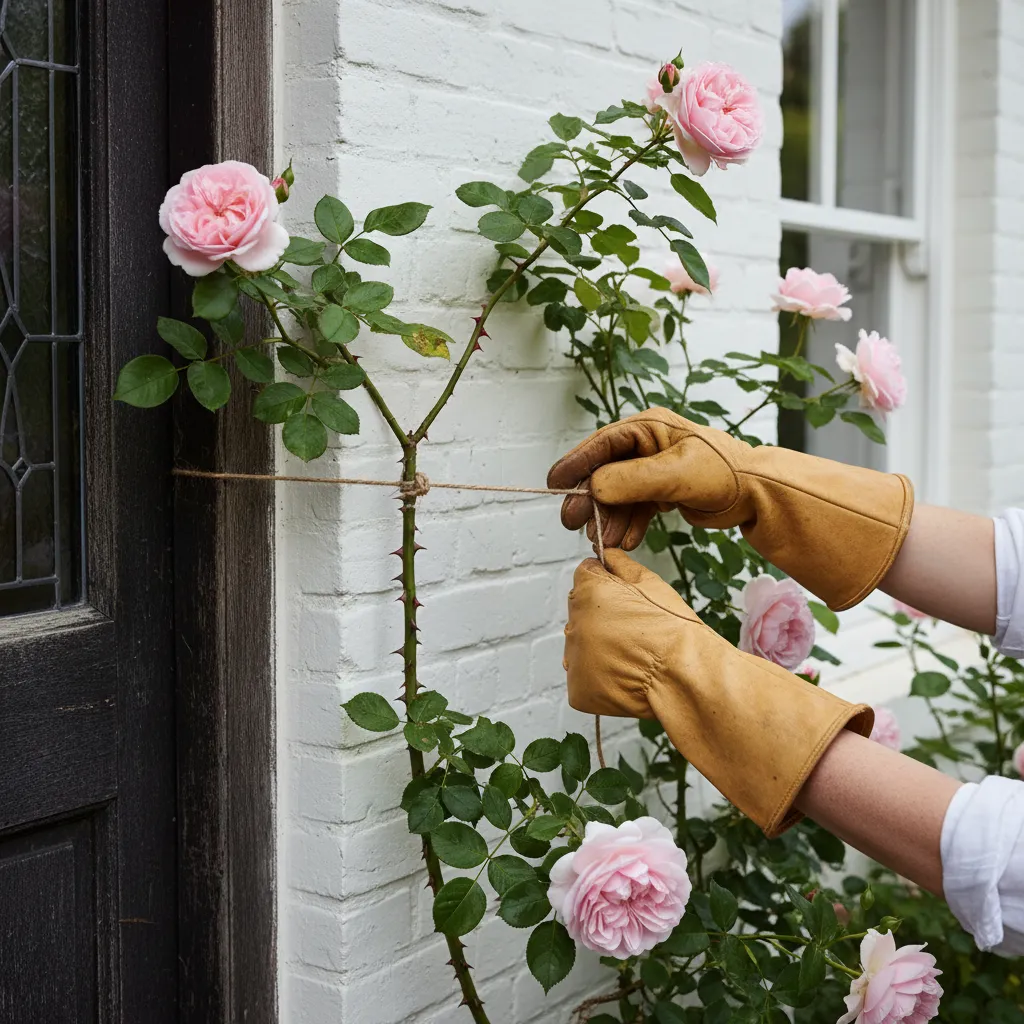
Interior designers often refer to “circulation paths” indoors. The same logic applies to your exterior vignette.
Keep a clear buffer zone of at least 18 inches around the door frame. This prevents snagged sweaters and allows safe passage for delivery boxes.
If you have an elaborate double door design, ensure the roses frame the architrave without encroaching on the swing radius.
The goal is to frame the view, not obscure it. Train the main structural canes to grow horizontally above the door lintel.
This placement encourages lateral growth and more blooms, creating a floral canopy that remains safely out of reach.
Tie in new stems regularly to the support… If stems are allowed to flail around they can suffer wind damage and be difficult to manage.
Royal Horticultural Society, Pruning and Training Climbing Roses
The Snag-Free Secret
- Use a measuring tape to mark an 18-inch buffer zone before mounting your trellis to ensure thorns never meet your favorite knitwear.
- Choose soft, flexible garden ties instead of wire to gently guide canes away from the door swing radius without scarring the stems.
- Test your rose placement by carrying a bulky delivery box through the doorway; if you have to twist or duck, your floral canopy needs more horizontal training.
Essential Tools for Safe Maintenance
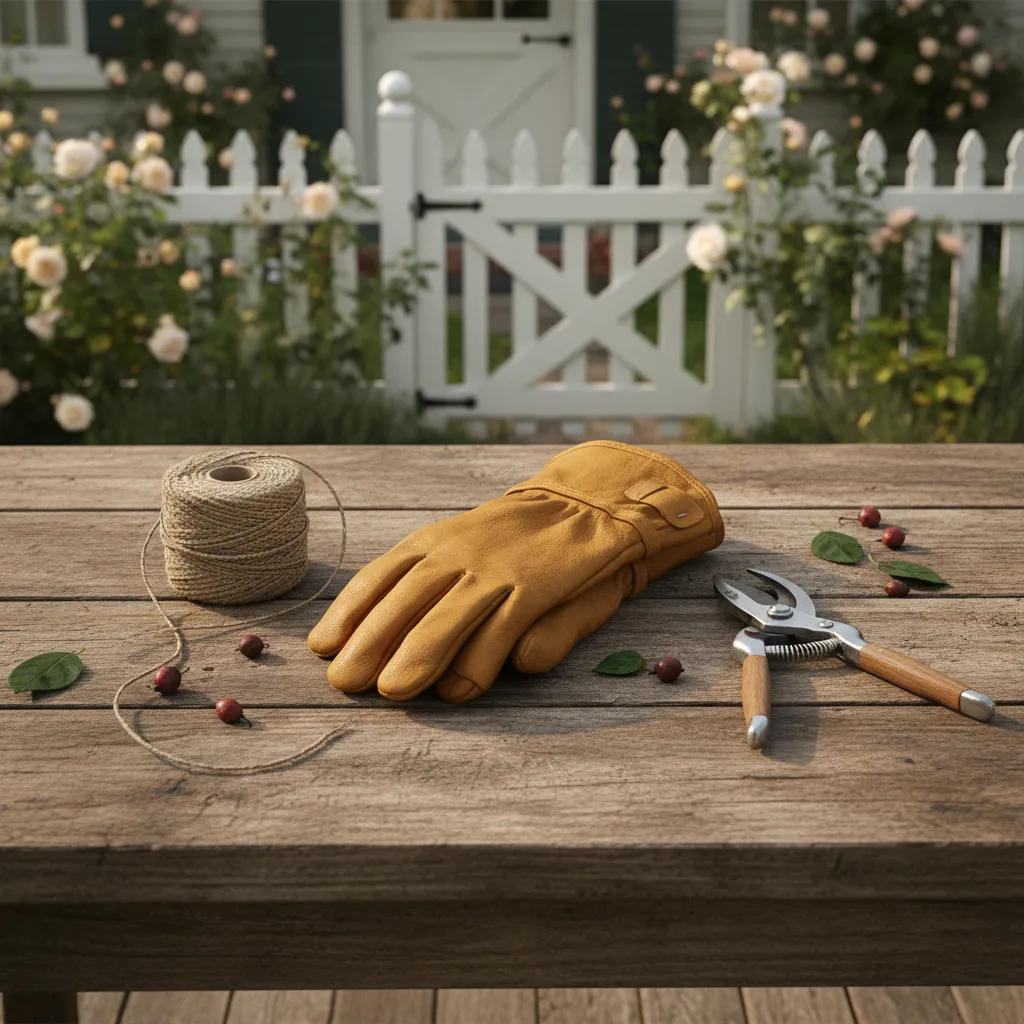
Proper maintenance requires the right gear. Using appropriate tools protects your hands and ensures clean cuts that heal quickly.
Invest in high-quality materials that last. The tactile experience of gardening is improved with tools that feel heavy and solid in the hand.
- Gauntlet Gloves: Choose goat-skin leather that extends up the forearm to protect against deep scratches while handling mature canes.
- Bypass Pruners: Keep them razor-sharp. A clean cut prevents disease entering the rose wood, maintaining a healthy, organic appearance.
- Flexi-Tie or Jute: Avoid wire, which cuts into the plant. Soft materials blend with the bark and expand as the cane grows thick.
- Telescopic Loppers: Essential for reaching rogue canes climbing near roof gutters without needing a ladder on the porch.
Regular “tipping” is better than a massive annual chop. Walk your porch weekly and snip just the tips of outward-facing growth.
This habit keeps the texture of the wall lush but flat. It preserves the ambient light reaching your front windows.
If thorns remain a major concern for young children, consider planting thornless varieties like Rosa ‘Zephirine Drouhin’ near the entry.
These varieties offer the same visual drama and satin petal texture without the risk, perfect for high-traffic family zones.
Pruning Mastery
- Sanitize your bypass pruners with rubbing alcohol between bushes to prevent the spread of soil-borne pathogens or rust.
- Use a diamond sharpening stone once a month to ensure your blades slice rather than crush the stems, promoting faster healing.
- Condition your leather gauntlet gloves with mink oil occasionally to keep them supple and prevent cracking, ensuring maximum dexterity and protection.
The Cottage Look: Companion Planting for Full-Season Porch Appeal
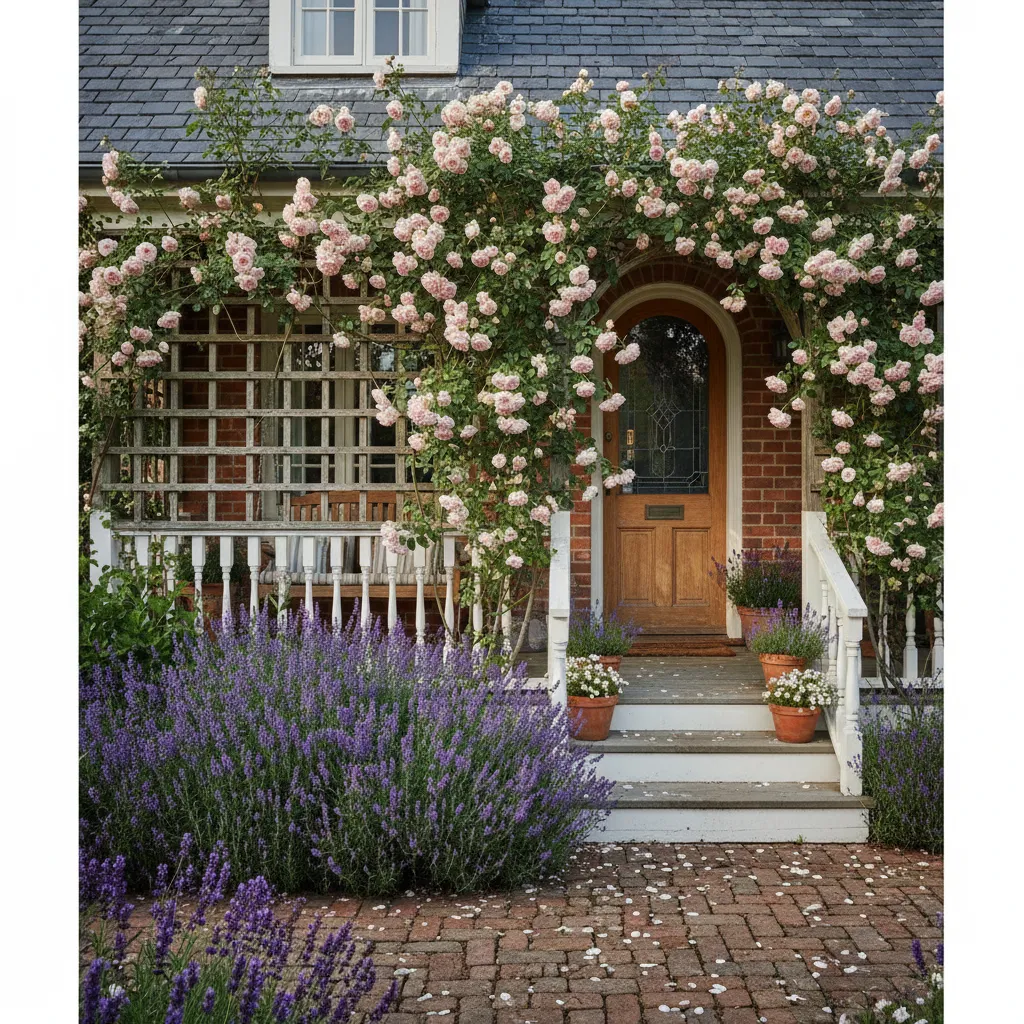
A solitary climbing rose is undeniably beautiful, but it can look stark during the off-season. To achieve a true cottage vibe, you must embrace layering.
Companion planting fills the visual gaps and extends the beauty of your porch. It creates a lush, organic tapestry that feels curated yet effortless.
A cottage garden thrives on diversity, turning a simple rose trellis into a living, breathing ecosystem of color and scent.
Hiding the “Knobby Knees”
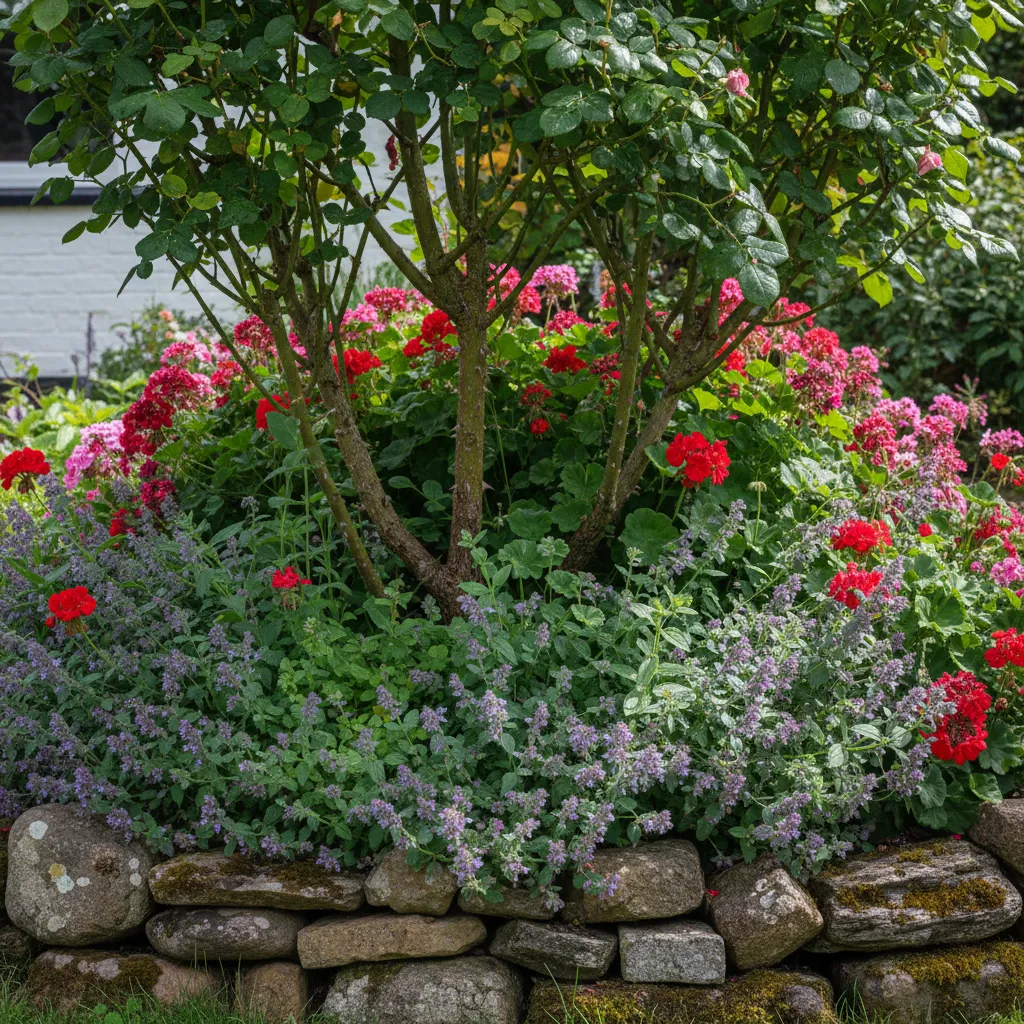
Mature climbing roses often lose their lower leaves, exposing woody, bare stems. Gardeners affectionately call these “knobby knees.”
Mask these bare spots by planting bushy perennials at the base. Lavender is a top choice, adding silvery foliage and a calming scent.
For a softer look, try Nepeta (catmint). Its sprawling purple hazes soften the hard lines of the trellis and spill beautifully onto walkways.
If you are designing a new planting area, consider exploring cheap outdoor flower bed border ideas to frame these layers.
Seasonal Succession Strategy
The goal is to ensure your porch remains inviting even when the roses are resting. You need a mix of early bloomers and late-season stars.
| Season | Plant Partner | Visual Role |
|---|---|---|
| Spring | Alliums & Tulips | Provides color while rose leaves are just emerging. |
| Summer | Clematis | Intertwines with roses for a double dose of blooms. |
| Autumn | Sedum | Adds rich copper tones as rose blooms fade. |
| Winter | Boxwood | Maintains evergreen structure near the foundation. |
Clematis are the perfect partner for climbing roses… If you grow a late-flowering clematis, you will extend the season of interest.
The Royal Horticultural Society, Clematis: Growing Guide
Potted Accents for Depth
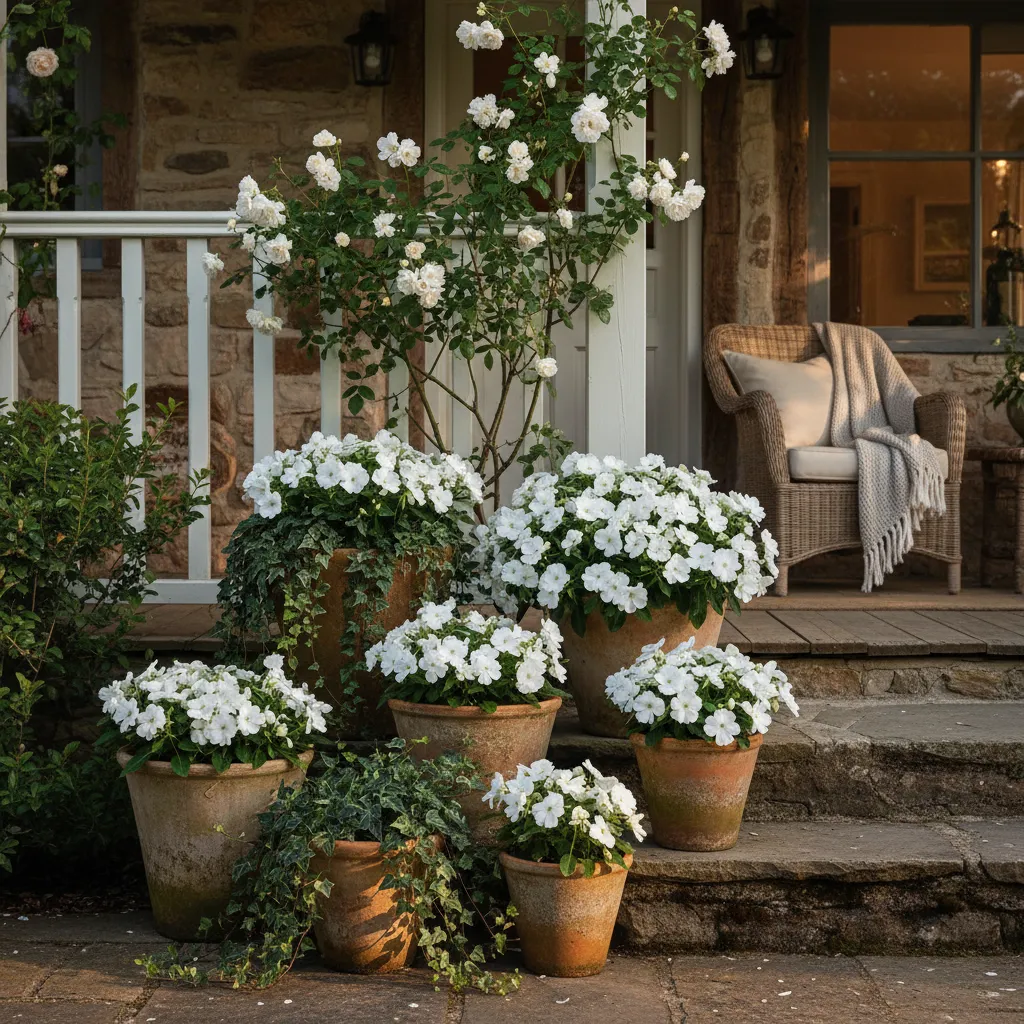
Not all companion plants need to go in the ground. Use containers to add height and texture directly on the porch floor or steps.
Cluster terracotta pots filled with trailing ivy or white alyssum. These soften the transition between the paved porch and the garden beds.
As the weather cools, swap out summer annuals for hardier varieties. Look into fall plant pot ideas to keep the color alive.
This approach allows you to change the “accessories” of your porch without disturbing the delicate roots of your climbing roses.
Cottage Garden Secrets
- To keep clematis roots cool; the perfect rose companion; place a large flat stone or a heavy layer of mulch over their base to retain moisture and provide necessary shade.
- When masking ‘knobby knees,’ choose long-blooming perennials like Salvia or Geranium ‘Rozanne’ to provide a constant color bridge between the rose’s flowering cycles.
- Mirror the heights of your garden beds in your porch containers by using the ‘Thriller, Filler, Spiller’ method to create a seamless visual transition from the ground up.
Curating Your Cottage Entrance
Climbing roses transform a static facade into a living tapestry. They bridge the gap between architecture and nature, softening hard lines with organic beauty.
Whether you choose the silvery sheen of ‘New Dawn’ or the romantic depth of ‘Eden’, fragrance is key. It turns a simple arrival home into a sensory event.
Remember to account for structure and growth habits. A well-supported vine ensures your porch remains a cozy retreat rather than a chaotic jungle.
Start small, train them gently, and watch your cottage garden dreams climb to new heights. Your front porch is waiting for its crowning glory.
Design Dilemmas Solved
For busy entryways, ‘Zephirine Drouhin’ is superior. It is nearly thornless, preventing snags on clothing while delivering a potent raspberry scent.
Use eye screws and galvanized wire for a minimalist look. Avoid wrapping canes directly around pillars to prevent moisture damage to the wood.
Yes, but choose a large container (at least 20 gallons). Select compact climbers like ‘Starlet’ varieties to ensure the roots have ample room to thrive.
Wait until the second or third year to prune heavily. In established roses, prune in late winter or early spring just as the buds begin to swell.
