
Table of Contents
- The Narrow Strip Layout: Rail-Mounted Tables and Slim Bistro Sets
- The Square Juliet Layout: Corner Lounging With Vertical Privacy Screens
- The Compact L-Shape: Multi-Functional Storage Benches for Clutter-Free Zones
- The Open-Air Micro Deck: Weather-Proof Textiles and Solar String Lighting
- The Foundation Layer: Rental-Friendly Interlocking Tiles and Geometric Rugs
- Creating Your Sky-High Sanctuary
- Tiny Balcony Dilemmas Solved
Living in the city often means sacrificing outdoor space, yet even the tiniest balcony holds immense potential. It is not just about placing a chair outside; it is about extending your living area into the open air.
With the right modern design approach, a cramped concrete slab can transform into a serene sanctuary for morning coffee or evening reads.
Simplicity is the secret weapon for small square footage. By focusing on clean lines, multi-functional furniture, and vertical gardening, you can maximize every inch without cluttering the view.
We will explore clever layout hacks that make tight corners feel spacious and inviting while curating a look that feels sophisticated rather than chaotic.
You do not need a massive renovation budget to achieve these results. A few strategic textures, the right lighting, and durable textiles can completely change the atmosphere.
Whether you rent or own, these ideas strike the perfect balance between high-end aesthetics and everyday comfort so you can turn that overlooked balcony into your favorite room.
The Narrow Strip Layout: Rail-Mounted Tables and Slim Bistro Sets
Designing a narrow balcony often feels like solving a complex puzzle. The challenge lies in maintaining a comfortable spatial flow without cluttering the limited floor area.
For these bowling-alley style layouts, standard furniture simply occupies too much depth. This creates a cramped atmosphere that discourages actual daily use of the space.
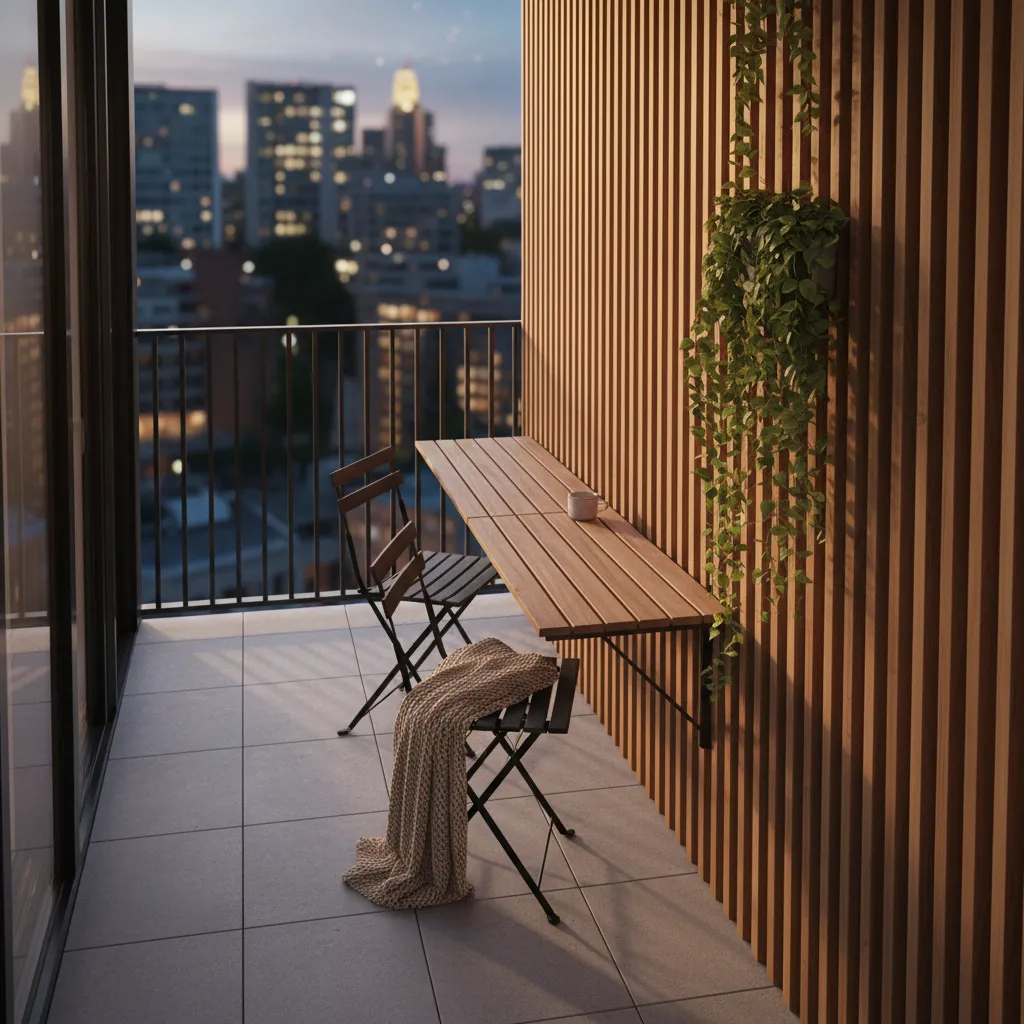
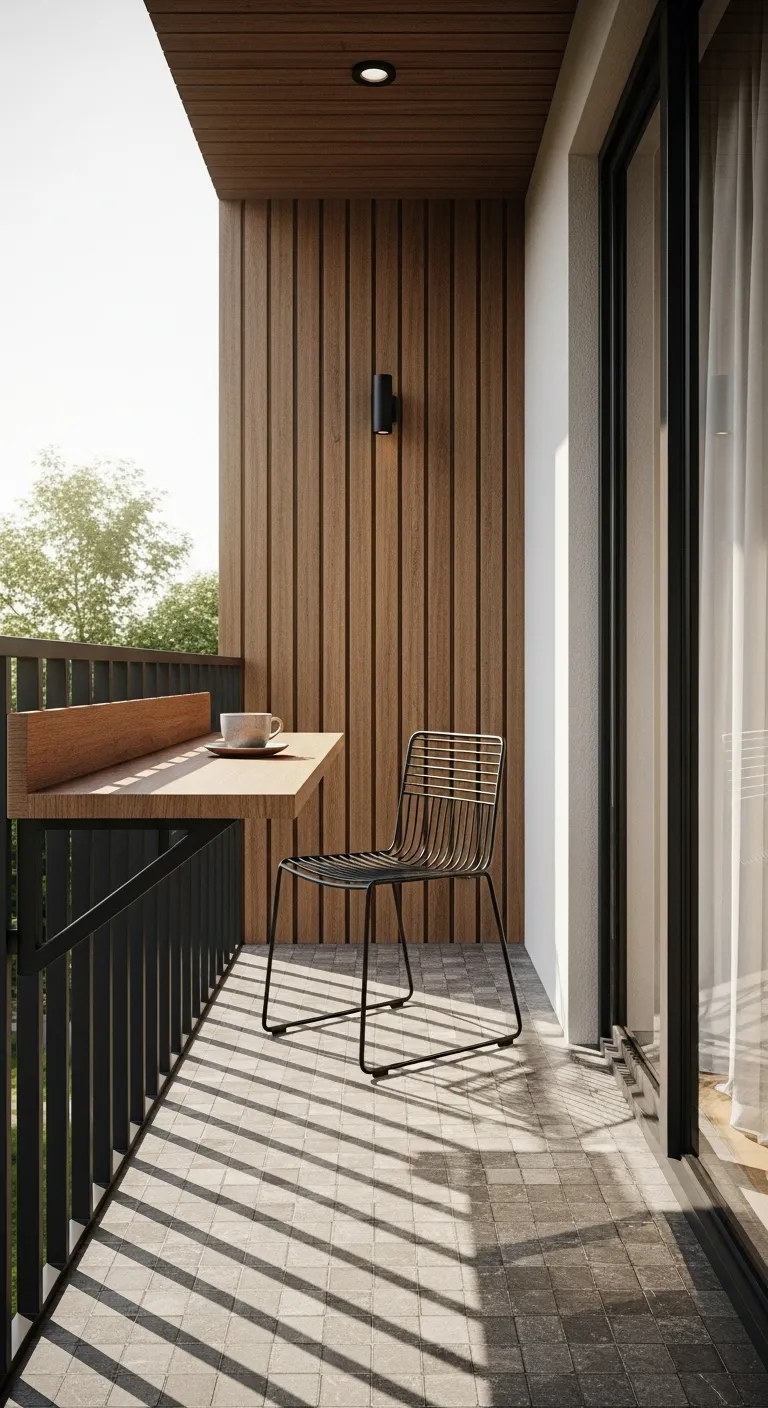
The smartest solution for a modern simple very small balcony is the rail-mounted table. These clever floating surfaces attach directly to the balustrade, requiring zero footprint.
By lifting the dining surface off the ground, you instantly create an illusion of more space. This preserves the spatial flow and allows for easier movement.
Look for tables crafted from weather-resistant acacia wood or powder-coated steel. These materials add a rich organic texture that warms up the often cold feel of concrete exteriors.
In a small space, floating furniture is the secret to airy, breathable design.
Selecting the Perfect Slim Bistro Set
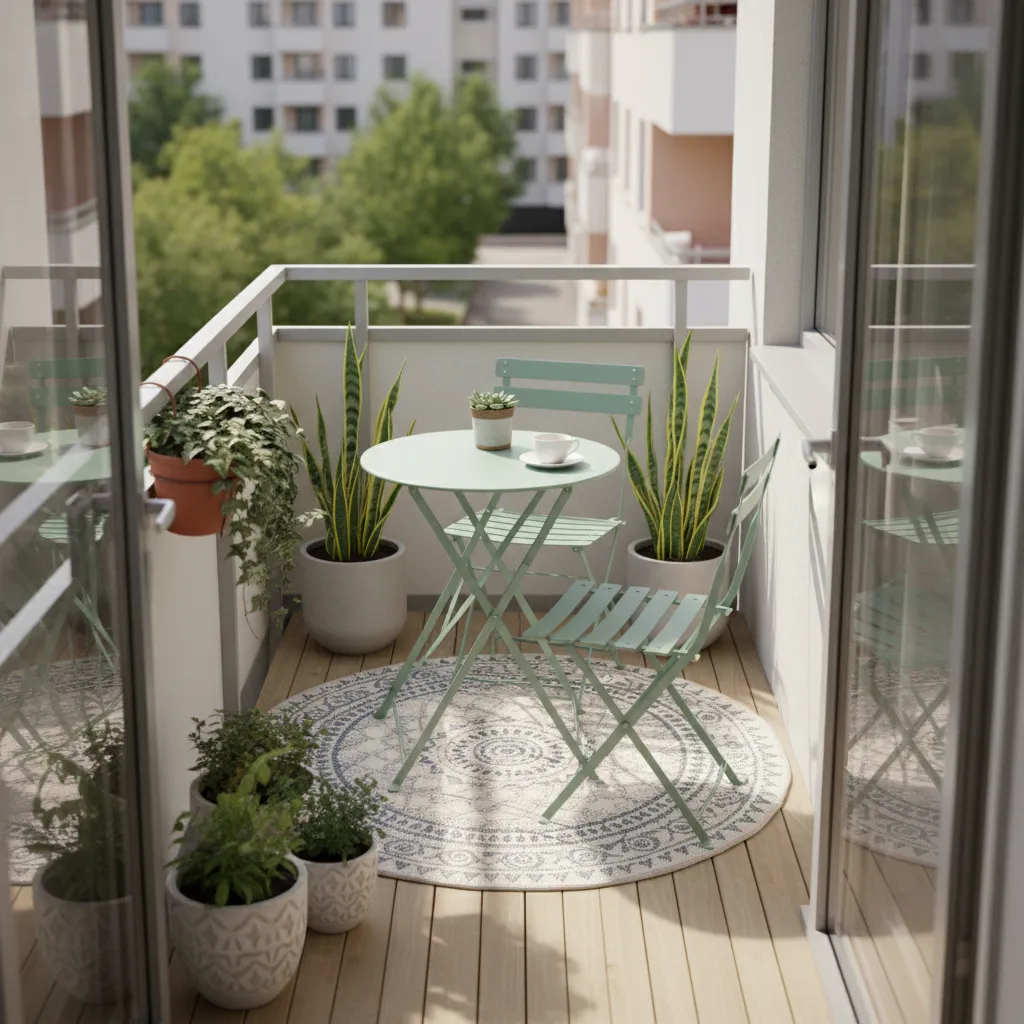
Pair your floating table with slim, foldable bistro chairs to complete the look. The goal is to create a functional vignette that can vanish when not in use.
Opt for chairs with open-weave backs or slat designs. This visual transparency lets light pass through, keeping the balcony feeling open, airy, and inviting.
Functionality is key here. If you need to store items during winter, collapsible furniture is essential. Just as you might optimize indoor areas with living and dining room combo ideas, outdoor furniture must be multi-functional.
When outdoor space is at a premium, scale is everything. Choose furniture with a small footprint and visually lightweight materials to keep the area feeling open.
Cambria Bold, Apartment Therapy
To help you choose the right material for your climate and aesthetic, consider the durability and maintenance needs of common balcony furniture options below.
| Material Type | Visual Weight | Durability | Best Aesthetic |
|---|---|---|---|
| Powder-Coated Steel | Light / Airy | High (Rust Resistant) | Modern Minimalist |
| Acacia / Teak Wood | Warm / Solid | Medium (Needs Oil) | Organic / Boho |
| Synthetic Rattan | Medium / Textured | High (Waterproof) | Cozy Traditional |
| Molded Plastic | Modern / Solid | Medium (Fade Risk) | Playful / Pop |
Finally, soften the hard lines of metal or wood with textiles. A simple seat cushion in a neutral palette adds comfort without overwhelming the design.
Even in a narrow strip, you can achieve a sense of hygge. Add a small battery-operated lantern to your rail table for a warm, ambient glow in the evenings.
The Slim-Fit Edit
- Opt for a semi-circular or drop-leaf rail table design; eliminating sharp corners maximizes hip room and prevents bruises in tight walkways.
- Create a ‘disappearing dining room’ by hanging foldable bistro chairs on heavy-duty wall hooks when not in use to instantly reclaim your floor space.
- Choose ‘visually light’ furniture like wire-frame or open-weave chairs; being able to see the floor through the furniture tricks the brain into perceiving the balcony as larger.
The Square Juliet Layout: Corner Lounging With Vertical Privacy Screens
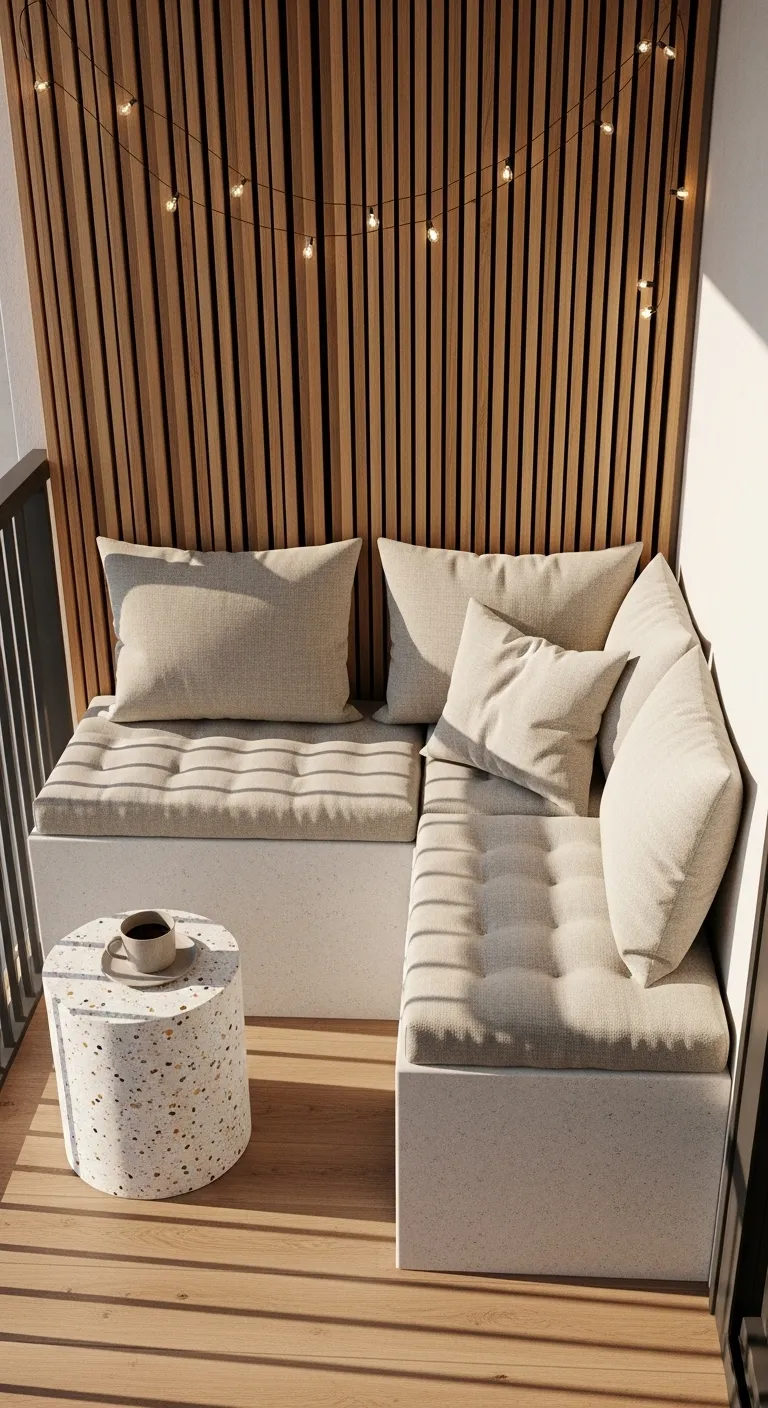
The square Juliet balcony often presents a unique challenge for city dwellers. Its symmetrical footprint can feel boxy and exposed if not styled with intention. The key to unlocking this layout lies in maximizing the perimeter while keeping the center open for spatial flow.
Instead of placing two chairs in the middle, push your seating to the edges. An L-shaped corner arrangement is the most efficient use of dead space in a square footprint. This creates a dedicated lounging zone that feels grounded rather than floating aimlessly.
In small spaces, pushing furniture to the perimeter doesn’t just save space; it creates a cozy embrace that turns a balcony into a room.
Constructing the Vertical Cocoon
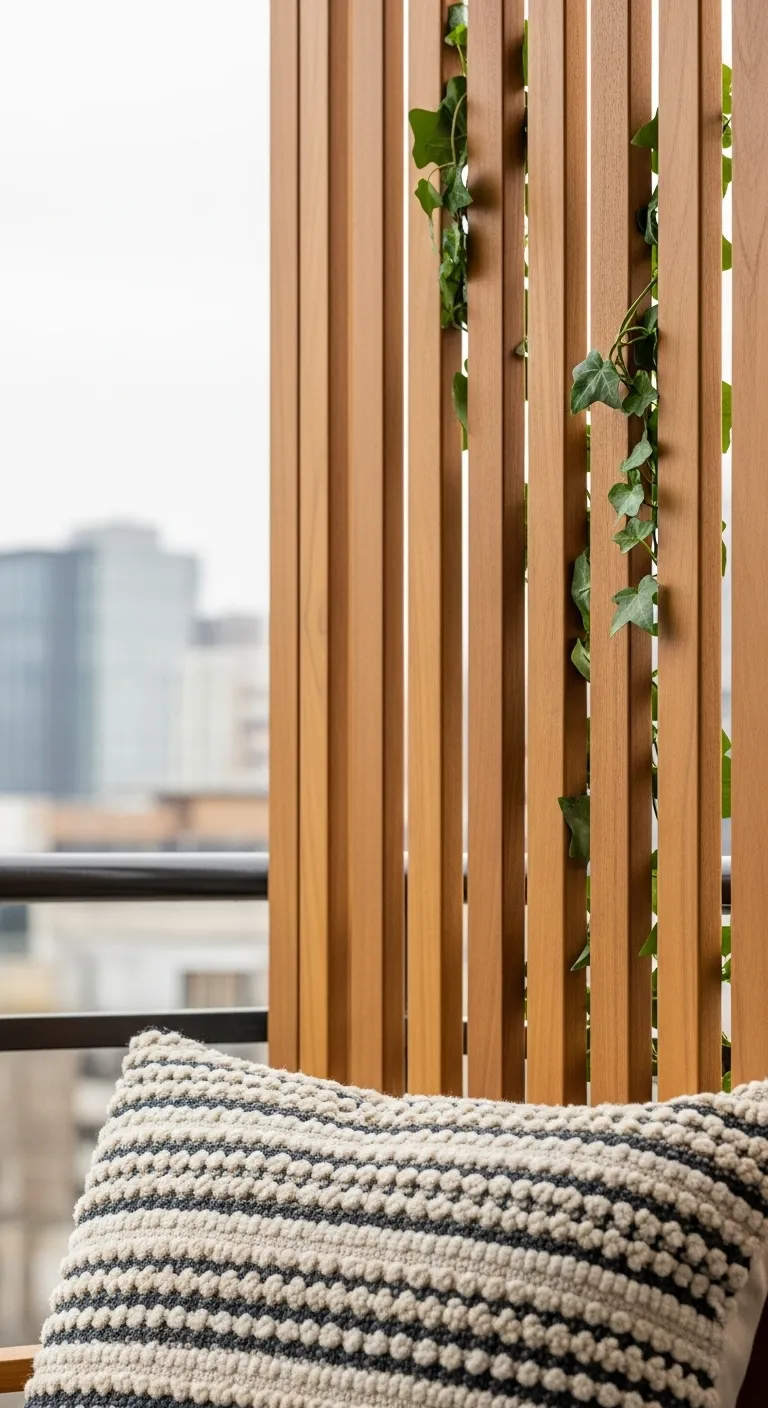
Privacy is the ultimate luxury in a dense apartment complex. Installing vertical screens behind your corner seating transforms the area into a secluded vignette. These screens act as a visual anchor, drawing the eye upward and adding architectural height.
Opt for materials like slatted cedar or treated bamboo to introduce organic warmth. The texture of natural wood contrasts beautifully against concrete building facades. For those seeking inspiration on structuring these barriers, exploring various yard divider and fence concepts can offer scalable ideas for smaller footprints.
Use tall plants or a trellis to create a living wall. This not only provides privacy but also helps to dampen street noise, creating a peaceful retreat.
The Editors, The Spruce
Functionally, these screens do more than block neighbors. They provide a sturdy backrest for plush cushions, allowing you to lounge comfortably against the railing. This setup mimics the comfort of indoor sofas, bringing a true hygge living room atmosphere to the outdoors.
Essential Elements for a Corner Vignette
To execute this look successfully, focus on selecting pieces that serve dual purposes. Every inch counts in a square layout, so prioritize items that add comfort without bulk.
| Design Element | Material Choice | Functional Benefit |
|---|---|---|
| Base Seating | Low-profile wood pallets or resin wicker | Provides hidden storage underneath for blankets. |
| Privacy Screen | Horizontal wood slats or lattice | Blocks wind and creates a support for climbing vines. |
| Textiles | Outdoor linen or performance velvet | Softens hard edges and introduces color to the palette. |
| Lighting | Solar string lights interwoven in slats | Offers soft ambient glow without using floor space. |
Finish the look with a small, round side table tucked near the corner. The curves of a round table break up the rigid lines of the square balcony and the vertical screen, softening the overall visual impact.
The Corner Curator
- Soften the rigid geometry of a square layout by pairing your angular corner seating with a circular outdoor rug or round bolster pillows to visually break up the boxy feel.
- Turn your privacy screen into a vertical organizer by utilizing S-hooks to hang lightweight lanterns or small herb planters, keeping your limited floor space completely clutter-free.
- Create a DIY sectional by pushing two rectangular storage benches together; this mimics the luxury of a corner sofa while providing essential hidden storage for cushions and covers.
The Compact L-Shape: Multi-Functional Storage Benches for Clutter-Free Zones
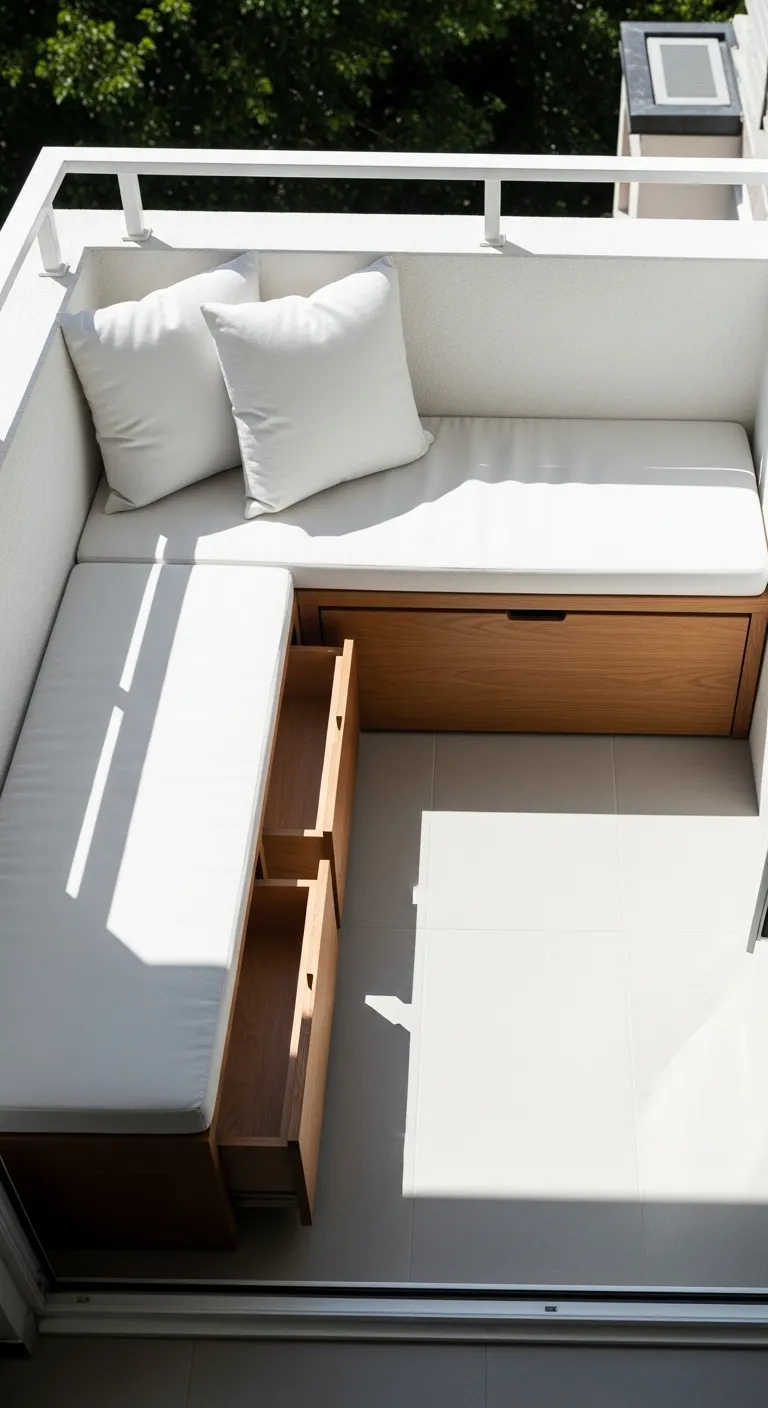
Corners in small outdoor spaces are often neglected “dead zones” that gather dust. Utilizing an L-shaped bench instantly reclaims this valuable square footage.
This layout pushes seating to the perimeter. It opens up the central floor area, improving spatial flow and making the balcony feel significantly larger.
The visual impact is undeniable. A continuous line of seating creates a cohesive vignette, replacing the clutter of mismatched folding chairs.
Design is not just about how it looks, but how it serves the life you live within the space.
Hidden Storage Solutions
The true magic of the L-shaped bench lies beneath the seat. Deep compartments provide the perfect hiding spot for gardening tools and seasonal decor.
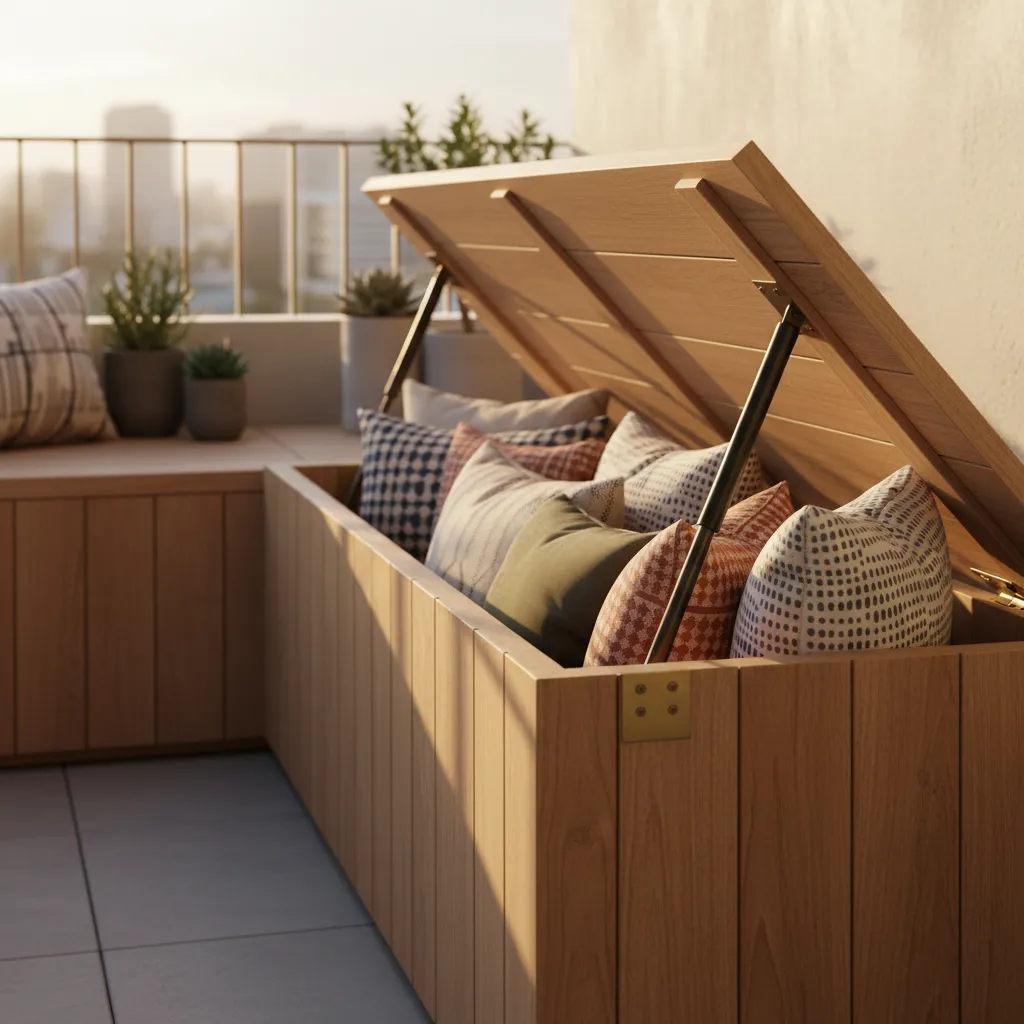
Opt for a lift-top mechanism for easy access. This allows you to quickly stow away cushions during sudden rain showers without hauling them inside.
For a custom look, you can build your own simple frame. Applying one of the 13 best paint colors for furniture can unify the piece with your exterior walls.
Material Selection and Texture
Select materials that weather gracefully. Teak and cedar develop a beautiful silver-grey patina over time, adding an organic touch to modern spaces.
Layering is key for that “hygge” atmosphere. Use seat cushions upholstered in performance linen to soften the hard lines of the wood.
When space is at a premium, built-in furniture is your best friend. It maximizes every inch and eliminates the visual clutter of legs and gaps.
House Beautiful Editors, Small Patio Decorating Ideas
Key Features for Bench Selection
Before investing in or building your bench, consider these functional requirements to ensure longevity and comfort.
- Weather Resistance: Ensure the wood is sealed or the resin is UV-resistant to prevent fading from direct sunlight.
- Ventilation: Good storage benches have slats or small vents to prevent mold growth on stored textiles.
- Depth Ratios: A seat depth of at least 18 inches allows for comfortable lounging with back pillows.
- Hardware: Look for soft-close hinges to protect fingers and prevent heavy lids from slamming shut.
By integrating storage directly into your seating, you eliminate the need for a separate deck box. This keeps your vertical lines clean and airy.
To further enhance the ambiance, consider painting the wall behind the bench. One of the 15 modern exterior colors that wow can create a stunning backdrop for your new nook.
Designer Hack
- Install gas struts or soft-close hinges on the lid for hands-free access, making it effortless to stow cushions while preventing the seat from slamming shut.
- Drill discrete ventilation holes in the base or back of the storage compartment to promote airflow, keeping your stored textiles fresh and mildew-free.
- Extend the benchtop slightly beyond the seating area to create a built-in side table surface, eliminating the need to squeeze in extra furniture.
The Open-Air Micro Deck: Weather-Proof Textiles and Solar String Lighting
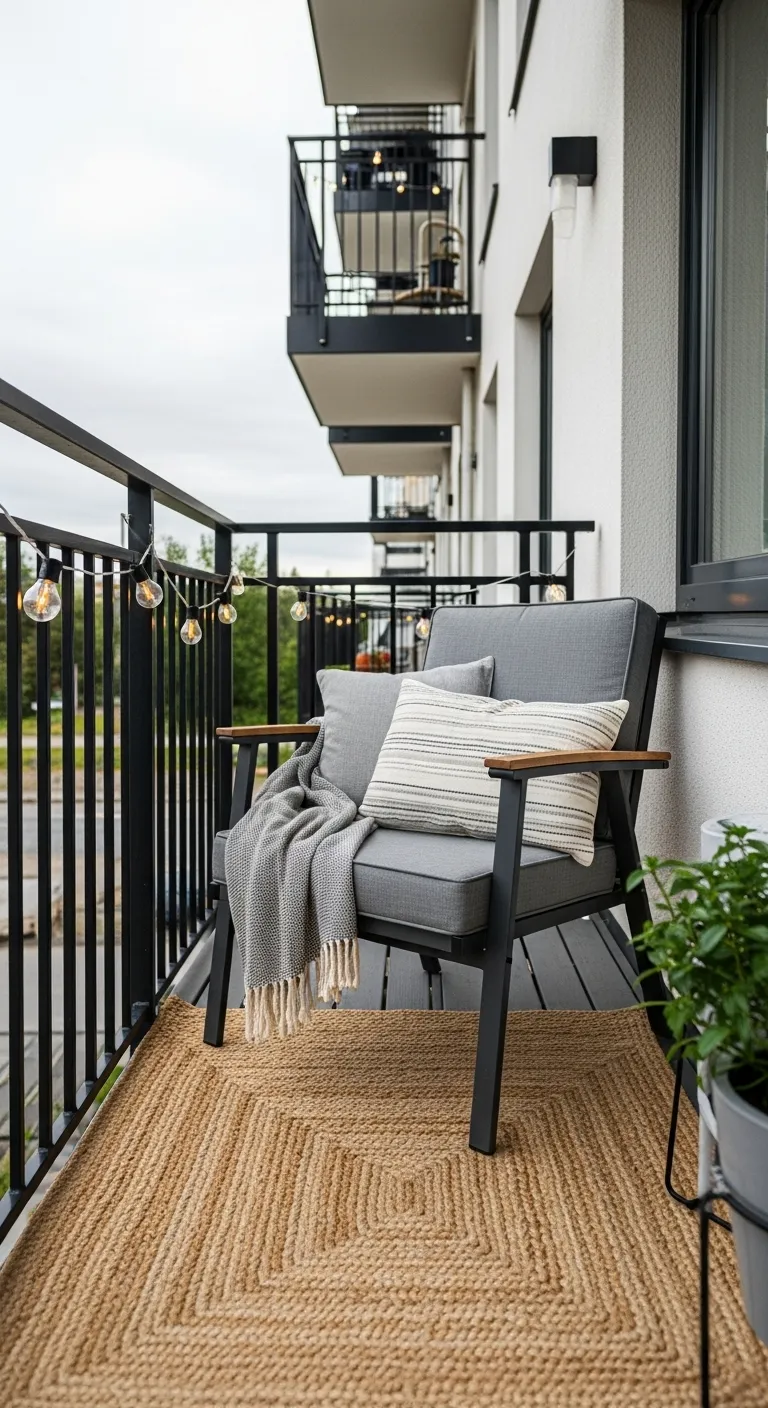
Transforming a cold concrete slab into a cozy retreat requires softness. The secret lies in treating your balcony floor like an indoor room.
A small balcony should feel like a warm embrace, not just an outdoor viewing platform.
Micro-Deck Magic
- Layer a durable outdoor rug over interlocking wood or composite deck tiles to instantly warm up cold concrete and define the ‘room’ without permanent renovation.
- Utilize vertical space by wrapping solar fairy lights around the railing or draping them in a canopy style overhead; this adds ambiance without cluttering the floor or requiring an outdoor outlet.
- Invest in dual-purpose soft furnishings, such as a weather-resistant pouf that can serve as a footrest, extra seating, or a side table when topped with a tray.
Layering Weather-Proof Textiles
Start with the foundation. A flat-weave outdoor rug instantly warms up the concrete and defines the spatial flow of the area.
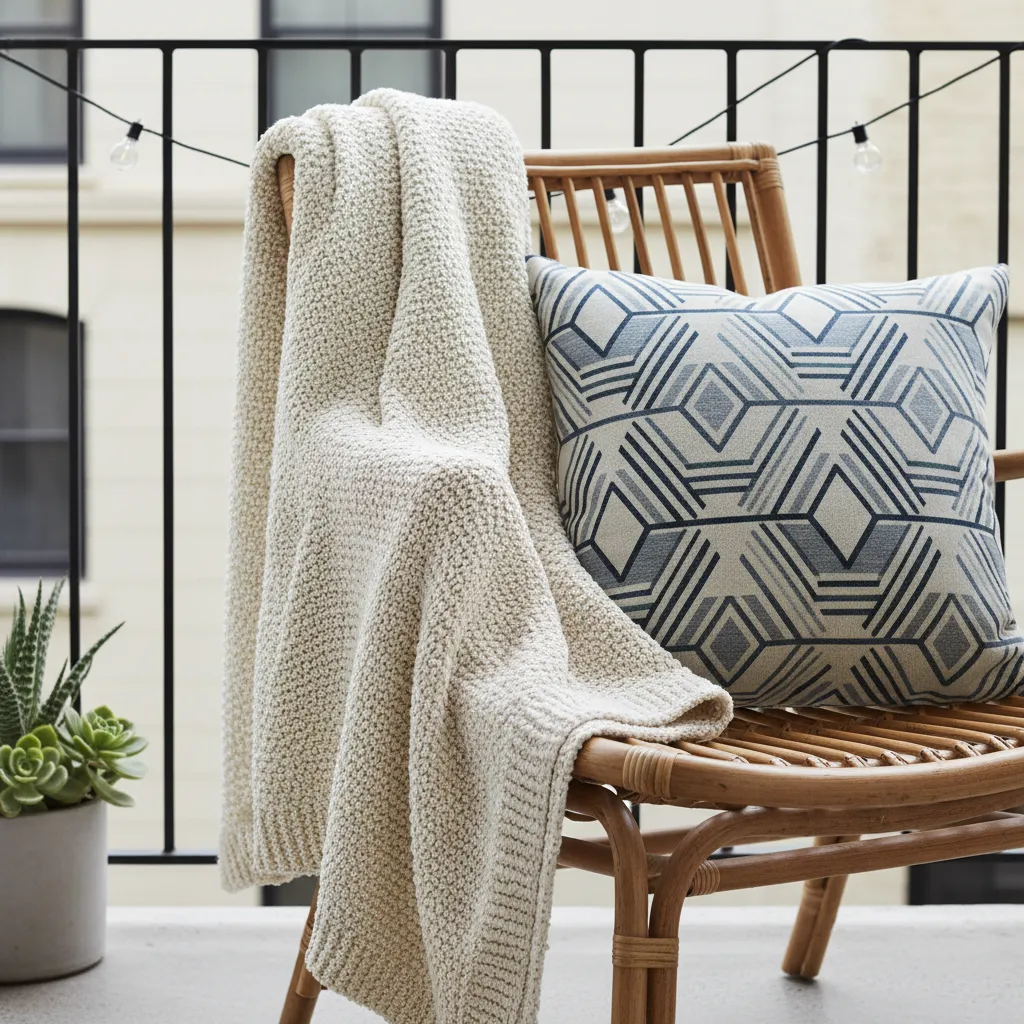
Choose materials like recycled polypropylene or solution-dyed acrylic. These fabrics resist fading and mold while mimicking the feel of wool.
Layering is crucial for that curated look. Place a smaller, patterned rug over a larger neutral base to add visual interest without clutter.
Don’t forget vertical softness. Hang weather-resistant curtains if your structure allows. This adds privacy and softens hard architectural lines.
For colder evenings, keep a basket of heavy throws nearby. This approach aligns with practical winter decor ideas for the home outside ensuring comfort year-round.
Outdoor fabrics have evolved tremendously. Look for ‘solution-dyed’ acrylics, where the color goes all the way through the fiber, like a carrot, rather than just on the surface, like a radish.
Maria Killam, The Best Outdoor Fabric for Your Patio
Soft Styling Secrets
- The ‘Carrot’ Rule: When shopping for fabrics, look for solution-dyed acrylics where the color permeates the core (like a carrot) rather than sitting on the surface (like a radish) to prevent fading.
- The Rug Ratio: Anchor your seating area with a large neutral flat-weave, then layer a smaller, high-patterned rug on top to create a focal point without overwhelming the space.
- Vertical Drama: Use outdoor curtains on tension rods between pergola posts to soften architectural lines and block the glare of the low afternoon sun.
Atmospheric Solar Lighting
Lighting dictates the mood. On a micro deck, harsh overhead lights kill the vibe. You want a warm, amber glow that invites relaxation.
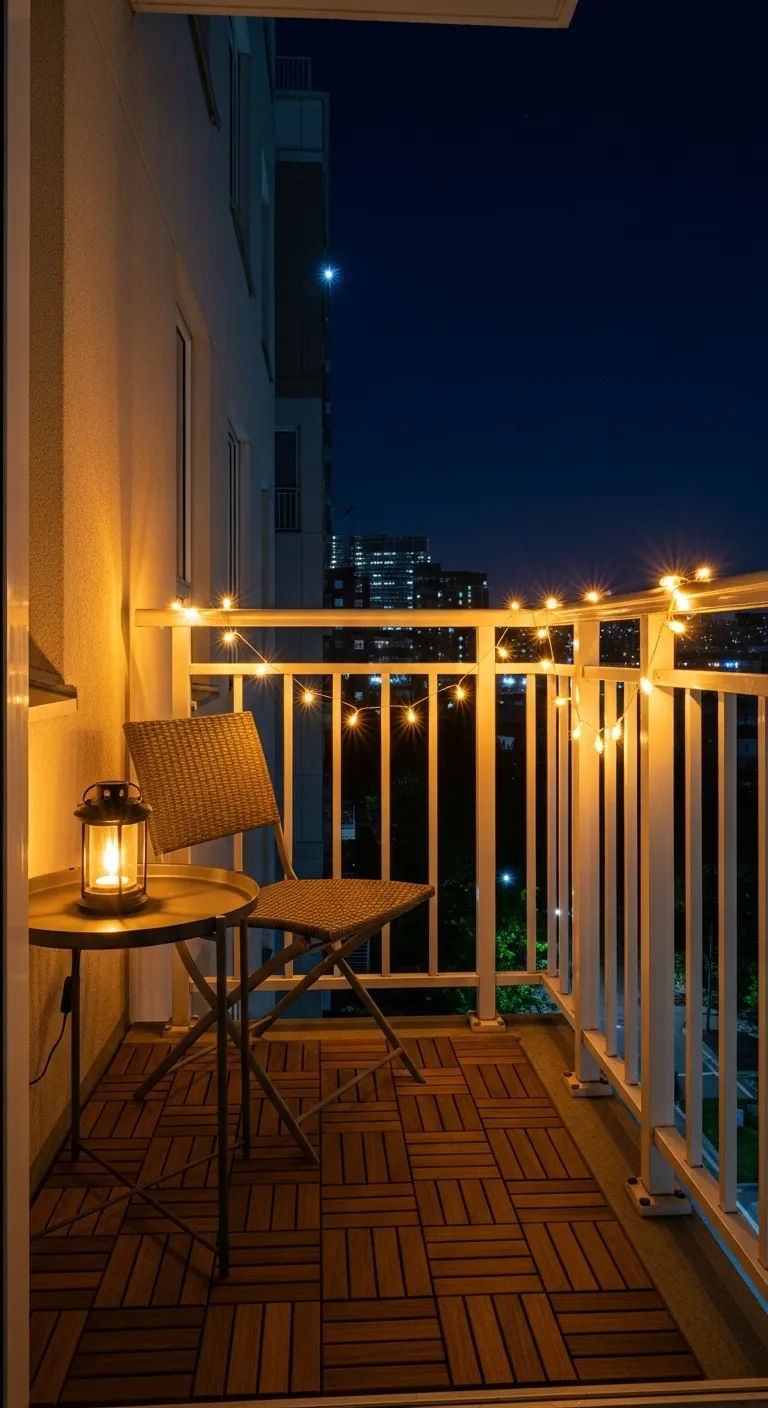
Solar string lights are the ultimate renter-friendly solution. They require no plugs and zero electricity, using the sun to charge daily.
Drape lights loosely along the railing or create a false ceiling effect overhead. This lowers the visual height, making the space feel intimate.
Opt for bulbs with a warm color temperature (2700K). This mimics the cozy atmosphere found in hygge living room ideas designed for relaxation.
Selecting the Right Outdoor Fabric
Not all “outdoor” fabrics endure the elements equally. Use this guide to choose materials that balance durability with touchable softness.
| Fabric Material | Tactile Feel | Water Resistance | Best Application |
|---|---|---|---|
| Solution-Dyed Acrylic | Soft, like canvas or cotton | High (Mold Resistant) | Seat cushions, pillows, drapes |
| Polypropylene (Olefin) | Textured, wool-like | Very High (Quick Dry) | Area rugs, heavy traffic zones |
| Spun Polyester | Smooth, silky | Moderate | Seasonal throw pillows (store often) |
| PVC Mesh | Plastic, firm | Extreme | Sling chairs, sun shades |
Combine these textiles with soft solar lighting to create a vignette that feels expansive despite the small footprint.
Designer Detail
- Create an instant ‘false ceiling’ by zig-zagging string lights overhead using outdoor command hooks or zip ties; this defines the vertical space without permanent construction.
- Avoid the harsh ‘hospital’ look of cheap solar LEDs by specifically checking packaging for ‘2700K’ or ‘Warm White’ labels to ensure a golden glow.
- Maximize longevity by mixing materials: use rugged Polypropylene (Olefin) for floor rugs that handle foot traffic, but stick to soft Solution-Dyed Acrylic for any surface touching your skin.
The Foundation Layer: Rental-Friendly Interlocking Tiles and Geometric Rugs
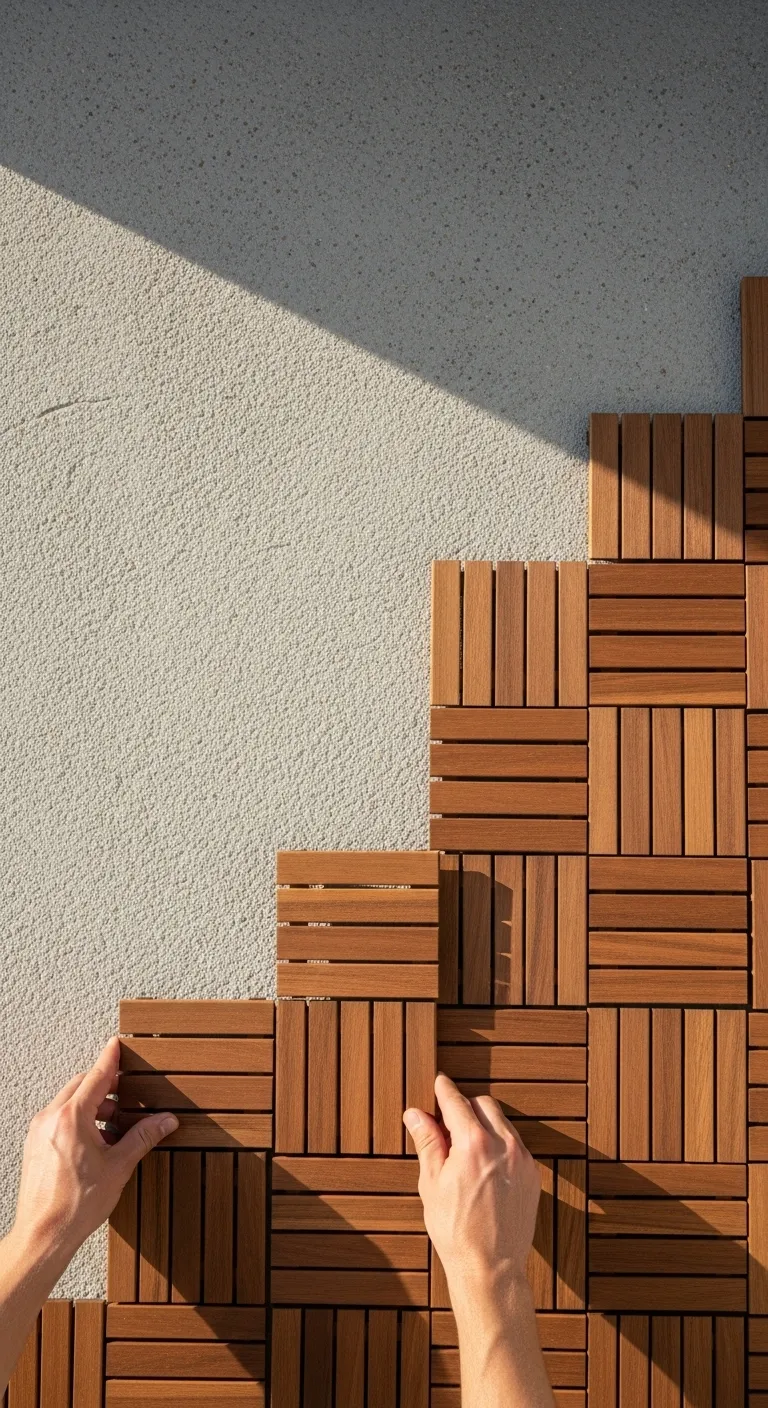
The biggest enemy of a cozy balcony is often the cold, stained concrete floor. It makes the space feel unfinished and uninviting.
To create a true extension of your living area, you must address the ground layer first. This sets the tone for the entire vignette.
For renters, permanent flooring changes are usually forbidden. This is where floating floor solutions become essential.
Treat the floor of your balcony with the same attention as your living room. It is the canvas upon which the rest of your design rests.
Snap-and-Go Wood Decking

Interlocking deck tiles are the gold standard for instant upgrades. They snap together like puzzle pieces without any glue or nails.
Acacia wood tiles add an organic, warm texture that immediately counters the sterility of metal railings. They allow water to drain freely underneath.
This drainage prevents mold buildup and keeps the surface dry for socks or bare feet. The installation takes less than an hour for small spaces.
If you are also planning to upgrade your perimeter, consider how your flooring meets the edge. You can coordinate these wood tones with beautiful yard divider and fence ideas to create a cohesive wooden look.
Anchoring with Geometric Rugs
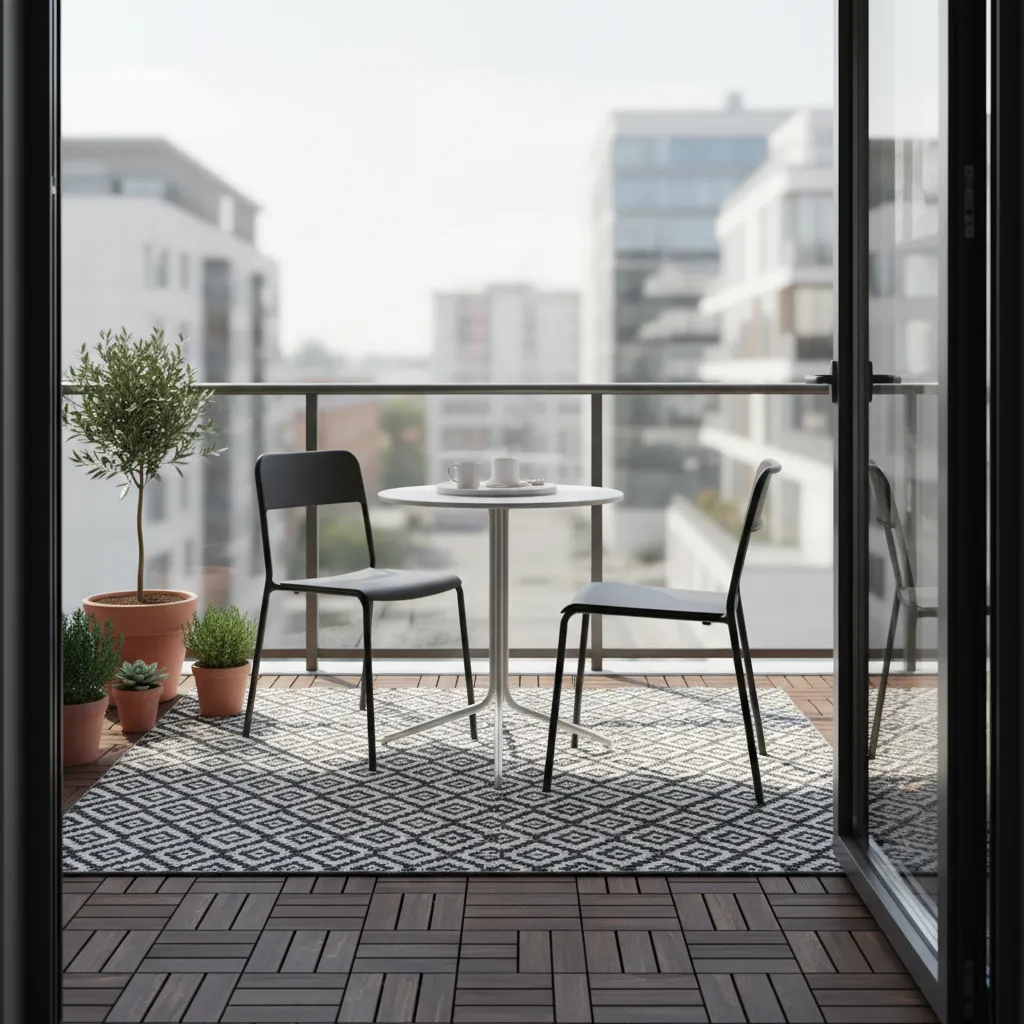
Once the wood tiles are down, layer a rug on top. This adds softness and helps define a specific zone, such as a reading nook.
A geometric pattern in black and white works best for modern minimalism. It draws the eye outward and makes the floor area feel expansive.
Select a rug made from recycled plastic or polypropylene. These materials resist fading from UV rays and can be hosed down easily.
When selecting your rug, stick to a strict palette. Using high-contrast neutrals aligns well with modern exterior colors that wow, ensuring your small space looks chic rather than cluttered.
An outdoor rug is the easiest way to zone a small space. It anchors your furniture so your chairs aren’t just floating on a concrete slab, making the balcony feel like a deliberate room.
Emily Henderson, Style by Emily Henderson
Comparison: Choosing Your Base
Choosing between tiles and rugs; or using both; depends on your budget and maintenance preference. Here is a breakdown of the materials.
| Feature | Acacia Wood Tiles | Composite/Plastic Tiles | Outdoor Rug Only |
|---|---|---|---|
| Visual Warmth | High (Natural Grain) | Medium (Matte Finish) | Medium (Fabric Texture) |
| Maintenance | Oil once a year | Wash with soap/water | Vacuum and shake out |
| Underfoot Feel | Solid and warm | Hard and smooth | Soft and cushioned |
| Durability | High (Rot resistant) | Very High (Weatherproof) | Medium (Fade risk) |
By combining the structural integrity of tiles with the visual softness of a rug, you create a layered, designer look.
The Ground Rules
- Fill the Gaps: If your balcony dimensions do not fit the tile grid perfectly, fill the awkward perimeter gaps with polished river stones or white gravel for a custom, high-end finish that aids drainage.
- Secure Your Rug: To prevent your geometric rug from curling or blowing away in high winds, use outdoor-rated double-sided carpet tape or anchor the corners with your heaviest planters.
- Create Continuity: Install your wood tiles running in the same direction as your interior flooring. This optical illusion blurs the threshold, making the indoor and outdoor spaces feel like one continuous room.
Creating Your Sky-High Sanctuary
Transforming a tiny balcony requires looking beyond square footage. Focus on maximizing vertical space and choosing pieces that float visually.
Whether you choose sleek steel or warm acacia, the goal is balance. Keep lines clean and textures organic to soften the concrete urban jungle.
Your balcony is an extension of your home. Treat it with the same design intent, and even the smallest strip becomes a cherished retreat.
Tiny Balcony Dilemmas Solved
Use tall potted plants or airy bamboo screens. They provide natural coverage and lush texture without stopping the flow of fresh air.
Interlocking wood or composite deck tiles are ideal. They snap over ugly concrete instantly and require no glue or permanent installation.
Solar-powered string lights and LED lanterns are your best friends. They offer a warm, cozy glow and require zero messy wiring.
It depends on the material. Powder-coated steel handles weather well, but wood and rattan should be covered or stored during harsh winters.
