

Is your porch still clinging to summer’s faded glory? Are your indoor plants sitting in the same plain pots, missing out on the magic of the season? You’re in the right place to change that.
Fall decor shouldn’t just be about a wreath on the door; it should be woven into every corner of your home, a backdrop for cozy evenings, pumpkin-spice mornings, and cherished memories.
This is your creative playbook for transforming simple plant pots into features that are not only beautiful and functional but feel deeply, personally autumnal.
We’ll explore dreamy designs, decode the secrets of fall style, and walk through the practical steps to bring it all to life.
By the end, you’ll see your planters not as a problem to be solved, but as a canvas waiting for your story.
Before You Begin: Dreaming Up Your Perfect Fall Vignette
The most beautiful arrangements start with a little bit of soul-searching, not a shopping trip.
Before you pick up a single pot, let’s lay the groundwork for a design that you’ll love all season long.
The Secrets of Style: Simple Rules for a Stunning Look
Design theory sounds intimidating, but it’s really just about what makes a space feel right. Here are a few simple secrets for your fall planters:
Getting the Scale Right: Your pot should feel like a supportive anchor for your plant, not like it’s being swallowed whole or bursting at the seams. A great little trick: choose a pot that’s about 1-2 inches wider in diameter than the plant’s current root ball. This gives it room to breathe without looking lost.
Creating Balance: A vibrant mum or a dramatic ornamental grass is a strong visual statement. You can balance it in two ways:
- Symmetrical Balance: Think of a front door perfectly flanked by two identical urns filled with the same arrangement. This creates a calm, formal, and traditional feeling.
- Asymmetrical Balance: Imagine a large statement pot on one side of your steps, balanced by a grouping of three smaller, varied pots on the other. This feels more modern, dynamic, and relaxed.
The 60-30-10 Color Secret: This is a designer’s foolproof recipe for a harmonious fall color palette:
- 60% is your main color (the warm terracotta of pots, the deep green of foliage).
- 30% is your secondary color (the vibrant orange of mums, the rich burgundy of coleus).
- 10% is your accent (a pop of gold from a metallic pot, the deep purple of ornamental peppers).
Let the Star Shine: Decide whether the plant or the pot is the main event. A wildly textured, multi-colored pot should hold a simple green plant. A spectacular, cascading floral arrangement deserves a simple, neutral container. Let one be the hero.
What’s the Real Effort? A No-Fuss Project Breakdown
| The Approach | Estimated Cost | What Your Money Buys | The Little Extras (Don’t Skip These!) |
| The Quick Refresh | $10 – $50 | • A can of spray paint • Twine or ribbon • Fabric scraps | • Good painter’s tape • A drop cloth • Hot glue gun |
| The Weekend Project | $50 – $200 | • A few new ceramic pots • Quality potting mix • A variety of fall annuals | • The right plants for your light • Trowel & gloves • A slow-release fertilizer |
| The Heirloom Investment | $200 – $500+ | • Large, frost-proof containers • Statement perennials • A quality tiered plant stand | • Pot feet for drainage • Proper winter storage plan • Drip irrigation system |
The Design Menu: Finding Your Signature Style
Here are the ingredients for your perfect fall display. Each one comes with a breakdown to help you choose with confidence.
The Foundation: Natural Textures & Tones
1. The Classic Terracotta

- Best For: Rustic, farmhouse, and Mediterranean styles. The ultimate timeless choice that lets the plants shine.
- Key Consideration: Terracotta is porous, meaning it dries out quickly. It’s great for drought-tolerant plants but requires more frequent watering for others.
- Pro-Tip: Give a new terracotta pot a “limewash” finish by brushing on a watered-down, light-colored latex paint and wiping most of it off. It creates an instant aged patina.
- Styling Cue: Group terracotta pots of various sizes together. The uniform color and material make even a large collection look cohesive and intentional.
2. The Woven Basket Planter
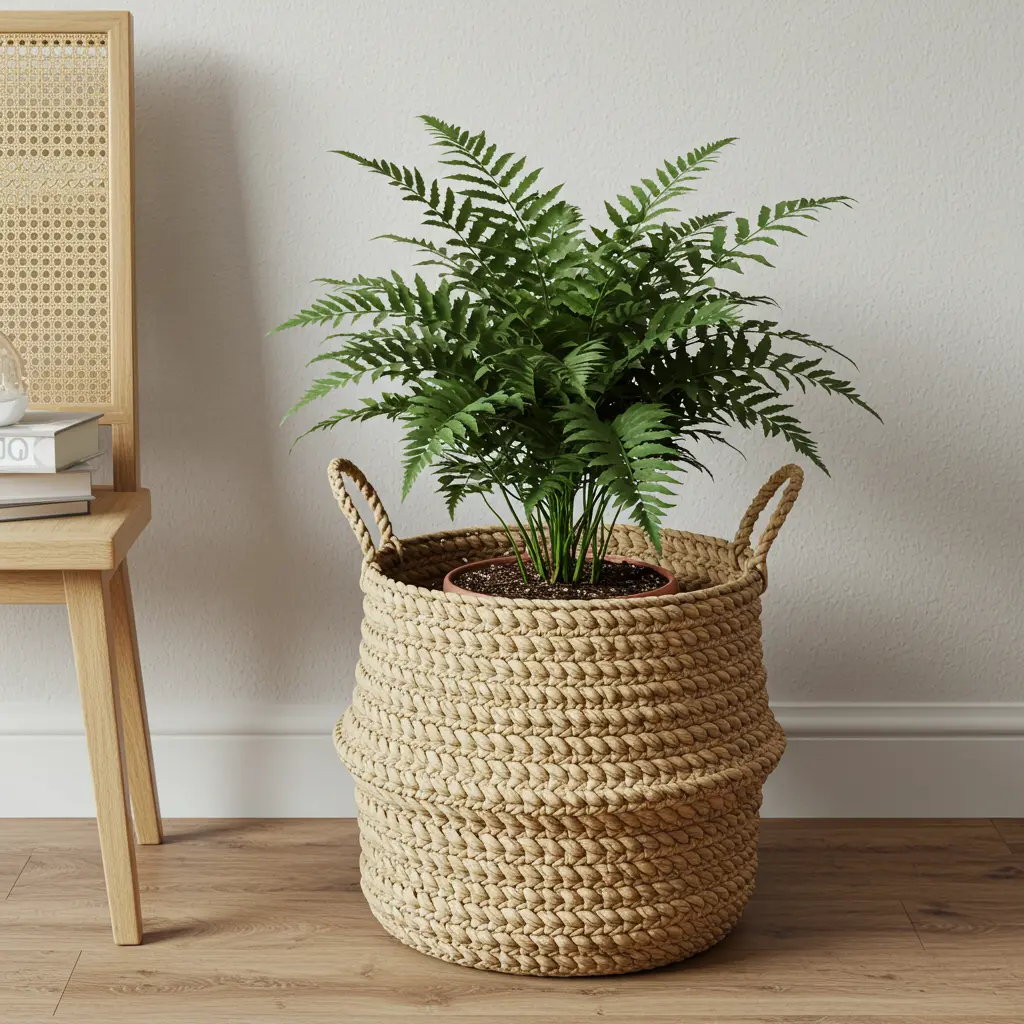
- Best For: Boho, coastal, and Scandinavian interiors. Perfect for adding soft, organic warmth and texture.
- Key Consideration: Natural fibers are not waterproof. Always keep your plant in a plastic nursery pot with a saucer inside the basket to prevent rot.
- Pro-Tip: Look for baskets with plastic liners already built-in. They offer the same beautiful look with much less worry.
- Styling Cue: Pair a chunky woven basket with a plant that has soft, feathery foliage, like a fern, to double down on the cozy texture.
3. The Modern Concrete Pot
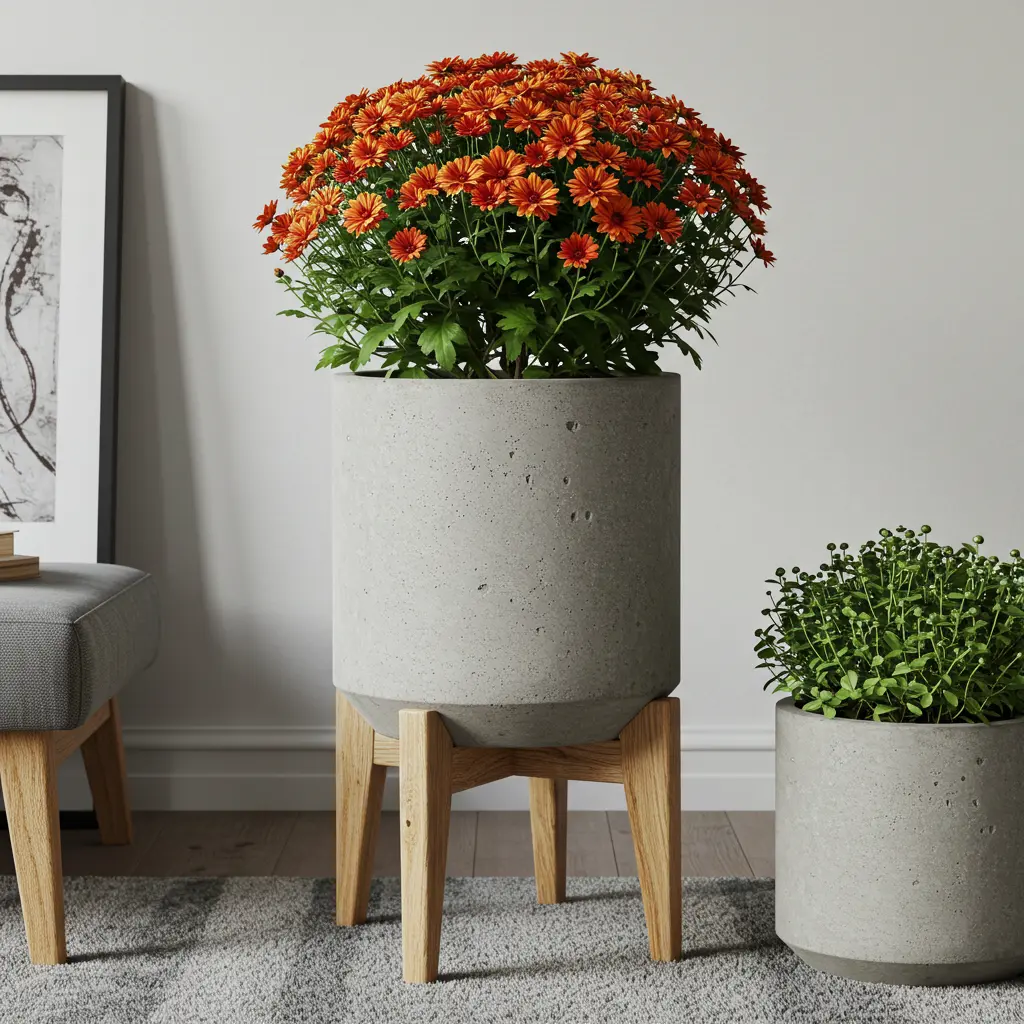
- Best For: Industrial, minimalist, and contemporary spaces. It adds an earthy, structural element.
- Key Consideration: Real concrete is extremely heavy. For larger pots, consider lighter-weight concrete-lookalikes made from fiberglass or resin.
- Pro-Tip: Use a concrete pot to house fiery orange or red mums. The contrast between the cool, grey stone and the hot, vibrant color is stunning.
- Styling Cue: Place a single, well-made concrete planter on a wooden stool or plant stand to elevate it (literally) into a piece of sculptural art.
4. The Rustic Wood Planter Box

- Best For: Farmhouse, cottage, and cabin-inspired decor. Brings the feeling of a harvest crate or apple barrel to your space.
- Key Consideration: Wood will eventually rot with prolonged contact with damp soil. Ensure your planter is made from cedar or treated pine, and use a plastic liner.
- Pro-Tip: Stencil your house number or a simple “Welcome” onto the side of a wooden window box for a personalized, charming touch.
- Styling Cue: Fill a wooden box with a mix of edibles and ornamentals: kale, pansies, and trailing ivy for a true “harvest” feel.
5. The Weathered Galvanized Metal

- Best For: Modern farmhouse and industrial styles. Adds a touch of vintage, utilitarian charm.
- Key Consideration: Metal heats up in the sun, which can cook plant roots. Best for covered porches or areas that get morning sun only. ALWAYS drill drainage holes.
- Pro-Tip: Find vintage galvanized buckets or watering cans at flea markets for a truly authentic, one-of-a-kind planter.
- Styling Cue: The cool, silvery tone of galvanized metal looks incredible paired with deep purples and blues, like those found in ornamental cabbage or pansies.
The Color Story: Embracing Autumn Hues
6. The Deeply Glazed Ceramic

- Best For: Adding a shot of rich, saturated color. Works with almost any style depending on the color chosen.
- Key Consideration: A high-quality, frost-proof glaze is a worthwhile investment if the pot will live outdoors in a cold climate.
- Pro-Tip: Choose a pot with a variegated glaze that has multiple tones swirled together. It adds incredible depth and looks artisanal.
- Styling Cue: Pick a pot in a classic autumn jewel tone like sapphire blue, emerald green, or deep plum. It’s a sophisticated alternative to the typical orange and brown.
7. The Moody Matte Black

- Best For: Modern, minimalist, and dramatic aesthetics. It makes every single plant color pop.
- Key Consideration: Black absorbs heat. Like metal, it’s best kept out of direct, scorching afternoon sun.
- Pro-Tip: Use a matte black pot for plants with lime green or chartreuse foliage, like a sweet potato vine. The contrast is electric.
- Styling Cue: Create a trio of matte black pots in different heights and plant them all with the same vibrant orange mum for a simple but incredibly powerful statement.
8. The Warm Metallic Glow

- Best For: Glam, mid-century modern, and eclectic styles. Adds a touch of luxury and reflects light beautifully.
- Key Consideration: Many metallic pots lack drainage. Either drill your own holes or use them as a “cachepot” (a decorative outer pot).
- Pro-Tip: Use copper or bronze pots. Their warm, reddish tones are the perfect metallic expression of autumn and they develop a beautiful patina over time.
- Styling Cue: Place a small brass pot with a simple succulent on a stack of books on your coffee table. It’s a small touch that feels instantly chic.
9. The Ombre Painted Pot
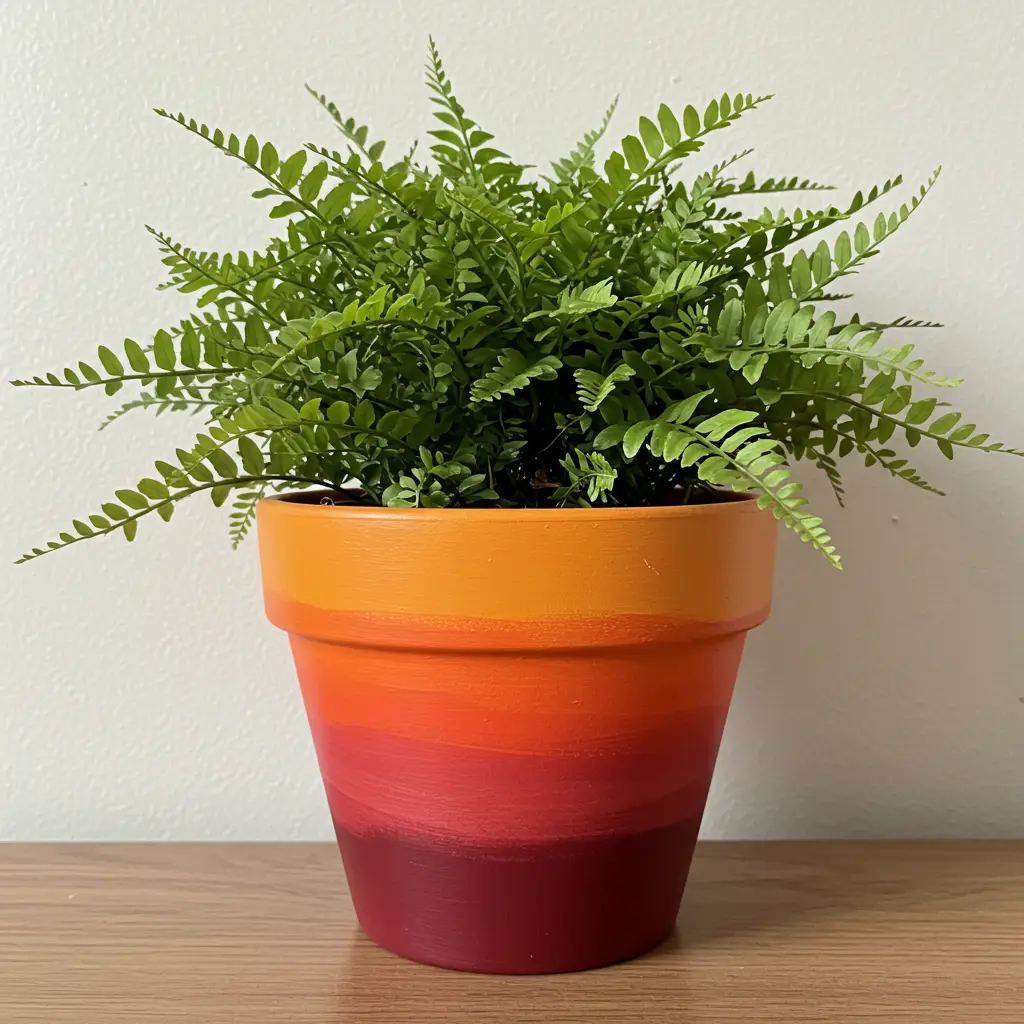
- Best For: A fun, modern, and artistic take on seasonal color. A fantastic DIY project.
- Key Consideration: Use spray paint designed for outdoor use and seal it with a clear matte topcoat to prevent chipping and fading.
- Pro-Tip: For a perfect fall ombre, use three colors: a deep burgundy at the base, a fiery orange in the middle, and a warm yellow at the rim.
- Styling Cue: Keep the plant simple. A solid green fern or snake plant will allow the beautiful gradient of the pot to be the star.
10. The Single-Color Saturation

- Best For: Creating a high-impact, minimalist display.
- Key Consideration: This works best when the pot and the flower are the exact same color family. It requires some careful matching at the nursery.
- Pro-Tip: Go for an all-yellow display: bright yellow chrysanthemums in a vibrant yellow ceramic pot. It’s a beacon of sunshine on a grey fall day.
- Styling Cue: Place this monochromatic arrangement against a contrasting background, like a dark-painted front door, to make it truly stand out.
The Creative Touch: DIY & Upcycled Charm
11. The Cozy Sweater Pot
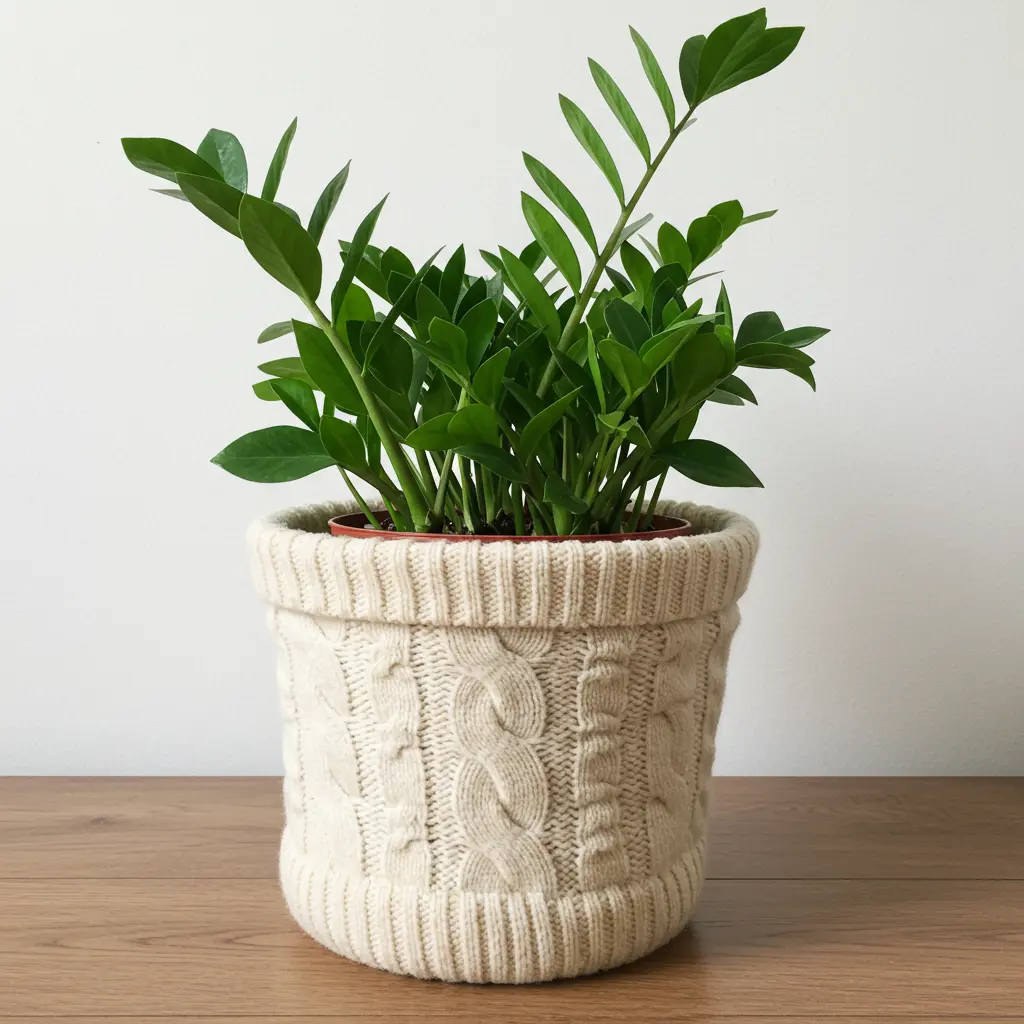
- Best For: Adding ultimate hygge and cozy texture. A perfect way to upcycle an old, beloved sweater.
- Key Consideration: This is for indoor use or a very well-covered porch only, as it will not withstand rain.
- Pro-Tip: Simply cut off the sleeve of an old cable-knit sweater, slide it over a plain pot, and fold the edges under. A few dots of hot glue will secure it.
- Styling Cue: Use a cream or oatmeal-colored sweater pot to hold a deep green plant, like a pothos or ZZ plant. The color and texture combination is pure coziness.
12. The Pumpkin Planter

- Best For: The quintessential fall statement piece, perfect for Halloween through Thanksgiving.
- Key Consideration: A real pumpkin will only last a couple of weeks before starting to decompose. For a longer-lasting display, use a hollow craft pumpkin.
- Pro-Tip: If using a real pumpkin, don’t plant directly in it. Keep your mums in their plastic nursery pot and just drop it inside. It makes cleanup a breeze and the pumpkin lasts longer.
- Styling Cue: Choose a pumpkin color that complements your flowers. A white “ghost” pumpkin looks incredibly elegant filled with deep purple pansies.
13. The Rustic Burlap Wrap

- Best For: A quick, inexpensive, and charming farmhouse update to any boring plastic pot.
- Key Consideration: Burlap will hold moisture, so ensure your pot has excellent drainage and don’t let it sit in a puddle.
- Pro-Tip: Wrap a plain pot in a square of burlap, gather it at the top, and tie it off with a simple piece of twine or a festive plaid ribbon.
- Styling Cue: Group three burlap-wrapped pots together and fill them with a simple herb garden of sage, rosemary, and thyme for a fragrant and functional display.
14. The Charming Chalkboard Pot

- Best For: Labeling herbs or leaving fun, seasonal messages. A great project to do with kids.
- Key Consideration: Use a chalkboard paint marker instead of actual chalk for a design that won’t smudge or wash away in the first rain.
- Pro-Tip: Paint only a “label” section of the pot with chalkboard paint, leaving the rest of the natural terracotta exposed for a nice contrast.
- Styling Cue: Write the names of the herbs (“Sage,” “Thyme”) in a beautiful script or draw simple fall designs like leaves and acorns.
15. The Gilded Gold Leaf Pot

- Best For: Adding an unexpected touch of elegance and glamour to an ordinary pot.
- Key Consideration: Applying gold leaf can be finicky. Be patient and work in a draft-free area. Seal with a proper topcoat to protect the finish.
- Pro-Tip: For an easier alternative, use a high-quality gold metallic paint pen to draw geometric patterns or just rim the top edge of the pot.
- Styling Cue: Apply gold leaf in an abstract, imperfect pattern on a dark-colored pot. It creates a beautiful, wabi-sabi effect that catches the light.
16. The Decoupage Leaf Pot

- Best For: A classic, crafty project that immortalizes the beauty of real fall leaves.
- Key Consideration: Use pressed, fully dried leaves. Fresh leaves will shrivel and rot under the Mod Podge.
- Pro-Tip: Use high-quality faux leaves from a craft store. They are much more durable and easier to work with than real ones.
- Styling Cue: Coat the entire pot with a collage of leaves for a busy, textured look, and plant a simple, spiky ornamental grass in the center.
17. The Plaid Flannel Wrap

- Best For: A cozy, “lumberjack chic” vibe that screams autumn comfort.
- Key Consideration: Like the sweater pot, this is for indoor or covered outdoor use only.
- Pro-Tip: Use a hot glue gun to affix the fabric for a no-sew solution. A plaid ribbon tied around the center adds a finishing touch.
- Styling Cue: Pair a red-and-black buffalo check plaid pot with a miniature evergreen tree for a festive, woodsy look that transitions easily into winter.
18. The Vintage Crate Display

- Best For: Creating a multi-level, rustic display for a collection of smaller pots.
- Key Consideration: Ensure the crate is sturdy and not rotting. A fresh coat of stain or sealant can extend its life.
- Pro-Tip: Turn a wooden apple crate on its side to create a “porch shelf” for your pumpkin planters and pots.
- Styling Cue: Stuff the crate with hay or Spanish moss before arranging your pots inside to create a lush, abundant “farmer’s market” feel.
19. The Reclaimed Watering Can
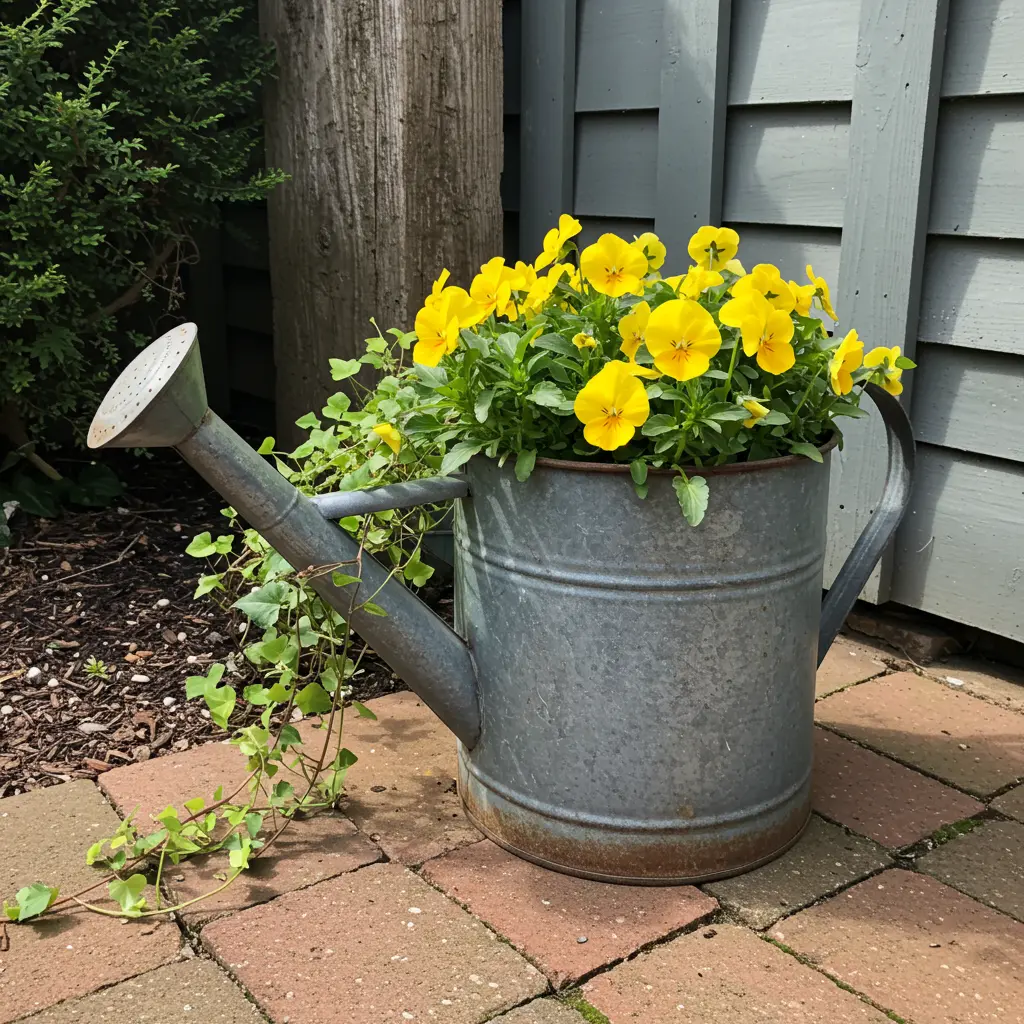
- Best For: A whimsical, cottage-garden touch.
- Key Consideration: It absolutely must have drainage holes drilled in the bottom to prevent plants from getting waterlogged.
- Pro-Tip: Plant a trailing plant, like a sweet potato vine or ivy, near the spout so it looks like it’s “pouring” out.
- Styling Cue: An old, rusty watering can filled with bright yellow pansies is the epitome of charming, rustic style.
20. The Twig-Covered Container
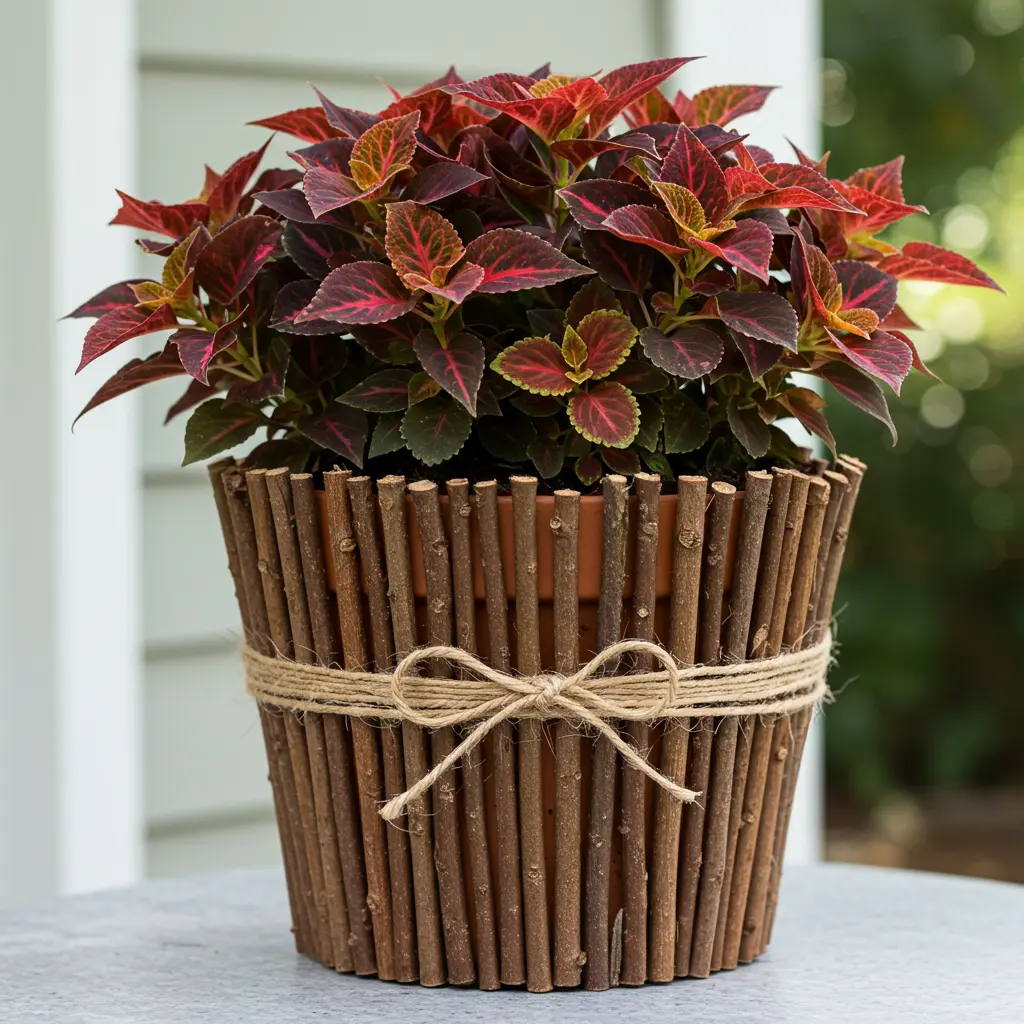
- Best For: A woodsy, natural look created from materials in your own backyard.
- Key Consideration: This is time-consuming but very rewarding. Use a strong hot glue gun or construction adhesive.
- Pro-Tip: Gather twigs of a similar thickness and cut them all to the same height as your pot. Glue them vertically, side-by-side, around a plain container.
- Styling Cue: Tie a simple jute twine ribbon around your finished twig pot and fill it with fiery croton or colorful coleus.
The Arrangement: Styling Your Display
21. The Tiered Stand Trio

- Best For: Maximizing vertical space on a small porch or balcony. Creates an instant, curated look.
- Key Consideration: Place the heaviest pot on the bottom tier for stability.
- Pro-Tip: Use the “Thriller, Filler, Spiller” method. Top tier: a tall “thriller” plant. Middle tier: a mounding “filler.” Bottom tier: a cascading “spiller.”
- Styling Cue: Use a simple black metal tiered stand and fill it with pots of the same color but plants of different fall hues for a cohesive yet colorful look.
22. The Bountiful Window Box
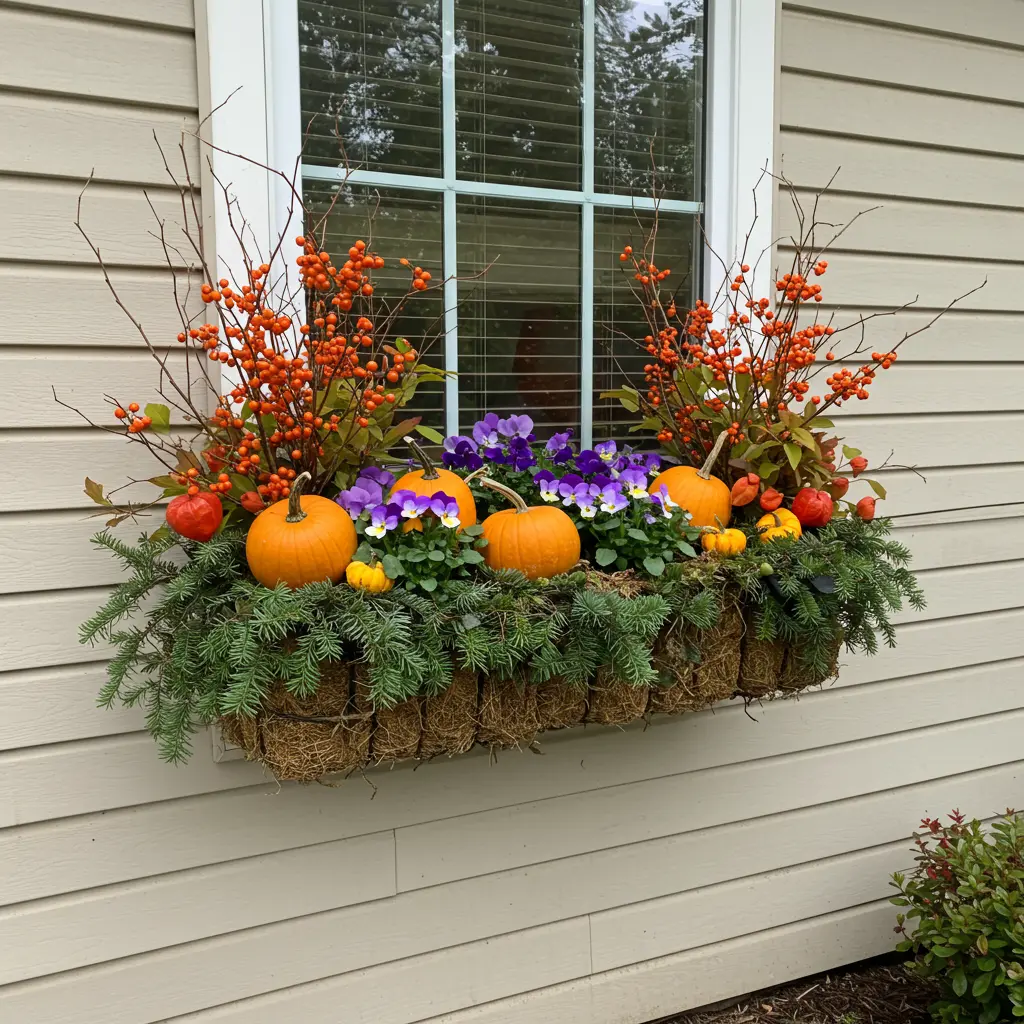
- Best For: Adding curb appeal and fall charm directly to the exterior of your home.
- Key Consideration: Window boxes dry out fast. Consider a self-watering version or be prepared for daily watering.
- Pro-Tip: Plant a base of evergreens (like dwarf Alberta spruce or ivy) that will last through the winter, then tuck in seasonal annuals like pansies that can be swapped out.
- Styling Cue: Weave in small gourds, mini pumpkins, and sprigs of bittersweet vine amongst the plants for a full, harvest-festival feel.
23. The Welcoming Front Step Cascade
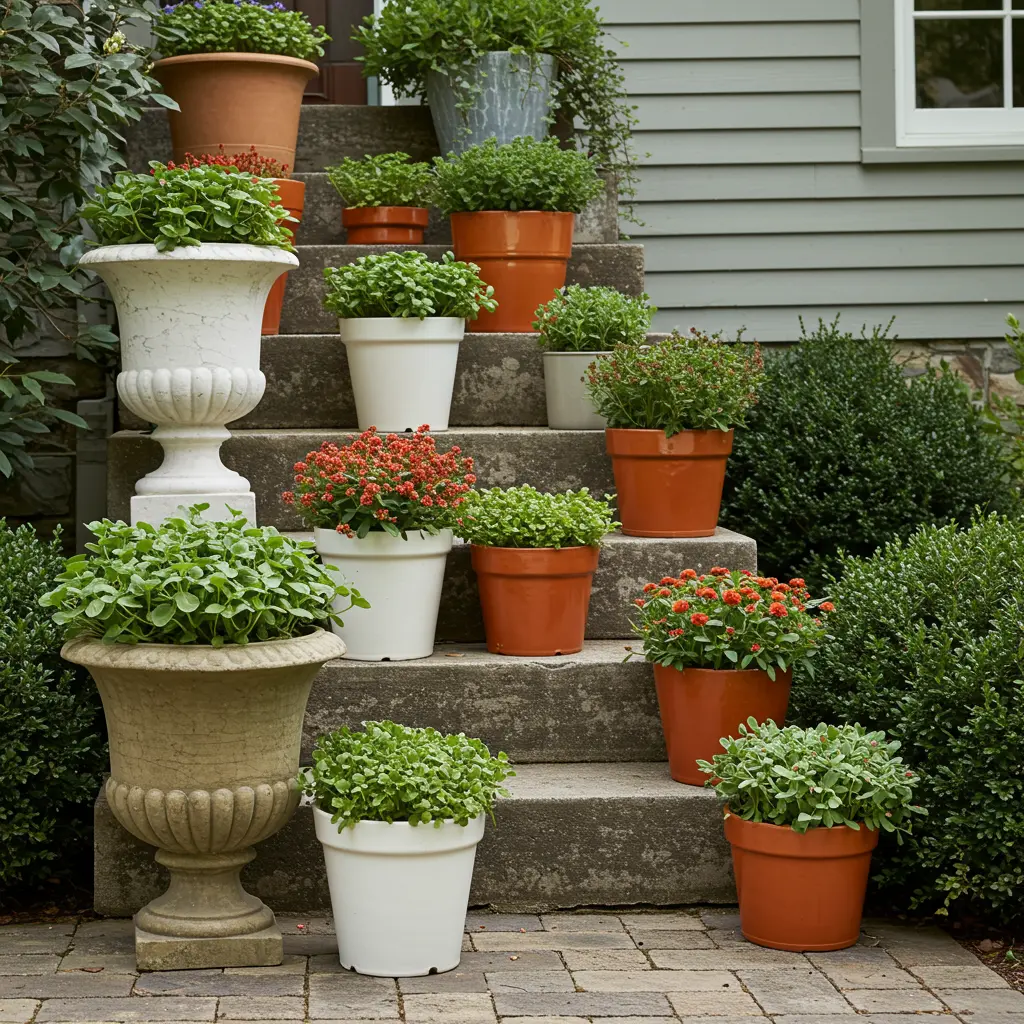
- Best For: Creating a grand, inviting entrance for guests.
- Key Consideration: Use pots of varying sizes to create rhythm and flow. Start with the largest at the bottom and get smaller as you go up the steps.
- Pro-Tip: Stick to a tight color palette (e.g., only white and green, or only shades of orange and bronze) to keep the display looking elegant, not chaotic.
- Styling Cue: On one side, place a large urn. On the other, create an asymmetrical cluster of three or five pots on the steps below it. It’s balanced but visually interesting.
24. The Hanging Macrame Holder

- Best For: Adding a touch of boho style and drawing the eye upward, especially in a small space.
- Key Consideration: Ensure the hook is securely anchored into a stud or joist. A watered plant can be very heavy.
- Pro-Tip: Look for macrame holders made with natural jute or dyed with autumn colors like mustard yellow or rust orange.
- Styling Cue: A trailing plant like a string of pearls or a pothos is the perfect companion for a macrame hanger, emphasizing its verticality.
25. The Elegant Single Statement Urn

- Best For: Formal, traditional homes or for anyone who prefers a simple, high-impact look over a cluttered collection.
- Key Consideration: This one piece has to do all the work, so invest in a large, high-quality urn and a spectacular plant arrangement.
- Pro-Tip: To save soil and weight in a huge urn, fill the bottom third with empty plastic bottles (with caps on) before adding your soil and plants.
- Styling Cue: Create a dramatic arrangement with a tall purple fountain grass in the center, surrounded by orange mums and trailing lime green sweet potato vine.
26. The Stacked “Topsy-Turvy” Planter

- Best For: A playful, whimsical display that’s a great space-saver.
- Key Consideration: This requires a central rod (like a piece of rebar) hammered into the ground or the base pot for stability.
- Pro-Tip: Use terracotta pots of decreasing size. Thread them onto the rod, tilting each one in an opposite direction as you go up.
- Styling Cue: Plant each tier with a different, hardy fall annual like pansies or violas for a cascade of color.
27. The Lantern Terrarium

- Best For: Protecting delicate plants from the elements or creating a magical, fairy-garden scene.
- Key Consideration: Ventilation is key. Leave the lantern door ajar on warm days to prevent cooking your plants.
- Pro-Tip: Place a small, potted fern or succulent inside a large lantern and surround it with moss, small pinecones, and battery-powered fairy lights.
- Styling Cue: Use a black or bronze lantern to create a moody, enchanted forest vibe for your indoor table centerpiece.
28. The Mantelpiece Trio

- Best For: Bringing the colors of fall right into the heart of your living room.
- Key Consideration: Use saucers! Protect your mantel from water damage.
- Pro-Tip: Use three identical small pots and plant them with plants of varying textures: one spiky, one soft, one trailing.
- Styling Cue: Line up three small, cream-colored pots on your mantel and fill them with vibrant, flame-orange crotons for a simple, elegant display.
29. The Indoor Herb Garden

- Best For: A functional and beautiful addition to a sunny kitchen windowsill.
- Key Consideration: Fall is a great time to bring herbs indoors before the first frost. Ensure they get at least 6 hours of sunlight.
- Pro-Tip: Group classic “Thanksgiving” herbs together: sage, rosemary, and thyme. Their silvery-green foliage is beautiful and you’ll have them fresh for your recipes.
- Styling Cue: Plant your herbs in small, aged terracotta pots for a timeless, European kitchen feel.
30. The Foraged & Found Display

- Best For: A nature-inspired look that is budget-friendly and deeply personal.
- Key Consideration: This is about styling around the pot.
- Pro-Tip: After potting your main plant, “top-dress” the soil with foraged materials like moss, acorns, small stones, or pinecones.
- Styling Cue: Place a simple potted plant on your entryway table and surround its base with a collection of small gourds, fall leaves, and a shed antler for a beautiful, natural vignette.
Bringing Your Vision to Life
With a dream in your heart and a plan in your head, it’s time to make it real.
Design Recipes for Tricky Spaces:
- For the Small Apartment Balcony: Think vertically. Use a Tiered Stand or railing planters. A Hanging Macrame Holder adds life without taking up any floor space.
- For the Shady Front Porch: Don’t fight the light. Choose shade-loving plants like heuchera (coral bells), coleus, and ferns. A Woven Basket Planter or a Cozy Sweater Pot will add warmth where the sun can’t.
- For the Expansive Back Deck: Create defined “rooms.” Use large Statement Urns or Rustic Wood Planter Boxes to anchor a seating area. Repeat the same pot and plant combination to create a sense of rhythm and cohesion across the large space.
The Practical Stuff: Soil, Drainage & Care
- Drainage is King: If your pot doesn’t have a hole in the bottom, it’s a plant killer. Drill one. It’s non-negotiable.
- Use the Right Soil: Don’t use garden soil in pots! It’s too heavy and compacts. Always use a quality “potting mix,” which is designed for container drainage and aeration.
- Water Wisely: Stick your finger two inches into the soil. If it’s dry, it’s time to water. Water deeply until it runs out the bottom.
- Know When to Quit: Most fall annuals (mums, pansies) are done after a hard frost. Don’t be afraid to pull them and transition your pots to winter greens.
The Finishing Touches: Styling & Smart Solutions
Your pots are planted. Now for the fun part making them truly yours.
- The Rule of Threes: Grouping pots in odd numbers (1, 3, 5) is always more visually appealing.
- Vary Your Heights: Combine tall urns, medium pots, and low bowls to create a beautiful rhythm.
- Mix Your Textures: Pair a smooth glazed pot with a rough terracotta one. Combine feathery grasses with broad-leafed heuchera.
- Give it Breathing Room: Don’t line up all your pots in a straight row. Cluster them in natural-looking groups with some space in between.
- Add an Accent: Tuck a mini pumpkin, a solar-powered stake light, or a bundle of cinnamon sticks into your arrangement for that final, personal touch.
A Few Common Missteps (And How to Avoid Them)
- Forgetting Drainage: The #1 mistake. Your plant’s roots will rot in standing water.
- The Wrong Size Pot: A pot that’s too small will stunt a plant’s growth. A pot that’s too large can hold too much moisture and lead to root rot.
- Color Chaos: Too many competing colors in your pots and plants can look messy. Stick to a planned color palette.
- Ignoring Winter: If you live in a cold climate, bring non-frost-proof pots (terracotta, some ceramics) indoors or they will crack.
No Garden Required: An Indoor Gardener’s Guide
- Bring the Outside In: Pot up some hardy mums or colorful crotons and use them as a temporary, living bouquet on your dining table.
- Focus on Foliage: Snake plants, ZZ plants, and pothos are nearly indestructible and their deep green foliage provides a beautiful backdrop for a few well-placed mini pumpkins on the shelf beside them.
- Embrace Faux: A high-quality faux autumn grass or berry stem in a beautiful pot requires zero care and provides lasting seasonal color.
Designing for Tomorrow
- Invest in Classics: A great pair of frost-proof black urns will look just as good filled with winter greens, spring tulips, or summer geraniums.
- Think in Layers: Start with a perennial “base” plant in your pot (like a dwarf evergreen or heuchera) and simply swap out the smaller annuals each season.
- Durable Materials: Fiberglass, treated wood, and high-fired ceramic are built to last for many falls to come.
Conclusion: Your Home’s Next Act
And just like that, you’re no longer just looking at a plant pot you’re looking at a world of possibilities. You have the ideas, the inspiration, and the know-how to create a fall display that’s beautiful, personal, and a true reflection of the season’s warmth.
This isn’t just about making your porch look pretty; it’s about creating a space that feels like a cozy, welcoming hug every time you come home.
It all starts with a single choice. Pick a style that made your heart skip a beat, and take the first small step. You’ve got this.
