
Table of Contents
- The Sun-Drenched L-Shape with Seamless Patio Transition
- The Privacy-Centric Split-Bedroom Ranch Layout
- The Sustainable Linear Plan Optimized for Solar Gain
- The Compact Urban Cube with Vertical Living Zones
- The Multi-Generational Haven with Private Casita Suite
- The Central Atrium Design for Maximum Natural Light
- The Minimalist Mono-Pitch Retreat with Vaulted Ceilings
- The Entertainer’s Open Concept with Hidden Scullery
- The Scandinavian Loft Plan with Smart Storage Solutions
- The Narrow-Lot Stacker with Private Rooftop Lounge
- The Remote Work Bungalow featuring a Dedicated Soundproof Office
- The Mid-Century Revival Layout with Indoor Planter Zones
- The U-Shaped Courtyard Sanctuary for Sheltered Privacy
- The Modular Eco-Cabin for Quick and Efficient Construction
- The Dual-Master Suite Configuration for Flexible Shared Living
- Your Blueprint for Modern Living
- Design Dilemmas Solved
Designing a home that resonates with your personal style begins with the very bones of the space. Whether you are dreaming of an open-concept living area or a private sanctuary tucked away in the back, the flow of your rooms dictates how you live.
A well-considered floor plan does more than simply arrange walls; it orchestrates the rhythm of your daily life and ensures every square foot serves a distinct purpose.
Navigating the world of modern architecture can often feel overwhelming without a clear roadmap to guide you. We have curated a diverse collection of layouts that balance sleek aesthetics with undeniable practicality.
These designs prove that you do not need a sprawling estate to achieve a high-end look, as smart spatial planning allows even compact footprints to feel spacious and inviting.
As you explore these fifteen distinct arrangements, try to visualize how they might adapt to your specific needs and daily routines. Look for opportunities to maximize natural light or create seamless transitions between indoor and outdoor zones.
Let these examples serve as a springboard for your own creativity so you can build a haven that is effortlessly stylish and deeply functional.
The Sun-Drenched L-Shape with Seamless Patio Transition
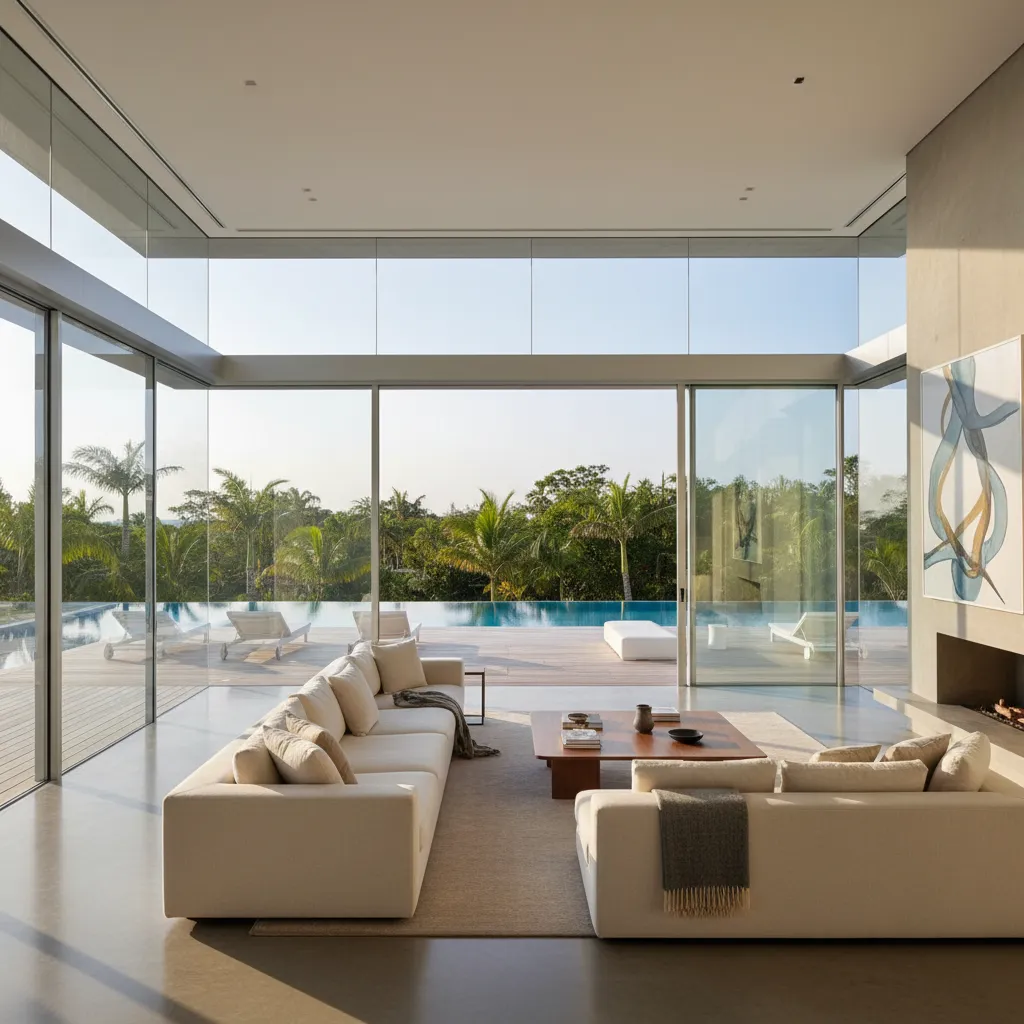
The L-shaped floor plan is a masterclass in organic design. It naturally separates private sleeping quarters from bustling social hubs while creating a central courtyard effect.
This layout prioritizes the connection between interior luxury and the natural world. By wrapping the architecture around an outdoor focal point, every room gets a view.
To maximize this layout, designers often utilize floor-to-ceiling glass sliders. These dissolve the barrier between the living room and the patio, expanding the usable square footage.
Architecture should not just contain space, but embrace the landscape it sits upon.
Creating Visual Continuity

The secret to a successful L-shape design lies in flooring consistency. Using the same material indoors and out creates a spatial flow that tricks the eye into seeing one massive room.
Materials like honed stone or matte porcelain tiles work best here. They offer durability against the elements while maintaining a sophisticated, high-end interior finish.
If you want to enhance the privacy of your courtyard area, consider implementing 15 beautiful yard divider and fence ideas that blend with your home’s modern architecture.
The most successful modern homes are those where the boundary between inside and outside is ambiguous. Use continuous flooring and consistent ceiling planes to draw the eye outward.
Kelly Wearstler, Architectural Digest
Zoning for Privacy and Rest
One wing of the L-shape is typically dedicated to rest. This physical separation from the kitchen and living areas ensures acoustic privacy for the bedrooms.
To make this private wing feel like a true retreat, the color palette is crucial. Soft, calming hues are essential for relaxation in these secluded zones.
You can achieve a serene vibe by applying one of the 18 best paint colors for master bedrooms, ensuring the flow of tranquility continues even when the doors are closed.
Material Selection for Seamless Transitions
Choosing the right materials is critical for blurring indoor and outdoor lines. Below is a comparison of top choices for achieving this continuous aesthetic.
| Material | Visual Warmth | Durability (In/Out) | Best For |
|---|---|---|---|
| Polished Concrete | Cool / Industrial | Extreme | Modern minimalist homes |
| Porcelain Tile | Versatile | High | High-traffic family areas |
| Natural Slate | Organic / Textured | High (requires seal) | Rustic modern styling |
| Engineered Timber | Warm / Cozy | Medium (covered only) | Scandinavian aesthetics |
Strategic Lighting and Atmosphere
Lighting plays a pivotal role in the L-shaped plan. During the day, sunlight floods the core. At night, ambient lighting must take over to maintain the mood.
Uplighting heavily textured exterior walls can bring the outdoors in visually at night. This prevents the glass walls from becoming black mirrors after sunset.
Use warm LEDs to mimic the softness of candlelight. Avoid harsh overhead fixtures that can disrupt the cozy hygge atmosphere you want to cultivate in the courtyard.
Design Studio Secrets
- Create an ‘invisible threshold’ by recessing sliding door tracks flush with the floor; this eliminates visual breaks and ensures the indoor flooring flows uninterrupted to the patio.
- Combat the ‘black mirror’ effect on large glass walls at night by layering landscape lighting in the courtyard, which keeps depth of field visible after sunset.
- Use the inner corner of the L-shape as a transitional ‘pivot point’; such as a small library or gallery hall; to signal the shift from social areas to private wings.
The Privacy-Centric Split-Bedroom Ranch Layout

The split-bedroom ranch is a masterclass in functional zoning. By placing the primary suite on the opposite side of the home from secondary rooms, you create a natural acoustic buffer.
This layout is favored for its ability to provide solitude. The central living area acts as a bridge, allowing the sleeping quarters to remain quiet even when the kitchen is busy.
True luxury in a modern home isn’t just square footage; it’s the intelligent separation of rest and play.
Visually, these homes often rely on a “great room” concept to connect the wings. High vaulted ceilings and raw wood beams frequently define this central gathering space.
To maintain unity across the distance, use consistent flooring. Wide-plank white oak running from the master wing to the guest wing creates a seamless visual tether.
Optimizing the Primary Retreat

Since the primary suite is isolated, you have the freedom to design a true sanctuary. Treat this space as a standalone vignette that differs slightly from the main living area.
Incorporate softer textures like velvet drapes or plush wool rugs to dampen sound further. This isolation is the perfect opportunity to experiment with peaceful master bedroom colors that promote deep rest.
Ensure the flow into the ensuite bathroom is unobstructed. Without hallway traffic nearby, you can opt for sliding barn doors or wider archways to make the suite feel expansive.
Separating the master suite from the other bedrooms creates a private sanctuary for parents… and provides noise privacy for the entire family.
Editorial Team, Better Homes & Gardens
Styling the Central Hub
The middle of the house carries the aesthetic weight. It must feel inviting enough to bring everyone together from their separate corners.
Use lighting to define zones within this open space. A statement chandelier over the dining area grounds the room, while recessed warm lighting in the hallway softens the transition to bedrooms.
While the wings can have unique identities, the central area needs cohesive color flow to prevent the house from feeling disjointed.
Design Checklist for Split-Bedroom Layouts:
- Soundproofing: Install solid core doors in the central hub to block noise travel to the wings.
- Sightlines: Arrange furniture so that bedroom doors are not directly visible from the main sofa.
- Traffic Flow: Ensure the path from the garage or mudroom to the kitchen does not cross through a private bedroom zone.
- Decor Consistency: Repeat a specific metal finish, like brushed brass, in door handles across both wings for unity.
This floor plan offers the best of both worlds. You get the airy, social vibe of open-concept living paired with the necessary boundaries for privacy.
Ranch Refinement Secrets
- Master the Sightlines: Orient your central furniture so guests focus on architectural features; like a fireplace or window view; rather than looking directly down hallways into private bedroom zones.
- The Visual Tether: Prevent the separate wings from feeling like disjointed spaces by keeping one element strictly consistent throughout, such as door hardware finishes or floor molding style.
- Layered Acoustics: While the layout buffers noise, amplify the effect by installing solid-core doors and using heavy textiles (like velvet drapes) in the primary suite to dampen echoes from the open central hub.
The Sustainable Linear Plan Optimized for Solar Gain
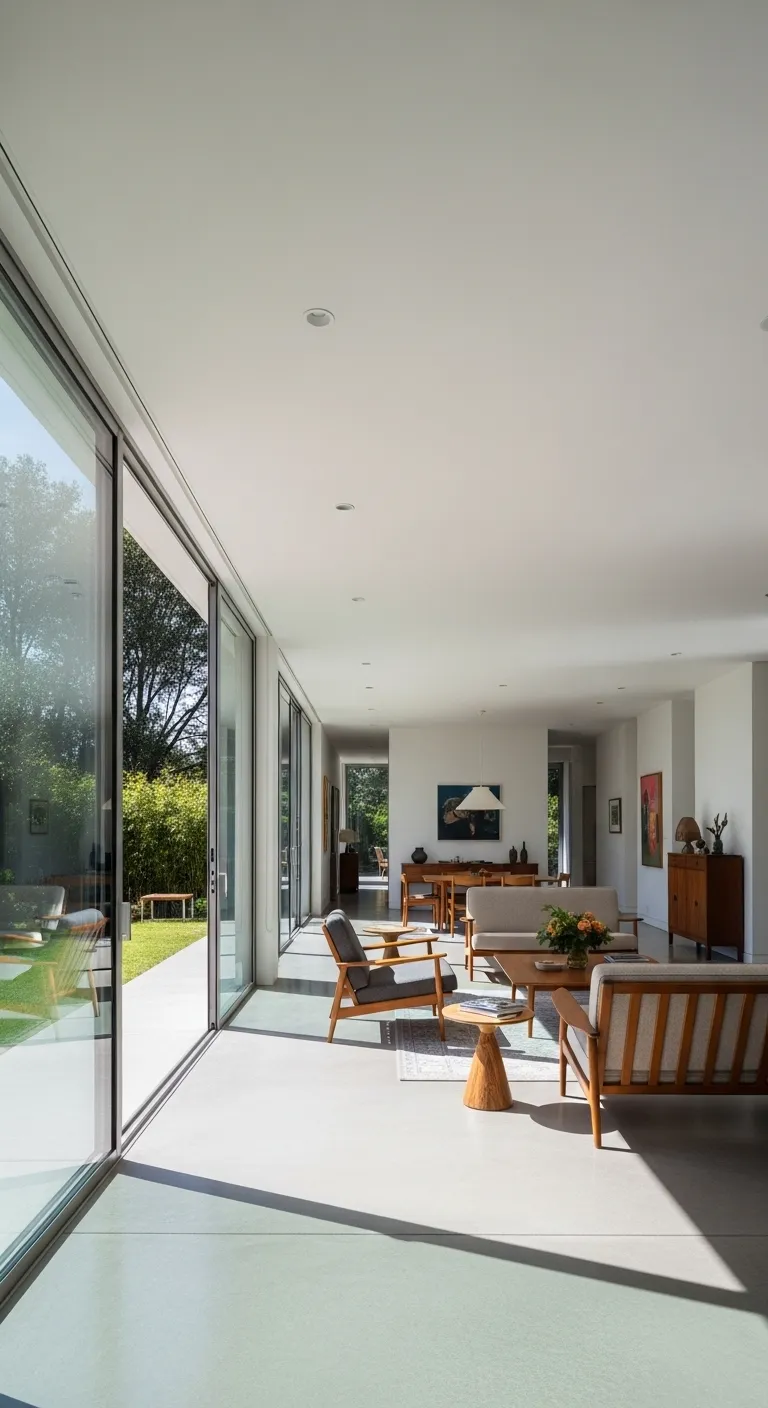
The sustainable linear plan is more than just a rectangular footprint. It is a calculated lifestyle choice that prioritizes natural light and energy efficiency.
By stretching the home along an east-west axis, you maximize the surface area available for southern exposure. This orientation is crucial for passive solar gain.
In these spaces, the spatial flow is intuitive and direct. Corridors are often minimized or eliminated entirely, allowing rooms to bleed into one another.
This layout encourages a seamless connection with the outdoors. Large banks of glazing turn the landscape into a living mural that changes with the seasons.
To ground the airy aesthetic, designers often utilize raw materials. Polished concrete floors act as thermal mass, absorbing heat during the day and releasing it at night.
Soft textures are essential to balance the hard surfaces. Layering wool rugs and linen curtains adds a necessary tactile element that creates a cozy, hygge atmosphere.
Design your home so the sun becomes your primary light source and nature becomes your favorite artwork.
Strategic Zoning and Flow
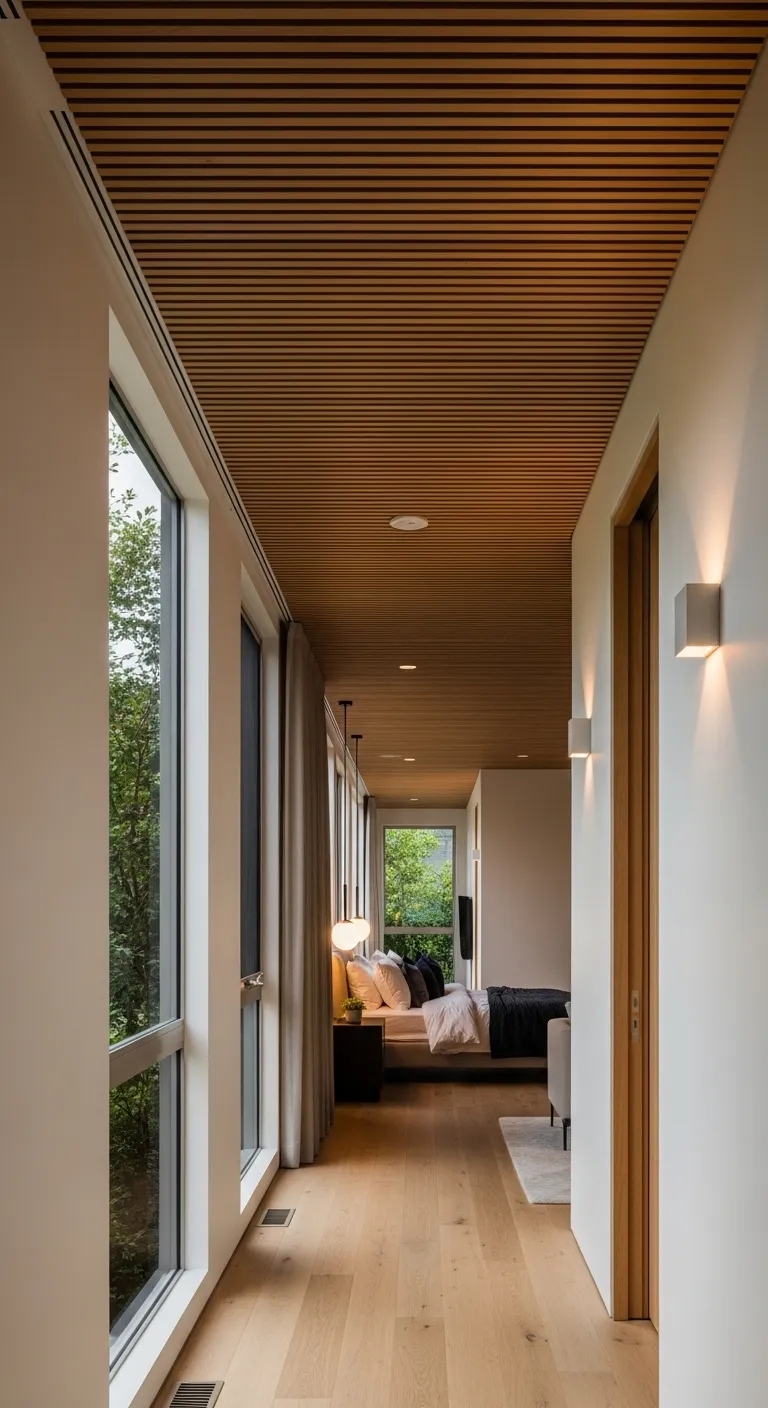
Functionality in a linear plan relies on distinct zoning. Public spaces like the kitchen and living room usually occupy the center or one end of the structure.
Private quarters are pushed to the edges. This separation allows for quiet retreats while maintaining the open, communal feel of the main living areas.
When designing the exterior, consider modern exterior colors that complement the natural surroundings. Dark hues can help blend the long structure into the tree line.
Internal flow is often dictated by the sun. Breakfast nooks face east to catch the morning rays, while living areas face south and west for prolonged daylight.
Thermal Regulation and Materiality
The success of this floor plan hinges on material selection. Materials must serve both a structural and a thermal purpose to maintain comfort.
Dense materials like stone, brick, or concrete are preferred for flooring near south-facing windows. They stabilize indoor temperatures effectively.
Aesthetically, these industrial materials pair beautifully with earth-tone paint colors. The combination creates a grounded, organic vignette.
The most sustainable energy is the energy you don’t use. Passive design focuses on that by taking advantage of a building’s site, climate, and materials.
Department of Energy, Passive Solar Home Design
Key Elements of a Solar-Optimized Layout
Implementing a linear plan requires attention to specific architectural details. These elements ensure the home remains efficient and comfortable year-round.
- Orientation: The longest wall of the house must face within 30 degrees of true south to capture optimal winter sunlight.
- Overhangs: Roof eaves must be calculated precisely to shade windows in summer while allowing low winter sun to penetrate the glass.
- Glazing: High-performance, triple-paned glass is standard to prevent heat loss during colder nights without sacrificing views.
- Cross Ventilation: Narrow floor plans allow breezes to pass easily from one side to the other, naturally cooling the home.
- Thermal Mass: Interior floors or feature walls made of masonry absorb solar energy to regulate the ambient temperature naturally.
The beauty of this plan lies in its simplicity. It strips away the unnecessary, leaving a home that is bright, warm, and deeply connected to its environment.
Passive Performance Hacks
- Maximize your thermal mass efficiency by keeping concrete or stone floors exposed to direct sunlight during winter days, then layering area rugs at night to trap the stored heat.
- Create a natural cooling tunnel by aligning operable windows on opposite north and south walls; this utilizes cross-ventilation to flush out stale air without relying on AC.
- If fixed roof overhangs aren’t possible, plant deciduous trees along the southern exterior to provide leafy shade in summer while allowing sunlight to penetrate branches in winter.
The Compact Urban Cube with Vertical Living Zones
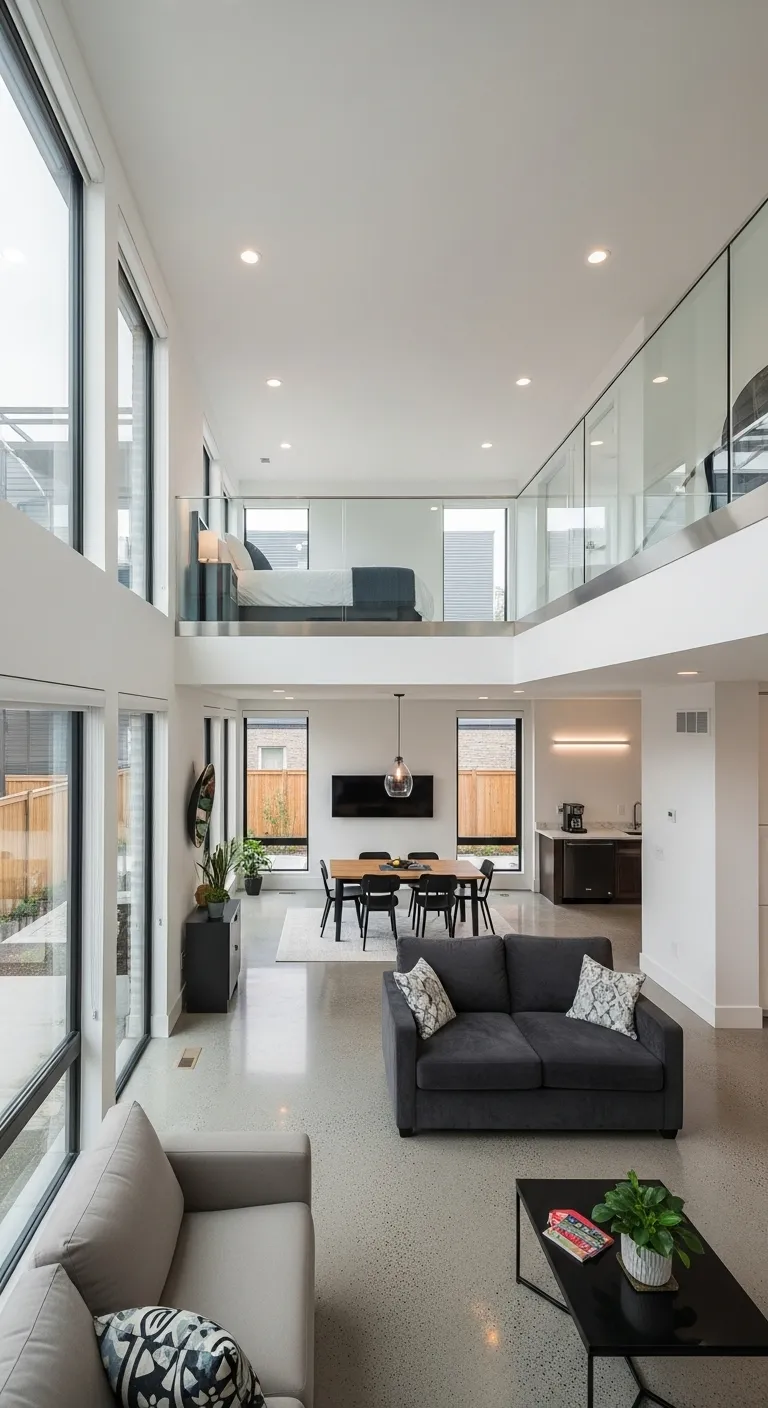
City living often demands creative solutions for smaller footprints. The Urban Cube design embraces height rather than width to maximize square footage.
This layout stacks living zones vertically. It creates a distinct separation between public social areas and private retreats without using walls.
The atmosphere in these homes is surprisingly airy. High ceilings and tall windows allow natural light to flood the space, eliminating dark corners.
For the upper level, choosing the right palette is crucial. You can use paint colors for small bedrooms to enhance the sense of depth.
Vertical living isn’t just about saving space; it is about creating volume and drama in a compact footprint.
The Mezzanine Advantage

The defining feature of the Urban Cube is the mezzanine. This half-floor overlooks the living area, maintaining a visual connection while adding privacy.
It typically houses the primary sleeping quarters. By elevating the bed, you free up the entire ground floor for entertaining and daily activities.
To keep the visual flow uninterrupted, designers often use glass balustrades. This allows light from the large windows to reach the upper corners.
Here is how to effectively zone a vertical home for maximum functionality:
| Zone Level | Primary Function | Key Design Elements |
|---|---|---|
| Ground Floor | Social & Utility | Open kitchen, durable flooring, modular sofas, hidden laundry. |
| Mezzanine | Rest & Privacy | Plush rugs, softer lighting, blackout curtains, acoustic panels. |
| The Vertical Void | Connection | Statement pendant lights, tall artwork, floating staircases. |
Smart Storage Integration

In a compact cube, every inch must work hard. The space beneath the staircase is often utilized for pull-out pantry drawers or a small home office.
Vertical shelving is another essential element. Floor-to-ceiling units draw the eye upward and provide ample room for displaying collections.
If you have a collection to display, consider using creative bookshelf ideas that act as architectural features.
Texture plays a big role here as well. Using raw materials like exposed brick or concrete on tall walls adds character without reducing floor space.
In small spaces with high ceilings, draw the eye up. Use vertical lines in your cabinetry and window treatments to emphasize the height.
The Editors, House Beautiful
Lighting is the final touch for the Urban Cube. A large statement chandelier suspended in the center ties the two levels together beautifully.
Vertical Vision
- Maximize the perception of space by installing floor-to-ceiling drapery or tall shelving units; these vertical lines draw the eye upward and celebrate the room’s volume rather than its limited footprint.
- Turn the area beneath your staircase into a functional powerhouse by installing custom pull-out drawers, a hidden laundry station, or a cozy work-from-home nook.
- Bridge the gap between levels with an oversized statement pendant light; hanging it within the open void connects the mezzanine to the living area and adds a touch of drama.
The Multi-Generational Haven with Private Casita Suite

Modern family dynamics are evolving rapidly. Homeowners now require versatile spaces that accommodate aging parents or adult children returning home.
This floor plan addresses the need for connection and autonomy. It features a primary residence attached to a private, self-contained casita suite.
The design creates a harmonious balance. It allows for shared meals in the main kitchen while ensuring everyone has a quiet retreat at the end of the day.
True luxury in a modern home is having the space to be together and the freedom to be apart.
Multi-Gen Masterclass
- Invest in high-quality soundproofing for any shared walls to ensure late-night movies in the main house don’t disturb the tranquility of the suite.
- Incorporate universal design features like curbless showers and wider doorways in the casita now to accommodate aging family members comfortably in the future.
- Create a shared outdoor courtyard or patio to bridge the two spaces, providing a neutral ground for casual interaction without encroaching on private zones.
Designing the Connection Point

The physical connection between the main house and the suite is vital. A shared mudroom or glazed breezeway often acts as the perfect buffer zone.
This transitional space reduces noise transfer. It creates a subtle psychological boundary that signals you are entering a private domain.
Use sound-absorbing materials here. Thick runners and acoustic wall panels help maintain a peaceful ambient atmosphere in both living sections.
You might consider converting a lower level for this purpose. If so, explore unique basement ideas to ensure the space feels bright and welcoming, not subterranean.
Architect’s Insight
- Install solid-core doors at both entry points of the connector; this adds mass that significantly dampens sound compared to hollow interior doors.
- Utilize the breezeway or mudroom for dense storage, such as floor-to-ceiling cabinetry or a shared laundry area, which acts as an additional physical sound barrier between the two living spaces.
- If using a basement connection, avoid the ‘tunnel effect’ by installing wall sconces or recessed lighting with a warmer temperature (3000K) to mimic the feel of natural daylight.
Equipping the Private Suite

The casita must function independently. A well-designed kitchenette with a coffee station and under-counter fridge elevates the functionality.
Keep the palette light and airy. Creamy whites and soft greige tones make smaller footprints feel expansive and sophisticated.
Bathrooms in these suites often have limited square footage. Utilizing simple small bathroom ideas like floating vanities can maximize floor space.
Storage is also a priority for long-term guests. Built-in wardrobes with mirrored fronts reflect light and hide clutter efficiently.
Privacy is the ultimate luxury. When designing for multi-generational living, ensure separate entrances and dedicated outdoor zones to maintain a sense of independence for all residents.
Hadley Keller, House Beautiful
Suite Smarts
- Swap standard swing doors for pocket doors to reclaim valuable floor space, allowing for better flow between compact rooms.
- Invest in soundproofing measures, such as acoustic insulation or solid-core doors, to ensure true acoustic privacy for multi-generational living.
- Opt for panel-ready appliances in the kitchenette to create a seamless look that reduces visual clutter in a small footprint.
Key Features for Longevity
A successful multi-generational layout considers future mobility. Universal design principles ensure the suite remains usable for decades.
Consider the spatial flow carefully. Wide doorways and lever-style handles are subtle details that vastly improve accessibility without looking clinical.
| Design Feature | Functionality Benefit | Aesthetic Application |
|---|---|---|
| Zero-Entry Showers | Removes tripping hazards for safety. | Seamless stone tile flow. |
| Pocket Doors | Saves swing space in tight rooms. | Matte black hardware contrast. |
| Zoned Thermostats | Personalized comfort control. | Sleek, modern digital interfaces. |
| Soundproofing | Ensures auditory privacy. | Textured upholstered walls. |
The Future-Proof Edit
- Install solid wood blocking behind shower walls during the framing phase so you can easily mount grab bars later without damaging expensive tile.
- Add toe-kick lighting under bathroom vanities to create a safe, glare-free guide for nighttime navigation that doesn’t disrupt sleep.
- Swap standard door knobs for lever-style handles and choose D-shaped drawer pulls, which are easier to operate with limited dexterity or full hands.
The Central Atrium Design for Maximum Natural Light

The central atrium is a sophisticated architectural feature that solves a common problem in deep floor plans. It eliminates dark hallways by bringing sunlight directly into the core of the home.
By creating a glass-encased void in the middle of the house, you create a private sanctuary. This design choice allows natural light to flood into adjacent rooms from multiple angles.
The atmosphere becomes airy and meditative, blurring the boundaries between indoors and outdoors. It creates a focal point that changes with the seasons, acting as a living art piece.
A home designed around light is a home that breathes, turning daily routines into serene rituals.
The Illumination Edit
- Plant a sculptural specimen, such as a Japanese Maple, in the center to create a living focal point that evolves visually with every season.
- Extend your interior flooring material directly into the atrium base to seamlessly dissolve the visual boundary between inside and out.
- Install subtle uplighting around the atrium perimeter to transform the glass void into a glowing architectural lantern after sunset.
Curating Your Indoor Garden Oasis
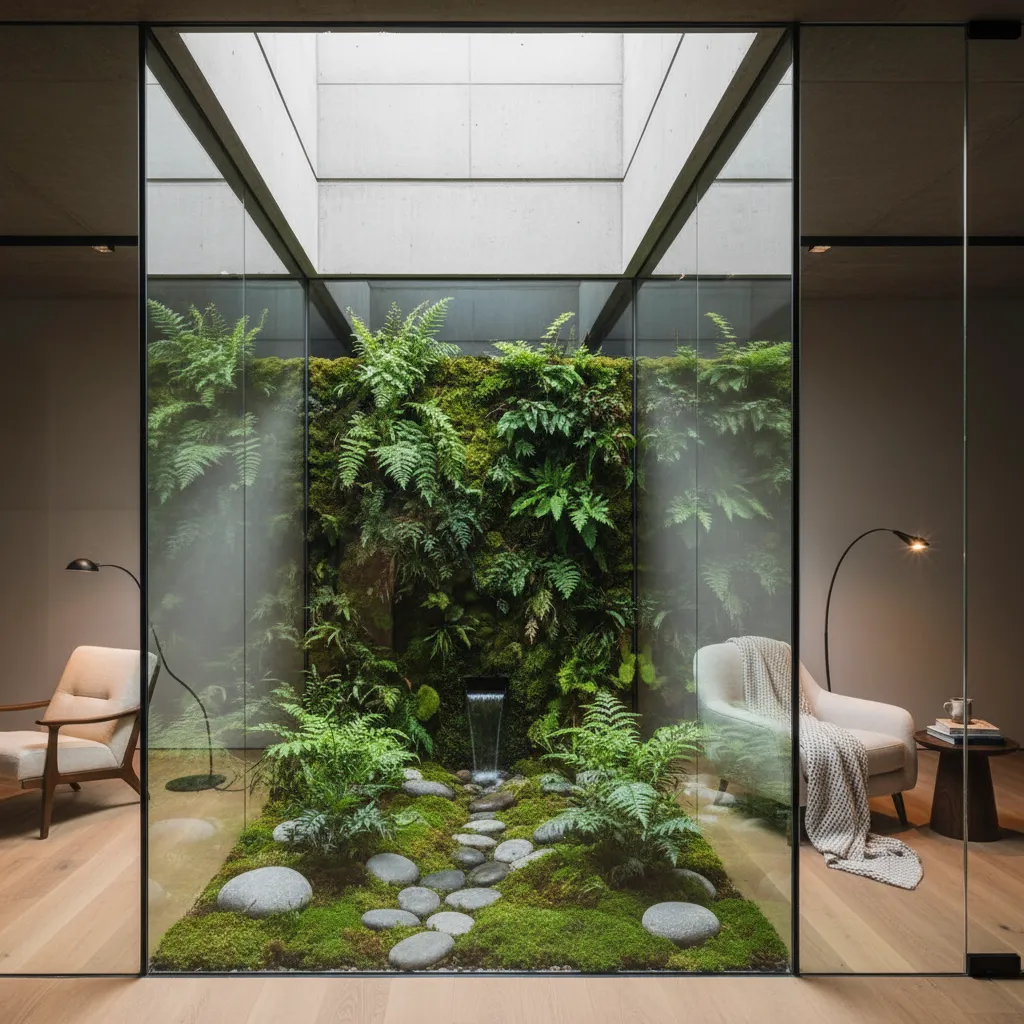
Treat the atrium as a curated vignette rather than just a yard. Layering textures like river stones, moss, and timber decking adds warmth to the sleek glass and steel structure.
Select plants that thrive in your specific light conditions to maintain a lush look. For container inspiration, look at these 30 best fall plant pot ideas to find vessels that complement a modern aesthetic.
Biophilic design involves the use of natural materials, natural light, and plants to create a more productive and healthy built environment.
Oliver Heath, Oliver Heath Design
The Green Edit
- Create visual depth by staggering plant heights and mixing leaf textures; pair feathery ferns with broad tropical leaves for a dynamic, curated vignette.
- Soften the acoustics and sleek lines of a glass atrium by incorporating ground-level textures like polished river stones, driftwood, or moss beds.
- Treat your containers as sculptural elements; opt for pots in a monochromatic palette with varying shapes to maintain a modern, cohesive aesthetic.
Optimizing Flow and Functionality

An atrium dictates the spatial flow of the house, often creating a circular path. This layout encourages movement and visual connection between separated zones, like the kitchen and living area.
This approach is excellent for compact footprints. It maximizes perceived space, much like these 40 living and dining room combo ideas for small apartments that rely on smart zoning.
Functionally, an open-air atrium assists with passive cooling. When glass doors are opened, hot air rises out of the central void, drawing cool fresh air in through the exterior windows.
Glazing Options for Light and Privacy
Choosing the right glass is critical for balancing thermal efficiency with aesthetics. The table below outlines modern glazing solutions suited for central atriums.
| Glass Type | Visual Effect | Primary Benefit | Best Application |
|---|---|---|---|
| Low-E Clear | Invisible, crisp | Heat insulation | North-facing walls |
| Frosted/Etched | Soft, diffused glow | High privacy | Bathrooms facing atrium |
| Switchable Smart Glass | Changes on demand | Versatility | Bedroom partitions |
| Tinted Bronze | Warm, moody filter | Glare reduction | Sunny southern exposures |
Incorporating a central atrium requires careful planning, but the payoff is immense. You gain a home that feels significantly larger, brighter, and deeply connected to the natural world.
The Atrium Architect’s Playbook
- Blur indoor-outdoor boundaries by extending your interior flooring material into the atrium base; this optical illusion creates a seamless flow and visually expands the floor plan.
- Boost passive cooling by installing motorized actuators on high-level windows to automate the ‘stack effect,’ venting hot air effortlessly without needing a ladder.
- If switchable smart glass exceeds your budget, apply a gradient frost film to the lower third of bedroom-facing glazing to secure privacy while preserving sky views.
The Minimalist Mono-Pitch Retreat with Vaulted Ceilings

The mono-pitch roof creates a dramatic silhouette that defines modern architectural beauty. This single-slope design offers more than just curb appeal; it transforms the interior experience completely.
Inside, the ceiling soars upward to create a sense of limitless volume. This vertical space draws the eye up, making even modest footprints feel incredibly spacious and open to the outdoors.
The aesthetic relies on clean lines and raw materials to maintain warmth. Think of polished concrete floors paired with warm oak cabinetry to balance the industrial feel of the architecture.
Functionality is central to this layout, as the high wall allows for massive glazing. This floods the space with ambient light, reducing the need for artificial fixtures during the day.
True minimalism is not about having less, but about making room for more of what matters: light, space, and calm.
Strategies for Zoning Open Volume

High ceilings can sometimes make a room feel undefined or echoing. To combat this, you must use visual anchors to designate specific living zones within the open floor plan.
Large area rugs are essential for grounding furniture groupings. They create a “room within a room” effect that adds necessary texture and acoustical dampening to the hard surfaces.
Lighting plays a crucial role in lowering the visual ceiling height. Low-hanging pendant lights over a dining table create an intimate atmosphere despite the soaring roofline above.
You can also define the entertainment area by incorporating media wall ideas for cozy sleek living. A structured wall unit adds a focal point that complements the room’s scale.
In rooms with high ceilings, you want to address the ‘human scale’; the bottom 8 to 10 feet of the room. This is where we live, sit, and interact.
Emily Henderson, Style by Emily Henderson
Mastering the Slanted Bedroom Aesthetic
The mono-pitch design works exceptionally well for private quarters. Placing the bed against the lower wall creates a cozy, protective nook that feels safe and restful for sleeping.
Conversely, positioning the bed to face the high glazing allows you to wake up to sky views. This connection to nature is a hallmark of unique and stylish modern bedroom ideas.
Window treatments are critical in these angled spaces. Motorized shades are often necessary for clerestory windows to manage morning glare without ruining the clean architectural lines.
Key Design Elements for Vaulted Spaces
Successfully furnishing a room with a mono-pitch roof requires paying attention to scale and acoustics. Use this checklist to ensure your retreat remains comfortable.
- Acoustic Softening: Use heavy linen drapes and upholstered furniture to absorb sound bouncing off high walls.
- Vertical Art: Select tall artwork or stacked gallery walls to bridge the gap between furniture and the ceiling.
- Statement Lighting: Install a chandelier or oversized pendant that acts as a sculptural element in the void.
- Tall Greenery: Place large indoor trees, like a Ficus or Fiddle Leaf Fig, to connect the floor to the height.
- Wall Texture: Apply wood slatting or a matte finish paint to the tall wall to reduce glare and add depth.
Vaulted Living Secrets
- Combat echoes in high-ceilinged rooms by layering plush wool rugs and heavy linen drapery to absorb sound bouncing off hard, minimalist surfaces.
- Create intimacy within the vast volume by suspending pendant lights low over dining tables or seating areas, visually lowering the ceiling to a cozy human scale.
- Install motorized shades for hard-to-reach clerestory windows to easily control glare and temperature without cluttering the walls with cords or needing a ladder.
The Entertainer’s Open Concept with Hidden Scullery
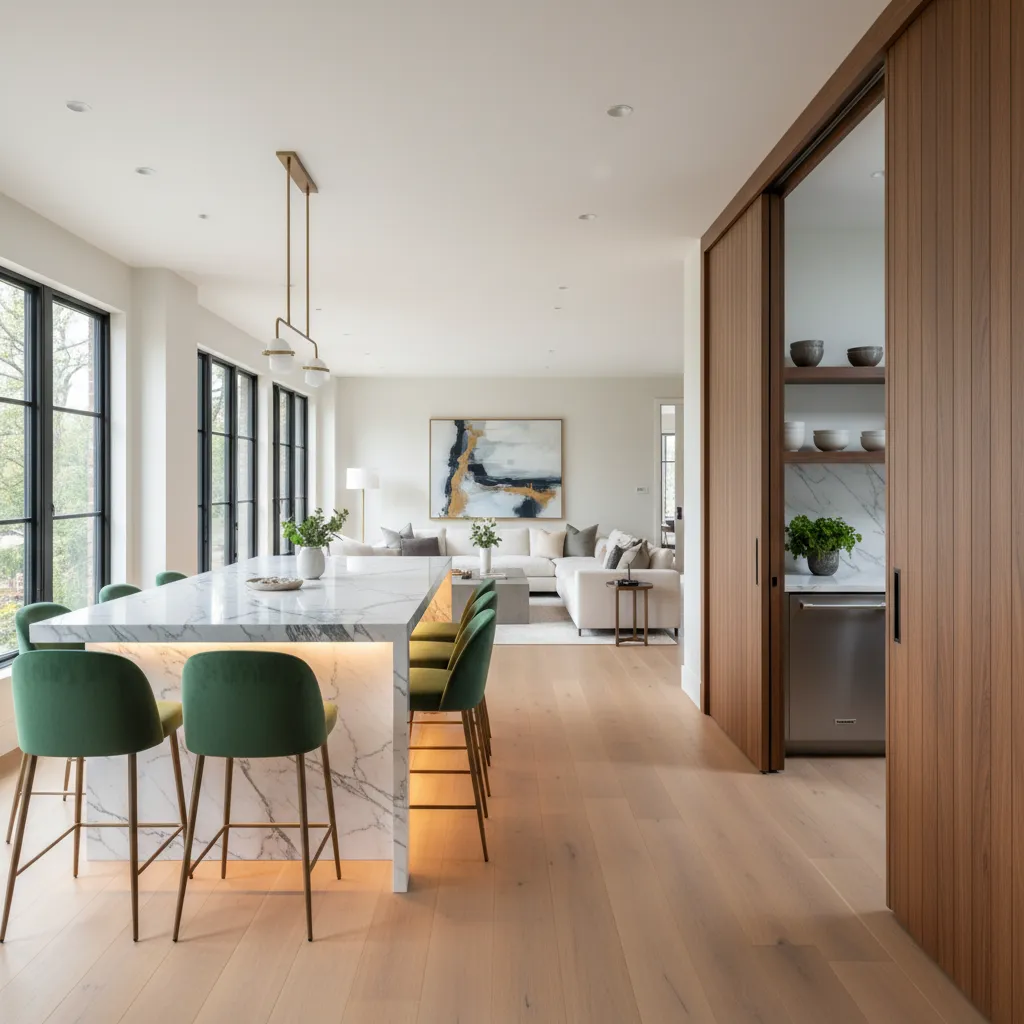
Hosting guests brings joy, but the visual clutter of prep work often distracts. This floor plan solves the issue elegantly. It keeps the chaos tucked away while you socialize.
Imagine a seamless spatial flow where guests mingle around a pristine island. Meanwhile, dirty dishes vanish into a secondary prep zone. This layout preserves the ambiance perfectly.
The true luxury of modern design is not just how it looks, but how it serves the rhythm of your life.
Use materials like honed quartz or warm walnut to ground the space. This separation allows your main kitchen to remain a curated vignette. It creates a relaxing atmosphere for everyone.
Designing the Hidden Workhorse
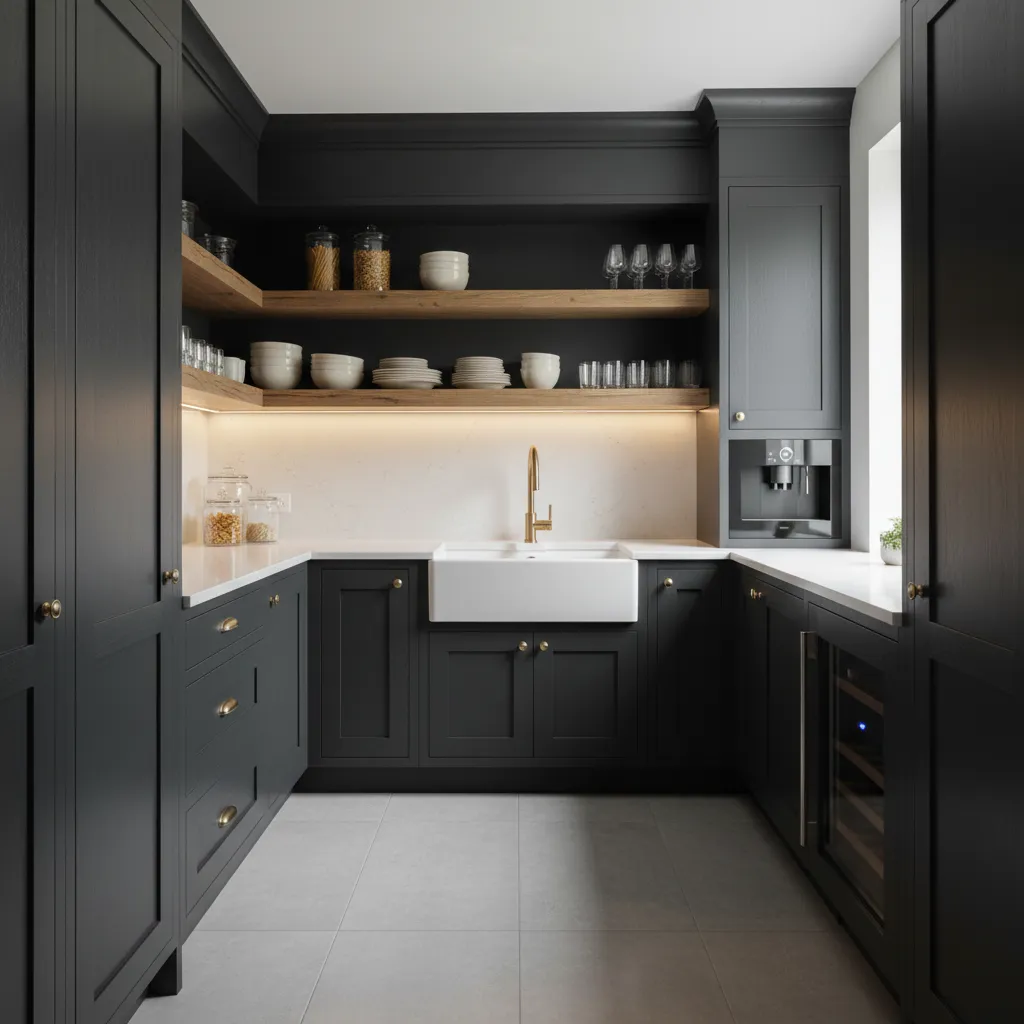
The scullery is the functional engine of this floor plan. Equip it with a deep sink and a second dishwasher. This keeps the main area free of noise and mess.
Opt for durable surfaces that can withstand heavy use. Open shelving here makes grabbing platters easy during parties. It transforms pure functionality into an organized art form.
The scullery allows the main kitchen to serve as a beautiful entertaining space while the hard work happens behind the scenes.
Lisa Staton, Homes & Gardens
While the main kitchen focuses on aesthetics, the scullery focuses on utility. However, you can still apply moody kitchen ideas here. Darker tones hide wear and create a cozy vibe.
Cohesive Aesthetic Flow
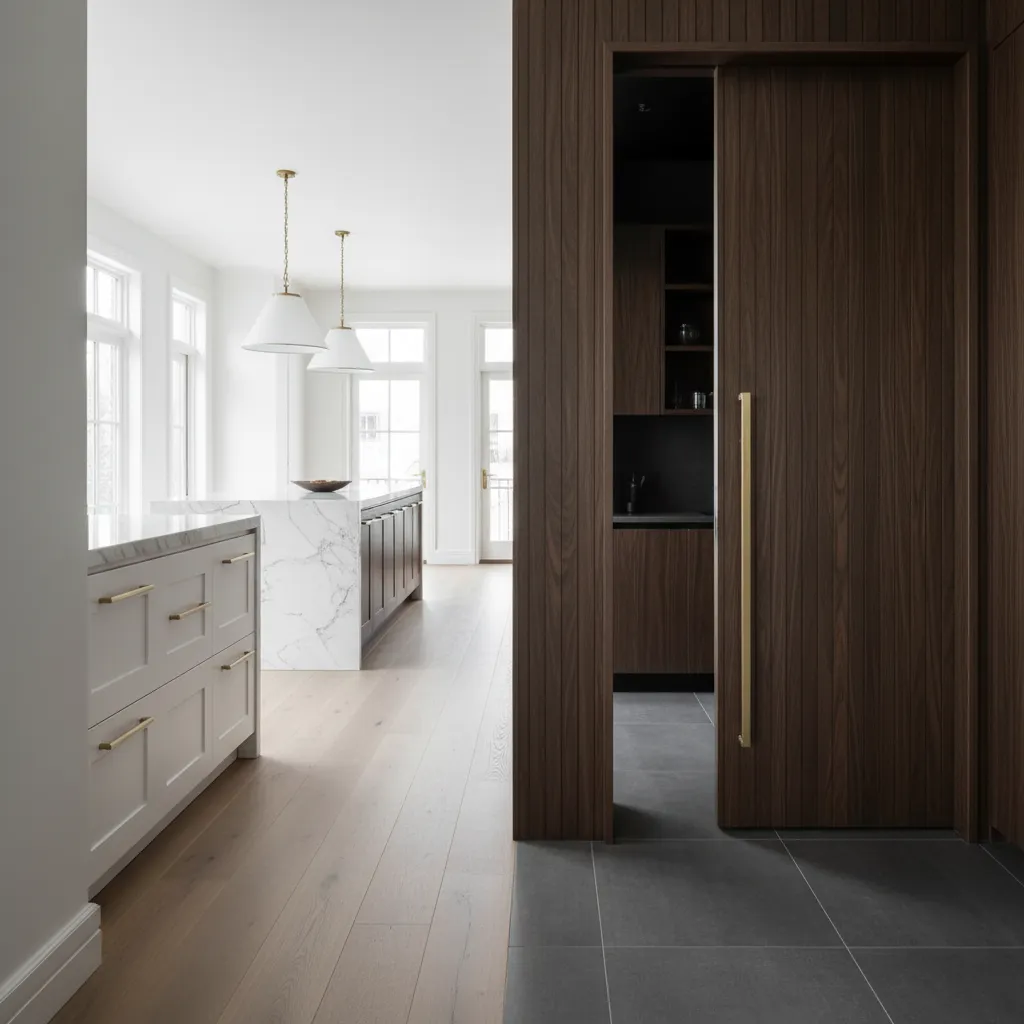
Ensure a connection between the hidden and visible spaces. Carry the same flooring through to maintain spatial flow. This makes the hidden area feel like an extension, not an afterthought.
Repeat specific finishes, such as brass hardware or wood stains. This repetition creates a sense of harmony. You can explore various kitchen color combinations to blend these zones.
Key Differences Between Zones:
- Lighting: The main kitchen uses statement pendants for drama. The scullery relies on bright, cool-toned task lighting for precision.
- Countertops: Use stain-resistant surfaces like quartz in the scullery. Reserve porous natural stones like marble for the low-traffic main island.
- Storage: The main area features concealed cabinetry for a sleek look. The scullery utilizes open racks and hooks for rapid access.
- Sink Type: Install a small prep sink in the social zone. Place a large, double-basin farmhouse sink in the back for scrubbing pots.
This floor plan offers the best of both worlds. You get the beauty of minimalism with the utility of a professional kitchen. It is the ultimate upgrade for the modern host.
The Host’s Secret Weapon
- Designate the scullery as the ‘noise zone’ by placing loud appliances like coffee grinders, blenders, and the primary dishwasher there to keep the main gathering space quiet.
- Utilize a pocket door or hidden pivot door to separate the two spaces; this allows for seamless flow during prep but instantly conceals the mess once guests arrive.
- Balance your budget by using cost-effective, high-durability materials like stainless steel or butcher block in the hidden prep zone, saving your splurge budget for a statement marble slab on the main island.
The Scandinavian Loft Plan with Smart Storage Solutions
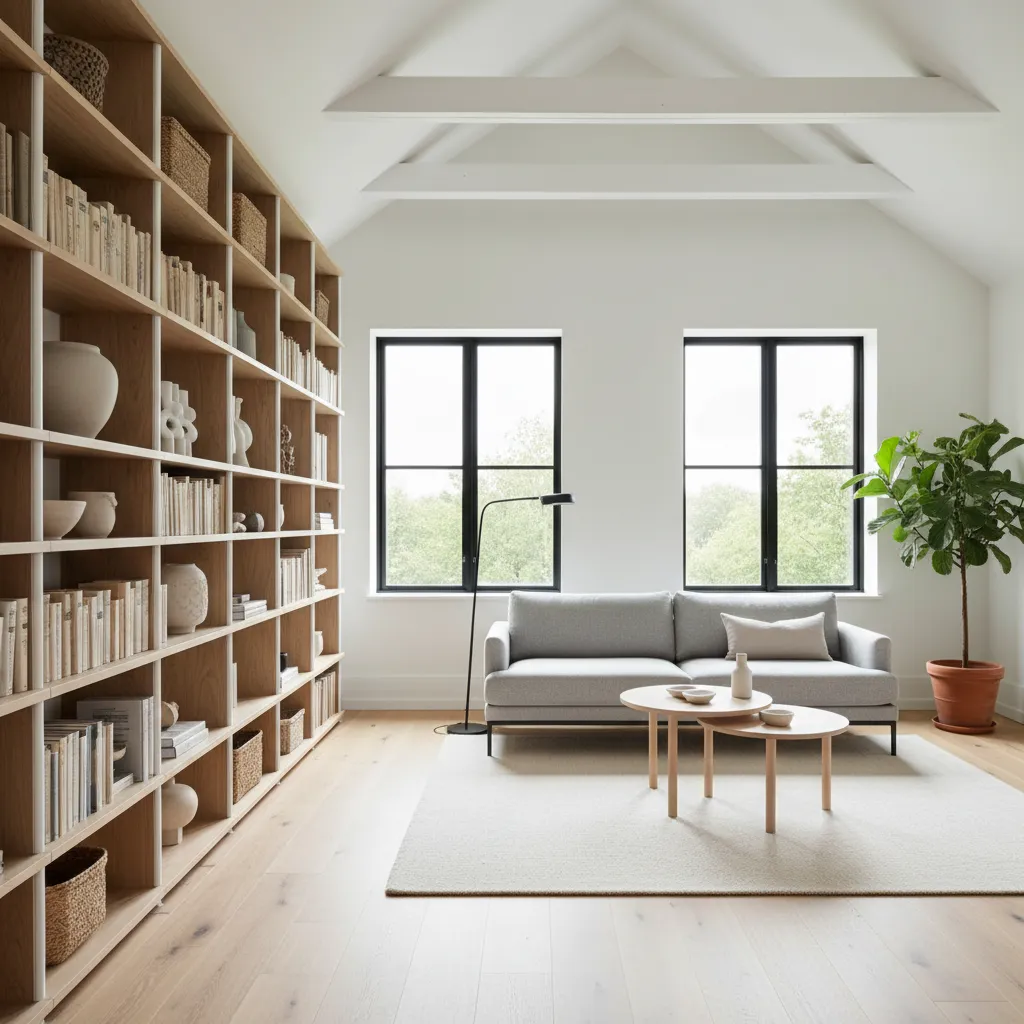
The Scandinavian loft aesthetic is defined by its airy atmosphere and intentional simplicity. This floor plan prioritizes light and spatial flow.
It creates a home that feels expansive yet incredibly cozy. The key lies in balancing open sightlines with functional zones.
You achieve this look by using raw materials like untreated oak or ash. These textures warm up the crisp white walls common in this style.
The flow remains uninterrupted because clutter is virtually non-existent. Every item has a designated place, hidden or displayed with purpose.
True minimalism isn’t about having less; it’s about making room for what matters most.
Integrating Vertical Storage
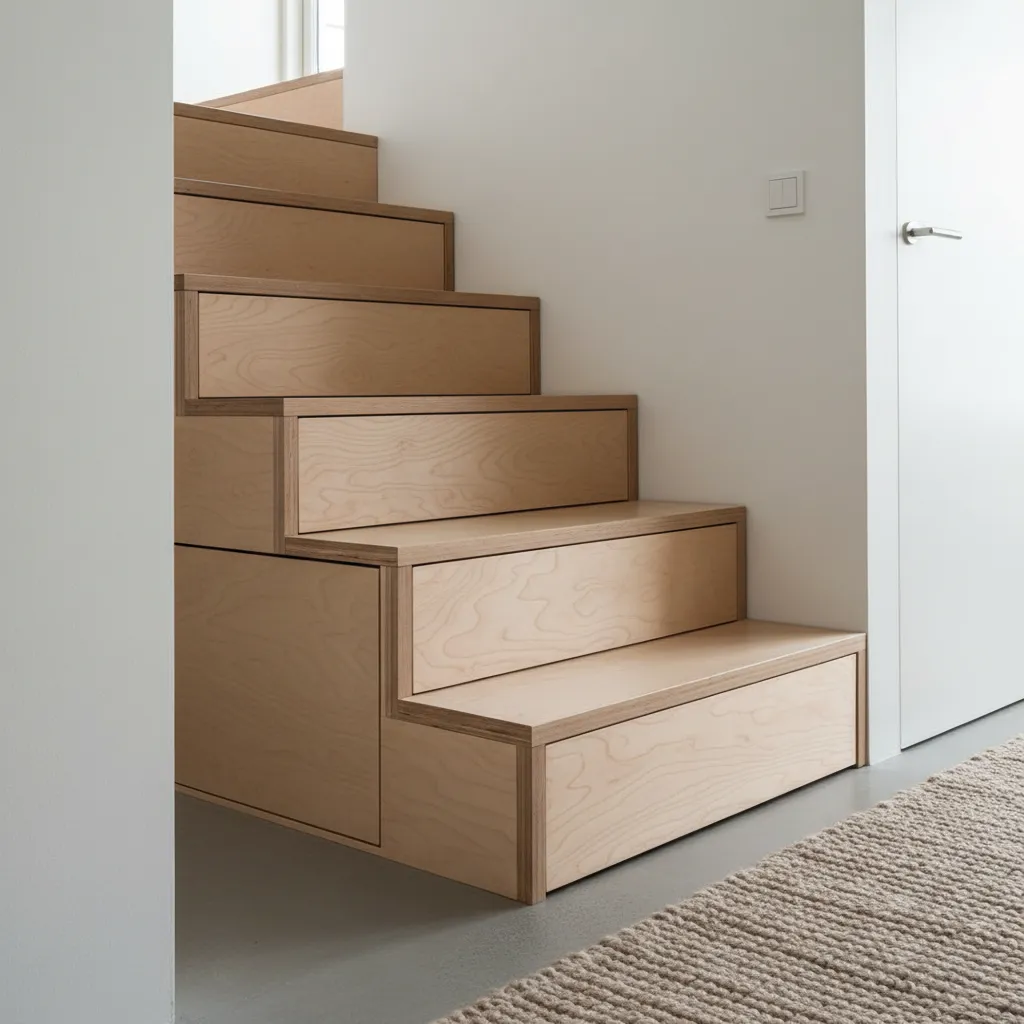
In a loft plan, the vertical plane is your greatest asset. Tall ceilings beg for storage that draws the eye upward.
Consider installing floor-to-ceiling shelving units. These act as a focal point while housing your library and decor.
This approach keeps the floor area clear for movement. It reinforces the sense of height and volume in the room.
If you are looking for specific ways to style these tall units, you can explore creative bookshelf ideas to maximize every inch.
To keep the look airy, choose furniture with legs. Seeing the floor underneath sofas and cabinets tricks the eye into thinking the room is larger.
The Editors, Real Homes
Hidden Functionality and Flow
The “smart” aspect of this floor plan is invisible at first glance. It utilizes negative space to hide everyday items.
Think about built-in benches with lift-up seats in the dining area. This provides ample room for linens without adding bulk.
In the bedroom, use platform beds with integrated drawers. This eliminates the need for heavy dressers that block pathways.
To truly capture the warmth of this style, consider adding elements from these hygge living room ideas to your design.
Material Palette for Storage
Choosing the right finish for your storage units is critical. The goal is for cabinets to blend into the architecture.
| Material | Best Application | Visual Effect |
|---|---|---|
| Birch Plywood | Custom built-ins and shelving | Adds organic warmth and texture |
| Matte White Lacquer | Kitchen cabinets and wardrobes | Disappears into white walls |
| Powder-Coated Steel | Open shelving brackets | Provides sleek, industrial contrast |
| Natural Rattan | Storage baskets and bins | Softens hard lines with texture |
By sticking to this palette, your storage solutions become part of the design. They enhance the serene vibe rather than disrupting it.
Scandi Storage Secrets
- Create the illusion of expansive space by choosing furniture on raised legs; seeing the flooring run underneath sofas and cabinets tricks the eye into perceiving more square footage.
- Paint large storage units or wardrobes the same matte shade as your walls to help them visually melt into the architecture, reducing visual clutter.
- Maximize ‘invisible’ capacity by swapping standard seating for benches with lift-up lids or using platform beds with integrated drawers to hide linens without adding bulk.
The Narrow-Lot Stacker with Private Rooftop Lounge

Urban living often demands creativity with square footage. The Narrow-Lot Stacker addresses this by building upward instead of outward.
This floor plan maximizes tight city plots without sacrificing luxury. It relies on a vertical flow that separates active zones from quiet retreats.
To make the tall facade feel grounded rather than imposing, choose your palette carefully. Darker tones can slim the visual profile.
Consider browsing 15 modern exterior colors that wow to find the perfect shade for a sleek vertical exterior.
Vertical Living Mastery
- Install a central skylight or light well above the main staircase to funnel natural sunlight all the way down through the core of the home.
- Use distinct flooring materials or color schemes on each level to psychologically separate high-energy social zones from quiet sleeping quarters.
- Maximize your rooftop lounge year-round by installing wind-resistant glass barriers and built-in all-weather cabinetry for entertaining.
Vertical Zoning and Spatial Flow
The brilliance of this layout lies in its distinct layering. The ground floor is strictly utilitarian, often housing the garage and entry foyer.
Ascending to the second level reveals the heart of the home. This open-concept area combines the kitchen, dining, and living spaces.
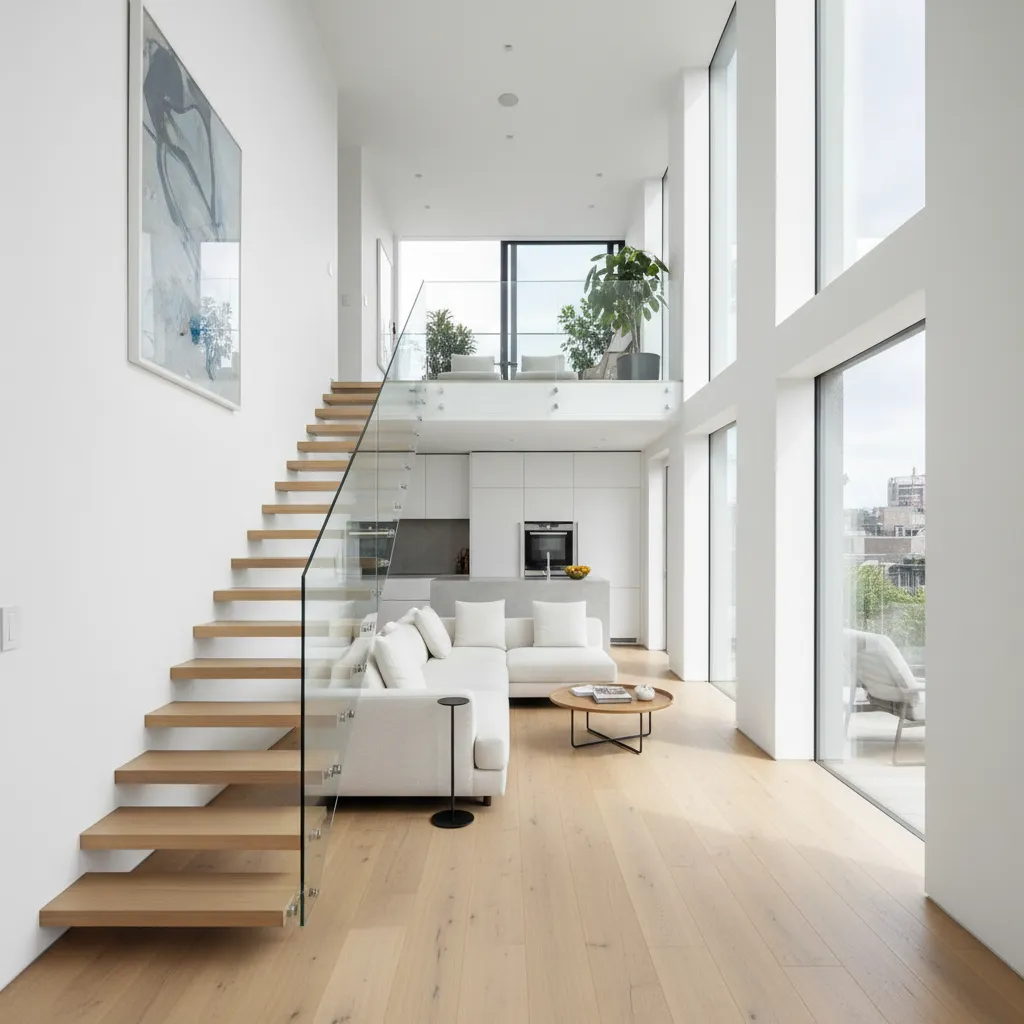
To keep the space feeling airy, designers use materials like glass stair railings. This allows light to travel uninterrupted through the core.
Warm timber flooring softens the modern edges of the architecture. It adds a tactile, organic element to the otherwise industrial structure.
For the main living area, a sleek entertainment setup is crucial. It saves floor space while providing a dedicated focal point.
You can adapt 20 media wall ideas for cozy, sleek living to fit a narrow room perfectly.
In narrow homes, the staircase is more than just circulation; it is a light shaft. Using open risers and skylights above the stairwell brings daylight deep into the lower levels.
Dwell Editors, Dwell Magazine
Elevation Hacks
- Turn your staircase into a light shaft by combining open risers with glass balustrades to pull daylight from roof skylights down to the lower levels.
- Soften structural severity with organic textures; pairing cool steel or glass with warm timber flooring prevents open-concept spaces from feeling too industrial.
- Opt for floating joinery in narrow rooms. Wall-mounted media units keep the floor visible from wall to wall, tricking the eye into seeing more square footage.
The Rooftop Sanctuary
The crowning feature of this floor plan is the private rooftop lounge. It acts as a secluded backyard in the sky, away from street noise.
Treat this area as an extension of your interior. Use durable outdoor rugs and plush sectional seating to create a “living room” vibe.

Ambient lighting is key here. Solar lanterns and integrated step lights ensure the space remains inviting long after the sun sets.
Functionality is paramount. Include a small kitchenette or bar cart station near the door to avoid constant trips down three flights of stairs.
When you can’t build out, build up. The sky is the only limit to your living space.
Optimizing Levels for Daily Life
Living vertically requires a strategic allocation of rooms. Here is a breakdown of how to best utilize each level for maximum efficiency.
| Level | Primary Function | Design Focus |
|---|---|---|
| Ground Floor | Utility & Entry | Durability, mudroom storage, polished concrete floors. |
| Second Floor | Social Hub | Open flow, maximum window height, cohesive color palette. |
| Third Floor | Private Quarters | Soundproofing, blackout curtains, soft textiles like wool. |
| Rooftop | Entertainment | Weather-resistant materials, privacy screens, greenery. |
This separation ensures that guests stay in social zones while bedrooms remain private sanctuaries. It is the ultimate balance for urban families.
Sky-High Style Secrets
- Create a seamless visual flow by matching your outdoor decking tone to your interior flooring; this optical illusion blurs the threshold and makes the rooftop feel like a massive room expansion.
- Don’t skimp on the ‘convenience station’; if a full kitchenette isn’t feasible, a weather-proof mini-fridge or stocked rolling bar cart is essential to save you from hauling drinks up three flights of stairs.
- Use tall, wind-resistant planters such as bamboo or ornamental grasses to act as ‘green walls,’ providing organic soundproofing and privacy from neighboring buildings.
The Remote Work Bungalow featuring a Dedicated Soundproof Office

The rise of remote work has fundamentally shifted how we view our floor plans. We no longer just need a desk in the corner of a bedroom.
The Remote Work Bungalow prioritizes a distinct separation between professional grind and personal relaxation. It offers a dedicated sanctuary.
This layout features a soundproof office situated near the entryway, far removed from the high-traffic noise of the kitchen and living areas.
By placing the workspace here, you create a physical boundary that helps mental transition. You can “leave” work at the end of the day.
A dedicated workspace isn’t just about a desk; it’s about reclaiming your living room for living.
Acoustics and Aesthetics Combined

Functionality does not have to sacrifice style. To dampen sound effectively, this plan utilizes solid core doors rather than hollow ones.
We recommend incorporating thick, textured materials. Think heavy velvet drapes or wool rugs that absorb echo during conference calls.
Wall treatments play a massive role here. Consider installing wood slat acoustic panels which add warmth and reduce noise transfer.
Lighting is equally critical for video calls. You want soft, diffused light that illuminates your face without casting harsh shadows.
If you are struggling to find the right shade for your walls, check out these 22 best office paint colors to increase productivity and focus.
Your home office should be a direct reflection of your personal style, passions, and aspirations. It’s the one place where you can be entirely selfish with your design choices.
Bobby Berk, Elle Decor
Strategic Layout Features
In this bungalow plan, the office includes a built-in closet. This allows the room to double as a guest suite if absolutely necessary.
However, the primary goal is productivity. The desk commands the room, ideally facing a window to capture natural light and garden views.
To ensure the rest of your home feels just as inviting as your workspace, you might explore 24 creative decorating ideas to make your room cozy.
Below is a checklist of essential elements that transform a standard room into a high-performance acoustic office.
| Feature | Material Suggestion | Functional Benefit |
|---|---|---|
| Flooring | Cork or Thick Wool Rugs | Absorbs footfall and reduces room echo. |
| Entryway | Solid Wood Core Door | Blocks 50% more noise than hollow doors. |
| Walls | Acoustic Foam or Felt | Prevents sound leakage to adjacent rooms. |
| Windows | Double or Triple Glazing | Eliminates outdoor street noise distractions. |
By investing in these structural elements, you create a zone of deep focus. It stops the sound of the dishwasher from interrupting your flow.
Ultimately, this floor plan acknowledges that modern living requires adaptable spaces that respect both our career ambitions and our need for rest.
Productivity Blueprint
- Layer your acoustics by pairing structural upgrades (like solid-core doors) with soft materials; adding heavy velvet drapes or a thick wool rug can significantly reduce echo during video calls.
- Master your lighting setup by positioning your desk facing a window to capture natural light, using sheer curtains to diffuse glare and eliminate harsh shadows on your face.
- If the room must double as a guest suite, utilize a Murphy bed or a stylish sleeper sofa to keep ‘sleep cues’ hidden during the workday, maintaining the psychological boundary of a dedicated office.
The Mid-Century Revival Layout with Indoor Planter Zones

The Mid-Century Revival layout is redefining modern living. It prioritizes an organic connection between the homeowner and nature.
This floor plan removes traditional barriers. Instead of walls, it uses dedicated indoor planter zones to separate functional areas.
Imagine rich walnut textures paired with vibrant greenery. This combination creates a warm and inviting atmosphere that feels grounded.
Functionally, these green zones act as natural air purifiers. They also serve as acoustic buffers to reduce echo in open spaces.
Bring the outdoors in: let your floor plan breathe with living architectural elements.
This layout often features a “sunken” conversation pit. The perimeter is lined with low-profile planters to define the boundary.
To master this aesthetic, choose furniture with clean lines. You can explore 20 vintage living room decor ideas to match this architectural flow.
Lighting is crucial for this design. Large windows should allow sunlight to filter through leaves, creating dynamic shadow play.
Defining Spaces with Living Dividers

Structural planters are more permanent than pots. They are often built directly into the floor or serve as half-walls.
This approach maximizes spatial flow. Light travels freely across the room while distinct zones for dining and lounging remain.
Consider installing 20 double door design ideas near these zones. This physically opens the home to an exterior garden.
The transition between indoor and outdoor living becomes seamless. This visual trick makes the floor plan feel significantly larger.
Plants are the ultimate multi-taskers: they purify the air, boost your mood, and look good doing it. Use them to soften the strong lines of modern architecture.
Cambria Bold, Apartment Therapy
Choosing the right greenery is vital for this layout. The plants must thrive in your specific light conditions to maintain the look.
We have curated a guide to help you select plants based on their architectural purpose within the floor plan.
| Architectural Zone | Ideal Plant | Light Needs | Visual Impact |
|---|---|---|---|
| Sunken Pit Border | Snake Plant | Low to Bright | Adds vertical height without bulk. |
| Room Divider Top | Pothos (Trailing) | Low to Medium | Softens hard edges with cascading vines. |
| Atrium Focal Point | Fiddle Leaf Fig | Bright Indirect | Acts as a living sculpture and anchor. |
| Window Bench | Rubber Tree | Medium to Bright | Glossy leaves reflect natural light. |
Maintain a cohesive palette for your pots and built-ins. Matte black or raw terracotta finishes complement the mid-century wood tones best.
Mid-Mod Style Secrets
- Double-pot for longevity: If you are building custom wooden planters, keep plants in their plastic nursery pots and hide the rims with decorative moss. This protects your walnut finishes from water damage and makes it easier to swap plants out if they lose their luster.
- Layer your lighting: While the text emphasizes natural light, installing waterproof LED up-lighting inside the planter beds creates dramatic shadows at night, turning your living dividers into sculptural art pieces.
- Mix leaf textures for depth: To prevent your green zones from looking like a messy jungle, alternate between vertical structural plants (like Snake Plants) and softer, trailing varieties (like Pothos) to maintain clean architectural lines.
The U-Shaped Courtyard Sanctuary for Sheltered Privacy

The U-shaped floor plan is a masterclass in balancing openness with seclusion. This layout wraps around a central outdoor space to create a private sanctuary.
By orienting the home inward, you shield your living areas from street view. This design is perfect for maximizing privacy in suburban neighborhoods.
Large windows facing the courtyard allow natural light to flood the hallways. This blurs the line between indoors and outdoors, making spaces feel larger.
True luxury is a home that holds nature at its center, offering a private sky for every room.
The Central “Outdoor Room”
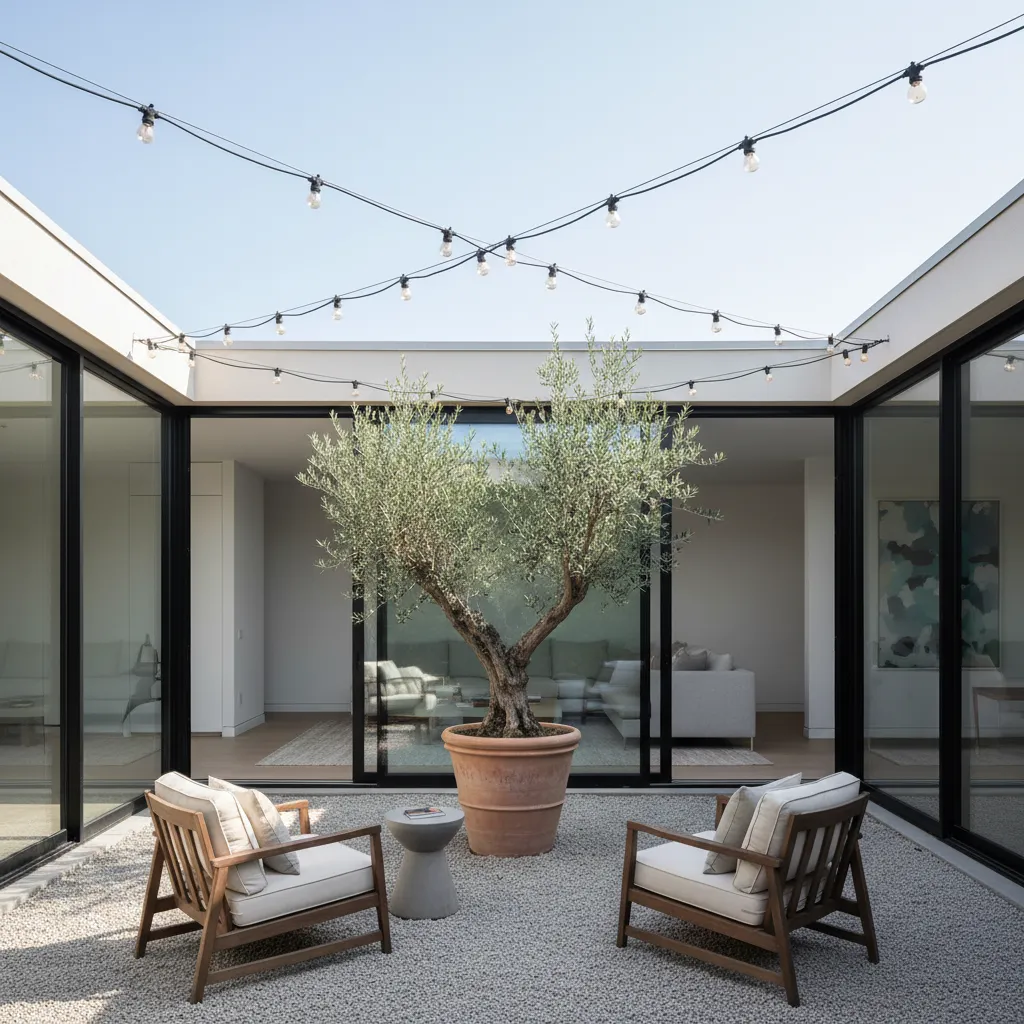
In this layout, the courtyard functions as the heart of the home. It acts as an open-air living room where you can relax without being overlooked.
Treat this space with the same design attention as your interiors. Use weather-resistant rugs and potted plants to soften the hardscaping.
If your property neighbors are close, consider 15 beautiful yard divider and fence ideas for every backyard to enhance the perimeter.
Courtyards are wonderful for bringing light into the center of a house… They also provide a protected outdoor space that is sheltered from the wind.
Houzz Editorial Staff, 8 Reasons to Love a Courtyard House
Zoning for Peace and Quiet

The two parallel wings of the U-shape allow for distinct zoning. One wing typically houses the sleeping quarters, while the other contains social areas.
This separation reduces noise transfer between the kitchen and bedrooms. It is an ideal setup for families with different sleep schedules.
To connect these wings elegantly, consider installing grand entryways. Stylish 20 double door design ideas to add elegance and charm to your home can create a dramatic transition.
Key Features of the U-Shaped Plan
This architectural style prioritizes flow and connection. Here are the defining elements that make this floor plan a timeless choice for modern living.
- Central Focal Point: The entire home is oriented around the garden or pool, ensuring nature is always in view.
- Cross-Ventilation: With windows on opposite sides of the wings, fresh air circulates easily throughout the home.
- Sheltered Outdoors: The three walls provide excellent protection from strong winds, creating a calm microclimate.
- Natural Zoning: The physical layout naturally separates the master suite from noisy entertainment areas.
- Abundant Daylighting: Shallow room depths ensure sunlight penetrates deep into the interior spaces.
The Designer’s Edge
- Create a seamless indoor-outdoor flow by matching your interior flooring tone with the courtyard pavers; this visual trick makes the entire footprint feel like one continuous room.
- Prevent the ‘black mirror’ effect at night by installing uplighting on courtyard trees or sculptures, ensuring your view remains captivating even after sunset.
- Maximize cross-ventilation by aligning sliding glass doors on opposite wings, allowing cool breezes to naturally flush out stale air through the central garden.
The Modular Eco-Cabin for Quick and Efficient Construction
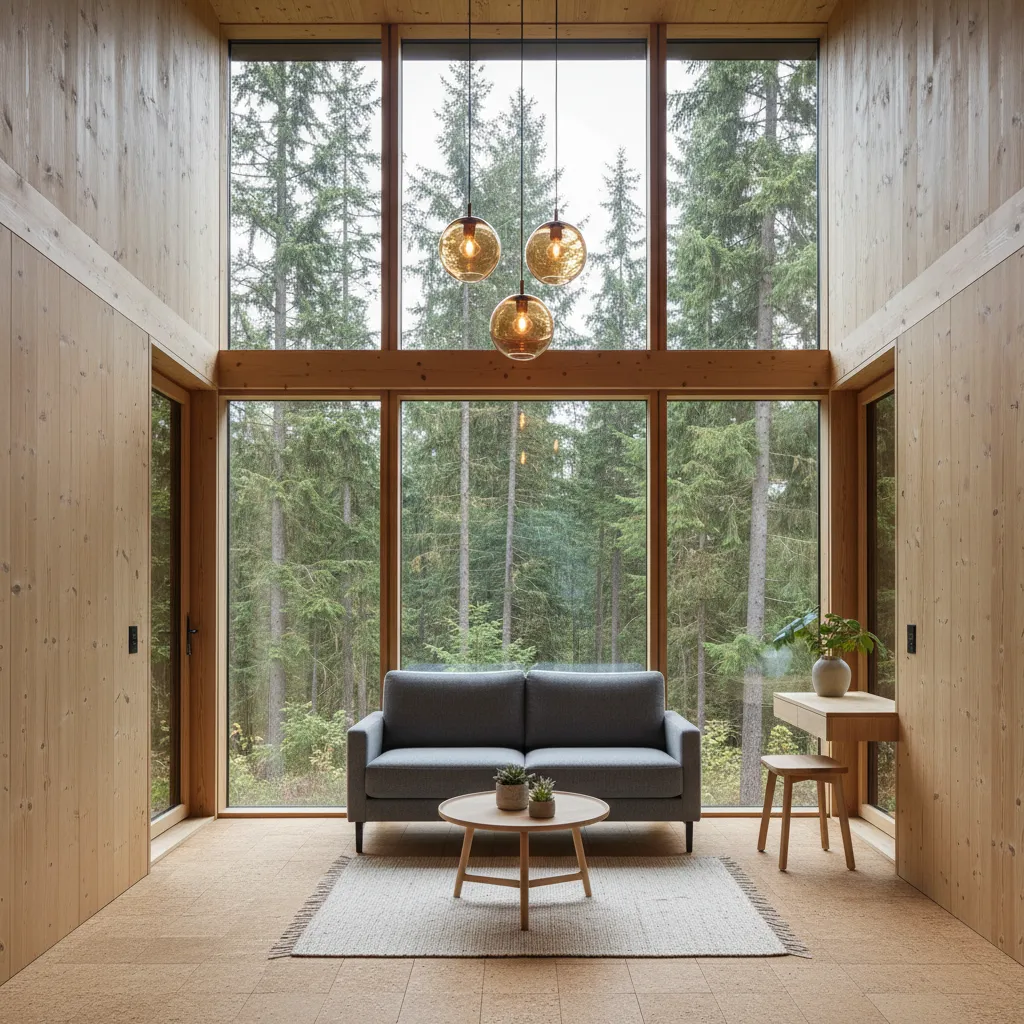
Modular homes have evolved far beyond simple box structures. They now offer a sophisticated blend of sustainability and style. The latest designs feature clean lines and organic textures.
Imagine raw pine walls paired with sleek, matte black hardware. This contrast creates a modern focal point that feels grounded. Large windows ensure the spatial flow remains airy.
These floor plans prioritize a seamless connection to the outdoors. The glass elements invite natural light to flood the interiors. This makes even a compact footprint feel expansive.
True luxury is not about square footage, but how the space makes you feel connected to your environment.
Functionality is the core of these eco-conscious layouts. Built-in furniture often replaces bulky standalone pieces. This approach maximizes every inch of usable square footage.
If you prefer richer tones for your interior cladding, consider exploring dark wood bedroom ideas for inspiration. A moody palette can add depth to the minimal architecture.
Prefabrication permits a high degree of precision and quality control, reducing waste and construction time significantly.
Lloyd Alter, Treehugger
Lighting plays a crucial role in these compact environments. Layered ambient lighting creates a hygge atmosphere at night. It softens the architectural angles for a cozy vibe.
Key Features of the Modern Eco-Cabin Layout
- Open-Concept Core: Merges kitchen and living areas to borrow light from all angles.
- Smart Storage Walls: Floor-to-ceiling cabinetry that acts as sound insulation between rooms.
- Passive Solar Orientation: Window placement designed to capture heat in winter and shade in summer.
- Flexible Lofts: Vertical spaces utilized for sleeping quarters or reading nooks.
- Outdoor Transitions: Sliding glass walls that double the living space during warmer months.
The beauty of this floor plan lies in its adaptability. You can start small and add modules as your needs change. It creates a home that grows with your lifestyle.
Modular Mastery
- Visually double your square footage by matching indoor flooring materials with outdoor decking to create a seamless transition through glass walls.
- Utilize floor-to-ceiling cabinetry as room dividers instead of standard walls; this provides massive storage while acting as a sound buffer between zones.
- Map the sun’s path on your site before installation to optimize window orientation for passive solar heating and natural light.
The Dual-Master Suite Configuration for Flexible Shared Living
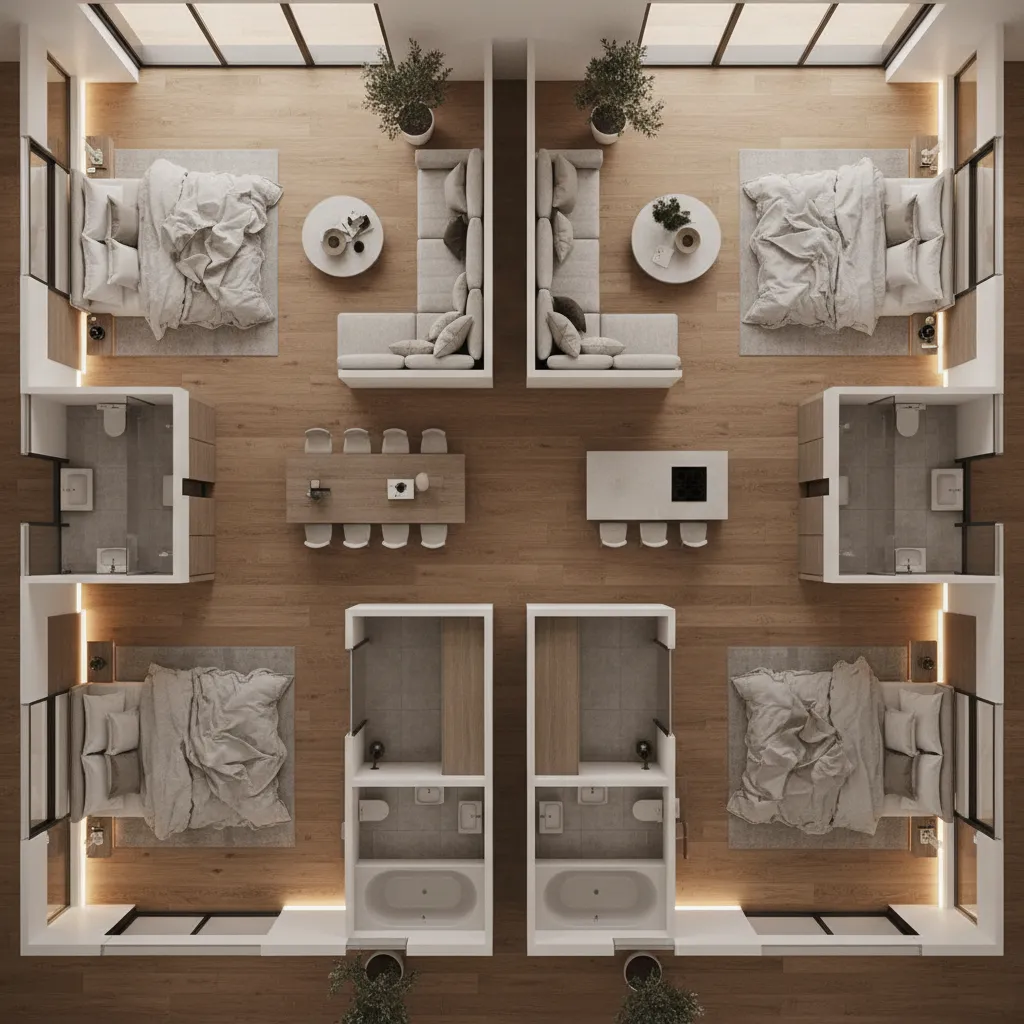
Modern households are evolving rapidly. The dual-master suite configuration addresses this shift by offering two primary bedrooms of equal grandeur.
This layout is ideal for multi-generational families or roommates. It provides autonomy without sacrificing the comfort of a luxury ensuite.
True luxury in a modern home is having the space to be yourself, together.
Creating Distinct Sanctuaries
The key to this design is spatial separation. Usually, the suites are placed on opposite ends of the home to maximize acoustic privacy.
Visualize the texture of raw silk drapes and the glow of brass sconces. These details make each wing feel like a private hotel retreat.
When styling these separate wings, you can explore unique and stylish modern bedroom ideas to give each occupant a personalized vibe.
Functionality is paramount here. Ideally, both suites should have direct access to outdoor spaces, such as a private patio or garden deck.
The rise of multigenerational living has made the dual master suite one of the most requested features in new construction, offering flexibility for aging parents or long-term guests.
Sheri Koones, Forbes
Privacy Maximization Checklist
To ensure this floor plan works effectively, specific design elements must be included. A successful layout relies on more than just square footage.
- Sound Buffer Zones: Use closets or hallways between the bedroom and common areas to dampen noise transfer.
- Separate HVAC Zones: Install independent thermostats so occupants can control their own sleep temperature preferences.
- Ensuite Equality: Ensure both bathrooms feature double vanities and high-end finishes to avoid a “secondary” feel.
- Lighting Control: Incorporate dimmable ambient lighting to create a soothing atmosphere in each private wing.
- Private Entrances: If possible, design the layout so each suite has discrete access to the kitchen or garage.
This configuration adds immense resale value. It future-proofs the home for changing family dynamics or potential rental income opportunities.
Using earth-tone paint colors can further unify the two spaces while maintaining a calm, grounded aesthetic throughout the home.
The Dual-Suite Edit
- Establish distinct personalities for each suite by varying the art and accent colors, giving long-term guests or family members a true sense of ownership over their space.
- Maximize acoustic privacy without structural changes by positioning heavy furniture, like floor-to-ceiling bookshelves or wardrobes, against shared walls to act as natural sound barriers.
- Future-proof your investment by designing the second suite with universal accessibility features; like wider doorways and curbless showers; to accommodate aging parents or changing mobility needs.
Your Blueprint for Modern Living
Modern floor plans are more than just lines on paper; they shape how we interact, relax, and gather every single day.
Whether you choose a sun-drenched L-shape or an open-concept layout, the goal remains the same: distinct functionality mixed with effortless style.
Remember to prioritize light, natural flow, and necessary privacy. Your home should look stunning but feel even better to live in.
Take these ideas, consult with your architect, and start building the foundation for your best, most stylish life.
Design Dilemmas Solved
Modern plans focus on open sightlines, functional zoning, and abundant natural light. They often ditch formal dining rooms for flexible, multi-use social spaces.
They can be slightly costlier due to increased foundation and roof surface area compared to a square box, but the privacy and courtyard benefits are invaluable.
Use partial walls, changes in floor levels, or strategic furniture placement. Zoning creates intimacy without sacrificing that airy, connected feel.
Consistency is key. Polished concrete or matte porcelain tiles work beautifully because they are durable enough for patios yet chic enough for your living room.
