
Table of Contents
- The 4×8 Raised Bed Blueprint for High-Density Vegetable Production
- The 10×10 Geometric Potager Design with Integrated Gravel Paths
- The Cattle Panel Archway Layout for Vertical Crop Management
- The Modular Container Garden Map for Small Space Patio Design
- The Galvanized Steel Trough Blueprint for Succession Harvests
- Harvesting Your Design Vision
- Growing Your Knowledge
Transform your compact outdoor area into a lush and productive sanctuary. Even the smallest footprint can host a sophisticated vegetable garden when you apply thoughtful design principles. It is about balancing beauty with high-yield functionality to create a space that feels curated and purposeful.
Vertical structures and tiered planters offer smart solutions for tight quarters. By utilizing walls and fences, you can maximize your growing potential without sacrificing precious floor space. These budget-friendly hacks allow you to cultivate fresh produce while maintaining a polished and intentional aesthetic throughout your yard.
Whether you are a seasoned gardener or a curious beginner, these ideas focus on making every square inch count. From elegant raised beds to stylish container arrangements, we explore how to blend utility with comfort. Let us turn your small yard into a cozy retreat that nourishes both your home and your spirit.
The 4×8 Raised Bed Blueprint for High-Density Vegetable Production
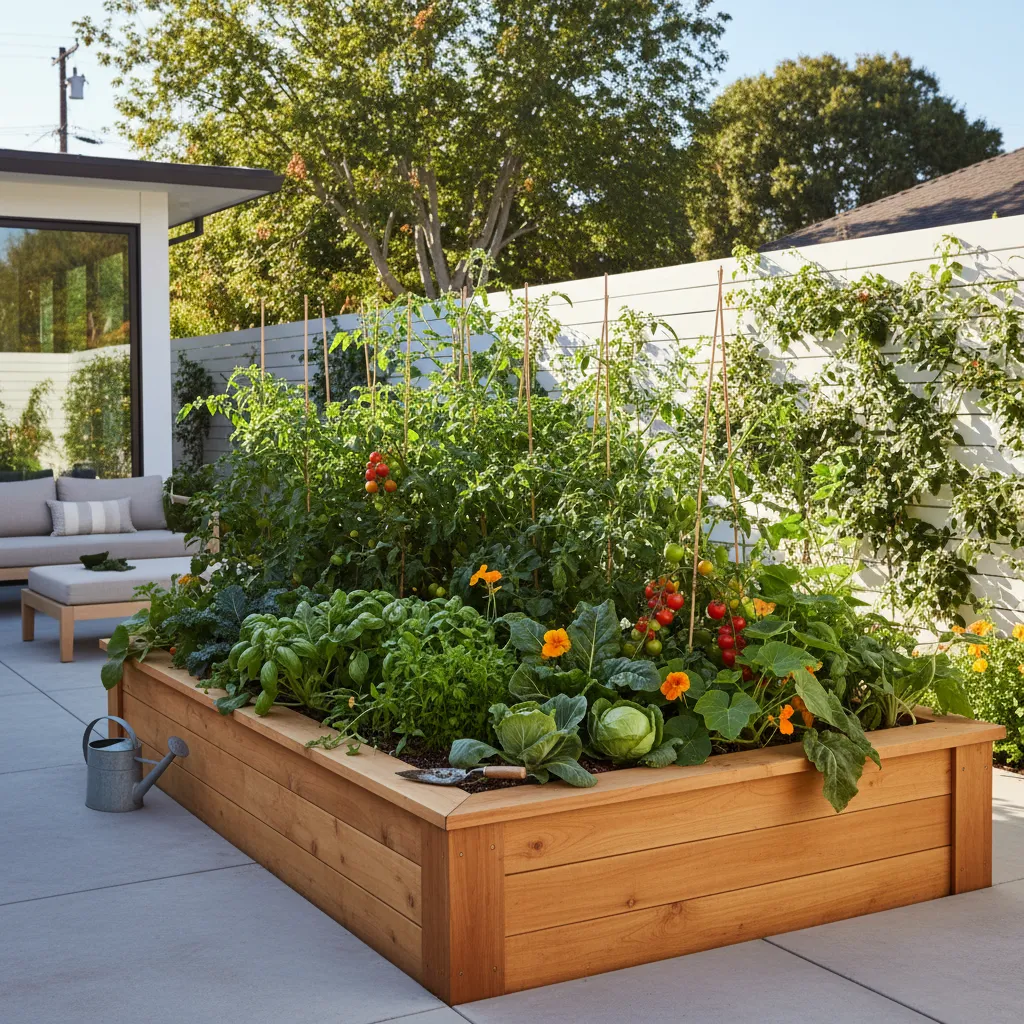
The 4×8 raised bed is a gold standard in garden design. It offers a perfect reach from all sides, ensuring easy access to every crop.
Visualize raw cedar planks weathered to a soft silver. These structures create a clean, architectural flow within your outdoor space.
This footprint supports high-density growth perfectly. It uses every inch of fertile soil while minimizing paths and wasted ground.
Raising the soil level protects plants from foot traffic. It also improves drainage and saves your back during harvest sessions.
A garden’s beauty lies in its productivity, where every square inch serves a purpose for both the eye and the table.
Strategic Grid Layouts for Maximum Yield
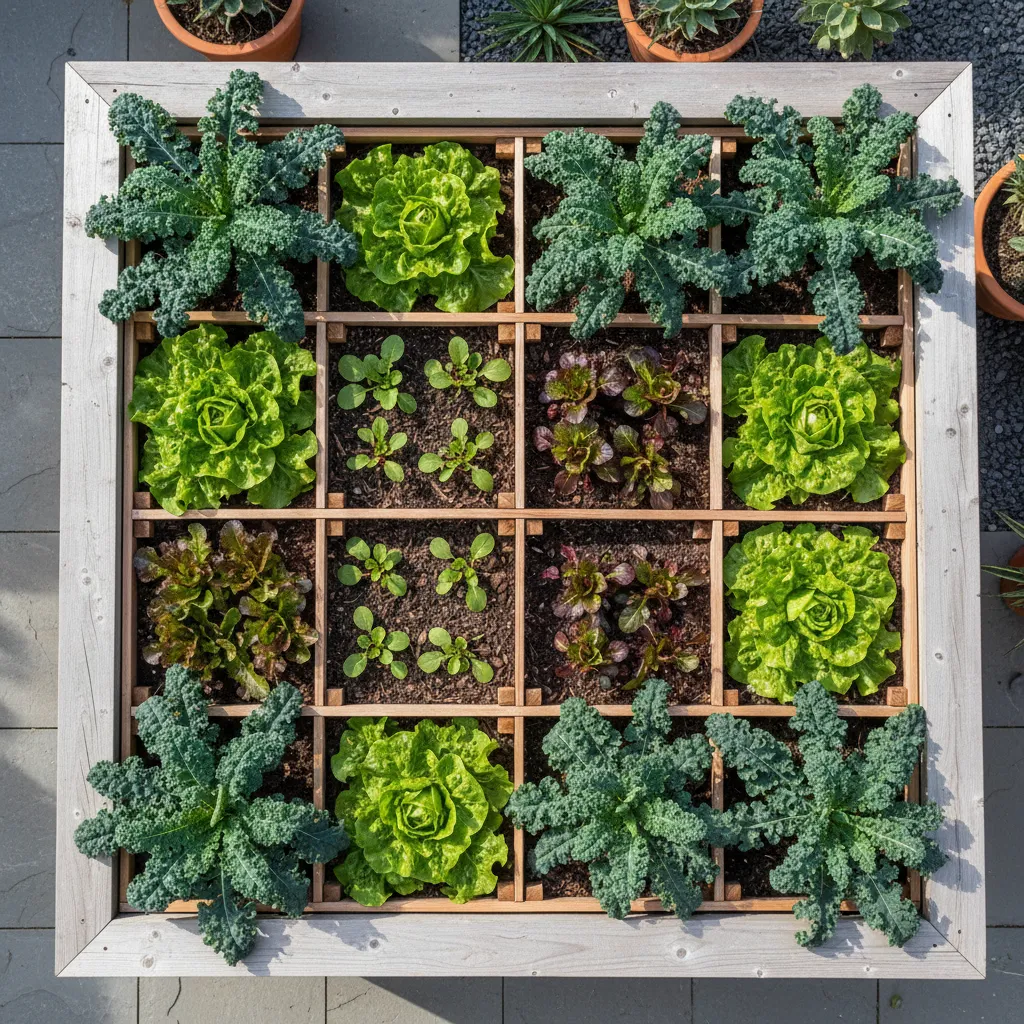
By dividing the bed into one-foot squares, you eliminate waste. This method organizes plants like a curated gallery of edible art.
Raw wood textures contrast beautifully with vibrant greens. In the golden hour, the shadows of leaves create a rhythmic pattern.
Integrating the garden into chic backyard landscaping ensures it feels like a curated part of the home.
The 4×8-foot bed is the classic size. It provides 32 square feet of growing area, which is manageable for almost anyone.
Mel Bartholomew, Square Foot Gardening Foundation
| Material | Life Expectancy | Style Profile |
|---|---|---|
| Red Cedar | 10 to 15 Years | Organic and Rustic |
| Galvanized Steel | 20 Plus Years | Modern Industrial |
| Composite Wood | 25 Plus Years | Clean and Minimalist |
Vertical Growth and Structural Accents
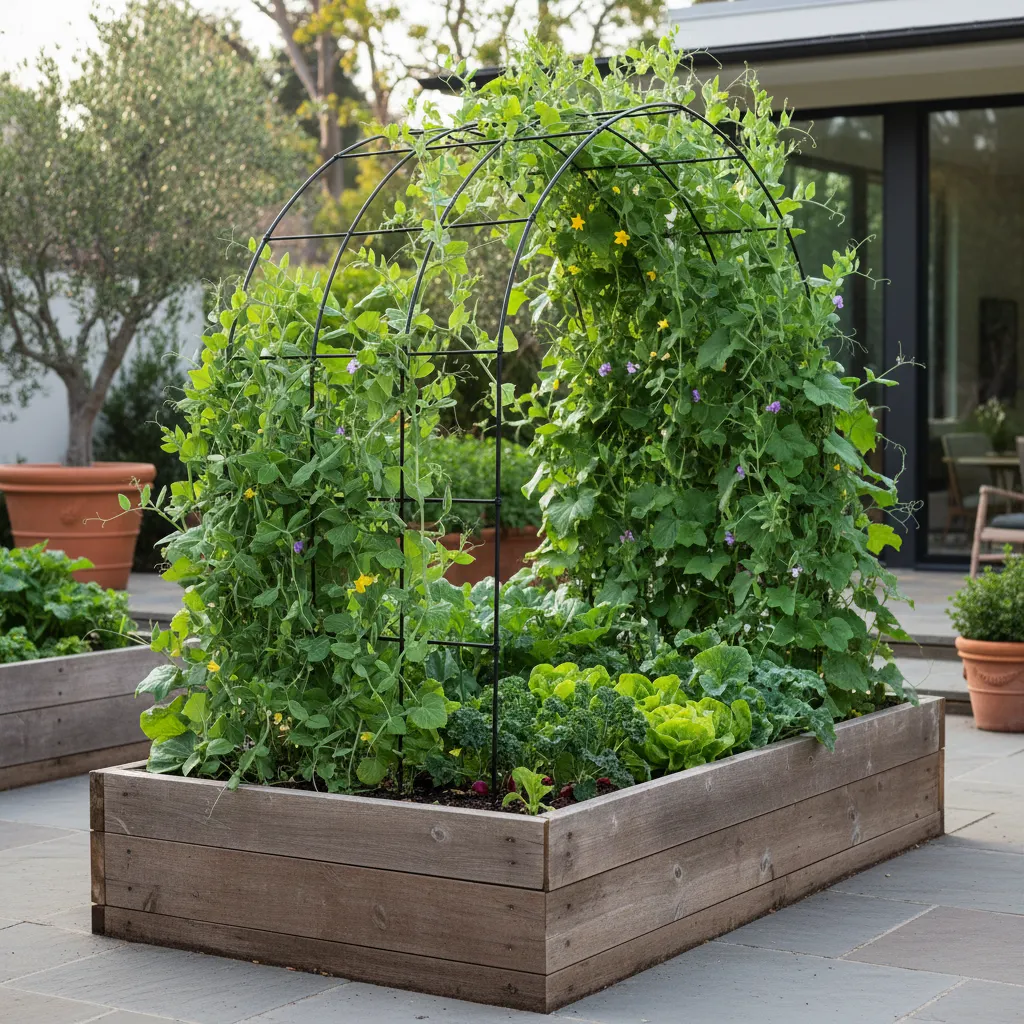
Vertical elements like arches create a sense of enclosure. They transform a simple utility bed into a romantic garden vignette.
Incorporate a central trellis to draw the eye upward. This adds a focal point and saves valuable ground space for roots.
Combine the rough grain of timber with soft, velvety leaves. This interplay of textures creates a tactile sanctuary in the yard.
Using companion planting from simple flower gardening for beginners adds pops of color and attracts bees.
Consider the spatial flow between multiple beds. Leave wide paths for wheelbarrows and comfortable movement through the greenery.
The Designer’s Edge
- Position tall crops like trellised tomatoes on the north side of the bed to ensure they do not cast shadows over smaller, sun-loving greens.
- Line the interior of cedar planks with food-safe pond liner to prevent moisture rot and extend the lifespan of your structure by several years.
- Install a cattle panel arch between two parallel 4×8 beds to create a living walkway that maximizes vertical space for climbing squashes and beans.
The 10×10 Geometric Potager Design with Integrated Gravel Paths
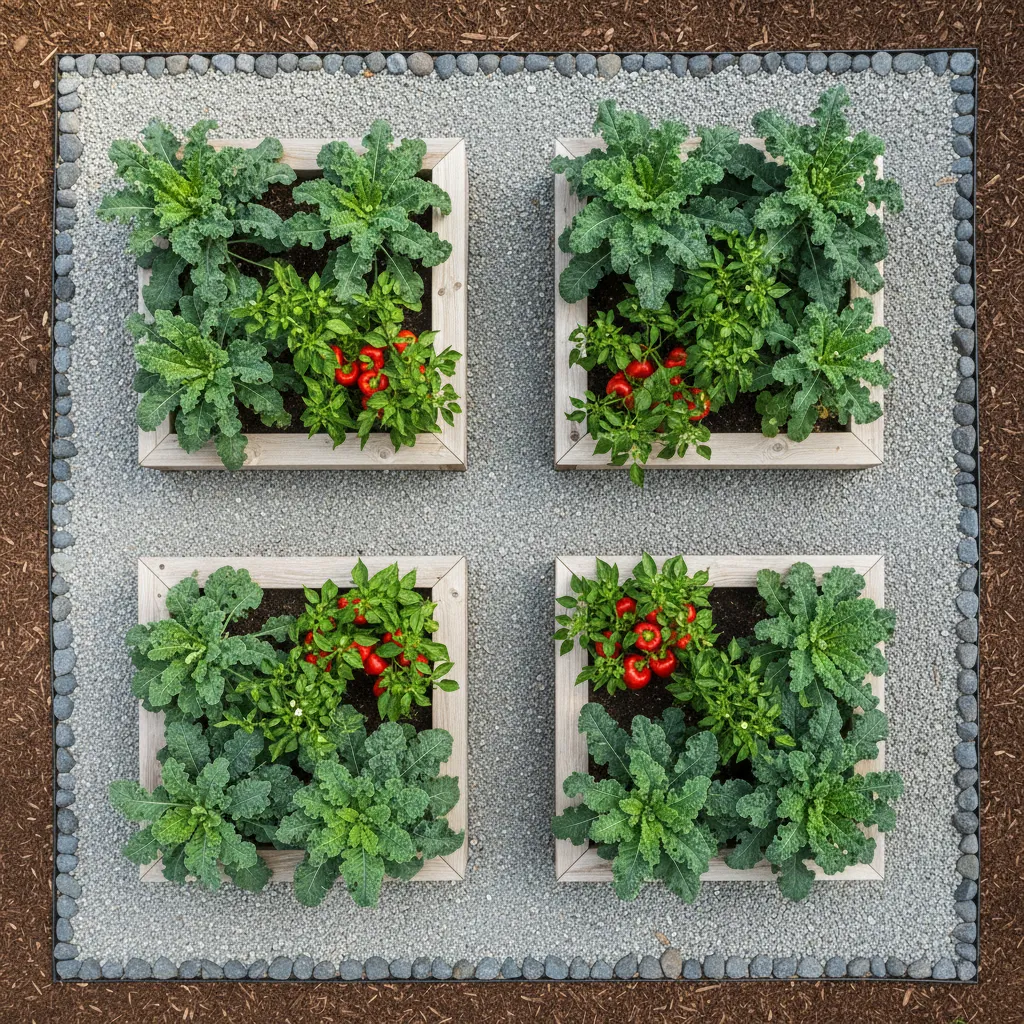
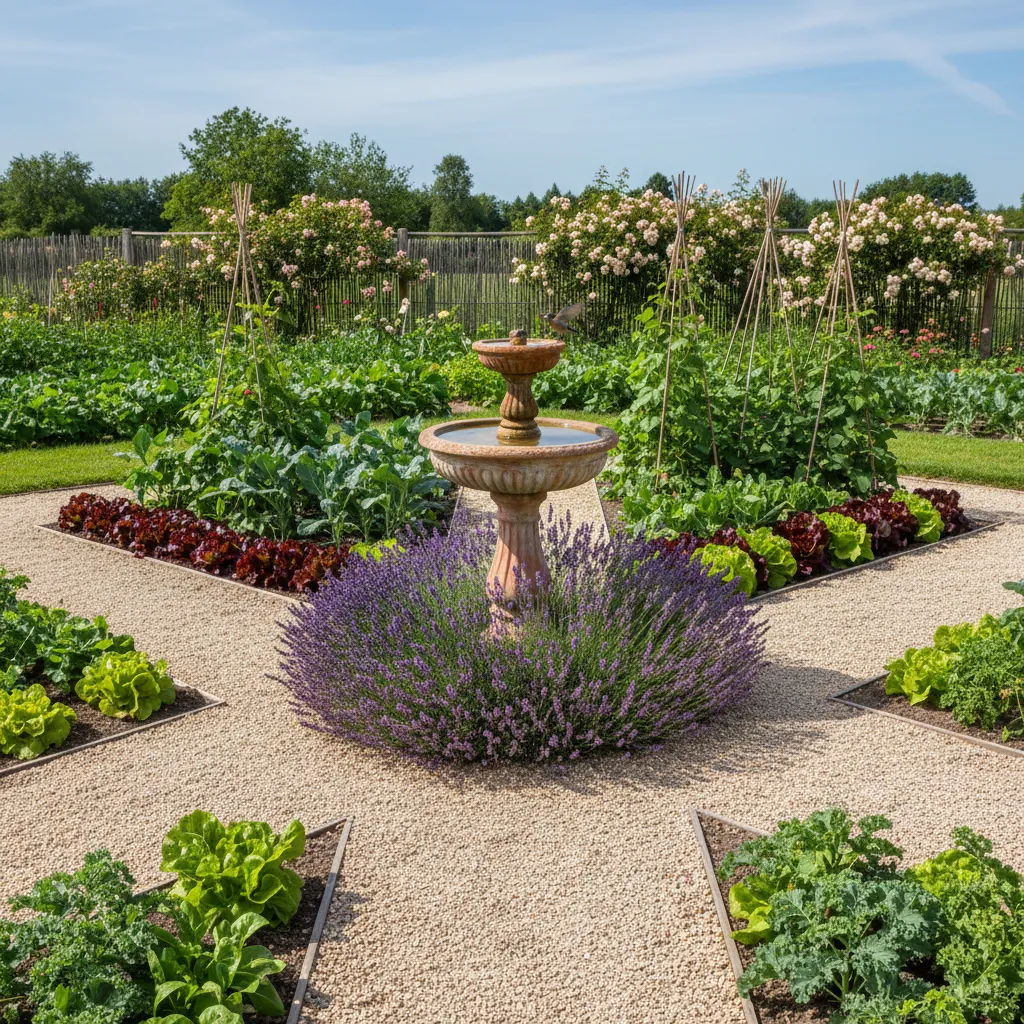
The 10×10 geometric potager balances classic French style with modern functionality. It uses a central focal point to anchor the entire outdoor space.
By dividing the square into four smaller beds, you create a sense of order. This layout ensures every plant is within easy reach from the paths.
The symmetry of this design provides a calming visual flow. It transforms a simple vegetable patch into a sophisticated garden room for your home.
A geometric potager turns the act of growing food into a living piece of fine art.
Selecting Materials for Texture and Contrast
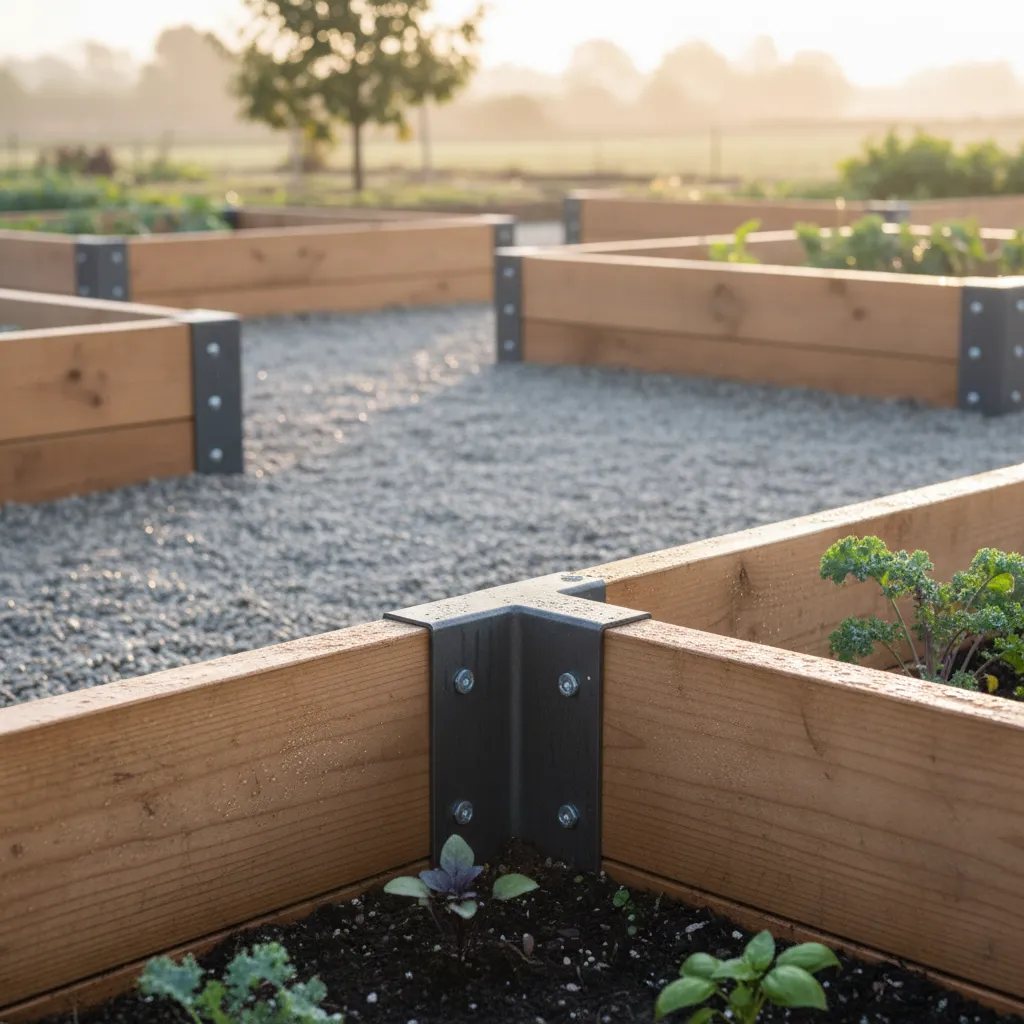
Raw cedar wood offers a warm, organic feel for the raised beds. Its natural grain provides a beautiful contrast against vibrant green leafy crops.
Cool grey pea gravel adds a tactile crunch underfoot as you walk. This material also improves drainage and prevents mud from entering your home.
Pair this design with chic backyard landscaping techniques to elevate your home value. It creates a high-end look on a budget.
The potager is essentially a decorative vegetable garden, where plants are chosen for their aesthetic as well as their edible qualities.
Martha Stewart, Designer & Lifestyle Expert
Maximizing Functionality with Integrated Paths
Integrated gravel paths are the backbone of a successful potager. They provide a clean, stable surface for garden chores in any weather condition.
Wide walkways allow for easy movement of tools and harvest baskets. This thoughtful spatial flow makes daily maintenance a relaxing ritual.
Protect your harvest by exploring beautiful yard divider and fence ideas that keep pets away. A low fence adds architectural interest.
The 10×10 footprint is ideal for small to medium yards. It offers enough space for variety without becoming an overwhelming weekend project.
| Component | Material Choice | Design Benefit |
|---|---|---|
| Raised Beds | Raw Cedar or Oak | Warmth and Durability |
| Pathways | Crushed Pea Gravel | Drainage and Texture |
| Focal Point | Terracotta Birdbath | Visual Interest |
| Edging | Weathered Steel | Modern Clean Lines |
Proper lighting can extend the usability of your potager. Adding warm ambient lanterns along the paths creates a magical glow during summer evenings.
This design encourages you to linger and enjoy the atmosphere. It is a space built for both production and peaceful reflection in nature.
Potager Pro Secrets
- Lay down a heavy-duty landscape fabric before pouring your pea gravel to prevent weed growth and keep your paths looking crisp and maintenance-free.
- Position taller architectural plants like kale or trellised beans toward the inner corners of the beds to draw the eye toward your central focal point.
- Edge your cedar beds with low-growing herbs like creeping thyme to soften the geometric lines and release a pleasant scent whenever you brush past.
The Cattle Panel Archway Layout for Vertical Crop Management
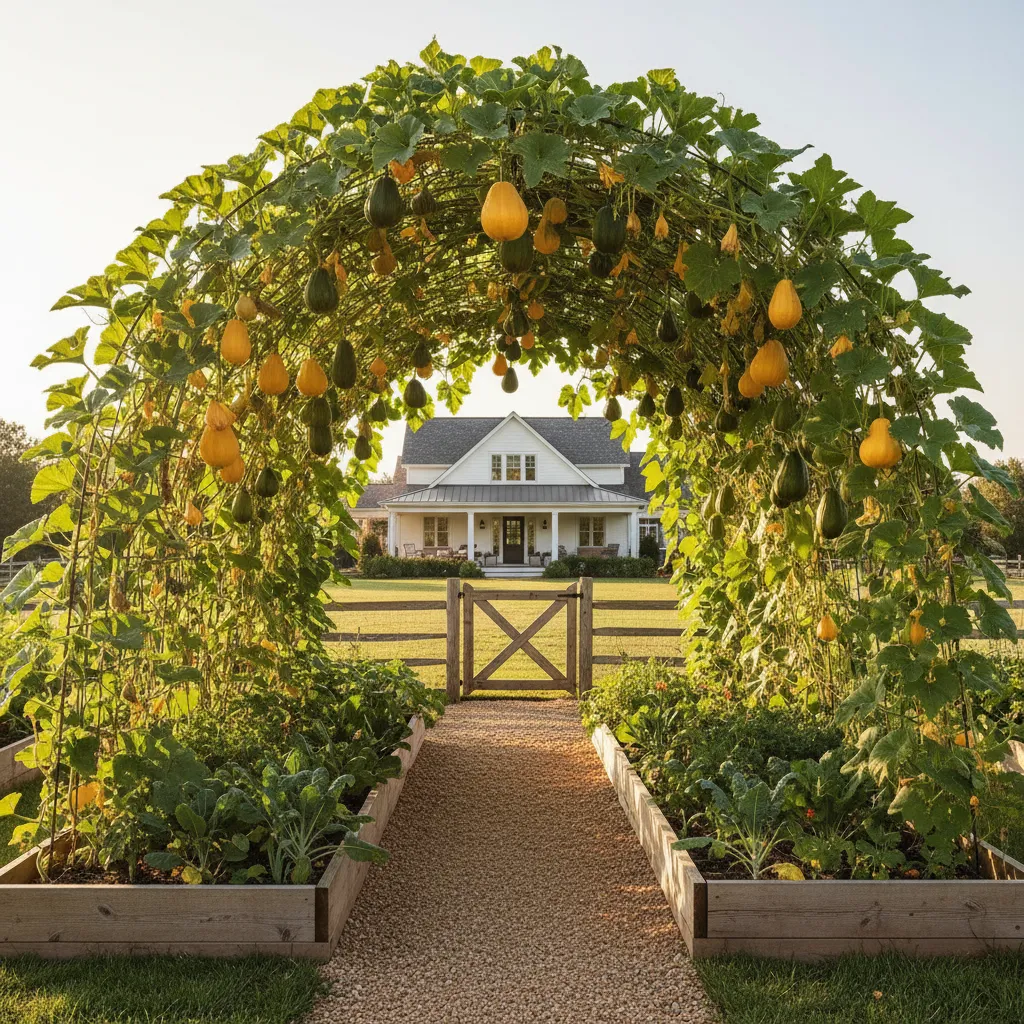
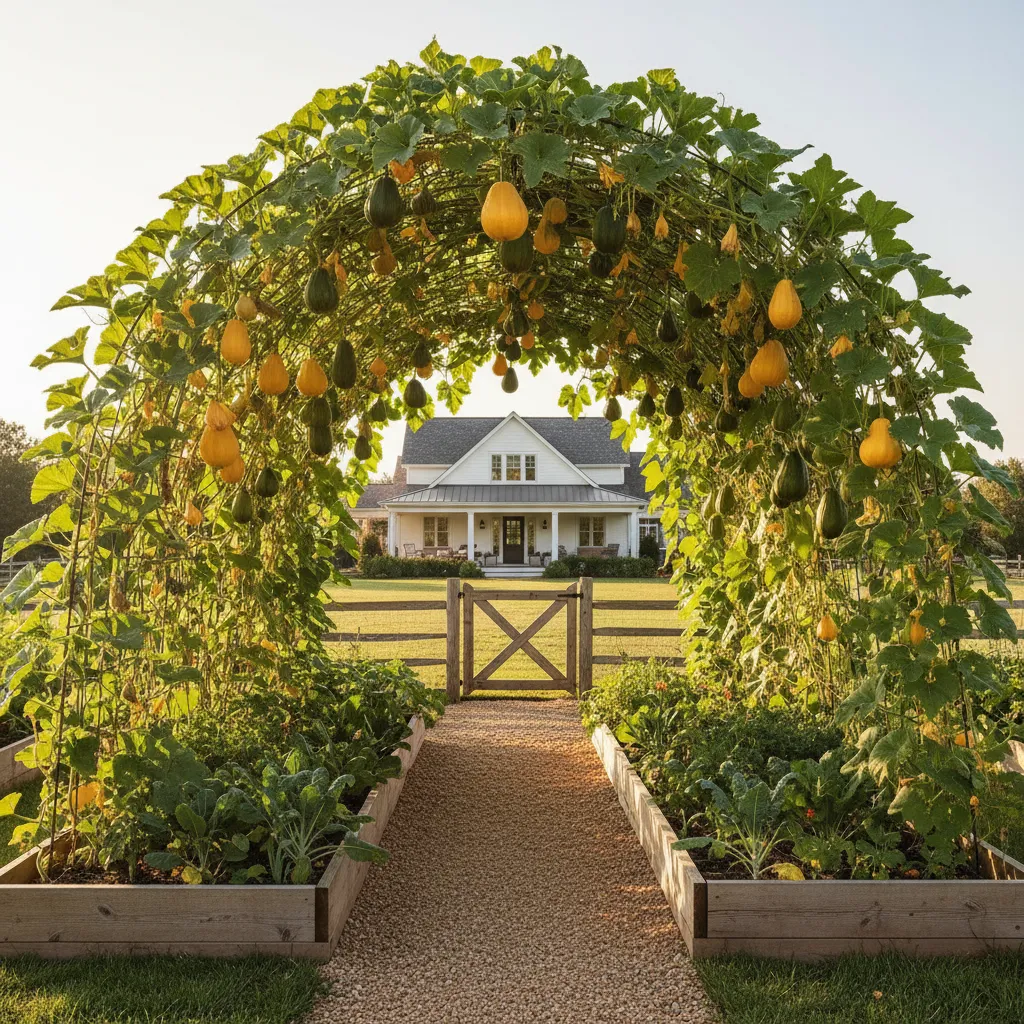
The cattle panel archway turns a flat plot into a 3D sanctuary. It uses galvanized steel to create a grand, curved entrance.
This structure offers a tactile contrast between raw metal and organic foliage. It creates a stunning focal point in any yard.
As sunlight filters through the leaves, it casts rhythmic shadows. This adds a layer of ambient charm to the garden path.
By moving crops off the ground, you improve spatial flow. This allows for easier movement between your raised garden beds.
Design your garden to lead the eye upward, turning a simple path into an immersive living tunnel.
Architectural Structure and Materials
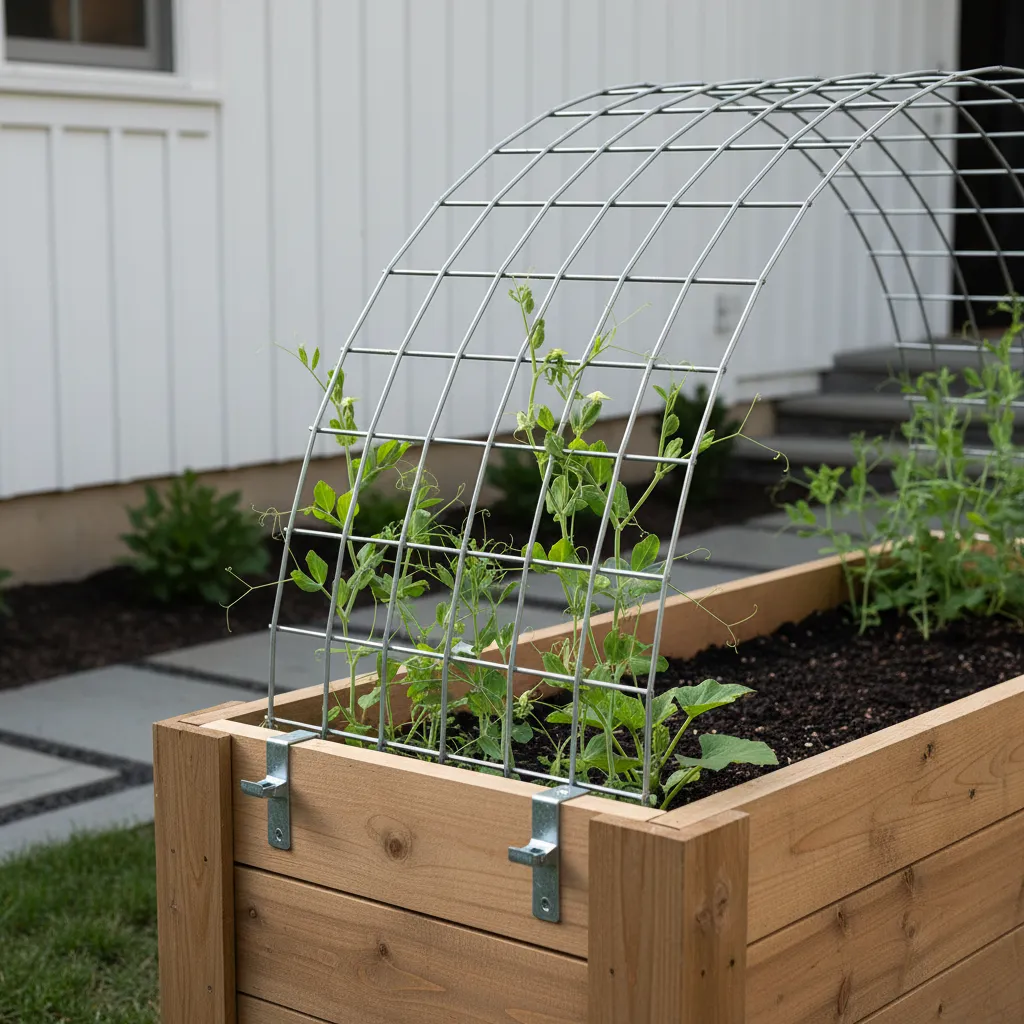
Start with a heavy-duty sixteen-foot cattle panel. These panels are flexible enough to bend into a perfect, graceful arch.
Anchor the ends inside two parallel raised beds. Use sturdy T-posts or U-bolts to secure the wire to your timber frames.
The silver sheen of the wire pairs beautifully with warm cedar. This creates a curated, modern farmhouse aesthetic in your yard.
You can even integrate these arches into existing yard divider and fence ideas to define specific zones.
Arbors and arches create a sense of transition and help define the different rooms within a garden landscape.
Jan Johnsen, Garden Design Magazine
Optimal Crop Selection for Verticality
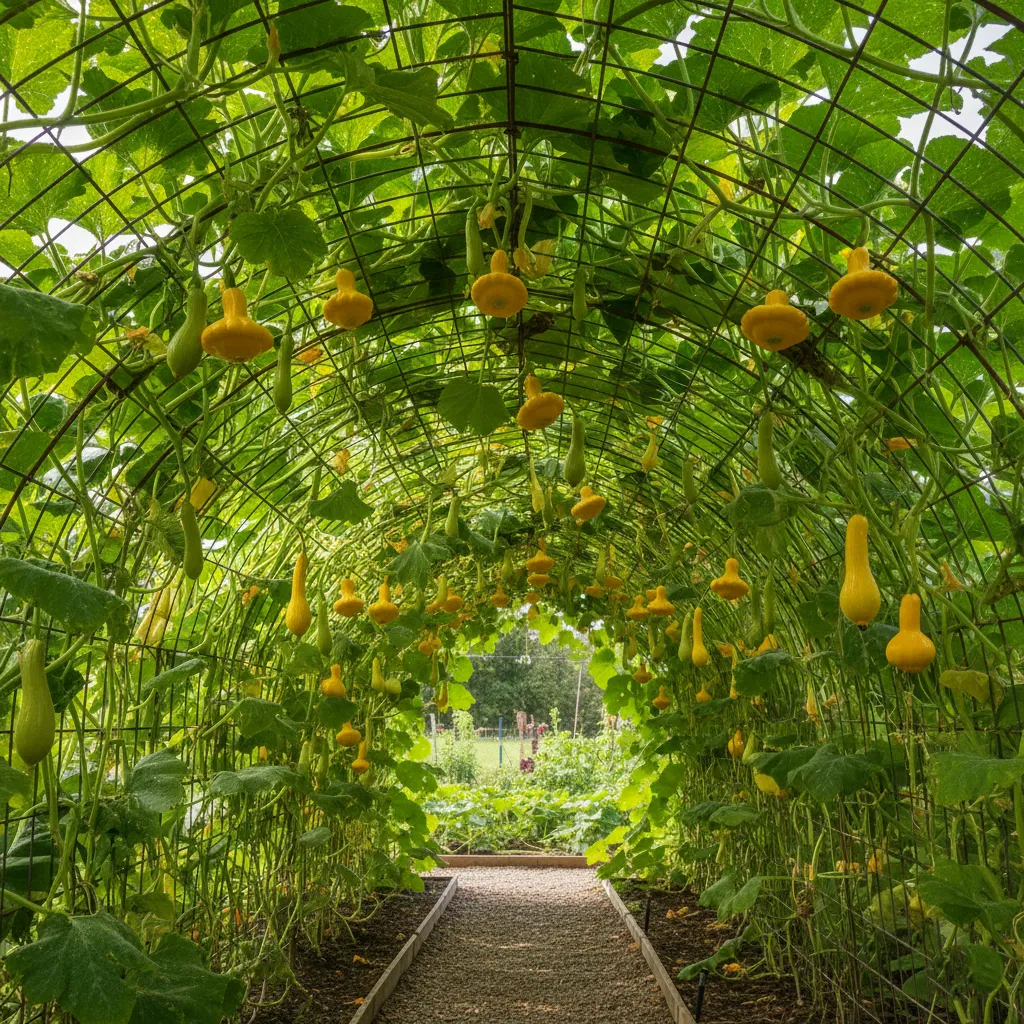
Select climbing plants that thrive with extra airflow. Vertical gardening can increase yields for climbing crops by up to 100 percent.
Vines like cucumbers and pole beans naturally follow the mesh. Their tendrils wrap around the wire for a secure, vertical climb.
Small pumpkins and melons can also hang from the arch. This keeps the fruit clean and away from pests on the ground.
For a softer look, mix in some vining flowers. This approach is perfect when designing your garden oasis for both food and beauty.
The following table highlights the best varieties for your new archway to ensure maximum functionality and visual appeal.
| Crop Category | Recommended Variety | Design Benefit |
|---|---|---|
| Pole Beans | Kentucky Wonder | Creates a dense green privacy screen. |
| Small Squash | Delicata | Offers beautiful hanging fruit shapes. |
| Vining Flowers | Sweet Peas | Adds fragrance and vibrant color. |
| Cucumbers | Marketmore | Straight fruit that is easy to pick. |
Regularly tuck wayward stems back into the wire mesh. This simple maintenance keeps the path clear and the archway looking curated.
Harvesting becomes a breeze as produce hangs at eye level. You no longer have to crouch or search through tangled ground vines.
This layout maximizes every inch of your outdoor space. It proves that productive gardens can be both functional and breathtakingly beautiful.
Vertical Design Secrets
- Secure your panels with heavy-duty UV-resistant zip ties or galvanized wire to ensure the structure remains stable even under the weight of a full harvest.
- Fashion ‘fruit hammocks’ out of scrap mesh or old nylon stockings to support heavier produce like small melons or squash as they dangle from the arch.
- Plant at the base on both the interior and exterior sides of the panel to create a thicker, more lush ‘living tunnel’ effect in half the time.
The Modular Container Garden Map for Small Space Patio Design
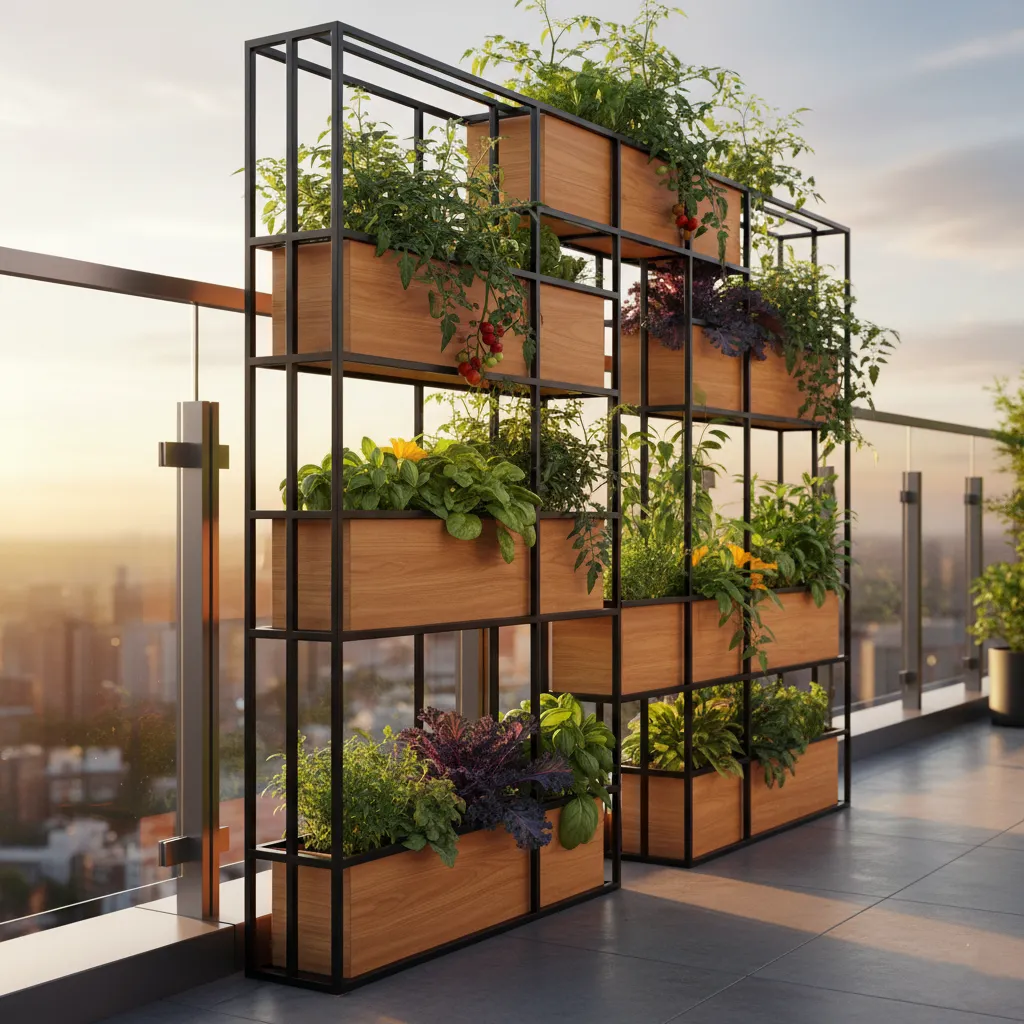
Small patios require a strategic map to maximize every inch. Modular containers offer a flexible layout that evolves with your seasonal harvest.
Imagine the contrast of rough cedar planters against smooth slate tiles. This textural layering adds visual depth to a highly functional space.
A modular approach turns a cramped deck into a curated oasis. By grouping pots of varying heights, you create a dynamic focal point.
This arrangement improves spatial flow, making the area feel larger. It allows for easy movement between seating and your homegrown produce.
A modular garden turns a static patio into a living, breathing pantry.
Maximizing Vertical and Horizontal Flow
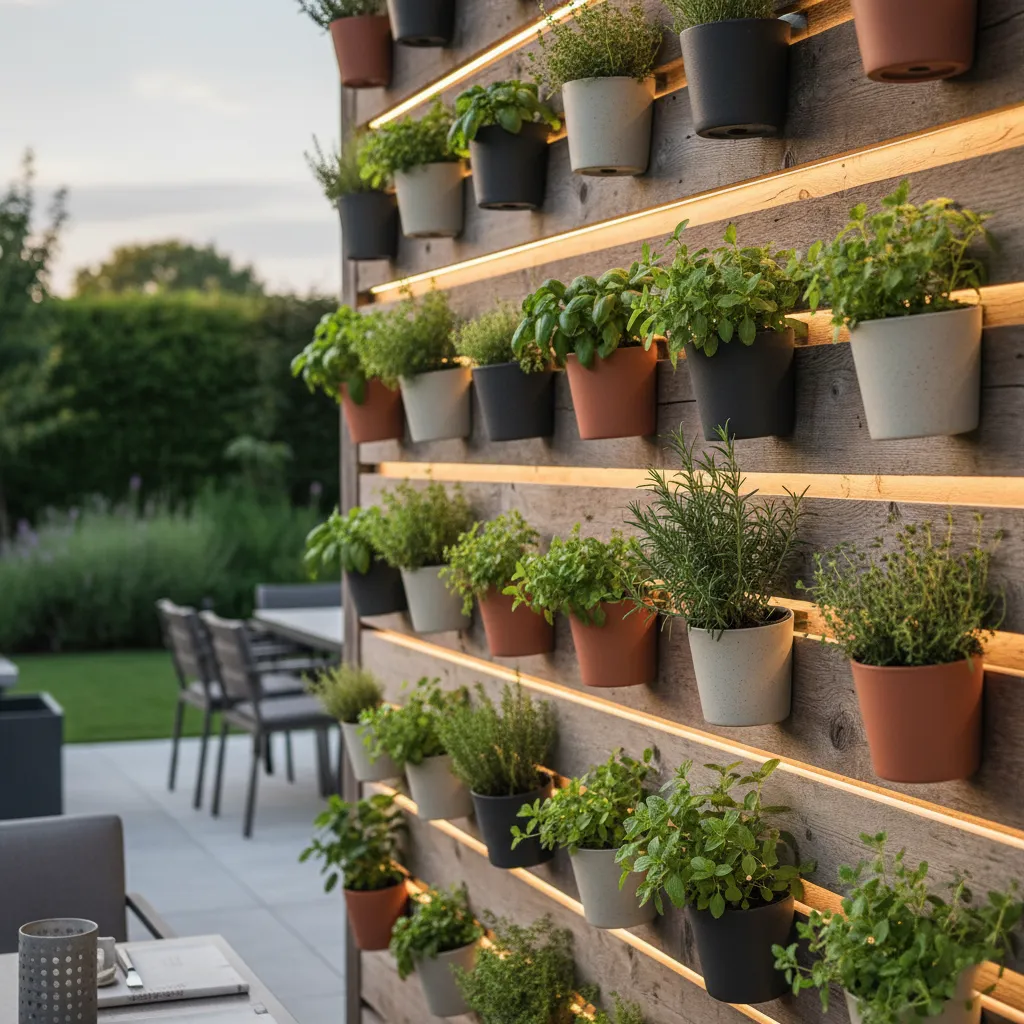
Use verticality to free up essential floor area for furniture. Teaming wall pots with floor basins creates an airy, curated atmosphere.
For those working with tight quarters, exploring modern small balcony ideas can provide inspiration for layout efficiency.
Modular systems allow you to rotate plants based on sun exposure. This ensures each vegetable gets optimal light without moving heavy items.
Consider the weight of your materials to ensure patio safety. Lightweight resin mimics stone but is much easier to reposition as needed.
Container gardening allows for total control over soil quality and drainage, which is often the key to success in small urban environments.
P. Allen Smith, Container Gardening 101
Choosing Materials for Function and Style
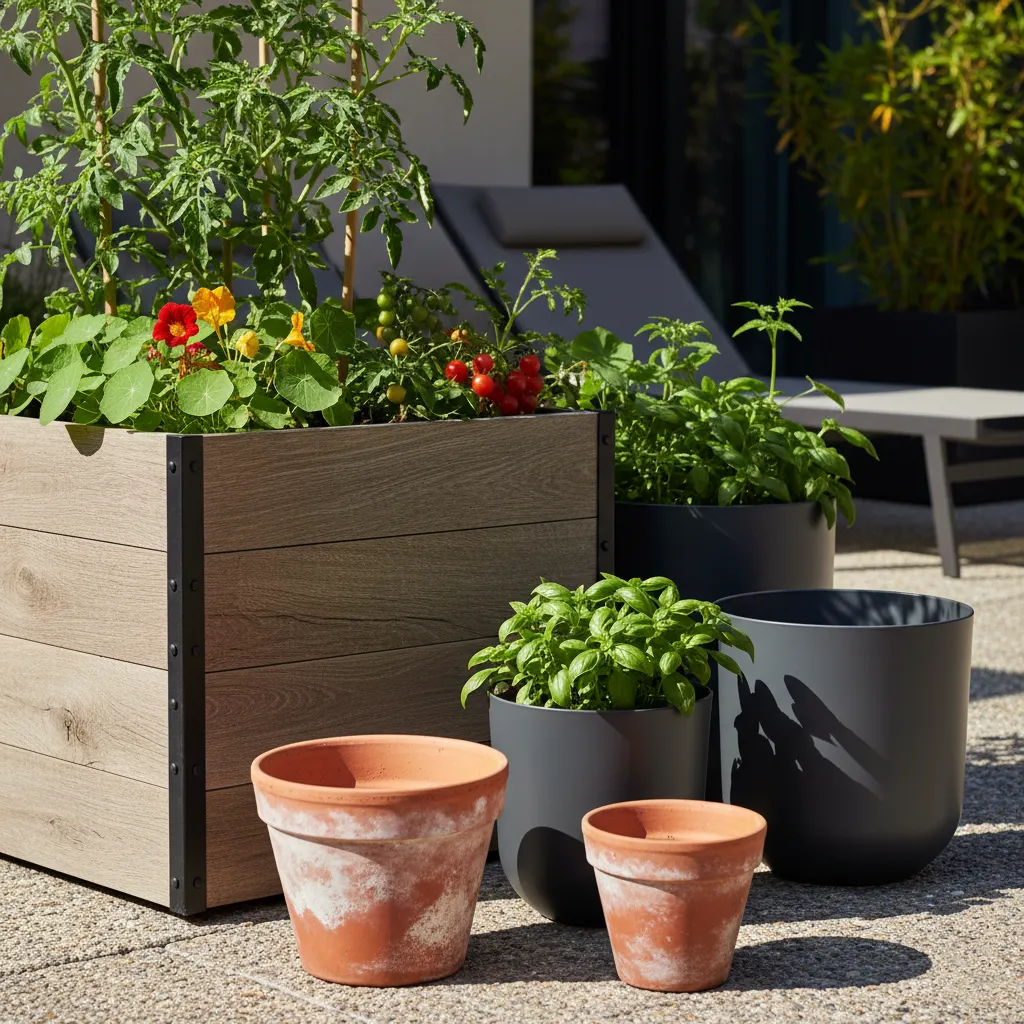
The right material impacts both plant health and patio aesthetics. Terracotta offers an organic feel while providing excellent breathability for roots.
In contrast, powder-coated steel brings a sleek, industrial edge. It is perfect for modern homes that value clean lines and durability.
| Material | Weight | Visual Style |
|---|---|---|
| Terracotta | Heavy | Warm and organic. |
| Steel | Medium | Sleek and modern. |
| Cedar | Light | Rustic and cozy. |
When planning your layout, look at stunning rooftop garden designs to see how experts balance heavy planters.
Lighting also plays a crucial role in the evening atmosphere. Soft, ambient glow from solar stakes makes the garden a cozy retreat at night.
Modular Masterclass
- Attach heavy-duty locking casters to the bottom of large planters so you can shift your layout effortlessly for cleaning or to catch the moving sun.
- Maximize your ‘air space’ by mixing wall-mounted herb pockets with tiered floor stands to create a lush green backdrop without sacrificing floor area.
- Group containers by water requirements; placing thirsty greens together and drought-tolerant herbs in another cluster; to streamline your maintenance routine.
The Galvanized Steel Trough Blueprint for Succession Harvests
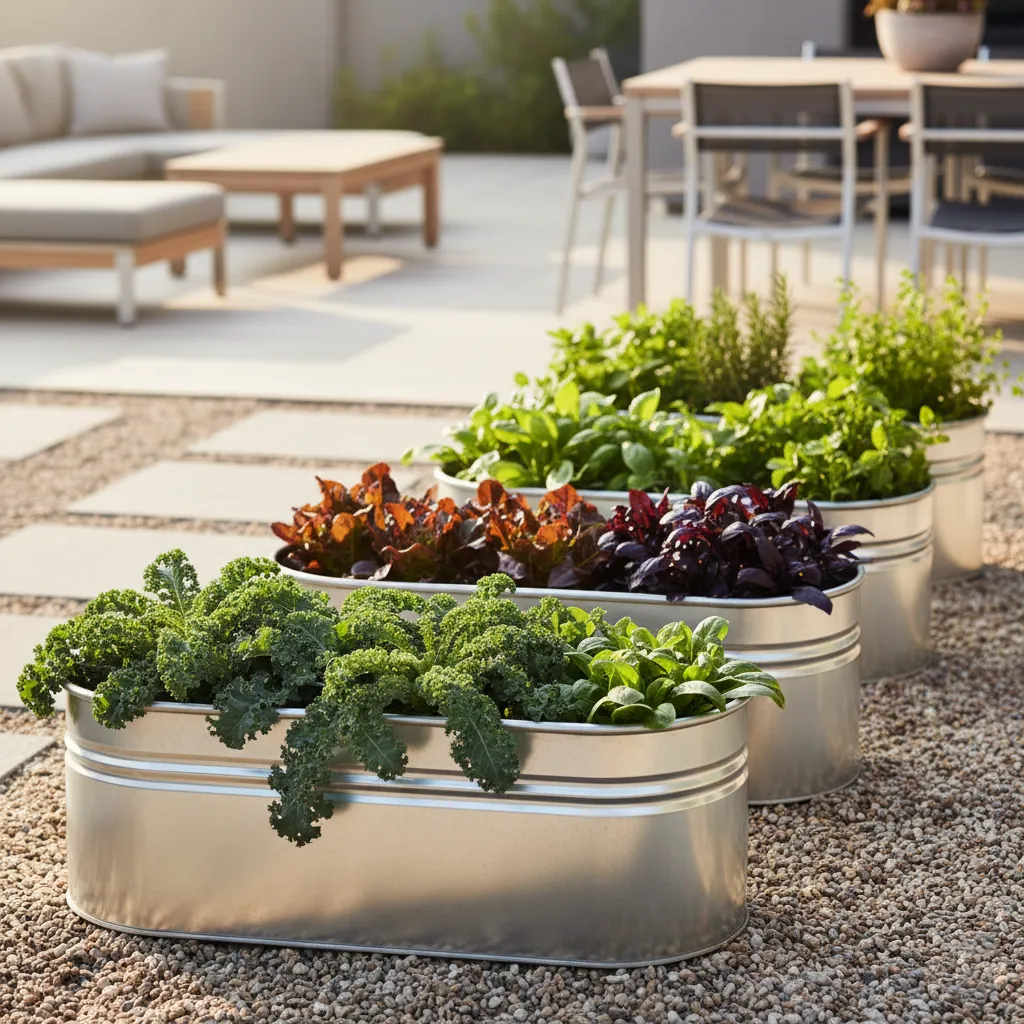
Galvanized steel troughs offer a curated, industrial aesthetic for any backyard. The polished finish reflects ambient light, brightening the surrounding greenery. This choice combines long-term durability with a modern, clean look.
These raised beds improve spatial flow by defining clear boundaries. Their height reduces back strain and keeps common pests away from your crops. The metal also retains heat, which helps seeds germinate faster in the early spring.
Designing for Continuous Growth
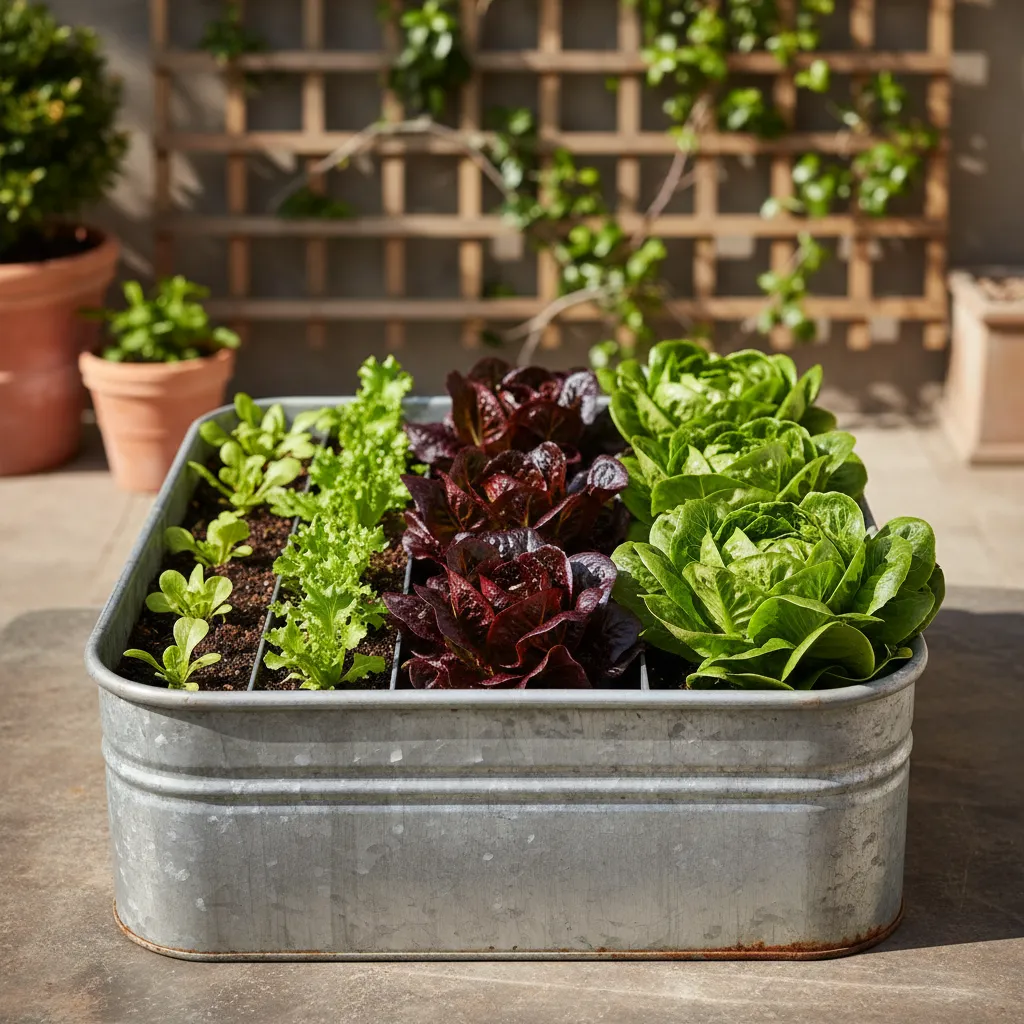
Succession harvesting involves planting small batches of seeds at intervals. Once one crop is finished, the next batch is ready for harvest. Troughs make this rotation easy to manage within a confined, organized area.
Place troughs in sunny spots for the best results. You can integrate them into small front yard landscaping ideas to maximize productivity in any size lot without sacrificing style.
A garden should be a place where utility meets artistry, and metal troughs provide that perfect, modern structure.
Proper soil preparation is key for metal containers. For tips on seasonal soil needs, see our guide on fall plant pot ideas to keep your garden lush throughout the year.
Raised beds like troughs allow you to control the soil environment completely, which is the secret to a high-yielding, healthy vegetable garden.
Niki Jabbour, Savvy Gardening Expert
Trough Sizing and Crop Compatibility
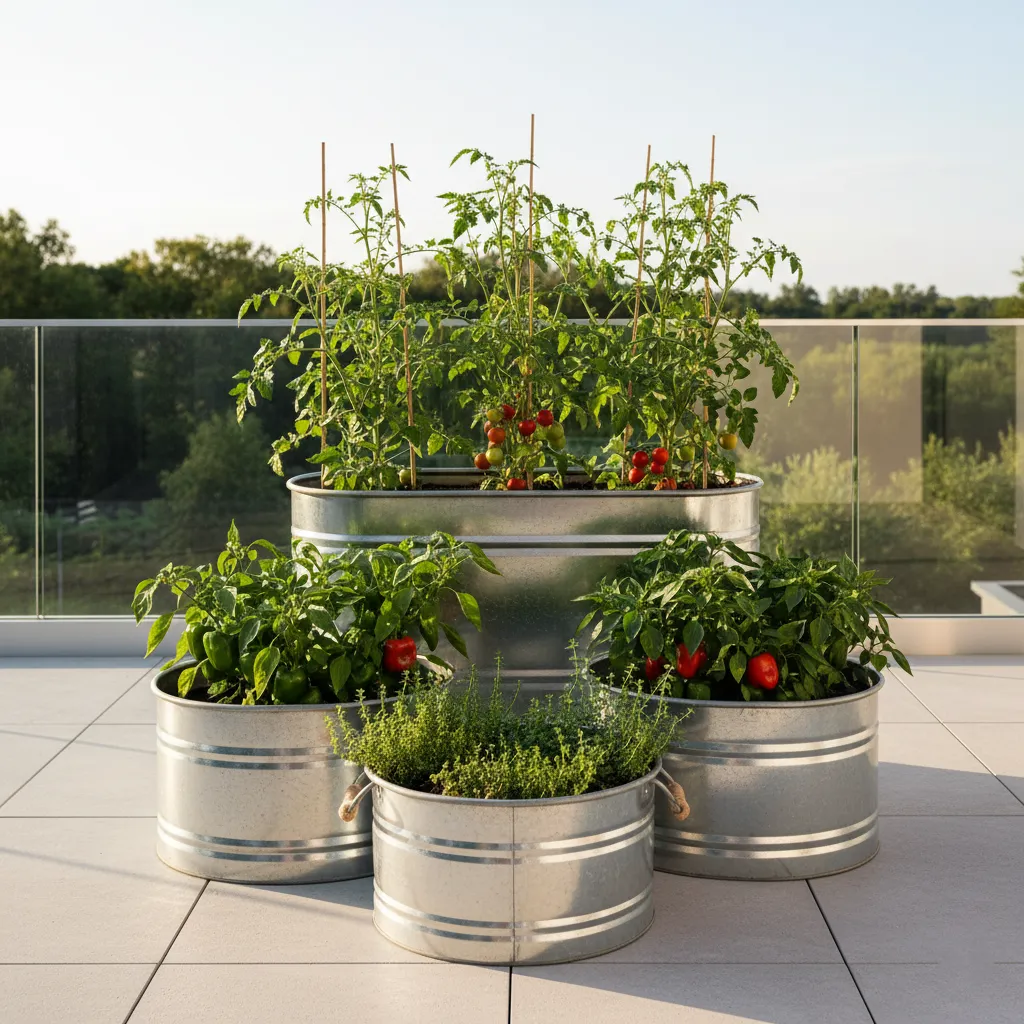
Choosing the right size trough ensures your plants have enough room for their root systems. Consider the depth required for each vegetable type to maintain healthy growth and prevent overcrowding in the container.
- Shallow Troughs: Ideal for radishes, spinach, and microgreens.
- Medium Troughs: Perfect for peppers, bush beans, and larger herbs like rosemary.
- Deep Troughs: Necessary for root vegetables like carrots or climbing plants with trellises.
| Vegetable Type | Min. Trough Depth | Harvest Style |
|---|---|---|
| Salad Greens | 6-8 Inches | Cut and Come Again |
| Root Vegetables | 12-18 Inches | Single Harvest |
| Fruiting Veggies | 18-24 Inches | Continuous Pick |
Always ensure you drill drainage holes in the bottom of the steel. Layer the base with coarse gravel to prevent water from pooling. This simple step protects the roots and keeps the organic soil well-aerated.
Steel-Strong Growth Hacks
- To manage summer heat, line the inner walls of your trough with cardboard or landscape fabric to insulate roots against temperature spikes.
- Lighten the load and save on soil by filling the bottom third of deep troughs with empty plastic containers or clean logs before adding your organic mix.
- Drill drainage holes every 6 inches and elevate the trough slightly on bricks or pot feet to prevent rust rings on your patio and ensure peak aeration.
Harvesting Your Design Vision
Transforming your backyard into a productive oasis is about blending utility with elegance. Whether choosing cedar or steel, your garden reflects your personal style. <\/p>
From 4×8 raised beds to geometric potagers, these designs maximize yield while creating a cozy retreat. Start small and watch your sanctuary grow season after season. <\/p>
Growing Your Knowledge
Red cedar is a top choice for its organic look and natural rot resistance. If you prefer a modern industrial vibe, galvanized steel offers lasting durability.
Aim for paths at least two to three feet wide. This ensures you can comfortably navigate with a wheelbarrow or garden tools without damaging your crops.
Absolutely! Marigolds and nasturtiums add pops of color while naturally deterring pests. This blend of beauty and function is the heart of potager design.
Yes! The 4×8 footprint is a classic standard. It provides ample growing space while remaining easy to reach from all sides, preventing soil compaction.
