
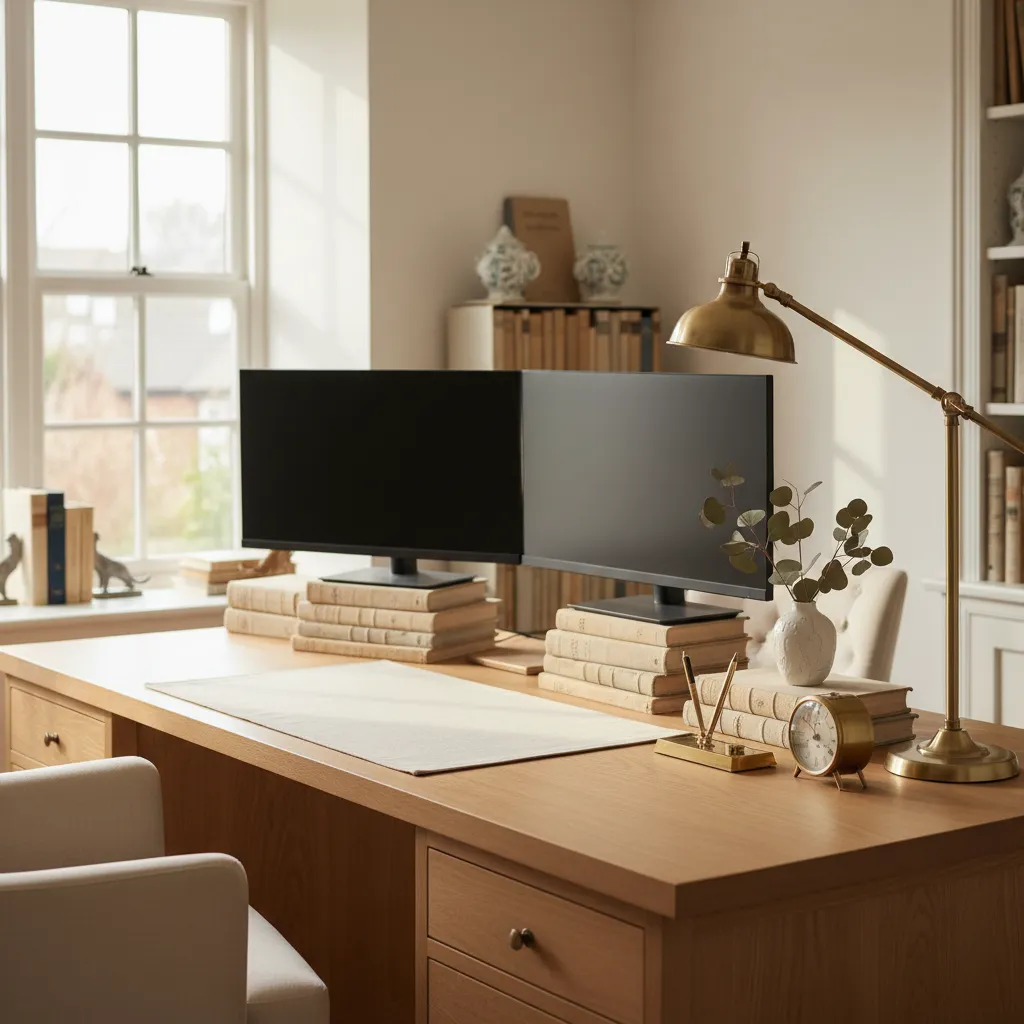
Table of Contents
- 1. Build a Neutral Light Oak Desk Foundation for Dual Monitors
- 2. Elevate Screens Using Stacked Vintage Books and Brass Accents
- 3. Blend an Ergonomic Mesh Chair With Cream and Beige Textiles
- 4. Camouflage Heavy Cables Behind Marble Busts and Dried Florals
- 5. Hide Modern Gadgets Inside Leather Journals and Antique Boxes
- Bringing Your Light Academia Office to Life
- Design Dilemmas Solved: Your Office FAQs
The light academia aesthetic celebrates a life of curiosity and timeless style.
To build a productive home office, you must balance vintage charm with modern utility. Imagine a workspace filled with warm sunlight and soft, cream tones that inspire deep focus and creativity.
Creating this look involves more than just stacking old books. You should layer textures like linen and light wood while ensuring every item serves a daily purpose.
High-quality lighting and thoughtful desk placement turn a simple corner into a sophisticated sanctuary for your most important work.
Whether you are refreshing a spare room or styling a small nook, these ideas are both elegant and achievable.
You do not need a massive budget to craft this refined environment. With a few smart styling choices, you can design a space that feels as good as it looks.
1. Build a Neutral Light Oak Desk Foundation for Dual Monitors
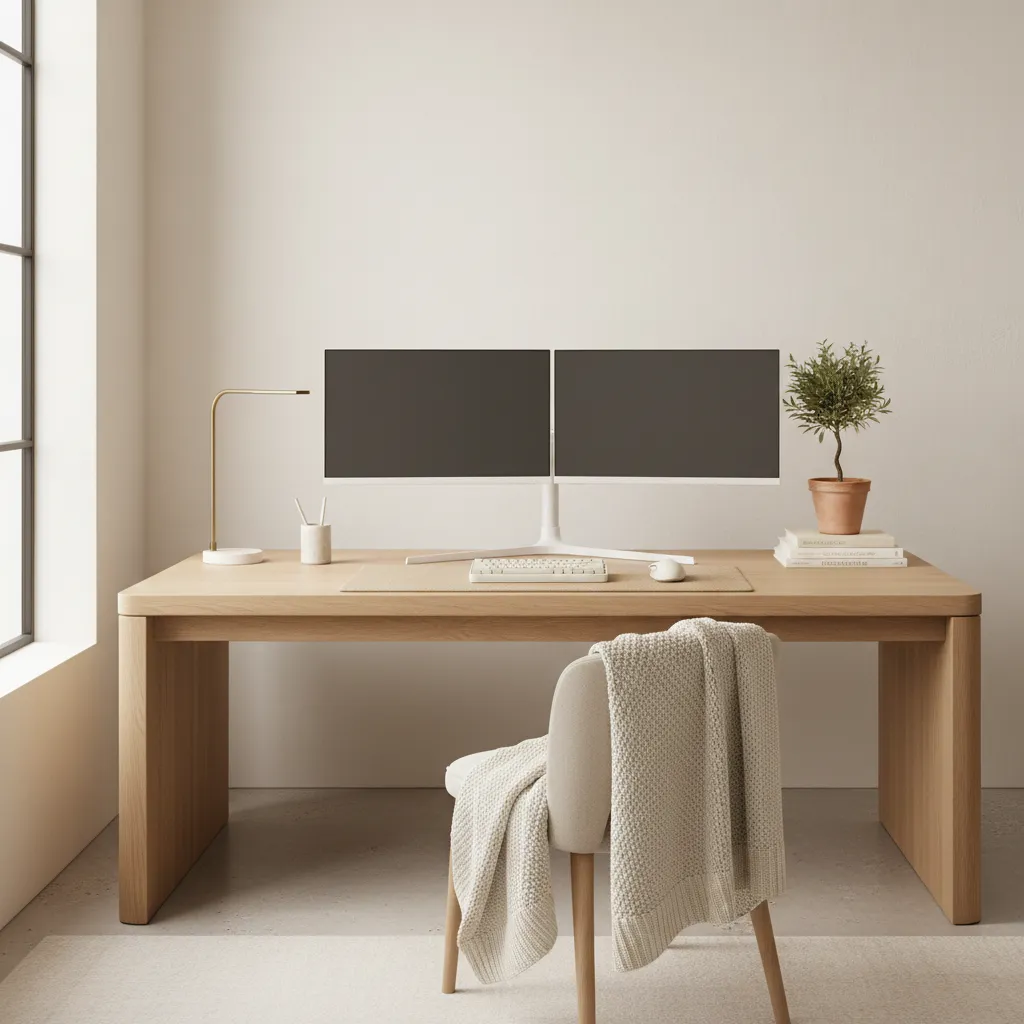
A light oak desk serves as the perfect organic anchor for your home office. The pale wood brings a warm ambient glow to the room. It instantly elevates a light academia aesthetic.
Balancing dual monitors requires smart spatial flow. A solid wood foundation supports heavy tech while keeping the vibe airy and minimal. Your workspace remains curated, not cluttered.
A beautifully curated desk is the foundation of a focused and inspired mind.
Pairing the raw wood texture with soft linen accessories creates a cozy hygge feel. A matte finish on the desk prevents harsh screen glare. This detail drastically improves usability.
If you want to expand this look, exploring modern office decorating ideas can help you easily integrate brass hardware and vintage art pieces.
I love incorporating natural wood tones into an office. It brings warmth and life to a space that is often filled with cold technology.
Shea McGee, Studio McGee Design Guide
| Wood Finish | Aesthetic Vibe | Durability |
|---|---|---|
| Raw White Oak | Highly organic, soft and matte | Needs regular sealing |
| Clear Varnished Ash | Warm ambient glow, subtle shine | Excellent against spills |
| Whitewashed Pine | Vintage, charmingly distressed | Prone to minor scratches |
Optimizing the Monitor Placement
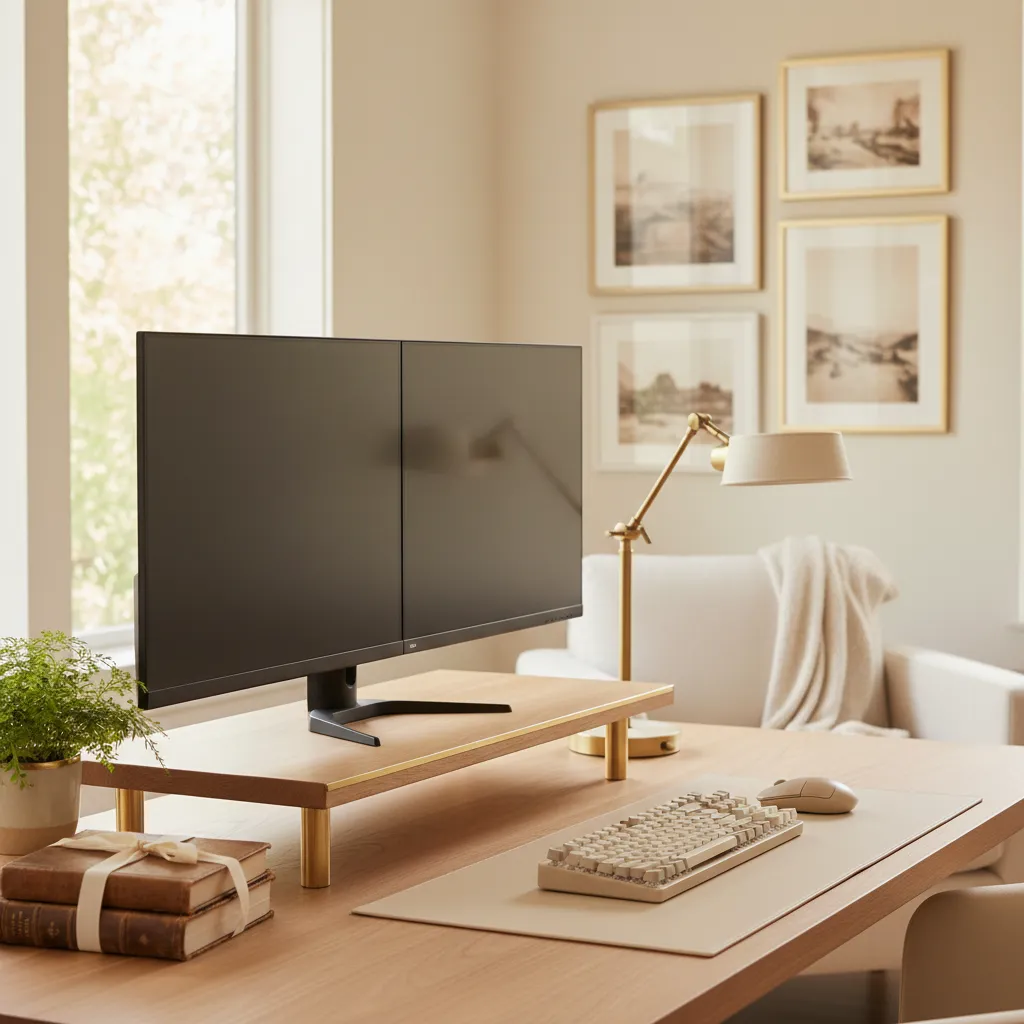
Placing two large screens on a desk can easily disrupt your carefully chosen palette. Use a light wood monitor riser to blend the technology into your beautiful setup seamlessly.
A monitor stand also creates hidden storage beneath the screens. You can tuck away notebooks or a vintage brass pen tray. This simple addition instantly improves the spatial flow.
Proper screen height reduces neck strain by nearly 35 percent, making risers essential. You can check the OSHA ergonomic guidelines for more details.
Designer Desk Hacks
- Elevate your dual screens with a light wood monitor riser to reduce neck strain and create hidden storage for notebooks and pen trays.
- Choose a light oak desk with a matte finish to prevent harsh screen glare from your monitors and improve daily usability.
- Soften the cold, heavy look of dual monitors by incorporating soft linen accessories and vintage brass hardware into your workspace.
2. Elevate Screens Using Stacked Vintage Books and Brass Accents
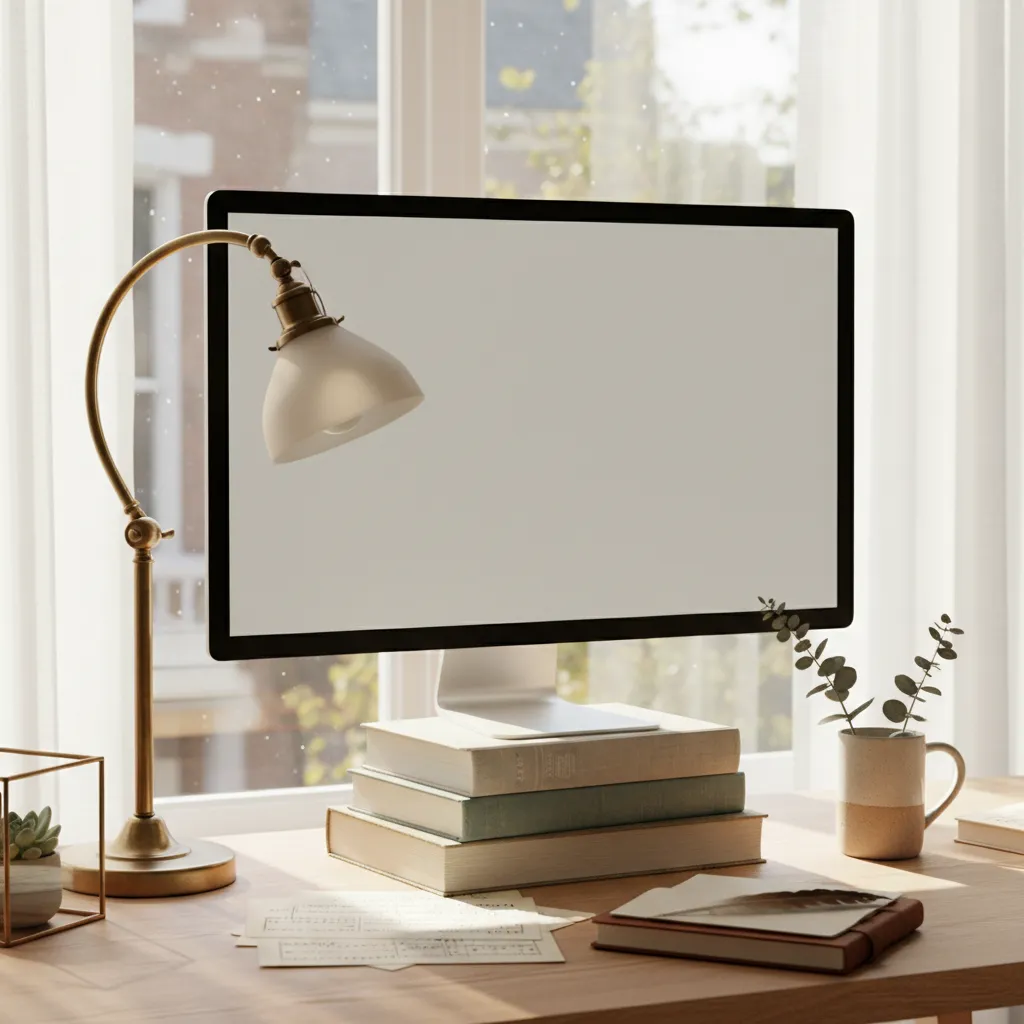
Elevating your monitor is vital for neck health. Instead of sterile plastic risers, use vintage books to merge function with the cozy light academia aesthetic.
Stack three or four thick volumes bound in faded linen or distressed leather. This creates a solid base that grounds the technology in tactile, organic texture.
Pair your literary monitor stand with polished brass desk accessories. The warm metallic finish reflects ambient light beautifully, softening the glare of screens.
The best home offices are those that do not feel like an office at all. They should feel like a natural extension of your home.
Jeremiah Brent, Architectural Digest
Small touches like a solid brass tray or a vintage lamp make a huge impact. Reviewing modern office decorating ideas to boost style helps balance these elements.
Curating Your Book and Brass Display
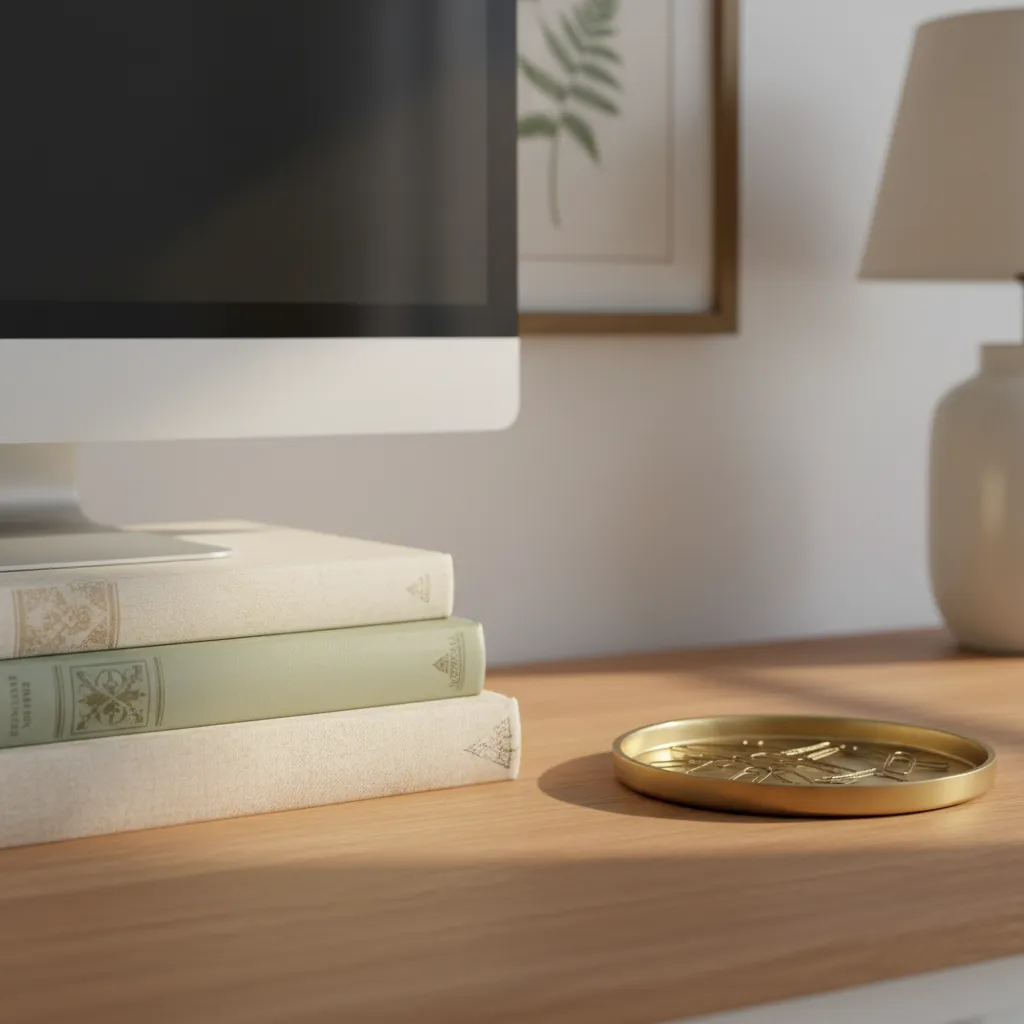
Building the perfect vintage book riser requires a careful eye. You want to ensure maximum stability while maintaining a highly curated visual appeal.
- Select Sturdy Volumes: Choose oversized hardcover books with flat covers to prevent your monitor from wobbling during heavy typing sessions.
- Coordinate the Palette: Alternate spine colors using soft creams, pale greens, and subtle gold foil detailing to match the light academia vibe.
- Incorporate Warm Metals: Add a weighted brass task lamp beside the stack to direct ambient lighting exactly where you need it for writing.
This curated arrangement significantly improves your daily workflow. A neat stack clears desk clutter while providing a hidden nook to tuck away stray pens.
Transform digital distraction into a curated display by grounding your everyday technology with tactile, vintage textures.
By treating everyday utilitarian items as deliberate design choices, you create a focal point that is both visually inspiring and wonderfully practical.
The Curator’s Secret
- Prioritize stability by choosing large coffee-table books or encyclopedias with flat, non-slip spines to ensure your monitor remains perfectly level.
- To conceal unsightly tech cords, position the book spines forward and tuck your cables neatly behind the stack for a cleaner, wireless appearance.
- Enhance the vintage glow by polishing your brass accents with a microfiber cloth to maintain a high-shine contrast against the matte textures of the book covers.
3. Blend an Ergonomic Mesh Chair With Cream and Beige Textiles
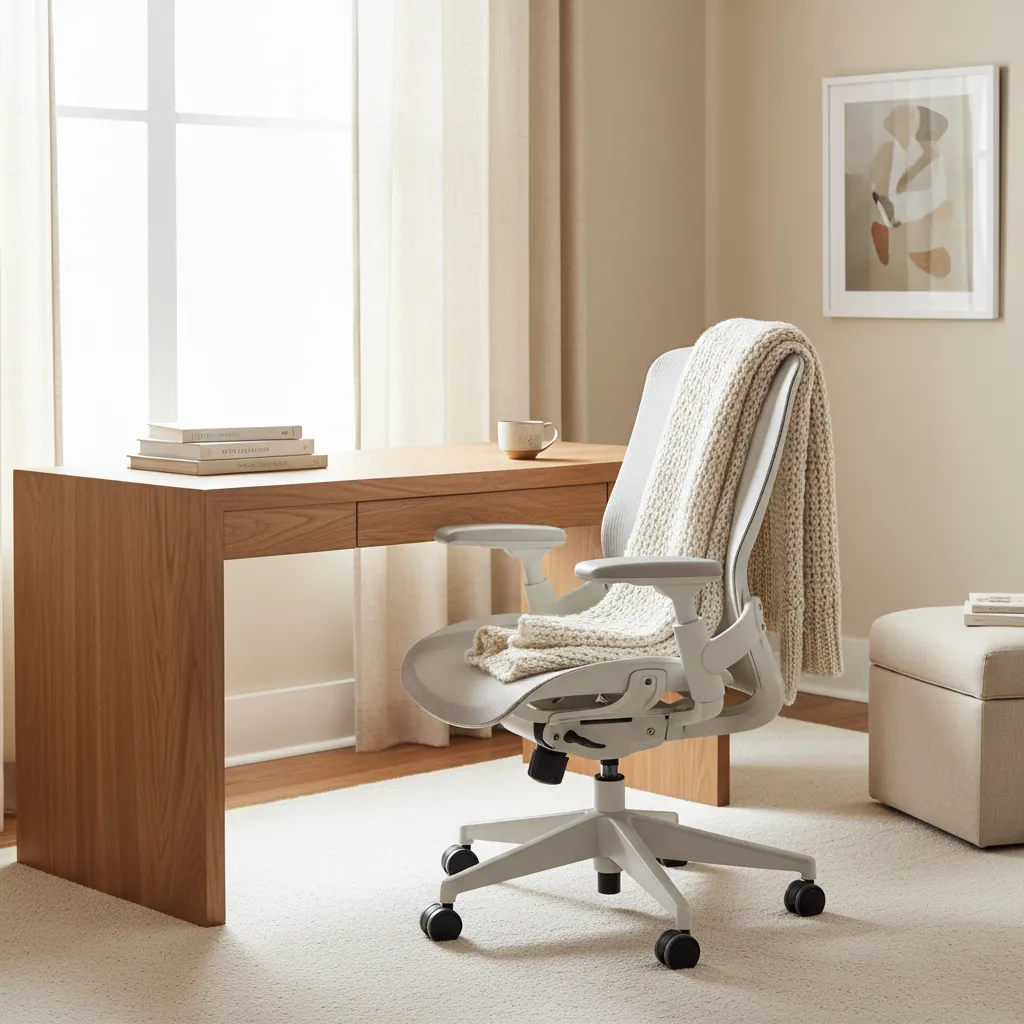
Ergonomic seating often feels too clinical for a curated home workspace. You can easily soften the rigid lines of a mesh chair using warm textiles.
The trick is finding a balance between spinal support and visual warmth. A high quality mesh back provides essential airflow during long work hours.
Look for ergonomic chairs featuring white or pale gray frames. These lighter finishes catch the ambient room lighting beautifully.
Layer a heavy linen or soft knit throw over the backrest. This instantly bridges the gap between structured utility and cozy aesthetic appeal.
True office design harmony happens when supportive ergonomics meet the comforting embrace of soft, tactile textiles.
Much like you would use decorative tapestries to warm up cold walls, textiles transform office furniture.
A light academia aesthetic thrives on layers and organic materials. Bringing these elements to your seating improves the overall spatial flow.
Key Ways to Soften an Ergonomic Chair
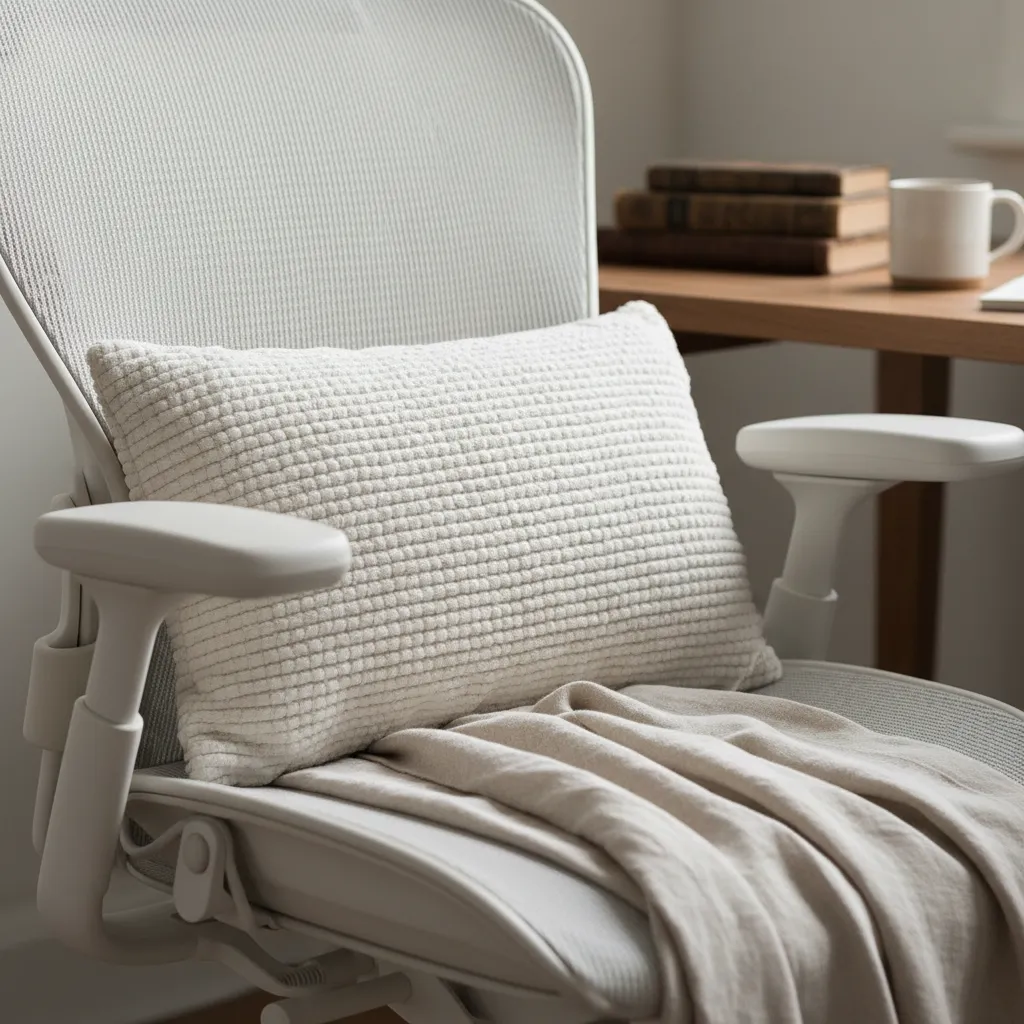
- Choose Lighter Frames: Opt for beige, cream, or light gray mesh. These hues blend seamlessly with an airy academic palette.
- Add a Lumbar Pillow: Select a textured linen or boucle fabric in a soft oat shade to provide customized lower back support.
- Drape a Woven Blanket: A chunky beige throw gently softens the harsh plastic or metal edges of the seat back.
- Upgrade the Hardware: Swap standard black plastic casters for brushed brass or soft silicone wheels to elevate the finish.
Layering textures is the easiest way to add warmth and dimension to a functional space.
Athena Calderone, EyeSwoon Design
These thoughtful layers invite you to sit down and focus. They ensure your workspace feels like a luxurious study rather than a corporate cubicle.
The Softened Study Secret
- Drape a chunky knit throw diagonally over one shoulder of the chair to break up the rigid silhouette without obstructing the adjustable armrests.
- Swap industrial black casters for clear or brushed metallic ‘rollerblade’ style wheels to eliminate the corporate look and ensure a silent, smooth glide over hardwood.
- Layer a faux-sheepskin or heavy linen cushion onto the seat to provide tactile contrast against the mesh while maintaining the airy aesthetic of a light academia palette.
4. Camouflage Heavy Cables Behind Marble Busts and Dried Florals
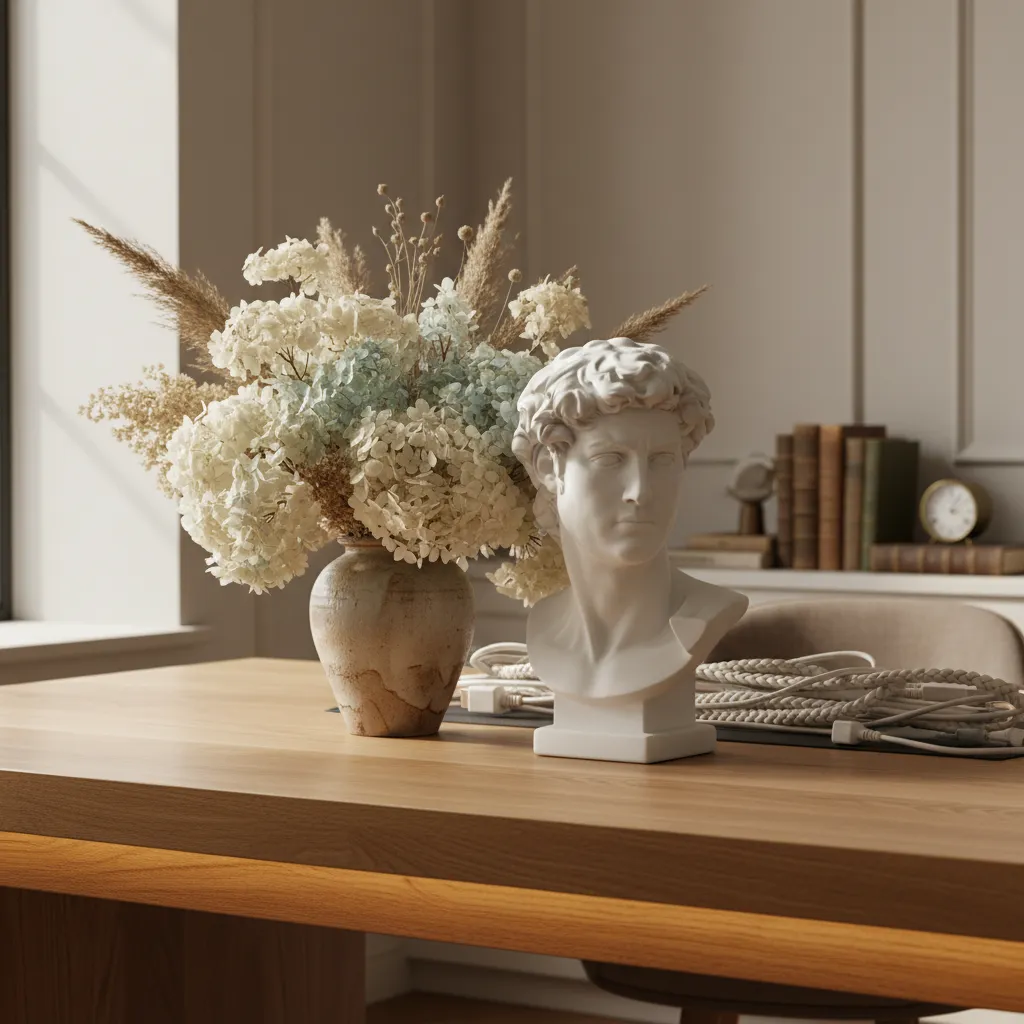
Nothing breaks the illusion of a classic, scholarly workspace quite like a tangle of black computer cords. Tech clutter instantly ruins a curated vibe.
To fix this, treat your aesthetic decor as functional tools. Just as there are aesthetic ways to hide internet routers, you can mask desk cables seamlessly.
A classic marble bust is the ultimate Light Academia statement piece. Its solid mass and cool matte finish make it perfect for blocking unsightly wires.
Place a hefty bust directly in front of your monitor stand or power strip. The visual weight draws the eye upward, while hiding modern tech behind it.
Have nothing in your house that you do not know to be useful, or believe to be beautiful.
William Morris, Victoria and Albert Museum
Next, introduce organic warmth with dried botanicals. Arrangements of dried hydrangeas or tall pampas grass soften the rigid lines of your technology.
Place a heavily textured ceramic vase next to your monitor. The sprawling stems naturally drape over bulky wires, obscuring them completely from view.
True elegance in a workspace happens when modern utility hides quietly behind timeless beauty.
Building a layered desk vignette requires the right balance of objects. Try these elegant, academia-approved cable concealers for your daily workspace.
- Plaster Corbel Bookends: Heavy enough to hold thick cables in place while adding vintage architectural charm to your wooden desk.
- Tall Stoneware Pitchers: The wide base easily covers power strips, while the height accommodates long floral stems perfectly.
- Stacked Vintage Books: Arrange a staggered pile to block wire entry points near the back of your monitor setup.
- Framed Botanical Prints: Lean a small, ornate gold frame casually against the wall to disguise power outlets beautifully.
Combining these elements creates a warm, inviting spatial flow. You gain a visually serene environment that keeps you focused and highly inspired.
The Curator’s Secret
- Use neutral-toned adhesive clips on the back of your marble bust to guide cables downward in a single line, preventing them from fanning out and becoming visible from the sides.
- Stack two or three vintage linen-bound books to elevate your bust, creating a taller shield that masks monitor ports and higher cable entry points effortlessly.
- Mist your dried floral arrangements with a light setting spray to prevent delicate petals from shedding onto your tech, ensuring your cable-hiding greenery stays pristine.
5. Hide Modern Gadgets Inside Leather Journals and Antique Boxes
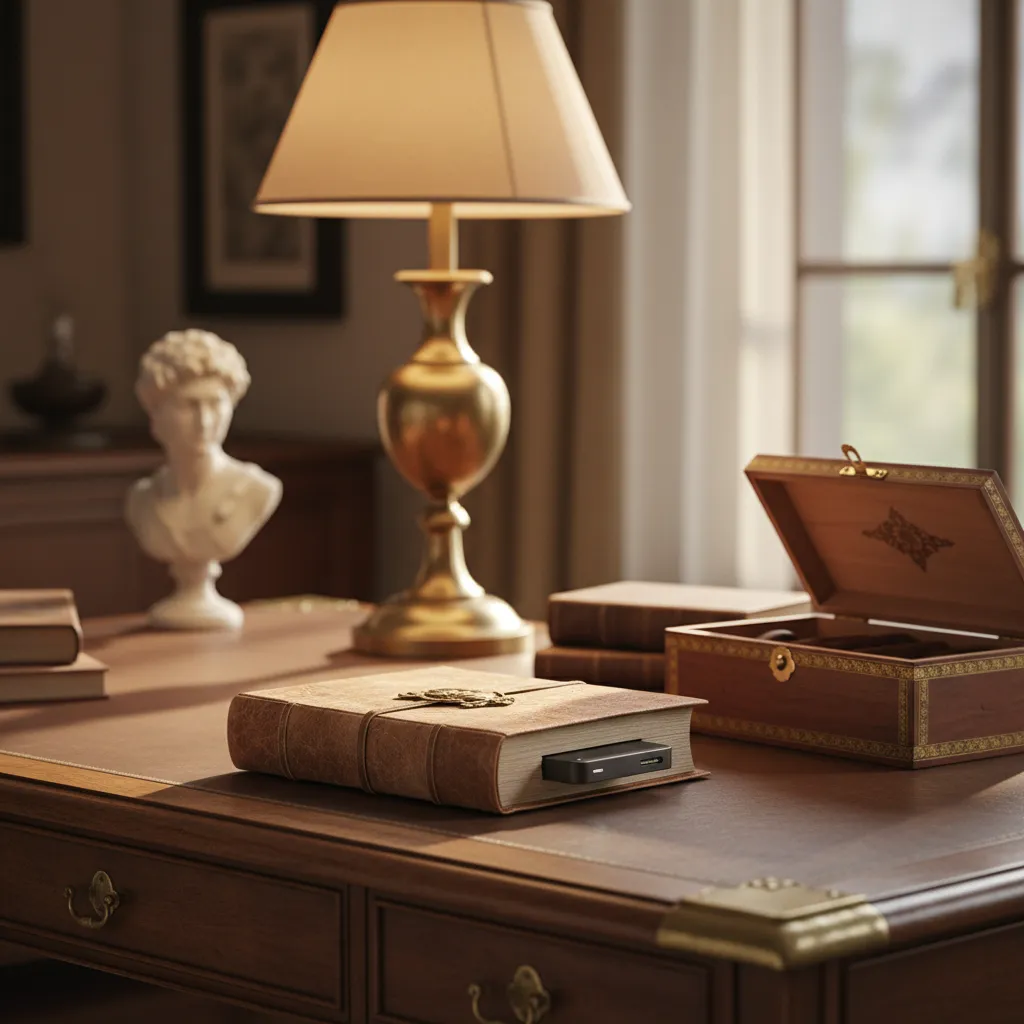
Nothing breaks the spell of a curated light academia workspace quite like a tangle of black plastic cords. To maintain that classic charm, modern technology needs a clever disguise.
You can easily mask unsightly hard drives by tucking them into hollowed-out vintage books. This adds tactile texture and keeps your daily workspace beautifully clutter-free.
An antique cigar box made of rich oak or burled walnut serves as the perfect statement piece. It instantly grounds your palette while offering practical storage for small tech.
Hiding bulky tech is essential for an organic spatial flow. Explore aesthetic ways to hide internet routers and modems to ensure your workspace preserves a calm mood.
Tucking cords and chargers into decorative boxes keeps your workspace feeling like a sanctuary rather than a corporate cubicle.
Hadley Mendelsohn, House Beautiful
Try these functional styling strategies to successfully conceal your daily digital gadgets:
- Faux Leather Journals: Cut a small hole in the back to elegantly thread charging cables completely out of sight.
- Brass Catch-Alls: A heavy, vintage metal dish offers a highly stylish resting place for loose USB drives.
- Wooden Tea Boxes: The built-in internal dividers are naturally perfectly sized to sort and store small cables.
Creating a lovely vignette with stacked faux books establishes a strong focal point. It seamlessly draws the eye away from your screen while keeping essential tools within arm’s reach.
True elegance in a workspace is found when modern utility is quietly draped in vintage charm.
Consider a mid-century brass tin for extra memory cards. The warm metallic finish reflects ambient lighting beautifully and gracefully adds a subtle nod to functional minimalism.
When your desk feels organized, the space gains a sense of cozy hygge. Tucking away the plastic and wire leaves only rich, natural materials for you to deeply enjoy every workday.
The Collector’s Cover-Up
- Use a craft knife to hollow out the center of a thick hardcover book to create a bespoke, hidden housing for your external hard drive or router.
- Line the interior of vintage brass tins or wooden cigar boxes with adhesive velvet or felt to protect your phone screen and gadgets from scratches.
- When creating cable exit holes in the back of decorative boxes, sand the edges smooth and add a small leather flap or brass grommet for a refined finish.
Bringing Your Light Academia Office to Life
Creating a light academia desk setup is all about balancing daily function with soulful, timeless design.
Pairing a natural light oak desk with dual monitors, vintage books, and brass accents keeps your space warm.
Your workspace should inspire focus. Let your curated vintage details and natural textures spark creativity.
Design Dilemmas Solved: Your Office FAQs
Use adhesive cable clips under the desk edge. Route wires behind a monitor riser or vintage books to keep your workspace looking tidy.
Yes! Mount them on a brass or white dual monitor arm clamped to your desk. This frees up surface space for cozy linen and wood accents.
Opt for warm-toned LED bulbs inside a vintage brass desk lamp. It perfectly highlights the natural wood grain and reduces eye strain.
